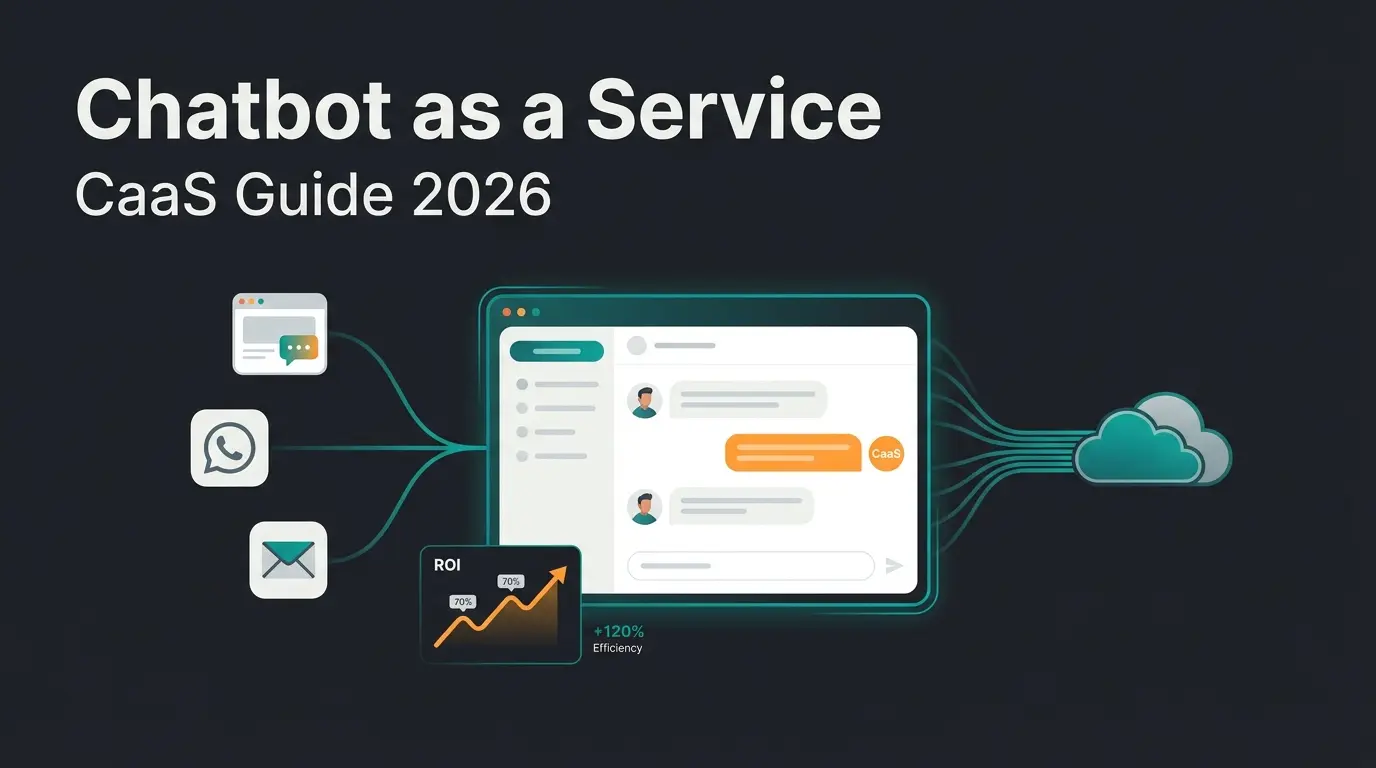
Closing the Advice Gap in E-Commerce
Digital commerce faces a significant challenge: the quality of advice often does not meet customer expectations. Customers are often overwhelmed by the selection but find no adequate guidance. According to the current E-Commerce Study 2023, lack of advice leads to purchase abandonment for 67% of customers. These figures illustrate a significant discrepancy between the expectations of online shoppers and the actual advice offered by many shops, which rely solely on filter functions.
The legal dimension of the obligation to provide advice in online retail is becoming increasingly important. The German E-Commerce Association defines clear guidelines: Online retailers must actively provide product information and support customers in their purchasing decisions. This obligation goes beyond the mere presentation of products and includes a comprehensive advisory service that helps the customer find the right product for them, not just any product.
Customer expectations of online shops have fundamentally changed. A recent analysis shows: Modern consumers expect personalized advice around the clock. They are looking for a shopping experience that is in no way inferior to personal advice in stationary retail – with the added advantage of temporal and local flexibility. This is precisely where professional AI consulting comes in to close the gap between static online catalogs and human sales conversations.
Limitations of Traditional Online Advice and the FAQ Trap
The classic advisory formats in e-commerce are reaching their limits. Standardized FAQ sections and simple contact forms can no longer cope with the complexity of modern customer inquiries. An analysis by the German Retail Association puts the average cost of personalized customer support at 15-25 euros per consultation – a considerable cost factor for online retailers, which often makes 1:1 advice from people uneconomical.
The limitations become particularly clear with classic chatbots, which are often falsely sold as "AI solutions". Studies on customer acceptance show that rule-based systems often fail when faced with more complex inquiries. The rigid decision trees lead to frustration for customers and additionally burden the service staff, who have to step in when automated systems reach their limits. It is crucial to understand that a "Support Bot" (Where is my package?) is not a "Sales Bot" (Which notebook is suitable for my work?).
| Characteristic | Classic FAQ Chatbot | AI Product Advisor (Digital Sales Assistant) |
|---|---|---|
| Primary Goal | Cost Reduction (Support Deflection) | Revenue Increase (Conversion Uplift) |
| Technology | Rigid Decision Trees / Keywords | Generative AI / Sales Psychology |
| Customer Interaction | Reactive (Answers Questions) | Proactive (Performs Needs Analysis) |
| KPI | Ticket Resolution Rate | Shopping Cart Value & Return Rate |
The integration of real AI-supported consulting systems offers a promising solution here. These systems combine the efficiency of automated processes with the ability to respond individually to customer inquiries. They enable scalable, cost-efficient consulting while maintaining high quality standards.
AI Solutions for Online Advice: More Than Support
The integration of AI into online consulting opens up completely new possibilities for shop operators. Practice shows that AI-supported consulting systems not only improve customer support, but also measurably increase sales. The AI consultant James achieves an average of 35% higher shopping cart values compared to conventional consulting methods. This is achieved by the AI not only answering questions, but also actively determining the customer's needs like a good salesperson.

Intelligent Consulting Systems in Practice
Modern AI systems analyze customer behavior in real time and adapt their advice individually. They take into account factors such as previous purchasing behavior, current product interests and specific customer needs. The AI consultant Flora impressively demonstrates the potential of this technology with a recommendation accuracy of 97%. In contrast to static filters, the AI also understands requests such as "I'm looking for a gift for my wife who likes to hike but gets cold quickly" and translates this human language into technical product attributes.
Integration of AR/VR into Consulting
The combination of AI with augmented and virtual reality creates an immersive consulting experience. Customers can virtually experience products and receive personalized recommendations at the same time. This combination increases purchase certainty and significantly reduces the return rate, as customers get a more precise idea of the product before completing the purchase.
Let us analyze whether your products are suitable for automated consulting and how much sales potential is untapped.
Request Free AnalysisPractical Guide: Implementing AI Consulting in 5 Steps
The integration of AI consulting systems into online shops is systematic and requires a structured approach. Thorough preparation is particularly important so that the AI consulting works effectively from the outset and is not perceived as a foreign body in the shop. A structured process minimizes risks and accelerates ROI.
Recording of current consulting processes and identification of the most frequent consulting occasions.
Structuring of product data (PIM) and consulting knowledge for training the AI.
Selection of the appropriate AI engine and technical integration via API into the shop.
Training the AI with historical data and test run in selected categories.
Rollout and continuous improvement based on conversion data.
A successful example is the implementation of the AI consultant James, which led to 35% higher shopping cart values for an electronics retailer. The AI consulting enables personalized customer contact around the clock, but requires that the database is correct. The technical integration should be seamless: The AI solution must be able to communicate with the merchandise management system, the product database and the CRM system. An API-first architecture helps here with flexible connection.
Data Protection Compliant Implementation as a Trust Factor
The protection of customer data is the top priority in AI consulting. The data protection guidelines for AI consulting form an important framework. Systems must operate in accordance with GDPR and communicate transparently how they process customer data. Regular security audits and clear data protection guidelines create trust among customers.
- Transparency: Clear identification that the advice is provided by an AI.
- Data economy: Only collect necessary data for the consultation.
- Security: Encrypted transmission and server locations within the EU.
- Control: Provide opt-out option for customers at any time.
ROI: Measurable Success Through AI Consulting
Investing in AI consulting is not just a technology project, but a business case. To measure the success of AI consulting, leading online shops rely on concrete KPIs. The implementation of AI consultants leads to measurable improvements along the entire customer journey.
Average increase through guided consulting
Increase through intelligent cross-selling
Reduction of costs per consultation
Improvement of customer satisfaction
Outlook 2024/2025: The Future of Digital Consulting
The use of AI in online consulting will continue to develop strongly in the coming years. According to the current retail study, 72% of online retailers are already investing in AI-supported consulting solutions. The market is expected to double by 2025.

Multi-modal AI systems will become standard in online consulting in 2024/2025. The combination of text, image and speech processing enables more natural communication between customers and AI consultants. Image recognition technology in particular is making great progress – AI systems can analyze product photos and make precise recommendations (e.g. "Find pants that match this shirt").
Another important development is the integration of Voice Commerce. Voice-controlled consulting via smartphone or smart speaker is becoming increasingly popular. Online shops should prepare their AI systems accordingly and implement interfaces to common voice assistants in order to be present in 'screen-less' commerce as well.
The costs vary depending on the complexity. While simple chatbots are inexpensive, specialized Sales-AIs require an investment in setup and training. In the long term, however, they reduce the costs per contact by up to 80%.
A chatbot usually reacts reactively to service questions (FAQs). A Digital Sales Assistant acts proactively, conducts a needs analysis and uses sales psychology to recommend products.
Especially for shops with products requiring explanation or large assortments (e.g. electronics, fashion, furniture, sporting goods, cosmetics), where customers are often overwhelmed without help.
Turn visitors into customers with intelligent consulting. We help you with the strategy and implementation.
Arrange a Consultation Now