
Introduction: The E-Commerce Stack of the Future
E-commerce is getting harder. Advertising costs continue to rise, and customers expect Amazon-level delivery speeds regardless of whether they're purchasing from a small Shopify brand or a large marketplace seller. To thrive in this environment, thousands of merchants rely on Billbee as the central nervous system of their online operations.
However, many merchants fall into a dangerous trap: they optimize their logistics to perfection while hemorrhaging money because their conversion rate stagnates or return rates devour their margins. According to Xentral, Billbee maintains its position as the leading entry solution for multichannel merchants in the DACH region who want to centrally manage Amazon, Etsy, Shopify, and other platforms.
In this comprehensive Billbee review for 2026, we don't just examine the classic features like invoice printing and inventory synchronization. We go a step further. We'll show you how to use Billbee not as an isolated tool, but as part of a modern "autopilot shop" where backend automation (Billbee) and frontend intelligence (AI product consultation) work seamlessly together.
What Is Billbee? Understanding the Basics
Before diving deep, we need to clarify where Billbee fits in the software landscape. Many beginners ask: Is it accounting software? An ERP? Or just a tool for shipping labels?
Definition and Core Function
At its core, Billbee is a cloud-based inventory management system (WaWi) and order processing solution specifically developed for multichannel merchants. As noted by softwareabc24.de, it deliberately positions itself not as a heavyweight enterprise ERP like SAP or Microsoft Dynamics, but as agile middleware for solopreneurs through mid-sized merchants processing several thousand orders monthly.
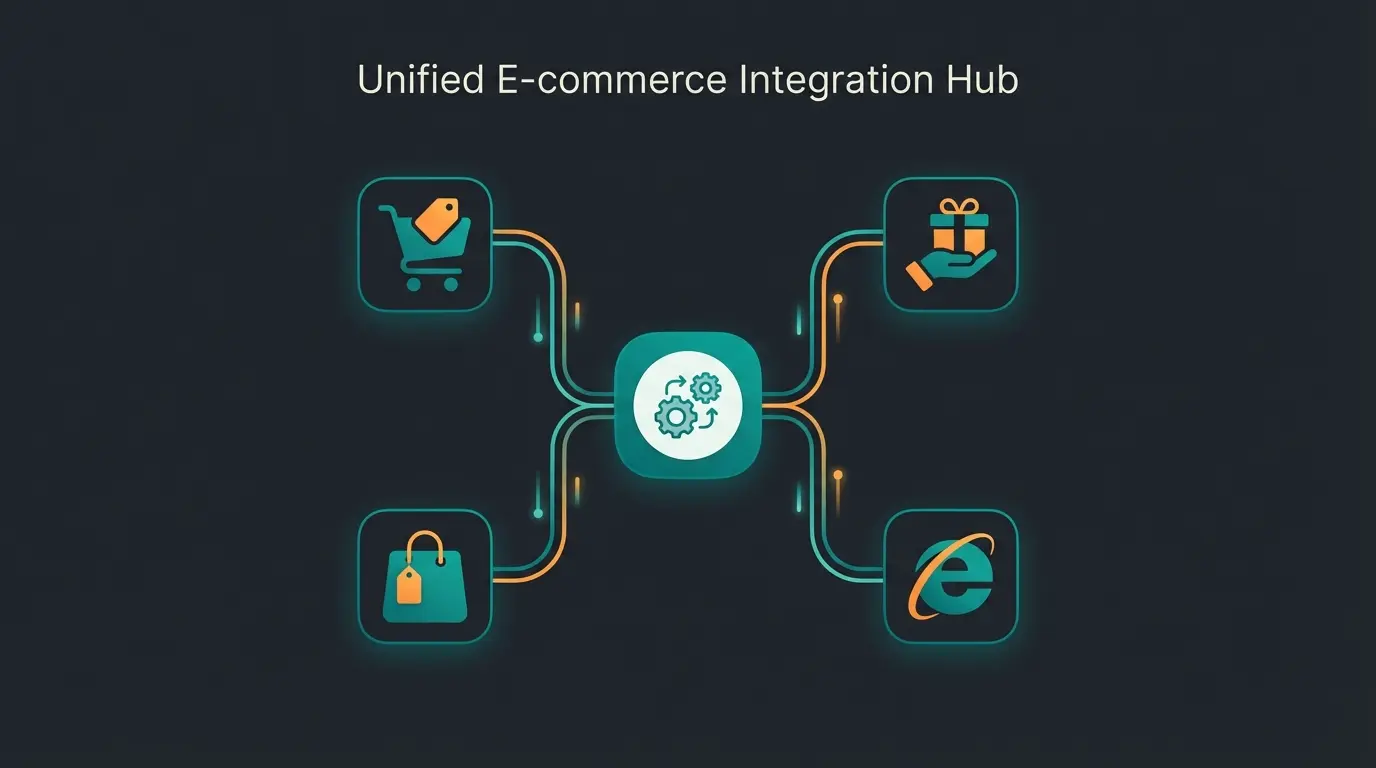
The problem Billbee solves: Imagine you sell handmade soaps on Etsy, electronics on Amazon, and accessories in your own WooCommerce shop. Without Billbee, you'd need to log into three separate portals, manually correct inventory (to avoid selling products that are already gone), and type invoices by hand. With Billbee, all orders flow into a single funnel. Billbee becomes the "spider in the web" holding all the threads together.
Who Is Billbee Best Suited For?
Based on current Billbee experiences and market analysis from PulpoWMS, the tool is ideal for several merchant types:
- D2C Brands (Direct-to-Consumer): Those who want to quickly launch with Shopify or WooCommerce without complex infrastructure
- Marketplace Merchants: Those who primarily sell on Amazon (FBA/FBM), eBay, or Etsy and need centralized order management
- Growth-Stage Companies: Those who don't yet want to spend five-figure amounts on complex ERP systems like Xentral or JTL (with service partner costs)
Deep Dive: Core Billbee Features and Automation
Many review articles simply list features without context. We're focusing on the Billbee functions that genuinely save you time and secure your revenue.
Multichannel Synchronization and Inventory Management
Every merchant's nightmare scenario is "overselling"—when a customer buys the last item on eBay, and two minutes later another customer purchases that same item in your webshop. According to Synesty, Billbee solves this through real-time inventory synchronization. As soon as an order arrives on Channel A, Billbee reduces inventory on Channels B and C automatically.
- Supported Platforms: Billbee offers over 120 integrations as documented on Billbee.io. These include major players (Shopify, Amazon, eBay, Otto, Kaufland) as well as niche platforms (Avocadostore, Etsy)
- Pro Tip: Use Billbee as the "master" for inventory. Never manage inventory changes in your shop—always in Billbee or a connected warehouse tool like VentoryOne
The Rule Engine: The Heart of Automation
This is where the wheat separates from the chaff. Most users only utilize Billbee for invoice printing. But the automation rules (if-then logic) are the software's most powerful feature, as highlighted on Billbee's automation documentation.
How does it work? You define a trigger (e.g., "order imported"), a condition (e.g., "shipping country is Switzerland"), and an action (e.g., "create invoice without VAT & print CN23 form").
3 Advanced Automation Examples for Power Users
1. The "VIP Customer" Scenario:
- Trigger: Order imported
- Condition: Order total > $200
- Action: Set tag "VIP" + Send email to warehouse "Please add premium insert"
2. Logistics Routing:
- Trigger: Payment received
- Condition: Item weight < 1kg AND Country = US
- Action: Create shipping label "USPS First Class"
- Else: Create shipping label "USPS Priority"
3. Digital Product vs. Physical:
- Trigger: Order imported
- Condition: Item SKU contains "EBOOK"
- Action: Send email with download link + Set status to "Shipped"
Order Documents and Shipping Integration
Billbee creates invoices, delivery notes, and order confirmations fully automatically and sends them via email to customers. Through API connections to DHL, DPD, Hermes, or USPS, shipping labels are generated directly. The tracking number is automatically relayed back to the shop (e.g., Shopify) and the customer, as explained on Trusted.de.
The layouts are customizable using HTML/CSS, ensuring your invoices look professional and brand-consistent. This design flexibility is demonstrated in various YouTube tutorials showing template customization.
AI Consultant guides product selection
Order placed in shop/marketplace
Automatic sync across all channels
Billbee creates and sends documentation
Carrier label auto-generated
Customer receives shipment updates
Billbee Costs and Pricing Model 2026
A frequent criticism of ERP systems is opaque pricing. Billbee takes a different approach, though the platform has made pricing adjustments in recent years that merchants need to understand. The Billbee costs are structured around a transaction model rather than traditional subscriptions.
The Transaction-Based Model
Billbee doesn't charge a classic monthly subscription fee for features. Instead, you pay for the number of orders. An "order" is every order that's imported or created. This pricing structure is detailed on OMR Reviews.
| Orders/Month | Approximate Price | Avg. Price per Order |
|---|---|---|
| 0 - 1 | $10 (base fee) | - |
| 100 | $52 | $0.52 |
| 500 | $136 | $0.27 |
| 2,000 | $249 | $0.12 |
| 3,500 | $320 | $0.09 |
Note: Prices are approximate USD equivalents. There's no minimum contract term, and the package automatically adjusts to your volume each month (pay-as-you-grow).
The Hidden Champion: The Growth Package
Starting at 200 orders, you automatically move into the "Billbee Growth" package. This might sound like just a name change, but it includes massive added value that many overlook. The tools VentoryOne (warehouse & inventory management, Amazon FBA analysis) and Replyco (helpdesk/ticket system) are included free of charge, as confirmed in the Billbee documentation.
- VentoryOne Value: These tools normally cost $100+ monthly. VentoryOne helps you forecast FBA inventory and automate Amazon reimbursements (Lost & Found), as detailed by Comrce.io
- Replyco Value: A helpdesk that centralizes eBay/Amazon messages. This alone saves hours daily in customer support, according to Replyco
The Missing Link: Pre-Purchase Optimization
Now we arrive at the point that 90% of Billbee reviews completely ignore. Billbee is a master of administration. It manages orders that have already happened. But Billbee cannot ensure that more or better orders come in.
The Problem: The "Dumb" Order
Every order that flows into Billbee creates work. When a customer orders the wrong product (wrong replacement part, wrong size), it triggers a chain of costs in Billbee:
- Invoice creation (costs Billbee fees)
- Shipping (costs postage & logistics)
- Return (costs processing time, return shipping, value depreciation)
Billbee does have a returns portal, but that's just damage control. The solution lies upstream.
The Solution: AI Product Consultation + Billbee
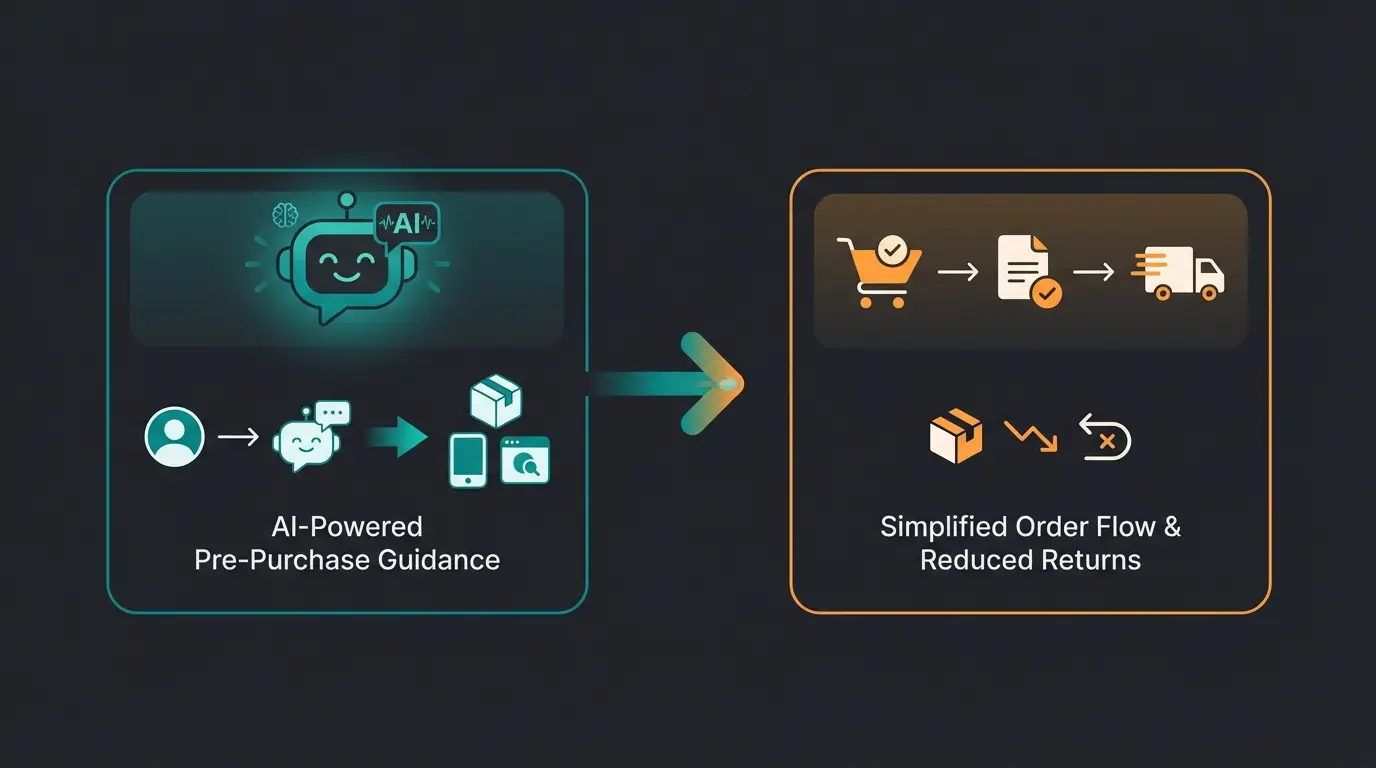
This is where the modern approach comes into play: AI Product Consultation. Imagine placing an AI advisor before the checkout process.
Scenario: A customer searches your shop for "running shoes."
- Without AI: They click through 50 products, feel overwhelmed, randomly buy Model A. Model A doesn't fit → Return → Work in Billbee.
- With AI: A chatbot or quiz asks: "Where do you run? (Asphalt/Trail)", "What's your arch type?" The AI recommends Model B. Customer buys Model B. Model B fits → No return → Maximum efficiency in Billbee.
The Synergy: The Modern E-Commerce Stack
To succeed in 2026, you must connect frontend and backend operations seamlessly.
| Phase | Tool Category | Example Tool | Function | Benefit for Billbee Users |
|---|---|---|---|---|
| 1. Pre-Sales | AI Consultation | Qualimero AI | Advice, Selection Help | Reduces returns, increases AOV |
| 2. Transaction | Shop System | Shopify / WooCommerce | Storefront, Checkout | Delivers the data foundation |
| 3. Post-Sales | WaWi | Billbee | Fulfillment, Invoicing | Efficient processing |
| 4. Service | Helpdesk | Replyco (included in Billbee) | Customer Questions | Post-purchase satisfaction |
Strategic Advantage: By using AI to increase the quality of orders (fewer wrong purchases), you relieve your Billbee system from the most expensive of all tasks: returns management. You scale revenue without linearly scaling operational headaches.
Most users only use 20% of Billbee's capabilities by ignoring the Rule Engine
Fashion e-commerce sees return rates up to 30%, creating massive backend work
Studies show up to 85% of returns stem from wrong product selection pre-purchase
Discover how AI product consultation reduces wrong purchases before they ever reach your Billbee dashboard. Guide customers to the right product the first time.
Try AI Consultation FreeBillbee Experiences: User Reviews and Real Feedback
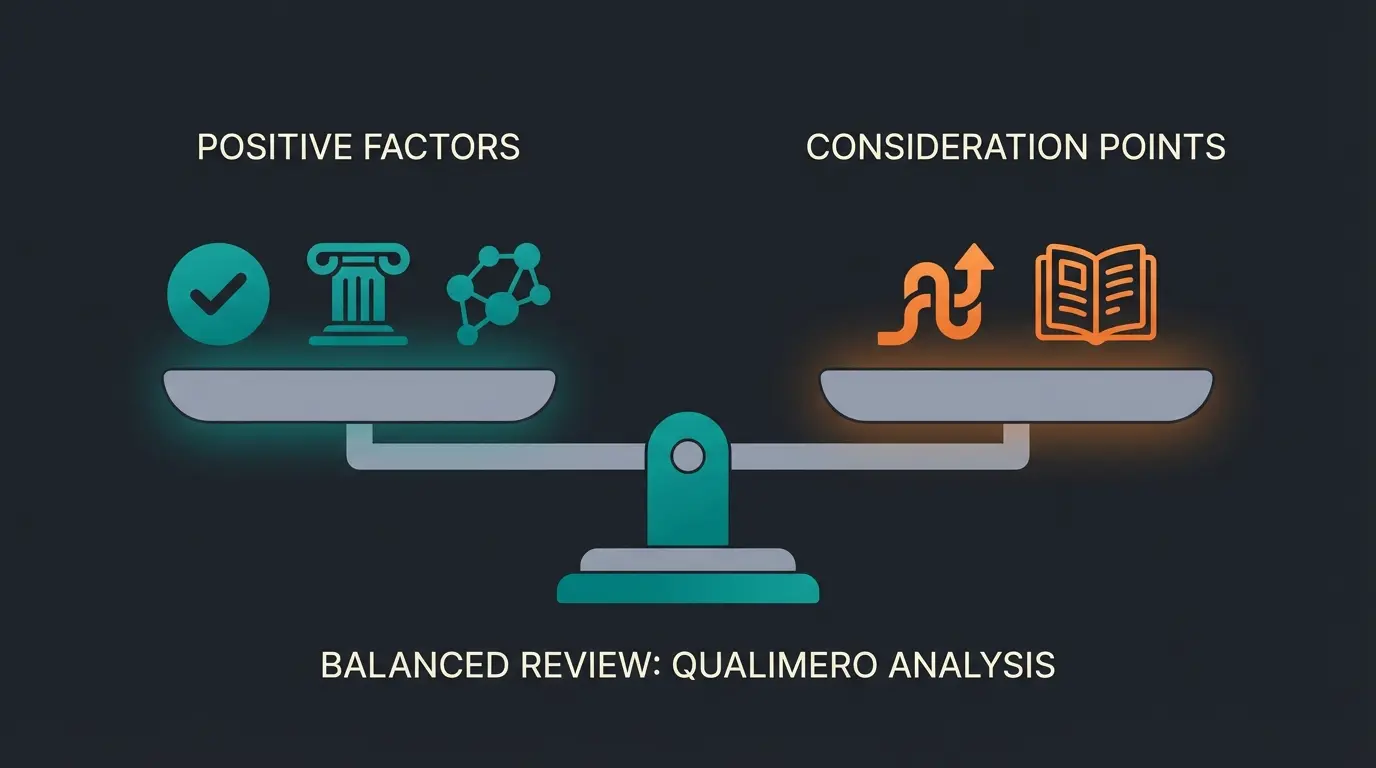
After analyzing hundreds of user reviews on Trustpilot, OMR Reviews, and forums, a clear picture emerges regarding Billbee experiences from actual merchants.
What Users Love (Pros)
- Stability: "It just works." Billbee is considered extremely reliable. Outages are rare, as confirmed by Trustpilot reviews
- Usability: Compared to JTL Wawi (which often requires its own server and Windows), Billbee is immediately ready in the browser according to OMR Reviews
- Support: Email support is often praised as fast and competent, especially compared to faceless large corporations
- Integration Variety: Whether niche marketplace or major shop platform, Billbee usually already has a connector available
What Users Criticize (Cons)
- No "Real" Accounting: Billbee is not accounting software. It prepares data, but you absolutely need an external tool like QuickBooks, Xero, or an accountant
- DATEV Complexity: For German merchants, export to DATEV is possible but often challenging. There's manual export (CSV) and the paid "DATEV Booking Data Service" (interface). The latter requires clean setup of tax codes, or the tax office will complain, as explained by Bayfox.de
- UI/UX: The interface is functional but appears somewhat "dated" and text-heavy in places. New employees need a certain onboarding period to understand menu structures, as noted on Shopify forums
- Price Increases: The adjustment of order packages was perceived by some users as a hidden price increase, although the Growth package does offer more value according to Y-Progress.de
Conclusion and Recommendation
Is Billbee still the right choice in 2026?
Yes, absolutely. For 95% of small and mid-sized online merchants, Billbee is the most logical choice. It's more flexible than large ERP systems and more powerful than the internal functions of Shopify or WooCommerce. The integration of VentoryOne and Replyco in the Growth package particularly makes it an "all-in-one" suite for operational excellence.
But: Automation doesn't end at the shipping label. Merchants who use Billbee have done their homework in the backend. But to truly scale and protect margins, you must optimize the frontend.
Our Strategic Recommendation
- Use Billbee for the "hard" work (invoices, inventory, shipping)—it excels here
- Use AI product consultation for the "smart" work (customer guidance, return prevention)—this is the gap Billbee cannot fill
- Only this combination creates a shop that isn't just efficiently managed, but also grows profitably
The merchants who will dominate 2026 aren't those with the fastest shipping labels—they're those who prevent wrong orders from happening in the first place. As eBakery notes, the comparison between Billbee and JTL often comes down to complexity needs—but neither solves the pre-purchase problem.
FAQ: Common Questions About Billbee
No, Billbee costs a minimum of approximately $10 per month (base fee). However, there is a 30-day free trial where all features can be used without restriction. The pay-as-you-grow model means you only pay for what you use, scaling with your order volume.
For pure online merchants, often yes. JTL is stronger if you also have brick-and-mortar retail locations (POS) or need extremely complex warehouse management. Billbee is leaner, cloud-based, and faster to set up—ideal for merchants who prioritize agility over enterprise features.
Yes. Billbee creates invoices but doesn't handle balance sheets or sales tax filings. You can connect Billbee with accounting software like QuickBooks, Xero, or Lexoffice (for German merchants) to automatically transfer receipts and transaction data, as explained by BuchhaltungsButler.
Excellently. The Shopify integration is one of the best-maintained connections. Orders, inventory levels, and tracking data are reliably synchronized. Many merchants consider it the gold standard for Shopify order management.
Starting at 200 orders monthly, the Growth package automatically includes VentoryOne (warehouse management worth ~$100/month) and Replyco (helpdesk software) at no additional cost. This bundle makes Billbee one of the best value propositions in the market for scaling merchants.
Don't just automate your shipping labels—automate your sales advice too. See how AI product consultation works alongside tools like Billbee to prevent returns before they happen.
Start Your Free Trial