
From Warehouse Chaos to Intelligent Customer Consultation
Imagine this scenario: A customer calls or messages your chatbot. They want to know if the e-bike in 'matte black' and frame size L is immediately available. In a traditional company, chaos ensues. The sales representative runs to the warehouse, calls the logistics department, or stares at an Excel spreadsheet that was last updated three days ago. The result? Long wait times, frustrated customers, and in the worst case, a lost sale because the information was 'not available.'
In the modern retail world, this scenario is an absolute no-go. Customers expect real-time answers. This is where the merchandise management system (WaWi) comes into play. But while most articles describe the WaWi as a pure back-office administrative tool, its role has fundamentally changed.
Today, the merchandise management system is no longer just the 'warehouse manager.' It is the data foundation for your artificial intelligence and your active sales operations. It is the brain that tells your AI sales consultant: 'The black bike is sold out, but the dark gray model is technically identical, in stock, and even 50 euros cheaper – suggest that to the customer!'
In this comprehensive guide, you'll learn not only how to optimize your warehouse processes but how to transform your merchandise management system into a genuine competitive advantage that elevates your Customer Experience (CX) to a new level.
What Is a Merchandise Management System? (Definition)
A merchandise management system (abbreviated WaWi or WWS in German) is a software solution that maps, controls, and monitors all material goods flows within a company. It is the digital representation of the physical reality in your warehouse and supply chain.
The Classic Definition
At its core, the WaWi answers these questions at any point in time:
- What do we have? (Item data)
- How much do we have? (Inventory data)
- Where is it located? (Storage location)
- When do we need restocking? (Reorder point)
It covers the complete cycle: Demand determination → Procurement → Goods receipt → Storage → Sales → Goods issue → Shipping.
The Modern Definition: Single Source of Truth
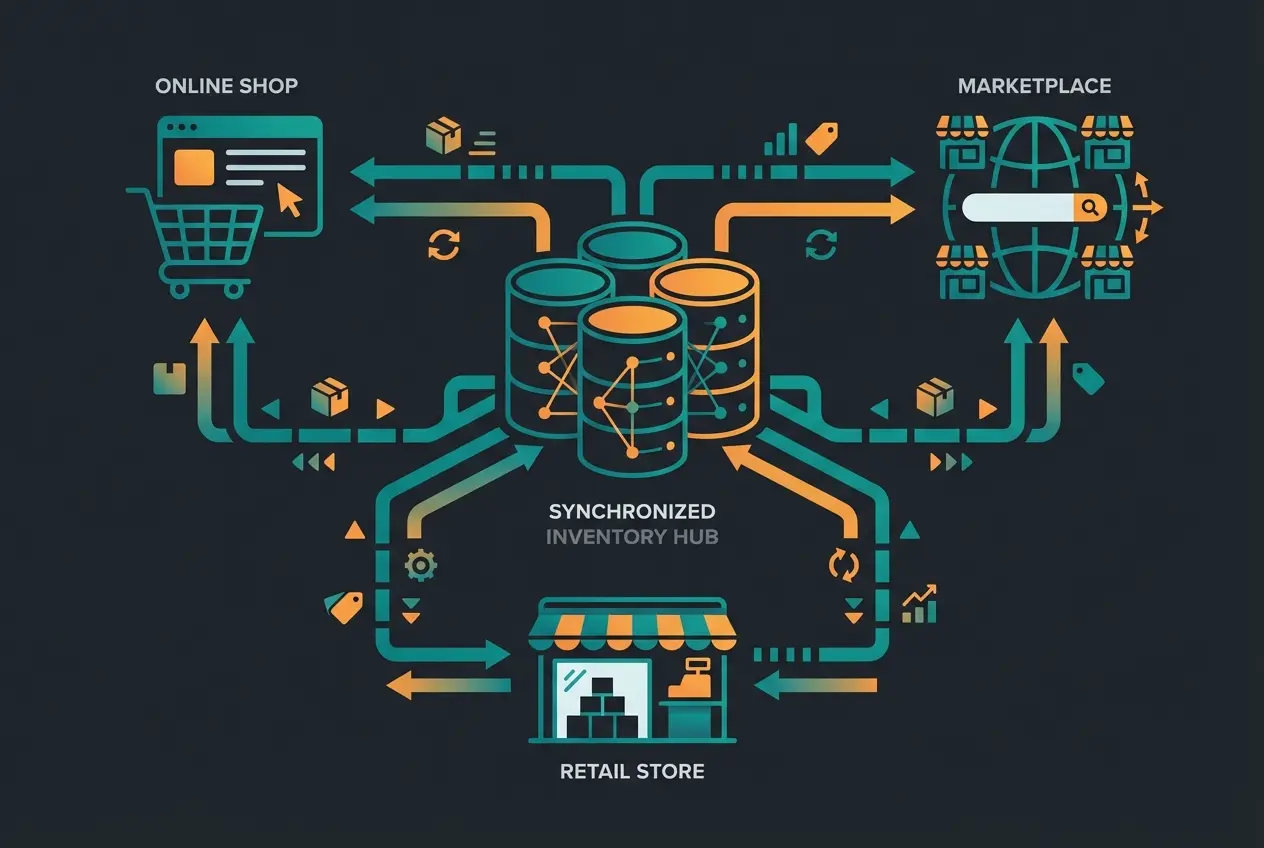
In an era where companies sell through multiple channels (omnichannel: online shop, marketplaces like Amazon/eBay, brick-and-mortar stores, social commerce), the classic definition is no longer sufficient.
The modern merchandise management system is the 'Single Source of Truth' (the only source of reliable data). If your online shop displays 'Available' but the warehouse is empty, you lose customer trust. The WaWi synchronizes this data in real-time across all channels. More importantly: it delivers the structured data that modern AI tools need to predict trends or automatically advise customers. According to Omniful, AI-powered inventory systems are becoming essential for competitive retail operations.
Essential Functions of a WaWi System
A capable merchandise management system is built in a modular fashion. To fully address the merchandise management system functions, let's examine the four central pillars and a new, fifth pillar that is often overlooked.
1. Purchasing and Procurement
The process begins before the goods even arrive at your facility.
- Supplier Management: Administration of contact data, terms, and delivery times.
- Order Suggestions: The system recognizes when a reorder point is reached and automatically generates order proposals.
- Price Inquiries: Automated comparison of purchase prices from various suppliers.
2. Warehousing and Logistics
The heart of the system. This is where efficiency is determined.
- Inventory Management: Real-time tracking of quantities per item and variant (size, color).
- Storage Location Management: Chaotic warehousing (system assigns available space) vs. fixed location systems.
- Inventory Counting: Support for annual or perpetual inventory (often via scanner/app).
- Batch and Serial Number Tracking: Essential for recall actions or warranty cases.
3. Sales and Order Processing
This is where revenue is generated and documented.
- Order Entry: Manual or automatic via shop interface.
- Quote Creation: Conversion of quotes to orders with a single click.
- Invoicing: Creation of delivery notes and invoices (including e-invoices starting 2025).
- Returns Management: Processing of returns and credit notes.
4. Goods Issue and Shipping
- Picking: Creation of pick lists (route optimization in the warehouse).
- Shipping Label Printing: Direct connection to carriers like DHL, UPS, or FedEx.
- Tracking: Transmission of tracking numbers to customers.
5. The New Pillar: Data Provision for AI and External Channels
This is the critical difference from systems of 10 years ago.
- API-First Approach: The WaWi must not only store data but actively 'push' it.
- Product Data Enrichment: Storage of attributes (material, care instructions, fit) necessary for AI consultation.
- Real-Time Sync: Millisecond-accurate transmission of inventory levels to AI chatbots, ensuring they don't recommend unavailable products.
Analyze sales data and trends to forecast inventory needs
Generate purchase orders and manage supplier relationships
Receive, inspect, and book incoming inventory
Store, organize, and track inventory locations
Pick, pack, and prepare orders for shipment
Generate labels, ship products, provide tracking
Why Is a Merchandise Management System Indispensable Today?
The importance of merchandise management has evolved from a mere necessity to a strategic lever. Those who cut corners here will pay the price elsewhere.
Merchandise Management Benefits at a Glance
- Prevention of costly out-of-stock situations
- Efficiency gains through automation and error reduction
- Legal compliance with accounting standards (GoBD in Germany)
- E-invoice readiness for 2025 mandate
- Enhanced customer experience through data transparency
1. Avoiding Out-of-Stock Costs
Nothing is more expensive than an empty shelf. According to Slimstock, retailers lose massive revenue through out-of-stock situations – not just the current purchase, but often the customer forever.
- The Problem: Without a WaWi, you order based on gut feeling.
- The Solution: The WaWi analyzes sales velocities and seasonal trends (e.g., 'Holiday shopping starts in October') and warns you in time.
2. Efficiency Gains and Error Reduction
Manual lists are error-prone. A typo in the Excel spreadsheet ('100' instead of '10') can tie up thousands of dollars or cause delivery bottlenecks.
- Automation: Barcode scanners and automatic bookings eliminate the 'human factor' in data entry.
- Time Savings: Employees spend less time searching and more time on value-adding activities.
3. Legal Compliance and GoBD
In Germany, tax-relevant data must be tamper-proof, traceable, and available at all times (GoBD regulations). A certified merchandise management system automatically ensures this compliance. Excel spreadsheets are not permissible for this purpose.
4. The E-Invoice Mandate Starting 2025
A current and critical point: Starting January 1, 2025, the e-invoice mandate applies to B2B transactions in Germany.
- What does this mean? Paper invoices or simple PDFs are no longer sufficient. Invoices must be in a structured electronic format (e.g., XRechnung, ZUGFeRD) that complies with the EN 16931 standard.
- The Consequence: Your WaWi must be capable of receiving, processing, and ideally sending these formats. According to IHK, anyone still relying on outdated software risks massive problems in business transactions and input tax deductions starting 2025.
The German Federal Ministry of Finance has published detailed guidelines on these new requirements that every business should review.
5. Customer Experience Through Data Sovereignty
This is where your differentiation potential lies. Customers today expect transparency.
- 'When will my order arrive?'
- 'Is this item available in the store?'
Only an integrated WaWi can answer these questions precisely. Incorrect inventory displays in the online shop are one of the main reasons for returns and negative reviews. As InventoryPath notes, real-time inventory accuracy is crucial for customer satisfaction in omnichannel retail.
Average annual revenue loss from out-of-stock situations
Customers who won't return after stockout disappointment
Decrease in inventory errors with automated WaWi systems
WaWi vs. ERP: The Difference Simply Explained
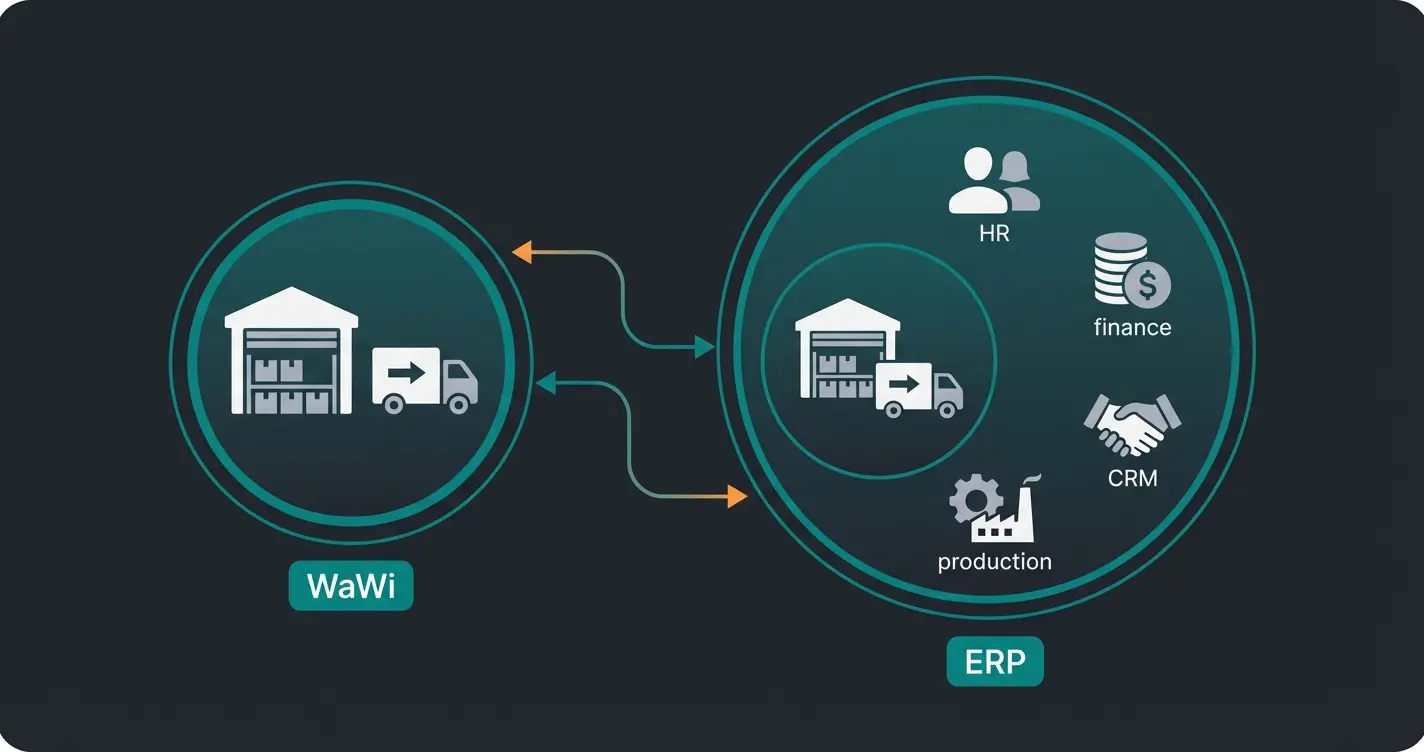
During research, many encounter the question: What is the difference between WaWi and ERP? The terms are often used interchangeably but are not identical.
| Feature | Merchandise Management System (WaWi) | Enterprise Resource Planning (ERP) |
|---|---|---|
| Focus | Material flow & goods movement (Physical) | All company resources (Holistic) |
| Core Areas | Purchasing, Warehousing, Sales, Shipping | WaWi + Financial Accounting, HR, Controlling, Production, CRM |
| Target Group | Retail, E-Commerce, Logistics | All industries (including services, manufacturing) |
| Complexity | Medium to High (focused) | Very High (comprehensive) |
| Integration | Often integrated as a module in an ERP | Usually includes a WaWi module |
Conclusion: Every ERP for retail companies includes WaWi functionality. But not every WaWi is a full-fledged ERP (it often lacks payroll accounting or complex controlling). According to Haufe X360, CSB, and Faveo, the integration between these systems continues to evolve.
For startups, a pure WaWi with an interface to accounting software is often sufficient. Above a certain size, switching to an ERP makes sense to avoid data silos between warehouse and accounting.
Discover how AI-powered product consultation can turn your merchandise management data into personalized customer recommendations that drive conversions.
Start Your Free TrialThe Next Level: Merchandise Management and AI-Powered Consultation
This is the aspect that most standard guides overlook. We are in the transition from administrative merchandise management to advisory merchandise management.
The Problem: The 'Silent' Warehouse
Traditionally, WaWi data is passive. It sits in a database waiting for a human to retrieve it. A customer in the online shop might see 'Out of Stock,' but the system offers no intelligent solution.
The Solution: WaWi as the 'Brain' for AI Consultants
Through the integration of Artificial Intelligence (AI) and Large Language Models (LLMs), we can make WaWi data 'speak.' The AI acts as an intermediary between the customer and your inventory.
Scenario: The Intelligent Upsell
A customer is searching in the shop for a specific outdoor tent.
- Customer: 'I need the 'Everest Pro' tent for my trip next week.'
- AI Check: The AI queries the WaWi in real-time via API.
- WaWi Response: 'Stock: 0. Next delivery: in 3 weeks.'
- AI Action (Old): 'Sorry, the product is sold out.' (Customer goes to Amazon).
- AI Action (New): The AI analyzes the attributes in the WaWi. It sees: The 'Alpine X' tent has similar waterproof ratings, is suitable for the same number of people, and is immediately available.
- AI Response to Customer: 'The Everest Pro unfortunately won't be back for 3 weeks. But for your trip next week, I have an alternative: The Alpine X is technically almost identical, weighs 200g less, and is available now. Would you like me to show it to you?'
Traditional FAQ Bot vs. WaWi-Connected AI Consultant
| Feature | Standard FAQ Bot | AI Product Consultant (WaWi-Connected) |
|---|---|---|
| Data Source | Static text snippets ('We ship with DHL') | Real-time data from the WaWi |
| Stock Awareness | Doesn't know what's in stock | Checks availability in milliseconds |
| Product Knowledge | Limited to keywords | Understands attributes & relationships (cross-selling) |
| Goal | Reduce support tickets | Active sales & revenue growth |
| Out-of-Stock Response | Dead end ('Not available') | Solution-oriented (recommends alternatives) |
Why Data Quality Is Decisive Here
AI is only as smart as the data it receives. If your WaWi says 'Stock: 5' but the warehouse is empty (inventory inaccuracy), the AI recommends a product you can't deliver. This leads to maximum customer disappointment.
According to UMU, AI can improve inventory accuracy, but it first needs a clean foundation. A modern WaWi forces you into clean processes, which in turn are the prerequisite for any AI strategy.
Paper lists, clipboards, calculators. Data isolated & slow. High error rate. No transparency.
Desktop PCs, barcode scanners, servers. Processes automated. Reporting & admin focus on efficiency.
Data drives active sales. Real-time AI consulting. Personalized CX. Cloud-connected intelligence.
Selection Criteria: What to Consider During Implementation
The market for merchandise management systems is enormous. From entry-level solutions like JTL or Weclapp to enterprise systems like SAP or Microsoft Dynamics. What matters most?
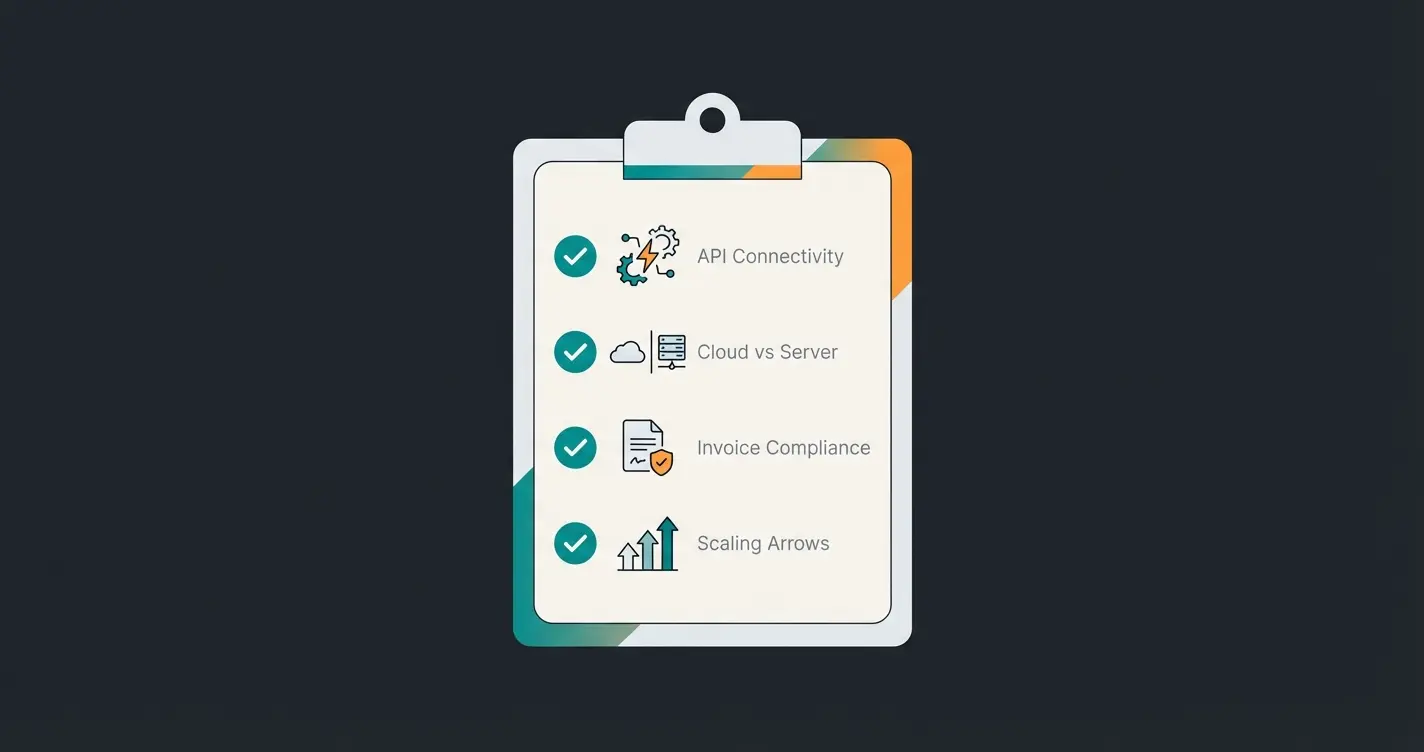
1. Interfaces (API-First)
The most important criterion for the future. Does the system have a modern REST API?
- Can you seamlessly connect your shop (Shopify, Shopware, WooCommerce)?
- Can external AI tools access the product data?
- Are there connections to marketplaces (Amazon, eBay)?
2. Cloud vs. On-Premise
- Cloud (SaaS): Monthly subscription, access from anywhere, automatic updates, no server maintenance. Ideal for SMBs and startups that want to stay flexible. According to Gründer.de, cloud solutions are increasingly preferred by growing businesses.
- On-Premise: License purchase, installation on own servers. Full data control but high IT overhead. Often only sensible for very large corporations or special security requirements.
3. E-Invoice Readiness (EN 16931)
As mentioned above: Check now whether the provider guarantees that the system can receive and process e-invoices (XRechnung/ZUGFeRD) starting January 1, 2025. Get it in writing. Many older on-premise solutions will fail here or require expensive updates. Markt und Mittelstand provides additional guidance on preparing for these requirements.
4. Scalability
Does the system grow with you? If you have 100 orders per day today and 1,000 next year – can the WaWi handle it? Watch for transaction limits or user restrictions.
Practical Checklist: Is Your Data Foundation AI-Ready?
Before you think about AI tools, you need to do your homework in the WaWi. Use this checklist:
- Structured Attributes: Are colors, sizes, and materials maintained in separate fields (e.g., Field 'Color': 'Blue') or hidden only in the description free text? AI needs structure.
- EAN/GTIN Maintenance: Does every product have a unique number? This is essential for identification across marketplaces.
- Real-Time Inventory: Is stock updated immediately when a sale occurs, or only once at night? For AI consultation, 'real-time' is mandatory.
- Supplier Data: Are replenishment lead times stored? The AI needs to know when an item will be available again to manage customer expectations.
- Image Assignment: Are product images cleanly linked to variants? (The red image with the red variant).
- E-Invoice Reception: Is an email inbox or interface set up to import XML invoices directly into the WaWi starting 2025?
Frequently Asked Questions About Merchandise Management
A merchandise management system (WaWi) focuses specifically on material flow and goods movement – purchasing, warehousing, sales, and shipping. An ERP (Enterprise Resource Planning) system is more comprehensive, covering the WaWi functions plus financial accounting, HR, controlling, production planning, and CRM. Think of the WaWi as a specialized module that's often integrated into larger ERP systems.
Costs vary significantly based on your needs. Cloud-based (SaaS) solutions typically start at $50-200 per month for small businesses and can reach $1,000+ monthly for enterprise features. On-premise solutions require upfront license costs of $5,000-50,000+ plus ongoing maintenance. Consider Total Cost of Ownership (TCO) including implementation, training, and integration costs.
Starting January 1, 2025, B2B invoices in Germany must be in structured electronic formats (XRechnung, ZUGFeRD) complying with EN 16931. Paper invoices and simple PDFs won't suffice. Your WaWi must be able to receive, process, and ideally send these formats. Systems that can't handle e-invoices will cause compliance issues and problems with input tax deductions.
AI transforms passive inventory data into active sales intelligence. Instead of simply showing 'out of stock,' an AI-connected WaWi can analyze product attributes, suggest alternatives, predict demand patterns, automate reordering, and provide real-time product consultation to customers. This turns your inventory system from a cost center into a revenue driver.
AI requires structured, accurate data. Essential elements include: properly maintained product attributes in separate fields (not free text), accurate real-time inventory counts, complete EAN/GTIN numbers, stored supplier lead times, and correctly linked product images to variants. Without clean data, AI recommendations will be unreliable and damage customer trust.
Conclusion: From Warehouse Manager to Competitive Advantage
The merchandise management system has undergone a remarkable evolution. What began as a tool to prevent warehouse chaos is now the central nervous system of modern retail.
The implementation or replacement of a WaWi is not merely an IT project – it's a strategic decision.
- Short-term it secures your operational capability (e-invoice 2025, GoBD compliance).
- Medium-term it reduces costs through efficiency and error prevention.
- Long-term it is the foundation for the next stage of e-commerce: AI-powered, hyper-personalized customer consultation.
Companies that view their WaWi only as a 'necessary evil' for administration will fall behind in competition. But those who understand their merchandise management as a data source for intelligent services will not only work more efficiently but offer their customers a shopping experience that goes far beyond simply 'Add to Cart.'
Start now: Review your data quality, make your system ready for 2025, and open the doors to the AI future of your business.

See how AI-powered product consultation uses your WaWi data to deliver personalized recommendations, prevent out-of-stock frustrations, and boost conversions. Start your free trial today.
Get Started Free