
Why Pure Administration Won't Cut It in 2026
When you think about Amazon inventory management, what comes to mind first? Probably spreadsheets, stock levels, invoice numbers, and the constant battle against out-of-stock situations. That was the reality of the past decade. But we're now in 2026, and e-commerce has fundamentally transformed.
The days when an Amazon seller inventory management system was merely a passive backbone shuffling numbers in the background are over. In an era where Amazon's own algorithm—driven by AI assistants like Rufus—influences purchasing decisions through conversation, your inventory management system (WaWi) becomes a strategic weapon.
Why? Because the biggest threat to Amazon sellers today is no longer just competitive pricing—it's the return rate and dead capital (inventory that doesn't turn over). Merchants who use their inventory management only as a "stock database" are falling behind those who deploy it as a data source for active, AI-powered sales consultation.
This article guides you through the landscape of Amazon FBA inventory management in 2026. We analyze not only the classic tools like JTL or Billbee but also show you the "Blue Ocean" strategy: How to use your stock management to better advise customers, reduce returns, and save your margins. Companies achieving success with AI product consultation are already seeing dramatic improvements in their conversion metrics.
The Foundation: Why You Need Dedicated Amazon WaWi
Before we discuss AI and future possibilities, we need to clarify the basics. Many beginners still try to run their business through Amazon Seller Central and Excel spreadsheets. In 2026, that's a guaranteed path to chaos.
A professional Amazon inventory management system solves three critical problems that Seller Central alone cannot handle:
The Overselling Risk
If you sell not only on Amazon but perhaps also on eBay, Kaufland, or your own Shopify store, real-time inventory synchronization is essential for survival. Nothing leads to Amazon account suspension faster than selling an item that's no longer physically in your warehouse because it just sold on eBay. A WaWi automatically synchronizes inventory across all channels.
Accounting Automation and Invoicing
Amazon demands lightning-fast invoicing. Manual creation is error-prone and time-intensive. Systems like Billbee or JTL automate the process completely:
- Invoice creation at the moment of shipping
- Automatic upload to Amazon (VCS - VAT Calculation Service)
- Transfer to your tax advisor (DATEV export)
- Multi-country tax compliance for EU-wide selling
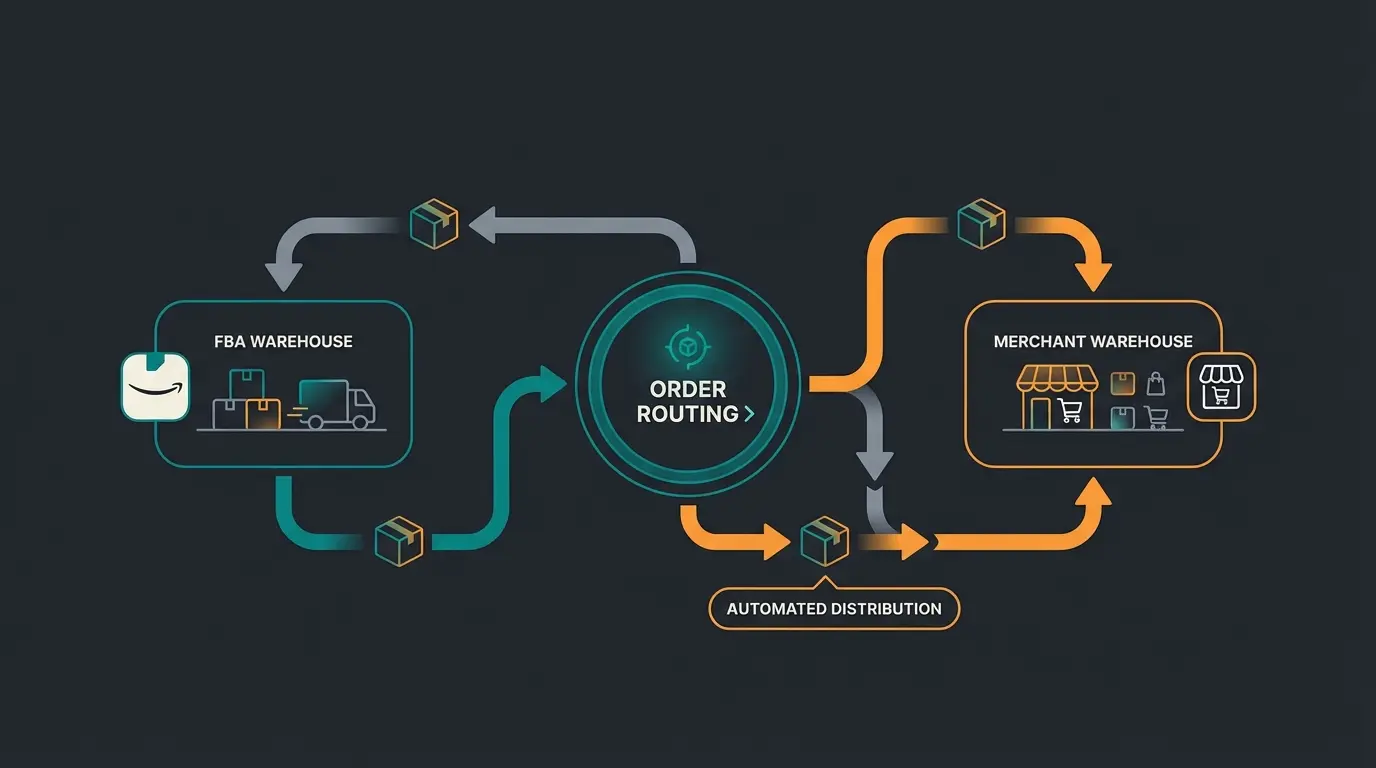
FBA and FBM Hybrid Strategies
Many successful merchants use a mixed strategy: fast-moving items through Amazon FBA (Fulfillment by Amazon), long-tail products or bulky goods through FBM (Fulfillment by Merchant). A good Amazon fulfillment software automatically recognizes which warehouse is responsible for which order and routes the order accordingly—without your intervention. According to Billbee, this automation alone saves sellers up to 15 hours per week on order processing.
Market Leaders 2026: A Quick Overview
The market for inventory management systems is consolidated, but the nuances matter. Based on current data and user reviews from OMR Reviews and other platforms, here's the comparison of the "Big 3" for Amazon sellers.
| Feature | Billbee | JTL-Wawi | Xentral |
|---|---|---|---|
| Target Audience | Beginners, D2C brands, Solopreneurs | Scaling merchants, Pros, Tech-savvy users | Growth companies, Funded startups |
| Pricing Model | Pay-per-order (from €9 base fee) | Edition model (Start/Advanced/Pro/Enterprise) | Monthly flat rate (Starter/Business/Pro) |
| Setup Effort | Low (cloud-based, plug & play) | High (server installation or hosting required) | Medium (cloud ERP, but complex processes) |
| Strength | Simplicity, Multichannel focus | Powerful ecosystem (WMS, POS), Customizability | Process automation, Scalability |
| Amazon Integration | Very good (FBA/FBM, VCS) | Excellent (own repricer, deep integration) | Strong (focus on automation) |
| Special Feature | No contract binding, transparent pricing | Community-driven, but new pricing since 2024/25 | Lean ERP approach, most modern UI |
Our Assessment for 2026
For Starters: Billbee remains the undisputed champion for getting started. It's cost-effective and covers all Amazon basics without creating technical barriers. The entry threshold is minimal, making it ideal for sellers processing up to approximately 500 orders per month.
For Scalers: JTL has caused some frustration among users due to pricing structure changes, but remains the standard for merchants with high volume and complex logistics due to its enormous feature set (WMS for own warehouses). The community support and ecosystem are unmatched.
For Process Optimizers: Xentral positions itself strongly in process automation ("Lean ERP") and is ideal for teams that are growing quickly and want to minimize administrative tasks. Their modern UI and API-first approach makes them particularly attractive for tech-forward operations.
The Missing Link: Inventory Management vs. Optimization
Here is where 2026 separates the wheat from the chaff. The tools mentioned above are excellent at managing what you have. They tell you: "You have 5 units of Product A left." But traditionally, they don't help you actively sell those units or prevent returns.
The problem in classic Amazon inventory management is data isolation. Your inventory is a static number in the backend. Your customer is a dynamic variable in the frontend. These two worlds rarely communicate effectively.
The New Model: Smart Inventory and Consultative Selling
Imagine your inventory management wasn't just an archive, but an active advisor. Through the integration of AI tools (like Amazon Rufus or external chatbots), inventory data can be used to guide customer decisions. This is where solutions like AI employee Kira demonstrate the power of connecting inventory intelligence with customer interaction.
The Results of Smart Inventory
- The customer buys the available product rather than waiting or going elsewhere
- A long-tail item (old stock incurring storage fees) gets sold
- The probability of a return drops because the consultation ('for wide feet') was precise
- Your IPI score improves as inventory turns over faster
- Customer satisfaction increases, leading to better reviews and repeat purchases
System reports: '50 units of Blue Winter Jacket available. Sales sluggish, 90+ days in warehouse.'
Customer asks: 'I need a warm jacket for ski vacation, budget €150.'
AI checks inventory. New collection costs €300, but Blue Winter Jacket (previous year model) costs €140 and meets all criteria.
AI suggests the available jacket: 'This jacket fits perfectly in your budget and ships immediately.'
Customer buys. WaWi updates inventory. AI learns: 'Blue Winter Jacket sells well to skiers.' Data feeds PPC campaigns.
How AI Consultation Saves Your Inventory Metrics
In the world of Amazon FBA inventory management, metrics equal money. Amazon measures you by the IPI (Inventory Performance Index). If this falls below the threshold (which stands at 400 in 2025/2026 according to Seller Labs and eFulfillment Service), Amazon limits your storage space and increases your fees.
Here's the direct connection between AI consultation and your hard inventory KPIs:
Return Reduction Equals Healthy Inventory
Every return is poison for your inventory management. The item is blocked for weeks, must be inspected, and is often no longer sellable as "new."
Fact: AI-powered consultation and chatbots can quadruple conversion rates and significantly reduce returns through precise answers, as research from HelloRep.ai demonstrates. When a customer knows before purchase whether the table wobbles or the jacket runs small (through AI analysis of reviews and product data), they order the right product. This massively relieves your logistics.
Businesses implementing AI product consultation report return rate reductions of 15-25% within the first quarter of deployment.
Moving Dead Stock Through Intelligent Recommendations
Classic WaWi systems mark items as "slow movers." An AI-powered strategy turns them into "recommendations." When your Amazon fulfillment software reports that Product B is causing high storage fees, an AI engine can prioritize this product in consultations, provided it fits the customer's needs. This transforms dead storage costs into liquidity.
AI consultation multiplies conversion compared to static FAQ pages
Pre-purchase validation through AI reduces returns by up to a quarter
Active AI recommendations clear slow-moving inventory faster
Automation eliminates manual order processing and customer queries
The Impact of Amazon Rufus and Project Amelia
Amazon itself is driving this development forward with powerful new AI tools:
Rufus: Amazon's AI shopping assistant answers customer questions based on product data and reviews. According to About Amazon, if your WaWi data (attributes, availability) is cleanly maintained, Rufus will recommend your products. This is crucial for visibility, as Rufus increasingly complements classic search. Products with complete attribute data see significantly higher recommendation rates.
Project Amelia: This AI assistant for sellers helps you identify inventory problems. As Data Automation reports, Amelia can tell you: "Your inventory for ASIN XYZ will last 10 more days, but demand is rising. Restock now." Use these tools actively in your WaWi strategy to stay ahead of stockouts and capitalize on demand spikes.
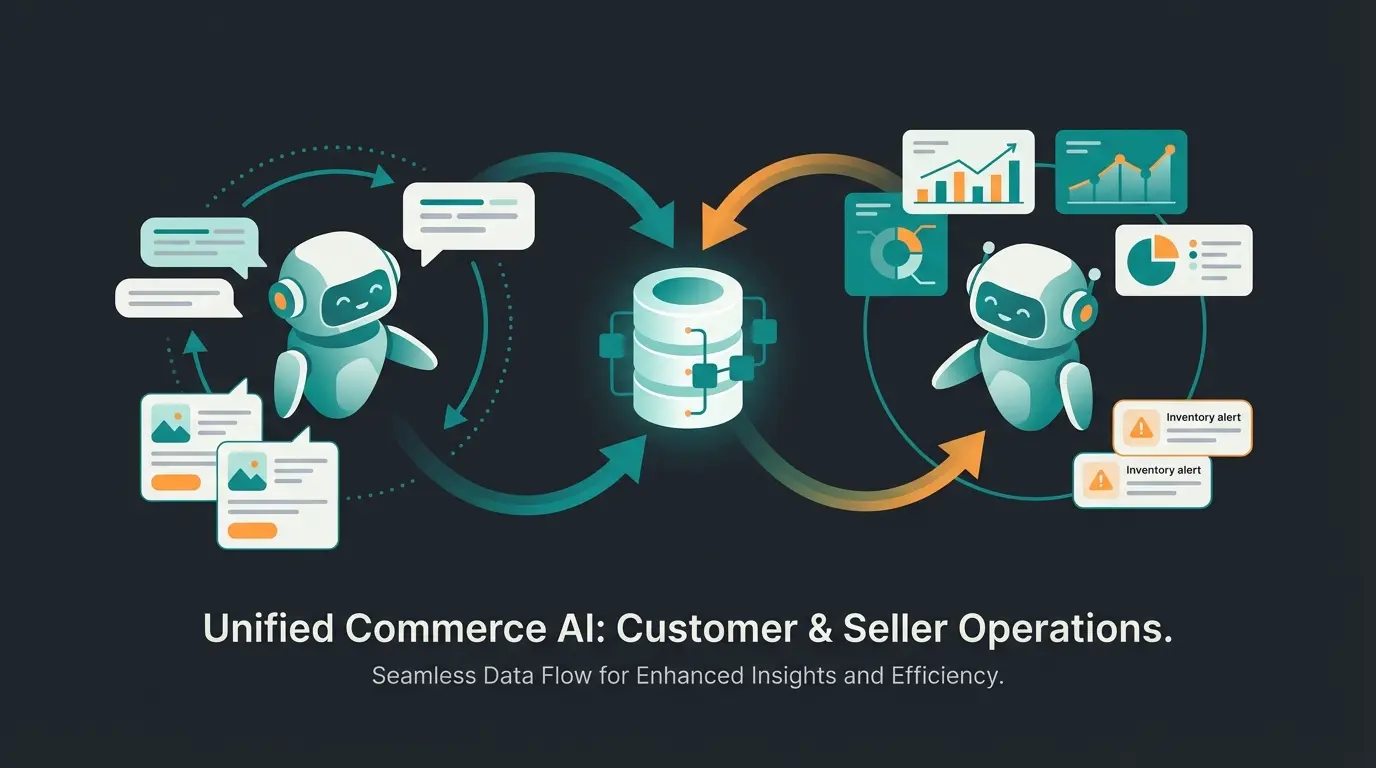
See how AI-powered product consultation connects your stock data with intelligent customer guidance to reduce returns and boost conversions.
Start Your Free TrialChecklist: What a Modern Amazon Stack Must Do
When evaluating a new Amazon seller inventory management system today or reviewing your existing setup, look for these features. It's no longer just about printing shipping labels.
1. Seamless SP-API Integration
The old MWS interface (Merchant Web Service) is history—deprecation was already final in 2023/2024 as confirmed by Infiplex and CedCommerce. Must-Have: Your system must be fully based on the new Selling Partner API (SP-API). Only then are real-time data transfers and modern features like Prime shipping by sellers error-free.
2. Real-Time Synchronization Under 5 Minutes
In a world of same-day delivery, inventory reconciliation every 2 hours is unacceptable. Requirement: As soon as a sale occurs on Shopify, the inventory on Amazon FBM must be reduced within minutes to avoid cancellations. Look for systems offering webhook-based instant sync rather than polling intervals.
3. AI-Readiness and Data Quality
Can your WaWi structure product data (PIM - Product Information Management) so that AI systems can read it? Data Fields: Detailed attributes (material, fit, occasion) are fuel for algorithms like Rufus. A mere SKU and price are no longer sufficient. Think about how an AI employee solution might use your product data to advise customers.
4. Returns Management Module
A modern system must not only process returns (print labels) but analyze them. Analysis: "Which item is being returned and why?" This data must flow back into the product description to close the loop. Pattern recognition in return reasons enables proactive listing optimization.
5. Multi-Warehouse Capability (FBA, FBM, 3PL)
Flexibility equals security. The system must be able to virtually separate inventory (e.g., "FBA inventory" vs. "own warehouse inventory") and automatically switch to self-fulfillment when FBA goes out-of-stock (switching). This redundancy prevents lost sales during FBA receiving delays.
- SP-API native integration (not MWS legacy)
- Sub-5-minute inventory sync across all channels
- Rich attribute support for AI consumption
- Return analytics with reason code tracking
- Virtual warehouse separation with automatic routing
- Accounting automation with multi-country tax support
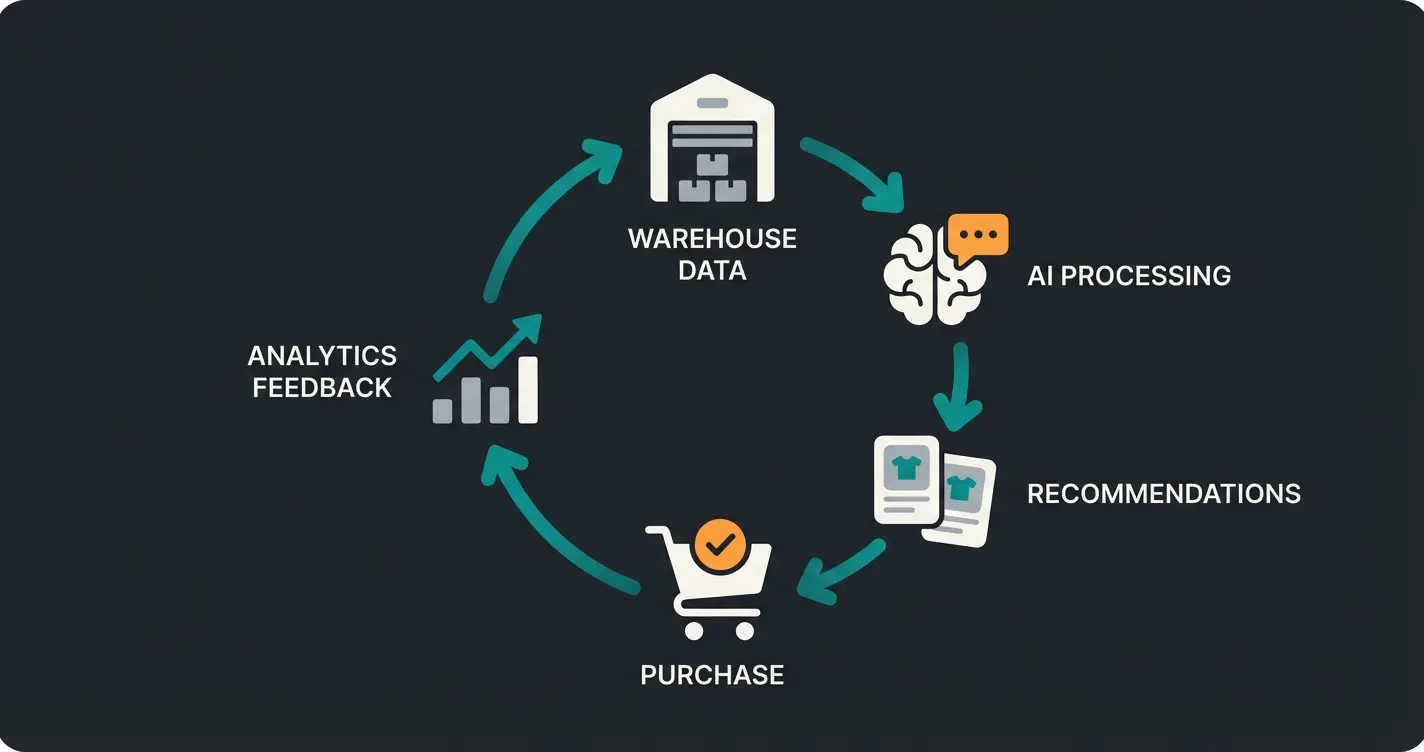
Strategic Deep-Dive: The Smart Inventory Cycle
To make the concept tangible, let's visualize the ideal process for 2026. It's a cycle, not a one-way street. This cycle transforms the Amazon inventory management from a cost center into a profit center.
The key insight is that every stage feeds the next. Your WaWi provides the data foundation, your AI consultant uses that data to make intelligent recommendations, the sale updates your inventory, and the feedback loop optimizes future forecasting and marketing. Companies like those using product consultation solution have perfected this cycle.
Costs and ROI: Is the Upgrade Worth It?
Many merchants shy away from switching or upgrading their systems. But the costs of inefficiency are higher than you might think.
Return Rate Cost Calculator Example
Let's calculate what a "dumb" inventory management system costs you—one that doesn't provide precise data for consultation. According to research from Emixa, the true cost of returns often exceeds what sellers estimate.
Assume you sell electronics articles:
- Average order value: €50
- Monthly orders: 1,000
- Return rate (without consultation): 15% (150 returns)
- Cost per return (shipping, inspection, value loss): approximately €12.50
Monthly cost of returns: €1,875
Scenario with AI-optimized WaWi & consultation:
- Return rate drops to 10% (through better fit/compatibility consultation)
- You save 50 returns x €12.50 = €625 per month
- Annual savings: €7,500 just from return reduction
- Additional revenue from higher conversion rates not even counted
Table: Traditional vs. AI-Enhanced Inventory Management
This comparison clearly illustrates why the shift to AI-enhanced systems represents such a competitive advantage:
| Feature | Traditional WaWi | AI-Enhanced WaWi |
|---|---|---|
| Stock Management | Excel sheets, static lists, periodic updates | Real-time sync, predictive restocking alerts |
| Customer Queries | FAQ page, manual email responses | Personalized AI advice based on live inventory |
| Return Handling | High rate, reactive processing | Pre-purchase validation, proactive prevention |
| Overstock Strategy | Manual discounts, hope-based selling | Active AI recommendation of slow movers |
| Dead Stock | Monthly reports, delayed action | Real-time alerts, automated promotion triggers |
| Customer Experience | Generic, one-size-fits-all | Personalized, inventory-aware consultation |
The businesses implementing AI chat solution have seen these differences translate directly into improved margins and customer satisfaction scores.
FAQ: Common Amazon Inventory Management Questions
For getting started (up to approximately 500 orders/month), Billbee is often the best choice. It's cost-effective, cloud-based, and perfectly covers invoicing and shipping labels. The entry barrier is minimal, and the pay-per-order model means you only pay for what you use. As you scale beyond 500 orders monthly, consider JTL for its powerful ecosystem or Xentral for its process automation capabilities.
No. Seller Central is a sales tool, not a management tool. It cannot create tax-compliant invoices for different countries, cannot synchronize inventory with eBay or other channels, and offers no real overview of your purchase prices and margins. For professional multi-channel selling, a dedicated WaWi is essential to prevent overselling and ensure compliance.
AI helps on two levels: Backend (Amelia) precisely predicts when you need to reorder based on seasonal trends and sales velocity, preventing out-of-stock situations. Frontend (Rufus/Chatbots) helps customers find the right product, which reduces return rates and keeps inventory healthy with a high sell-through rate. The combination transforms passive stock counting into active inventory optimization.
Amazon limits your storage space for the next quarter and charges penalty fees for overstock. A good WaWi helps you identify excess inventory early and, for example, start discount campaigns before the score falls. Maintaining an IPI above 400 ensures you have unlimited storage capacity and avoid the costly long-term storage fees that can devastate margins.
AI consultation analyzes product data, customer reviews, and real-time inventory to provide precise recommendations before purchase. When customers receive accurate guidance about sizing, compatibility, and features, they order the right product the first time. Studies show this pre-purchase validation can reduce returns by 15-25%, directly improving your inventory metrics and profitability.
Conclusion: The Future Belongs to Consultative Sellers
The era of pure "box pushers" on Amazon is coming to an end. In 2026, the winner is not the merchant who has the most goods in the warehouse, but the one who uses their Amazon inventory management most intelligently.
The integration of logistics data and sales consultation is the lever to survive in a saturated market. Tools like Billbee, JTL, and Xentral provide the technical foundation. Your task is to link this foundation with a strategy that takes the customer by the hand.
Companies leveraging AI lead generation alongside their inventory systems are seeing compound benefits—better data quality feeds better AI recommendations, which generate more qualified leads and sales.
Your Action Plan for 2026
- Audit your status quo: Are you only managing or already optimizing? Review your current return rate, IPI score, and dead stock percentage.
- Clean up your data: Ensure your WaWi contains attributes that an AI can use. Rich product data is the foundation of intelligent consultation.
- Test the new Amazon tools: Actively use Project Amelia in Seller Central for inventory analyses. Enable Rufus optimization for your listings.
- Implement AI consultation: Connect your inventory system with customer-facing AI to transform stock data into personalized recommendations.
- Measure and iterate: Track the impact on returns, conversion, and IPI score. Continuously optimize based on data.
The step from administration to consultation is significant, but it's the only way to secure long-term profitable margins in the Amazon cosmos. Businesses already implementing AI lead qualification principles to their e-commerce operations are proving this strategy works.
Discover how AI-powered inventory optimization can reduce your returns, clear dead stock, and boost your IPI score. Join the sellers who are winning in 2026.
Get Started Free