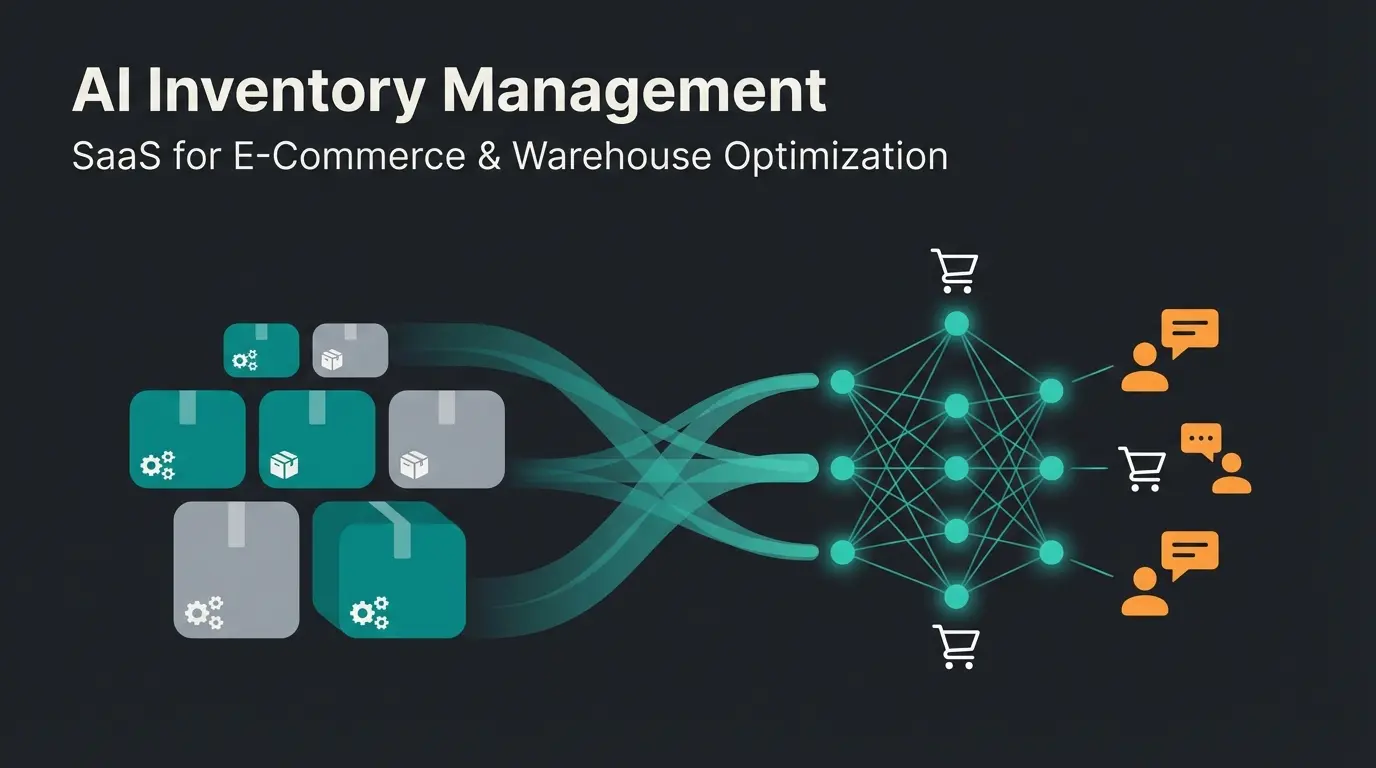
Introduction: The 'Amazon Effect' & Return Culture Crisis
The e-commerce market has become ruthless. Driven by the so-called 'Amazon Effect,' customers today expect not only delivery within 24 hours but also maximum transparency and generous return policies. However, this is precisely where many retailers face significant challenges: they optimize their logistics (how quickly does the package reach the customer?) while neglecting the quality of the order (is the customer ordering the right product?).
Germany leads the world in return rates. According to retourenforschung.de, fashion return rates of up to 50% are not uncommon. This creates massive strain on the order management system (OMS), which must now manage not only the outbound journey but an increasingly complex return process.
The thesis of this article is radical but necessary: A modern OMS cannot simply activate when the 'Buy' button is clicked. It must engage pre-click. Through the integration of AI-powered product consultation, the OMS transforms from a pure administrative tool into a profitability instrument that proactively prevents 'wrong' orders.
What is an Order Management System (OMS)?
At its core, an order management system (often referred to as OMS software) is the central nervous system of any retail business. It's the digital platform that manages the entire lifecycle of an order—from the moment of purchase decision through inventory management and shipping to delivery and potential returns.
Unlike an ERP (Enterprise Resource Planning) system, which often focuses on accounting and static processes, the OMS is designed for speed and agility. It acts as an intermediary between sales channels (Shopify, Amazon, brick-and-mortar retail) and fulfillment nodes (central warehouse, retail locations, dropshipping partners).
The Technical Definition
An OMS aggregates orders from various sources ('Capture'), processes them according to predefined business rules ('Orchestrate'), and assigns them to the optimal warehouse location ('Fulfill'). The core mission is delivering the right product, at the right time, to the right customer—with the highest possible margin.
Modern AI-powered customer service solutions integrate seamlessly with OMS platforms to provide real-time order status updates and proactive communication throughout the customer journey.
The Evolution: From Warehouse Manager to CX Architect
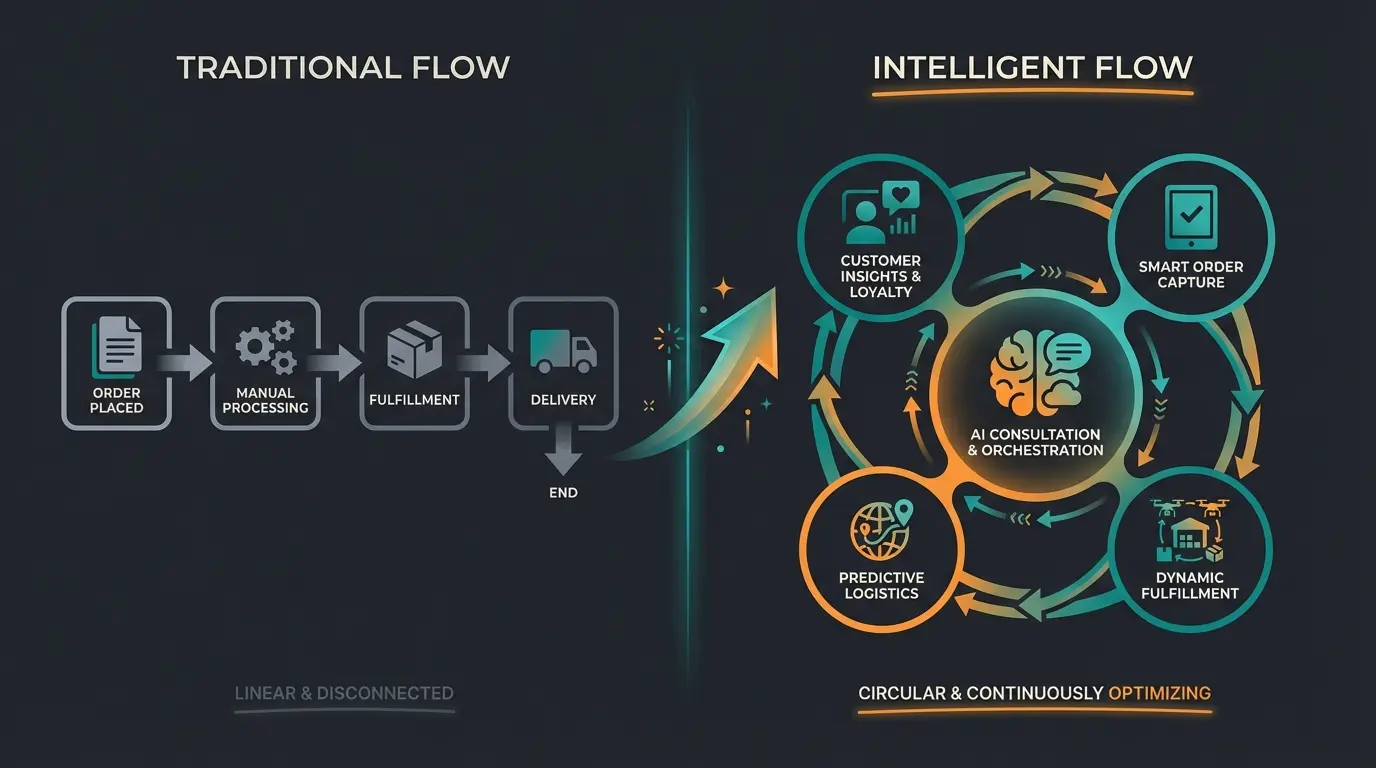
To understand why AI consultation represents the next logical step, it's worth examining the developmental stages of order management systems and how they've transformed over time.
Order management as an ERP module focused solely on inventory management. Siloed data meant online stores didn't know what physical stores had in stock.
Systems emerged that could bundle orders from eBay and proprietary shops. Often one-way only, leading to overselling issues.
Current standard with real-time visibility and complex routing logic. Still reactive—manages problems rather than preventing them.
Deep frontend integration with AI analysis of inventory data and customer preferences. Advises customers during browsing to prevent logistics issues.
Generation 1: The Monolithic ERP Era
In the early days, order management was simply a module within the ERP system. The focus was inventory management, but the disadvantage was significant: data silos meant the online shop often didn't know what inventory existed in physical retail locations. Changes were slow and expensive to implement.
Generation 2: Multi Channel Order Management
With the emergence of marketplaces, systems developed that could bundle orders from eBay and proprietary shops. The focus shifted to channel aggregation, but the disadvantage remained: these systems were often 'one-way' only. Inventory wasn't synchronized in real-time, leading to overselling scenarios.
Generation 3: Omnichannel & Distributed Order Management
This represents today's standard. The system knows everything in real-time and uses complex logic to intelligently distribute orders. The focus is on logistical efficiency and speed. However, the disadvantage is that it only reacts after the order is placed. It manages the problem (e.g., a return) rather than solving it proactively.
Generation 4: The Consultative OMS (The Future)
Here, the OMS integrates deeply into the frontend. Through AI analysis of inventory data and customer preferences, the customer is advised during browsing so that logistics problems never arise in the first place. The focus shifts to Order Creation Optimization.
| Feature | Traditional OMS (Gen 2/3) | Modern AI-OMS (Gen 4) |
|---|---|---|
| Starting Point | After checkout (Post-Click) | During search (Pre-Click) |
| Primary Goal | Fast delivery | Correct delivery (First-Time-Right) |
| AI Deployment | Backend (demand forecasting) | Frontend (customer consultation) |
| Returns | Efficiently processed | Proactively prevented |
| Customer View | Recipient of goods | Partner in selection process |
Key Features of a Modern OMS (Must-Haves for Success)
When evaluating OMS software today, you cannot settle for generic standards. The market has specific requirements for compliance and logistics that vary by region, making proper feature evaluation critical for success.
Distributed Order Management (DOM)
This is the heart of modern systems. Distributed order management means the system doesn't simply send every order to the main warehouse. Instead, an algorithm ('Order Routing Logic') decides based on parameters such as:
- Geographic Proximity: 'The product is in the Munich store, the customer lives in Starnberg. Ship from store to save time and CO2.'
- Split Avoidance: 'Try to send all three items from one warehouse instead of shipping three separate packages.'
- Inventory Prioritization: 'Sell first from the warehouse that's scheduled for closure.'
Omnichannel Fulfillment & Inventory Visibility
Nothing frustrates customers more than an order that gets canceled later ('Out of Stock'). An omnichannel fulfillment system synchronizes inventory in real-time (or near-real-time) across all channels.
Example Scenario: A customer buys the last red sweater in a Berlin store. The OMS must set this inventory to '0' on Amazon, Zalando, and the proprietary Shopify store within seconds. This level of synchronization prevents overselling and maintains customer trust.
Regional Compliance: The Underestimated Factor
This is where many international providers fail. An OMS for specific markets must automate critical bureaucratic hurdles that vary by region.
E-Invoicing Mandates (Starting January 1, 2025)
According to the IHK (German Chamber of Commerce), receiving e-invoices in B2B transactions becomes mandatory in Germany starting January 1, 2025. PDFs or paper invoices will no longer suffice to secure input tax deduction when business partners send e-invoices.
The Requirement: The OMS must generate invoice data not just as PDFs but as structured datasets in XRechnung (XML) or ZUGFeRD 2.x (hybrid format: PDF + XML) formats. According to Seeburger, compliance with the EN 16931 standard is essential.
The Risk: Many US-based systems only have simple PDF generators. Without native support for the EN 16931 standard, massive manual efforts in accounting become unavoidable.
Packaging Law (VerpackG) & LUCID Registration
According to ZSVR (Central Packaging Register), every retailer who ships goods to end consumers in Germany must license their packaging quantities and register with the LUCID Register.
The OMS Solution: An intelligent OMS stores the weight and material type (cardboard, plastic) of each shipping box and filling material. Automation: At month-end, the OMS generates a report: 'In January, 450kg of cardboard and 20kg of plastic were shipped.' According to epr-one.com, this saves hours of manual Excel work and protects against warnings that can amount to up to €200,000.
The Gamechanger: From Admin AI to Consultative AI
Most market analyses (e.g., from McKinsey or according to Flevy) discuss AI in order management primarily in terms of 'Predictive Analytics'—forecasting how much merchandise needs to be ordered to avoid out-of-stock situations. While important, this doesn't solve the returns problem.
Here lies your strategic opportunity: Position your OMS not as an 'administrator' but as a 'consultant.' This shift represents the evolution from administrative AI (backend operations) to consultative AI (frontend customer engagement).
Why Backend AI Is No Longer Sufficient
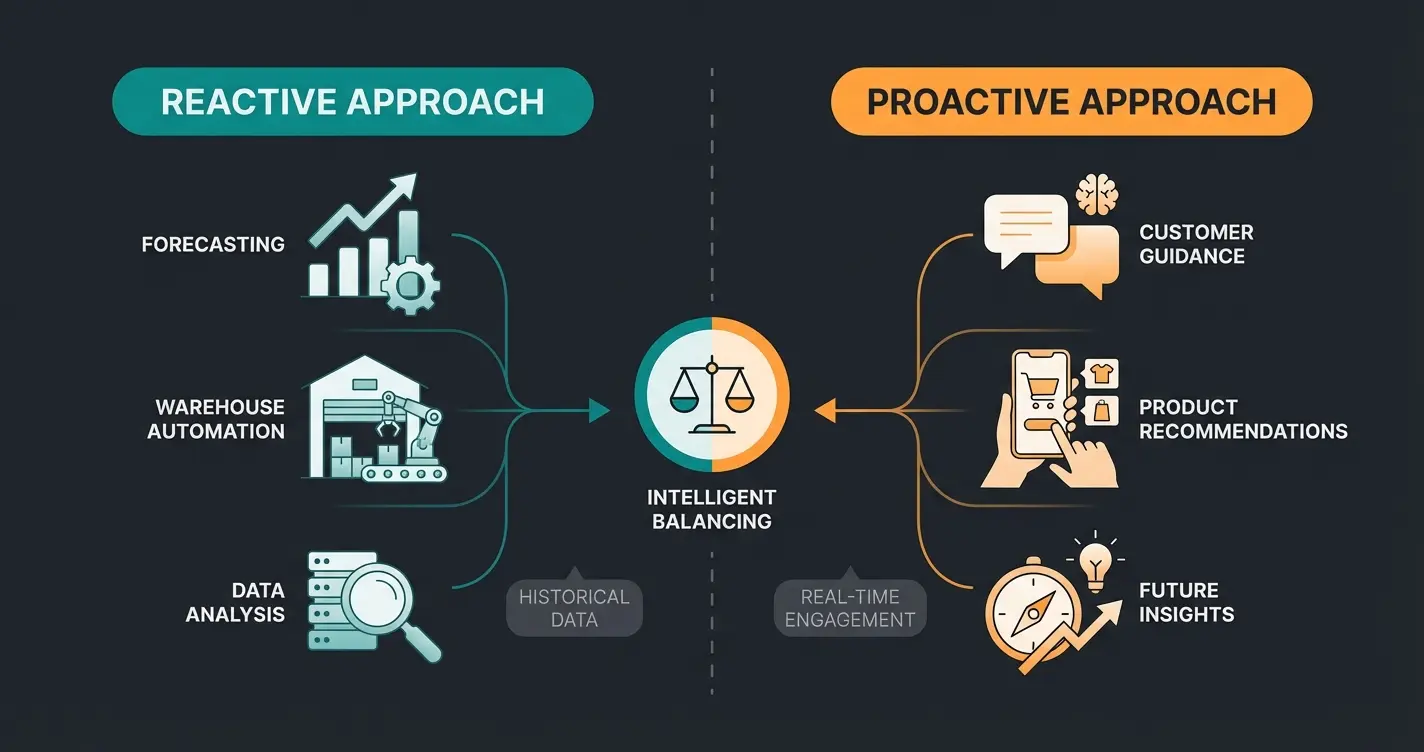
Traditional AI in OMS works behind the scenes, optimizing warehouse routes, detecting fraud attempts, and forecasting delivery times. However, when customers order three sizes out of uncertainty ('bracketing'), the backend must absorb this inefficiency.
No warehouse AI, no matter how sophisticated, can prevent two-thirds of these orders from coming back as returns. The solution requires intervention at the point of decision, not after shipment. This is where AI product consultation transforms the customer experience.
Forecasts stock levels, routes orders efficiently, flags potential fraud
Recommends products, answers technical questions, reduces return rates by 40%+
Backend AI cannot prevent 'bracketing' behavior where customers order multiple sizes
AI consultation matches customers to correct products based on preference data
Use Case: The Intelligent Ski Boot Purchase
Let's imagine how an OMS with integrated Consultative AI (frontend consultation) transforms the process in a real-world scenario.
Scenario A: Classic OMS (The 'Dumb' Shopping Cart)
- Customer searches for 'ski boots'
- Uncertain about size, orders Model X in sizes 42, 43, and 44
- OMS blocks inventory for 3 pairs of boots
- Warehouse picks and packs 3 pairs (enormous package)
- Customer keeps size 43. Two pairs go back as returns
- Result: 3x shipping, 2x returns, 2x quality inspection, value loss (B-grade merchandise)
Scenario B: OMS with Consultative AI
- Customer searches for 'ski boots'
- AI assistant (integrated into the shop, fed with OMS product data) appears: 'I see you're looking at Model X. Ski boots often fit differently. What street shoe size do you normally wear, and how wide is your foot?'
- Customer responds with their details
- AI cross-references data with historical return data from the OMS ('Customers with similar profiles returned size 42 in 90% of cases')
- AI recommends: 'Take size 43. This model runs small.'
- Customer orders only size 43
- Result: 1x shipping, 0x returns, maximum margin
This consultative approach mirrors what successful retailers achieve with AI Employee 'Kira', where intelligent product recommendations significantly reduce return rates while improving customer satisfaction.
Discover how AI-powered product consultation can reduce your return rates by up to 40% while improving customer satisfaction. Our intelligent solutions integrate seamlessly with your existing OMS.
Start Your Free TrialThe Hidden Costs of Poor Order Management
Why is this approach particularly important in high-return markets? Because the 'return culture' has become a significant profitability drain that many businesses underestimate.
The Stark Numbers
According to a current study by the EHI Retail Institute:
- 30% of retailers estimate costs per returned item at €5 to €10
- Another quarter (26%) calculate €10 to €20 per item
- In the fashion sector, up to 50% of goods are returned
Combined shipping, processing, and restocking per returned item
Up to half of all fashion orders are returned in high-return markets
A €50 order can result in negative profit after return processing
Over a quarter of retailers report €10-20 costs per returned item
The Cost Cascade
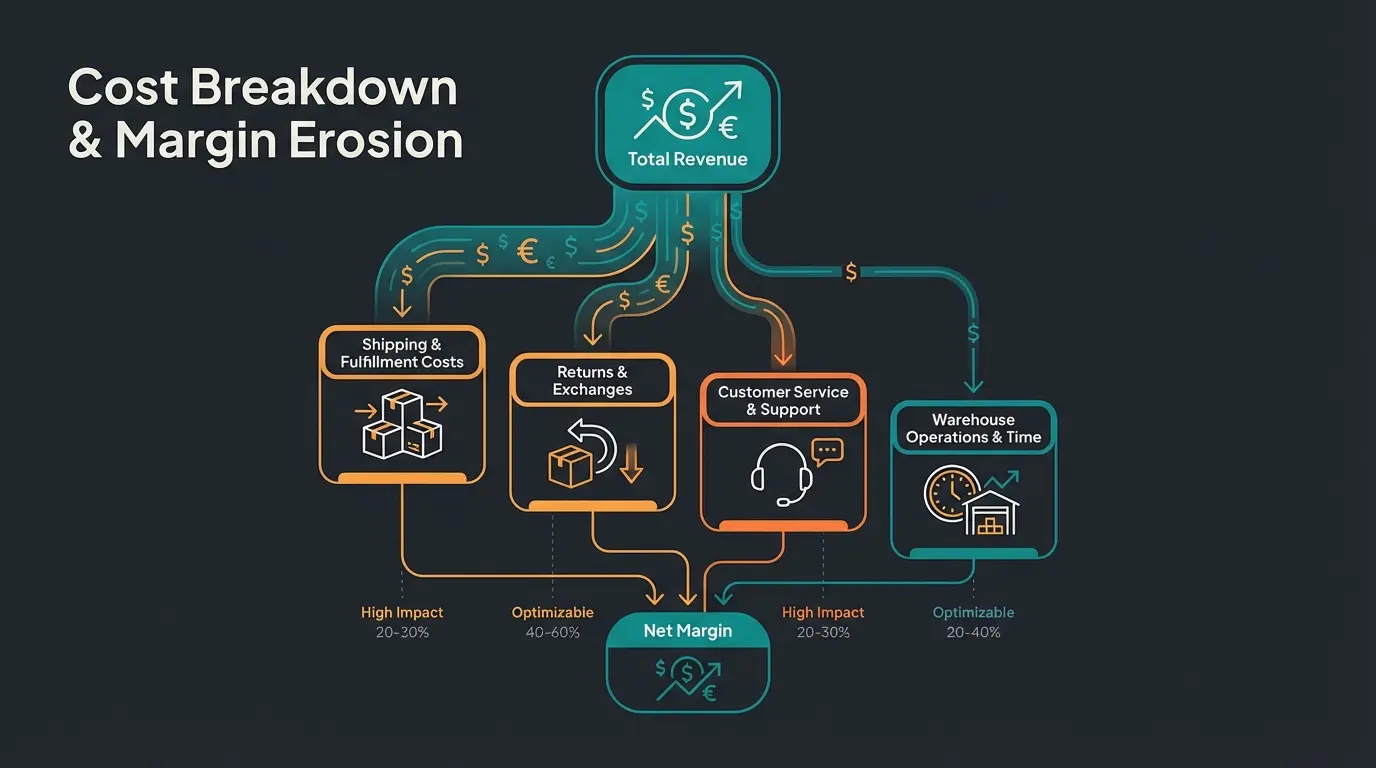
A poor order management system causes costs in places that aren't immediately visible:
- Inventory Lock-up: Return merchandise is often 'in transit' for weeks and not sellable. Dead capital.
- Packaging Fees: You pay license fees for boxes that only serve to transport goods back and forth.
- Customer Service Load: 'Where's my refund?' is the most common support question. An OMS without automated refund workflows paralyzes your support team.
Businesses that implement AI lead generation alongside their OMS optimization see compounding benefits—not only reducing operational costs but also improving the quality of customer acquisition.
Strategic Selection: Checklist for Business Success
When comparing software like Salesforce OMS, Fluent Commerce, or specialized local providers, use this checklist to separate the wheat from the chaff and ensure your selection meets all critical requirements.
Technical Architecture & Integration
- API-First Approach: Can the system connect headless to modern frontends (Shopify, commercetools)?
- Accounting Integration: How easily does data flow into your accounting systems?
- Carrier Integration: Are major carriers natively connected (including label creation for returns)?
Compliance & Legal Requirements
- E-Invoice Ready: Can the system export XRechnung/ZUGFeRD? (Deadline 01.01.2025 for German markets!)
- GDPR Compliance: Is customer data automatically anonymized after retention periods expire?
- Packaging Reporting: Can the system sum up and export packaging weights?
Intelligence & Advanced Features
- Pre-Purchase Support: Are there interfaces to AI tools or built-in consultation features?
- Click & Collect: Does the system support complex store processes (BOPIS - Buy Online, Pick up in Store)?
- Sourcing Logic: Can you define your own shipping rules (e.g., 'Never send split orders under €50 value')?
Companies implementing comprehensive AI solutions often start with AI Product Consultation capabilities before expanding into full OMS integration, allowing for phased adoption and measurable ROI at each stage.
| Evaluation Category | Must-Have Features | Nice-to-Have Features |
|---|---|---|
| Technical | API-first architecture, Real-time sync | Headless commerce support |
| Compliance | E-invoicing, GDPR automation | Multi-country tax handling |
| Intelligence | Basic routing logic | AI consultation integration |
| Integration | Major carriers, Accounting software | Marketplace connectors |
| Scalability | Multi-warehouse support | Edge computing capabilities |
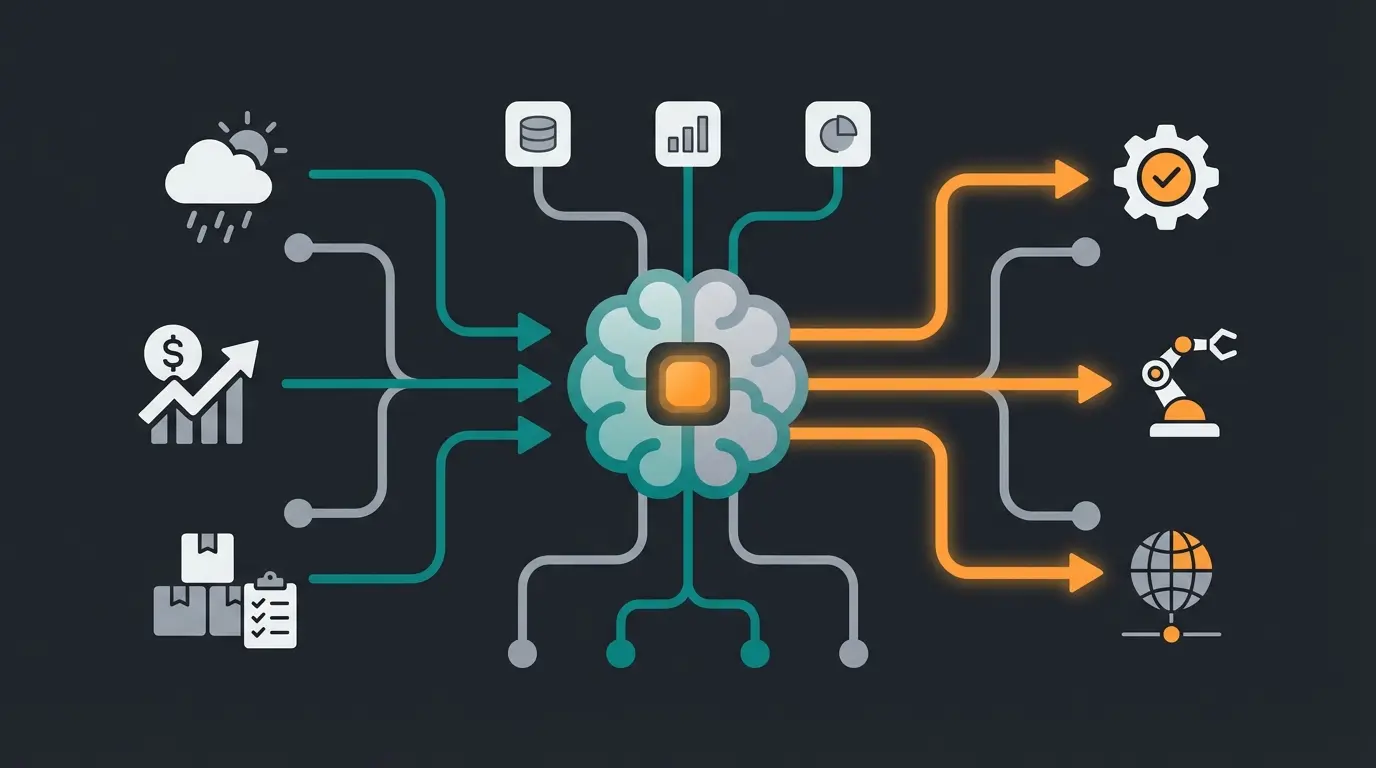
Future Outlook: Agentic AI and Hyper-Personalization
Looking to the future shows that automation will become even more autonomous. According to Gartner and analysis from 3QCode, the tech trends for 2025 point to 'Agentic AI' as a transformative force.
What Does This Mean for Your OMS?
Classic AI provides recommendations ('You should reorder merchandise'). Agentic AI acts independently ('I have reordered merchandise because the supplier is raising prices next week and the weather forecast predicts rising demand').
In the context of customer consultation, the OMS becomes a personal shopping assistant. It knows that Mr. Smith is going on a ski vacation next week (based on purchase history and season) and proactively checks whether his equipment is still current—offering perfectly fitting upgrades that are guaranteed to fit.
This evolution is already visible in implementations like Product Consultation Automated, where AI handles complex product matching that previously required human expertise. Similarly, automated social media inquiries demonstrate how AI agents can operate autonomously across customer touchpoints.
The Hyper-Personalization Frontier
Beyond agentic capabilities, the future OMS will deliver hyper-personalized experiences at scale. Every customer interaction—from initial browse to post-purchase support—will be informed by comprehensive data analysis and predictive modeling.
Companies already seeing success with lead qualification with AI understand that the same principles apply to order management: better data utilization leads to better outcomes. The integration of AI employees for customer service into the OMS ecosystem creates a seamless experience where customers feel understood and supported throughout their journey.
Conclusion: Beyond Boxes to Customer Decisions
The market for order management systems is saturated with tools that promise to move packages faster from A to B. But in markets where logistics costs and return rates eat away at margins, speed alone is no longer enough.
The winners of the coming years will be those retailers who rethink the OMS: Not as a passive processor after checkout, but as an active consultant before the purchase. By combining distributed order management with AI-powered product consultation and strict compliance automation, you create a system that doesn't just save costs but actively contributes to revenue.
The transformation from reactive logistics tool to proactive customer advisor represents a fundamental shift in e-commerce strategy. Businesses achieving reduction in cost per lead through AI are discovering that the same technology, applied to order management, delivers even more dramatic returns on investment.
For businesses exploring AI integration, starting with AI Chat capabilities provides an entry point that delivers immediate value while building toward comprehensive OMS transformation. The journey from basic automation to full consultative AI can be achieved incrementally, with measurable benefits at each stage.
The evolution of applicant management through AI demonstrates how intelligent automation transforms operations across business functions. The same principles that revolutionize HR processes—personalization, prediction, and proactive engagement—apply equally to order management excellence.
Frequently Asked Questions About Order Management Systems
An ERP (Enterprise Resource Planning) system focuses on accounting, HR, and static business processes across the entire organization. An OMS (Order Management System) is specifically designed for speed and agility in order processing, acting as the intermediary between sales channels and fulfillment operations. While ERP systems manage broader business functions, the OMS specializes in real-time inventory synchronization, intelligent order routing, and omnichannel fulfillment optimization.
OMS costs vary significantly based on business size and requirements. Entry-level solutions for small businesses may start at €200-500/month, while enterprise systems from providers like Salesforce or SAP can range from €5,000-50,000+ monthly. The true cost calculation should include implementation, integration, training, and ongoing maintenance. Importantly, consider ROI factors like reduced return rates, inventory optimization, and customer service efficiency gains.
Distributed Order Management is an intelligent routing system that determines the optimal fulfillment location for each order. Instead of sending every order to a central warehouse, DOM algorithms consider factors like geographic proximity to the customer, inventory availability across locations, shipping costs, and business rules like split-order avoidance. DOM enables capabilities like ship-from-store and reduces delivery times while lowering logistics costs.
AI enhances OMS in two critical ways: Backend AI handles demand forecasting, fraud detection, and warehouse optimization. Frontend 'Consultative AI' represents the newer, more impactful application—providing pre-purchase product recommendations that ensure customers order the right items initially. This proactive approach can reduce return rates by 40% or more by preventing 'bracketing' behavior and matching customers to appropriate products based on their specific needs.
Modern OMS platforms must address multiple compliance requirements depending on your market. Key considerations include e-invoicing mandates (like XRechnung/ZUGFeRD for German B2B transactions starting 2025), GDPR data protection requirements including automatic data anonymization, and packaging regulations requiring tracking and reporting of shipping material usage. Ensure your chosen system has native support for these requirements rather than relying on manual workarounds.
Ready to transform your order management strategy? A free initial consultation can help you identify the specific opportunities in your current setup and develop a roadmap for AI-powered optimization that drives measurable results.
Stop managing returns and start preventing them. Our AI-powered consultation solutions integrate with your existing OMS to optimize order creation, reduce return rates, and maximize profitability. Join leading e-commerce brands already seeing 40%+ reduction in returns.
Book Your Free Demo