Introduction: From Warehouse Manager to Data Brain
Is it 2026, and you're still only using your inventory management system to print invoices and count stock? Then you're leaving money on the table. For more details, see our Shopify Warehouse Management.
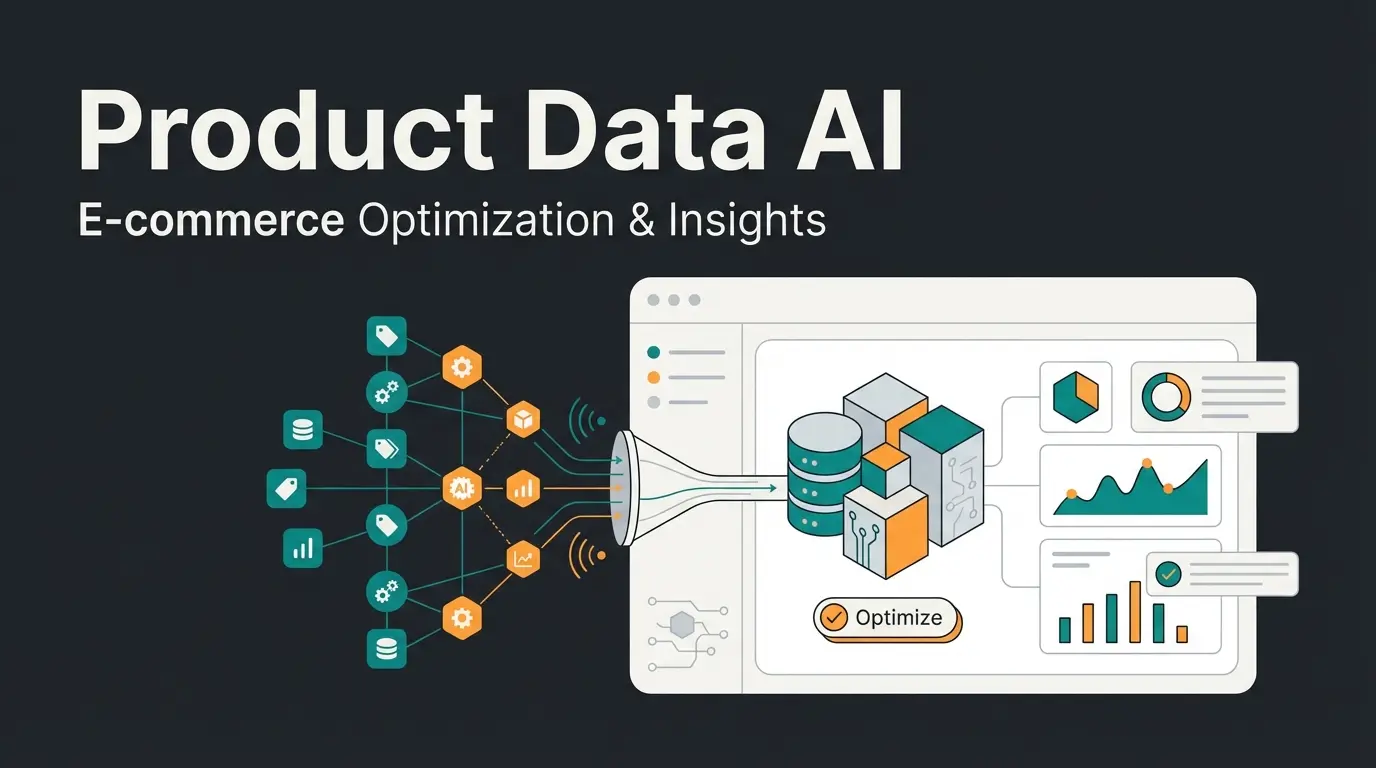
For a long time, Shopify inventory management (WaWi) was considered the unsexy backend topic: a necessary evil to avoid warehouse chaos and keep the accountant happy. But the rules of e-commerce have changed dramatically. In an era where AI shopping assistants and automated customer consultation are conquering the market, your WaWi is no longer just a warehouse management system—it's the central database for your sales operations.
In this comprehensive guide, we don't just compare the top providers like Billbee, JTL, and Xentral for 2026. We'll also show you why the quality of your data in your Shopify inventory system determines whether your AI tools will sell tomorrow—or remain silent.
Anyone running a Shopify store today knows the problem: While Shopify itself offers a solid foundation, it quickly reaches its limits with complex logistics processes, DATEV exports, or multi-channel sales (Amazon, eBay, Kaufland). The call for an external Shopify inventory management integration grows louder.
But while most merchants are only looking for a solution to avoid being "sold out," they overlook the real trend of 2026: Active Data.
Your competition views the WaWi as a cost center. You should see it as an asset. Why? Because modern e-commerce experiences are built on data. When a customer asks an AI chatbot: "Which of these jackets is waterproof but breathable enough for an Alpine crossing in August?"—the AI can only provide that answer if the corresponding attributes (water column rating, material composition, seasonal suitability) are stored in a structured format in your inventory management system.
A Shopify stock management system that only knows SKUs and prices is "dumb" in the AI era. This article helps you choose a system that doesn't just organize your warehouse but makes your shop intelligent.
Quick Decision Guide: Which WaWi Is Right for You?
Short on time? Here's a quick overview for those in a hurry. We evaluate these tools not only by price but also by their "Data Depth"—meaning how well they're suited to provide complex product data for future AI applications.
| Provider | Ideal for... | Cost Tendency | Complexity | AI-Data Score* |
|---|---|---|---|---|
| Billbee | Starters, D2C brands, solopreneurs | Low (usage-based) | Low | ⭐⭐⭐ |
| JTL-Wawi | Tech-savvy merchants, multi-channel, high volume | Medium (modular) | High | ⭐⭐⭐⭐⭐ |
| Xentral | Scaling teams, funded startups | High (investment) | Medium | ⭐⭐⭐⭐ |
| Pickware | Focus on warehouse processes & barcode scanning | Medium | Medium | ⭐⭐⭐ |
| Weclapp | Service providers who also sell products | Medium | Low-Medium | ⭐⭐⭐⭐ |
AI-Data Score: Evaluates the ability to manage complex attributes and custom fields beyond basic master data and provide them via API.
Deep Dive: Top Shopify Inventory Solutions 2026
Here we analyze the strengths and weaknesses of providers in detail, based on current market data and user experiences from 2025/2026.
1. Billbee: The Agile All-Rounder for Starters
Billbee has established itself as the go-to solution for Shopify merchants who want to get started quickly. Strictly speaking, it's not a full-fledged ERP but a multi-channel solution for order processing.
- Why Billbee? It's extremely easy to set up. The Shopify ERP connection works in just a few minutes.
- Cost Structure 2026: According to Billbee, they continue with a transparent model. There's a base fee (approx. €9) plus costs per order. This is fair for starters but can become more expensive than flat-rate prices with very high order volumes and low margins.
- AI Potential: Billbee excels at processing, but product data maintenance often still happens directly in Shopify. It's less designed for complex attribute management than JTL or Xentral.
- Conclusion: Perfect for going from 0 to €1 million in revenue without needing an IT degree.
2. JTL-Wawi: The Powerhouse for Tech Professionals
JTL is the market leader in the German-speaking region when it comes to feature scope. Originally launched as free software, JTL adjusted its pricing model in 2024/2025 (editions: Start, Advanced, Pro), but still offers a very powerful Community Free Edition for beginners, as noted by JTL Software.
- The Strength: JTL can do almost everything. Its own warehouse management (WMS), production, complex bills of materials, and configurators.
- Shopify Integration: The JTL connector for Shopify is mature. Important: Since 2025/2026, merchants often need to use the "Grow" plan (formerly "Shopify" plan) to fully utilize certain API functions for personal data (PII), according to JTL documentation.
- AI Potential: Very high. JTL allows extremely deep data structuring through "Custom Fields" and attributes. If you want to prepare your products for AI consultants, JTL offers the necessary database depth.
- Disadvantage: The learning curve is steep. You often need a service partner for setup.
3. Xentral: The Business Operations Platform
Xentral has evolved from an insider tip to the standard solution for fast-growing D2C brands (known from "Shark Tank" equivalents). It positions itself as a modern cloud ERP.
- The Strength: Process automation. Xentral thinks in "workflows." The interface is more modern than JTL and more intuitive than SAP.
- Shopify Integration: Seamless. According to Latori, Xentral imports orders, synchronizes inventory levels, and sends tracking data back.
- Costs: Xentral is an investment. Prices often start in the mid-three-figure range per month, which can be a hurdle for complete beginners, as Xentral pricing indicates.
- AI Potential: Xentral increasingly integrates automations. The API is modern ("Xentral Connect"), which facilitates the connection of external AI tools, as discussed on the Xentral community.
4. Pickware: The Native Warehouse Solution
Originally exclusive to Shopware, Pickware has made the leap to Shopify and now offers a strong Shopify inventory app.
- The Strength: Pickware comes from the warehouse. According to Pickware, its strength lies in the mobile barcode scanner solution. If your main problem is "warehouse chaos" and "incorrectly packed packages," Pickware is extremely powerful.
- Integration: It feels very "native" as it often directly integrates into or supplements the shop interface logic, as shown on Shopify's app store.
- Conclusion: Ideal for merchants who run their own warehouse and want to professionalize processes without introducing a massive ERP monster.
5. Weclapp: Cloud ERP for Teams
Weclapp is popular with agencies and service providers but has a strong e-commerce module.
- The Strength: Usability and team collaboration. It's a true cloud ERP that also handles CRM and project management.
- AI Roadmap: According to Weclapp, they're actively researching AI functions, such as predicting return probabilities or automatic document recognition.
- Conclusion: If you sell services alongside products or need a strong CRM, Weclapp is top-notch.
The Missing Link: From Storage to Consultation
Here lies the critical mistake that 90% of merchants make: They view Shopify inventory management only as a backend tool.
The Problem: The 'Dumb' Storefront
Shopify is fantastic for selling, but the data structure is often flat (title, description, price, vendor, tags). When a customer asks: "I'm looking for a sustainable toy for a 3-year-old that promotes motor skills but contains no plastic"—the classic search fails.
The Solution: WaWi as the Single Source of Truth
A modern ERP (like JTL or Xentral) can store these attributes:
- `Material`: Wood (FSC-certified)
- `Age Recommendation`: 3-5 years
- `Development Goal`: Fine motor skills
- `Sustainability`: Plastic-free
The AI Opportunity: An AI shopping assistant (like epoq, product advisor bots, etc.) can access this deep data in your WaWi via API. It doesn't just "read" the product text—it understands the structured logic behind it.

Discover how AI-powered product consultation can turn your inventory data into a 24/7 sales machine. Connect your WaWi to intelligent customer conversations.
Start Your Free TrialThe WaWi Maturity Matrix: Where Do You Stand?
To understand where you currently are, this matrix helps. The goal is to develop from bottom left to top right if you want to use AI effectively.
| Data Depth (Y-Axis) | Low Complexity (X-Axis) | High Complexity (X-Axis) |
|---|---|---|
| High (Rich Attributes) | The Niche: Specialized tools or PIM systems (Product Information Management) | The Goal: JTL-Wawi / Xentral (Fully configured with characteristics & attributes) |
| Low (Basic SKUs) | The Start: Billbee (Focus on processing, little data depth) | The Trap: Expensive ERP used like an Excel spreadsheet (waste of money) |
Matrix Explanation
- The Start: You use Billbee. It works, but the data is flat.
- The Goal: You use a system like JTL or Xentral and maintain all attributes there. This increases complexity but is the only way to enable the use of intelligent sales bots.
- The Trap: You've invested in expensive software but use it like a simple spreadsheet—the worst of both worlds.
- The Niche: Specialized PIM systems that offer rich data but require additional integration work.
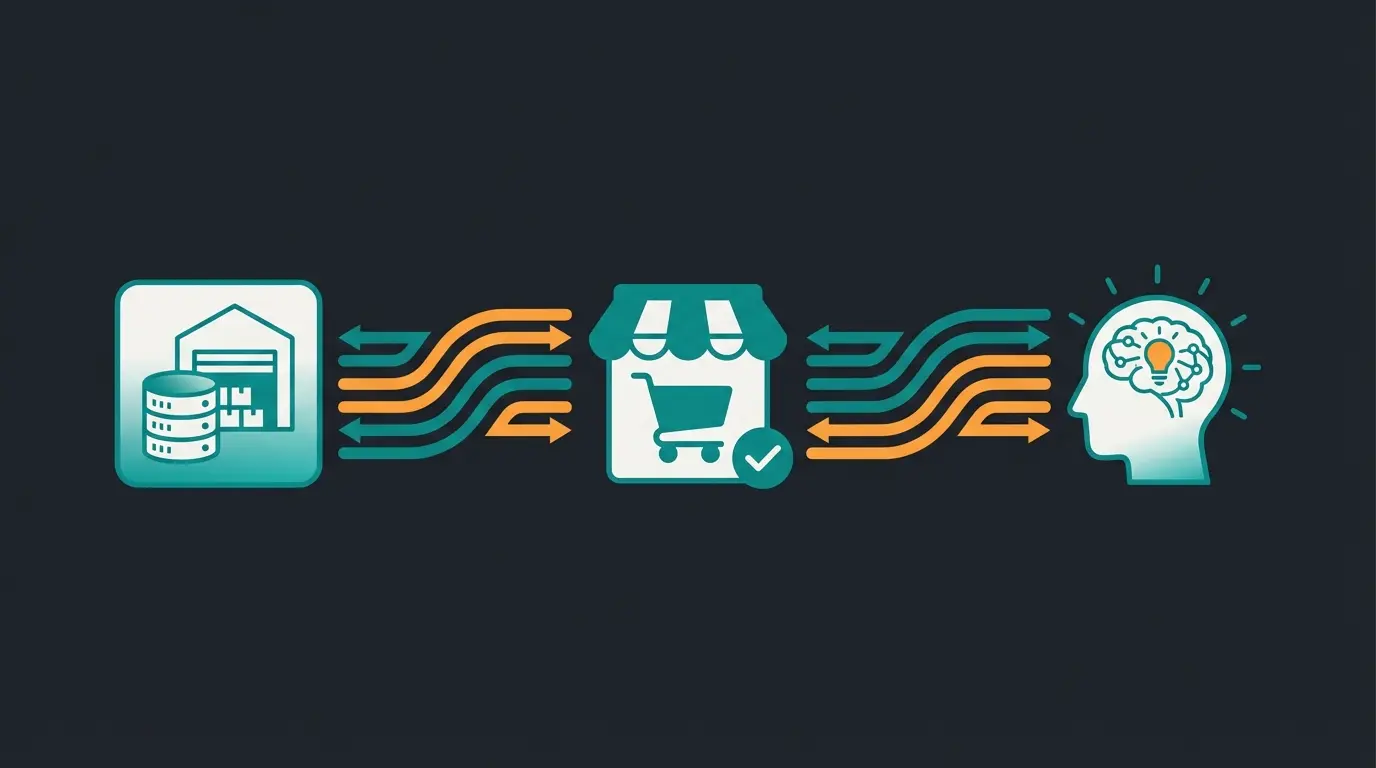
Stores all product data including rich attributes like materials, certifications, and use cases
Displays products and handles transactions while syncing inventory in real-time
Reads structured data via API to understand products deeply and answer complex queries
Receives personalized recommendations based on specific needs and preferences
Criteria: What Makes a WaWi AI-Ready?
When searching for a Shopify ERP connection in 2026, pay attention to these three criteria to be future-proof:
1. Clean API & Headless Capability
Can an external tool (e.g., a chatbot) query in real-time: "Is item X in stock?" AND "What technical specifications does item X have?" Many older inventory systems can only transmit stock levels via API but not product attributes. This is fatal for AI applications.
2. Granular Attribute Management
A free-text "Description" field is okay for AI, but structured data is worth its weight in gold.
- Bad: "Red T-shirt made of organic cotton." (Everything in one string)
- Good: `Color: Red`, `Material: Organic Cotton`, `Certificate: GOTS`.
Your WaWi must support these fields and be able to cleanly transfer them to Shopify (e.g., as Metafields).
3. Real-Time Synchronization
Nothing kills conversion faster than an AI bot that recommends a product that sold out 10 minutes ago. The synchronization between Shopify and your inventory system must occur on a minute-by-minute basis or via webhook (real-time).
Studies show poor product data can cause up to 23% revenue loss according to research by GoDataFeed
Incomplete product information leads to customer uncertainty and abandoned carts
Rich, structured product data can triple AI recommendation accuracy
Practical Guide: Dirty Data vs. Clean Data
Research indicates that bad product data can cause up to 23% revenue loss, as highlighted by William Flaiz's analysis. For AI systems, this is even more critical: bad data leads to AI "hallucinations" (it invents facts).
Here's an example of how you should maintain data in your new WaWi:
| Attribute | ❌ Dirty Data (Standard) | ✅ Clean Data (AI-Ready) |
|---|---|---|
| Title | "Men's Shirt Blue L" | "Business Shirt 'Milano', Slim-Fit, Light Blue" |
| Description | "Nice shirt, 100% cotton, good for office." | "Breathable business shirt made of 100% Egyptian cotton. Easy-iron finish. Ideal for summer meetings." |
| Attributes | (Empty) | Fit: Slim-Fit, Occasion: Business, Season: Summer, Care: Easy-iron |
| Stock | "5" | "5 (Warehouse A), Reorderable: Yes, Delivery Time: 3 days" |
The Real-World Difference
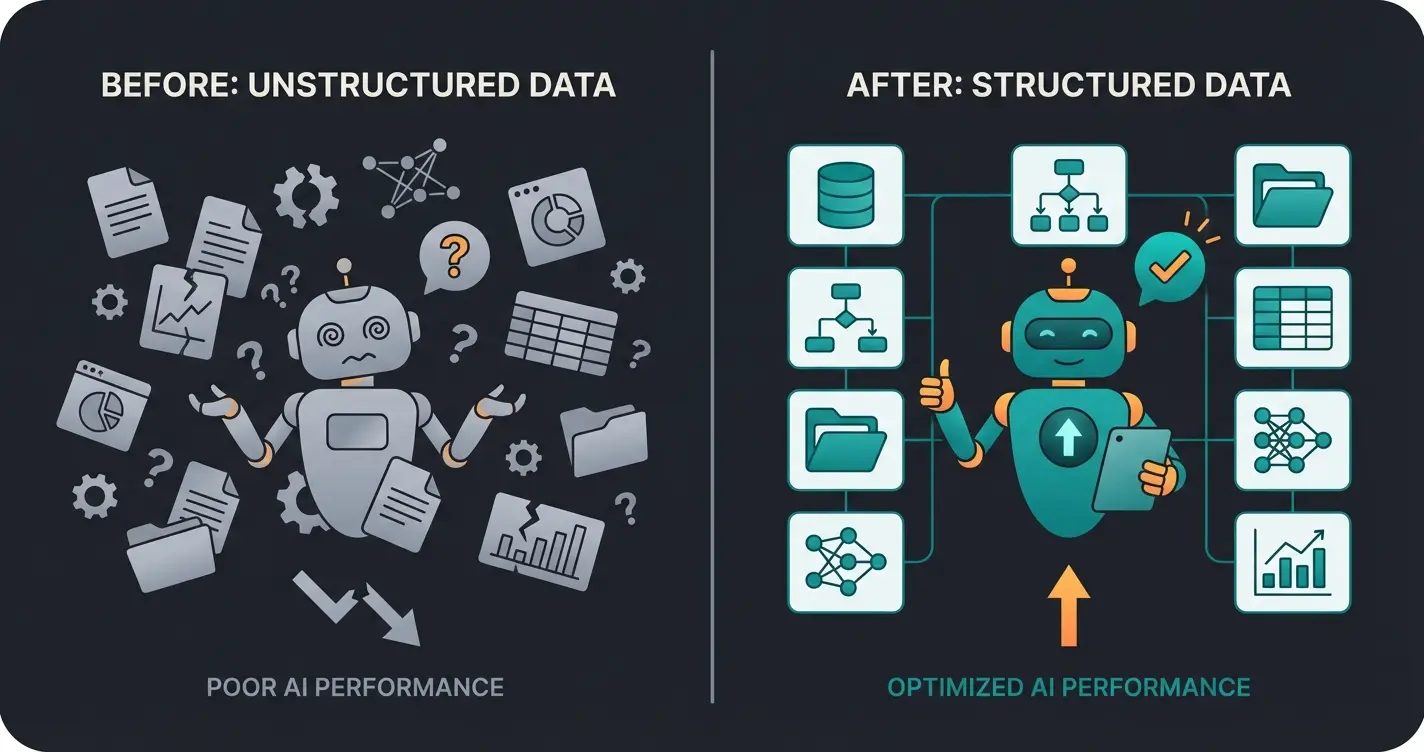
With the data from the left column, an AI bot can only say: "Here is a blue shirt."
With the data from the right column, it can say: "Since you're looking for a shirt for summer meetings, I recommend the Milano model. It's breathable and easy-iron, which is practical for business trips."
This is the difference between a search engine and a sales consultant. Your inventory management system decides which one your shop becomes.
Conclusion: Building for Tomorrow's AI Commerce
The search for the best Shopify inventory management in 2026 is more than a price comparison. It's a decision about the architecture of your business.
- Start appropriately: If you're small, take Billbee. Don't drown in complexity.
- Scale smartly: As you grow, switch to Xentral or JTL, but don't underestimate the setup effort.
- Think about tomorrow: Regardless of which system you choose—start structuring your data cleanly today.
The WaWi is the foundation. Shopify is the storefront. The AI is the salesperson. If the foundation crumbles (bad data), the best salesperson (AI) can't save anything.
FAQ: Shopify Inventory Management in 2026
For beginners and solopreneurs, Billbee is the ideal choice. It offers a usage-based pricing model starting at approximately €9 per month, requires minimal technical knowledge to set up, and can connect to Shopify in just a few minutes. While it lacks the deep data structure capabilities of more complex systems, it provides everything needed to manage orders and inventory for stores doing up to €1 million in revenue.
This depends on your business complexity. If you only sell on Shopify with straightforward logistics, a multichannel tool like Billbee is sufficient. However, if you sell across multiple channels (Amazon, eBay, Kaufland), need production management, complex bills of materials, or plan to use AI-powered product consultation, you'll need a full ERP like JTL-Wawi or Xentral. The key question is: Do you need to store rich product attributes for future AI applications?
AI shopping assistants read product data via APIs to answer customer questions. If your inventory system only stores SKUs and prices, the AI can only provide basic responses. However, if your WaWi stores detailed attributes (materials, certifications, use cases, seasons), the AI can provide sophisticated consultation—like recommending the perfect hiking boot for wide feet and wet terrain. Your inventory system becomes the 'brain' that powers AI-driven sales.
Three critical factors: 1) A clean API that allows external tools to query both stock levels AND product attributes in real-time. 2) Granular attribute management with custom fields—not just free-text descriptions. 3) Real-time synchronization to prevent AI from recommending out-of-stock items. Systems like JTL-Wawi and Xentral score highest on AI-readiness due to their deep data structuring capabilities.
Studies indicate that poor product data can cause up to 23% in lost revenue through failed searches, customer confusion, and abandoned carts. For AI systems, the impact is even more severe—bad data leads to incorrect recommendations and 'hallucinations' where the AI invents information. Investing time in clean, structured data pays dividends not just in current sales but in enabling future AI-powered commerce.
Stop leaving money on the table. See how our AI solution connects directly to your inventory system to offer 24/7 expert product consultation that actually sells.
Get Started Free Today
Lasse is CEO and co-founder of Qualimero. After completing his MBA at WHU and scaling a company to seven-figure revenue, he founded Qualimero to build AI-powered digital employees for e-commerce. His focus: helping businesses measurably improve customer interaction through intelligent automation.