Adobe Commerce and Magento are the same product. Adobe acquired Magento in May 2018, renamed the commercial edition Adobe Commerce in April 2021, and kept the free community edition as Magento Open Source. So a comparison of Adobe Commerce vs Shopify is a comparison of Magento vs Shopify, and Google serves one merged result page for both names.
That matters, because almost every comparison on this topic is running on old numbers. Four of the nine pages currently ranking for this query were last updated in 2024 or 2025. They quote pricing that has changed, support dates that have passed, and a total-cost statistic that no longer matches what its own source publishes.
Every figure below was pulled in the last week of July 2026: platform counts from Store Leads on 24 July, Adobe's lifecycle documentation as updated on 20 May, Shopify's live rate card, and the two conflicting cost studies that everyone quotes and nobody reconciles. Where a claim has no verifiable source, it is not in here.
Adobe Commerce vs Shopify: the 60-second verdict
Shopify Plus fits roughly 80% of enterprise merchants: faster to launch, predictable pricing, no infrastructure burden. Adobe Commerce (Magento) wins only where catalogues exceed 50,000 SKUs, B2B logic is deeply customised, or full source-code control is non-negotiable. The old rule, Shopify for SMB and Magento for enterprise, stopped being true once Shopify Plus closed the standard-B2B gap.
The 80% figure is not ours. scandiweb, an agency that builds on both platforms and has no incentive to talk itself out of Magento work, put it at "roughly 80% of merchants in 2026" in its February 2026 comparison. Aigars Pavlovics of scandiweb's executive board frames the other 20% precisely: "complex B2B pricing, catalogs above 50,000 SKUs, multi-store setups, or full source-code ownership."
| Decision factor | Adobe Commerce (Magento) | Shopify Plus |
|---|---|---|
| Entry cost | ~USD 22,000/yr licence, hosting extra | EUR 2,250/mo on a 1-year term, hosting included |
| Hosting model | Self-hosted or Adobe Cloud, you patch | Fully managed SaaS, Shopify patches |
| Time to launch | 16 to 28 weeks, 22 to 36 for B2B | 12 to 20 weeks |
| Catalogue ceiling | Tens of millions of SKUs | 100,000+ SKUs handled well |
| Standard B2B | Native, deeper | Native on Plus, unlimited catalogues |
| Complex B2B (quotes, approval chains) | Native | Extension or custom build |
| Uptime SLA | 99.9% on Cloud, DIY otherwise | 99.99% |
| Data residency | You choose the region | Shopify's global infrastructure |
| Best fit | In-house engineering team, complex logic | Teams that want to sell, not maintain |
Adobe Commerce (Magento) and Shopify Plus: the core differences
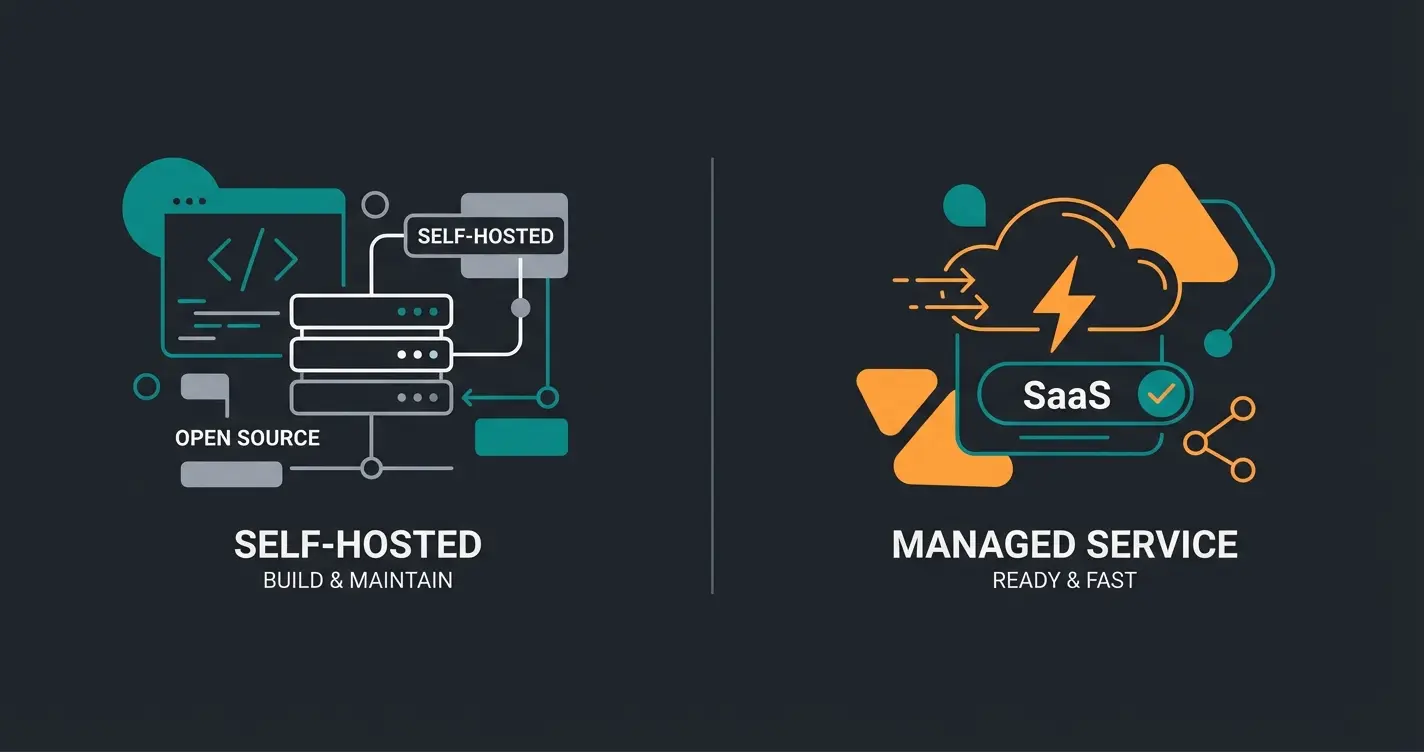
The difference is architectural, not featural. Adobe Commerce is open-source software you host, patch and secure yourself, which buys root-level control at the cost of a permanent engineering commitment. Shopify Plus is fully hosted SaaS: Shopify runs the infrastructure, ships updates and handles PCI compliance, and you trade source-code access for that.
Strip away the marketing and the question is narrow. Who applies the security patch?
On Magento, you do. Adobe publishes security patches annually at minimum for every supported release line, plus non-cumulative isolated patch files for faster remediation, and applying them is the merchant's job. Adobe's documentation is explicit that this responsibility extends past its own product: it does not provide fixes for MariaDB, OpenSearch, Redis or PHP when those reach end of life inside your support window. PHP 8.2 reaches end of life on 31 December 2026, and Adobe flags the consequence directly as a PCI compliance risk for anyone still on 2.4.6.
On Shopify Plus, nobody on your team applies anything. Shopify reports 99.99% average uptime across its worldwide platform during peak sales events, a load-tested ceiling above 10,000 checkouts per minute, and roughly 100ms average storefront API response times. IWD Agency's 2026 comparison puts the Adobe Commerce Cloud SLA at 99.9% against Shopify Plus at 99.99%, with self-hosted Adobe carrying no SLA at all.
| Task | Adobe Commerce (Magento) | Shopify Plus |
|---|---|---|
| Security patching | Merchant or agency | Shopify |
| PHP and database upgrades | Merchant, and Adobe explicitly does not cover them | Not applicable |
| Peak traffic scaling | Merchant, via Varnish, Redis and Elasticsearch tuning | Shopify |
| PCI compliance | Merchant, per customisation | Level 1 PCI DSS included |
| Version upgrades | Merchant, every 3 years minimum | Continuous, no version pinning |
| Source code access | Full | None below the Liquid and Functions layer |
There is a real cost to the SaaS side of that table, and it deserves saying plainly. You cannot fix what you cannot reach. When Shopify's checkout behaves in a way your business needs changed, Shopify Functions and checkout extensibility cover a lot of it, but the boundary is real and Shopify draws it. On Magento the boundary is your budget. Both are constraints. One of them you can spend your way out of.
Total cost of ownership: what both platforms really cost
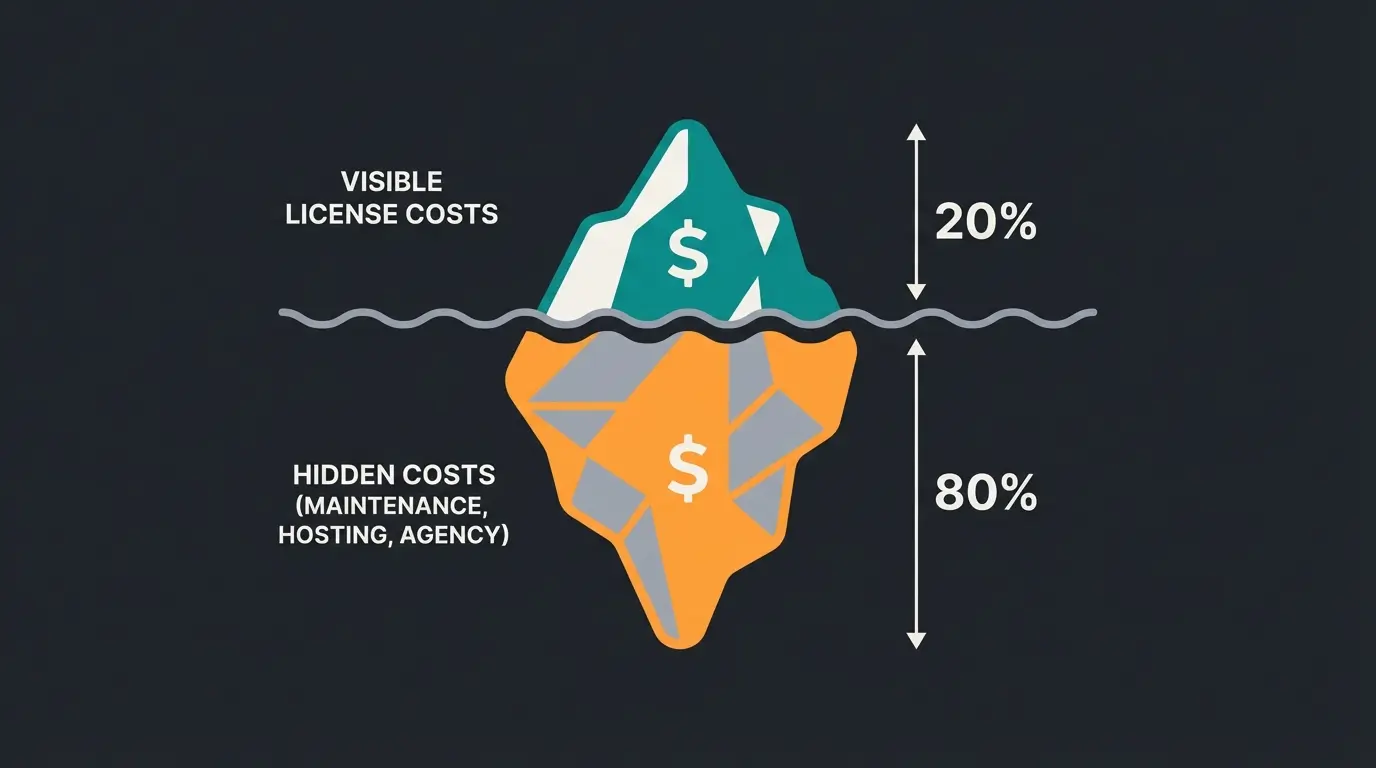
Published TCO figures contradict each other, and both are right about different things. Shopify-commissioned research puts Adobe Commerce's platform fees 42% higher. Independent 2026 modelling puts annual cost at USD 10M GMV at roughly USD 540K for Shopify Plus against USD 350K for Adobe. The first counts operating and lost-conversion cost. The second counts direct line items.
This is the part of the comparison nobody does, so it is worth doing carefully.
Where the "41% higher" number actually comes from
Search this topic and you will meet one statistic repeatedly: Adobe Commerce's total cost of ownership is 41% higher than Shopify's. It is quoted by LATECH, it is what Google's AI Overview returns for the cost question, and it is presented almost everywhere as independent research.
Three things about it are worth knowing. First, LATECH's own FAQ describes the source as "independent research cited in Shopify's TCO study," and LATECH is a certified Shopify Plus Partner. Second, Shopify's own comparison page does not say 41%. It says Shopify's TCO is "29% better than Adobe Commerce's, on average." The 41% figure is a third-party reading of sub-components that the vendor itself does not publish as a headline.
Third, and this is the one that changed how I read the whole study: Shopify's own methodology page states the consulting firm "surveyed enterprise executives and interviewed experts in North America" between December 2023 and January 2024. The single most-quoted cost statistic in this comparison rests on fieldwork that is now more than two and a half years old, from one continent, based on self-reported executive perception rather than audited invoices.
| Shopify-commissioned study | IWD Agency 2026 model | |
|---|---|---|
| Headline | Adobe TCO higher (29% per Shopify, quoted as 41% elsewhere) | Adobe ~35% lower at USD 10M GMV |
| Fieldwork date | December 2023 to January 2024 | May 2026 |
| Geography | North America only | Not stated |
| Method | Executive survey and expert interviews | Agency line-item modelling |
| Counts operating cost | Yes | Yes, as dev retainer |
| Counts implementation | Yes | Listed separately, not in the annual total |
| Counts lost conversion | Yes, as a ~1.8% offset | No |
| Who paid for it | Shopify | An agency that builds on both platforms |
Read that table and the contradiction dissolves. The two studies are not disagreeing about arithmetic. They are measuring different things over different periods. Adobe Commerce is genuinely cheaper on direct line items, and genuinely more expensive once you price the engineering capacity needed to run it. Both statements are true at the same time.
A caveat on the 2026 model, since we are checking everyone's work
IWD Agency's annual TCO model publishes headline totals of roughly USD 540K for Shopify Plus and USD 350K for Adobe Commerce at USD 10M GMV. It also publishes the line-item ranges those totals are built from, and the two do not sit comfortably together.
Add up IWD's own published ranges at that GMV bracket and Shopify Plus lands between roughly USD 167K and USD 413K per year, while Adobe Commerce lands between roughly USD 235K and USD 600K. On the agency's own numbers, Adobe's recurring range starts higher and ends higher. The headline says the opposite. IWD does not publish which point in each range its totals assume, which is exactly the sort of thing worth knowing before you put a figure in a board deck.
| Line item | Shopify Plus | Adobe Commerce |
|---|---|---|
| Licence or subscription | ~USD 52,600 (USD 2,300/mo + 0.25% revenue share) | USD 40,000 (B2B Mid tier) |
| Hosting | Bundled | USD 15,000 to 50,000 |
| Apps and extensions | USD 18,000 to 60,000 | USD 36,000 to 90,000 |
| Developer retainer | USD 96,000 to 300,000 | USD 144,000 to 420,000 |
| Annual range on these items | ~USD 167K to 413K | ~USD 235K to 600K |
| Implementation (one-off, B2B build) | USD 90,000 to 250,000 | USD 125,000 to 400,000 |
The practical lesson is not that one platform is cheap. It is that the developer retainer is the dominant variable on both sides, and it is the line item merchants consistently underestimate. IWD budgets USD 5,000 to 15,000 per month in DevOps capacity for self-hosted Adobe Commerce before a single feature gets built. If you want the Shopify side of that equation broken down properly, we cover it in Shopify costs in detail.
The dated Q3 2026 figures
Here is what both platforms actually list today, checked on 31 July 2026 against the vendors' own pages rather than against other comparison articles.
| Cost component | Adobe Commerce (Magento) | Shopify Plus |
|---|---|---|
| Licence | USD 22,000 to 125,000+/yr by GMV tier | EUR 2,250/mo (1-year term), EUR 2,100/mo (3-year term) |
| Open source edition | Magento Open Source, free | None |
| Hosting | USD 15,000 to 50,000/yr, or bundled in Pro Cloud | Included |
| Third-party gateway fee | None at platform level | 0.2% on Plus, 2% on Basic |
| Card rate with native payments | No native processor | From 1.3% + EUR 0.30 on Plus |
| Extra storefronts | Multi-store included | 9 expansion stores free, then EUR 250/mo each |
| Realistic all-in (Open Source, solo dev) | USD 30,000 to 80,000+/yr | Not applicable |
Two corrections to figures that circulate widely. Shopify Plus is commonly quoted at USD 2,300 per month; Shopify's own pricing page currently lists EUR 2,250 on a one-year term and EUR 2,100 on a three-year term, so check your region rather than a blog. And the Plus third-party transaction fee is 0.2%, not the 0.25% that most comparisons still print.
Market share and platform momentum
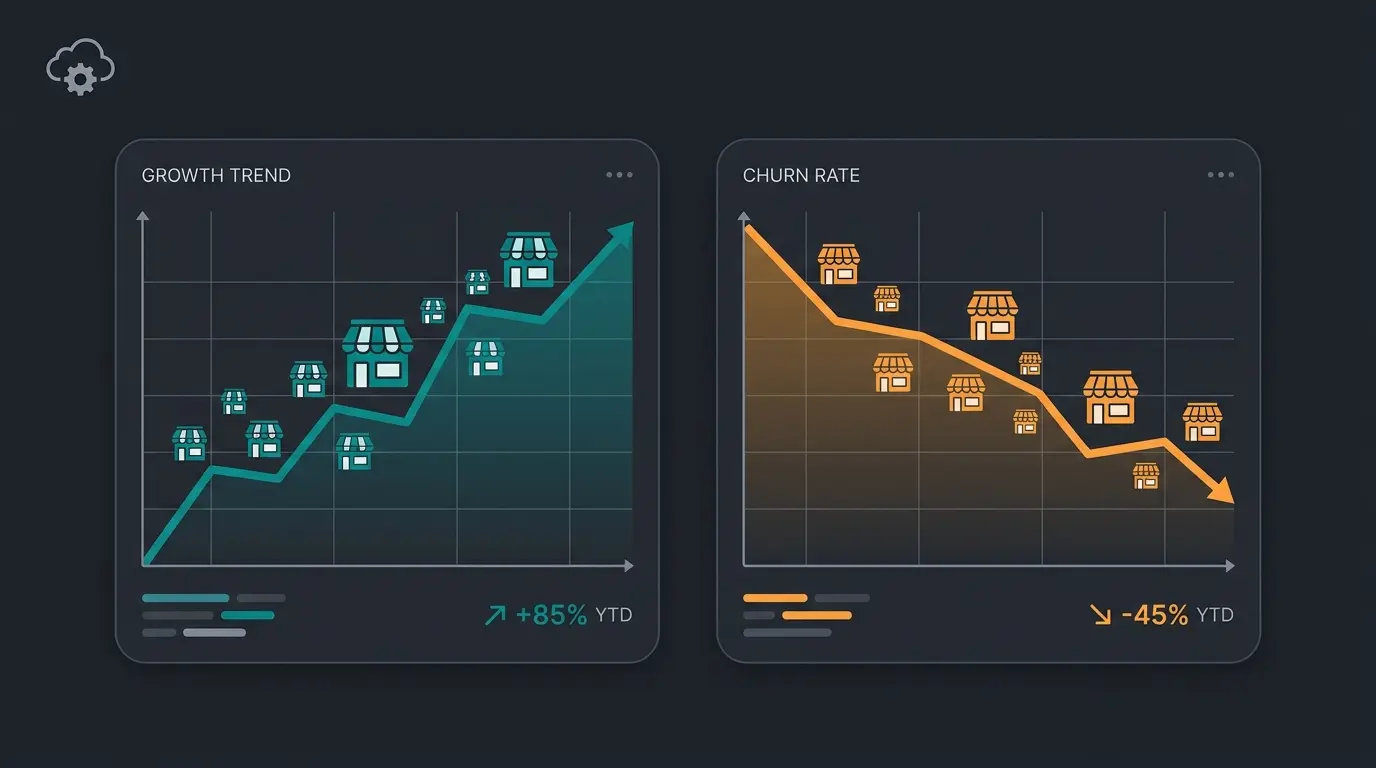
Shopify and Adobe Commerce are moving in opposite directions. Shopify's store count grew 11% year over year in Q2 2026 while Magento deployments fell 14%, a decline running since the Adobe acquisition and driven largely by Magento 1 end-of-life migrations that never came back to Adobe. The gap is now roughly 27 to 1 by store count.
Store Leads, which tracks live installations rather than survey responses, updated both platform reports on 24 July 2026. Magento: 106,095 live stores, down 4.7% quarter over quarter and 14% year over year. Shopify: 2,917,946 live stores, up 1.7% quarter over quarter and 11% year over year, of which 76,817 domains run Shopify Plus.
Roughly 72% the size of Magento's entire install base
966 gained from other platforms, 1,534 lost to them
The 90-day switching data is the sharper signal. Over the three months to 24 July 2026, Magento took 966 merchants from competing platforms and lost 1,534 to them, a net loss of 568. Shopify took 25,051 and lost 11,755, a net gain of 13,296. Adobe Commerce still facilitates around USD 173 billion in annual GMV at roughly 8% global market share, so this is contraction, not collapse.
Enterprise and B2B features compared
Adobe Commerce shipped native B2B years before Shopify and still leads on deeply customised logic: complex tiered pricing, requisition lists, multi-level company hierarchies. Shopify Plus closed most of the standard-B2B gap with native B2B on the Plus plan, which covers company accounts, customer-specific catalogues and payment terms without a single app.
The distinction that matters is standard versus complex, and most comparisons blur it. Here is the audit, feature by feature.
| Capability | Adobe Commerce | Shopify Plus |
|---|---|---|
| Company and buyer accounts | Native, deeper | Native |
| Customer-specific catalogues | Native | Native, unlimited on Plus |
| Multi-tier customer pricing | Full | Limited |
| Quote-to-order workflow | Full | Basic |
| Requisition lists | Native | Via extension |
| Multi-level company hierarchies | Native | Via extension |
| Approval workflows | Native | Via extension |
| Net-30 and PO buyers | Full | Limited |
| Trade pricing customer groups | Unlimited | Up to 10 |
| ERP-native sync | Native API depth | Via apps |
Read that honestly and Adobe wins the B2B column. Not narrowly. Six of those ten rows are native on Adobe and extension work on Shopify, and the four that matter most for distributors and manufacturers, quote workflows, approval chains, multi-tier pricing and requisition lists, are exactly the four where Shopify hits a ceiling. Joe McFerrin, CEO of IWD Agency, is direct about where the line falls: "For pure B2B distributors and manufacturers above 10M GMV, Adobe Commerce remains the stronger platform. For pure DTC at any GMV, Shopify Plus is usually the cleaner pick."
Shopify's own rate card confirms the tiering: B2B catalogues are capped at three on Basic, Grow and Advanced, and only become unlimited on Plus, alongside 200 inventory locations and up to 10x API rate limits. If you are weighing that specific upgrade, we go deeper in Shopify B2B.
Now the part neither vendor sells against. Both platforms present a catalogue and wait. Gartner's March 2026 sales survey found 67% of B2B buyers prefer a rep-free experience, which both platforms serve well. Gartner's follow-up in May found 69% of those same buyers turn to a sales rep to validate what they find. Self-service is what buyers want. Validation is what they still cannot get from a filter menu.
Strengths and weaknesses at a glance
Adobe Commerce's strength is unlimited control, and its weakness is that control is expensive to keep. Shopify Plus's strength is that everything works without engineering effort, and its weakness is that the boundaries of the platform are Shopify's to set, not yours.
| Strengths | Weaknesses |
|---|---|
| EAV architecture handles 50+ custom attributes per SKU and compatibility matrices | Realistic Open Source running cost of USD 30,000 to 80,000+ per year |
| Native B2B covering RFQ, negotiated pricing and approval workflows | You own patching, PHP upgrades and PCI compliance for every customisation |
| True multi-store from one admin, separate catalogues and currencies | Three-year support windows force a paid upgrade cycle |
| No platform-level transaction fees on any gateway | Developer supply is contracting as the community shifts to JavaScript |
| Deployable on-prem or in sovereign cloud for regulated industries | 16 to 28 weeks to launch, 22 to 36 for a B2B build |
| Deepest ERP integration surface of the two | Store count down 14% year over year |
| Strengths | Weaknesses |
|---|---|
| 99.99% average uptime and 10,000+ checkouts per minute, load-tested | No source-code access below the Liquid and Functions layer |
| Zero patching, zero version pinning, PCI DSS Level 1 included | 0.2% third-party gateway fee unless you use Shopify Payments |
| 12 to 20 weeks to launch | Complex B2B logic needs extensions or custom builds |
| 26,950 apps from 16,830 vendors | App dependency is a recurring cost, not a one-off |
| Shopify invested over USD 1.5 billion in R&D in 2025, up from 1.3 billion | Data residency is contractual, not geographic |
| Unlimited B2B catalogues and 25 headless storefronts on Plus | Pricing is set by Shopify and changes on Shopify's schedule |
Gartner Peer Insights reviewers describe Adobe Commerce's flexibility as "the strongest aspect" of the platform, noting that "product and catalog management are robust, and integrations are powerful and reliable." That is a fair verdict, and it is also the whole trade. Flexibility is the strength and the bill.
AI in ecommerce: Adobe Sensei, Shopify Magic and the third way
Adobe Sensei and Shopify Magic both optimise the merchant's side: product copy, segmentation, forecasting. Neither advises the customer. That is the open gap. A shopper facing 8,000 SKUs gets a filter menu on both platforms, and platform-native AI does nothing to close the distance between a catalogue and a decision.
| Layer | What it does | Who it serves |
|---|---|---|
| Adobe Sensei | Predictive analytics, personalised recommendations, Live Search | The merchant's merchandising team |
| Shopify Magic and Sidekick | Product descriptions, email content, store tasks, analytics queries | The merchant's operators, bundled on all plans |
| Consultative AI | Answers technical fit, compatibility and compliance questions in conversation | The customer, at the point of decision |
The third row is not a platform feature on either side. It sits on top of both.
HELLA's Lightstyle division sells auxiliary vehicle lighting, which is about as consultation-heavy as a catalogue gets: every purchase carries ECE approval rules, wiring requirements and mounting constraints, and the buyers are truckers and off-road drivers working on their vehicles at the weekend when nobody is answering the phone. Its AI product advisor answers those questions around the clock. Support inquiries dropped 60%, and product recommendations are held to 100% legal compliance.
The honest limitation: this only pays back where products are genuinely consultation-intensive. If you sell t-shirts, a good filter and a size chart will outperform anything conversational, and I would tell you so. Where the catalogue carries technical fit, compatibility or regulatory constraints, the picture changes: our AI product consultation accounts run at around +30% basket value with 97% of consultations handled without a human. Platform choice does not change that either way, which is the point. Both Adobe Commerce and Shopify Plus can carry the layer.
GDPR, server location and the European market
Adobe Commerce lets you choose your hosting region outright, which makes GDPR data-residency arguments straightforward. Shopify processes on its own global infrastructure, so European merchants rely on Shopify's contractual and technical safeguards rather than on server location. Defensible, but a different conversation with a data protection officer.
In practice the residency question is decided by procurement policy, not by law. Thousands of European enterprise brands run on Shopify Plus under standard contractual clauses. If your legal team has a hard requirement for data to sit on hardware in a named country, Adobe Commerce or a European platform answers it and Shopify does not. If the requirement is a defensible compliance position, both work.
Payment coverage is the more practical European differentiator, and it is where Shopify has quietly caught up. Its published rate card now prices iDEAL, Bancontact, Sofort, EPS, Klarna, Przelewy24, BLIK, MobilePay and TWINT natively. What it does not solve natively is invoice purchasing, which remains the structural gap in German-speaking B2B: the EHI Retail Institute's Online-Payment 2026 study, covering 172 retailers and EUR 50.7 billion in net online sales, puts Rechnungskauf at 26.1% of German online payments, second only to PayPal at 28.7%.
Adobe handles invoice purchasing natively through its B2B module. Shopify Plus handles it through B2B payment terms or an app. That is a genuine difference for a German wholesaler and a non-issue for a DTC brand. European merchants weighing a third option should also look at Shopware alternatives, since the EU-hosting argument usually points there before it points at Magento.
Migrating from Adobe Commerce (Magento) to Shopify Plus
A Magento to Shopify Plus migration takes three to six months for a mid-size catalogue and fails most often on two things: an incomplete 301 redirect map, and B2B pricing logic that has no direct equivalent. Data migration is the easy part. URL structure and custom checkout logic are not.
The trigger is almost always a date rather than a decision. Adobe gives each version a three-year standard support window from general availability, and the current schedule is unforgiving.
| Version | General availability | End of standard support | End of extended support |
|---|---|---|---|
| 2.4.9 | 12 May 2026 | 31 May 2029 | Not published |
| 2.4.8 | 8 April 2025 | 31 May 2028 | Not published |
| 2.4.7 | 9 April 2024 | 31 May 2027 | 31 May 2028 |
| 2.4.6 | 14 March 2023 | 11 August 2026 | 30 August 2027 |
| 2.4.5 | 9 August 2022 | 12 August 2025 | 12 August 2026 |
| 2.4.4 | 12 April 2022 | 12 April 2025 | 14 April 2026 (passed) |
Two dates in that table land in the next fortnight. Adobe's own guidance on the security-only period that follows is unusually blunt for vendor documentation: "Treat the security-only period as migration time, not as a long-term support tier." From 1 June 2027 Adobe will also stop maintaining Cloud environments running unsupported versions and reserves the right to decommission them.
Magento URLs typically end in .html. Shopify enforces /products/ and /collections/ prefixes. Every old URL needs a 301 target before anything else starts.
The mechanical part. Tools handle it. Customer passwords cannot be migrated and buyers must reset on first login, so plan the communication.
Custom modules, extension logic and complex pricing rules have no equivalent. This is where budget and timeline actually go.
Multi-tier pricing, approval chains and requisition lists need redesign, not translation. Scope this before signing, not after.
Crawl the staging site against the old URL inventory. A redirect map with gaps is the single most common cause of post-migration ranking loss.
Expect volatility for four to eight weeks. Sustained loss past that usually traces back to step one.
On timelines, sources vary by scope rather than by disagreement. scandiweb puts a full mid-size migration at 6 to 12 weeks. IWD puts a cross-platform replatform at 6 to 12 months and USD 200,000 to 500,000, which reflects enterprise B2B rather than a straightforward catalogue move. The difference between those two numbers is entirely the amount of custom logic being rebuilt. One expert interviewed for Shopify's own TCO study reported spending USD 800,000 on migration alone with a six-month catalogue rebuild, which is the upper bound of what "complex" costs.

Adobe Commerce vs Shopify vs the rest of the enterprise league
Adobe Commerce and Shopify Plus are not the only two options, and for European merchants they are frequently not the right two. Shopware, commercetools, Salesforce Commerce Cloud and BigCommerce each win specific cases: EU hosting, composable architecture, deep Salesforce estates and mid-market simplicity respectively.
Shopware is the one that most often belongs on a European shortlist and most often is not on it, which is why Magento vs Shopware and Shopware vs Shopify are worth reading before you narrow to two. At the other end of the market, Shopify vs WooCommerce and Shopify vs Wix cover the comparisons that actually apply below enterprise scale, which is where a surprising number of people asking this question really sit.
| Platform | Best-fit case | Hosting model | Entry cost band | B2B strength |
|---|---|---|---|---|
| Adobe Commerce | Complex B2B, 50,000+ SKUs, source-code control | Self-hosted or Adobe Cloud | USD 22,000+/yr licence | Very high, native |
| Shopify Plus | DTC at any scale, standard B2B, fast launch | Managed SaaS | EUR 2,250/mo | High, native on Plus |
| Shopware | European merchants needing EU hosting and DACH payments | Self-hosted or cloud | Low to mid four figures/yr | High |
| commercetools | Composable and API-first architectures | Headless SaaS | Enterprise quote only | High, via composition |
| Salesforce Commerce Cloud | Existing deep Salesforce estates | Managed cloud | Enterprise quote only | High |
| BigCommerce | Mid-market simplicity without Plus pricing | Managed SaaS | Low four figures/yr | Moderate |
The verdict: which platform for which merchant
Choose Shopify Plus if you want to sell rather than maintain software, your catalogue is under 50,000 SKUs, and your B2B needs are standard. Choose Adobe Commerce if you run an in-house engineering team, need source-code control, or your pricing logic cannot live inside a SaaS platform. If you are small or new, neither.
Stay with or move to Adobe Commerce if
- You have or can hire in-house Magento and PHP capacity, and you have budgeted USD 5,000 to 15,000 per month in DevOps before feature work
- Your B2B logic needs quote workflows, approval chains or multi-tier pricing that Shopify handles only through extensions
- Regulated procurement requires on-premise or sovereign-cloud deployment
- You are deeply invested in Adobe Experience Cloud, which is the single most defensible reason to stay
Move to Shopify Plus if
- You are running Adobe Commerce 2.4.5 or 2.4.6 and the upgrade budget is arriving in the next two quarters anyway
- Your model is DTC, or B2B that fits company accounts, customer-specific catalogues and payment terms
- Time to market matters more than source-code access, and 12 to 20 weeks beats 16 to 28
- Your engineering capacity is better spent on your product than on Varnish, Redis and PHP upgrades
If you are a small or new business, choose neither
This is the question the enterprise comparisons never answer, so here it is plainly. Below roughly USD 5M GMV, both platforms are the wrong tool. Shopify Basic at EUR 25 per month billed annually, or Magento Open Source if you genuinely have a developer, will do everything you need. Shopify Plus becomes worth it when third-party gateway fees, app costs and checkout limitations on Advanced start exceeding the Plus premium, and when unlimited B2B catalogues and 200 inventory locations stop being theoretical. Not before.
| Criterion | Points to Adobe Commerce | Points to Shopify Plus |
|---|---|---|
| Budget shape | CAPEX, high upfront, lower recurring licence | OPEX, predictable monthly |
| IT resourcing | In-house team or retained agency | Small team, admin focus |
| Catalogue | 50,000+ SKUs, deep custom attributes | Under 50,000 SKUs |
| B2B complexity | Quotes, approvals, multi-tier pricing | Company accounts and payment terms |
| Data residency | Named country required by policy | Contractual safeguards acceptable |
| Time to launch | 16 to 36 weeks acceptable | 12 to 20 weeks needed |
| Innovation route | Custom development | App ecosystem and native releases |
One closing observation that cuts against the general direction of this article. The migration math is brutal in both directions, and "our platform is annoying" is not a business case. IWD prices a cross-platform replatform at USD 200,000 to 500,000 and 6 to 12 months either way. If your Magento build works, your support window runs to 2027 or 2028, and your team can patch it, staying put is a defensible engineering decision and the market-share chart is not an argument. For the wider option set, we keep Shopify alternatives compared current.
Frequently asked questions
For most merchants, no. Adobe Commerce is better for complex B2B logic, catalogues above 50,000 SKUs, and cases requiring source-code control or on-premise deployment. scandiweb puts Shopify as the stronger choice for roughly 80% of merchants in 2026, with Adobe winning the remaining 20%.
Yes. Adobe acquired Magento in May 2018 and renamed the commercial edition Adobe Commerce in April 2021. The free community edition still ships as Magento Open Source. Adobe Commerce licences run roughly USD 22,000 to USD 125,000 per year by GMV tier, while Magento Open Source is free to download but costs USD 30,000 to USD 80,000+ per year to actually run.
By enterprise deal count, Adobe Commerce and Salesforce Commerce Cloud. By raw store numbers, WooCommerce. Adobe Commerce runs 106,095 live stores against Shopify's 2,917,946 as of 24 July 2026 per Store Leads, so the competition is concentrated at the enterprise end rather than spread across the market.
Yes, for the workload it was built for. Gartner Peer Insights reviewers rate its flexibility as the platform's strongest aspect, alongside robust product and catalog management. The caveats are cost and staffing: a three-year support window forces recurring upgrades, and merchants own patching, PHP upgrades and PCI compliance for every customisation.
Shopify takes no cut of the sale itself, only a payment-processing fee. On the Basic plan with Shopify Payments the eurozone rate is 2.1% plus EUR 0.30, so a EUR 20 sale costs EUR 0.72 and you keep EUR 19.28. Use a third-party gateway instead and Basic adds 2% on top, falling to 0.2% on Plus. Card rates vary by country, so check Shopify's pricing page for yours.
Three to six months for a mid-size catalogue. scandiweb puts a straightforward catalogue move at 6 to 12 weeks, while IWD Agency prices a full enterprise B2B replatform at 6 to 12 months and USD 200,000 to 500,000. The variable is not data volume but how much custom pricing and checkout logic has to be rebuilt rather than transferred.
Adobe Commerce and Shopify Plus both hand a shopper a filter menu and hope. A KI-Mitarbeiter answers the compatibility, fit and compliance questions that stop a purchase, on either platform. Our product consultation accounts run at around +30% basket value with 97% of conversations handled without a human.
Test an AI employee in your store
Kevin is CTO and co-founder of Qualimero. As an AI architect with over 15 years of experience as CTO and CPO in the tech industry, he designs the AI systems that automate tens of thousands of customer interactions daily for Qualimero's clients — reliably, securely, and at scale.