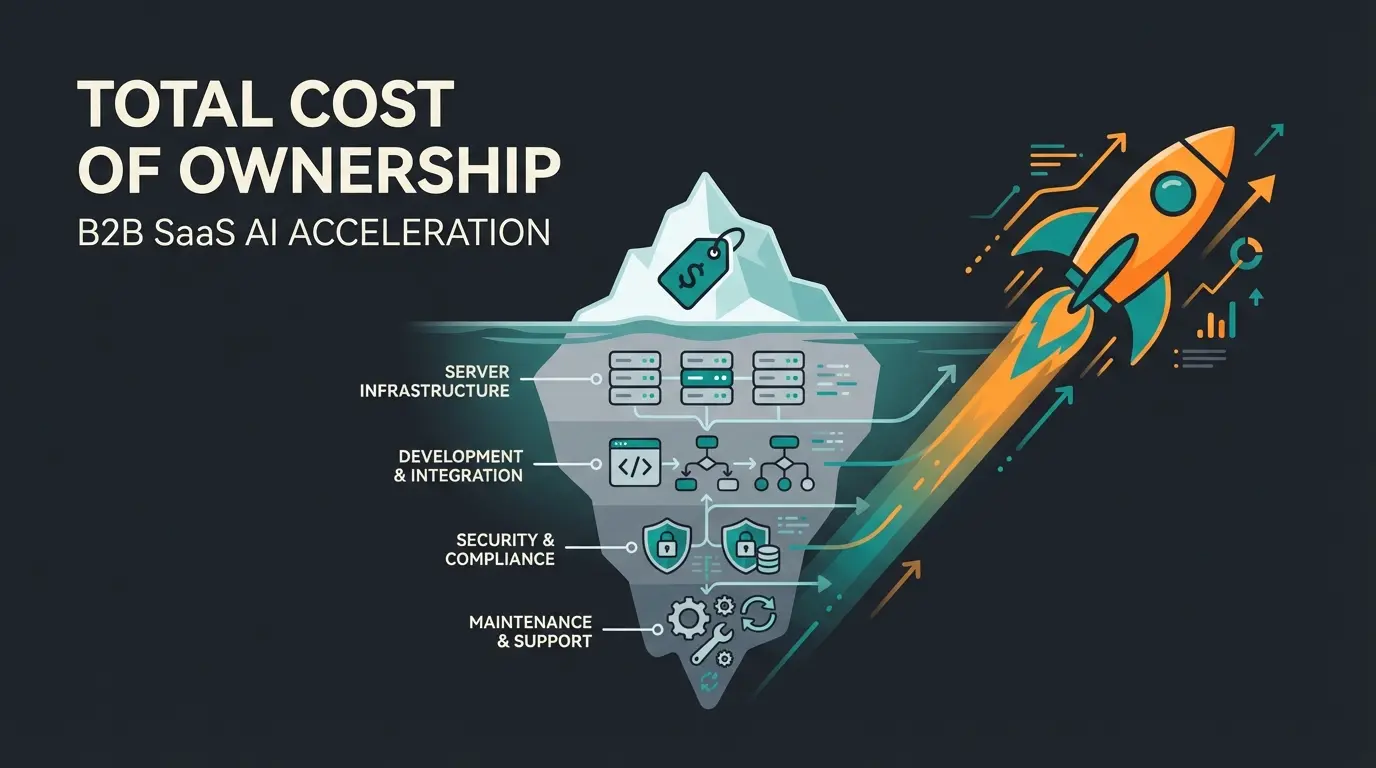
Introduction: The $100,000 Question in E-Commerce
It's the classic decision scenario for e-commerce managers and CTOs in 2026: You're facing a relaunch or new implementation, and the word "Magento" comes up. But confusion immediately follows. Is it Magento? Is it Adobe Commerce? Do I need the Cloud? And most importantly: Is the massive price jump to the Enterprise version really worth it?
The landscape has changed dramatically since Adobe acquired Magento. While Adobe Commerce (formerly Enterprise Edition) has increasingly evolved toward a closed, high-priced suite for large corporations, Magento Open Source (formerly Community Edition) remains the backbone for flexible, innovative merchants—and is gaining new momentum through initiatives like Mage-OS, as reported by the Mage-OS Association.
This article isn't a superficial comparison. We go deep into the subject matter. We analyze not just features and licensing costs but also strategic aspects often missing from standard comparisons: Data sovereignty in Germany (GDPR) and the true value of AI in e-commerce. Because "AI" is often used as a sales argument for the expensive license, even though specialized solutions on the free version are frequently more powerful.
Whether you're a "hidden champion" in the German Mittelstand or an emerging B2C brand, this guide provides the framework for a decision that will still hold up in 2030. If you're also considering other platforms, our comprehensive Shopware vs Magento comparison offers additional perspective on the European market.
Quick Definitions: What Is What in 2026?
Before we dive into the analysis, we need to clear up the naming chaos. Adobe has aggressively rebranded, which often leads to misunderstandings. Understanding the difference between magento community vs enterprise naming conventions is essential for making the right choice.
Magento Open Source (The Foundation)
This is the system formerly known as Magento Community Edition.
- Model: Free license (Open Source)
- Hosting: You choose the host yourself (on-premise or cloud of your choice)
- Target audience: Small to large businesses that need full control over their code and data and have developer resources (internal or agency)
- Status 2026: Still extremely popular, supported by the community and the Mage-OS Association, which ensures the platform continues to evolve even without Adobe's full focus
Adobe Commerce (The Enterprise Package)
This is the evolution of the Magento Enterprise Edition, and understanding magento open source vs commerce differences is crucial for your decision.
- Model: Annual license fees based on revenue (GMV)
- Adobe Commerce On-Premise: You host yourself but pay for the software features
- Adobe Commerce Cloud: PaaS solution (Platform as a Service), including hosting on Adobe's infrastructure (Azure)
- Target audience: Large enterprises that need SLA-backed support, out-of-the-box B2B suites, and PCI compliance
Mage-OS (The New Player)
An important note for 2026: Mage-OS is a community-driven fork of Magento Open Source. It's compatible but includes bug fixes and improvements that Adobe neglects in the free version. For many German agencies, this has become the standard for "Magento" projects. According to Mage-OS documentation, the project maintains full compatibility while providing faster security patches.
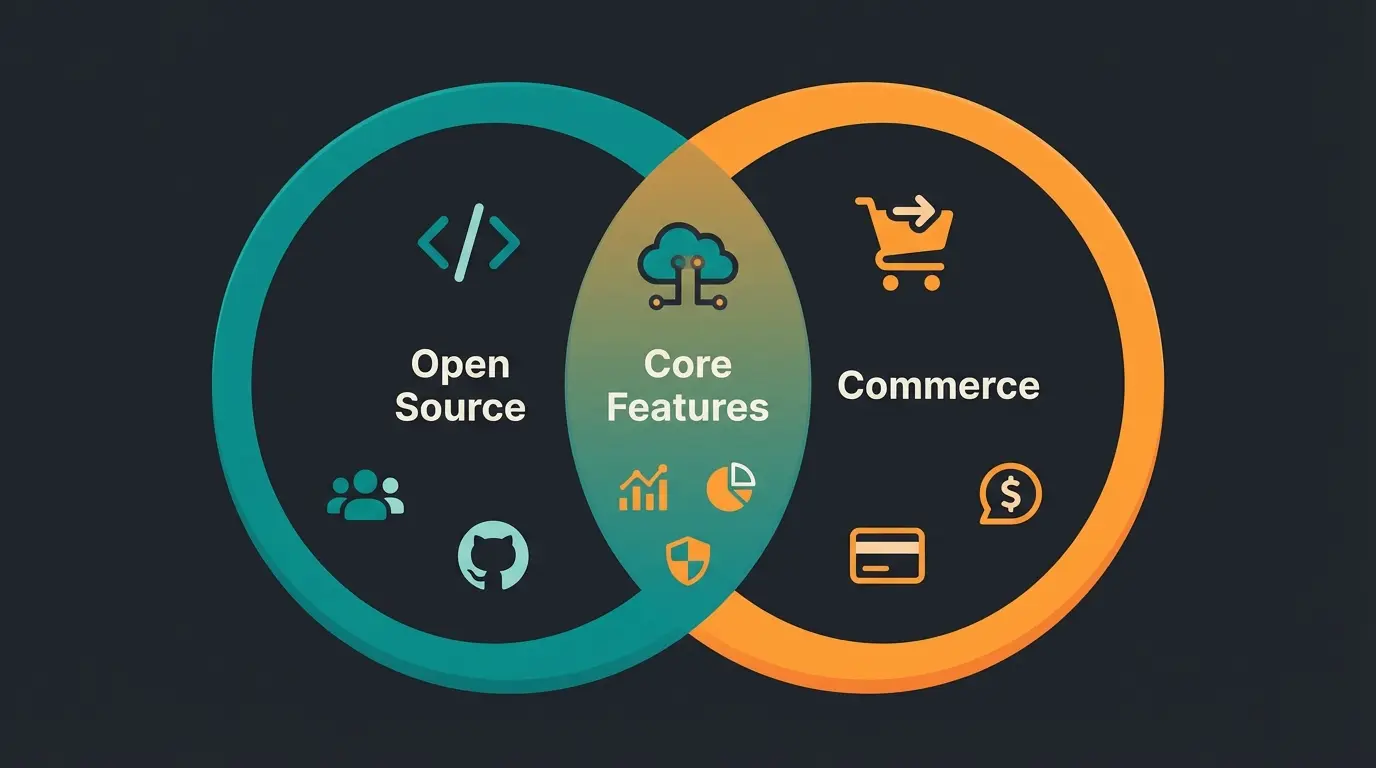
Core Differences: Adobe Commerce vs Magento Open Source
The adobe commerce vs magento decision is often reduced to a simple formula: "Free vs. Expensive." However, this is dangerously shortsighted. Let's examine the differences in detail, which our Adobe Magento guide covers comprehensively.
Costs & Total Cost of Ownership (TCO)
This is usually the first filter. The license costs for Adobe Commerce are significant and recurring.
Magento Open Source:
- License: $0 / Year
- Hosting: Variable, approximately $300 - $2,000 per month depending on traffic (e.g., with German specialists like MGT-Commerce or Maxcluster)
- Development: Higher, as missing features (e.g., B2B) must be added through modules or custom development
Adobe Commerce:
- License: Starts at approximately $22,000 per year for revenues under $1 million. For revenues over $25 million, costs quickly rise to $125,000 to $200,000 per year, according to eesel.ai pricing analysis
- Cloud surcharge: The Cloud version often starts at $40,000 per year, as noted by elogic.co
- Development: Agency costs also apply here, often with higher hourly rates since certified "Adobe Commerce" developers are more expensive
For a complete breakdown of all expenses, including hidden costs, check our comprehensive Magento shop costs guide.
Zero licensing fees, budget goes to innovation
Starting price for sub-$1M GMV businesses
PaaS solution with managed hosting included
Mid-market merchants save by choosing Open Source + specialized tools
Hosting, Security & GDPR (The German Angle)
This is where it gets critical for the DACH market.
Adobe Commerce Cloud: Uses a PaaS infrastructure (mostly Azure). While there are European data centers, you give up control over the infrastructure. The "shared responsibility" approach to GDPR can be complex here, especially regarding the US CLOUD Act, as analyzed by cunderwood.dev.
Magento Open Source: You have full data sovereignty. You can host with a German provider (e.g., in Frankfurt) that is ISO 27001 certified and guarantees that no data leaves the EU. For German data protection officers, this is often the "killer argument" for Open Source, confirmed by neterra.cloud compliance reports.
Security: Adobe Commerce offers automated PCI compliance tools. With Open Source, you (or your agency) are responsible for applying patches. However, with competent partners, Open Source's security level is identically high, as magefan.com security analysis confirms.
B2B Capabilities
Adobe Commerce shines in the B2B space. The integrated B2B suite includes:
- Company accounts with hierarchies and permissions
- Quote processes and negotiated price lists
- Quick order lists and requisition lists
The Open Source Workaround: Magento Open Source does not have these features natively. But there are excellent third-party modules (e.g., from Amasty, Mageplaza, or BSS Commerce) that close this gap for a fraction of the license costs (often a one-time fee of $300-500 per module), according to bsscommerce.com and magefan.com.
Support & Scalability
- Adobe Commerce: Offers 24/7 support and a "Customer Success Manager." This is important for corporations that need "insurance" to delegate responsibility, as detailed by aureatelabs.com
- Open Source: Support comes from your agency or the community. The community is huge and often faster than official support, but there's no SLA from the manufacturer
Feature vs. Cost Matrix: Complete Comparison
This table visualizes how you can often do better with Open Source and third-party tools than with the expensive suite. This comparison is essential for understanding magento open source vs commerce trade-offs.
| Feature | Magento Open Source | Adobe Commerce | Open Source + Specialized AI |
|---|---|---|---|
| License Costs | $0 | from $22,000/year | $0 (plus tool costs) |
| Hosting | Freely selectable (DE/EU) | Cloud (PaaS) or On-Prem | Freely selectable (Max GDPR control) |
| B2B Features | Via extensions (~$500 one-time) | Natively integrated | Via extensions |
| Page Builder | Basic version | Extended (Staging, Preview) | Basic + Hyvä Themes (better performance) |
| Product Search | Elasticsearch / OpenSearch | Live Search (Adobe Sensei) | Elasticsearch + AI layer |
| Product Intelligence | Basic filters | Statistical recommendations (Sensei) | Conversational product consultation |
| Support | Community / Agency | Adobe Support (SLA) | Agency + Tool support |
Search & Intelligence: Your Key Differentiator
Here lies the biggest strategic mistake companies make when deciding. Adobe sells the Commerce license often with the argument "Native AI" (Adobe Sensei). But what does that really mean?
What Adobe Sensei Offers (The "Black Box")
Adobe Sensei in Adobe Commerce offers features like Live Search and Product Recommendations, as documented by wagento.com and mgt-commerce.com.
- How it works: It's primarily statistical and behavior-based. "Customers who bought X also bought Y" or "This product is often viewed together"
- Advantage: It's deeply integrated and automates cross-selling based on mass data
- Disadvantage: It doesn't "understand" the customer. It optimizes for clicks, not problem-solving. When a customer searches for "running shoes for marathon in rain," Sensei delivers products that contain the keywords or statistically match, but it doesn't advise
According to swiftotter.com analysis, Adobe Live Search (part of Commerce) takes a lot of work off your hands but also control. You often can't precisely control why a product ranks at the top. For merchandisers who want to push certain products (e.g., due to high margin or inventory), this can be frustrating.
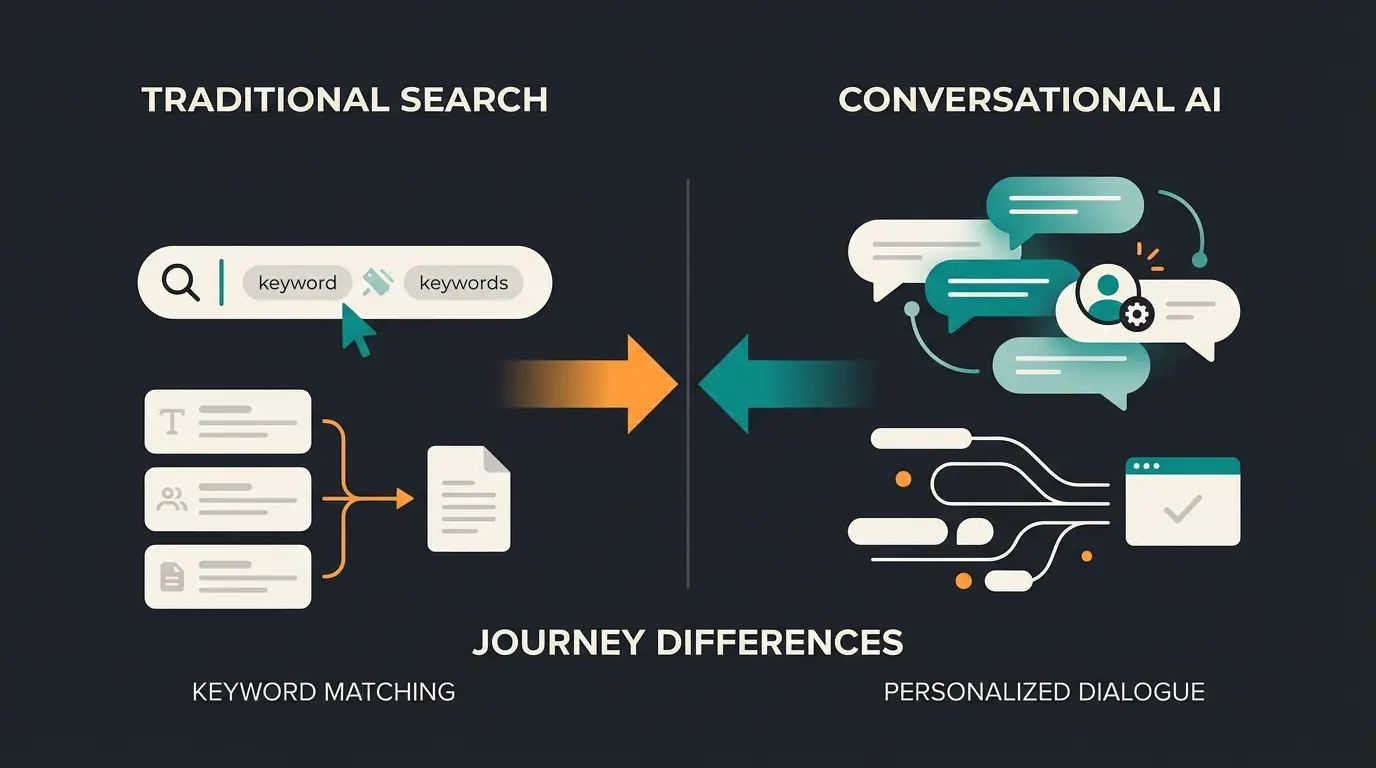
The Gap: Search vs. Consultation
Most comparisons (see competitors like BigCommerce or agencies) ignore the difference between Finding (Search) and Advising (Consultation).
- Search (Adobe Sensei / Algolia / Klevu): Responds to keywords. Good for customers who know exactly what they want (e.g., "Nike Air Max Size 42")
- Consultation (The missing puzzle piece): Responds to needs. Good for customers who have a problem but don't know the product (e.g., "Which running shoe stabilizes my foot with overpronation?")
This distinction is crucial for modern e-commerce success. Learn more about implementing effective AI product consultation strategies that go beyond basic search functionality.
The Solution: Open Source + Specialized AI
Instead of paying $40,000+ per year for Adobe Commerce to get a statistical AI, smart companies in 2026 often choose the following path:
- Base: Magento Open Source (License costs: $0)
- Investment: The saved budget flows into a specialized AI consultation solution
Why this approach is superior:
A specialized "Conversational AI" can act as a real sales consultant. It uses Large Language Models (LLMs) to understand product attributes and usage contexts. It can ask questions, analyze needs, and recommend products because they fit, not just because others bought them. Our guide on AI chatbot implementation explains how this transforms customer interactions.
The result: You get "Enterprise Intelligence" on a "Community Platform"—and often at a fraction of the TCO, with simultaneously higher conversion rates through real consultation. For Shopify merchants exploring similar options, our Shopify chatbot guide provides platform-specific insights.
Stop paying enterprise license fees for basic product recommendations. Our AI consultation solution delivers personalized customer guidance on any platform—including Magento Open Source.
Start Your Free TrialWhy "Native AI" Often Disappoints
Let's return to the topic of magento open source vs commerce in the context of AI. Adobe markets "Sensei" massively. But in practice, limitations become apparent.
The Problem with "Black Box" AI
Adobe Live Search takes a lot of work off your hands but also control. You often can't precisely control why a product ranks at the top. For merchandisers who want to push certain products (e.g., due to high margin or inventory), this can be frustrating.
The Difference from 2026 AI Standards
We live in the era of ChatGPT and LLMs. Customers today expect more than just "Similar Products." They expect dialogue.
- Adobe Commerce: Offers "Silent AI" in the background (ranking, sorting)
- Modern requirement: Customers want "Active AI." A chatbot or assistant that asks: "Are you looking for the bike for commuting or for sports?" and filters based on that
The integration of conversational AI extends beyond website chatbots. Many merchants are now implementing WhatsApp AI bot solutions to reach customers on their preferred messaging platforms.
Do you need advanced quotes, hierarchies, and credit limits?
Is your annual revenue over €5M where license costs become negligible?
Must data remain on German/EU servers for compliance?
Do customers need consultation or just product search?
Compare total ownership costs including development and tools
Decision Framework: Who Should Choose What?
To make your decision easier, we've developed a framework based on 2026 market data.
Choose Magento Open Source (or Mage-OS) If...
- Budget efficiency: You prefer to invest in innovation (UX, AI consultation, marketing) rather than software rental
- Data sovereignty (GDPR): You want or need to keep your data on German servers under your full control
- Flexibility: You need customized adjustments that go deep into the core without waiting for Adobe roadmaps
- The "Hybrid" approach: You plan to connect specialized best-of-breed tools (e.g., for search, PIM, or AI consultation) instead of relying on the Adobe suite
Choose Adobe Commerce If...
- Corporate compliance: Your IT policies mandatorily require manufacturer support (SLA) and PCI certification "out of the box"
- Massive B2B volume: You intensively use all B2B features (quotes, hierarchies, credit limits) and don't want to maintain these through modules
- Adobe ecosystem: You already intensively use Adobe Experience Manager (AEM), Adobe Analytics, and Marketo and benefit from seamless integration
- Money plays a subordinate role: With a GMV of >€50 million, €100,000 in license costs hardly matters
For those considering alternatives beyond the Magento ecosystem, our Magento alternative 2025 guide compares other viable platforms including Shopware and modern headless solutions.
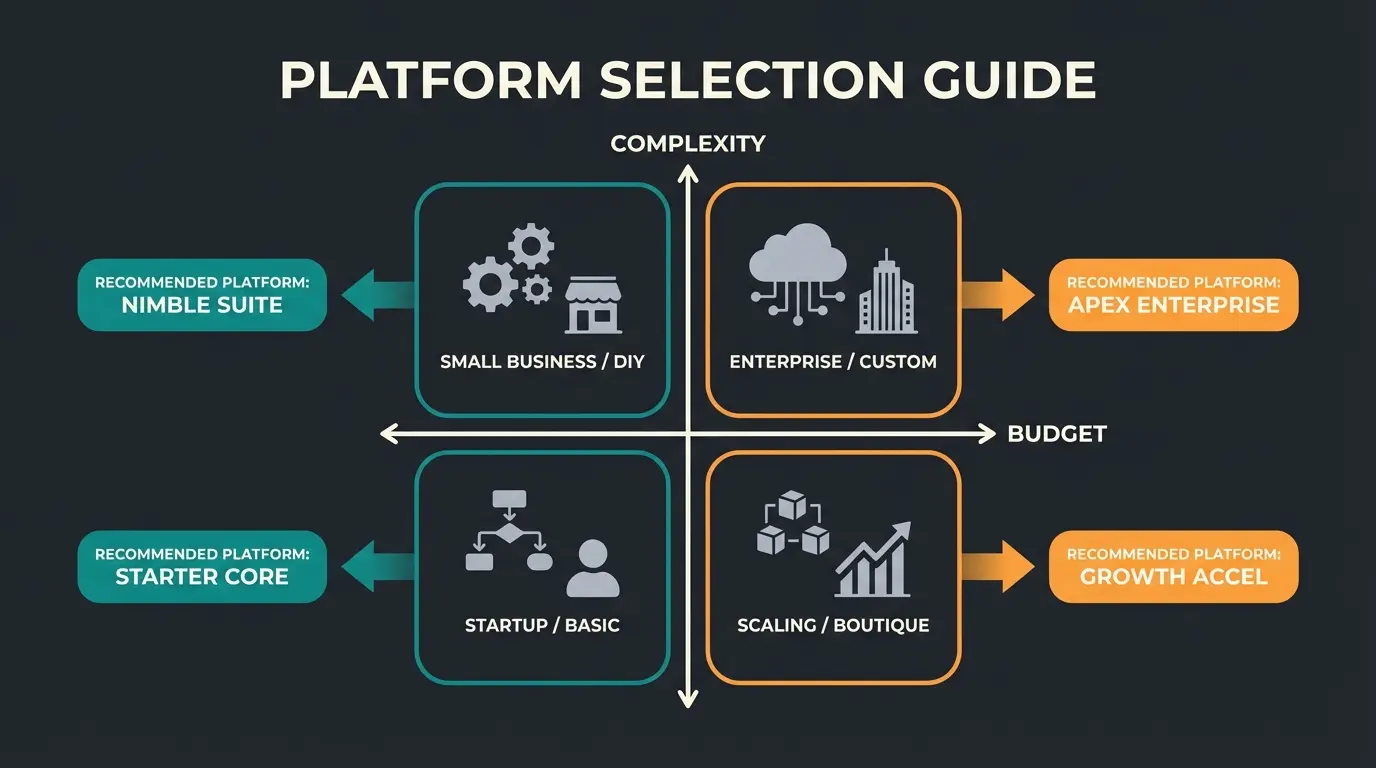
Practical Tips for the German Market
When deciding on one of the two variants, consider these DACH-specific points:
German Setup Requirements
Whether Commerce or Open Source, you need adaptations for the German market (legal compliance, terms and conditions, cancellation rights). The FireGento MageSetup module is the gold standard for Open Source here, according to github.com and magecloud.net documentation.
Performance & Frontend Considerations
Adobe Commerce often still relies on the sluggish Luma theme or PWA Studio. In the Open Source space, Hyvä Themes has established itself as the standard—it's drastically faster and cheaper in development. Check if you can also use Hyvä with Adobe Commerce (yes, possible), but the ROI is higher with Open Source, as detailed by mateuszzbylut.com.
Payment Methods Integration
Ensure that local favorites like PayPal Plus, Klarna, and invoice payment (Ratepay/Unzer) are cleanly integrated. This is usually solved through modules in both versions, not through the core. The comparison between Shopify vs Magento also highlights payment flexibility as a key differentiator.
Frequently Asked Questions
Adobe Commerce (formerly Enterprise Edition) is a paid, licensed platform with built-in B2B features, PCI compliance tools, and Adobe Sensei AI. Magento Open Source (formerly Community Edition) is free to license but requires you to build or purchase these capabilities through extensions. The core codebase is similar, but Commerce includes approximately 40+ exclusive features and official Adobe support.
Magento Open Source has zero license fees. Adobe Commerce starts at approximately $22,000 per year for businesses under $1 million GMV, scaling to $125,000-$200,000+ for enterprises over $25 million GMV. The Cloud version typically starts at $40,000 annually. However, Open Source often requires higher development investment to achieve similar functionality.
Yes, when properly maintained. Security depends on timely patch application, competent hosting partners, and proper configuration—not the license type. Many large enterprises run secure Open Source installations. The key difference is that Adobe Commerce provides automated security tools and guaranteed SLAs, while Open Source relies on your team or agency for patch management.
Magento Open Source offers advantages for strict GDPR compliance because you maintain full data sovereignty. You can host with German providers, ensure data never leaves the EU, and have complete control over data processing. Adobe Commerce Cloud uses Azure infrastructure with European data centers, but the shared responsibility model and US CLOUD Act implications require careful legal review.
Absolutely. While Adobe Commerce includes Sensei for statistical recommendations, specialized AI consultation tools available for Magento Open Source often provide superior results. These modern solutions use LLMs to understand product context and customer needs, delivering conversational guidance rather than just "customers also bought" suggestions—often at lower total cost than Adobe's license fees.
Conclusion: Don't Be Blinded by the Enterprise Label
The adobe commerce vs magento decision is not a decision about "Good vs. Bad" but about "Suitable vs. Unsuitable."
For 90% of merchants in the DACH region, Magento Open Source (or Mage-OS) in combination with a strong hosting partner and modern third-party tools is the economically more sensible choice. You retain control over your data, save massive license costs, and remain flexible.
The decisive competitive advantage in 2026 lies not in the Commerce license but in how intelligently your shop sells. Instead of sinking the budget into license fees for standard features, invest it in AI-powered sales consultation that runs on your Open Source platform. This is how you create real added value for your customers—and differentiate yourself from the mass of "dumb" catalog shops.
The landscape of e-commerce platforms continues to evolve rapidly. For a broader perspective on platform choices, our comparison of WooCommerce vs Shopify explores how different ecosystems approach similar challenges.
Action Recommendations
- Calculate your TCO over 3 years (License vs. Development costs)
- Check your B2B requirements: Are they standard or highly complex?
- Test the difference: Compare Adobe's "Product Recommendations" with a real AI consultation demo. You'll see: The difference between "statistics" and "understanding" is tomorrow's revenue
Understanding how AI-powered product consultation transforms the shopping experience will help you evaluate whether your platform investment should focus on licenses or intelligent customer engagement tools.
Join hundreds of merchants who chose innovation over expensive licenses. Our AI consultation platform integrates seamlessly with Magento Open Source to deliver enterprise-level product intelligence without enterprise-level costs.
Get Started Free
Lasse is CEO and co-founder of Qualimero. After completing his MBA at WHU and scaling a company to seven-figure revenue, he founded Qualimero to build AI-powered digital employees for e-commerce. His focus: helping businesses measurably improve customer interaction through intelligent automation.