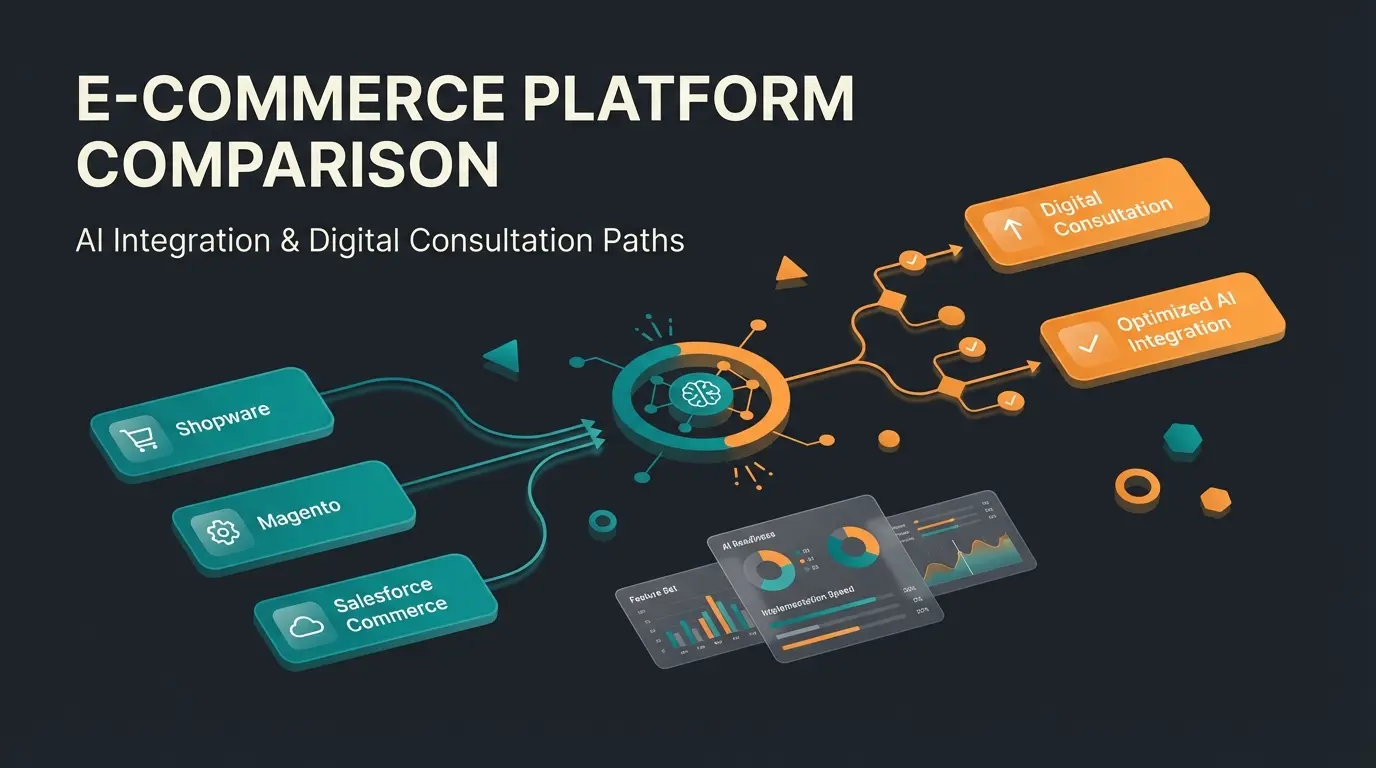
Introduction: Why the Magento Exit Seems Inevitable in 2025
Magento (now Adobe Commerce) reigned as the undisputed king of e-commerce for complex requirements for over a decade. Anyone needing variants, B2B price lists, and international multi-store setups could hardly avoid Magento. But the tide has turned dramatically.
In 2025, many merchants face a watershed moment. The reasons for searching for a Magento alternative are diverse, but they typically boil down to three pain points:
- Exploding Costs: Maintaining Magento 2 is extremely resource-intensive. Security patches, PHP updates, and hosting consume budgets that should flow into marketing.
- Lack of Agility: While competitors on Shopify or Shopware build new landing pages in minutes, Magento teams often need days or weeks for frontend adjustments.
- The 'Consultation Crisis': Magento excelled at managing complex catalogs. But modern customers no longer want to filter – they want to be advised. And this is precisely where traditional shop systems increasingly fail when not enhanced with AI.
This article is not a superficial comparison. We analyze the best Magento alternatives for the German and European market, illuminate the new pricing models of 2025 (particularly at Shopware and Shopify), and demonstrate why switching platforms is only half the battle if you don't simultaneously revolutionize your product consultation. For a detailed Magento vs Shopware comparison, check our dedicated analysis.
Magento merchants report 73% higher total cost of ownership compared to modern alternatives
Merchants using AI guided selling see significant conversion improvements
Shopware's new Fair Usage Policy kicks in above this revenue level
Shopify Plus base cost with 3-year commitment
Decision Matrix: Which Type of Alternative Are You?
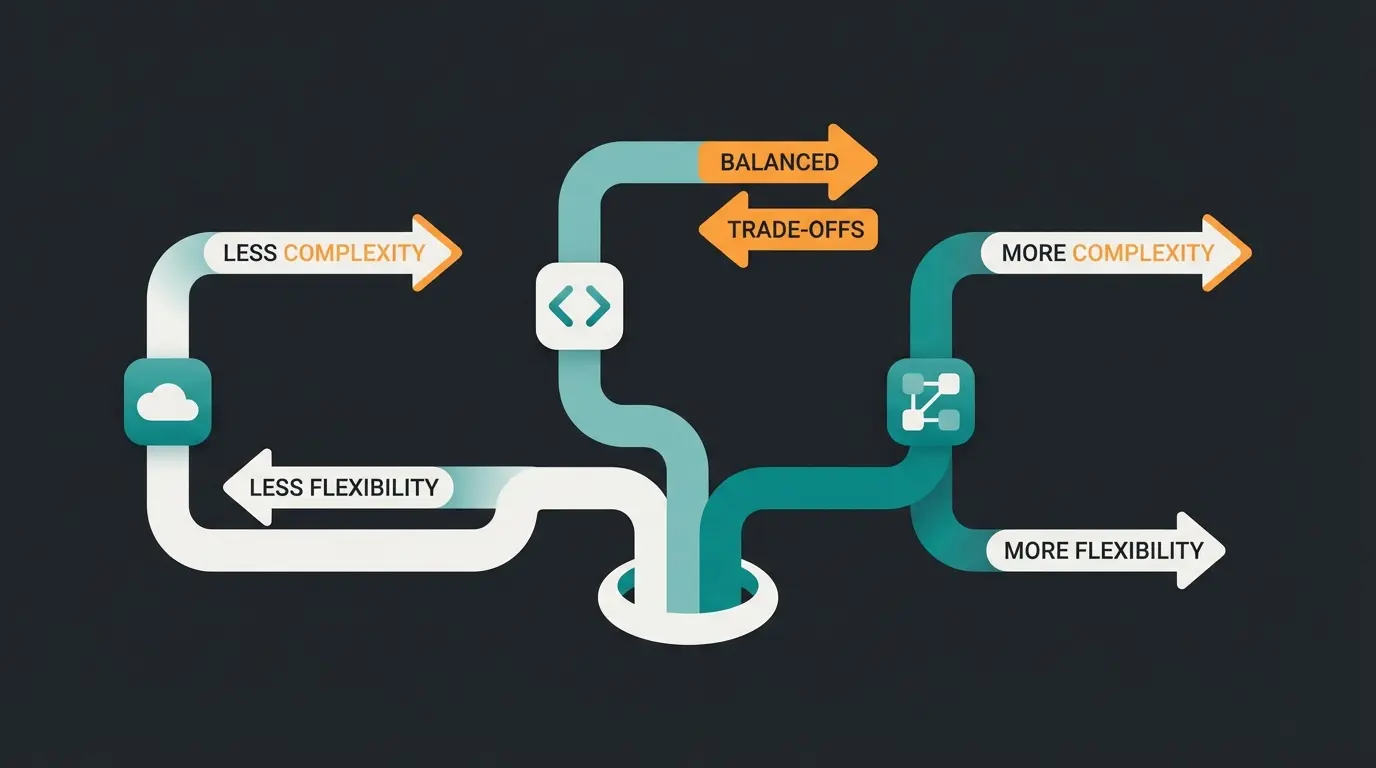
Before examining individual software solutions, we need to clarify the architecture. The search for a Magento replacement often fails because apples are compared to oranges. Understanding your specific needs is crucial for making the right choice, similar to choosing between Shopware and Shopify.
The SaaS Route (Software as a Service)
- Examples: Shopify Plus, BigCommerce
- Concept: You rent the shop including hosting, security, and updates
- Advantage: Extremely fast time-to-market, no worries about server updates or security patches
- Disadvantage: Less access to core code. Data often resides (partially) in the USA
- Ideal for: Brands wanting to focus 100% on marketing and sales without maintaining a complex IT department
The Open-Source / PaaS Route (Platform as a Service)
- Examples: Shopware 6, WooCommerce, JTL-Shop
- Concept: You own the license (or use open-source code) and host yourself or with a specialized partner
- Advantage: Maximum data sovereignty (GDPR), deep intervention in logic possible, perfect for complex B2B processes in the DACH region
- Disadvantage: You (or your agency) are responsible for updates and performance
- Ideal for: German SMEs, B2B merchants with complex ERP integrations and high data protection requirements
For those exploring WooCommerce options specifically, our guide on WooCommerce alternatives for German shops provides additional insights.
The Composable / Headless Route (The AI-Ready Stack)
- Examples: Spryker, commercetools (or Shopware/Shopify in headless mode)
- Concept: Backend (shopping cart, checkout) and frontend (what the customer sees) are separated
- The Key Benefit: This is the best architecture for AI commerce. You can use a lean backend and implement a highly intelligent AI consultation layer on the front end that guides the customer
- Ideal for: Innovation leaders who understand that the standard online shop is dying and being replaced by interactive consultation
Top 5 Magento Alternatives in Detail (2025 Update)
Based on market shares in Germany, B2B capabilities, and future viability, we have analyzed the most relevant systems. This comprehensive overview helps you find the perfect alternative to Magento for your specific requirements.
1. Shopware 6: The German Market Leader
Shopware is by far the most common answer to the question of a Magento alternative in the DACH region. It combines the flexibility of open source with cutting-edge technology (Symfony, Vue.js). For a comprehensive breakdown of Shopware costs in 2025, see our detailed analysis.
Why Choose Shopware 6?
- B2B Suite: Shopware offers powerful B2B functions out of the box (rights & roles, approval processes, quick orders) that often required expensive extensions on Magento
- GDPR & Legal Compliance: As a German company, Shopware is 'GDPR-native'. Server locations and legal compliance are rarely an issue
- Headless Core: Shopware 6 was developed API-first, making it the ideal base for later connecting AI tools or mobile apps
The new pricing tiers according to Shopware's pricing page and datrycs analysis include:
- Rise: Starting at approximately €600/month. Includes support and the 'Rule Builder'
- Evolve: Price on request (approximately €2,400+). Focus on B2B and extended CMS functions
- Beyond: Enterprise level with 24/7 support and multi-inventory capabilities
Verdict: Shopware 6 is the most logical Magento replacement for German merchants, but the new licensing models mean it's no longer the 'budget solution'. Compare this with other Shopware alternatives in our 2025 comparison.
2. Shopify Plus: The International Scaler
Shopify has gained massive ground in Germany. With Shopify Plus, the provider targets Magento Enterprise customers directly. For merchants evaluating both platforms, our Shopify vs Magento comparison guide provides comprehensive insights.
Why Choose Shopify Plus?
- Stability: No more installing updates. Shopify guarantees 99.99% uptime, often saving tens of thousands of euros in agency costs per year
- Automation: With 'Shopify Flow', you can automate processes (e.g., 'If order > €1,000, then tag as VIP') without code
- B2B on Shopify: According to skailama.com and rvsmedia, Shopify has invested massively in B2B in 2024/2025 (company profiles, net prices, draft orders) to close the gap to Magento
The Cost Trap?
Based on analysis from atlasstudios.agency, here's what you need to know:
- Base Price: Shopify Plus starts at $2,300 (approximately €2,150) per month with a 3-year contract in 2025
- Transaction Fees: Those not using 'Shopify Payments' (which is often the case in Germany due to missing local payment options or conditions) pay an additional 0.15% - 0.20% penalty fee on every sale
- Variable Costs: Above $800,000 monthly revenue, the model switches to 0.25% of revenue (capped at $40,000)
Verdict: Ideal for brands focusing on D2C (Direct-to-Consumer) and international growth who despise technical complexity. Those interested in German alternatives should also explore Shopify alternatives for Germany.
3. JTL-Shop: The Efficiency Master (ERP-Driven)
For merchants who primarily used Magento because of its connection to complex ERP systems, JTL is often the insider tip. According to uptain.de and fynax.io, JTL has also adjusted prices in 2024/2025.
Why Choose JTL-Shop?
- All-in-One Solution: JTL-Wawi (inventory management) and JTL-Shop are perfectly synchronized. No connector problems, no data discrepancies
- Marketplace Integration: JTL excels in multi-channel sales (Amazon, eBay, Kaufland)
- Costs: There are now editions like 'Start' (free up to 500 items), 'Advanced', and 'Pro' (starting at €299/month)
Verdict: Anyone prioritizing logistics and marketplaces while placing less emphasis on high-end design frontends will find a robust Magento alternative here.
4. WooCommerce: The Flexible Lightweight
Often underestimated but globally relevant with over 35% market share.
- Pros: Extremely cheap entry point, huge community, full control
- Cons: With very large product catalogs (100,000+ SKUs) or complex B2B rules, WooCommerce reaches its limits without massive customization. The 'plugin hell' (incompatibilities during updates) can become just as annoying as with Magento
For a detailed comparison, check our analysis of Shopware vs WooCommerce.
5. Spryker / commercetools: The Enterprise League
If you generate over €50-100 million in revenue, a standard shop is often too limited. This is where 'Composable Commerce' solutions come into play. They don't offer a finished frontend, only APIs. This allows maximum freedom but requires large development teams.
The Hidden Problem: The Consultation Gap
Here lies the crux that most migration guides overlook. Understanding this fundamental issue is essential before making any platform decision.
The Magento Paradox
Magento was terribly complex, but precisely this complexity allowed merchants to map extremely detailed product attributes, dependencies, and configurators. When merchants now switch to Shopify or Shopware, they often 'simplify' their data structure.
The Result: The shop is faster and prettier, but customers can no longer find the right product because the granular filters are missing or the navigation is too flat.
The Solution: AI Commerce Instead of Just Switching Shops
Instead of laboriously programming Magento's complex consultation logic into Shopify's backend (which slows down the system), you should take a different path in 2025:
Why AI Guided Selling is the True Magento Replacement
The concept of AI guided selling represents a fundamental shift in how e-commerce platforms serve customers:
- Dynamics: An AI asks customers: 'What do you need the bike for? Mountains or city?' instead of forcing them to filter by 'travel in mm'
- Independence: The AI consultation sits above the shop system. If you switch from Shopware to Shopify in 5 years, you simply take your 'best sales conversation' with you
- Conversion: Merchants using guided selling often see conversion uplifts of 20-30% because customer uncertainty ('Does this part really fit?') is eliminated
Learn more about how AI product consultation transforms the customer experience and why AI consulting in e-commerce is becoming essential.
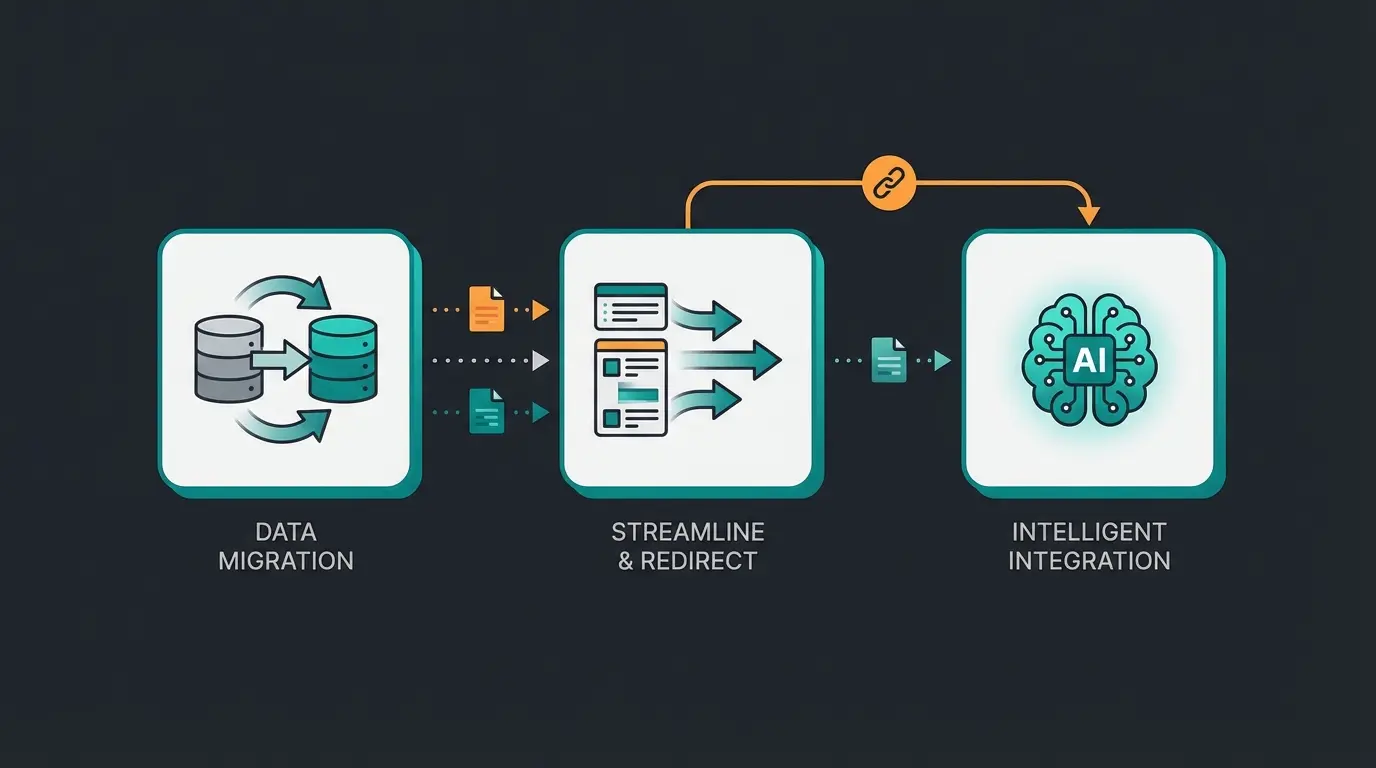
Replace heavy Magento infrastructure with lean, API-first platform (Shopware/Shopify)
Migrate and optimize product data, attributes, and customer information
Implement intelligent product consultation that sits above the shop system
AI learns from interactions to improve recommendations and conversions
Don't just replace Magento – upgrade your entire customer experience. Our AI-powered product consultation helps customers find the perfect products while boosting your conversion rates by 20-30%.
Start Your Free TrialComparison Table: Magento Alternatives Check (2025)
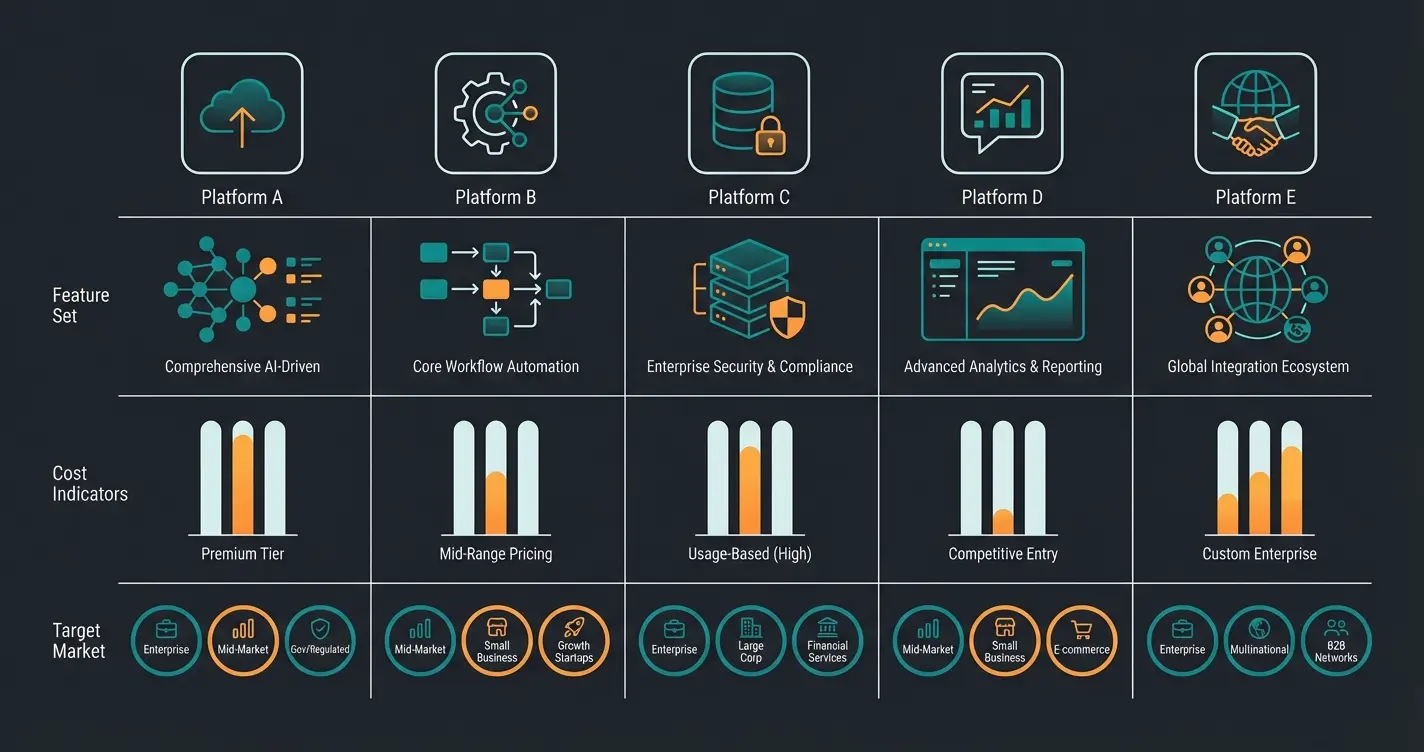
| Feature | Shopware 6 | Shopify Plus | JTL-Shop | Magento 2 (Status Quo) |
|---|---|---|---|---|
| Type | Open Source / PaaS | SaaS | On-Premise / Hosting | Open Source / PaaS |
| License Costs | From €600/mo (Rise) to Enterprise | From ~€2,150/mo + revenue share | From €0 to ~€299/mo+ | Free (Open Source) but extremely high maintenance |
| Server Location | DE / EU (excellent for GDPR) | Global / US (consider data residency) | DE (Self-Hosted) | Self-Hosted |
| B2B Focus | Very High (Native Suite) | Medium to High (greatly improved) | High (via ERP) | Very High |
| Maintenance Effort | Medium (updates required) | Very Low (SaaS) | Medium | Extremely High |
| AI Readiness | High (API-First approach) | High (Many apps) | Medium | Medium (Legacy code) |
| Verdict | The All-Rounder for DE/EU | The Scaler | The Logistician | The Legacy System |
Migration Guide: 3 Steps Away from Magento
Switching from Magento is an operation on an open heart. Here are the three critical phases to avoid losing the 'patient'.
Step 1: Data Mapping & Cleanup
Magento databases are often 'historically grown' (a euphemism for chaotic).
- Tip: Don't migrate everything. Use the switch to get rid of old customer corpses (GDPR deletion deadlines!) and products that haven't sold in 2 years
- Attributes: Map Magento attributes (EAV model) to the often flatter structures of Shopify/Shopware. This is where most errors occur
Step 2: The SEO Life Insurance (301 Redirects)
Magento often generates complex URLs (`/category/product-id-123.html`). New systems have different structures (`/products/product-name`).
- Mandatory: Create a complete redirect map. Every old URL with traffic must redirect to the exact equivalent in the new shop
- Risk: If you forget this, you'll lose 50-80% of your Google visibility within 2 weeks
Step 3: Integration of Intelligence
Don't just build the new shop as a copy of the old one.
- Integrate modern tools for product discovery from day one
- Use the APIs of Shopware 6 or Shopify to connect external AI services that enrich product data or advise customers in chat
The Platform vs. Consultation Matrix
When evaluating Magento alternatives, most merchants focus exclusively on backend capabilities. However, the real competitive advantage lies in the intersection of platform complexity and consultation quality.
High backend complexity, low consultation quality without AI enhancement
Balanced complexity with superior consultation through AI integration
Simplified backend but limited consultation capabilities
Maximum flexibility with best-in-class consultation potential
The key insight: Moving from a high-complexity/low-consultation position (traditional Magento) to a medium-complexity/high-consultation position (modern platform + AI layer) delivers the best ROI for most merchants.
The German Compliance Check
For merchants operating in Germany and the EU, compliance isn't optional. Here's what matters most when selecting a Magento replacement:
| Criteria | Shopware 6 | Shopify Plus | JTL-Shop | commercetools |
|---|---|---|---|---|
| EU Data Residency | ✓ Native | Partial (Options available) | ✓ Self-hosted | ✓ EU regions available |
| GDPR Compliance | ✓ Built-in | ✓ With configuration | ✓ Built-in | ✓ Built-in |
| German Legal Packages | ✓ Native | Via apps/partners | ✓ Native | Custom implementation |
| B2B Features | ✓ Comprehensive | ✓ Improved in 2025 | ✓ Via ERP | ✓ API-based |
| AI Integration Ready | ✓ API-first | ✓ App ecosystem | Partial | ✓ Fully flexible |
Frequently Asked Questions
Shopware 6 is the leading choice for German B2B merchants due to its native B2B suite, GDPR compliance, and German-speaking support. The platform offers built-in features for approval workflows, customer-specific pricing, and quick ordering that often required expensive extensions on Magento.
Migration costs vary significantly based on catalog size, customizations, and integrations. Budget €15,000-€50,000 for small to medium shops and €50,000-€150,000+ for complex B2B setups. The new Shopware Fair Usage Policy means shops above €1M GMV need paid licenses starting at €600/month (Rise plan).
Yes, but only with proper planning. Create a comprehensive 301 redirect map for all indexed URLs before migration. Magento's URL structure differs from most alternatives, making redirects essential. Without proper redirects, expect 50-80% visibility loss within weeks.
Magento excelled at managing complex product attributes and configurations. Simply switching to a 'simpler' platform often means losing this capability. AI consultation layers restore and enhance this functionality by guiding customers through complex decisions conversationally, typically improving conversions by 20-30%.
Choose Shopware 6 if you need maximum control, German legal compliance, and deep B2B processes. Choose Shopify Plus if you prioritize speed, international scaling, and minimal technical overhead. Both support AI integration, but Shopware's API-first architecture often provides more flexibility for custom consultation solutions.
Conclusion: The Best Magento Alternative is a Mindset Shift
The question in 2025 is no longer just 'Shopware or Shopify?' Both systems are excellent Magento alternatives that can drastically reduce TCO (Total Cost of Ownership).
- Choose Shopware 6 if you need maximum control, German legal compliance, and deep B2B processes, and are ready to invest in the new license models (Rise/Evolve)
- Choose Shopify Plus if you prioritize speed and international growth over individual customization and have the budget for monthly fees
But don't forget: The reason customers buy from you isn't the software in the background. It's the way you present and sell your products. Switching from Magento is the perfect opportunity to leave the static catalog behind and create a shopping experience through AI-powered consultation that is truly future-proof.
Analyze your consultation gap and discover how AI-powered product guidance can replace Magento's complexity while dramatically improving customer experience and conversion rates.
Get Your Free Analysis
Lasse is CEO and co-founder of Qualimero. After completing his MBA at WHU and scaling a company to seven-figure revenue, he founded Qualimero to build AI-powered digital employees for e-commerce. His focus: helping businesses measurably improve customer interaction through intelligent automation.