Why the Market Leader Isn't Always the Best Choice
Shopify has revolutionized e-commerce. It has made creating an online shop as simple as setting up a social media profile. However, in 2025, the facade of the "one-size-fits-all" solution is crumbling, particularly in the German market. Those searching for Shopify alternatives today typically do so for three painful reasons: costs scale uncontrollably through apps and transaction fees, legal uncertainty (GDPR) hangs like a sword of Damocles over US hosting, or the shop hits its limits with complex products.
The search for an alternative to Shopify is often frustrating. Most comparisons merely list feature tables: Shopware can do this, WooCommerce can do that. However, this perspective falls short. When you migrate your shop from Shopify to another provider, you often only exchange the tool, not the outcome. As explored in our comprehensive Shopware vs Shopify comparison, the fundamental selling approach matters more than the platform itself.
In this comprehensive guide, we analyze not only the best Shopify alternatives in Germany for 2025 but also uncover a fundamental gap in e-commerce: the absence of genuine consultation. While traditional shop systems (including Shopify) merely list products, new technologies enable for the first time actively selling products – similar to a good salesperson in a physical store.
This article is your blueprint for the system decision in 2025: from the hard cost truth to the GDPR trap, all the way to the future of "guided selling."
Decision Criteria: What Matters in Germany 2025
Before we examine the individual systems, we must define the benchmarks. A US-based dropshipper has different requirements than a German medium-sized enterprise. The following criteria are essential for the German market:
Legal Security and GDPR (The "German Factor")
Germany has one of the strictest competition and data protection laws in the world. Understanding the EU AI Act is also becoming increasingly important for merchants implementing AI solutions.
- Server Location: Shopify uses servers worldwide. While there are efforts toward EU hosting, through the US CLOUD Act, US authorities theoretically have access to data, even when it's stored in Frankfurt. According to Medium and Twipla, this remains a red flag for many data protection officers.
- Warning Letter Security: Features like basic price regulation, legally compliant checkout processes (button solution), and GDPR-compliant cookie banners must work "out-of-the-box." With US solutions like Shopify or Wix, this is often only possible through apps, which in turn carry their own data risks.
Total Cost of Ownership (TCO) – The True Cost Calculation
The monthly base price is often misleading. According to Coding9, understanding the full cost structure is essential before committing to any platform.
- Transaction Fees: Shopify charges fees (e.g., 2.9% + €0.30 in the Basic plan) if you don't use the in-house "Shopify Payments."
- App Costs: A professional Shopify store often requires 5-10 apps (for invoices, SEO, reviews, upselling). These monthly subscriptions can quickly triple the base fee.
- Commissions: Some alternatives don't charge revenue participation, which can save thousands of euros with high turnover.
Shopify charges per transaction when not using Shopify Payments
Average number of paid apps needed for a professional Shopify store
App subscriptions can triple your monthly platform costs
Advisory Capability (The New Metric)
This is the criterion that most comparisons ignore. As detailed in our guide on AI product consultation, this capability is becoming the key differentiator.
- Static vs. Dynamic: Can the shop only filter (size, color, price) or can it advise ("Which running shoe fits my knee problem?")?
- Conversion Lever: According to Uptain, the average e-commerce conversion rate in Germany is approximately 2.26%. To exceed this value, a beautiful design is no longer sufficient; the system must actively guide the customer.
The "Big 3" Classic Alternatives Explained
Here we analyze the established market leaders that are considered direct Shopify alternatives in Germany. For a deeper comparison, our Shopware alternatives analysis provides additional insights.
Shopware 6: The German Market Leader (Best for SME & Enterprise)
Shopware is the standard answer for German merchants who want to move "away from Shopify." The system originates from Schöppingen and is 100% aligned with the German market.
What Changed in 2025: Shopware has radically restructured its pricing model. The days of one-time purchase licenses are over. The new model relies on monthly plans: "Rise," "Evolve," and "Beyond." According to Erock Marketing and Webwirkung, this represents a significant shift in the platform's accessibility.
- Community Edition: Still free (open source), but hosting and maintenance are your responsibility.
- Rise Edition: Starts at €600 per month. Includes support and extended features like the "Flow Builder."
- Evolve/Beyond: For larger B2B scenarios, prices on request (often starting at €2,400/month).
Advantages: Shopware offers maximum GDPR compliance with the possibility of German server hosting, excellent B2B functions for dealer prices, customer groups, and complex offers, plus an extremely flexible headless architecture for individual frontends.
Disadvantages: The platform is not for beginners – you need an agency or developer. The entry into commercial versions at €600/month is significantly more expensive than Shopify Basic (approximately €36).
Verdict: The best choice for ambitious merchants in the DACH region with budget who seek independence from US corporations. Our detailed Shopware vs WooCommerce comparison explores these differences further.
WooCommerce: Freedom for DIY Enthusiasts (Best for Content & SEO)
WooCommerce is not a standalone system but a plugin for WordPress. It powers the most shops worldwide.
- Software: Free (open source)
- Hosting: From approximately €10-30/month according to Raidboxes and Shopify's own comparison – good hosting is mandatory for performance
- Maintenance: High. Plugins must be constantly updated.
Advantages: Full control where data belongs to you, hosting in Germany is easily possible. Since it's based on WordPress, the content marketing possibilities (blogging) are unmatched. The ecosystem offers thousands of affordable plugins.
Disadvantages: The "tinkering factor" means plugins can interfere with each other, and an update can crash the shop. Without caching and strong hosting, WooCommerce becomes slow with many products. When something breaks, you're on your own with no central support.
Verdict: Ideal for small to medium shops that already use WordPress and have technical know-how (or time).
JTL-Shop: The Efficiency Master (Best for Multichannel)
JTL actually comes from warehouse management (JTL-Wawi) and offers the shop as a perfect satellite.
What Changed in 2025: JTL has also tightened the price screw. According to JTL Software, the free "Community Free Edition" is now limited to 500 items. Anyone selling more must pay.
Advantages: The synchronization between warehouse, Amazon, eBay, and your own shop is unmatched with the Wawi integration. Support, community, and legal security are "Made in Germany."
Disadvantages: The standard templates often appear somewhat old-fashioned compared to Shopify. The platform really only makes sense if you also use JTL-Wawi.
Verdict: The logical choice for merchants who primarily sell on marketplaces (Amazon/eBay) and build their own shop as an additional channel.
The Hidden Problem: Why Switching Often Disappoints
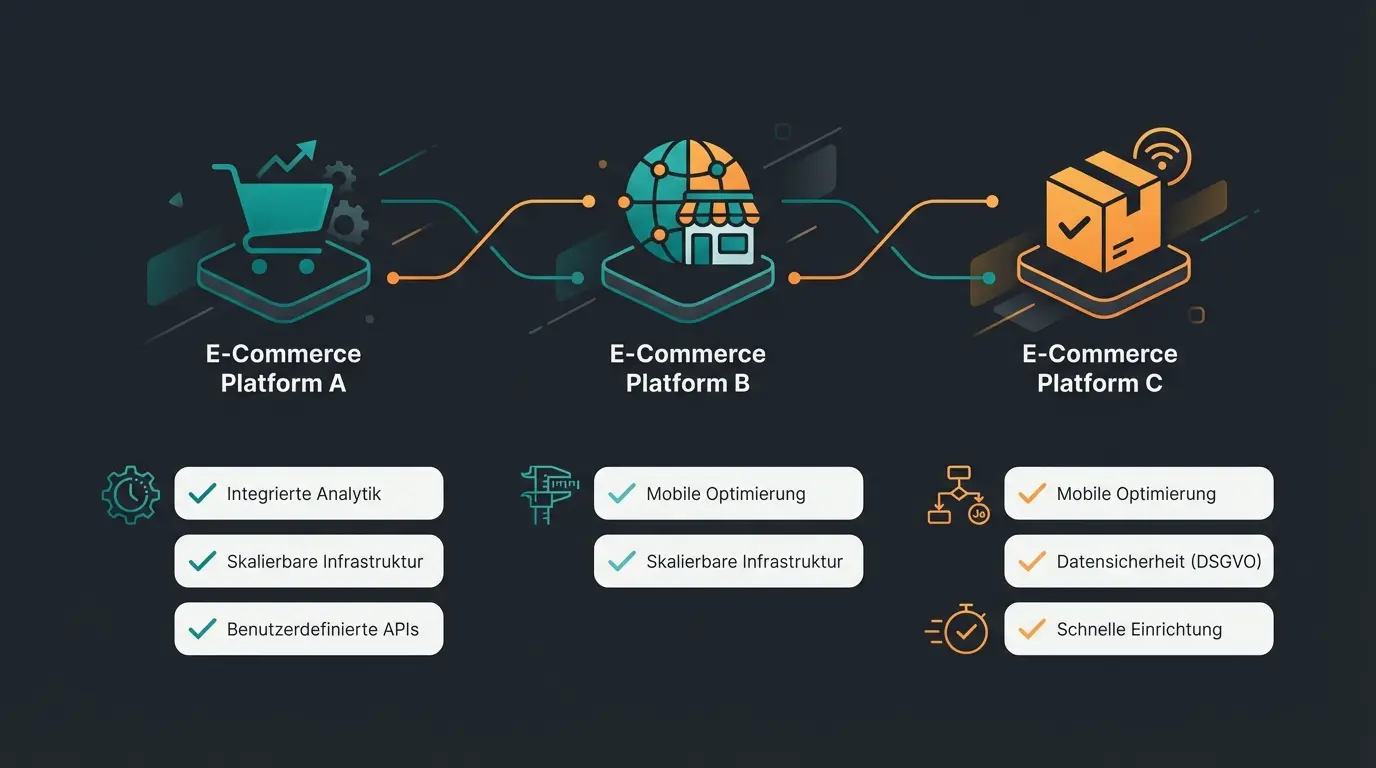
You now have the choice between Shopware, WooCommerce, or JTL. But let's be honest: if you switch from Shopify to Shopware, you may solve the GDPR problem, but you don't solve the sales problem.
The "Vending Machine" Syndrome
Almost all traditional shop systems work on the principle of a vending machine: The customer comes in, the customer must know what they want, the customer uses filters (size, color, brand), and the customer selects. This works well for socks or printer paper. But what about bicycles, skincare, supplements, or technical equipment?
Choice Overload: Too much selection leads to purchase abandonment. According to Bitkom, this represents a significant challenge for German online retail.
Return Rate: In Germany, according to Neocom.ai, approximately 11% of all online purchases are returned, in the fashion sector even up to 50%. The main reason? "Item doesn't fit" or "Don't like it" – often a consequence of insufficient consultation before purchase.
Stagnating Conversion: Despite faster loading times and better UX design, the conversion rate in e-commerce has been hovering between 2% and 3% for years according to Oberlo.
The standard alternatives to Shopify offer no solution here. They only offer different filters. Understanding this limitation is crucial when implementing AI in ecommerce solutions.
High personal consultation, limited scale, highest conversion but restricted reach
Shopify, Shopware, WooCommerce – self-service with filters, zero consultation, ~2% conversion
Simple FAQ responses, no product expertise, minimal conversion impact
Active product consultation at digital scale, guided selling, 3-4x higher conversion
The New Category: AI-First Commerce & Guided Selling
Here lies your opportunity to stand out from the competition in 2025. Instead of just searching for a software alternative, you should search for a sales alternative. Our comprehensive Conversational Commerce Guide explores this evolution in detail.
What is Guided Selling?
Imagine you enter a specialty store. A good salesperson doesn't say: "Here's the shelf, filter by price." They ask: "What do you need the shoe for? Do you run on asphalt or forest trails? Do you have knee problems?"
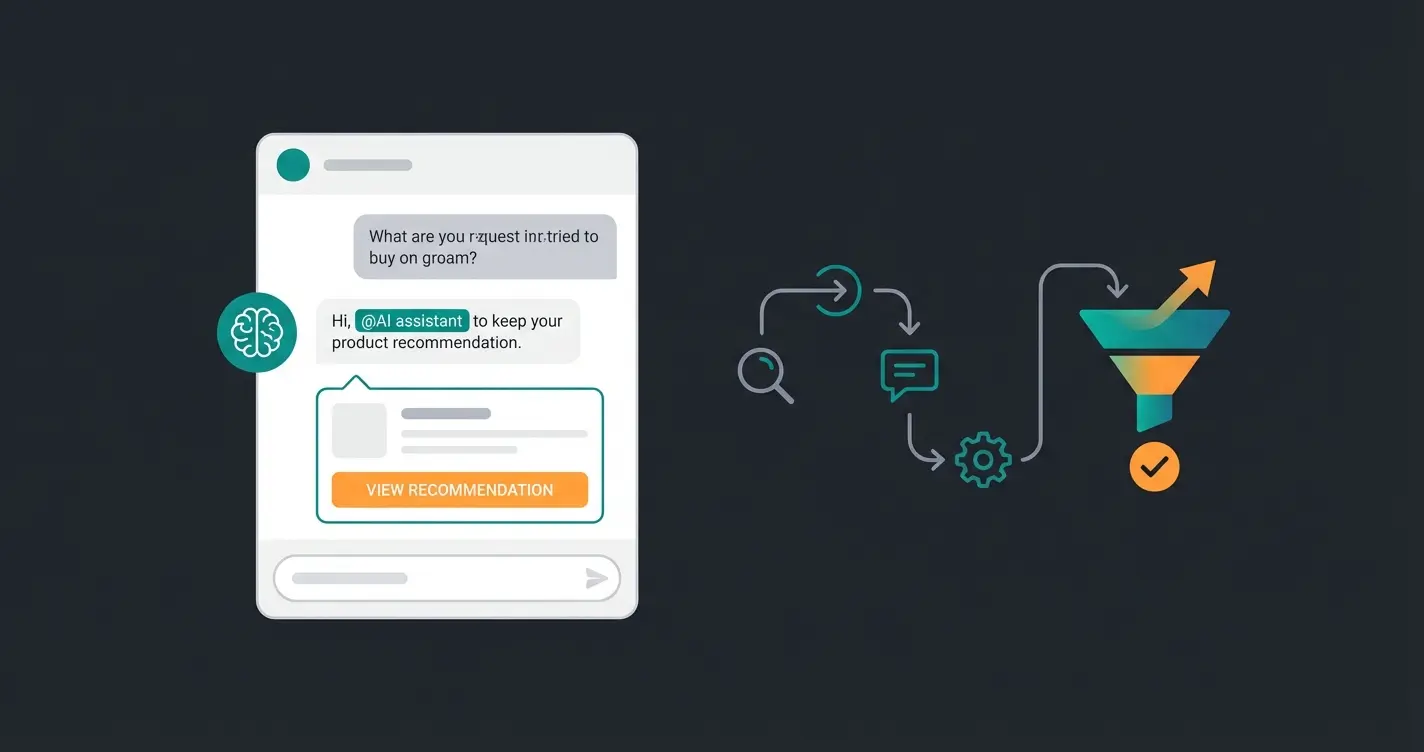
AI-First Commerce (or Conversational Commerce) brings exactly this dialogue into the online shop. It's not a simple chatbot bubble in the bottom right corner, but a central element of the user experience. The way AI chatbots transform customer service is fundamentally changing e-commerce expectations.
How It Works (Example)
Instead of filtering 50 skin creams, an AI guides the customer through a dialogue:
- AI: "How does your skin feel after showering?"
- Customer: "Feels a bit tight and dry."
- AI: "Would you also like something for early wrinkles?"
- Customer: "Yes, please."
- Result: The AI recommends exactly one day cream and explains why ("Because it contains hyaluronic acid for moisture and retinol for wrinkles").
Why This is the True Shopify Alternative
- Higher Conversion: Guided customers buy with 3-4x higher probability.
- Fewer Returns: Those who buy the right product don't send it back. Return prevention is the biggest lever for profitability according to EHI.
- Data Sovereignty: You learn not only what was purchased, but why (e.g., "80% of my customers have dry skin"). No Google Analytics in the world can track that.
This approach aligns with AI consulting ecommerce requirements that are increasingly becoming standard in German retail. For businesses seeking to transform your support capabilities, AI-first commerce represents the logical evolution.
Discover how AI-powered product consultation can increase your conversion rates by 3-4x while reducing returns. Join hundreds of merchants already transforming their e-commerce experience.
Start Your Free TrialThe Complete Comparison: Standard vs. AI-First Commerce
In this table, we compare the market leaders with the new approach of guided selling. This comprehensive overview helps you make an informed decision based on your specific business needs.
| Feature | Shopify | Shopware 6 | WooCommerce | AI-First / Guided Selling |
|---|---|---|---|---|
| Type | SaaS (Rental Shop) | PaaS / Self-Hosted | Plugin | Consultation Layer / System |
| Starting Costs | ~€36/month + fees | Free (Community) / €600 (Rise) | Free (excl. hosting) | Variable (often SaaS) |
| GDPR / Server | Critical (US connection) | Excellent (DE hosting) | Excellent (DE hosting) | Excellent (provider dependent) |
| Setup | Very Easy | Complex (Agency needed) | Medium (DIY possible) | Easy (Plug & Play) |
| Consultation Level | Low (Static Filters) | Low (Static Filters) | Low (Static Filters) | High (Active Dialogue) |
| Return Prevention | Low | Low | Low | High (through consultation) |
| Target Group | Generalists / Dropshipping | SME / B2B | Content-Driven / DIY | Complex Products |
Practical Tips for Migration and Switching
If you decide to make a switch, don't underestimate the effort involved. Understanding how AI eliminates waiting in customer service can also smooth the transition period.
Critical Migration Considerations
- Data Export Isn't Everything: You can export products and customers (CSV), but passwords can almost never be migrated for security reasons. Customers must reset their passwords in the new shop.
- Save Your SEO Ranking: The most important thing when switching is 301 redirects. Shopify has a rigid URL structure (e.g., `/products/productname`). Shopware or WooCommerce have different structures. If you don't redirect the old URLs to the new ones, you'll lose your Google ranking overnight.
- App Cost Trap: Before switching, check which Shopify apps you use. Are they available for Shopware/WooCommerce? If not, what does the individual programming of this function cost?
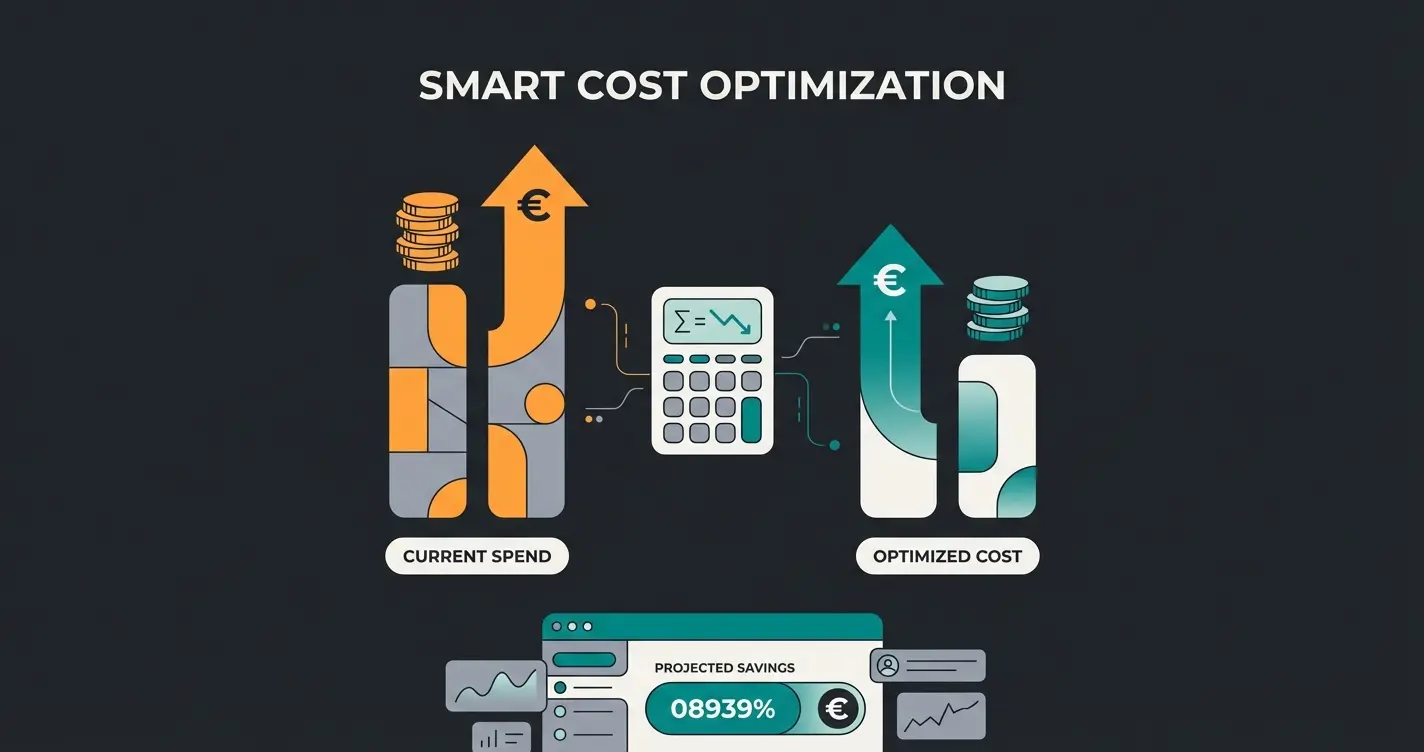
Real Cost Calculator: Shopify vs. Alternatives
Germans are price-sensitive, and understanding hidden costs is crucial. Here's what a typical professional shop actually costs across platforms:
| Cost Category | Shopify Basic | Shopware Rise | WooCommerce | AI-First Solution |
|---|---|---|---|---|
| Base Monthly Fee | €36 | €600 | €0 (software) | €200-500 |
| Hosting | Included | €50-200 | €20-50 | Often included |
| Essential Apps/Plugins | €100-300 | €0-100 | €50-150 | Included |
| Transaction Fees | 2.9% + €0.30* | 0% | 0% | Varies |
| Agency/Maintenance | €0-200 | €500-2000 | €100-500 | €100-300 |
| Total Monthly (Low Volume) | €150-550 | €700-1000 | €170-700 | €300-800 |
| Total Monthly (High Volume) | €500-2000+ | €700-1200 | €200-800 | €400-1000 |
*Transaction fees apply when not using Shopify Payments
Conclusion: Which Alternative Fits Your Business?
The question "Which is the best alternative to Shopify?" can no longer be answered universally in 2025. It depends on which problem you want to solve.
Scenario A: You Want Legal Security & B2B Power
Choose Shopware 6. It's more expensive and more complex than Shopify, but it protects you from warning letters, offers German servers, and is unbeatable in B2B. If you have the budget for the "Rise Edition" (€600/month) or an agency, this is the safest harbor.
Scenario B: You Want Maximum Freedom & Low Fixed Costs
Choose WooCommerce. If you're willing to take care of updates and technology (or pay someone for it), WooCommerce offers the best price-performance ratio. It's the best choice if content marketing (blog, SEO) is your main channel.
Scenario C: You Sell Complex Products & Want More Revenue
Choose an AI-First Strategy (Guided Selling). If you sell bicycles, cosmetics, electronics, or wine, switching from Shopify to Shopware won't double your conversion rate. The problem isn't the system, but the missing consultation.
Consider whether to expand your existing system (whether Shopify or Shopware) with guided selling software or choose a platform that natively integrates AI consultation.
Frequently Asked Questions About Shopify Alternatives
Yes, both WooCommerce (WordPress plugin) and the Shopware Community Edition are free open-source options. However, you'll still need to pay for hosting (€10-50/month), domain, and potentially premium plugins. JTL-Shop also offers a free tier but is limited to 500 products as of 2025.
Shopware 6 is the clear winner for GDPR compliance in Germany. As a German company, it offers native support for German legal requirements, the option for German server hosting, and built-in features for basic price regulations, legally compliant checkout processes, and cookie banners – all without third-party apps.
Migration is possible but requires careful planning. You can export products and customer data via CSV, but customer passwords cannot be migrated for security reasons. The biggest challenge is preserving SEO rankings through proper 301 redirects, as URL structures differ between platforms. Budget 2-4 weeks for a proper migration.
Traditional chatbots answer FAQs and handle simple queries. AI-first commerce platforms provide active product consultation – they ask questions about customer needs, analyze responses, and recommend specific products with explanations. This guided selling approach typically achieves 3-4x higher conversion rates than static filter-based shopping.
The true monthly cost varies significantly: Shopify Basic starts at €36 but typically reaches €150-550 with necessary apps. Shopware Rise starts at €600/month plus agency costs. WooCommerce can run €170-700 depending on hosting and plugins. AI-first solutions typically range €300-800/month but often deliver better ROI through higher conversion rates.
Whether you're migrating from Shopify or enhancing your existing platform, AI-powered product consultation can revolutionize your conversion rates. See how leading German merchants are achieving 3-4x conversion improvements.
Get Your Free Demo
Lasse is CEO and co-founder of Qualimero. After completing his MBA at WHU and scaling a company to seven-figure revenue, he founded Qualimero to build AI-powered digital employees for e-commerce. His focus: helping businesses measurably improve customer interaction through intelligent automation.