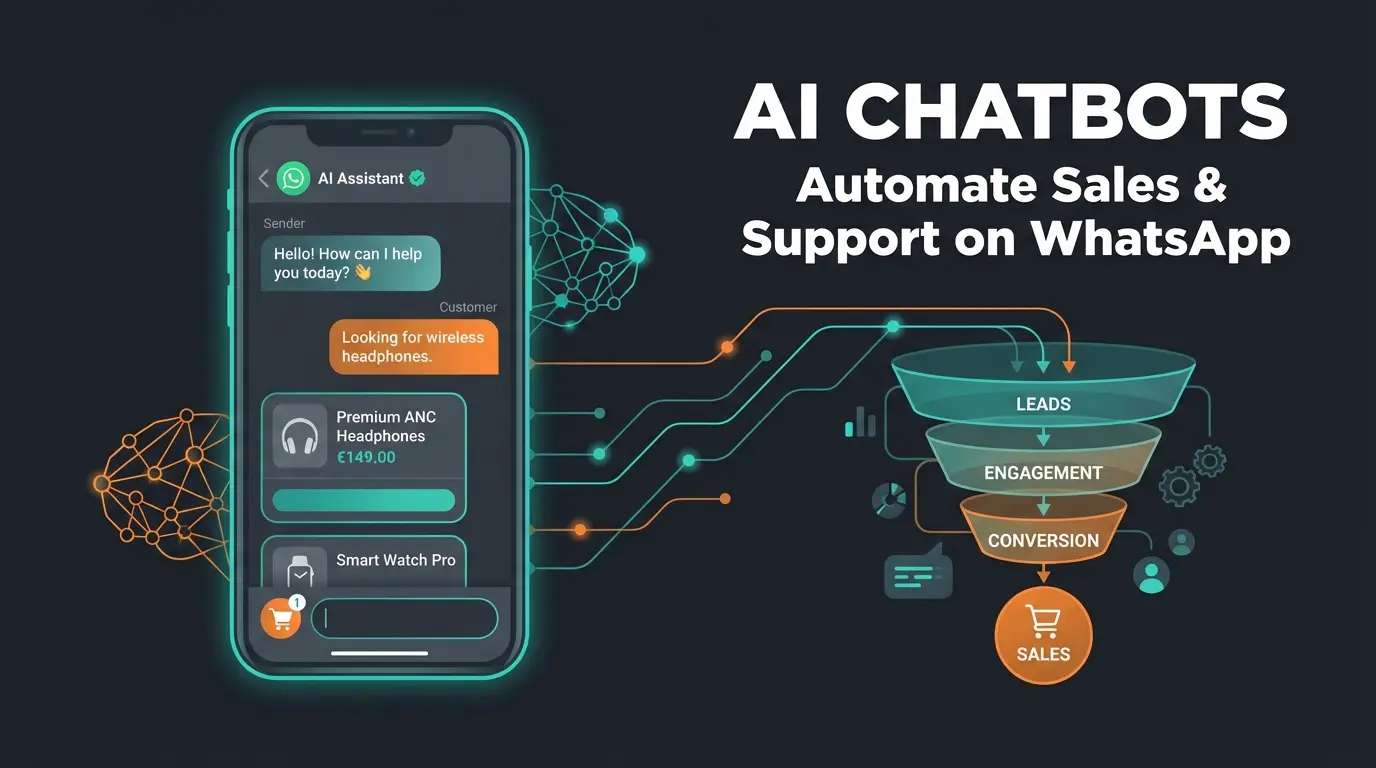
Introduction: The Crisis of Silent E-Commerce
E-commerce is growing. According to einzelhandel.de, forecasts predict e-commerce revenue of $92.4 billion for 2025 in Germany alone. Yet behind these impressive numbers lies a structural problem that keeps many online retailers awake at night: The Paradox of Choice.
We have transformed our online shops into gigantic warehouses. Customers stand before thousands of items, armed only with static filters like "price ascending" or "color: blue." The result? Overwhelm. The average conversion rate in e-commerce hovers around 2% to 3%, as confirmed by research from Shopify, uptain.de, and ecommercenews.eu. This means in reverse: 97% of your visitors leave the store without buying—often not because the product is missing, but because the consultation is missing.
This is where conversational commerce enters the picture. But not in the form we've known over the last years. The era of annoying pop-ups asking "Can I help you?" only to link to an FAQ page is over.
In 2025, we're redefining conversational commerce: It's no longer just support automation. It's the rise of the Digital Sales Consultants. It's the transition from a reactive "Where is my package?" handling to a proactive AI Product Consultation that understands what customers truly need—often even better than the customers themselves.
In this article, you'll learn why online product consultation represents the most important differentiation opportunity for retailers this year, how to implement the technology securely, and why this is your only salvation in a world without third-party cookies. The Conversational Commerce transformation is not coming—it's already here.
Most e-commerce stores convert only 2-3% of visitors
Leave without purchasing due to lack of guidance
E-commerce market continues to grow despite conversion challenges
The Evolution: From FAQ Bots to True AI Consultation
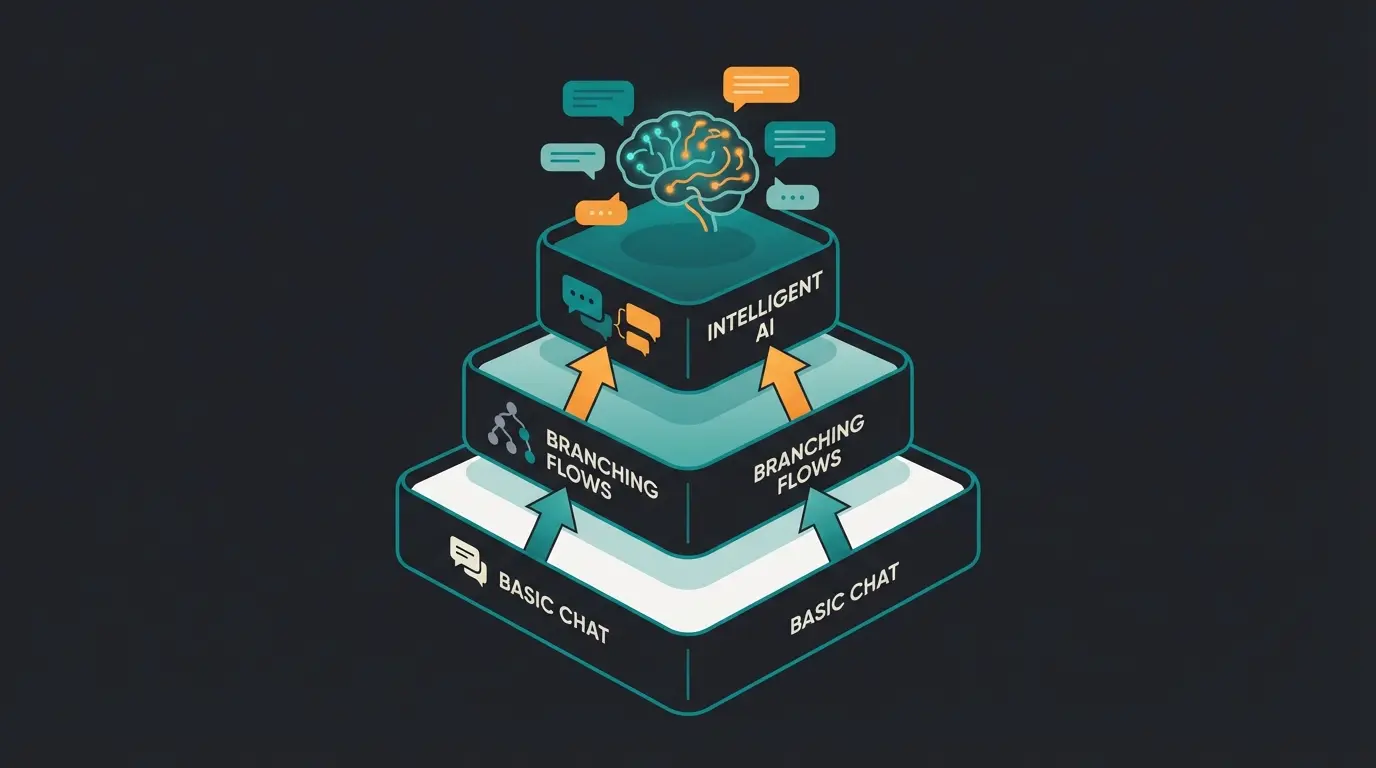
To understand why most conversational commerce strategies fail, we need to examine the maturity levels of the technology. Many retailers are stuck at Level 1, while market leaders are already rolling out Level 3 solutions. Understanding this progression is crucial for anyone looking to leverage AI expert consultants effectively.
Level 1: The "Librarians" (FAQ Automation)
This is the status quo in many online shops. A rule-based chatbot that reacts to keywords.
- Scenario: Customer types "return." Bot posts link to the return form.
- Problem: As soon as the question becomes more complex ("Which bicycle fits my body height?"), the bot fails. It's a cost reducer (support), not a revenue driver.
Level 2: Guided Selling (The Rigid Decision Tree)
One step further are click-flows or quizzes designed to guide customers through predetermined paths.
- Scenario: "Click here for the gift finder." The user clicks through 5 pre-formulated questions.
- Problem: It's not a real conversation. When the customer wants to express a nuance not in the script, they're trapped. It feels like an interrogation, not a consultation.
Level 3: The AI Product Consultant (Conversational Commerce 2.0)
Here lies the future. Thanks to Large Language Models (LLMs) and RAG technology (more on that later), AI can communicate fluidly and naturally. This is where AI sales assistants truly shine.
- Scenario: Customer: "I'm looking for a camera for my vacation, but I have no idea about technology. It should just take good pictures in low light."
- AI Response: It understands the context ("low light" = high ISO value/large sensor, "no idea" = easy operation) and proactively recommends: "For this purpose, I recommend [Model X]. It has a special night mode that works automatically without you having to adjust any settings."
- Value Added: This is conversational commerce in its purest form—a digital sales consultation that directly impacts revenue.
Why Product Consultation Is the Missing Puzzle Piece
Why do companies invest millions in traffic (SEO, SEA) only to leave customers alone on the product page? The answer lies in understanding the fundamental difference between cost centers and revenue drivers. Implementing digital product consultants changes this equation entirely.
From Cost Factor to Revenue Driver
Traditional chatbots were often introduced with the motivation to save costs in customer service (ticket deflection). That's legitimate, but it wastes potential. An AI product consultation solution, on the other hand, targets top-line revenue directly.
Think of the difference this way:
- The search bar is like a warehouse worker. You ask for item number 123, they bring item number 123.
- The AI consultant is like the best salesperson in your store. They ask: "What do you need this for?" and in the end, might not sell you what you wanted, but what you needed (and often the matching accessories too).
This shift from reactive to proactive is what separates revenue-generating product consultants from basic support automation. The digital product consultants of today are designed to increase both conversion rates and average order values.
Comparison: Chatbot vs. AI Sales Consultant
To make the difference tangible, a direct comparison of capabilities helps illustrate why autonomous digital consultants represent such a significant advancement:
| Feature | Classic Chatbot (Level 1) | AI Sales Consultant (Level 3) |
|---|---|---|
| Primary Goal | Reduce support tickets (lower costs) | Increase conversion & cart value (revenue) |
| Understanding | Reacts to keywords ("shipping", "price") | Understands intention & context ("Looking for gift for hobbyist") |
| Data Basis | Static scripts & FAQ database | Real-time product data (PIM) & customer history |
| Interaction | Reactive (waits for questions) | Proactive (asks follow-up questions for needs analysis) |
| Learning Ability | Must be manually trained | Learns dynamically from interactions (with guardrails) |
| User Experience | Often frustrating ("I didn't understand that") | Natural, empathetic, and goal-oriented |
The Trust Factor: Privacy and Expertise in E-Commerce
Different markets have different expectations. While in Asia and the USA conversational commerce is often "fast and playful," consumers in many Western markets expect competence and security. Understanding these nuances is essential when implementing AI-powered sales consultants.
Why Consumers Love AI Consultation
Many consumers are "feature-oriented." They compare technical data meticulously. An AI that can immediately explain why the vacuum cleaner with 65dB is better for an apartment than the one with 75dB serves exactly this need for well-founded decision-making help. It's about efficiency and expertise—delivering the right information at the right moment.
This is where proactive sales experts demonstrate their value. Rather than making customers search through specifications, AI consultants translate technical features into practical benefits that matter to each individual buyer.
Data Privacy and Security as a Competitive Advantage
A common objection is the fear of "data collectors." Here, companies that prioritize privacy have a competitive advantage.
- Local Hosting: Use solutions that utilize servers in your region with strong data protection laws.
- Transparency: Communicate clearly: "I am a digital assistant. Your data is only used for this consultation."
- Compliance: Modern conversational marketing solutions are "Privacy by Design." Unlike open systems like ChatGPT, the data remains in your closed system.
Building trust through transparent data practices isn't just good ethics—it's good business. Customers who trust your AI consultant are more likely to share the detailed preferences that enable truly personalized recommendations.
Zero-Party Data: Gold in the Cookie-less Era
This is perhaps the most important strategic point for 2025. Third-party cookies are dying. Tracking is becoming less accurate. So how do you get to know your customers?
By talking to them.
When a customer says in a chat: "I have dry skin and react allergically to fragrances", that's zero-party data. According to research from bluebarry.ai, Shopify's analytics team, and gravitalagency.com, this is data that customers give you voluntarily and consciously because they hope for a better result.
The Value of Zero-Party Data
- Hyper-Personalization: You can immediately hide products that contain fragrances, showing only relevant options.
- Long-term CRM: If you store this information (GDPR-compliant), you can send the customer an email in 3 months: "New skincare cream for sensitive skin just arrived."
- Product Development: If 1,000 customers ask for "vegan hiking boots" but you don't have them, conversation analysis immediately reveals this gap in your assortment.
Understanding AI consulting for e-commerce means recognizing that every conversation is an opportunity to learn about customer needs in ways that traditional analytics simply cannot capture.
Customers voluntarily share preferences for better recommendations
Self-reported data is more reliable than inferred behavioral data
Works perfectly regardless of browser tracking restrictions
Stop losing 97% of your visitors. Our AI-powered product consultants understand customer needs, provide personalized recommendations, and drive conversions 24/7.
Start Your Free TrialHow It Works: The Technology Behind the Magic (RAG Explained)
Many retailers hesitate because they fear "hallucinating" AIs—bots that invent products or quote wrong prices. This concern was justified in 2023. In 2025, it's solved through RAG (Retrieval-Augmented Generation), as detailed in technical resources from dev4side.com, projectpro.io, and webkul.com.
What Is RAG?
Think of RAG like an extremely well-read librarian taking an exam.
- Without RAG (LLM only): The librarian writes from memory. They might confuse things or make things up.
- With RAG: The librarian is allowed to look things up in the book (your product data) before answering.
This approach to AI product finder technology ensures that recommendations are always grounded in your actual inventory, pricing, and product specifications.
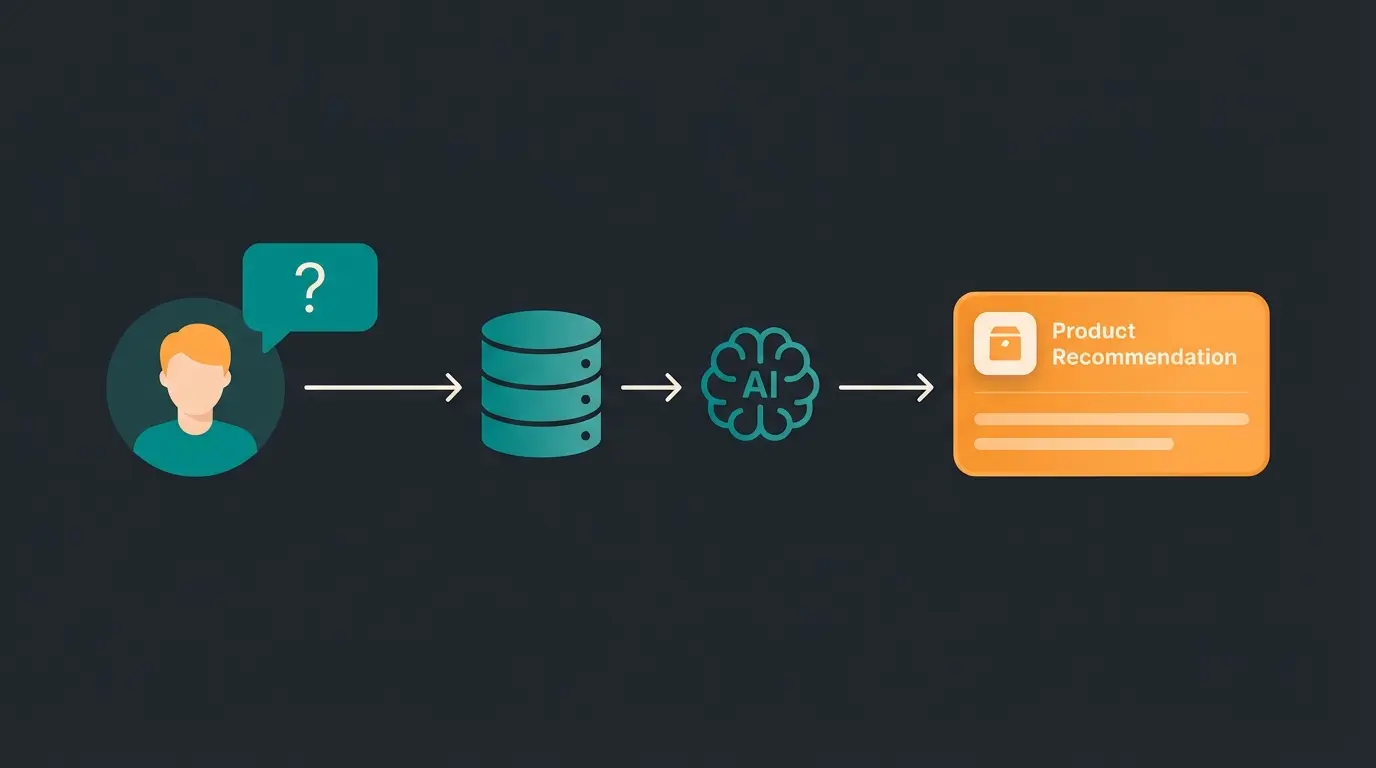
The Technical Flow of AI Consultation
Customer asks: "I'm looking for a quiet vacuum cleaner for hardwood floors."
AI searches your PIM and manuals for attributes "dB level" and "hardwood floor brush."
AI takes the found facts (e.g., "Model X has 60dB and hardwood brush").
AI formulates a natural answer with specific product recommendation and reasoning.
The Result: The eloquence of ChatGPT combined with the factual accuracy of your database. When a customer asks about a quiet vacuum for hardwood floors, the AI responds: "For hardwood floors and low noise levels, Model X is ideal. At 60dB, it's whisper-quiet and has a special soft brush that prevents scratches."
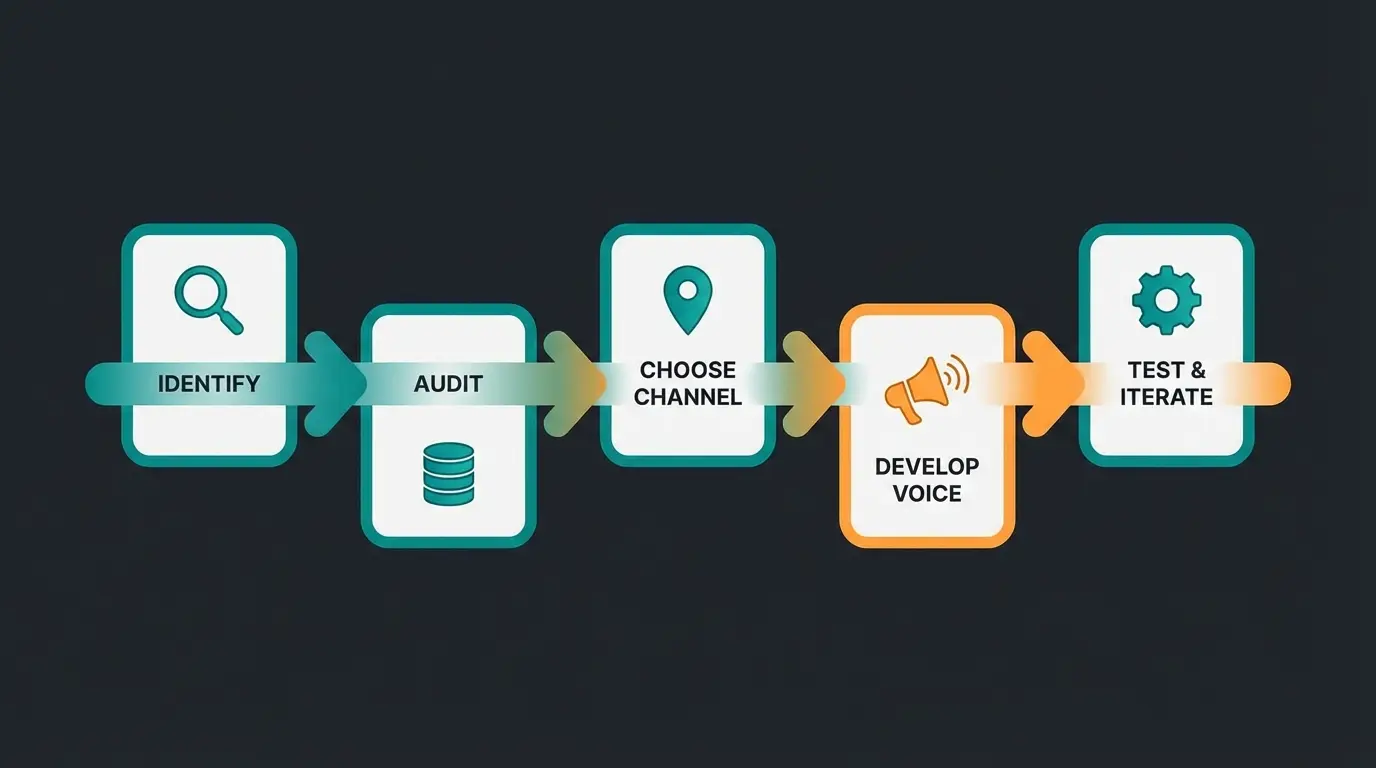
Implementation Strategy: 5 Steps to Your AI Consultant
Don't start by trying to automate the entire shop at once. Proceed strategically. The insights from AI E-Commerce implementations show that focused rollouts deliver better results.
Step 1: Identify Consultation-Intensive Categories
Where do customers abandon most frequently? Where is the return rate high because customers order the wrong thing? (e.g., mattresses, running shoes, technical components). Start there. These are the categories where AI consultation delivers the highest ROI because the decision-making process is complex and customers genuinely need guidance.
Step 2: Data Audit (Garbage In, Garbage Out)
Your AI is only as good as your product data. If your PIM doesn't state that the jacket is "waterproof," the AI can't recommend it when a customer asks for rain gear. Structured attributes are the key. Before launching any AI consultation solution, audit your product data for completeness, accuracy, and proper attribute tagging.
Step 3: Choose the Right Approach (On-Site vs. Messenger)
- On-Site Assistant: Ideal for saving the sale in the shop. The customer is already there; they just need to convert. This approach intercepts abandonment at the moment of decision.
- WhatsApp/Messenger: Ideal for re-engagement and long-term customer retention, as demonstrated by providers like Charles and Moin.ai. Messaging apps are extremely strong for re-engagement, but often present a hurdle for first purchases.
The combination is king. Use on-site AI for immediate conversion assistance and messaging for post-purchase engagement and repeat sales.
Step 4: Define the Brand Voice
Should your consultant be casual ("you") or formal? Should it use emojis? The AI must match your brand personality. A luxury watch retailer and a youth fashion brand need completely different communication styles. Document your brand voice guidelines and ensure the AI reflects them consistently across all interactions.
Step 5: Test and Train
Start in "silent mode" or with a small user group. Analyze the chat logs: Where did the AI misunderstand the question? Adjust the RAG parameters accordingly. This iterative improvement process is essential for building an AI consultant that truly understands your customers and products.
Metrics That Matter: Beyond Response Time
Forget "Average Response Time." With AI, the response time is always "instant." Instead, measure business success with metrics that reflect the true value of AI consultation.
The New KPIs for 2025
- Conversion Rate per Conversation: What percentage of users who interact with the AI end up buying? (Benchmark: Good AI consultants often achieve 15-20% conversion, compared to 3% shop average).
- Average Order Value (AOV) Uplift: Does the AI successfully sell matching accessories (cross-selling)? A good AI consultant should increase AOV by 15-30%.
- Zero-Party Data Collection Rate: How many customer profiles could you enrich through conversations? Track the number of preference data points captured per interaction.
- Return Rate Reduction: Was less ordered "for inspection" thanks to better consultation? Accurate AI recommendations should measurably reduce returns.
The ROI Calculator (Example Calculation)
Is the investment worth it? Let's calculate conservatively:
| Metric | Without Conversational Commerce | With AI Consultation |
|---|---|---|
| Monthly Traffic | 50,000 visitors | 50,000 visitors |
| Chat Usage Rate | N/A | 10% (5,000 users) |
| Conversion Rate (Chat Users) | 2.5% (standard) | 10% (AI-assisted) |
| Conversion Rate (Non-Chat) | 2.5% | 2.5% |
| Orders from Chat | N/A | 500 orders |
| Orders from Rest | 1,250 orders | 1,125 orders |
| Total Orders | 1,250 | 1,625 |
| Revenue Increase | Baseline | +30% |
The result: 30% more revenue just by activating 10% of users with AI consultation. According to fulfin.com, these conversion improvements are consistent across industries implementing AI-powered product consultation.
Conclusion: The Return of the Sales Conversation
Conversational commerce in 2025 is no longer a gimmick. It's the technological answer to a deeply human need: We want to be understood.
While competitors still try to optimize their FAQ pages, you have the chance to provide your customers with a real Digital Sales Consultant. The technology (LLMs, RAG) is mature, customers are ready, and the market demands quality over quantity.
Recommendation for action: Don't wait until major platforms have set the standard. Start today with your most complex product category and transform anonymous visitors into advised loyal customers. The AI product finder technology is ready—the question is whether you'll be an early adopter or a late follower.
Frequently Asked Questions
Traditional chatbots are reactive tools designed to answer specific questions using keyword matching and scripts. Conversational commerce goes further—it's a proactive, AI-powered sales approach that understands customer intent, asks clarifying questions, and provides personalized product recommendations. Think of chatbots as FAQ automation, while conversational commerce is digital consultative selling that directly drives revenue.
AI product consultation uses RAG (Retrieval-Augmented Generation) technology to combine the natural language capabilities of large language models with your actual product database. When a customer asks a complex question like "Which laptop is best for video editing under $1500?", the AI retrieves relevant product specifications from your inventory, understands the customer's requirements, and generates a personalized recommendation with clear reasoning—all in real-time.
Yes, when implemented correctly. Modern conversational commerce solutions are built with "Privacy by Design" principles. Key compliance features include local EU hosting, transparent data usage policies, explicit consent mechanisms, and data staying within your closed system rather than being processed by third-party AI services. Always choose providers that prioritize data protection and offer compliance documentation.
Results vary by industry, but benchmarks show that AI-assisted conversations typically achieve 10-20% conversion rates compared to 2-3% for standard e-commerce browsing. Even if only 10% of your visitors use the AI consultant, this can translate to 30% or more revenue increase. Additional ROI comes from increased average order values through intelligent cross-selling and reduced return rates through better purchase decisions.
Start with your most consultation-intensive product categories—those with high abandonment rates, complex features, or high return rates. Electronics, mattresses, skincare, and technical equipment are excellent starting points. This focused approach lets you prove ROI quickly before expanding to other categories, while also allowing you to refine the AI's training on manageable product catalogs.
Join leading e-commerce brands using AI product consultation to double conversion rates and collect invaluable zero-party data. Start with a free pilot in your most complex product category.
Get Started Free