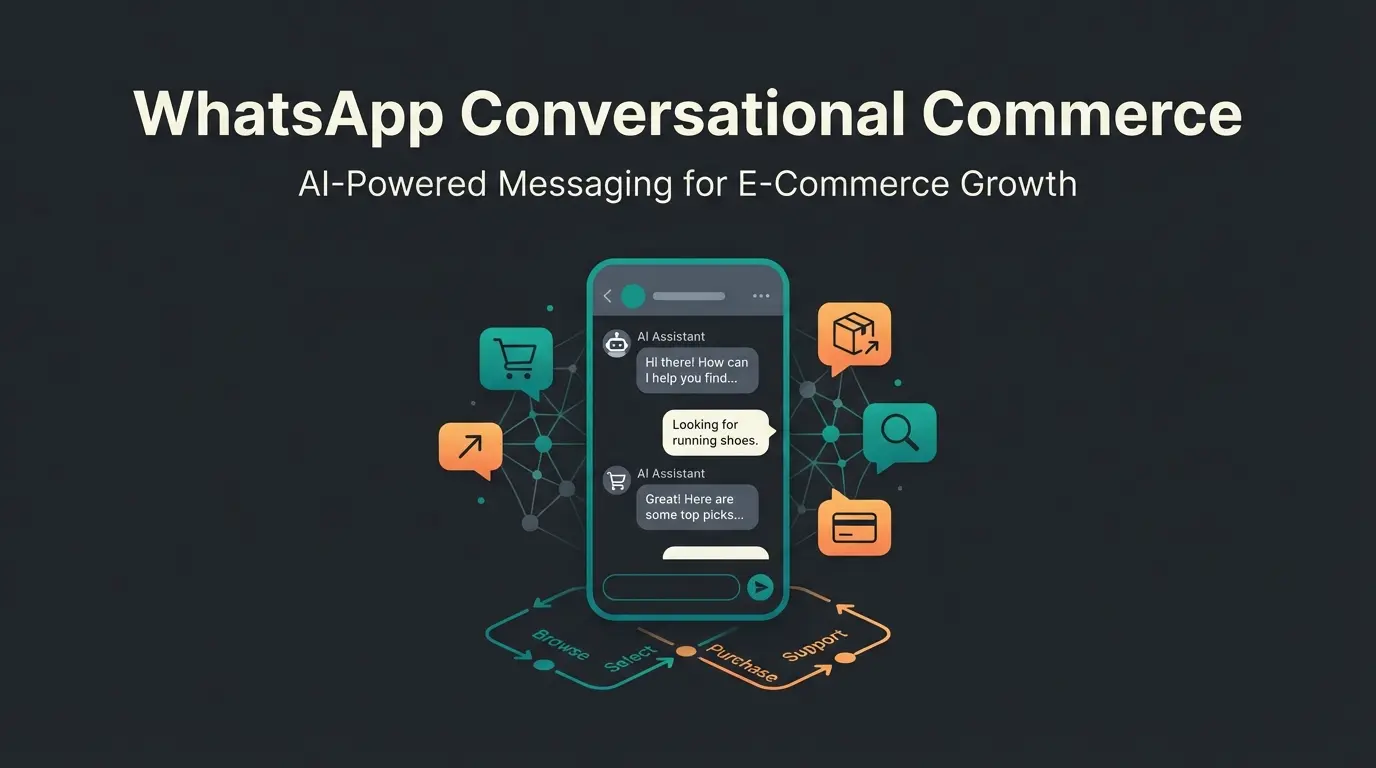
Introduction: Why Your Customers Are Waiting for Real Dialog
Imagine having a salesperson who never sleeps, knows every product detail by heart, and can personally advise 1,000 customers simultaneously—all on the channel these customers already check hourly.
The reality in 2025 often looks different: Companies invest heavily in traffic only to lose it on confusing mobile websites or in endless hold queues. While email marketing struggles with open rates of around 20%, WhatsApp offers open rates of up to 98% according to woztell.com and superchat.de. Yet many companies still use this potential only reactively—as a glorified FAQ section.
In this guide, you'll learn why the traditional WhatsApp chatbot has had its day and why the future belongs to AI-powered sales assistants. We'll illuminate the technical requirements of the WhatsApp Business API, clarify the critical GDPR questions for the market, and show you how to transform a support tool into a revenue driver. Understanding how AI chatbots are transforming customer interactions is essential for staying competitive in today's digital landscape.
WhatsApp messages vs. 20% for email marketing
WhatsApp's reach in Germany alone
AI consultants never sleep, serving customers around the clock
AI-guided selling vs. standard product search
The Problem: Why Classic Button Bots Fail
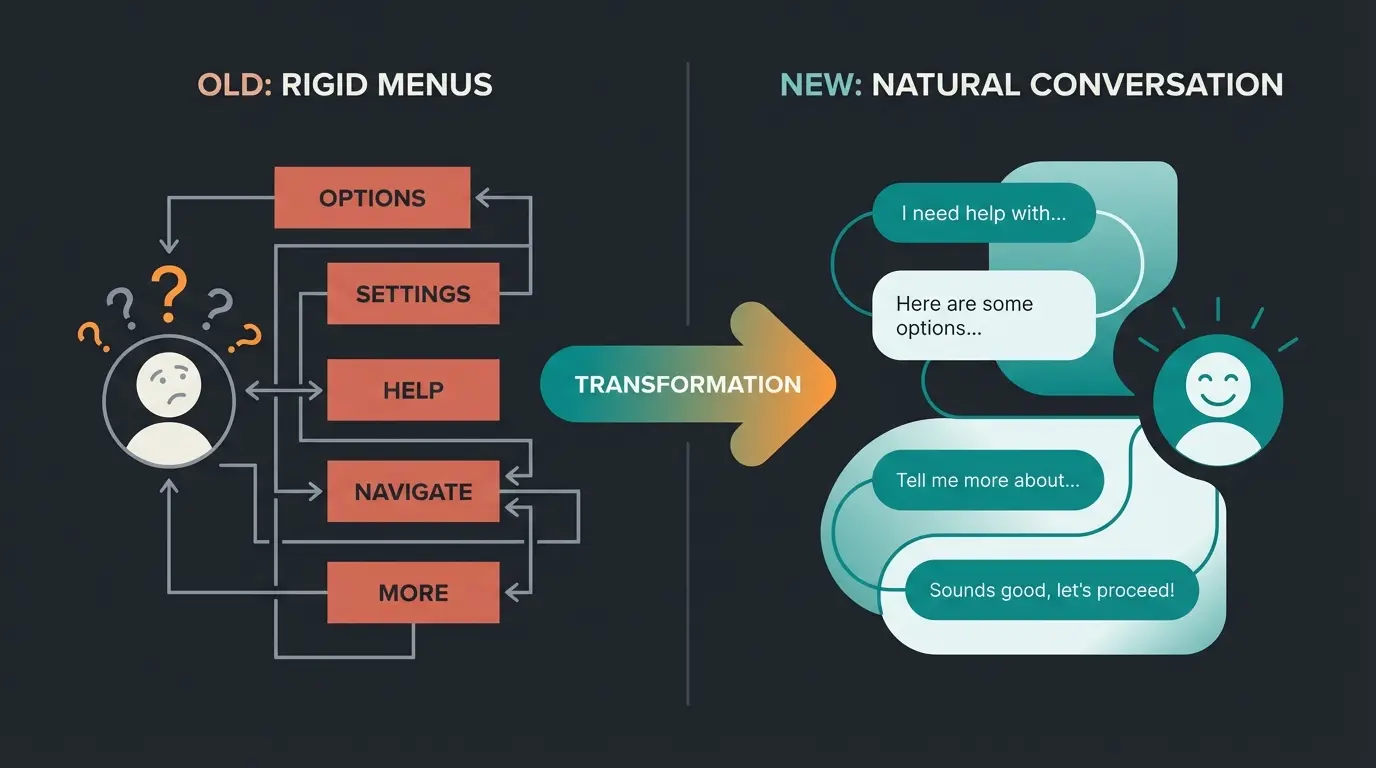
Everyone knows it, everyone hates it: The "menu hell."
Classic, rule-based chatbots function like rigid decision trees. They're excellent for handling simple, repetitive processes (e.g., "Where is my package?"). However, as soon as a customer asks a question that doesn't exactly fit the schema, the bot fails. The evolution toward AI chatbots for customer service represents a fundamental shift in how businesses approach customer communication.
The Psychological Barrier
Customers use WhatsApp for conversations, not forms. A chatbot for WhatsApp that behaves like a bureaucratic form breaks the expectation of the channel. The result includes high chat abandonment rates, frustrated users who immediately type "speak to agent," and missed revenue opportunities because the bot lacks any advisory competence.
The biggest mistake companies can make in 2025 is viewing chatbots as pure cost-saving instruments in support. The true potential lies in conversion optimization. Understanding the types of chatbots available helps businesses make informed decisions about which solution fits their needs.
The Solution: AI-Powered Product Consultation
Here's where the actual paradigm shift occurs. Modern WhatsApp chatbots are no longer based on rigid keywords but on Large Language Models (LLMs) and Generative AI. These systems understand context, nuances, and even spelling errors. This is where AI customer service fundamentals become crucial for implementation success.
From Support Ticket to Sales Conversation
Instead of merely reacting to questions, an AI bot acts as a Digital Sales Consultant. The difference between a standard chatbot and AI-powered solutions is dramatic when it comes to actual sales capability.
| Classic Rule-Based Bot | AI Sales Consultant (Your Opportunity) |
|---|---|
| Customer: "I'm looking for running shoes." | Customer: "I'm looking for running shoes for the woods, but my knees often hurt." |
| Bot: "Please select a category: 1. Women's 2. Men's 3. Children's" | AI Bot: "I understand, for forest trails and joint protection, I recommend models with strong cushioning and good tread. Do you prefer a specific brand, or should I show you our Top 3 'Cushioning' models?" |
| Result: Customer must click through. No consultation. | Result: Customer feels understood. The AI leads directly to the product. |
Why AI-Powered Consultation Works
The effectiveness of AI-powered WhatsApp chatbots comes down to three core capabilities. First, context understanding allows the AI to remember previous messages in the chat history. Second, data connectivity means that by connecting to your product catalog (feed), the bot can check availability and prices in real-time. Third, naturalness ensures the conversation feels human, which increases trust. For e-commerce specifically, a whatsapp bot integrated with your product catalog can dramatically improve customer engagement and sales.
Modern AI product consultants leverage these capabilities to deliver personalized recommendations that feel like talking to a knowledgeable store associate.
Customer sends a natural language question via WhatsApp
LLM analyzes context, sentiment, and underlying needs
AI searches product catalog, FAQs, and business rules
Personalized recommendation with relevant products
Feedback loop enhances future interactions
Technical Requirements: App vs. API Explained
A common misconception concerns the technical foundation. Many small businesses start with the free WhatsApp Business App. However, for a professional, scalable, and legally secure chatbot, this is unsuitable. Understanding what WhatsApp Business is and its limitations is the first step toward professional implementation.
Why You Need the WhatsApp Business API
| Feature | WhatsApp Business App | WhatsApp Business API (Platform) |
|---|---|---|
| Target Audience | Small business owners, solopreneurs | Mid-market & Enterprise |
| Chatbot Capability | Only simple greetings & quick replies | Full AI integration & automation |
| User Management | 1 smartphone + 4 devices | Unlimited users & teams |
| Data Protection (GDPR) | Critical (access to phone contacts) | Compliant (no access to private contacts) |
| Mass Messages | Broadcast lists (limited) | Scalable newsletters & campaigns |
Conclusion: If you want to operate a WhatsApp chat bot professionally, there's no way around the API. Since the API has no user interface of its own, you need a messaging platform (Business Solution Provider or software provider) that makes this interface usable for you, as detailed by respond.io.
The 2025 Pricing Model: What Does a Bot Cost?
Meta has adjusted the pricing model for the API. Since 2025, billing is no longer flat per conversation but based on four categories according to heltar.com and omnichat.ai:
- Service Conversations: When a customer messages your bot, a 24-hour window opens. Responses within this window are often free (or included in the quota). This is ideal for customer support.
- Utility (Administrative): Transactional messages like shipping confirmations. These are often cheaper or free when sent within the 24h window.
- Authentication: One-time passwords (OTPs) for verification.
- Marketing: Proactive messages (newsletters, offers) to bring customers back into the chat. This is the most expensive category.
For detailed information about costs and setup, explore our comprehensive guide on AI consultants and WhatsApp setup.
Stop treating WhatsApp as just another support channel. Our AI-powered chatbot solution turns conversations into conversions with intelligent product recommendations.
Start Your Free TrialLegal Compliance: Chatbots & GDPR Requirements
For businesses operating in Germany and the EU, data protection (GDPR/DSGVO) is often the biggest blocker. There's much uncertainty here, but the rules are actually clearly defined according to superchat.de and chatarmin.com.
The Problem with the Normal App
The standard WhatsApp app and the Business App access the smartphone's address book and upload contact data to US servers—including contacts who don't even use WhatsApp. This is a clear GDPR violation that can result in legal warnings and fines.
The Solution: API & Server Location
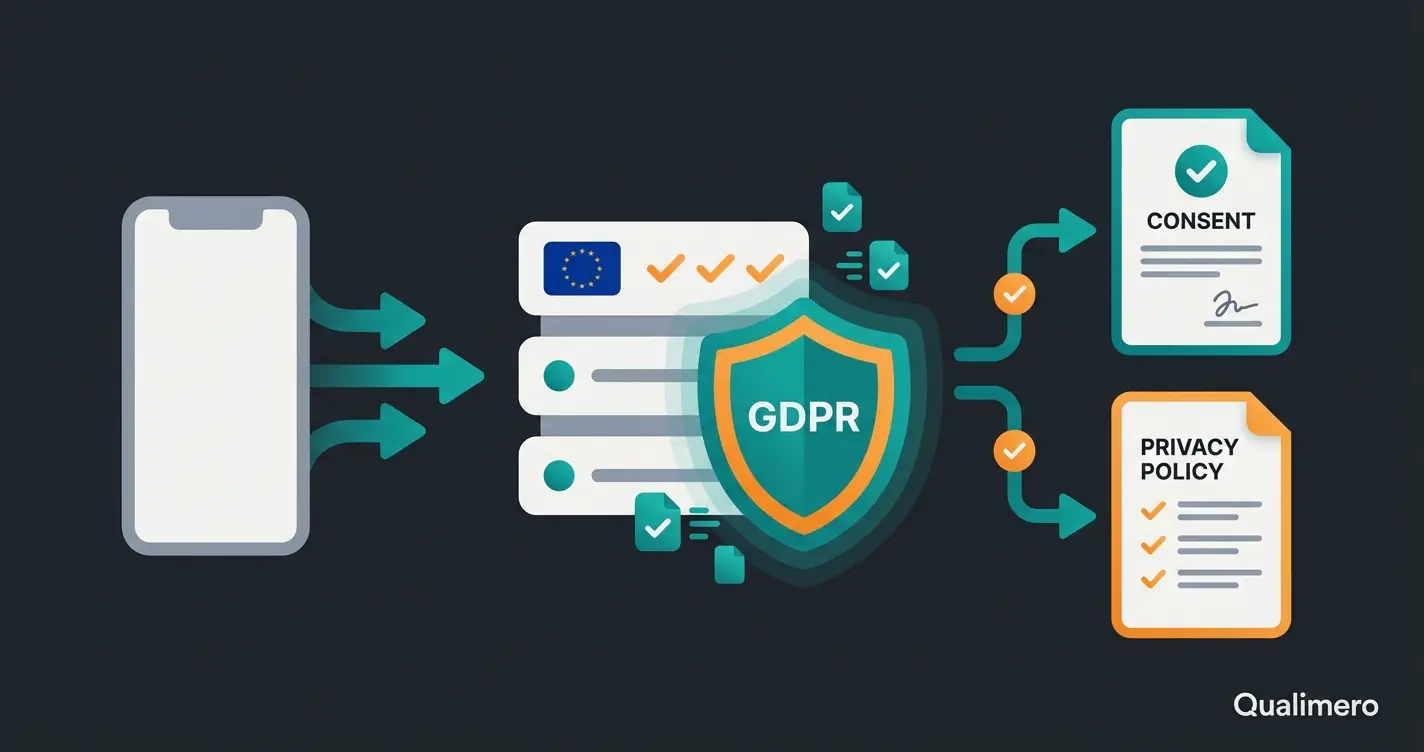
The WhatsApp Business API works differently. It does not access the address book. Contacts are only processed when they actively message the company (inbound) or have explicitly consented (outbound).
Checklist for a GDPR-Compliant Chatbot
- Data Processing Agreement (DPA): You must conclude a DPA with your software provider (who provides the API) according to Art. 28 GDPR, as explained by hellomateo.de.
- Server Location: Ensure your provider hosts data ideally on servers in the EU (e.g., Frankfurt) and not exclusively in the USA.
- Opt-In & Privacy Policy: Before the bot processes personal data, the user must be informed. Best practice: A brief notice at the start of the chat ("By using this chat, you agree to our privacy policy") or a preliminary menu.
- Link to Imprint & Privacy Policy: Include these directly in the WhatsApp profile.
- No Sensitive Data: Don't request highly sensitive data (health data, credit card numbers) in the chat unless special security measures are in place.
Use Cases: Where Your AI Bot Makes Money
Say goodbye to the notion that a bot only "saves costs." A well-configured WhatsApp chat bot is a revenue driver. Learning to optimize customer service as a revenue driver fundamentally changes how you approach chatbot implementation.
A. Guided Selling (Product Consultation)
Especially in e-commerce, the selection is often overwhelming. Consider this scenario: A customer searches for "gift for girlfriend." The bot asks targeted questions about interests (travel, decor, sports), budget, and style. It then presents a "carousel" (product cards) with 3 perfect suggestions and a direct "Go to Shop" link. The conversion rate is significantly higher than with a generic search bar in the shop.
Implementing whatsapp bot sales automation represents the cutting edge of conversational commerce.
B. Lead Qualification (B2B)
In the service sector, salespeople often spend too much time with unqualified leads. With a WhatsApp chatbot, when an interested party asks about "software prices," the bot asks: "How many employees should use the software?" and "When is the planned start?" For small requests, the bot sends a price list and link to the demo. For large requests, the bot says: "That sounds like an enterprise case. I'll connect you with our expert Mr. Smith." (Human Handover).
Understanding the difference between AI agents and traditional chatbots helps determine the right solution for B2B lead qualification.
C. Proactive After-Sales Service
After the purchase is before the purchase. When a customer has bought a coffee machine, 3 days after delivery the bot sends (as a Utility/Marketing Template): "So, how does the first coffee taste? Here's a 30-second video on how to make the perfect milk foam." The result: Customer retention increases, return rate decreases (because operating errors are prevented).
Comparison: Rule-Based Bots vs. AI Solution
To make the decision easier, here's a direct comparison of the technologies. This mirrors the fundamental shift in how AI chatbots transform customer interactions across industries.
| Feature | Standard "Button" Bot (Rule-Based) | AI Sales Consultant (LLM / Generative AI) |
|---|---|---|
| Understanding | Reacts only to exact keywords ("price", "hours") | Understands context, synonyms, and intentions ("What does this cost?") |
| Flexibility | Rigid: User must follow the path | Fluid: User can change topics at any time |
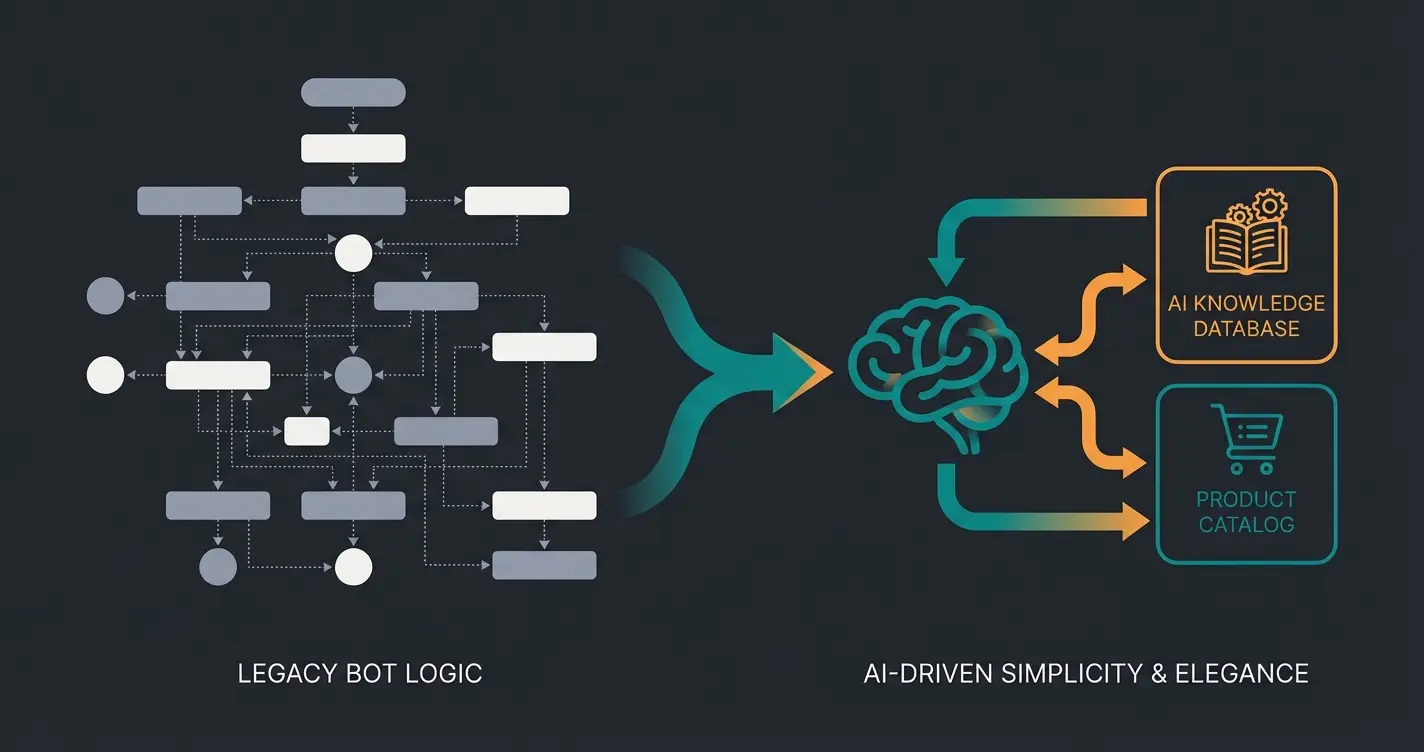
| Setup Effort | High: Manual building of huge flowcharts | Medium/Low: Upload knowledge base & product feed |
| Goal | Deflect support tickets | Consultation, sales & customer retention |
| User Experience | Often frustrating ("I didn't understand you") | Natural, human, and helpful |
| Maintenance | Every new question must be manually programmed | Often learns dynamically from new data sources |
Strategic Implementation: How to Get Started
Learning to create whatsapp bot solutions is easier than ever in 2025, but requires a clean strategy.
Step 1: Goal Setting & Use Case Definition
Do you want to relieve support (Service) or sell more (Sales)? A bot that tries everything simultaneously often fails. Start with a clear focus, e.g., "Product consultation for Category X."
Step 2: Provider Selection & API Access
Choose a Business Solution Provider (BSP) or software platform. Pay attention to native language user interface & support, integrated AI features (e.g., ChatGPT integration), GDPR compliance (server location), and the ability for "Human Handover" (seamless transfer to employees).
Step 3: Data Foundation & Training
An AI bot is only as smart as the data you give it. Upload your FAQs, product descriptions, and sales guides into the system. Define the bot's "persona" (Should it be casual or formal?).
Step 4: The Green Checkmark (Optional but Valuable)
For maximum credibility, you can apply for the green checkmark (Official Business Account). Meta checks strictly here: You need a verified Business Manager ID, 2-factor authentication, and a certain media presence (brand awareness), as detailed by chatarmin.com and wabo.ai. Even without the green checkmark, you can use the API to its full extent, but the checkmark enormously increases trust.
Choose focus: Support relief or sales increase? Select initial use case.
Evaluate BSPs for AI features, GDPR compliance, and human handover capabilities.
Upload FAQs, product data, sales guides. Define bot persona and tone.
Start with pilot use case, gather feedback, expand capabilities iteratively.
Conclusion: Build a Consultant, Not Just a Bot
The market for WhatsApp chatbots has radically changed. The days when customers willingly typed "1" or "2" are over. In a world where AI can conduct almost human-like dialogs, customers also expect real interaction on WhatsApp.
For businesses, the combination of WhatsApp's enormous reach and the intelligence of modern AI models offers a historic opportunity: You can combine scalability (automation) with quality (individual consultation). Our whatsapp shop setup guide walks through the complete configuration process.
Are you ready to meet your customers where they really are?
FAQ: Common Questions About WhatsApp Chatbots
The WhatsApp Business App itself is free but unsuitable for professional chatbots. Professional solutions via the API cost money (software fee + Meta fees per conversation). However, service conversations within a 24-hour window are often free, as confirmed by heltar.com and campaignhq.co.
No. Modern platforms offer "no-code" builders or simple interfaces to train AI bots. You simply upload your knowledge; the provider handles the technology. This makes sophisticated AI chatbots accessible to businesses without technical teams.
You must use the WhatsApp Business API and complete verification in the Meta Business Manager. Meta primarily awards the checkmark to well-known brands with high media presence, as explained by brevo.com. Requirements include a verified Business Manager ID, 2-factor authentication, and demonstrable brand awareness.
A good system includes "Human Handover" functionality. The AI recognizes when it's stuck or the customer is frustrated and seamlessly transfers the chat to a human employee. This ensures customers always get the help they need while maintaining conversation quality.
The WhatsApp Business App is free but limited to basic features like quick replies and greeting messages. It accesses your phone's contacts, raising GDPR concerns. The WhatsApp Business API enables full automation, unlimited users, AI integration, and is GDPR-compliant as it doesn't access private contacts.
Transform your WhatsApp channel from a cost center into a revenue driver. Our AI-powered solution delivers personalized product recommendations 24/7 while staying fully GDPR-compliant.
Request Your Demo Today
Lasse is CEO and co-founder of Qualimero. After completing his MBA at WHU and scaling a company to seven-figure revenue, he founded Qualimero to build AI-powered digital employees for e-commerce. His focus: helping businesses measurably improve customer interaction through intelligent automation.