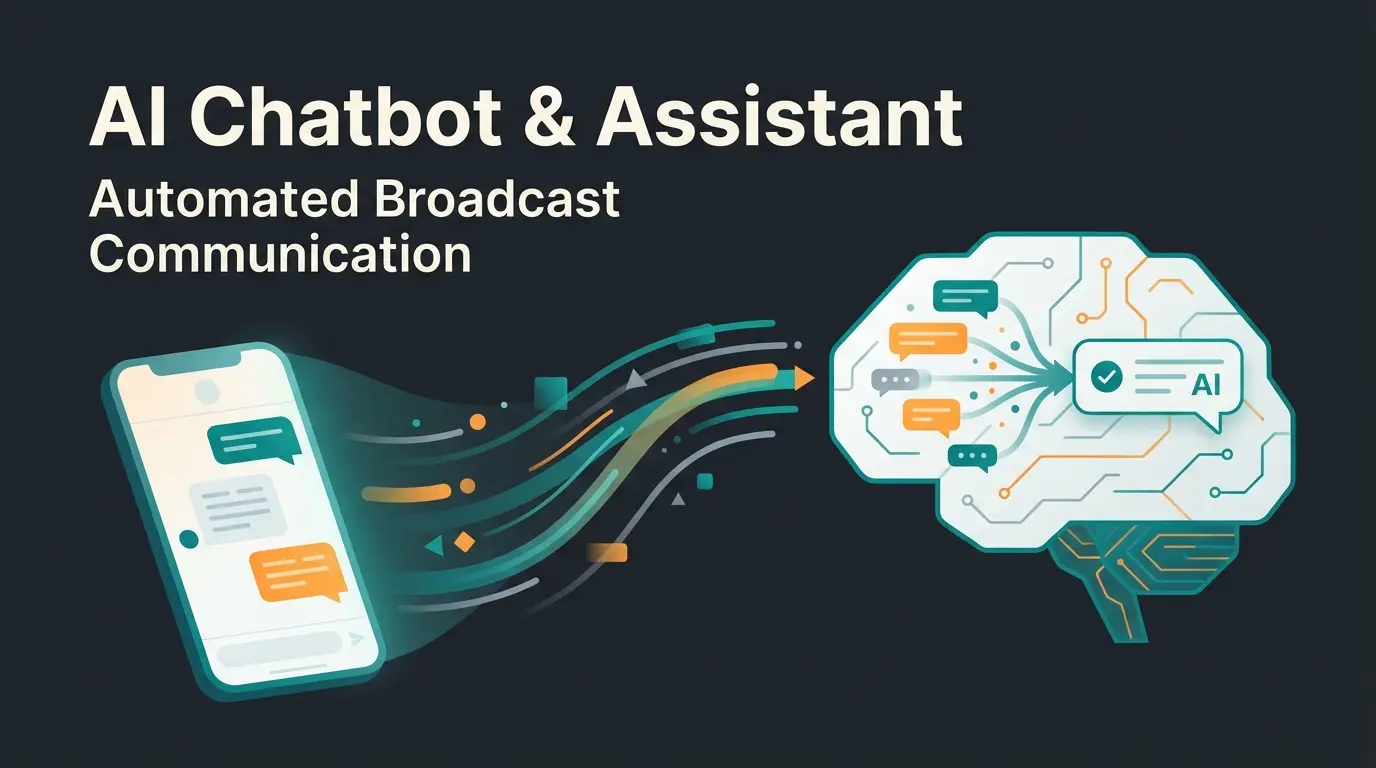
Why WhatsApp is the Most Important Channel for Business
Have you ever wondered why your email newsletters only achieve open rates of 20%, while your smartphone buzzes all day long? The answer is obvious: Communication has shifted.
In Germany, over 60 million people use WhatsApp daily according to Superchat and Best Practice Forum. For businesses, the platform is no longer a "nice-to-have" but the most important channel for customer retention and revenue. However, getting started is often confusing: What's the difference between the App and the API? Is everything GDPR compliant? And how do you scale personal service without hiring hundreds of employees?
This comprehensive guide for 2025 not only answers the question "What is WhatsApp Business?" but also shows you how to transform the channel from a mere support hotline into an intelligent AI sales consultant.
Of the German population aged 14+ uses WhatsApp
WhatsApp messages vs. 20% for email
Significantly higher engagement than traditional channels
90% of messages are read within 3 minutes
Introduction: The German Market Landscape
The German market is conservative when it comes to new technologies, but with WhatsApp, everyone agrees: It's the standard. The statistics speak a clear language according to Lime Technologies:
- Market Penetration: Over 80% of the German population aged 14 and above uses WhatsApp
- Engagement: WhatsApp messages have an open rate of up to 98% and a click-through rate (CTR) of 45-60%. In comparison, emails often struggle around the 20% mark
- Speed: 90% of messages are read within 3 minutes
However, the problem for many companies isn't the why, but the how. Many start with the free app and quickly run into a dead end of data protection issues and manual overload. Others shy away from the perceived complexity of the API. Understanding AI chatbots and their role in modern business communication is essential for making the right choice.
In this article, we'll clarify everything and show why the future lies not in manual typing, but in AI-powered consultation.
The 3 Versions of WhatsApp: A Complete Overview
To use WhatsApp for business, you first need to understand that there isn't just "one" WhatsApp. Meta (the parent company) strictly distinguishes between three variants. Choosing the wrong version can lead to warnings or blocked numbers.
1. WhatsApp Messenger (Personal)
This is the app you use privately.
- Target Group: Private individuals
- Business Use: Prohibited. According to WhatsApp's terms of service, this version may not be used for commercial purposes. Additionally, it's effectively illegal for businesses in Germany due to GDPR (access to all phone book contacts) as noted by Datenschutzkanzlei
2. WhatsApp Business App
A free, separate app for small business owners.
- Target Group: The local baker, florist, hairdresser, or solo entrepreneurs
- Function: Enables a business profile and simple automations (e.g., opening hours)
- Limitation: It's bound to one smartphone (and up to 4 linked web devices). It's not suitable for teams and is a legal gray area in Germany regarding data protection (more on this later) according to Latenode
3. WhatsApp Business API (Platform)
The professional interface for medium-sized businesses and corporations.
- Target Group: E-commerce, customer service teams, sales departments, growing companies
- Function: Not an app, but a technical interface that connects to software (like CRM systems or AI tools)
- Advantage: 100% GDPR compliant, unlimited user count, automation through chatbots/AI, and newsletter distribution as confirmed by Chatarmin
Comparison Table: Which Version is Right for You?
| Feature | WhatsApp Personal | WhatsApp Business App | WhatsApp Business API |
|---|---|---|---|
| Target Group | Private individuals | Small business owners (1-2 people) | SMB & Enterprise |
| Cost | Free | Free | Paid (Software + Conversations) |
| GDPR Compliance | 🔴 No | 🟡 Critical (only with workarounds) | 🟢 Yes (100% secure) |
| Multi-User | 🔴 No | 🟡 Limited (max. 5 devices) | 🟢 Unlimited |
| Automation | 🔴 None | 🟡 Simple (greeting text) | 🟢 Full (AI, Chatbots, Flows) |
| Newsletter | 🔴 Prohibited (blocking risk) | 🟡 Broadcast lists (max. 256) | 🟢 Scalable (Unlimited) |
| Green Checkmark | 🔴 No | 🔴 No | 🟢 Possible (Verification) |
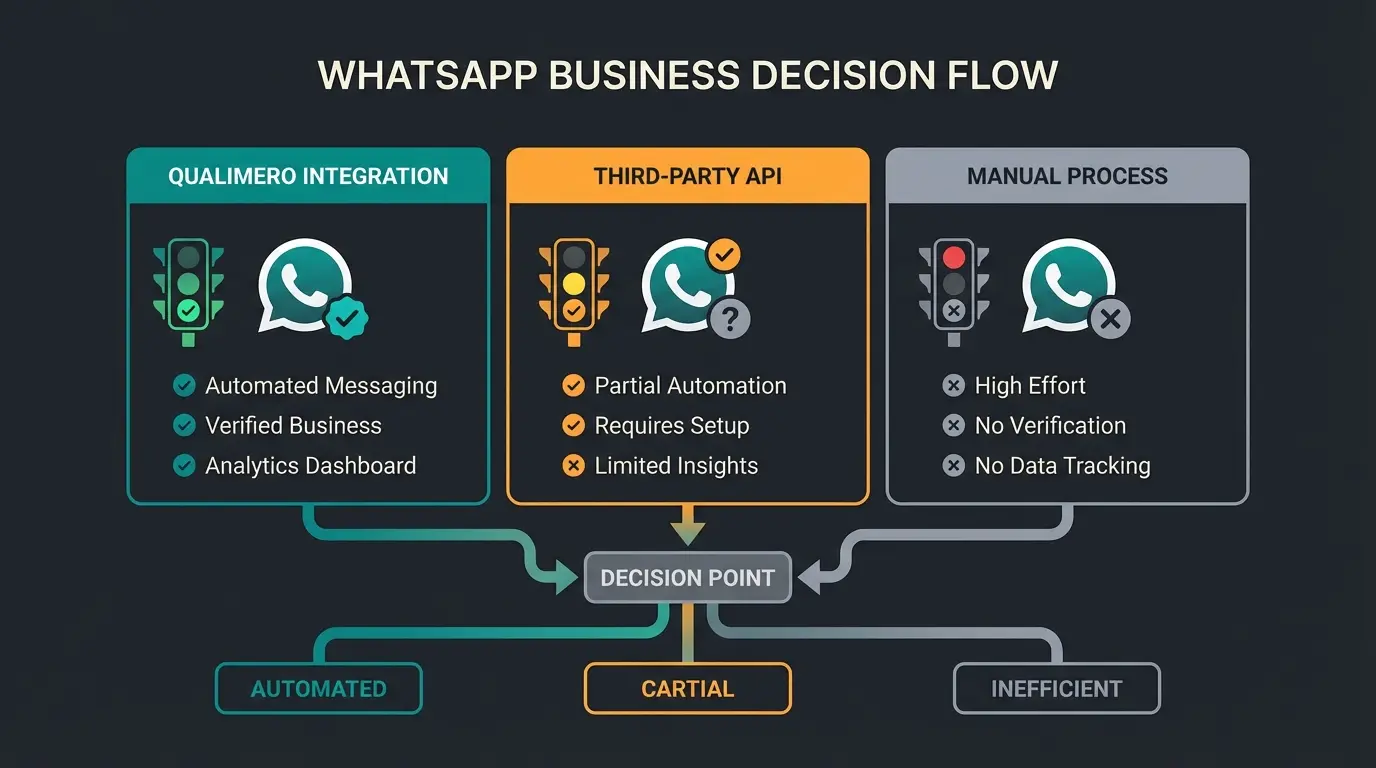
WhatsApp Business App: Features and Limitations
For solo entrepreneurs, the WhatsApp Business App is often the first step. It can be easily downloaded from the App Store and offers basic functions that go beyond the personal messenger.
The Most Important App Features
- Business Profile: Here you store your address, opening hours, email, website, and a description. It acts like a mini business card in the chat
- Product Catalog: You can create products with images and prices directly in the app. Customers can browse through the catalog without leaving the app as explained by Zoko
- Quick Replies: With shortcuts like `/thanks` you can retrieve pre-formulated texts. This saves typing work for frequently asked questions
- Labels: Organize chats with colored markers like "New Customer," "Paid," or "Order Open"
The "Scaling Trap"
As useful as these features are for getting started, they become dangerous with growth. Imagine the following scenario: You launch a marketing campaign. Suddenly, 50 customers write to you at the same time.
- Your smartphone vibrates non-stop
- You type your fingers sore
- Customers wait hours for a response
- An employee gets sick, and the phone with the WhatsApp account is at their home
The Result: Frustrated customers and lost revenue. The Business App is not automatable. It requires manual work for every single message. This is exactly where the journey ends for the App and begins for the API. Companies looking to implement chatbot integration solutions need the API to unlock true automation potential.
WhatsApp Business API: Scaling & Data Protection Solution
The WhatsApp Business API (Application Programming Interface) is not an app you install on your phone. It's the "key" to the WhatsApp network that you integrate into a professional software solution.
Why the API is the Standard for German Businesses
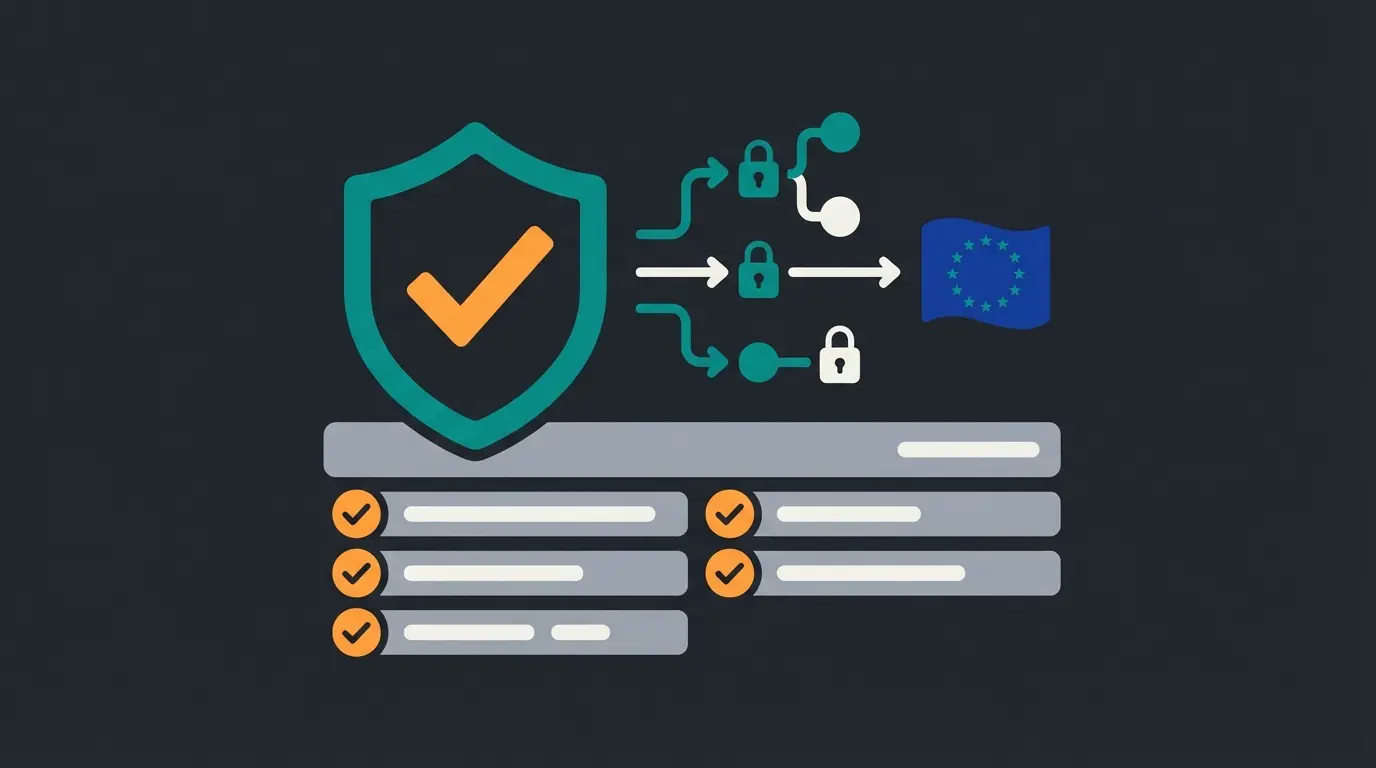
1. 100% GDPR Compliance (Data Protection)
The biggest risk of the normal app is access to the phone book. As soon as you install the app, all contacts are often transferred to Meta servers in the USA – including those of people who don't even use WhatsApp. In Germany, this is a clear GDPR violation that can lead to warnings according to Brevo.
The API, however, works differently:
- It has no access to your private phone book
- Contacts are only stored when they write to you (inbound) or explicitly consent (opt-in)
- Professional providers often host data on German servers and offer data processing agreements (DPA) as noted by Heydata
Understanding the EU AI Act is also crucial when implementing AI-powered solutions on WhatsApp to ensure full regulatory compliance.
2. The "Green Checkmark" (Verification)
Only through the API can you apply for the coveted green checkmark next to your company name. This signals authenticity and trust – a psychological factor that significantly increases response rates as confirmed by WABAConnect and Sinch.
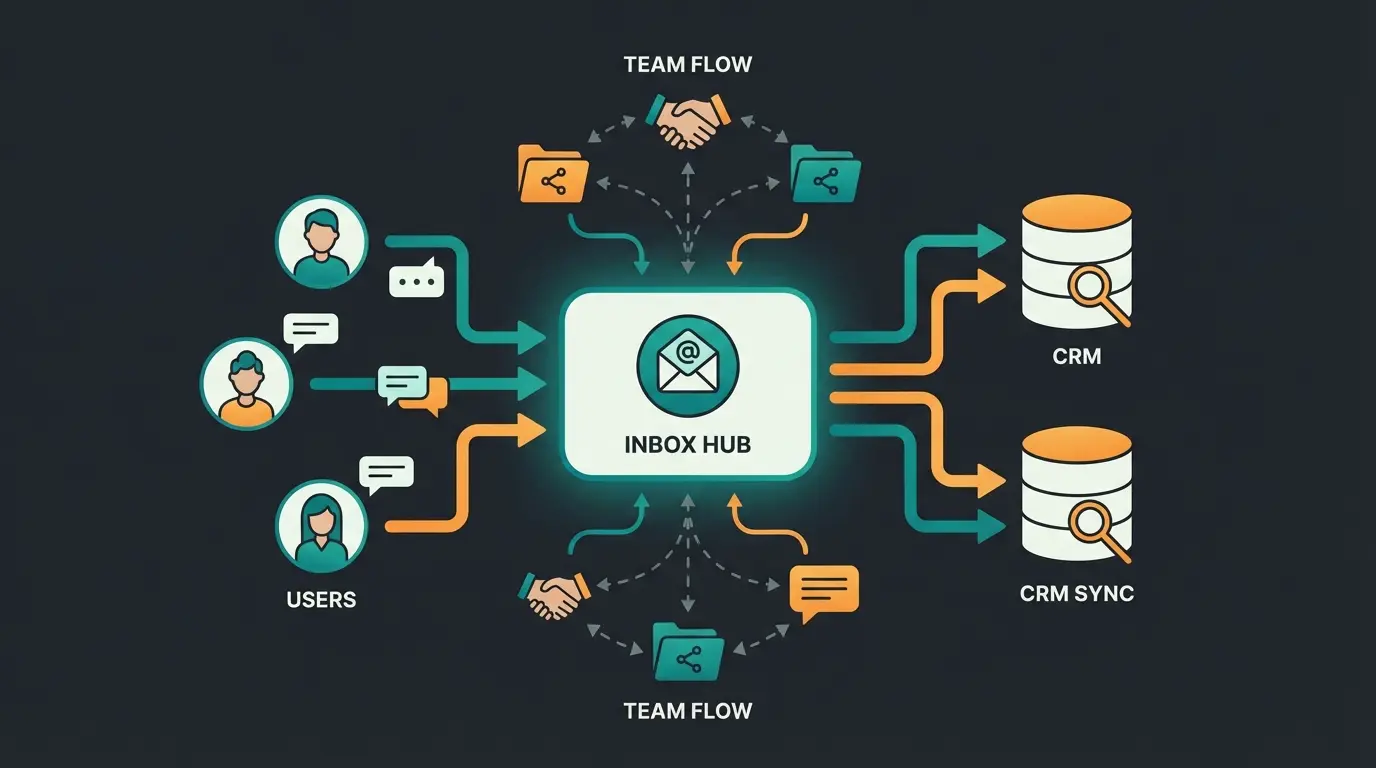
3. Team Inbox & CRM Integration
With the API, all messages land in a central software (Shared Inbox).
- Assignment: Messages can be distributed to specific employees (e.g., "Support" or "Sales")
- Context: By connecting to your CRM (e.g., Salesforce, HubSpot, Shopify), you can see what the customer last purchased directly next to the chat
WhatsApp as a Sales Channel: Beyond Support & Newsletters
Here lies the biggest misunderstanding in the market. Most companies use WhatsApp Business for two things:
- Reactive Support: "Where is my package?"
- Blunt Newsletters: "Here's our offer of the week!"
In doing so, you're missing out on the biggest potential: Proactive consultation. The AI chatbot for e-commerce represents a paradigm shift in how businesses can leverage WhatsApp for actual sales conversations.
From Simple Chatbot to AI Sales Consultant
The competition often offers you "chatbots." These are usually rigid decision trees:
The solution for 2025 is Conversational AI (AI Consultation). Understanding conversational AI and its business transformation potential is key to leveraging this opportunity.
The Difference in Detail
| Feature | Classic Chatbot (Rule-Based) | AI Sales Consultant (Generative AI) |
|---|---|---|
| Understanding | Only reacts to exact keywords ("price", "help") | Understands context, slang, and typos (NLP) |
| Flexibility | Gets stuck when customer deviates from script | Dynamically adapts to conversation flow |
| Goal | Avoid tickets (support focus) | Sell & Advise (sales focus) |
| Example | "We're open from 9am-5pm" | "For your dry skin, I recommend Product X as it contains hyaluronic acid. Shall I add it to your cart?" |
For businesses exploring different automation options, understanding the types of chatbots available helps in making an informed decision. The comparison between chatbots and conversational AI reveals why modern AI solutions outperform traditional rule-based systems.
Slow response times, low conversion rates, limited availability
Frustrating experiences, "I didn't understand that" responses, rigid scripts
Instant responses, personalized recommendations, high conversion rates, 24/7 availability
Use Case: Automated Product Consultation
Imagine you sell running shoes.
Without AI: The customer has to click through filters on the website. They're unsure, they abandon.
With AI via WhatsApp:
- Customer: "I'm looking for shoes for a marathon, but I mostly run on asphalt."
- AI: "Great goal! Cushioning is important for asphalt and long distances. Do you have rather narrow or wide feet?"
- Customer: "Rather wide."
- AI: "Then the UltraRun Wide Model is perfect for you. It offers stability for 42km. Here's the link to the shop..."
The Added Value: You scale the consulting competence of your best salesperson to thousands of customers simultaneously – 24/7, without waiting time and without personnel costs according to Gupshup. The AI product finder technology powers these intelligent recommendation conversations.
Real-world success stories demonstrate this potential. The AI Employee 'Kira' showcases how garden centers transformed customer service, while the AI Employee Flora demonstrates effective product consultation in action.
Stop manually typing responses. Let AI-powered product consultation work for you 24/7 – scaling personalized advice to thousands of customers without increasing staff costs.
Start Your Free TrialWhatsApp Business Costs: What to Expect
The cost structure changed in 2025. While the App is free, there are costs associated with the API. These consist of two building blocks:
1. Software Costs (Provider)
Since the API has no user interface, you need software (Business Solution Provider).
- Costs: Usually monthly basic fee (approx. €49 - €299 depending on feature scope)
2. WhatsApp Fees (Meta)
Meta charges costs per 24-hour conversation. Since 2025, there's a strict distinction by categories (prices for Germany, as of 2025) according to Heltar:
A. Marketing (approx. €0.11 / conversation)
Every message that you initiate to sell (newsletters, offers, "cart abandoned"). This is the most expensive category because it offers the highest value.
B. Utility / Administrative (approx. €0.045 / conversation)
Transactional messages like shipping confirmations or invoices.
- New in 2025: These are often free when sent within an open service window
C. Authentication (approx. €0.064 / conversation)
One-time passwords (OTP) or login codes.
D. Service (Free for Businesses)
When the customer writes to you first (e.g., asks a question), the response is free for you (within 24 hours).
- Strategy: The goal is to get customers to write to you (Click-to-Chat Ads, QR codes) to avoid expensive marketing costs as suggested by Link Mobility
Business-initiated promotional messages
Transactional updates and confirmations
One-time passwords and verification
Customer-initiated inquiries within 24h
Data Protection & GDPR: The Hard Truth
Many "growth hackers" recommend simply using the Business App and sending newsletters to all contacts. Don't do this.
In Germany, the legal situation is clear:
- Prohibition of Coupling: You may not make WhatsApp a condition for a purchase
- Opt-in Requirement: You may not send promotional messages to anyone who hasn't explicitly consented (e.g., via checkbox on the website)
- Metadata Problem: The standard app transfers metadata to the USA. Without API and DPA contract, you're acting negligently
The Solution: Use the API through a German provider. These act as a "data protection shield." The data is encrypted, contacts are not synchronized, and you receive legally secure opt-in processes (double opt-in) for your newsletters as explained by Mailody.
For businesses implementing AI chatbots in customer service, GDPR compliance becomes even more critical as these systems process customer data at scale.
Conclusion: Which Solution is Right for You?
The decision between App and API isn't a matter of taste, but a matter of business phase.
Choose the WhatsApp Business App if:
- You're a sole proprietor or a very small local business
- You receive fewer than 10-20 messages per day
- You don't want to send newsletters
- Data protection gray areas are acceptable for you (at your own risk)
Choose the WhatsApp Business API (+ AI Solution) if:
- You're an e-commerce company, medium-sized business, or brand
- You need to work GDPR-compliant
- You want to send newsletters to hundreds or thousands of customers
- You don't just want to process support tickets, but actively sell
- You're looking for automation that goes beyond "Hello, we're here from 9am"
For comprehensive guidance on leveraging AI for sales conversations, explore AI Product Consultation and learn about understanding AI chatbots to make an informed technology decision.
The Next Step
WhatsApp is no longer just a chat channel in 2025. It's your most powerful sales floor. While your competition is still typing manually or annoying customers with dumb bots, you can scale real consultation conversations with an AI-powered API solution.
Frequently Asked Questions (FAQ)
The WhatsApp Business App is not GDPR compliant in its standard configuration because it requires access to the phone book and transfers data to the USA. The WhatsApp Business API, however, can be operated 100% GDPR-compliant through certified partners, as there's no automatic contact synchronization and data processing agreements are concluded.
The "App" is an application for smartphones for small business owners (free, limited). The "API" is an interface for software solutions that enables scaling, multiple users, chatbots, and data protection (paid).
The App is free. With the API, you pay a software fee to the provider plus usage-based fees to Meta. In Germany (2025), a marketing conversation costs about 11 cents, while service conversations (customer-initiated) are often free.
With the App, you're limited to 1 smartphone and 4 web devices. With the API, unlimited employees can log in simultaneously from different devices and process messages.
Key features include business profiles, product catalogs, quick replies, and labels. The main benefits depend on the version: The App offers free basic tools for small businesses, while the API provides unlimited scalability, full automation capabilities, 100% GDPR compliance, green checkmark verification, and the ability to integrate AI-powered consultation – making it ideal for businesses focused on growth and customer experience.
Join leading e-commerce brands using AI-powered WhatsApp consultation to convert more customers. Get started with a personalized demo and see how intelligent automation transforms your customer conversations.
Book Your Free Demo
Lasse is CEO and co-founder of Qualimero. After completing his MBA at WHU and scaling a company to seven-figure revenue, he founded Qualimero to build AI-powered digital employees for e-commerce. His focus: helping businesses measurably improve customer interaction through intelligent automation.