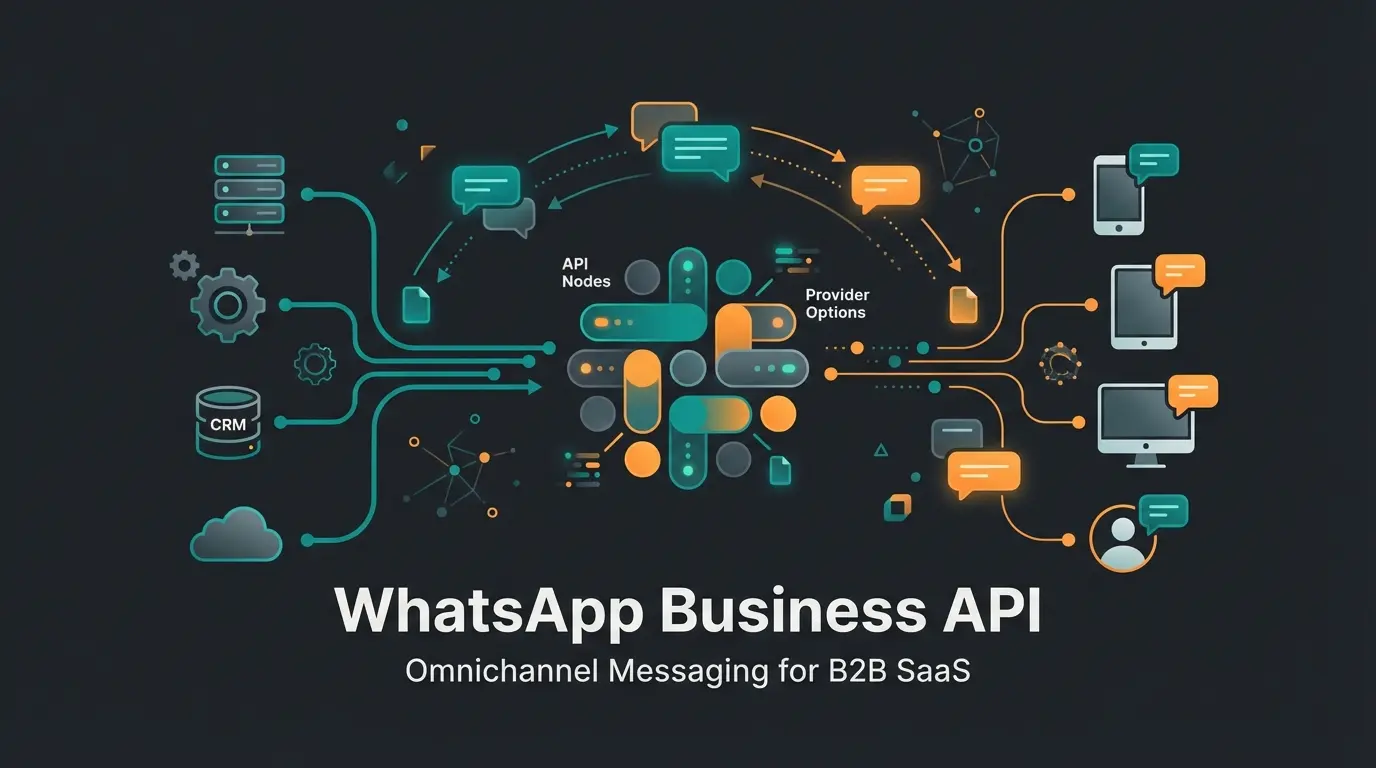
Is the WhatsApp Business API Free? The Fundamentals
Is the [WhatsApp Business API](/blog/whatsapp-business-api) free? Marketing managers, sales directors, and CEOs ask themselves this question daily. The answer is a complex "yes and no." While access to the technology has been drastically simplified and partially made free by Meta, the true costs lurk in the details—and the true profits lie in intelligent application.
In this comprehensive guide for businesses (current as of 2025), we deconstruct the myth of the "free WhatsApp API." We illuminate the radical pricing changes from Meta that have been in effect since November 2024 and July 2025, and show you why mere access to the API is worthless if it lacks a "brain." According to sent.dm, the platform has fundamentally shifted toward conversation-based pricing that benefits businesses focusing on customer service.
We go beyond the standard topics (support bots) and show you how to use the API to build a Digital Expert Consultant that doesn't just answer questions but actively sells. If you're searching for a "whatsapp api free" solution, understanding these nuances is essential for making the right business decision. This approach aligns with how AI Chatbots are transforming the entire e-commerce landscape.
The Crucial Difference: App vs. API
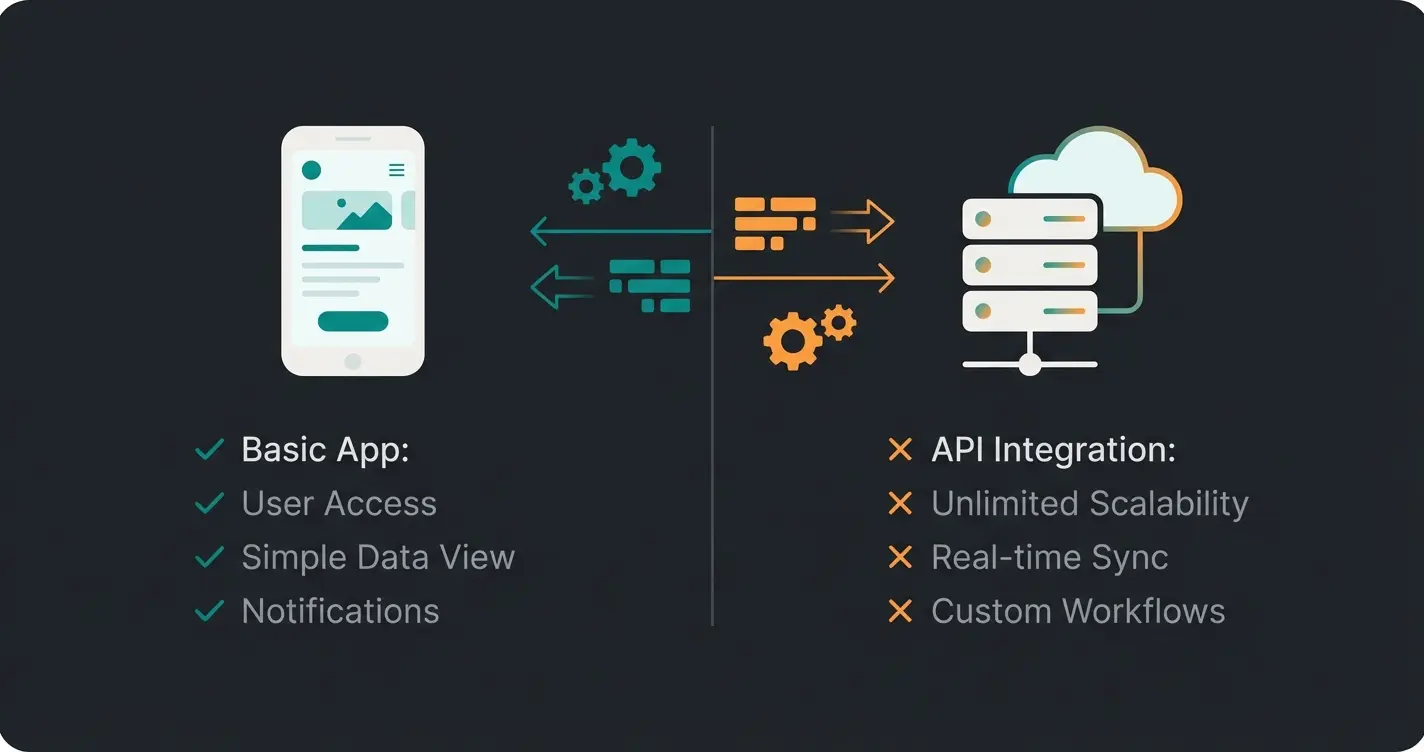
To answer this question precisely, we first need to make a clear distinction. Many businesses confuse the free app you download from the app store with the professional programming interface (API). Understanding this difference is fundamental to grasping WhatsApp Business costs and making informed decisions.
| Feature | WhatsApp Business App | WhatsApp Business API (Platform) |
|---|---|---|
| Costs | 100% Free | Access free, usage costs apply |
| Target Audience | Small businesses (bakeries, salons) | Mid-market & Enterprise |
| Users | 1 person (on one phone) | Unlimited users & teams |
| Automation | Limited (away messages) | Full (chatbots, AI, CRM) |
| GDPR | Problematic (access to contacts) | Compliant (no contact access) |
| Bulk Messaging | Broadcast lists (max 256) | Unlimited (newsletters/marketing) |
The short answer is: Access to the WhatsApp Business API is free (via Meta Cloud API), but conversations cost money. There is no longer a monthly license fee paid directly to Meta, but usage-based fees apply. This is confirmed by whatsboost.in, which details the current pricing structure.
Cloud API vs. On-Premise API
Previously, using the API was extremely expensive and technically demanding, as companies had to host servers or pay expensive partners. With the introduction of the Meta Cloud API, this has changed dramatically. Our WhatsApp Cloud API guide covers the technical details in depth. According to industry analysis, this shift has democratized access to enterprise-grade messaging capabilities.
- Hosting: Meta handles API hosting for free. You no longer need to operate your own servers.
- Setup: Configuration is free and often takes only minutes.
- Scalability: The cloud infrastructure handles traffic spikes automatically.
The Hidden Costs: Meta's 2025 Pricing Model
Those searching for "whatsapp business api free" often encounter outdated information. Articles from 2023 still mention "1,000 free conversations per month." This rule has fundamentally changed. Meta has revolutionized the pricing model in several waves (November 2024, April 2025, July 2025). Here is the current status for the market.
The Revolution: Free Service Conversations
Since November 1, 2024, service conversations are completely free—and unlimited. This represents a massive shift that thefastmode.com has documented extensively.
- What is this? When a customer writes to you first (User-Initiated).
- The change: Previously only the first 1,000 such conversations were free. Now all are free.
- The 24-hour window: As soon as the customer writes, a 24-hour window opens. During this time, you (or your AI) can send as many messages as you want—for free. This is confirmed by happilee.io in their detailed pricing analysis.
The End of "Conversation Flat Rate" (July 2025)
As of July 1, 2025, Meta is switching from a "conversation model" to a "per-message model" for business-initiated messages. According to gupshup.ai, this fundamentally changes how businesses should approach outbound messaging. This is also documented by gallabox.com.
This means: If you proactively write to customers (e.g., newsletters, order confirmations), you pay for each individual template message, no longer a flat rate for a 24-hour window. The distinction becomes crucial when planning your WhatsApp Business for sales strategy.
The 4 Categories and Their Costs
Prices vary by country. Germany and other European markets are among the more expensive regions (compared to India or Brazil). Here's an estimate of current rates (as of 2025/2026), as outlined by Facebook's official documentation:
| Category | Description | Cost (approx.) | When is it free? |
|---|---|---|---|
| Service | Customer writes first (support, questions) | €0.00 | ALWAYS (within 24h window) |
| Utility | Transactional (shipping status, invoice) | ~€0.07 | Free if sent within an open service window (from April 2025) |
| Authentication | One-time passwords (OTP), 2FA | ~€0.06 | Never (outside of test phases) |
| Marketing | Newsletters, offers, "abandoned cart" | ~€0.11 - €0.13 | Never (except with Click-to-WhatsApp Ads) |
Note: The exact cent amounts fluctuate slightly due to USD/EUR exchange rates. For the most current pricing, refer to controlhippo.com which maintains updated rate tables.
Unlimited free inbound customer chats
Transactional notifications (free in 24h window)
Promotional outbound per message
Free conversation window from paid ads
Summary of "Free" Opportunities
To truly leverage the free WhatsApp API keyword, you need to know these rules. Understanding these principles is fundamental to maximizing your ROI, as detailed in resources about AI customer service implementation.
- Inbound is King: Ensure customers start the chat. Then the dialog is free.
- Utility in the Window: Send order confirmations immediately while the 24h window is open. Then these templates are also free. This is confirmed by omnichat.ai and ycloud.com.
- 72h Window with Ads: If a customer comes through a Facebook/Instagram ad ("Click-to-WhatsApp"), the response window is free for 72 hours—even for marketing messages. This strategy is documented by wetarseel.ai and linkmobility.com.
Guide: How to Get the API "Free" (The DIY Method)
Many providers (BSPs) charge monthly base fees (€99, €200, €500). However, it is technically possible to obtain the WhatsApp Business API for free—directly from Meta. This is the path for developers and technically savvy businesses looking to leverage the kostenlose whatsapp api.
The "Direct Cloud API" Path
Meta allows companies to use the API without intermediaries. This approach requires technical expertise but eliminates monthly platform fees. The process involves several key steps that developers familiar with AI Chatbots evolving will find straightforward.
Create and verify your Meta Business Manager account with business documentation
Go to developers.facebook.com, create a new app, and select WhatsApp as the product
Generate a permanent access token—the key for your software to communicate with WhatsApp servers
Set up a webhook URL on your server to receive incoming messages as JSON data packets
The Big Trap of the "Free" Solution
Here lies the misunderstanding for many searching for "whatsapp api free" or "whatsapp api gratis." The API is just an interface. It has no user interface.
- If you use the API directly, you have no app where you can read messages.
- You have no "Send" button.
- You cannot see images that customers send.
Everything happens in code. To make the API usable, you must program your own software that takes the JSON data from Meta and displays it in a chat window for your employees. This technical reality is often glossed over by providers promising "free" solutions.
The Missing Puzzle Piece: Why You Need a "Brain" for the API
We've established: Access is affordable, but usage requires software. Most companies therefore opt for a Business Solution Provider (BSP) like Respond.io, Superchat, or Charles - see our WhatsApp API providers comparison for a detailed breakdown. These offer an inbox for teams, similar to how digital sales consultants function in modern e-commerce.
But here's where the next problem arises: An inbox doesn't scale.
If you use the API to reach thousands of customers, you cannot manually answer thousands of chats. You need automation. But standard automation ("Press 1 for opening hours") is no longer sufficient in 2025. Customers expect intelligent, contextual responses.
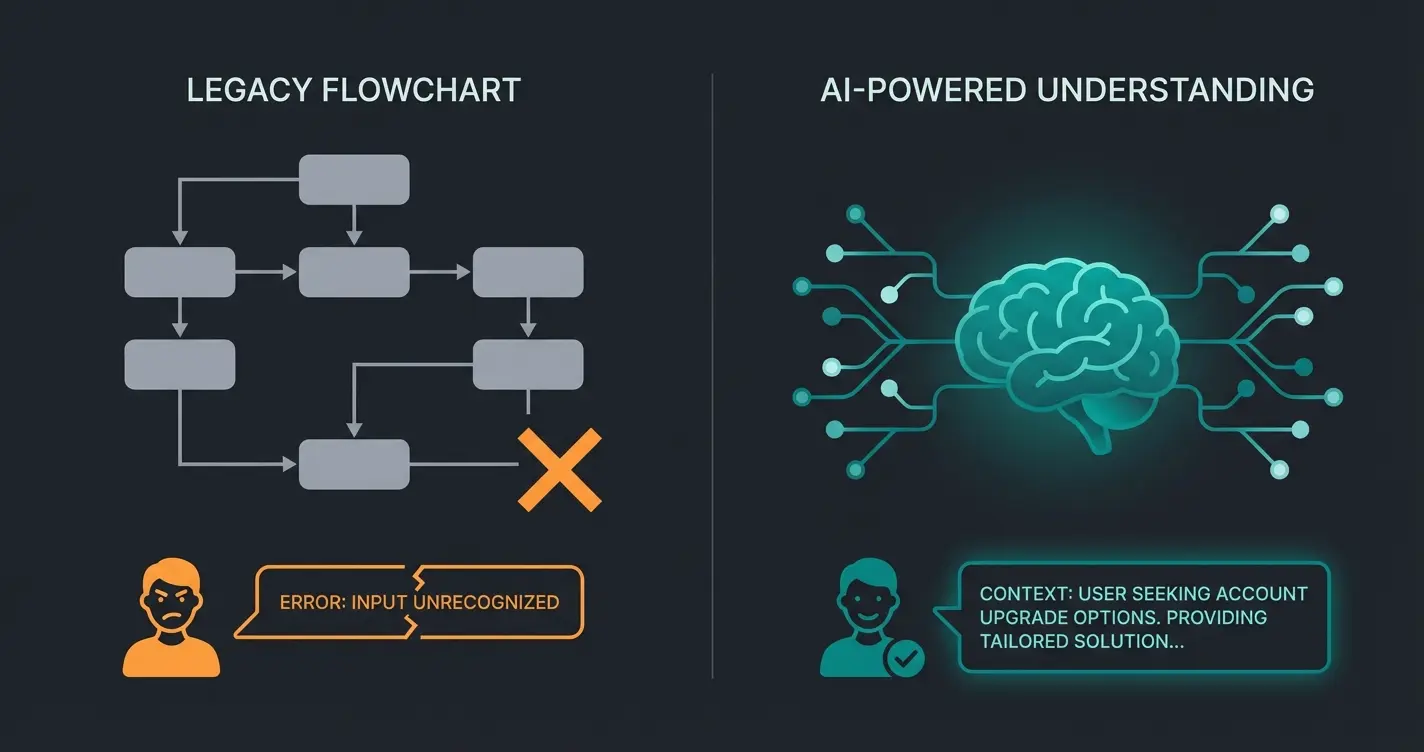
The Problem with "Dumb Bots"
Most "free chatbots" integrated into BSP solutions are based on rigid decision trees. They follow simple if-then logic without understanding context or intent:
- Customer: "Do you have that shirt in red?"
- Bot: "Please select from the menu: 1. Shipping, 2. Returns."
- Result: Customer frustrated, purchase abandoned.
To use the WhatsApp Business API profitably, you need not a rigid script but a brain. This is where Generative AI (LLMs) comes into play, fundamentally changing how businesses can leverage messaging platforms for sales.
From "FAQ Bot" to "Digital Expert Consultant": Revenue Over Support
Here lies your greatest opportunity to stand out from the competition. Use the API not to save costs in support but to generate revenue in sales. This approach represents the evolution of how an AI Chatbot for E-Commerce should function.
The Concept: Automated Product Consultation
Imagine you sell high-quality skincare products, bicycles, or wine. A customer in the store would receive consultation. On WhatsApp, they were previously just sent links. This gap represents a massive opportunity that most competitors completely miss.
With an AI-powered WhatsApp solution (connected via the API), you can simulate real consultation conversations. This transforms the messaging channel from a cost center into a revenue driver. The success of this approach is demonstrated by implementations like AI Employee Flora.
Comparison: Standard Bot vs. AI Consultant
| Scenario | Standard "Free" Bot | AI Sales Consultant (Your Advantage) |
|---|---|---|
| Customer Question | "I have dry skin." | "I have dry skin." |
| Reaction | Sends link to "Creams" category. | "I understand. Is your skin also sensitive or prone to redness?" (Qualification) |
| Context | Immediately forgets what was said before. | Remembers preferences ("Customer dislikes fragrances"). |
| Goal | Close ticket (Support). | Sell product (Sales). |
| Cost | €0 (Service conversation). | €0 (Service conversation). |
Why This is "Free"
Remember the pricing change from November 2024? Service conversations are free. If your AI engages the customer in a long, in-depth consultation conversation that spans 50 messages and leads to a purchase, you pay Meta not a cent.
You're using Meta's free infrastructure to build a fully automated sales channel. The only costs are the software fees for the AI solution. This represents a fundamental shift in how businesses should think about messaging—not as a cost center but as a revenue opportunity.
Practical Example: The "Wine Advisor"
This example illustrates how an AI product consultant can transform customer interactions into sales opportunities:
- Entry: Customer scans QR code on wine bottle ("Find the right cheese for this wine"). -> Inbound (Free).
- Consultation: AI asks: "Do you prefer strong or mild cheese?"
- Recommendation: AI suggests 3 cheese varieties and directly offers a "Gourmet Package" for purchase.
- Checkout: Link to shop or WhatsApp Checkout.
This isn't support. This is Automated Sales. The entire consultation happens within a free service conversation, yet it drives direct revenue. This approach works across industries, from fashion to electronics to specialty foods.
Discover how AI-powered consultation can turn free inbound chats into automated revenue. Start building your digital expert consultant today.
Get Started FreeStep-by-Step Guide: Setup for Businesses (GDPR & Verification)
Ready to start? Here's the roadmap for businesses to set up the API securely and efficiently. This process is essential for establishing a proper WhatsApp Business Account.
Step 1: Choose the Right Phone Number
You cannot simply convert your private number without losing chat history. This is a common mistake that leads to complications later.
- Tip: Use a fresh landline or mobile number.
- Important: This number must not currently be registered with WhatsApp (private or Business App). You must delete the account there first.
- Consideration: Use a dedicated business number that your team can access, not a personal device.
Step 2: Meta Business Verification (The Bottleneck)
To fully use the API (and lift the 250 messages/day limit), you must verify your business. This process is crucial for scaling your WhatsApp operations.
- You need: Business registration documents, commercial registration.
- The name in Business Manager must exactly match the documents.
- Duration: 2 days to 4 weeks (depending on Meta support responsiveness).
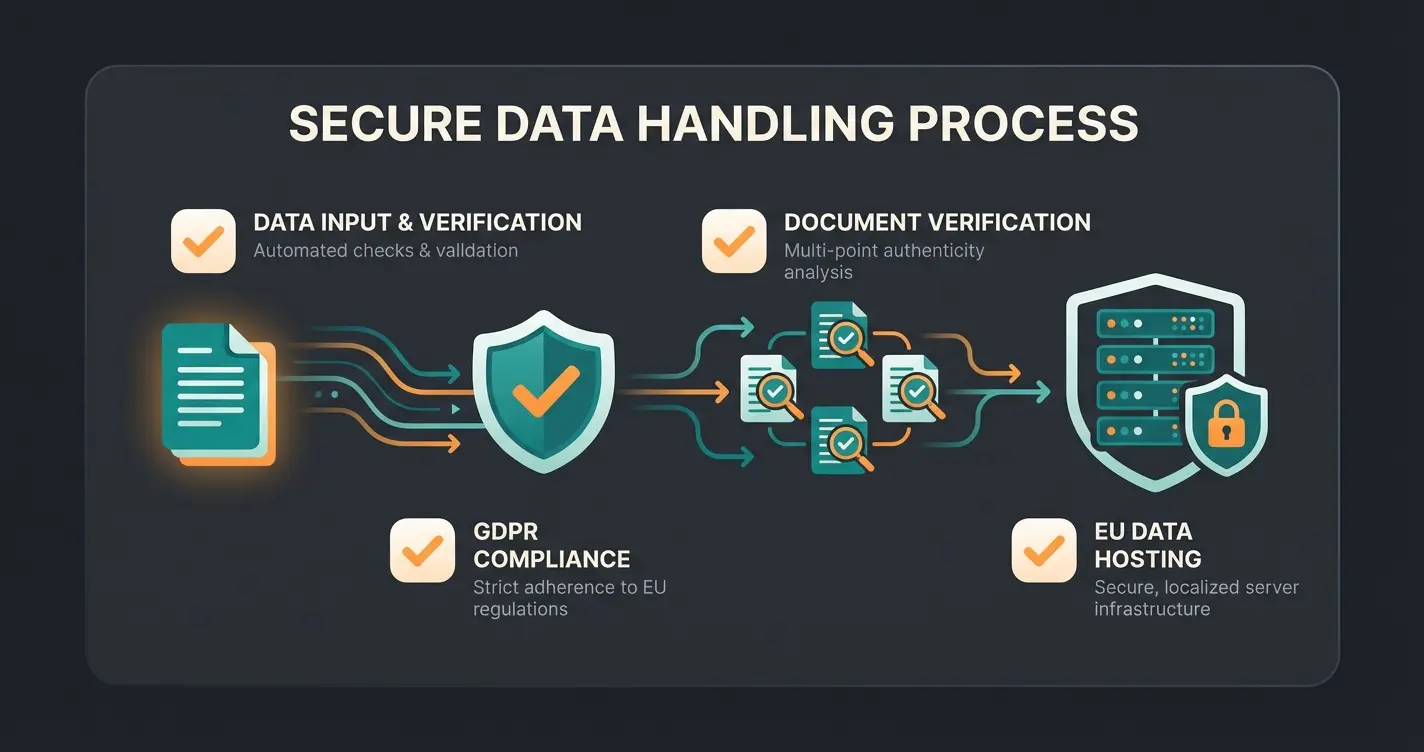
Step 3: Ensure GDPR Compliance
In Europe and many other regions, data privacy is critical. Proper compliance protects both your business and your customers.
- Data Processing Agreement (DPA): Sign this with your BSP or software provider.
- Server Location: Ensure your provider uses servers in the appropriate jurisdiction (Meta hosts the Cloud API in the US, but through the "Data Privacy Framework" and standard contractual clauses, usage is legally possible if properly documented).
- Opt-In: You may never contact customers for marketing without consent (Marketing Template). Double Opt-In is the gold standard. For service chats (customer writes first), legitimate interest to respond applies.
Step 4: Connect the Intelligence
Connect the API not just to an inbox but to your product database and an AI. This integration is what transforms a basic messaging tool into a powerful sales channel, similar to implementations with Shopware 6 chatbots.
- Load product catalogs (PDFs, CSV) into the AI's "knowledge base".
- Define the "persona" (e.g., "You are a friendly sommelier" or "You are an expert skincare consultant").
- Set up response workflows for common scenarios.
- Integrate with your CRM for customer context.
The True Cost Comparison: Three Scenarios
To help you make the right decision, let's compare three approaches to implementing WhatsApp Business API. This comparison illustrates why the "free" option often becomes the most expensive in practice.
| Scenario | Meta Costs | Software Costs | Time Effort | Result |
|---|---|---|---|---|
| DIY (Cloud API) | €0 | €0 | Extremely High (Dev) | Barely works without UI |
| Standard BSP | €0 (Service) | ~€100/month | Medium (Manual) | Support team overwhelmed |
| AI Sales Solution | €0 (Service) | Variable/month | Low (Auto) | Scalable revenue |
The DIY approach looks attractive on paper but fails in practice. Without a user interface, your team cannot efficiently manage conversations. Standard BSP solutions provide the interface but don't solve the scaling problem—you still need humans to respond to every message. Only AI-powered solutions deliver both the interface and the automation needed for true scalability.
Conversation Flow Transformation
Understanding how AI transforms the customer journey is crucial. Traditional bots follow a linear, limited path. AI consultants create dynamic, revenue-generating conversations.
Customer scans QR code or clicks chat button on website - service conversation begins at no cost
AI asks clarifying questions to understand needs, preferences, and context - building customer profile
AI suggests specific products based on gathered information, explaining benefits relevant to customer
Customer purchases through integrated checkout or receives direct link - revenue generated from free conversation
Frequently Asked Questions
Access to the WhatsApp Business API is free through Meta's Cloud API. However, usage costs apply depending on conversation type. Service conversations (when customers message you first) are completely free and unlimited since November 2024. Marketing and utility messages cost approximately €0.07-0.13 per message depending on your region.
The WhatsApp Business App is a free smartphone application designed for small businesses with one user. The WhatsApp Business API is a programming interface for medium to large businesses that enables unlimited users, full automation, CRM integration, and GDPR-compliant operations. The API requires software or a Business Solution Provider to function.
Since November 2024, ALL service conversations (customer-initiated) are completely free with no monthly limit. Previously, only the first 1,000 were free. Marketing and utility messages still incur costs per message. Click-to-WhatsApp ad responses are free for 72 hours.
Technically yes—you can access Meta's Cloud API directly for free. However, the API provides no user interface. You'd need to build your own chat dashboard, which typically costs thousands in development time. For 99% of businesses, using a BSP or AI solution is more economical than the DIY approach.
You need a Data Processing Agreement (DPA) with your software provider, proper documentation of data handling practices, and explicit opt-in for marketing messages. Service conversations where customers initiate contact fall under legitimate interest. Ensure your provider uses EU-based servers or has appropriate data transfer agreements in place.
Conclusion: Start Free, Scale Intelligently
Let's return to the original question: Is the WhatsApp Business API free?
Yes, service usage has actually become free since late 2024. This represents a massive subsidy by Meta to establish WhatsApp as the primary channel between customers and businesses. For companies searching for a "free whatsapp api" solution, this is genuinely good news—but only if you know how to leverage it.
Our Recommendation for 2025 and Beyond
Stop viewing WhatsApp as a cost center for support. The new pricing rules (free service chats) are an invitation to shift sales conversations to the platform. The businesses that will win are those that recognize this channel not as a support tool but as a revenue driver.
Invest the money you save on Meta fees into an intelligent AI solution. Because a free API is useless if it doesn't sell. The combination of free infrastructure and smart automation creates a scalable revenue channel that grows with your business.
Ready to launch your digital expert consultant? Use the free API infrastructure and transform chats into revenue. The technology is available—the question is whether you'll use it for basic support or strategic sales growth.
Stop leaving money on the table with basic chatbots. Transform your WhatsApp channel into an automated revenue engine with AI-powered product consultation.
Start Your Free Trial
Lasse is CEO and co-founder of Qualimero. After completing his MBA at WHU and scaling a company to seven-figure revenue, he founded Qualimero to build AI-powered digital employees for e-commerce. His focus: helping businesses measurably improve customer interaction through intelligent automation.