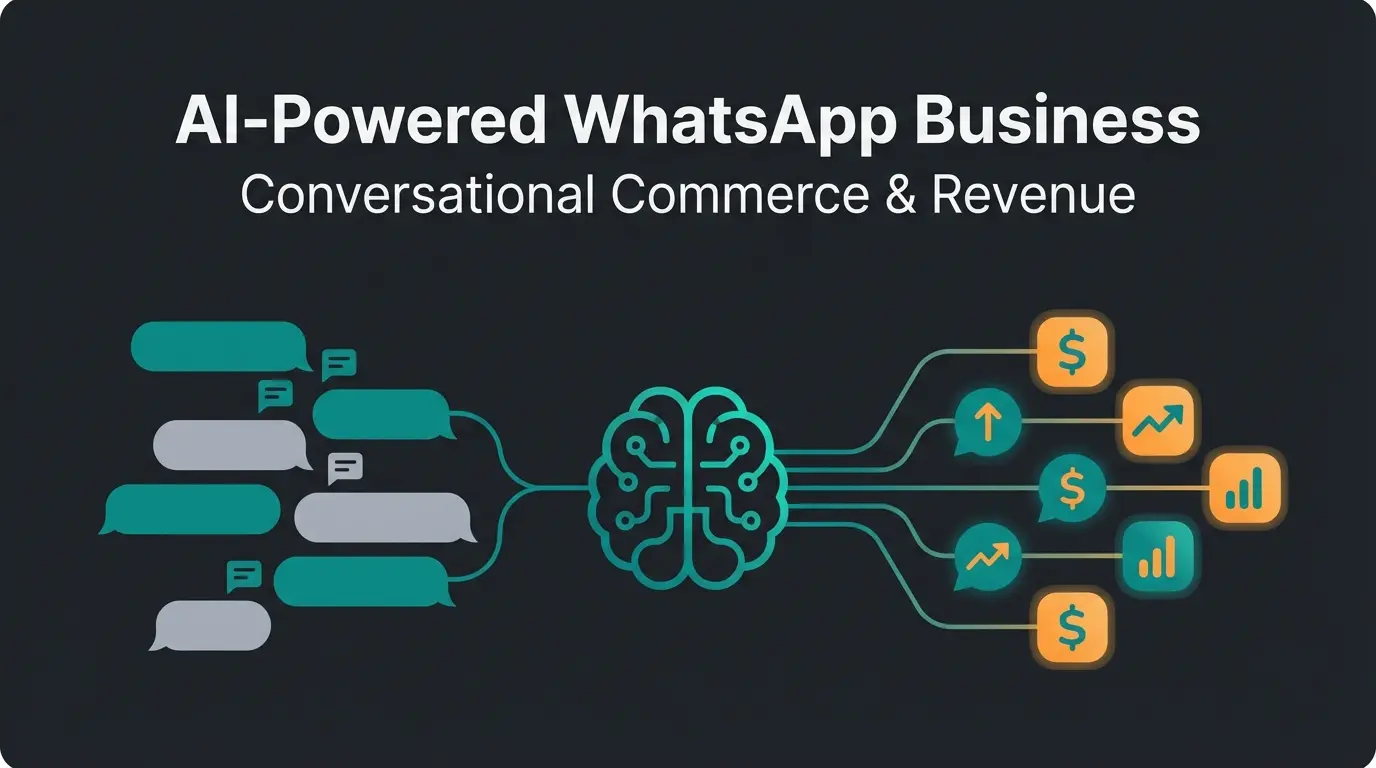
Why Your Provider Choice Determines Your Revenue
Have you ever wondered why some online shops actually sell on WhatsApp while others just process support tickets? The difference rarely lies in the product—it's the technology behind it.
Just two years ago, the WhatsApp Business API was purely a tool for customer service or mass marketing newsletter distribution. But in 2025, the tables have turned. Customers no longer expect rigid "Press 1 for returns" menus. They expect real-time consultation—as competent as in a brick-and-mortar store, but as convenient as chatting with friends.
Anyone searching for a WhatsApp API provider today faces a jungle of over 50 solutions. From pure developer interfaces like the Twilio WhatsApp API to support suites like Userlike to specialized marketing tools like Chatarmin. According to Lime Technologies, the market fragmentation continues to grow as businesses demand more specialized solutions.
But beware: not every provider can do everything. If you choose a "support provider" to boost revenue, you will fail. In this comprehensive comparison, we analyze the top providers on the German market, illuminate the critical differences between "chatbot" and "AI salesperson," and show you how to use the WhatsApp Business API in a GDPR-compliant and profitable way.
WhatsApp Business App vs API: What Do You Actually Need?
Before we compare providers, we need to clear up a fundamental misconception. Many small businesses start with the free WhatsApp Business App on a smartphone. That works for the local hairdresser around the corner, but it's a dead end for growing businesses.
Understanding what is WhatsApp Business at its core helps clarify which solution fits your business model. The differences are substantial and impact everything from compliance to scalability.
| Feature | WhatsApp Business App | WhatsApp Business API (Platform) |
|---|---|---|
| Target Audience | Solo entrepreneurs, local small businesses | SMBs, E-Commerce, Enterprise |
| Number of Users | Max. 1 smartphone + 4 devices | Unlimited users & devices simultaneously |
| Data Protection (GDPR) | Problematic (accesses phone contacts) | 100% Compliant (no access to private contacts) |
| Automation | Only simple greeting texts | Full chatbots & AI integrations |
| Newsletter | Broadcast lists (max. 256 contacts) | Unlimited sending (Scalable) |
| Integrations | None (Isolated solution) | Connection to CRM, Shopify, HubSpot, etc. |
The bottom line: If you want to work GDPR-compliant, automate processes, or reach more than 500 customers, the WhatsApp Business API is your only option. As Chatarmin confirms, businesses scaling beyond local operations need the API's capabilities. Since the API itself has no user interface, you need one of the following providers (Business Solution Providers) to use it.
Criteria for Choosing the Right WhatsApp API Provider
The market for WhatsApp Business API providers in Germany is fragmented. To separate the wheat from the chaff, you should check these four criteria:
1. GDPR & Server Location (The German Compliance Factor)
In Germany, data protection is non-negotiable. US providers often store data on American servers, which can lead to compliance problems despite the "Data Privacy Framework." According to Sinch, this remains a primary concern for European businesses evaluating API providers.
2. Integration Depth: Just Chatting or Actually Knowing?
A provider that only sends messages back and forth is a mailbox. A modern provider is a brain. The critical question: Can the software access your product catalog (e.g., Shopify, Shopware)? Does the chatbot know what the customer last purchased? Without this data, real sales consultation is impossible.
This is where AI product consultation becomes essential. Your WhatsApp solution needs to understand your inventory, pricing, and product attributes to provide meaningful recommendations.
3. AI Maturity: Script vs. Intelligence
This is where the wheat separates from the chaff in 2025. Legacy providers offer "chatbot builders" where you painstakingly build if-then paths (keyword-based). Next-gen providers use Large Language Models (LLMs) that understand context and argue like a real salesperson.
The evolution from basic automation to conversational AI represents a fundamental shift in what's possible with WhatsApp business communication.
4. The Twilio Problem (Build vs. Buy)
Many search for "Twilio WhatsApp API" because the name is well-known. However, Twilio is a CPaaS (Communication Platform as a Service). This means: you get raw code. You must program your own inbox, your own logic, and your own database. For 95% of businesses, this is uneconomical, as Respond.io and YCloud both emphasize in their provider analyses.
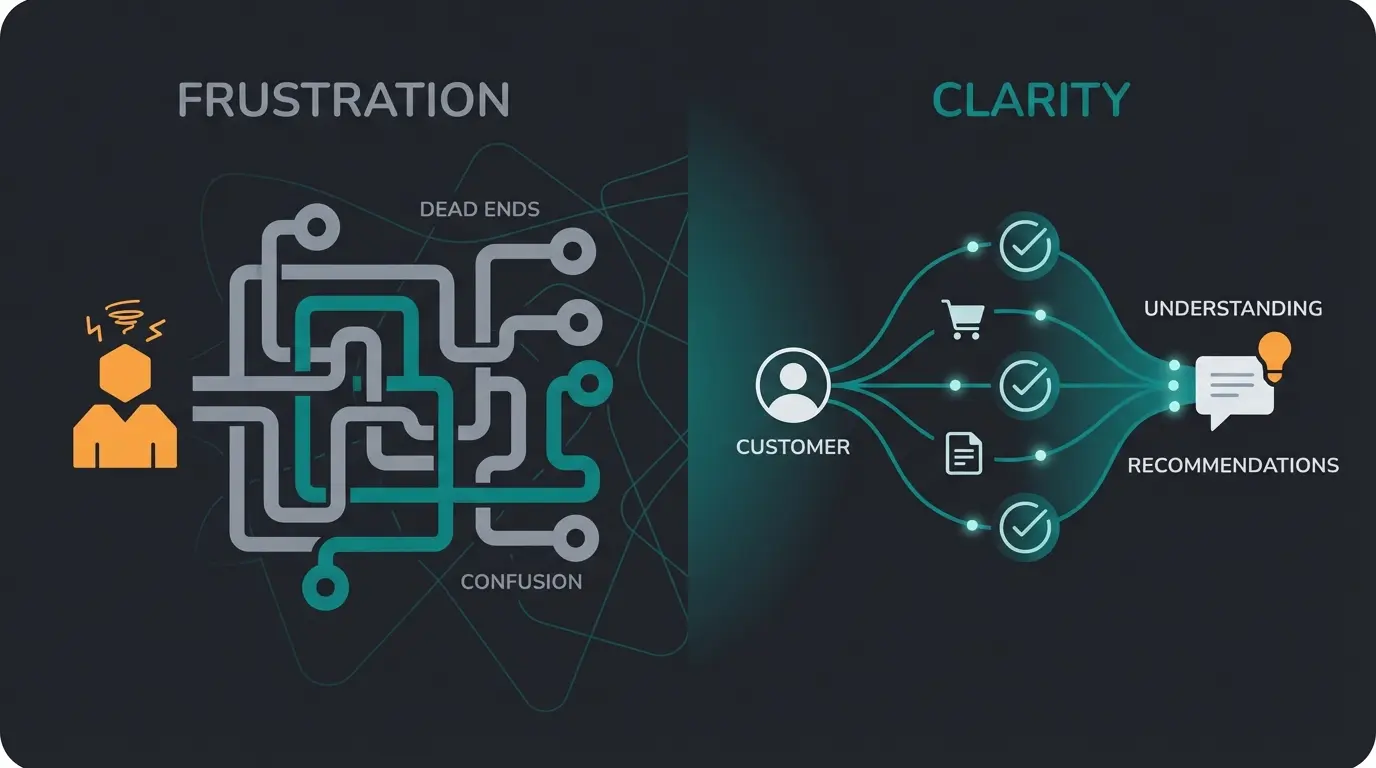
Slow response times, high labor costs, limited availability—customers waited days for answers
Frustrating menu trees, 'Press 1 for returns,' no real understanding of customer needs
Personalized consultation, 'Here's the red dress in size 38 based on your preferences,' real-time product knowledge
Top WhatsApp API Providers Compared (2025)
We've segmented the market based on business goals. There is no "best" provider for everyone—only the best for your goal. Understanding WhatsApp Business costs is essential before making your selection.
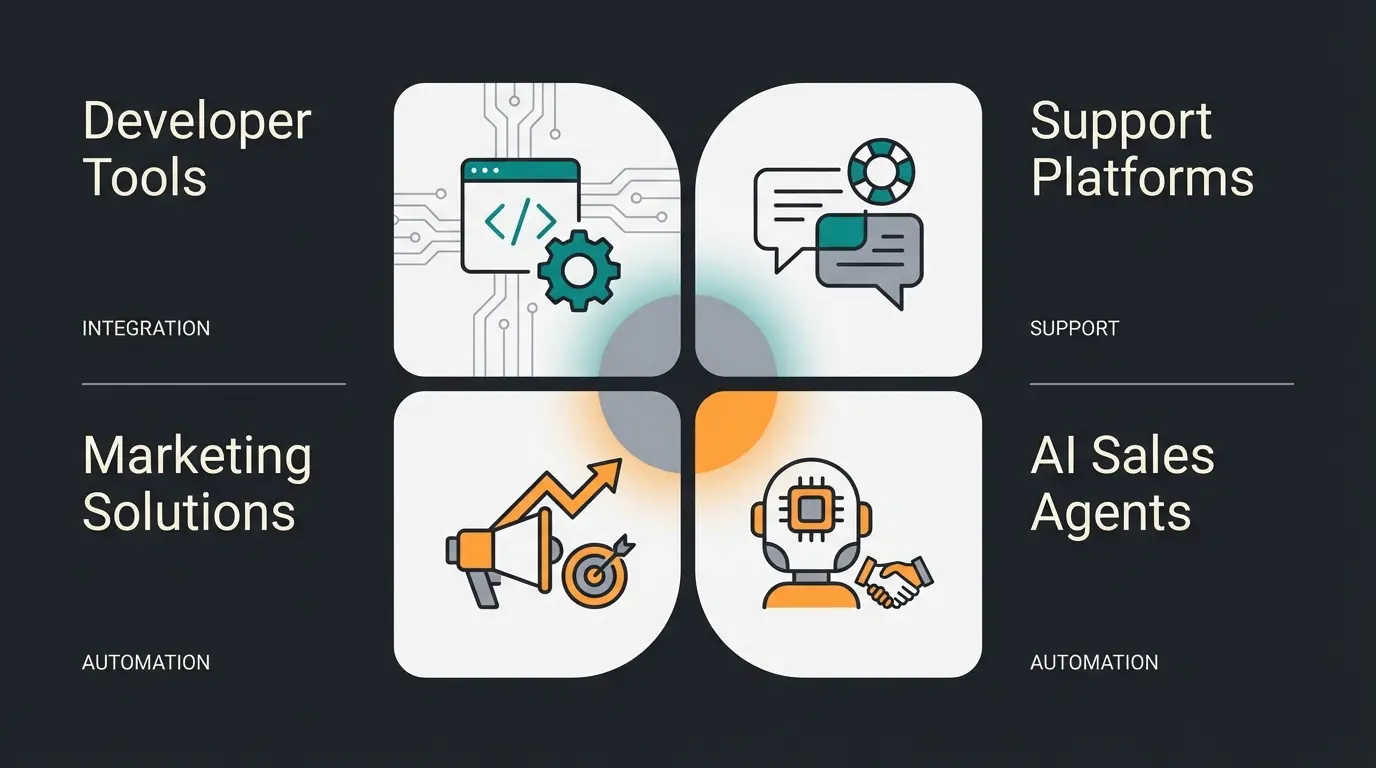
1. Qualimero: The Specialist for AI Sales & E-Commerce
(Best for: Companies that want to use WhatsApp as a sales channel)
While most providers come from the "support corner," Qualimero positions itself as the solution for Sales Enablement. The goal is not to close tickets quickly, but to fill shopping carts.
The unique selling proposition: Real Generative AI Sales Agents. Unlike dumb chatbots that only react to keywords, Qualimero's AI understands complex purchase intentions. This approach to AI guided selling transforms passive chat into active revenue generation.
- Customer: "I'm looking for running shoes for forest trails, but I have wide feet."
- Standard Bot: "Here's our link to the shoe category."
- AI Agent: "For forest trails and wide feet, I recommend our 'TrailBlazer Wide' model. It offers extra stability. Should I reserve size 43 for you?"
The platform offers native integration with product catalogs (Shopify, WooCommerce, PIM), so recommendations are always based on current inventory. Pricing follows a transparent model focused on ROI rather than just message costs.
2. Twilio: The Developer's Toolkit
(Best for: Tech startups with their own dev teams)
Twilio is the world market leader for communication APIs. It's extremely powerful but "naked," as Twilio's own documentation makes clear.
- Advantages: Maximum flexibility. You can determine every pixel yourself. Pay-as-you-go pricing (very cheap at small volumes, expensive at scale without volume discounts).
- Disadvantages: No user interface. No inbox. No ready-made chatbots. You must build and maintain everything yourself.
- GDPR: US company. Hosting options in the EU are possible but often complex to set up.
- Verdict: Use Twilio only if you're a software company building your own messaging platform.
3. Userlike & Zendesk: The Support Giants
(Best for: Classic customer service teams)
Userlike (from Cologne, Germany) and Zendesk are established players in customer support, as noted by Exafol in their market analysis.
- Focus: Ticket management. WhatsApp is just one channel alongside email and live chat.
- Advantages: Excellent "Unified Inbox." If a customer first emails and then writes on WhatsApp, it's merged. Strong GDPR compliance (Userlike).
- Disadvantages: Weak in sales. The "chatbots" are usually classic FAQ bots. Few options for proactive marketing or complex product consultation.
- Pricing: Often per "agent" (seat), which can get expensive with large teams.
For businesses focused purely on AI chatbots for customer service, these platforms deliver solid performance. However, they lack the sales intelligence needed for revenue generation.
4. Chatarmin & Superchat: The Marketing Specialists
(Best for: Newsletter marketing & local businesses)
These providers have revolutionized the German market for WhatsApp marketing, as Chatarmin and Superchat demonstrate with their specialized feature sets.
- Chatarmin: Very strong in e-commerce marketing (Klaviyo/Shopify integration). Focus is on newsletter campaigns and revenue tracking after sending.
- Superchat: Ideal for local businesses (automotive, real estate) that need to collect Google reviews and want a central inbox for all channels.
- Disadvantages: Often limited in complex AI consultation. The focus is on "sending" (marketing) or "managing" (inbox), less on "automated consultation."
Only 5% have dev resources for raw API implementation like Twilio
Average time to build a working solution on raw API infrastructure
AI-powered consultation vs. traditional FAQ chatbots
Typical investment for custom Twilio implementation
Why Standard Chatbots Fail at Sales
Many providers advertise "chatbot builders." But beware: this is often 2018 technology. Understanding this distinction is crucial before investing in any WhatsApp chatbot solution.
The Problem with Decision Trees
Most tools (like ChatWerk or simple Twilio flows) use a tree structure. You must plan every path in advance. According to Rasayel, this limitation causes significant conversion losses.
- Scenario: The customer asks something unexpected ("Are the shoes vegan?")
- Result: The bot doesn't understand ("I didn't understand that. Press 1 for opening hours")
- Conversion Killer: This frustrates customers and breaks off the purchase process
As demonstrated in various YouTube tutorials on chatbot implementation, even well-designed decision trees fail when customers deviate from expected paths.
The Solution: Generative AI Sales Agents
This is where modern WhatsApp AI bot technology makes the difference. By using LLMs (Large Language Models) in combination with your business data (RAG - Retrieval Augmented Generation), the following happens:
- Context Understanding: The AI understands nuances, slang, and typos
- Product Knowledge: The AI "reads" your product descriptions and can answer questions about materials, ingredients, or fit ad hoc
- Sales Psychology: The AI can upsell ("By the way, sock set X goes great with that")—not because it's a script, but because it logically fits the context
According to SwiftSell AI and Persana AI, businesses implementing generative AI see conversion improvements of 30-50% compared to traditional chatbot approaches.
See how AI Sales Agents can double your WhatsApp conversion rate with personalized product consultation that actually understands your customers.
Start Your Free TrialWhatsApp API Costs Explained (2025 Update)
Meta's pricing model is complex and was adjusted again in 2025. It's important to understand the "Total Cost of Ownership." The costs consist of two blocks. For a detailed breakdown, see our guide on WhatsApp Business costs.
Meta Fees (Pass-Through Costs)
Since mid-2025, Meta no longer charges a flat rate per conversation but differentiates strongly by categories and templates. According to Link Mobility, Heltar, and ControlHippo, understanding these categories is essential for budget planning.
- Service Conversations (User-Initiated): Customer writes first. Cost: Free (within the 24h window). This is a massive change to encourage customer service.
- Utility (Transactional): Shipping confirmations, invoices. Cost: Low (approx. €0.04 - €0.05 per message/template).
- Marketing: Newsletters, "abandoned cart," offers. Cost: High (approx. €0.11 - €0.13 per template). Meta wants to prevent spam here.
- Authentication: OTPs, login codes. Cost: Medium (approx. €0.06).
As confirmed by Typebot and Engati, the shift to free service conversations represents a significant opportunity for businesses prioritizing customer engagement.
Provider Fees (Software Costs)
Here the models differ massively, with Heltar's pricing analysis providing additional market context:
- Model A (Twilio/Raw API): Low base fee, but surcharge on every message (e.g., +€0.005 per message). This adds up at high volumes.
- Model B (SaaS like Userlike/Chatarmin): Monthly license fee (e.g., €99 - €400) + package prices. Often the first 1,000 conversations are included.
- Model C (Qualimero): Value-oriented pricing. Since the focus is on sales, the software often pays for itself through the additional revenue generated, not through saving support costs.
| Cost Component | 1,000 Conversations | Notes |
|---|---|---|
| Meta Fees (Marketing) | €110 - €130 | Highest category, avoid spam |
| Meta Fees (Service) | €0 | Free within 24h window |
| Provider Fee (Raw API) | €50 - €100 | Plus development costs |
| Provider Fee (SaaS) | €99 - €400/month | Usually includes base volume |
| Total Cost of Ownership | Varies significantly | Factor in dev time and maintenance |
The Compliance Factor: GDPR and EU AI Act
Operating in the German market requires strict attention to regulatory compliance. Beyond GDPR, the new EU AI Act introduces additional requirements for AI-powered communication systems.
When evaluating providers, ensure they can demonstrate compliance with both frameworks. This includes transparent AI decision-making, data processing agreements, and clear documentation of how customer data is handled.
The Future: From Support Tool to Sales Channel
The transformation of WhatsApp from support channel to sales engine represents the broader shift toward conversational commerce. Businesses that recognize this shift early gain significant competitive advantage.
The emergence of AI sales representatives capable of handling complex product consultations marks a new era in digital commerce. These aren't simple chatbots—they're intelligent agents that understand products, customer preferences, and sales psychology.
Conclusion: Which Provider Fits Your Business?
The search for the "best" WhatsApp API provider depends 100% on your goal. Don't be blinded by feature lists—look at the core benefit.
Here's our decision guide for 2025:
| Your Goal | Recommended Provider Type | Why? |
|---|---|---|
| I want to code & have full control | Twilio / Sinch | You're buying infrastructure, not a solution. Good for tech teams. |
| I want to solve support tickets | Userlike / Zendesk | Focus on efficiency in the service center and ticket routing. |
| I want to send newsletters | Chatarmin / Superchat | Strong campaign tools, but often weak AI consultation. |
| I want to sell & consult automatically | Qualimero | The only solution that turns WhatsApp from cost factor to profit center. |
Our recommendation: If you're in e-commerce and want to use WhatsApp not just as a "complaint box" but as a revenue channel, a standard tool is no longer enough. The future belongs to AI-powered consultation.
Don't start with yesterday's solution. Test how an AI Sales Agent can double your conversion rate on WhatsApp.
Frequently Asked Questions About WhatsApp API Providers
The WhatsApp Business API has two cost components: Meta's conversation-based fees (free for service conversations, €0.04-0.13 for utility/marketing) and your provider's software fees (ranging from €99-400/month for SaaS solutions or pay-per-message for raw APIs). Total costs vary significantly based on volume and use case.
The WhatsApp Business App is problematic for GDPR because it accesses phone contacts. However, the WhatsApp Business API is 100% GDPR-compliant when used through a provider with EU server locations. Look for providers with German/Frankfurt hosting and ISO certification.
Yes, but with restrictions. You can only message users who have opted in. Marketing messages cost approximately €0.11-0.13 per template, and Meta actively works to prevent spam. Focus on providing value to maintain good deliverability rates.
Twilio provides raw API infrastructure—you get code, not a solution. You must build your own inbox, chatbot logic, and integrations. Business Solution Providers like Userlike or Qualimero offer complete platforms with user interfaces, ready-made features, and managed infrastructure. For 95% of businesses, a BSP is more economical.
Traditional chatbots use decision trees where you pre-define every possible path—they fail when customers ask unexpected questions. AI-powered agents using Large Language Models understand context, nuances, and can answer questions about your products dynamically. They can upsell naturally and handle complex consultations that keyword-based bots cannot.
Join leading e-commerce brands using AI Sales Agents to deliver personalized product consultation at scale. Start your free trial and see the difference intelligent automation makes.
Get Started FreeNote: Prices and conditions are based on the status as of 2025 and may change due to Meta updates.

Lasse is CEO and co-founder of Qualimero. After completing his MBA at WHU and scaling a company to seven-figure revenue, he founded Qualimero to build AI-powered digital employees for e-commerce. His focus: helping businesses measurably improve customer interaction through intelligent automation.