Introduction: Why 98% Open Rates Are Worthless Without Conversation
Imagine you have a store on the busiest shopping street in the world. Everyone walking by looks into your window (that's the 98% open rate of WhatsApp). But as soon as a customer enters and asks a question, a mute salesperson just hands them a flyer and disappears again.
This is exactly what still happens with 90% of all businesses using a WhatsApp marketing tool today. According to insights from Lime Technologies, most businesses fail to leverage the true potential of conversational messaging.
We know that WhatsApp is the most powerful whatsapp marketing channel of our time. It beats email marketing by miles when it comes to attention. But in 2025, it's no longer enough to view WhatsApp merely as a "better newsletter." The real revenue doesn't come from sending messages—it comes from the quality of the response when customers show interest.
In this article, we analyze the current landscape of WhatsApp marketing tools for businesses. We compare the established market leaders, illuminate the critical pricing changes to the WhatsApp Business API for 2025, and show why the future belongs not to "chatbots" but to AI Sales Consultants. If you're exploring AI chatbots for conversational commerce, you'll discover why consultation-focused tools are becoming essential.
Part 1: What Defines a Modern WhatsApp Marketing Tool?
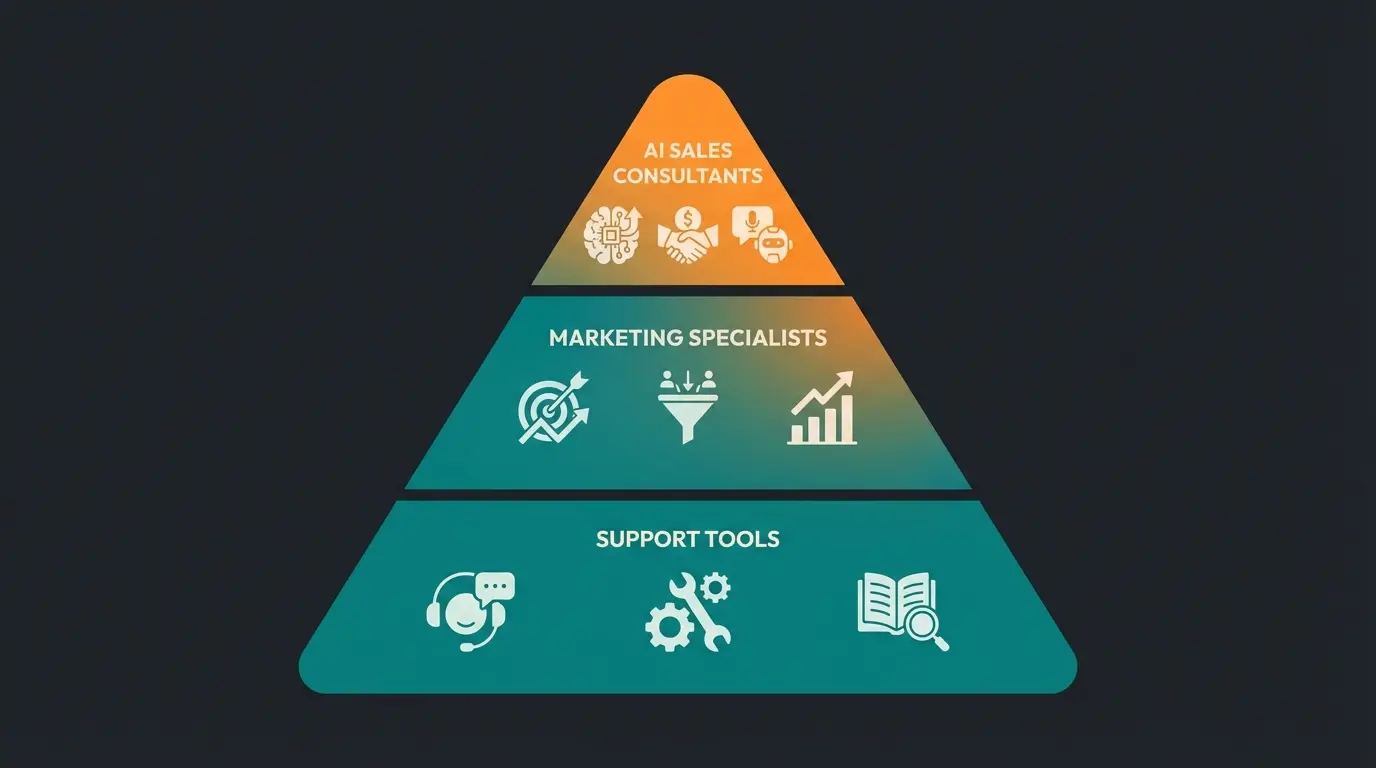
Before we dive into comparisons, we need to separate the wheat from the chaff. A tool that merely provides access to the WhatsApp Business API is a commodity today. Choosing the right whatsapp marketing software requires understanding three levels of capability:
1. The Foundation (Must-Haves for Operation)
Without these features, you shouldn't even start:
- GDPR Compliance: Essential in Germany and across the EU. The tool must use servers in the EU, offer IP masking, and provide Data Processing Agreements (DPA). According to Tooltester, using the private WhatsApp app or the Business app on a personal phone is a data protection minefield for businesses.
- Official API Connection: Only through the WhatsApp Business Platform (API) are scaling, automation, and legal compliance possible, as noted by Eesel.ai.
- Shared Team Inbox: A central inbox where support and sales teams can assign and manage tickets. Both Lime Technologies and Flowcart emphasize this as essential for team collaboration.
2. The Marketing Suite (The 2024 Standard)
This is what most good WhatsApp tools for business offer, including Chatarmin or Brevo:
- Bulk Newsletters & Campaigns: Segmented sending to thousands of contacts without getting blocked. Brevo and YCloud specialize in scalable message delivery.
- Flow Builder: Visual editors for "if-then" automations (e.g., "If customer clicks Button A, send Message B"). Platforms like Wabaconnect and Chatwerk offer intuitive flow builders.
- CRM Integration: Deep connections to Shopify, Klaviyo, HubSpot, or Salesforce to use purchase data for targeting. Chatarmin and Shopify integrations are particularly robust.
3. The New Standard (The 2025 Differentiator)
This is where the wheat separates from the chaff. This is where the era of AI Sales Consultants begins:
- Product Feed Intelligence: The AI knows your entire product catalog (sizes, colors, inventory) and can advise rather than just link. As Markopolo.ai demonstrates, this capability transforms passive browsing into active selling.
- Contextual Understanding (LLM): Instead of rigid decision trees ("Press 1 for help"), the AI understands nuances like "I'm looking for a gift for my father who loves hiking but has knee problems." Modelgate.ai shows how LLMs enable this contextual understanding.
- Consultation-to-Sale Focus: The goal isn't closing a support ticket—it's closing a sale through consultation.
Understanding what WhatsApp Business actually is forms the foundation before selecting any marketing tool. This knowledge helps you make informed decisions about which tier of functionality your business truly needs.
Simple message sending via WhatsApp Business API—commodity level functionality
Bulk newsletters, flow builders, CRM integration—standard 2024 capabilities
Product feed intelligence, LLM-based contextual understanding, consultation-focused selling
Part 2: Top WhatsApp Marketing Tools Compared
The market for WhatsApp business tools solutions is fragmented. To make your decision easier, we categorize providers by their primary strength profile.
Category A: All-Rounders & Support Specialists
Ideal for: Companies that primarily want to channel customer service and occasionally do marketing.
1. Userlike (Lime Connect)
Userlike is a veteran in the German market and positions itself strongly around "Unified Messaging."
- Strengths: Excellent "Unified Inbox" that bundles website chat, WhatsApp, and Telegram. Very strong focus on data protection (servers in Germany). With the "AI Automation Hub," Userlike offers solid automation capabilities for support inquiries according to Lime Technologies.
- Weaknesses: The focus is clearly on support. Marketing features (newsletter segmentation) are present but often less deep than e-commerce specialists. Pricing for AI features can be high for smaller companies (add-on from approx. €485/month in the Corporate Plan) as noted by Userlike.
- Best for: Mid-sized companies with high support volume seeking an "all-in-one" solution.
2. Superchat
Superchat has established itself as an accessible solution for SMBs.
- Strengths: Very intuitive interface, quick setup, and a broad range of integrations (Zapier, Make). It's particularly strong at digitizing local businesses (review management) and smaller e-commerce brands, as highlighted by Superchat.de.
- Weaknesses: With very complex e-commerce scenarios (e.g., dynamic cart abandonment with product images from the feed), standard flows sometimes reach their limits compared to specialists.
- Best for: Local businesses, service providers, and smaller online shops.
Category B: E-Commerce & Marketing Specialists
Ideal for: Online shops using WhatsApp as a performance channel (revenue > support).
3. Chatarmin
Chatarmin is often called the "Klaviyo for WhatsApp" and focuses extremely on e-commerce integrations.
- Strengths: Deep integration with Shopify and Klaviyo. They enable complex flows like "Abandoned Cart Recovery" and post-purchase automation. Chatarmin uses the official API without markups on Meta costs ("pass-through pricing").
- Weaknesses: Less focus on classic "ticket system" functions for large support teams compared to Zendesk integrations.
- Best for: Shopify/Shopware merchants running aggressive retention marketing.
4. Brevo (formerly Sendinblue)
Brevo is a marketing generalist that has integrated WhatsApp as a channel into its existing CRM suite.
- Strengths: If you already do email marketing through Brevo, adding WhatsApp is seamless. It's cost-effective for getting started and covers the basics solidly. YouTube tutorials provide extensive setup guidance.
- Weaknesses: It's not a specialized WhatsApp marketing tool. Features for complex conversational flows or AI consultation are more rudimentary than dedicated providers.
- Best for: Existing Brevo users who want to run WhatsApp "alongside" their email marketing.
Category C: AI Sales Consultants (The New Generation)
Ideal for: Brands with products requiring explanation who want to automate consultation.
While Category A and B excel at sending or managing messages, there's a gap in the market for consultation. This is where the new generation of AI tools positions itself.
- The Concept: Instead of sending the customer to a webpage ("Here's the link, search yourself"), the AI takes on the role of a specialist salesperson in the chat.
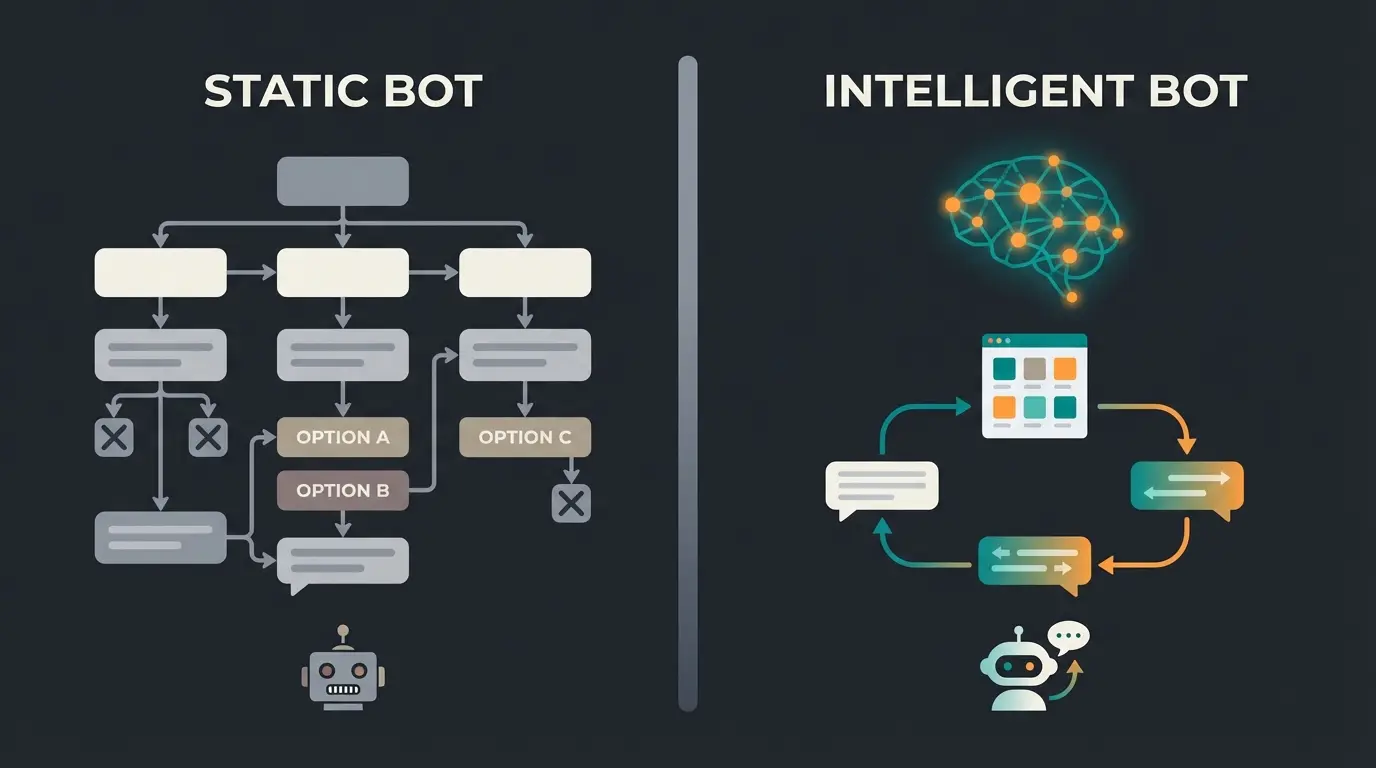
- The Difference: Others: Use static decision trees (If "pants", then show "pants category"). AI Consultant: Analyzes the product feed and customer desire (LLM). When a customer writes "I need something for a summer wedding, but not too fancy," the AI suggests specific products, explains the choice ("Linen fabric is breathable"), and adds the product directly to the cart.
- Best for: Fashion, beauty, interior design, and all industries where consultation drives sales.
An AI-powered chatbot that understands your product catalog transforms passive browsing into active selling conversations. This represents the fundamental shift from notification marketing to conversational commerce.
Stop just sending messages—start conversations that convert. Our AI Sales Consultant understands your products and guides customers to purchase.
Start Your Free TrialPart 3: Why FAQ Bots Kill Your Conversion Rate
Many companies install a chatbot and wonder why customers abandon in frustration. The reason lies in the technology architecture.
The Problem: The "Dumb Button" Effect
Most WhatsApp business tools solutions offer "Flow Builders." These are visual construction kits. They work like an old phone menu:
A customer who wants to buy rarely has a multiple-choice question. They have a need. When they type: "Do you have this cream for sensitive skin too?" and the bot responds: "I didn't understand that. Please select from the menu", the customer is lost.
The Solution: LLM-Based Product Consultation
Modern WhatsApp marketing tools integrate Large Language Models (like GPT-4o or Claude) trained on your specific product data. For businesses looking to implement AI customer service solutions, this represents the cutting edge of conversational technology.
| Standard Chatbot (Rule-Based) | AI Sales Consultant (LLM-Based) |
|---|---|
| Customer: "Looking for running shoes for asphalt." | Customer: "Looking for running shoes for asphalt." |
| Bot: "Please select a category: [Women] [Men]" | AI: "Happy to help! Are you looking for lots of cushioning for long distances or something light for tempo runs?" |
| Customer: (Clicks Men) | Customer: "Lots of cushioning, my knees often hurt." |
| Bot: "Here's the link to our men's category." | AI: "I understand. Then I recommend the CloudRunner Pro. It has our strongest sole that absorbs impact on asphalt—ideal for knee problems. Shall I show it to you in size 10?" |
Result: The standard bot delivers information (a link). The AI Consultant delivers context and trust. This is the lever that can boost conversion rates from the typical 2-3% to over 10% in chat.
Typical conversion rate with rule-based chatbots that only provide links
Achievable conversion rate with LLM-based product consultation
Decrease in customer frustration when AI understands natural language
Increase when AI provides personalized cross-sell recommendations
Part 4: Key Buying Criteria for Businesses
The German market operates differently. A US tool might look fancy but could get you into legal trouble. Pay attention to these four pillars:
1. GDPR & Server Location
This topic is non-negotiable for any business operating in Germany or serving EU customers.
- Requirement: The tool must use Meta's Cloud API (hosted in the US/EU), but the processing of customer data and hosting of the software itself should ideally take place in the EU.
- Check: Does the provider offer a DPA (Data Processing Agreement) under German/EU law? Are IP addresses masked? Providers like Userlike and Chatarmin explicitly advertise "Made in Germany/Austria" and EU hosting.
Understanding WhatsApp Business costs is essential for budgeting, but compliance costs should never be compromised. Non-compliance can result in fines up to 4% of global annual revenue.
2. Integration Depth (Plug & Play)
A WhatsApp marketing tool is only as good as the data it has access to.
- Shopify/WooCommerce: Can the tool access live inventory levels? Nothing is worse than when the AI recommends a sold-out product.
- Klaviyo/Emarsys: If you do email marketing, channels must be synchronized. When a customer purchases via WhatsApp, they shouldn't receive an "abandoned cart" email anymore.
An AI product finder integrated with your WhatsApp tool can dramatically improve recommendation accuracy by understanding your entire catalog in real-time.
3. AI Training & Onboarding
Beware of tools that require "months of training."
- State-of-the-Art: Modern AI tools crawl your website or product feed and are ready to use within hours. You shouldn't have to write manual "question-answer pairs" anymore.
- Red Flag: If a vendor tells you implementation takes 3-6 months, they're likely using outdated technology or overcomplicating the process.
4. The "Human Handover"
AI is good, but not perfect. A critical feature is seamless handover to a human agent. When the AI detects that a customer is angry (Sentiment Analysis) or asks a very complex question, the chat must silently land in an employee's inbox—with the complete history.
Part 5: Pricing Models & Costs 2025 (Important Update!)
This is where the most confusion often exists. Costs always consist of two blocks: Software License (to the tool provider) + WhatsApp Fees (to Meta).
The New Meta Pricing Model (From July 2025)
Meta is fundamentally restructuring pricing. The old model ("24-hour window") is being replaced by a per-template model according to Heltar, Link Mobility, and Gallabox.
- Marketing Templates: (e.g., newsletters, offers) will be charged per message. This becomes more expensive for mass sending but forces better segmentation.
- Utility Templates: (e.g., shipping confirmation) are free when sent within an open 24h service window.
- Service Conversations: (When the customer writes and you respond) have been completely free since November 2024, as confirmed by Charles and Twilio.
For detailed information about setting up your account correctly, check out our comprehensive WhatsApp Business setup guide.
Software Costs (Examples)
Based on data from Software Suggest and vendor pricing pages, here are typical ranges:
- Entry Level (Brevo, Superchat): Often starting at €50 - €100/month for basic features.
- E-Commerce Pro (Chatarmin): Often starts at approx. €99 - €199/month plus variable costs depending on contact volume.
- Enterprise (Userlike Corporate + AI): Can quickly cost €500+/month but offers enterprise support and dedicated CSMs.
For businesses looking to leverage their WhatsApp newsletter tool alongside AI consultation, understanding these pricing tiers helps optimize ROI across both use cases.
Customer-initiated conversations are now completely free (since Nov 2024)
New pricing model charges per template sent, not per conversation window
Order confirmations and shipping updates within 24h service window
Businesses focusing on inbound dialogue vs outbound blasts
Part 6: Feature Comparison Table & Recommendations
Here's an overview of the discussed archetypes to help you make an informed decision:
| Feature | All-Rounder (e.g., Userlike) | E-Com Specialist (e.g., Chatarmin) | AI Sales Consultant (Next Gen) |
|---|---|---|---|
| Focus | Support & Ticketing | Newsletter & Retention | Consultation & Conversion |
| AI Level | Support Automation (FAQ) | Segmentation AI | LLM Product Consultation |
| Integration | Broad (CRM, Slack, etc.) | Deep (Shopify, Klaviyo) | Deep (Product Feeds) |
| Setup Time | Medium (Team Setup) | Fast (Plug & Play) | Fast (Feed Crawl) |
| Target Audience | Service Teams | Marketing Managers | Sales & E-Com Managers |
| Best For | High-volume support | Retention campaigns | Product consultation sales |
The Future of WhatsApp Marketing: AI Chatbots Lead
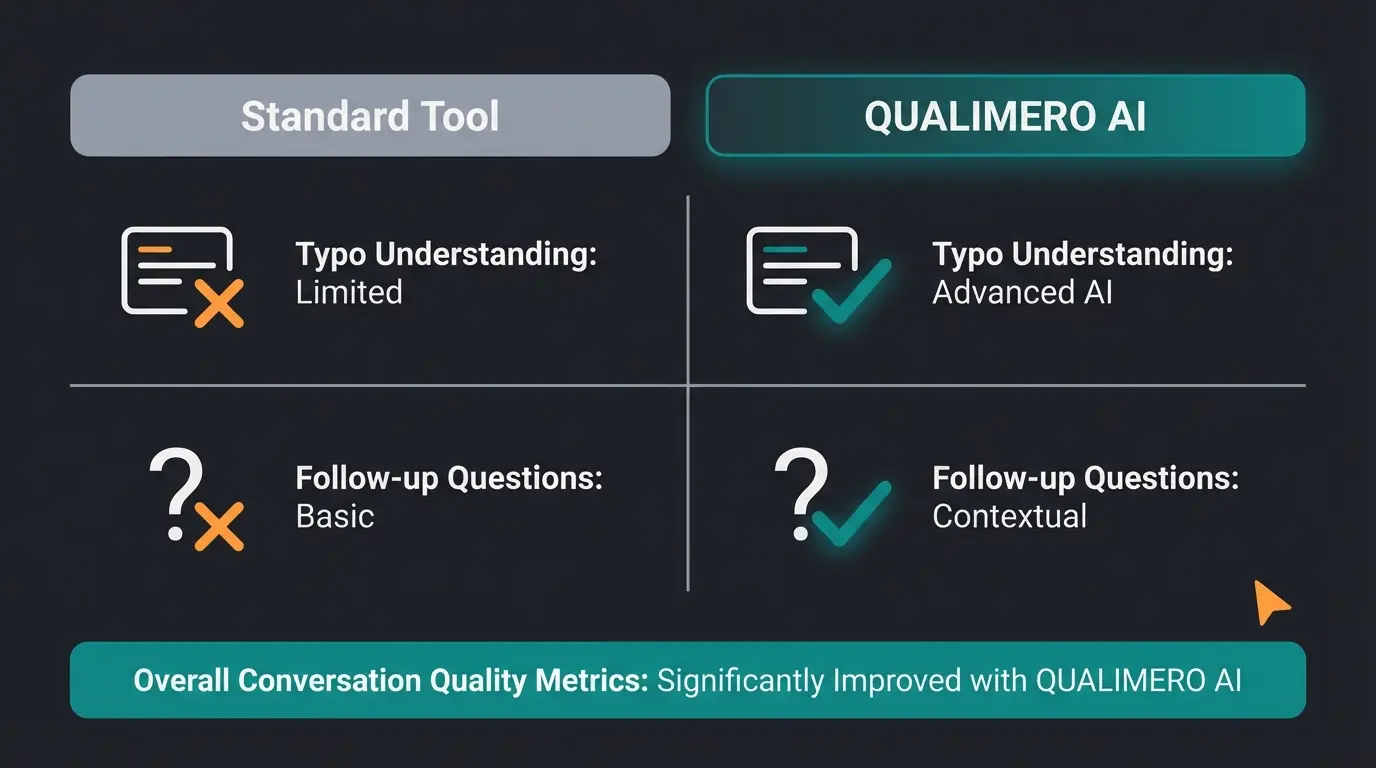
The distinction between traditional chatbots and modern AI solutions is becoming increasingly important. Understanding the different types of chatbots helps businesses choose the right technology for their specific needs.
The AI chatbot revolution in e-commerce is not just about automation—it's about creating genuinely helpful shopping experiences that rival (and often exceed) human sales consultants. When properly implemented, these tools don't feel like bots at all.
For marketing teams specifically, AI chatbots for marketing strategies offer unprecedented opportunities to personalize at scale. Instead of generic broadcast messages, every conversation becomes tailored to individual customer needs, purchase history, and preferences.
Conclusion: Stop Sending, Start Consulting
The market for WhatsApp marketing tools has matured in 2025. It's no longer about whether you use WhatsApp, but how intelligently you use it.
- If you primarily want to solve support tickets more efficiently, go with Userlike or Superchat.
- If you want to send newsletters to existing customers, Chatarmin or Brevo is your choice.
- But if you want to use WhatsApp as a revenue channel that actively advises your customers and closes sales, then you need to bet on the new generation of AI Sales Consultants.
The era of "dumb chatbots" is over. Use WhatsApp's free service windows to have real conversations. Because in the end, customers buy where they feel best understood.
Frequently Asked Questions About WhatsApp Marketing Tools
Yes, WhatsApp marketing is legal in Germany when done correctly. You must use the official WhatsApp Business API (not the consumer app), obtain explicit opt-in consent from customers, provide a Data Processing Agreement (DPA) compliant with GDPR, and ideally use a provider with EU-based servers. Using the private WhatsApp app for business purposes is a significant legal risk.
Costs consist of two parts: software license fees (€50-€500+/month depending on provider and features) and Meta's conversation fees. From July 2025, Meta charges per template for marketing messages, while service conversations (customer-initiated) are free. Utility messages like shipping confirmations are also free within the 24-hour service window.
Yes, but only through the official WhatsApp Business API with an approved Business Solution Provider. Mass messaging through the regular WhatsApp app will result in account bans. API-connected tools like Chatarmin, Brevo, or Superchat handle compliance automatically and prevent you from being blocked.
Traditional chatbots use rigid decision trees (if-then logic) that can only respond to predefined button clicks. AI Sales Consultants use Large Language Models (LLMs) that understand natural language, context, and your product catalog. They can handle complex queries like "I need a gift for my hiking-obsessed dad with knee problems" and provide personalized recommendations with reasoning.
For Shopify-specific needs, Chatarmin is often considered the leader due to its deep native integration, abandoned cart recovery flows, and pass-through API pricing. However, if you need advanced AI consultation for complex products, newer AI Sales Consultant tools that integrate with your product feed may deliver better conversion rates.
Ready for the Next Step?
Review your current WhatsApp strategy. Are you just sending, or are you already consulting? Start with a whatsapp button website integration to capture conversations, then scale from there. The technology for true 1:1 scaling is here—use it before your competitor does.
The shift from notification marketing to conversational commerce isn't coming—it's already here. Businesses that embrace AI-powered consultation are seeing 3-5x improvements in conversion rates compared to traditional broadcast approaches.
Don't just inform—advise. Our AI Sales Consultant transforms your WhatsApp into a revenue-generating consultation channel that converts browsers into buyers.
Get Started Free Today
Lasse is CEO and co-founder of Qualimero. After completing his MBA at WHU and scaling a company to seven-figure revenue, he founded Qualimero to build AI-powered digital employees for e-commerce. His focus: helping businesses measurably improve customer interaction through intelligent automation.