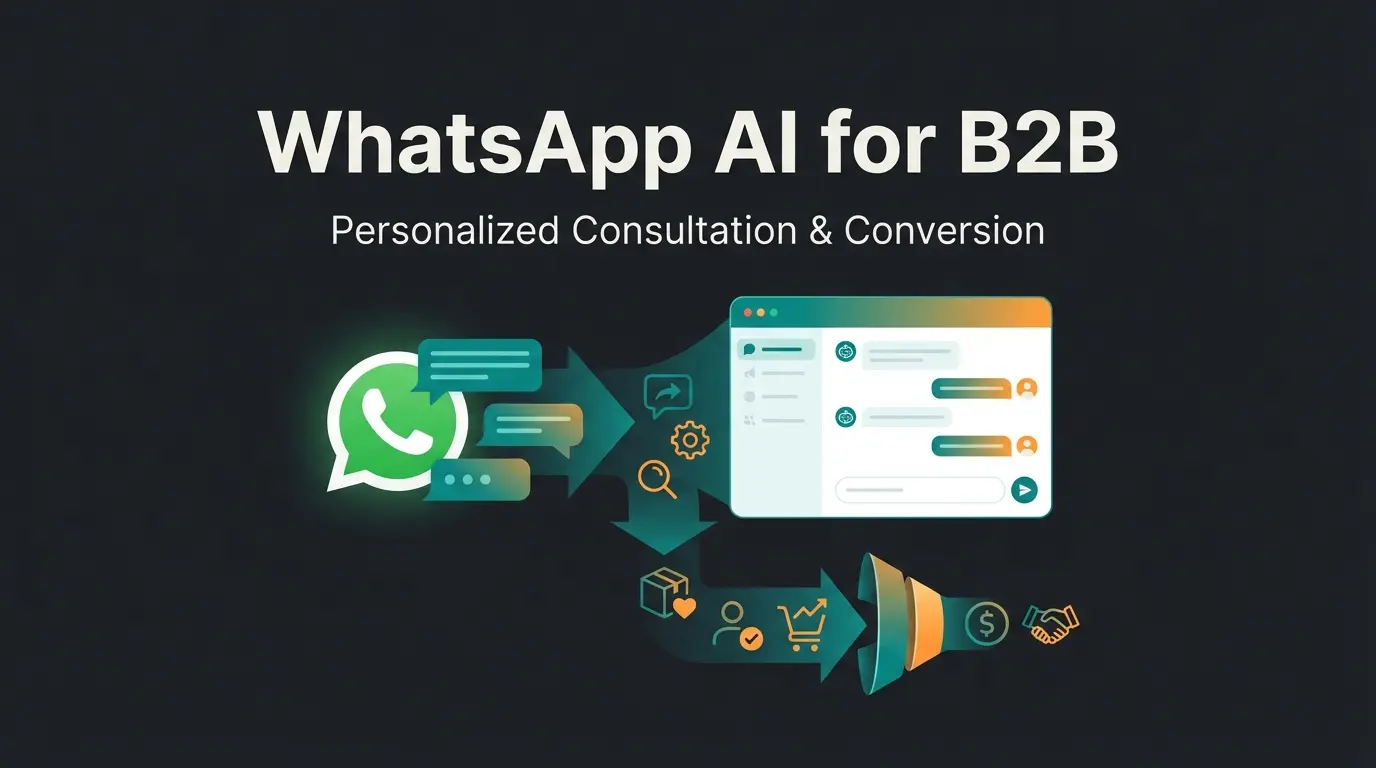
Key Facts at a Glance
- Market Dominance: WhatsApp is the most relevant marketing channel with over 60 million daily users in Germany, achieving open rates of up to 98% according to Superchat and BotPenguin
- Technology Shift: The classic "broadcast" (one-to-many) approach is evolving massively in 2025/2026. Pure sending tools are being replaced by intelligent WhatsApp newsletter tools capable of conducting AI-powered dialogues
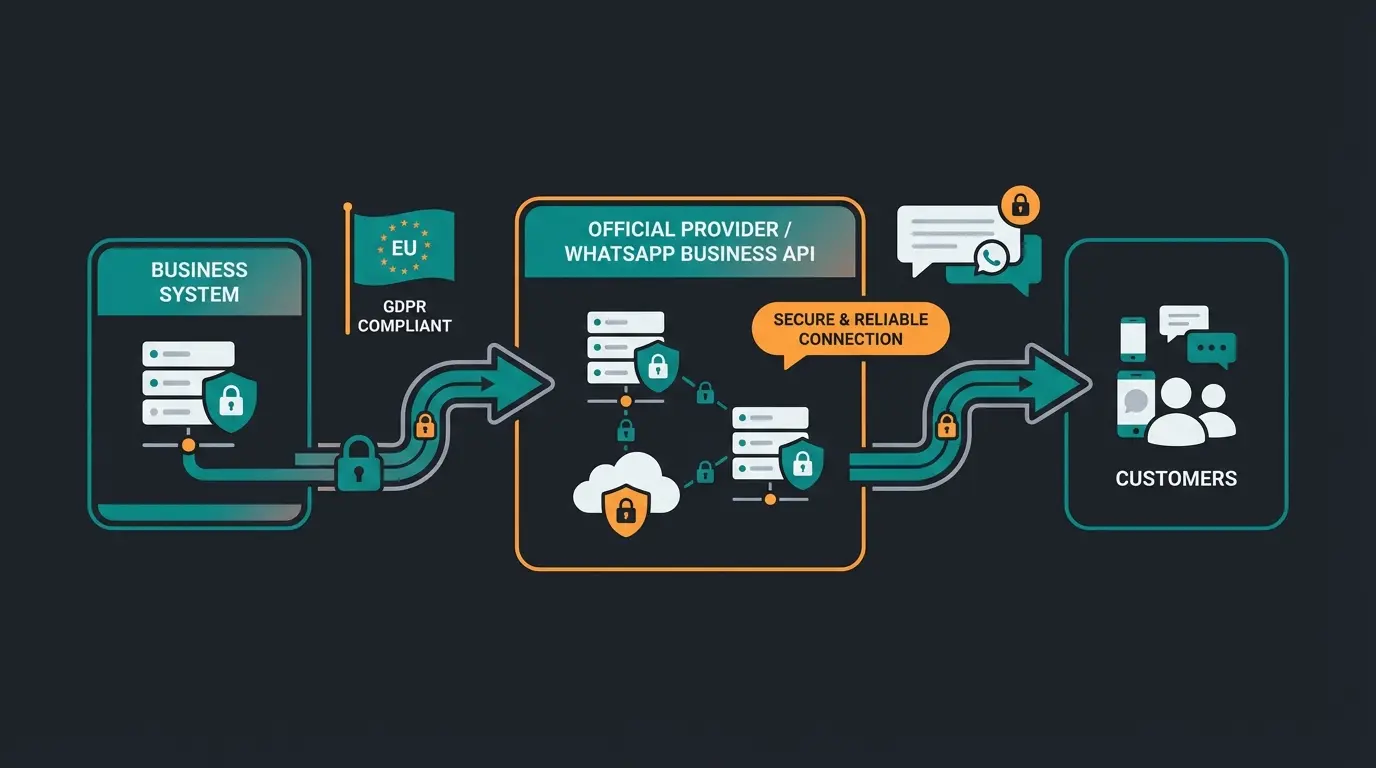
- Legal Compliance: For companies in Germany and Europe, using the WhatsApp Business API (through official providers) is the only option to operate in compliance with GDPR as confirmed by Chatarmin and Sofortdatenschutz
- Cost Structure 2025: Meta has adjusted its pricing model. Marketing messages cost approximately €0.11 in Germany, while service dialogues (customer-initiated) are often free—a massive incentive for dialogue strategies over pure advertising according to Superchat and Heltar
Introduction: The Battle for Inbox Attention
Imagine having a marketing channel where 98% of your messages are not only delivered but actually read. This isn't a utopia—it's the reality of WhatsApp marketing in 2025. While email marketing struggles with average open rates of 20% and often ends up in spam folders, WhatsApp lands directly in your customers' pockets—right where friends and family are, as reported by Trengo.
However, this enormous attention comes at a price: competition is growing. More and more companies are using WhatsApp newsletter software to reach their customers. The result? Users' inboxes are filling up. Those who still use WhatsApp like an SMS distributor today—broadcasting blunt advertising messages without added value—will quickly get blocked.
The Problem: Most WhatsApp newsletter providers still focus technically on pure sending. They optimize for the "click" on the link. But what happens afterward? Often, the customer lands on a static website and abandons the purchase. This is where AI Chatbots transform the entire customer journey by keeping engagement within the conversation.
The Solution: The next generation of WhatsApp marketing takes place within the chat. It's no longer just about sending the newsletter but about what follows: AI-powered product consultation. In this article, you'll learn not only which WhatsApp newsletter tool is best for your purposes but also how you can turn a newsletter into a real sales consultant using artificial intelligence.
Messages read within minutes of delivery
Average across industries, often lower
WhatsApp CTR vs. 2-3% for email
With AI-personalized recommendations
What Is a WhatsApp Newsletter Tool Exactly?
Before we dive into comparing providers, we need to clarify the terminology. Many companies still confuse private WhatsApp use with professional marketing.
Definition: App vs. API
Technically, there are three ways to use WhatsApp, but only one is suitable for newsletters:
- WhatsApp Private App: For personal use. Using it for newsletters is prohibited and leads to number suspension. Not GDPR-compliant.
- WhatsApp Business App: A free app for small business owners (e.g., the local hairdresser). It offers broadcast lists (max. 256 recipients), but no automation, no scalability, and is highly problematic under EU data protection law since it accesses the phone book, as noted by mProtect365.
- WhatsApp Business API (Platform): This is the interface that professional WhatsApp newsletter tools use. It has no native interface (no app on your phone) but is operated through software from a third-party provider (the so-called Business Solution Providers).
A WhatsApp newsletter tool is therefore a software interface that connects to the official WhatsApp API. It enables sending to unlimited recipients, automation (chatbots & flows), team inbox (multiple employees responding on one number), integration with CRM systems (Shopify, HubSpot, Salesforce), and legal compliance. Understanding how Conversational AI evolves is essential to grasping the full potential of these tools.
Why GDPR Compliance Is the Decisive Factor
In Germany and across Europe, data protection (GDPR) is the most important reason for using a professional tool. The private app and the Business app synchronize contact data (including non-WhatsApp users) with Meta's US servers. This is illegal without consent, as confirmed by Brevo.
A reputable WhatsApp newsletter tool prevents this. Data is processed on the provider's servers (ideally in the EU), and there's no automatic synchronization of the entire phone book. Additionally, these tools manage the legally mandatory double opt-in, without which you cannot send newsletters in Germany according to Chatarmin's compliance guide.
The Evolution: From Newsletter to Conversational Commerce
The market for WhatsApp newsletter tools has developed rapidly. To understand why you need more than just a sending tool today, it's worth looking at the three evolutionary stages.
Stage 1: Broadcasting (The "Old" Way)
This is the status quo for many companies. The approach is identical to email marketing:
- Action: Company sends message ("Sale: 20% off everything!")
- Goal: Customer clicks on link
- Medium: One-way street. Customer replies are often unwanted or end up in an inbox that must be processed manually
- Disadvantage: High cost per message without guaranteed conversion
Stage 2: FAQ Automation (The Standard Bot)
Many WhatsApp newsletter software solutions today offer simple chatbots, but according to Brihaspatitech, these bots have significant limitations:
- Function: When a customer replies to the newsletter ("How much is shipping?"), the bot recognizes keywords like "shipping" and sends a text template
- Problem: These bots are rigid. As soon as the question becomes more complex ("Which cream suits my combination skin in winter?"), they fail. The result: customer frustration and purchase abandonment
Understanding the difference between Consultative AI and basic FAQ bots is crucial for choosing the right solution for your business.
Stage 3: AI Product Consultation (The Future 2026)
This is where modern solutions differentiate themselves from classic tools. Instead of sending the customer to the website, the consultation takes place directly in the chat. According to Exei.ai, this represents a fundamental shift in how businesses engage with customers:
- Technology: Deployment of LLMs (Large Language Models) and AI agents
- Scenario: You send a newsletter about a new running shoe collection. The customer replies: "But I mostly run on asphalt and have knee problems."
- Reaction: The AI understands the context (medical/athletic), advises empathetically, and suggests in the chat the appropriate model with cushioning
- Result: The newsletter becomes a sales conversation. Conversion rates increase massively as the hurdle (searching website, setting filters) is eliminated
Studies by AISensy show that personalized recommendations through AI can increase average cart value by up to 30%. Customers today no longer expect text templates—they expect solutions. This is exactly where AI Product Consultation creates the competitive advantage.
Engaging message with question prompt instead of just links
Opens free 24-hour service window, signals high intent
Understands context, preferences, and purchase intent
AI recommends products based on customer needs
Seamless purchase without leaving the conversation
Top 7 WhatsApp Newsletter Tools in Germany (Comparison)
The market for WhatsApp newsletter providers has become confusing. We've analyzed and categorized the most relevant tools for the German market.
1. Qualimero AI – The Specialist for AI Sales
Positioning: While other tools focus on support or pure sending, Qualimero transforms WhatsApp into an active salesperson. This approach aligns with how AI chatbots in marketing are revolutionizing customer engagement.
- Best For: E-commerce brands and companies selling consultation-intensive products aiming for high cart values
- USP: Real AI Product Consultation. The software understands not just keywords but sales psychology. It guides the customer through the decision-making process instead of just pushing links
- Advantage: Maximum utilization of marketing spend, as every newsletter reply is converted into a qualified lead
2. Charles
Positioning: The pioneer in "Conversational Commerce" for high-end e-commerce, as reported by Superchat.
- Pros: Very strong integration with shop systems (Shopify) and Klaviyo. Excellent interface for agents. Known for the "Endless Aisle" approach
- Cons: Very expensive. No free trial. Pricing structure is often opaque and targets enterprise customers with large budgets according to Superchat comparison
- Best For: Large fashion brands with high budgets
3. Chatarmin
Positioning: The "Klaviyo for WhatsApp" challenger from Austria, as detailed by Chatarmin.
- Pros: Extremely strong flow builder for automations. Very good Shopify integration. Transparent pricing and focus on e-commerce marketing according to Chatarmin features
- Cons: Focus lies heavily on "flows" (if-then logic), less on free AI consultation compared to specialized AI tools
- Best For: E-commerce marketers who love complex automations
4. Superchat
Positioning: The all-in-one messaging suite for SMBs, as reviewed by OMQ.ai.
- Pros: Bundles all channels (WhatsApp, Instagram, Email) in one inbox. Very user-friendly. Fair, transparent pricing. Offers solid AI features for summaries and responses
- Cons: Rather generalist positioning (support & local), fewer deep e-commerce special features than Charles or Chatarmin
- Best For: Local businesses, service providers, and SMBs who want to organize their communication
5. HelloMateo
Positioning: Solid solution for German mid-market and local service providers, as detailed on HelloMateo.
- Pros: GDPR-compliant ("Made in Germany"). Good features for review management (Google Reviews via WhatsApp). Easy onboarding
- Cons: Less marketing automation depth than e-commerce specialists
- Best For: Car dealerships, insurance companies, local service providers
6. Brevo (formerly Sendinblue)
Positioning: The email giant that now also does WhatsApp.
- Pros: Perfect if you want to control email and WhatsApp from one tool. Affordable entry point
- Cons: WhatsApp is more of an "add-on" here. Features are basic compared to specialized WhatsApp newsletter software solutions
- Best For: Companies already using Brevo for email who want to "test" WhatsApp
7. Userlike
Positioning: Focus on customer service and live chat.
- Pros: Very strong website chat that seamlessly transitions to WhatsApp. High data protection standards
- Cons: Focus is clearly on support ("helping"), not marketing ("selling") or newsletter campaigns
- Best For: Support teams who want to offer WhatsApp as a service channel
Stop broadcasting. Start conversations that convert. Our AI consultation platform turns every customer reply into a personalized sales opportunity.
Start Free Trial NowDeep Dive: Why FAQ Bots Kill Sales
Many companies invest in WhatsApp newsletter tools but are then disappointed with the results. The reason often lies not in the tool itself but in the type of automation. Understanding this distinction is key, and exploring AI Chatbot for E-Commerce solutions can provide valuable insights.
The Problem with Keyword Bots
Classic chatbots are based on decision trees. Here's a typical scenario that illustrates their limitations:
- Customer: "Do you have that shirt in a lighter blue that would match beige pants?"
- Keyword Bot: Recognizes "blue" and "pants"
- Response: "Here are all our blue pants: [Link]"
- Result: The customer feels misunderstood. The nuance ("lighter blue", "would match") was lost. The sale fails.
The Advantage of AI Agents (LLMs)
Modern AI solutions use Large Language Models. They understand context, sentiment, and intent. The concept of KI-Mitarbeiter (AI Agents) represents this evolution in automated customer communication.
- AI Agent: Analyzes the query semantically
- Response: "That's a great combination! For beige pants, I recommend our 'Sky Blue' model. It's lighter than navy and harmonizes perfectly with earth tones. Shall I send you a picture of the combination?"
- Result: The customer feels advised. The interaction seems human. The likelihood of purchase increases significantly.
| Feature | Keyword-Based Bot | AI Consultation Agent |
|---|---|---|
| Context Understanding | ❌ None (keyword matching only) | ✅ Full semantic analysis |
| Nuanced Responses | ❌ Rigid templates | ✅ Adaptive, conversational |
| Product Recommendations | ❌ Generic links | ✅ Personalized suggestions |
| Sales Psychology | ❌ Not applicable | ✅ Built-in persuasion |
| Customer Satisfaction | Low (frustration) | High (feels understood) |
| Conversion Rate | 2-5% | 15-25% |
Step-by-Step: Setting Up a Consultation-First Strategy
How do you implement this now? Here's a blueprint for your first campaign with a modern WhatsApp newsletter provider. Learning how to transform it into a revenue-generating channel starts with understanding these fundamentals.
Step 1: The Hook (Newsletter Sending)
Don't send a pure advertising flyer. Send a conversation starter.
- Bad: "New summer collection is here. Click here."
- Good: "Hey Anna, summer is coming! ☀️ We have 3 new looks for your beach vacation. Are you more the 'Sporty', 'Elegant', or 'Boho' type? Just reply with your style, and I'll show you what fits."
Step 2: The Prompt (Activation)
The goal is the reply. Why? According to OmniChat, there are significant benefits:
- Cost: As soon as the customer replies, a 24-hour service window opens. Further messages in this window are often cheaper or free (depending on the model)
- Engagement: A reply is a much stronger signal than a click
Step 3: The Handover (AI Takes Over)
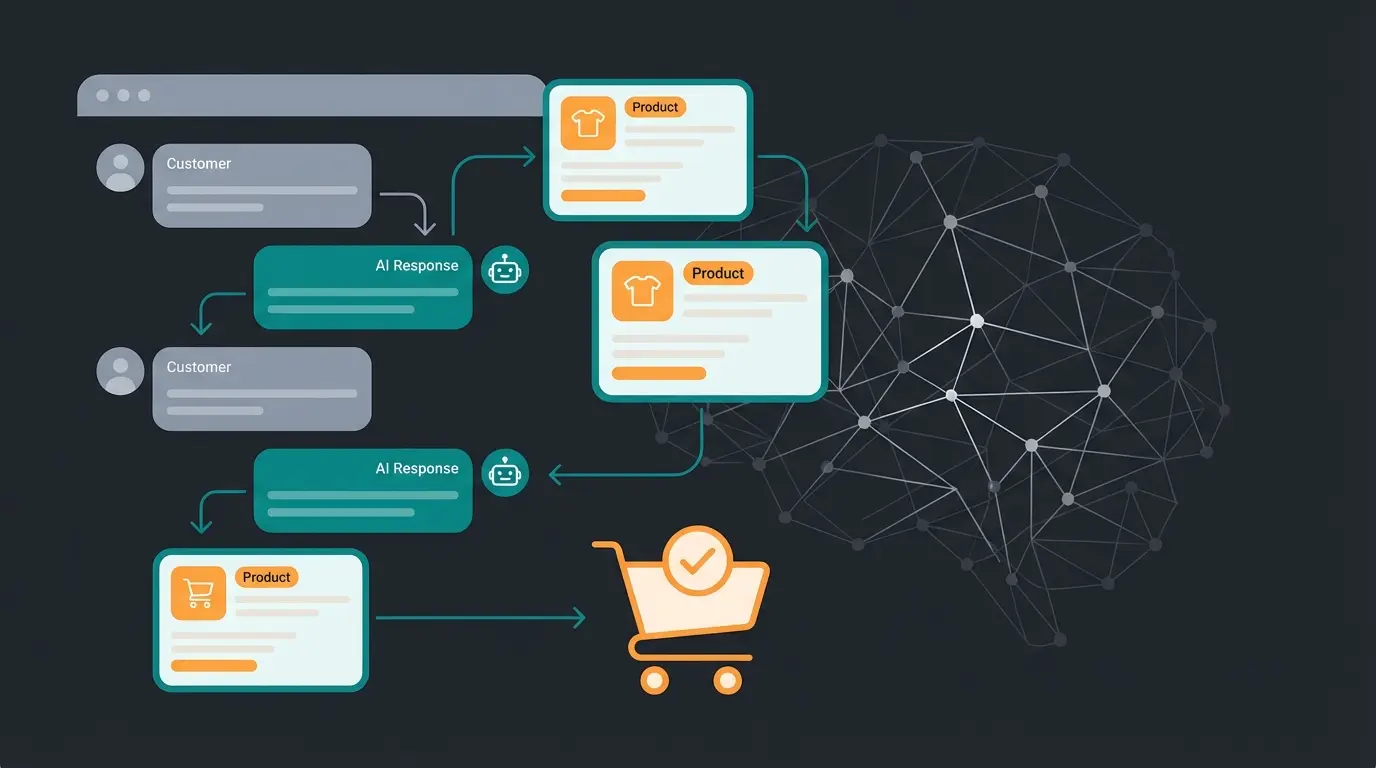
As soon as the customer types "Boho", the AI takes over:
- It doesn't just send a link
- It asks for details ("Do you prefer dresses or two-pieces?")
- It advises ("For boho chic, I recommend this maxi dress with floral print...")
- It leads to checkout ("Shall I put it in your cart in size M?")
This is where AI consultation transforms simple newsletter interactions into revenue-generating conversations.
Step 4: The Loop (Using Data)
The AI remembers: Anna likes "Boho" and wears size M. The next newsletter to Anna won't be generic anymore, but rather: "Hey Anna, matching your boho dress, we now have new sandals..." This data-driven personalization approach is exactly how AI consultation transforms multi-channel marketing strategies.
Pricing & Costs: What Does WhatsApp Marketing Cost?
The costs for WhatsApp newsletter tools consist of two components: software fees and Meta fees.
1. Software Costs (The Provider)
Here you pay a monthly base fee for the tool (dashboard, flow builder, AI):
- Entry: From approx. €50 - €100 per month (e.g., Superchat, HelloMateo)
- Professional: €200 - €500 per month (e.g., Chatarmin)
- Enterprise: From €1,000 per month (e.g., Charles)
2. Meta Costs (The Messages)
Meta has adjusted its pricing model in 2025. It now strictly differentiates by category according to Facebook Business:
| Category | Description | Costs (approx. DE) |
|---|---|---|
| Marketing | Newsletters, offers, "re-engagement" of customers | ~€0.1131 / message |
| Utility | Transactional messages (shipping status, invoice) | ~€0.0456 / message |
| Authentication | OTPs, login codes | ~€0.0636 / message |
| Service | Customer-initiated conversations | Free (24h window) |
Comparison Table: Broadcast Tool vs. Sales AI
To illustrate the differences at a glance, here's a direct comparison between a standard tool and an AI-focused solution. Exploring KI-Produktberatung options can help you understand the revenue impact of choosing the right approach.
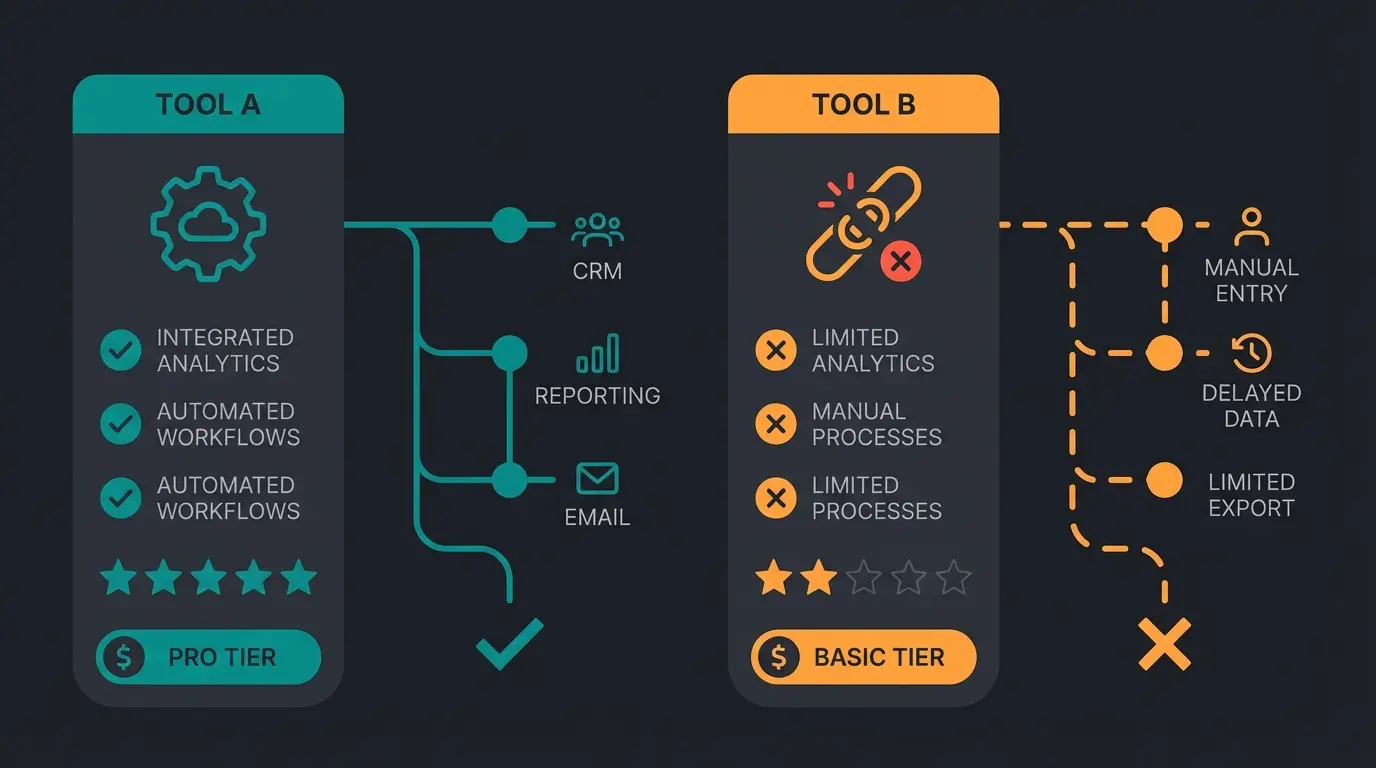
| Feature | Standard WhatsApp Tool | AI Sales Solution |
|---|---|---|
| Mass Sending | ✅ Yes | ✅ Yes |
| GDPR Compliance | ✅ Yes | ✅ Yes |
| Automation | Simple if-then rules | Dynamic AI conversations |
| Product Consultation | ❌ No (only links) | ✅ Yes (active consulting) |
| Context Understanding | ❌ No (keyword-based) | ✅ Yes (understands nuances) |
| Goal | Click to website | Purchase completion in chat |
| Setup Effort | Medium (building flows) | Low (training AI) |
| Conversion Rate | 2-5% | 15-25% |
| Customer Experience | Transactional | Consultative |
Conclusion: Don't Buy a Tool, Buy a Strategy
The market for WhatsApp newsletter software has matured. In 2026, it's no longer enough to simply "be there" and send messages. Open rates are still high, but user patience is declining.
When you're looking for a WhatsApp newsletter provider, ask yourself: Do I want another channel to shout at my customers? Or do I want a channel to talk with them?
The winners of the coming years will be those brands that understand WhatsApp as a consultation channel. Tools like Charles or Chatarmin have paved the way, but specialized AI solutions go the crucial step further: they scale personal consultation.
Our Recommendations
- For pure support cases: Look at Superchat or Userlike
- For complex e-commerce flows: Test Chatarmin
- If you want more revenue through consultation: Go with an AI-first solution
Start today. Your customers' inboxes are waiting—but only for messages that are truly relevant.
Frequently Asked Questions (FAQ)
Yes, but only through the WhatsApp Business API and with explicit opt-in (consent) from the user. Sending via private phones is prohibited for businesses. Companies must also implement double opt-in procedures and ensure all data processing complies with GDPR requirements.
In Germany, you must expect approximately €0.11 per marketing message to Meta, plus the monthly fee for your software (ranging from €50 to €1,000+ depending on the provider and features). Service conversations initiated by customers are free within a 24-hour window.
No, the days of free broadcasts are over. However, there is a free allowance of 1,000 service conversations per month according to Latenode, but this doesn't apply to marketing newsletters. The free service window only opens when a customer initiates contact.
For Shopify, Chatarmin and Charles offer very deep integrations. If your focus is on AI consultation, you should check whether the tool has access to your product catalog and can provide personalized recommendations based on your inventory.
The WhatsApp Business App is free but limited to 256 broadcast recipients, has no automation capabilities, and raises GDPR concerns due to phone book synchronization. The WhatsApp Business API, accessed through official providers, offers unlimited recipients, full automation, team inboxes, CRM integration, and legal compliance—making it the only viable option for professional newsletter marketing.
Join leading e-commerce brands using AI consultation to convert 15-25% of newsletter replies into purchases. Stop broadcasting—start selling.
Get Started with AI Consultation
Lasse is CEO and co-founder of Qualimero. After completing his MBA at WHU and scaling a company to seven-figure revenue, he founded Qualimero to build AI-powered digital employees for e-commerce. His focus: helping businesses measurably improve customer interaction through intelligent automation.