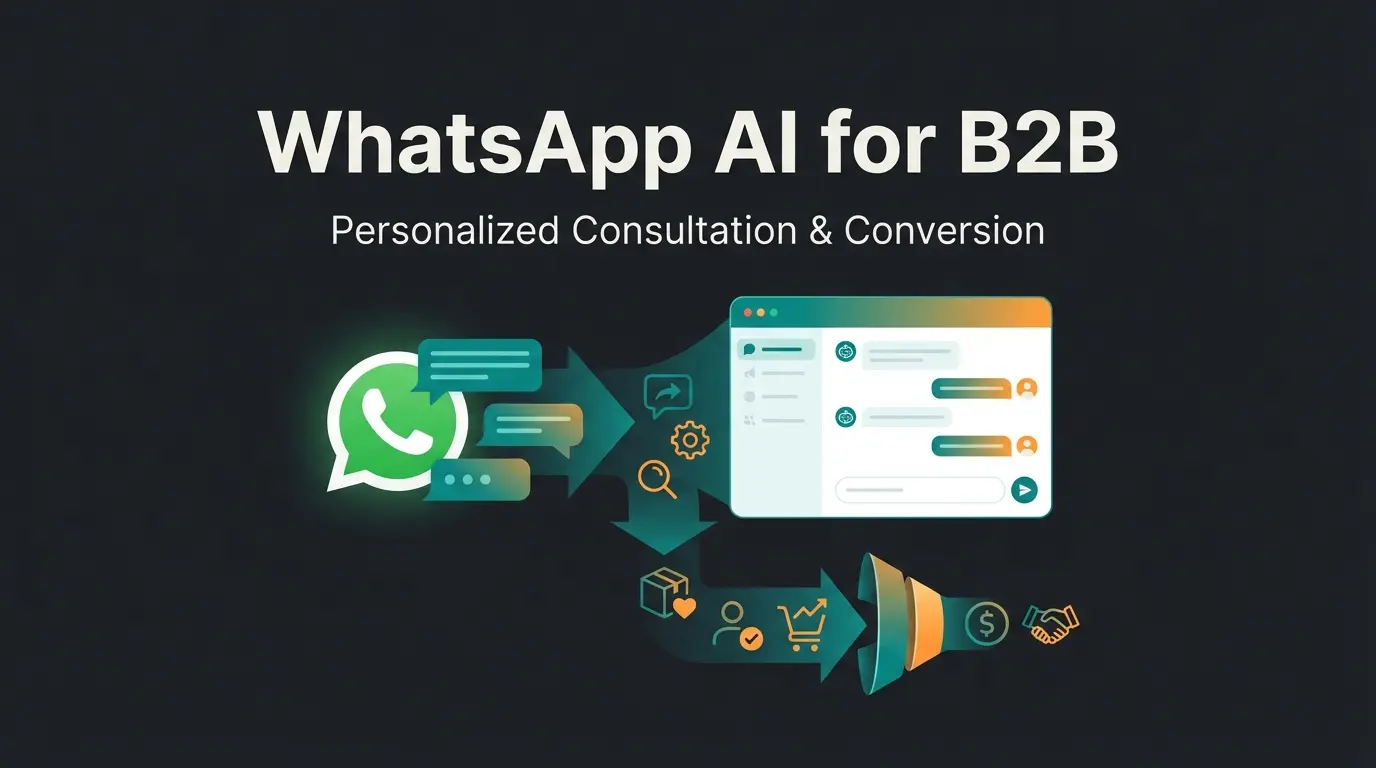
Why Traditional Newsletters Are Becoming Obsolete
Imagine standing in a crowded room, shouting a message into the crowd. Maybe a few people turn around, but most ignore you. That's email marketing in 2025. With average open rates of around 20% and click-through rates often languishing in the single digits according to BotPenguin and SendWo, businesses are fighting for attention in overcrowded inboxes.
Now imagine your customer's smartphone vibrates. A message from a friend? No, from your brand. But it feels that personal. That's the power of WhatsApp. With an open rate of up to 98% and a click-through rate (CTR) of 45-60% as documented by AiSensy, this channel plays in a completely different league.
But beware: Many companies make the mistake of treating WhatsApp exactly like email – as a one-way street. They simply want to create a WhatsApp newsletter, send links, and hope for purchases. That's wasted potential. In this guide, you'll learn not only how to technically set up a WhatsApp newsletter but how to use it strategically. We'll show you how to move from simply "informing" to "consulting" and how Artificial Intelligence (AI) helps you turn thousands of responses into real revenue. For a comprehensive overview of available solutions, check out our guide on WhatsApp newsletter tools.
What Is a WhatsApp Newsletter? (And What It Isn't)
Before we dive into the technical aspects, we need to clear up a widespread misconception. When we talk about creating a professional WhatsApp newsletter today, we don't mean the "broadcast lists" on your personal phone or the free WhatsApp Business App.
The Difference: Broadcast vs. API Newsletter
Many small businesses start with the free WhatsApp Business App. However, this has massive limitations that make professional scaling impossible:
| Feature | WhatsApp Business App (Broadcast) | WhatsApp Business API (Newsletter) |
|---|---|---|
| Recipient Limit | Max. 256 per list | Unlimited (scalable to 100k+) |
| Prerequisite | Customer must have saved your number | No, opt-in is sufficient (no need to save number) |
| Data Protection (GDPR) | Problematic (access to phone contacts) | GDPR-compliant (EU servers possible, no contact upload) |
| Automation | None / Very limited | Full (chatbots, AI, CRM integration) |
| Multi-User | Limited to few devices | Unlimited (team inbox) |
Conclusion: Anyone who wants to professionally and legally send newsletters via WhatsApp cannot avoid the WhatsApp Business API (interface). This API connects WhatsApp with a software platform (like Charles, Superchat, Chatarmin, or your own AI solution) through which you manage campaigns. For detailed implementation guidance, see our comprehensive WhatsApp Business API guide.
Conversational Commerce: The New Definition
A WhatsApp newsletter is not a digital advertising brochure. It's an invitation to conversation. Understanding this distinction is crucial for developing an effective WhatsApp marketing strategy.
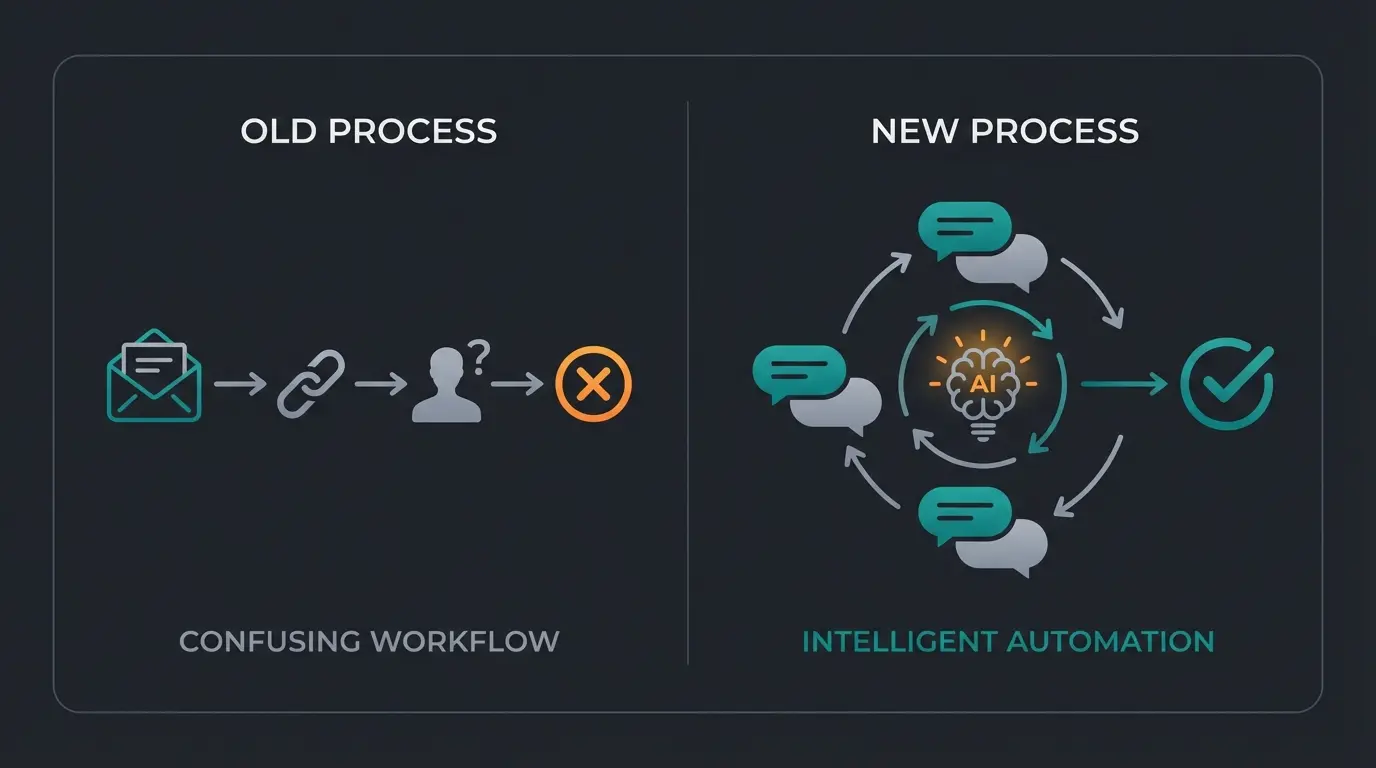
- Old approach: Send link → Customer clicks → Customer searches alone in shop → Cart abandonment
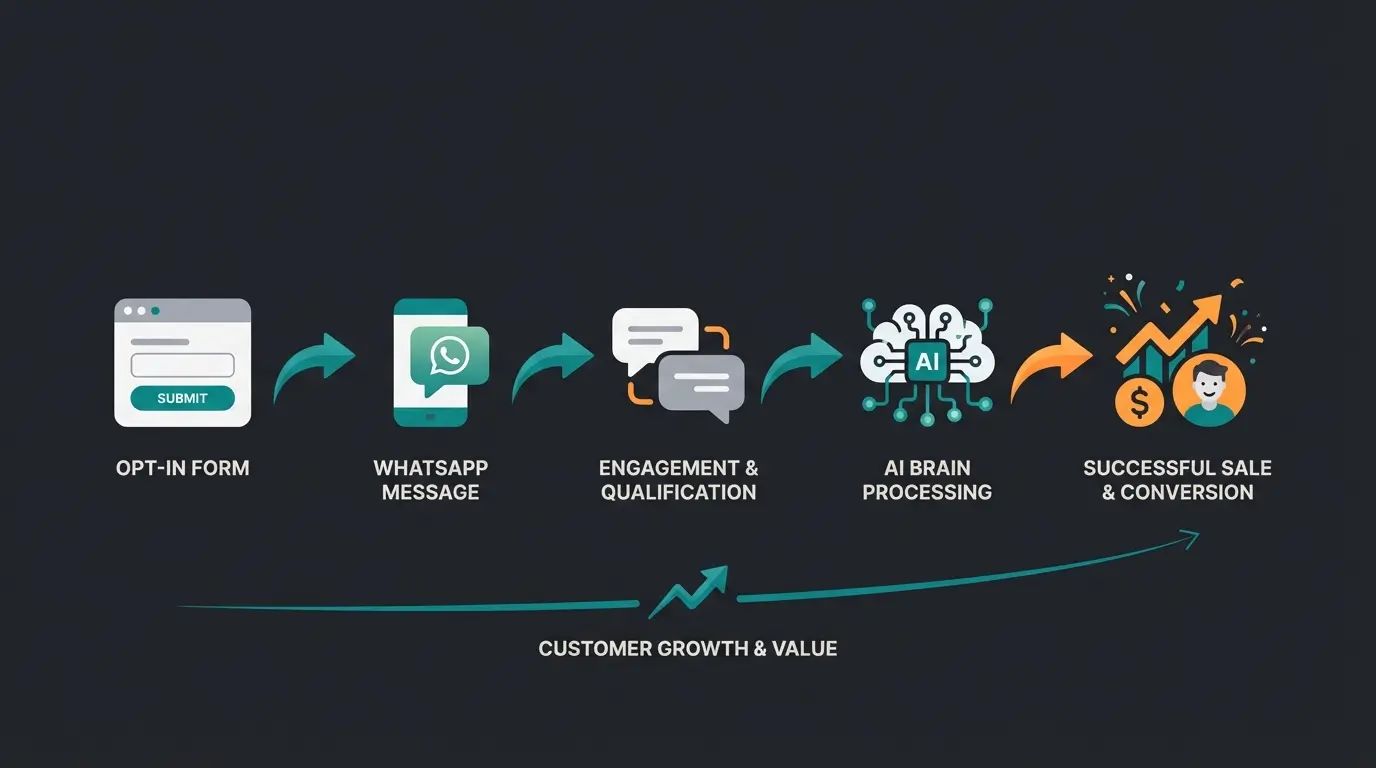
- New approach: Send teaser → Customer replies → AI consults immediately → Purchase in chat
Why WhatsApp Newsletters? (Benefits & KPIs)
The statistics speak a clear language, but the true benefits run deeper than just open rates.
The 'Unfair Advantage' Statistics
While emails are often ignored, 98% of WhatsApp messages are read
80% of messages are read within the first 5 minutes
Compared to 2-5% for email and SMS campaigns
According to DoubleTick and SleekFlow, these remarkable statistics make WhatsApp the most effective direct marketing channel available today.
New KPI: Reply-to-Revenue
In email marketing, we optimize for clicks (CTR). When you send a newsletter via WhatsApp, you should optimize for replies. Why? A reply is a signal of high interest (High Intent).
Example: A customer who responds to a newsletter with "Do you have this in size 42?" is more ready to buy than someone who just silently clicks on a link. This is where AI sales consultation becomes invaluable for converting these high-intent interactions.
The Algorithm-Free Channel
Social media (Instagram, TikTok) throttles your organic reach to sell ads. Email providers sort you into the "Promotions" folder. WhatsApp is one of the last channels where you reach 100% of your subscribers directly on their lock screen – without gatekeepers, as long as you remain relevant. Learn more about how AI Chatbots transforming are reshaping customer engagement across all channels.
Prerequisites & Legal Requirements (GDPR)
Germany has strict data protection laws. That's a good thing because it protects consumers from spam. When you set up a WhatsApp newsletter, you must meticulously comply with GDPR (General Data Protection Regulation).
The Technical Foundation
You don't need a direct contract with Meta; instead, you typically use a Business Solution Provider (BSP). That's the software you'll use.
- Meta Business Manager: Your company must be verified
- WhatsApp Business API Number: A "fresh" phone number that is not linked to a private WhatsApp account as noted by AuthKey
The Double Opt-In (DOI) Process
Just like with email, you cannot simply send advertising to anyone. You need explicit consent. In Germany, the Double Opt-In is the gold standard according to Chatarmin and Lexware.
User enters their number in a widget on your website or scans a QR code
This opens the chat on the user's phone with a predefined message (e.g., 'Start')
User sends this message (Single Opt-in)
Your system (chatbot) automatically sends: 'Do you really want to receive the newsletter? Reply with YES'
Only when the user types 'YES' are they added to the distribution list
Pro Tip: AI-Controlled Opt-In
Don't use this registration process just for bureaucracy. An AI bot can already query preferences during the opt-in:
"Thanks for signing up! Are you more interested in women's or men's fashion?"
This enables granular segmentation later. WhatsApp AI bots can make this entire process seamless and conversion-optimized.
Creating a WhatsApp Newsletter: Step-by-Step Guide
Here's the roadmap to launch your first campaign and start sending newsletters via WhatsApp effectively.
Step 1: Choose the Right Provider
Forget the phone. Choose a software platform that offers API access. Pay attention to:
- Server location (ideally EU for GDPR compliance)
- Integrations (Shopify, Klaviyo, CRM)
- AI capabilities (Can the tool automatically process responses?)
The right AI sales consultants software can make the difference between a simple broadcast tool and a revenue-generating machine.
Step 2: Import Contacts & Segment
Only import existing lists if you already have explicit WhatsApp consent for these contacts! Otherwise, use your email list to motivate people to switch to WhatsApp (e.g., "Receive offers 1 hour earlier on WhatsApp").
Segment your customers based on purchase history or AI chat data. Mass sending to everyone is expensive and inefficient. This is where AI Customer Service integration becomes crucial for maintaining personalized interactions at scale.
Step 3: Create the Template (The Art of Conversational Writing)
Every newsletter (marketing template) must be approved by Meta according to SleekFlow. But the content determines success.
The Mistake:
"Here's our new sale. 20% discount. Click here: [Link]"
(Boring, looks like spam, customer might click but won't buy)
The Strategy:
"Hey Anna, winter is coming! ❄️ We just got new wool coats in. Which style are you more?
[Button: Classic Elegant]
[Button: Sporty Modern]
[Button: Surprise me]"
Why this is better:
- It's interactive
- It qualifies the customer
- It starts a conversation that an AI can take over
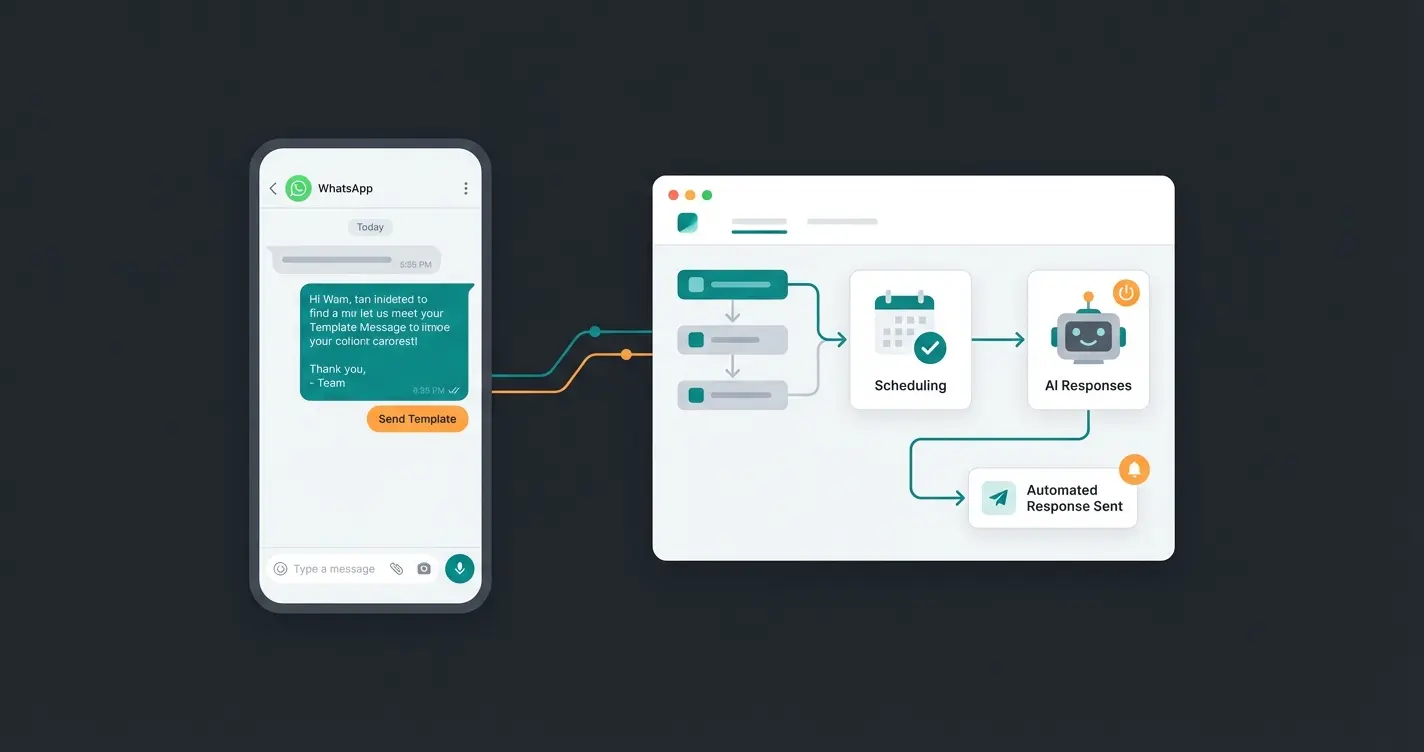
Step 4: Sending & Automation
Schedule sending for times when users have time to chat (e.g., evenings or weekends). Once the campaign is out, the real work begins – or the magic of your AI. Check out these AI consultation examples to see how leading brands are implementing this strategy.
The Secret Weapon: AI Product Consultation vs. Mass Sending
Here's where the wheat separates from the chaff. When you send a newsletter to 10,000 recipients and 10% respond (which is realistic with WhatsApp), you suddenly have 1,000 open chats.
No support team in the world can handle this in real-time. The result: Customers wait, get frustrated, the lead goes cold.
The Solution: The AI Sales Agent
Instead of viewing the newsletter as a "broadcast," use it as a trigger for automated consultation. This approach represents the future of automated sales consultation.
Workflow Visualization: Traditional vs. AI-Powered
Scenario A: The Classic (Bad) Way
- Newsletter with link sent
- Customer clicks, lands on product page
- Customer has question ("Does the jacket run large?")
- Customer doesn't find answer on website
- Abandonment (Bounce)
Scenario B: The AI-Supported Way
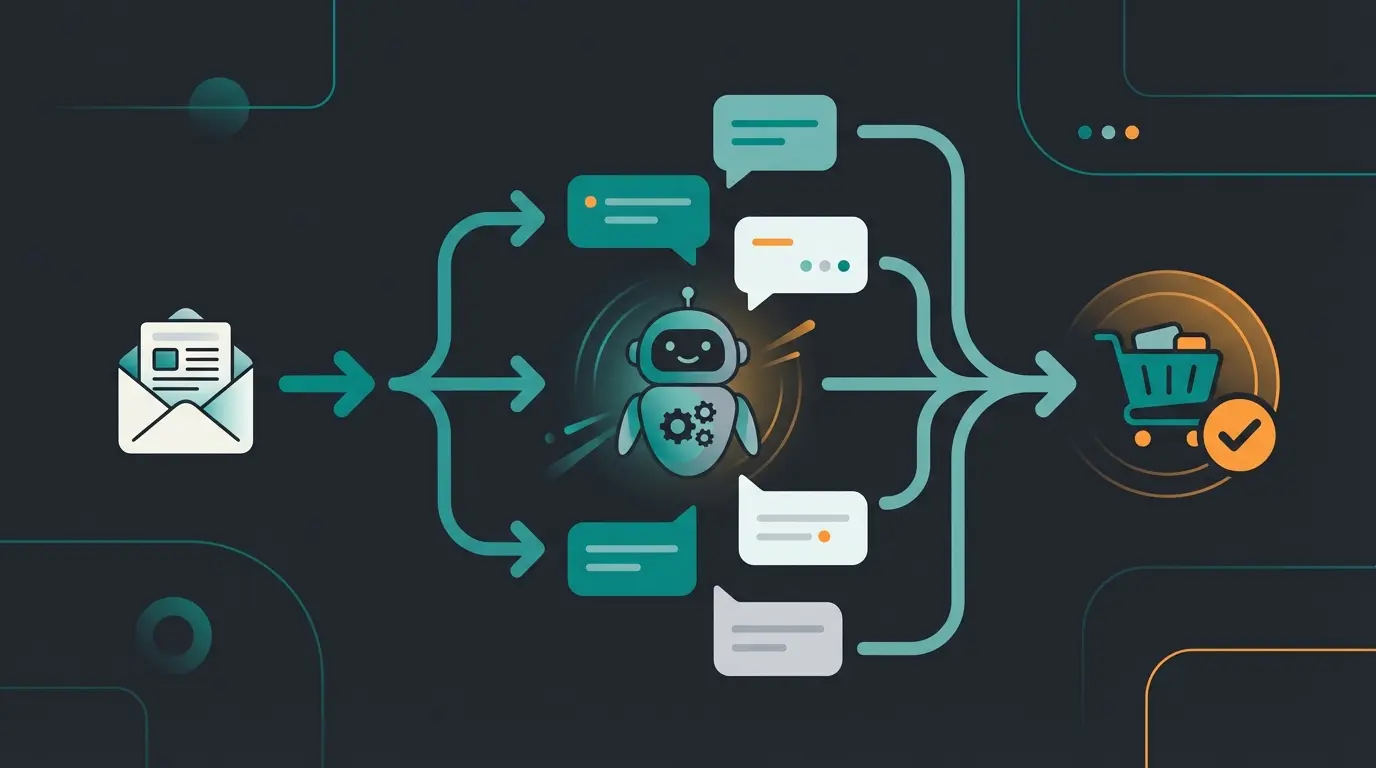
- Newsletter with question/button sent ("Looking for something for winter?")
- Customer clicks button "Yes, winter jackets"
- AI agent takes over immediately: "Great! Do you prefer short or long?"
- Customer: "Long and waterproof."
- AI agent: "Our 'Nordkap' model is perfect. It's waterproof up to 5000mm. Here's a picture. Should I add it to your cart?"
- Purchase completed
Hyper-Personalization Through Data
An AI forgets nothing. When you create your next WhatsApp newsletter, the AI can access past conversations:
"Hey Tom, how are you enjoying the coffee machine you bought last month? We now have the matching beans from Ethiopia on offer..."
This massively increases relevance and reduces the block rate (customers who block or report you). Discover how AI E-Commerce is revolutionizing personalized shopping experiences.
Stop broadcasting links. Start meaningful conversations that convert. Our AI-powered consultation platform handles thousands of customer replies instantly.
Start Your Free TrialWhatsApp Newsletter Costs (2025/2026 Update)
WhatsApp marketing isn't free. Meta has adjusted the pricing model to reduce spam and promote quality. Since 2025, specific categories apply according to ControlHippo, LateNode, and Heltar.
The Pricing Model Overview (Germany)
Billing is per 24-hour conversation.
| Category | Description | Cost (approx. DE) |
|---|---|---|
| Marketing | Offers, newsletters, product news | ~€0.11 - €0.13 |
| Utility | Transactional (shipping status, invoice) | ~€0.05 - €0.07 |
| Authentication | OTPs, login codes | ~€0.06 - €0.07 |
| Service | Responses to customer inquiries | Free (User-initiated) |
ROI Consideration
Yes, 11 cents per message sounds like a lot compared to email (fractions of a cent). But let's do the math:
- Email: 10,000 emails → 2,000 opens → 40 clicks → 1 purchase
- WhatsApp: 1,000 messages (€110 cost) → 980 opens → 400 replies → AI converts 50 purchases
Through the extremely high conversion rate and the ability to conduct service conversations (which are free once the user responds), the costs pay for themselves quickly with an intelligent strategy.
Decision Matrix: Which Channel for Which Purpose?
To sharpen your strategy, this overview helps:
| Criterion | Email Newsletter | WhatsApp Broadcast (App) | AI WhatsApp Newsletter (API) |
|---|---|---|---|
| Open Rate | Low (~20%) | High (~90%+) | Excellent (~98%) |
| Scalability | Unlimited | Very limited (256 contacts) | Unlimited |
| Interaction | One-sided (monologue) | Manual (time-consuming) | Dialogic (AI-scaled) |
| Costs | Very low | Free (but time-intensive) | Medium (pay-per-conversation) |
| Goal | Long content, storytelling | Small group info | Sales, consultation, promotions |
Implementation Checklist: Launch Your First Campaign
Ready to get started? Here's your actionable checklist to create a WhatsApp newsletter that drives real results:
- Select a WhatsApp Business API provider with EU servers and AI capabilities
- Integrate a GDPR-compliant opt-in widget on your website
- Set up a welcome flow with AI preference queries for segmentation
- Design your first interactive template (focus on replies, not clicks)
- Budget for marketing conversations (~€0.11-0.13 per message in Germany)
- Configure your AI agent to handle responses and guide customers to purchase
- Test your flow end-to-end before launching to your full list
- Monitor Reply-to-Revenue metrics instead of just open rates
Frequently Asked Questions About WhatsApp Newsletters
No, professional WhatsApp newsletters require the WhatsApp Business API, which involves per-conversation costs. Marketing messages cost approximately €0.11-0.13 per conversation in Germany. However, service replies within the 24-hour window after a customer responds are free, which is why encouraging replies is so valuable.
Yes, you cannot use your personal phone for professional newsletter sending. You need a Business Solution Provider (BSP) that connects to the WhatsApp Business API. This enables unlimited scaling, GDPR compliance, automation, and AI integration for handling responses.
WhatsApp Broadcast (via the free app) is limited to 256 recipients who must have your number saved. The API Newsletter has no recipient limits, doesn't require customers to save your number, is GDPR-compliant, and allows full automation including AI-powered responses.
Yes, but only with proper Double Opt-In consent. Customers must explicitly agree to receive marketing messages, and you must provide an easy unsubscribe option (e.g., sending 'Stop'). Using the official API with EU-based servers ensures GDPR compliance.
This is where AI agents become essential. When you achieve 10%+ reply rates on large campaigns, manual handling is impossible. AI sales agents can instantly respond to customer inquiries, answer product questions, provide personalized recommendations, and guide customers to purchase – all within the free 24-hour service window.
Conclusion: The Newsletter Is the Beginning, Consultation Is the Goal
Anyone who wants to create a WhatsApp newsletter in 2025 must not think in old patterns. The channel is too valuable and too expensive to flood with irrelevant advertising.
Tomorrow's winners use WhatsApp as a performance channel:
- They obtain legally compliant opt-in
- They send relevant, interactive prompts (not walls of text)
- They use AI agents to immediately turn the resulting flood of responses into sales conversations
The WhatsApp newsletter is not a replacement for your email. It's your digital salesperson who proactively approaches customers. Are you ready to start the conversation?
Disclaimer: The prices and legal information mentioned are based on the status as of 2025 and serve informational purposes. For binding legal advice, please consult an attorney.
Join leading e-commerce brands using conversational AI to turn WhatsApp subscribers into loyal customers. Start with our proven templates and AI consultation framework.
Get Started Today
Lasse is CEO and co-founder of Qualimero. After completing his MBA at WHU and scaling a company to seven-figure revenue, he founded Qualimero to build AI-powered digital employees for e-commerce. His focus: helping businesses measurably improve customer interaction through intelligent automation.