Why Open Rates Alone No Longer Cut It
Imagine walking into a store, only to have a salesperson run up to you, slap a "20% OFF" poster on your forehead, and dash away. That's the current state of many WhatsApp marketing strategies: mass newsletters, high frequency, zero context.
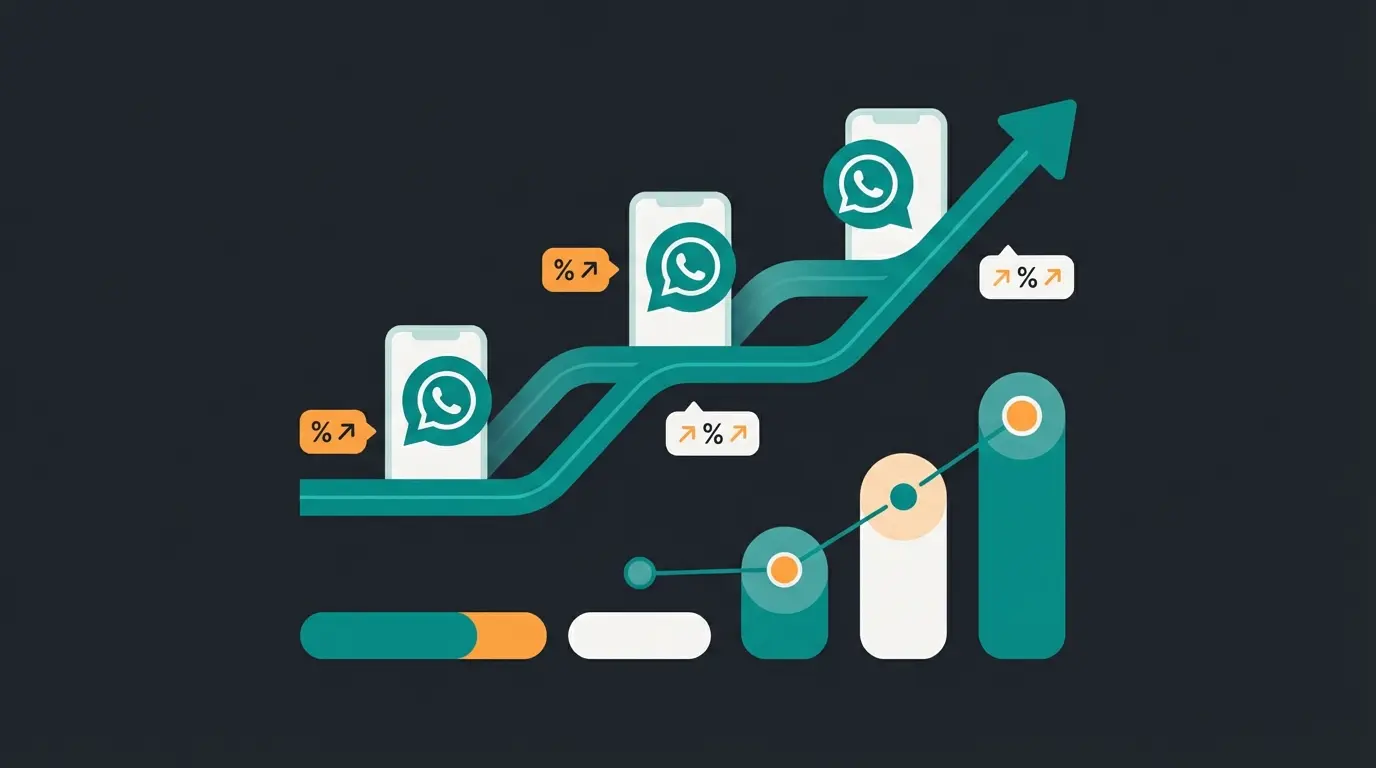
Yes, the statistics are impressive. With open rates of up to 98% and click-through rates (CTR) between 45% and 60%, WhatsApp outperforms traditional email by miles according to sendwo.com. But in 2025 and looking toward 2026, attention alone is no longer enough. The market is shifting. Customers have become more demanding. They don't just want to be informed—they want to be understood and advised.
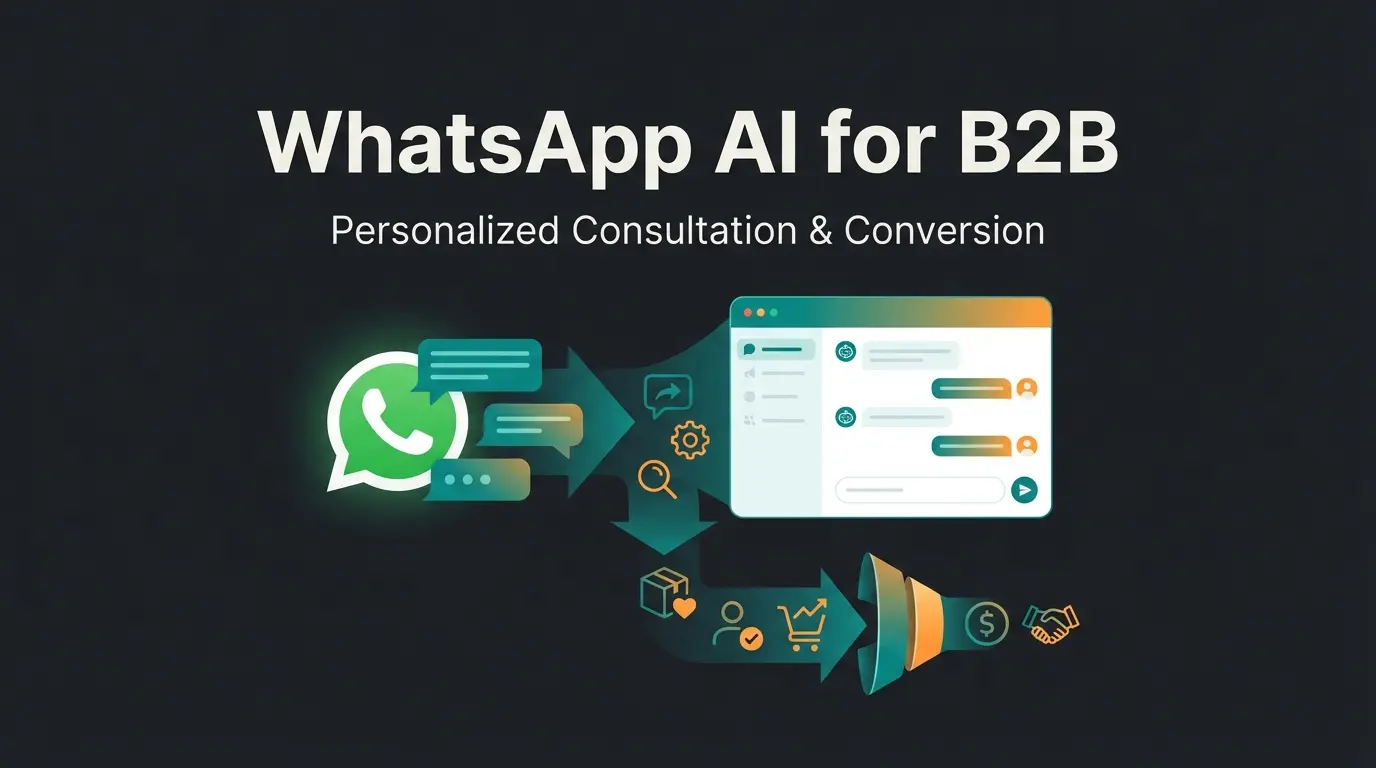
While most businesses still view WhatsApp as a pure "push channel" for discount codes, a quiet revolution is taking place in the background: the shift to conversational commerce with real depth. Powered by generative AI (GenAI) and new API features, WhatsApp for marketing is evolving from a one-way street into a powerful consultation channel.
This guide is different. We won't dwell on how to send a simple newsletter. We'll show you how to use WhatsApp marketing to sell consultation-intensive products—from solar panel systems to premium skincare—in an automated yet personal way. We're bridging the gap between "dumb" chatbots and real sales conversations.
WhatsApp messages vs. 20% for email
Significantly higher than email marketing
Conversational commerce in Germany by 2028
What Is WhatsApp Marketing? Definition & Current State
To understand the future, we need to clarify the foundation. WhatsApp marketing refers to all measures a company takes to interact with potential or existing customers through the WhatsApp messenger service, build brand loyalty, and drive sales.
In the modern marketing mix, we distinguish between two fundamental approaches that define your marketing WhatsApp strategy:
Push Marketing (Outbound)
This is the classic "newsletter" approach. You have a list of contacts (opt-ins) and actively send messages to this group.
- Examples: Product launches, Black Friday offers, back-in-stock notifications
- Advantage: Immediate reach and traffic generation
- Disadvantage: High cost per message (especially after the 2025 price changes) and risk of being perceived as spam
Pull Marketing & Service (Inbound)
Here, the customer initiates the conversation. This is often dismissed as "service," but in the marketing WhatsApp context, it's the strongest revenue driver for complex products.
- Examples: "What size do I need?", "Does this spare part fit my machine?", "How do I apply this serum?"
- Advantage: Extremely high purchase intent (High Intent)
- Disadvantage: Was previously difficult to scale since human agents are expensive. This is exactly where our new strategy comes in.
Why the German Market Is Special
Germany is a "WhatsApp country." With market penetration of over 80%, the app is installed on almost every smartphone according to gaasly.com. At the same time, German consumers are privacy-conscious and skeptical of crude advertising. The market for conversational commerce in Germany is growing rapidly—forecasts from researchandmarkets.com project transaction values reaching nearly 48 billion USD by 2028. To win here, you must build trust through consultation, not volume.
Prerequisites: App vs. API & GDPR Compliance
Before we dive into the AI strategy, we need to set the technical and legal guardrails. A common mistake by smaller businesses is attempting to run professional marketing through the private app or the simple "WhatsApp Business App" on a smartphone.
The Comparison: Business App vs. WhatsApp Business API
For a scalable WhatsApp marketing strategy, the API (Application Programming Interface) is essential. Understanding the difference is crucial when considering your WhatsApp Business API implementation.
| Feature | WhatsApp Business App | WhatsApp Business API (Platform) |
|---|---|---|
| Target Audience | Small local businesses (bakery, salon) | Mid-market & Enterprise |
| Access | Via smartphone / web interface | Via software partners (BSPs) |
| Users | 1 user (tied to 1 phone) | Unlimited users & devices |
| GDPR Compliance | ❌ Critical: Accesses phone contacts | ✅ Compliant: No metadata transfer |
| Automation | Very limited (away message) | Full (chatbots, AI, flows) |
| Mass Sending | Broadcast (max 256, only if number saved) | Unlimited newsletters (opt-in required) |
| Costs | Free | Paid (depending on message type) |
GDPR and Server Location
In Germany, GDPR (General Data Protection Regulation) is the sword of Damocles hanging over every marketing channel.
- The Problem: The standard app synchronizes contact data with Meta's US servers. Without consent from the contacts, this is a violation.
- The Solution: Using the API through a German or European Business Solution Provider (BSP). Providers like Superchat, Userlike (Lime Connect), or ChatWerk host their servers in Germany or the EU and act as data trustees according to superchat.de and lime-technologies.com.
- Important: You need explicit opt-in for every marketing newsletter (similar to email). For pure support chat (customer writes first), legitimate interest for contract fulfillment applies.
Pricing Models 2025/2026: A Strategic Turning Point
Meta has massively adjusted the pricing model. Until mid-2025, a model based on "24-hour conversations" applied. According to chatalog.ai and typebot.io, starting July 2025, a "per-message" model applies for templates:
- Marketing Templates: Charged per message sent.
- Service Conversations: Are free if the customer initiates them and you respond within 24 hours (since Nov 2024).
- Utility Templates: (e.g., shipping confirmations) are often free or cheaper within the 24h service window.
Strategic Consequence: Since service conversations are free, it's economically smarter to get the customer to contact you (inbound/consultation) rather than sending expensive outbound marketing messages. This insight from facebook.com and omnichat.ai is reshaping how businesses approach WhatsApp Business for support.
The Problem with Traditional Chatbots
Many businesses have already tried "chatbots" and were disappointed. Why? Because yesterday's technology wasn't built for today's sales challenges.
The Decision Tree Trap
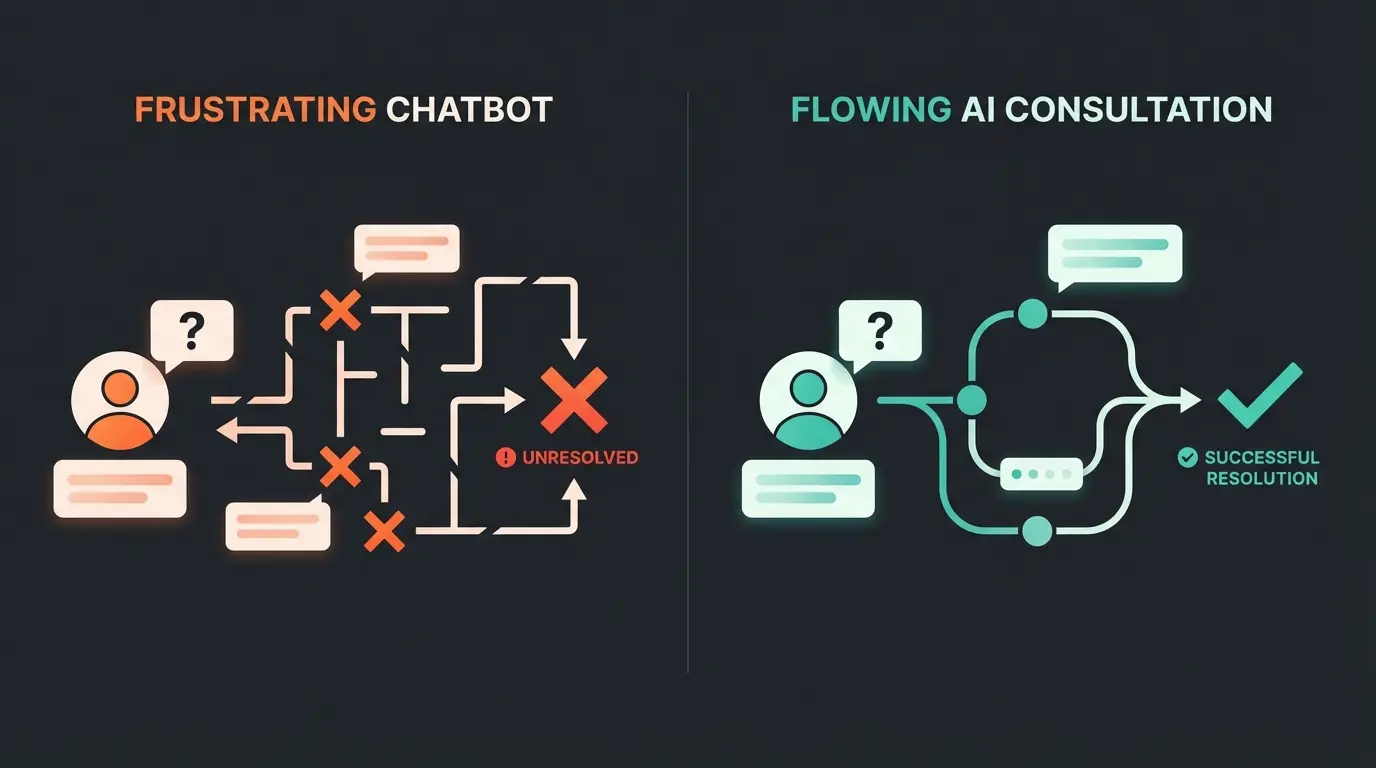
Traditional chatbots are based on rigid if-then rules:
- Bot: "Hello! Do you want 1. Opening hours, 2. Returns, 3. Status?"
- Customer: "I'm looking for a bicycle for my 8-year-old son."
- Bot: "I didn't understand that. Please select 1, 2, or 3."
Why This Fails for Complex Products
If you're selling socks, a simple bot suffices. But if you're selling consultation-intensive products (e.g., dietary supplements, B2B software, e-bikes, furniture), rule-based bots fail miserably.
- No Context: The bot doesn't know that an 8-year-old needs a specific frame size.
- Dead Ends: As soon as the customer asks a question not in the script, the flow breaks.
- Frustration Instead of Purchase: The customer doesn't feel advised—they feel "processed."
The result: High abandonment rates and the belief that "automation in sales doesn't work." But that's wrong. Only the old type of automation doesn't work. Modern AI chatbots in marketing are changing this paradigm completely.
The New Era: AI Product Consultation in WhatsApp Marketing
Here lies your "blue ocean" opportunity. We're redefining WhatsApp marketing: away from the market crier (newsletter), toward the personal advisor (consultational commerce).
What Is AI Product Consultation?
Instead of rigid rules, we use Large Language Models (LLMs) like GPT-4o or Claude, trained or connected with your specific product knowledge (datasheets, FAQs, sales guides) through RAG (Retrieval Augmented Generation). This approach to AI product consultation is revolutionizing how businesses engage customers.
These AI agents can:
- Understand: They recognize complex intentions ("I need something for dry skin, but without fragrance").
- Ask Follow-up Questions: Like a good salesperson, they inquire ("Is your skin also dry in summer or just now in winter?").
- Recommend: They don't just send a link—they justify the recommendation ("Based on your sensitive skin, I recommend Serum X because it contains ingredient Y").
Use Case: Selling Solar Panel Systems
Imagine you're selling balcony power stations.
Scenario A (Old Chatbot):
- Customer: "Is this worth it for my north-facing balcony?"
- Bot: "Here are our top sellers: [Link]"
- Result: Customer doesn't buy because they're uncertain.
Scenario B (AI Product Consultant):
- Customer: "Is this worth it for my north-facing balcony?"
- AI: "With a purely north-facing balcony, the yield is significantly lower than facing south. Do you perhaps also have an east or west orientation, or space on the facade? Often, mounting there is more worthwhile."
- Customer: "Yes, there's morning sun on the side."
- AI: "Perfect! For this east orientation, I recommend our 'MorningSun' model. It's optimized for lower light conditions. Shall I send you the yield forecast?"
| Feature | Standard Rule Bot | AI Product Consultant (2026) |
|---|---|---|
| Understanding | Reacts to keywords ("price", "shipping") | Understands context & nuances ("too expensive", "alternative?") |
| Goal | Avoid support tickets (Deflection) | Close sales (Conversion) |
| Setup | Manual flow chart building | Training with PDF catalogs & website data |
| Flexibility | Crashes on unknown questions | Improvises based on knowledge base |
| Experience | Robotic, static | Natural, empathetic, consultative |
New Keywords for Your Niche
To leverage this approach for SEO, you should integrate terms like "WhatsApp product consultation", "Conversational Commerce", and "AI sales assistant WhatsApp" into your content. These have little competition yet, but extremely high relevance for B2B decision-makers looking to transform it into AI.
Stop sending newsletters that get ignored. Start having AI-powered consultations that convert. See how leading brands use AI product consultation to drive 3x more sales through WhatsApp.
Start Your Free TrialStrategy: Using WhatsApp as a Sales Channel
How do you implement this WhatsApp marketing strategy? Here's the roadmap for 2026.
Step 1: Entry Points (How Do Customers Enter the Chat?)
Since we want to practice "pull marketing" (to use the free service windows), we need to lower barriers.
- Click-to-WhatsApp Ads (CTWA): Run Facebook/Instagram ads that don't lead to a landing page but directly open WhatsApp. The CTA isn't "Buy Now" but "Get Advice Now."
- QR Codes on Products: "Questions about installation? Scan me for instant help."
- Website Widget: Replace the classic live chat with a WhatsApp button. The advantage: The chat persists even when the customer leaves the page.
Step 2: The Consultation Flow (Qualification Through AI)
Once the customer presses "Start" or asks a question, the AI agent takes over. This is where AI customer service truly shines.
- Needs Analysis: The AI asks 2-3 targeted questions (budget, use case, preferences).
- Using WhatsApp Flows: For structured data (e.g., appointment booking or configuration), use the WhatsApp Flows feature. These are small forms within the chat that save typing according to sinch.com and interakt.shop. Example: A form for selecting skin type and age that pops up directly in the chat.
- Product Presentation: The AI sends personalized suggestions, ideally as a "Multi-Product Message" (catalog feature) directly in WhatsApp.
Click-to-WhatsApp ads, QR codes, website widgets drive customers to initiate chat
AI asks targeted questions about budget, preferences, and use case requirements
Personalized suggestions with reasoning based on customer's specific needs
Direct checkout link or seamless transfer to human sales expert
Step 3: The Handover (Human Takeover)
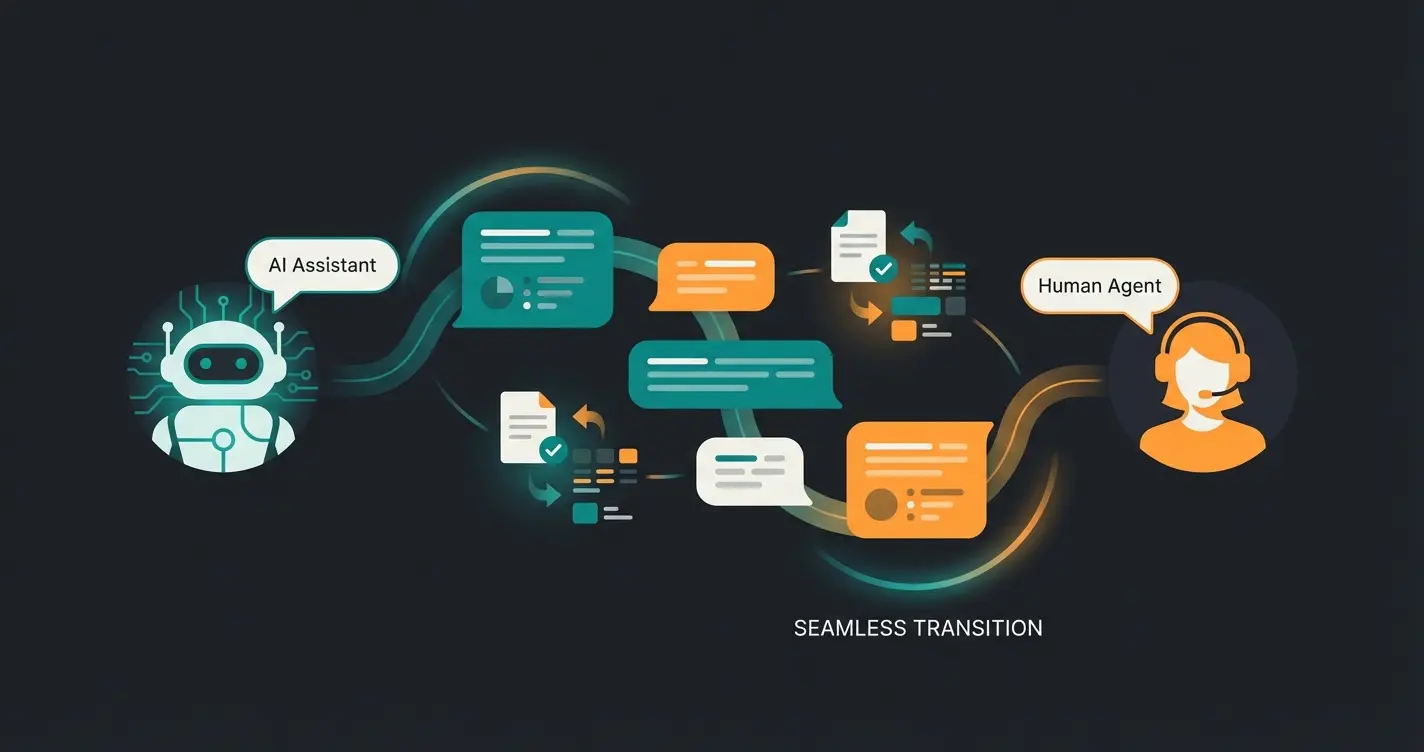
AI is great, but for high-ticket sales (e.g., B2B machinery for €50,000), you often still need a human to close the deal. This is where AI integration for sales becomes essential.
- Sentiment Analysis: The AI recognizes when the customer is hesitant or frustrated.
- Trigger: "Would you like to briefly speak with an expert about this?"
- Seamless Transition: The human agent sees the entire chat history in the CRM (e.g., HubSpot, Salesforce) and can jump in immediately.
Best Practices for Consultation-Intensive Products
To ensure your WhatsApp for marketing strategy doesn't fail, follow these best practices for 2026.
Rich Media Instead of Text Walls
Nobody reads 500 words in a speech bubble.
- Use PDFs for datasheets (sent automatically).
- Send short explainer videos (max 30 sec) when a customer asks "How do I set this up?"
- Use List Messages instead of long text options.
The 24-Hour Rule as a Sales Accelerator
Since responses within 24 hours are free (Service Conversations), program your AI to respond instantly. Speed is the most important sales factor in 2025.
Trust Through Transparency
Especially with WhatsApp product consultation, it must be clear that an AI is speaking.
- Give the bot a name (e.g., "Lara, your digital assistant").
- Always offer an "emergency exit" ("Type 'human' to speak with a team member").
Integration Into Your Tech Stack
Isolated solutions are deadly. Your WhatsApp tool (e.g., Superchat, Charles) must be connected to your shop system (Shopify, Shopware) and your CRM. An AI Chatbot for E-Commerce needs proper integration to deliver results.
Why? If the customer buys in the chat, inventory must be updated in the shop. If the customer buys in the shop, they shouldn't receive a "cart abandoner" message on WhatsApp. Using AI product consultation effectively requires this seamless data flow.
Measuring Success: KPIs That Actually Matter
Moving beyond vanity metrics like open rates, here's what you should track for your AI-powered WhatsApp marketing strategy:
AI consultation vs. traditional newsletters
Instant AI responses capture intent
Free service conversations vs. paid marketing templates
When AI provides personalized recommendations
Conclusion: The Future Belongs to Advisors
The term WhatsApp marketing has evolved. In 2020-2024, it was about reaching as many people as possible (reach). From 2025/2026, it's about advising the right people better (quality).
The combination of the WhatsApp Business API, new features like WhatsApp Flows, and intelligent AI agents makes it possible for the first time to digitally scale the experience of a sales conversation in a physical store.
For businesses with products that require explanation, this isn't an option—it's a necessity. While your competition still sends expensive newsletters to annoyed customers, your AI is already conducting hundreds of parallel sales conversations—friendly, competent, and around the clock.
Action Steps
- Check your current status: Are you still using the App or already the API?
- Identify your top 10 sales questions: What do customers always ask before buying?
- Start a pilot project: Train an AI agent on these 10 questions and test it as a "Digital Product Consultant" on your website.
The technology is ready. Are you?
The WhatsApp Business App is free and designed for small local businesses with one user. The WhatsApp Business API is a paid solution for mid-market and enterprise companies that need unlimited users, full automation capabilities, GDPR compliance, and integration with CRM systems. For any scalable WhatsApp marketing strategy, the API is essential.
Yes, but only when using the WhatsApp Business API through a European Business Solution Provider (BSP) with servers in the EU. The standard WhatsApp app synchronizes contacts with US servers, which violates GDPR. You also need explicit opt-in for marketing messages, similar to email marketing requirements.
Meta's new pricing model charges per message for marketing templates. However, service conversations (when customers initiate) are free within 24 hours. This makes inbound consultation strategies more economical than outbound newsletter campaigns. Additional costs include your BSP subscription and any AI platform fees.
AI excels at handling initial qualification, answering common questions, and providing 24/7 availability. For complex high-ticket sales, a hybrid approach works best: AI handles the consultation until purchase intent is confirmed or the customer shows signs of hesitation, then seamlessly hands over to a human expert with full conversation context.
Consultation-intensive products see the highest ROI: solar panel systems, skincare routines, B2B machinery, dietary supplements, furniture, electronics, and any product where customers need personalized recommendations before purchasing. Simple commodity products may not require this level of consultation.
Join leading e-commerce brands using AI product consultation to convert more customers on WhatsApp. Our platform integrates seamlessly with your existing tech stack and starts delivering results from day one.
Get Started Free
Lasse is CEO and co-founder of Qualimero. After completing his MBA at WHU and scaling a company to seven-figure revenue, he founded Qualimero to build AI-powered digital employees for e-commerce. His focus: helping businesses measurably improve customer interaction through intelligent automation.