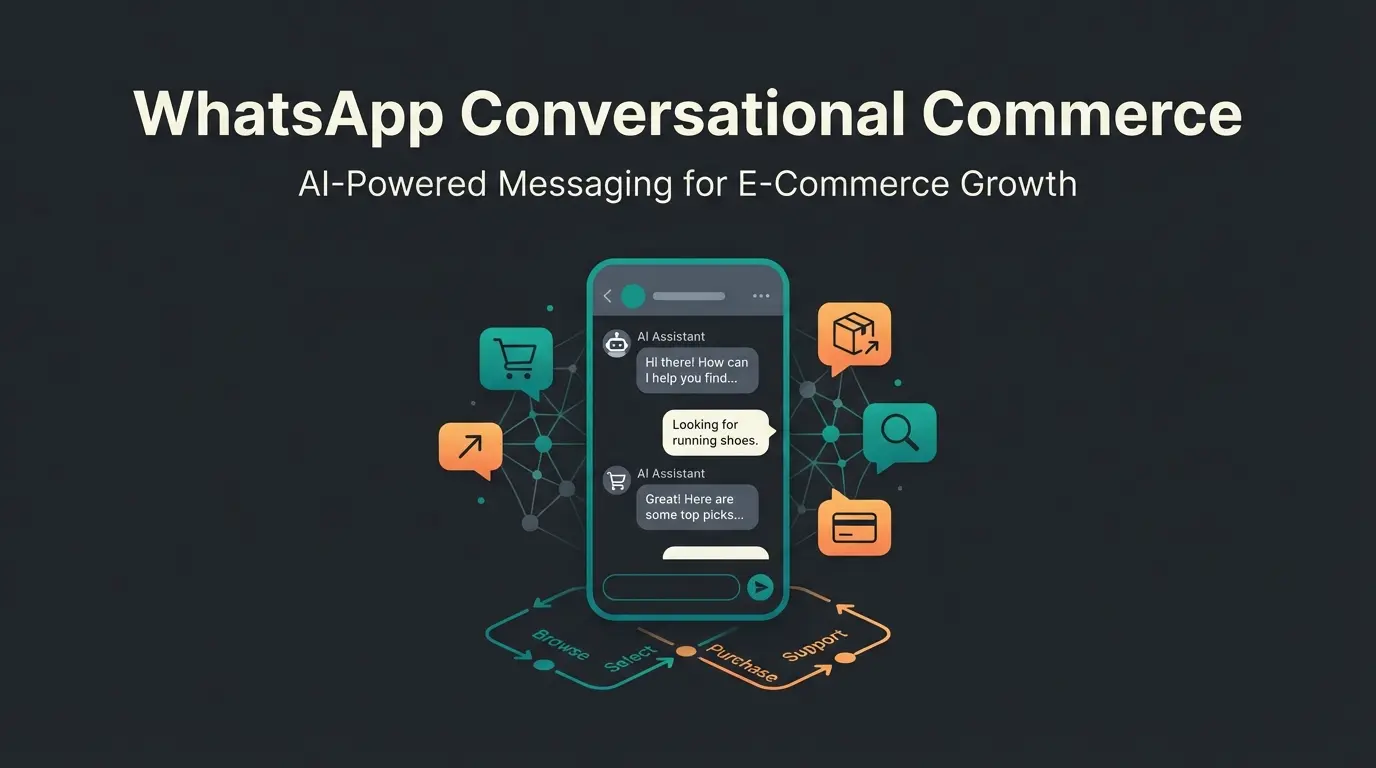
Introduction: The Evolution of Customer Communication
Have you ever wondered why your Intercom chatbot excels at deflecting support tickets but barely contributes to increasing revenue? You're not alone. In today's customer communication landscape, most businesses use automation purely defensively: to cut costs and relieve support staff.
But we're standing at a threshold. The year 2026 marks the transition from reactive "support bots" to proactive AI product consultants. While standard search results on this topic often only scratch the surface or provide basic setup guides, this article goes deeper. We don't just analyze the technical features of Intercom automation – we show you strategically how to bridge the gap between a support agent and a true sales consultant. This shift represents how AI Chatbots are transforming the way businesses engage with customers.
In this comprehensive guide, you'll learn: Why the standard use of Intercom Fin often falls short for complex sales conversations. How to avoid the cost trap of $0.99 per resolution and maximize ROI. How to automate in Germany while staying GDPR-compliant and in accordance with the EU AI Act. And how to build a hybrid bot that doesn't just answer questions but actively provides consultation.
The Current Landscape: Intercom Custom Bots vs. Fin AI
To understand how we build a "product consultant," we first need to understand the tools Intercom currently provides. Many users confuse the terminology or don't know exactly when which tool should be deployed. Understanding how AI Chatbots are evolving helps contextualize these different approaches.
Intercom Custom Bots (The Rule-Based Approach)
The Intercom bot in its classic form is a rule-based chatbot. It operates on a strict "if-then" principle. The functionality works as follows: You build visual paths (workflows). The user clicks on buttons (e.g., "I have a question about my invoice"), and the bot guides them to the next step.
The strengths include absolute control over the conversation flow, making it ideal for lead qualification (querying company size, name, email) and simple routing tasks. According to newoaks.ai, these bots excel at predictable, structured interactions.
However, the weaknesses are significant: Custom bots are essentially "unintelligent." They cannot understand free-text questions that fall outside the defined buttons. They often appear rigid and impersonal, as noted in G2's comprehensive review of the platform.
Intercom Fin AI (The Generative Approach)
Fin is Intercom's answer to ChatGPT. It's an AI agent based on OpenAI's Large Language Models (GPT-4), but specifically optimized for customer support. According to eesel.ai, the setup process is relatively straightforward for businesses with existing knowledge bases.
Fin uses RAG (Retrieval-Augmented Generation). This means it "reads" your Help Center, your internal articles, and PDFs, then generates answers to customer questions from this content. Intercom's documentation provides detailed guidance on configuring these knowledge sources.
The strengths are compelling: It requires minimal manual setup (Plug & Play), understands complex questions, and drastically reduces ticket volume. According to livechatai.com, Intercom advertises up to 50% ticket reduction.
The weaknesses, however, are critical for sales-focused use cases: Fin is primarily reactive. It waits for a question and delivers an answer from the knowledge base. It inherently lacks a "sales strategy." Additionally, the pricing model of $0.99 per resolution is a cost factor that must be strategically planned. This is explored in detail in our Intercom chatbot pricing analysis, and G2's pricing breakdown confirms these considerations.
The Strategic Gap
Here lies the problem for growth-oriented companies: Custom Bots are too rigid for genuine consultation ("Which product fits me?"). Meanwhile, Fin AI is too passive. When a customer asks: "What does X cost?", Fin responds with the price. A good salesperson, however, would ask: "What do you want to use X for – perhaps Y would be a better fit?"
This is exactly where the concept of the AI Product Consultant comes in. For businesses seeking AI Product Consultation solutions, understanding this gap is crucial to making the right investment.
Maximum support deflection rate advertised by Intercom Fin
Cost per successful Fin conversation – adds up quickly for pre-sales
Current content focuses on ticket deflection, not sales consultation
Why "Support Bots" Fail at Sales
Most Intercom chatbot implementations fail in sales because they're optimized for support. Let's analyze the difference to understand what we need to change. This distinction is fundamental to implementing effective AI Customer Service that also drives revenue.
The Metrics Trap: Resolution Rate vs. Conversion Rate
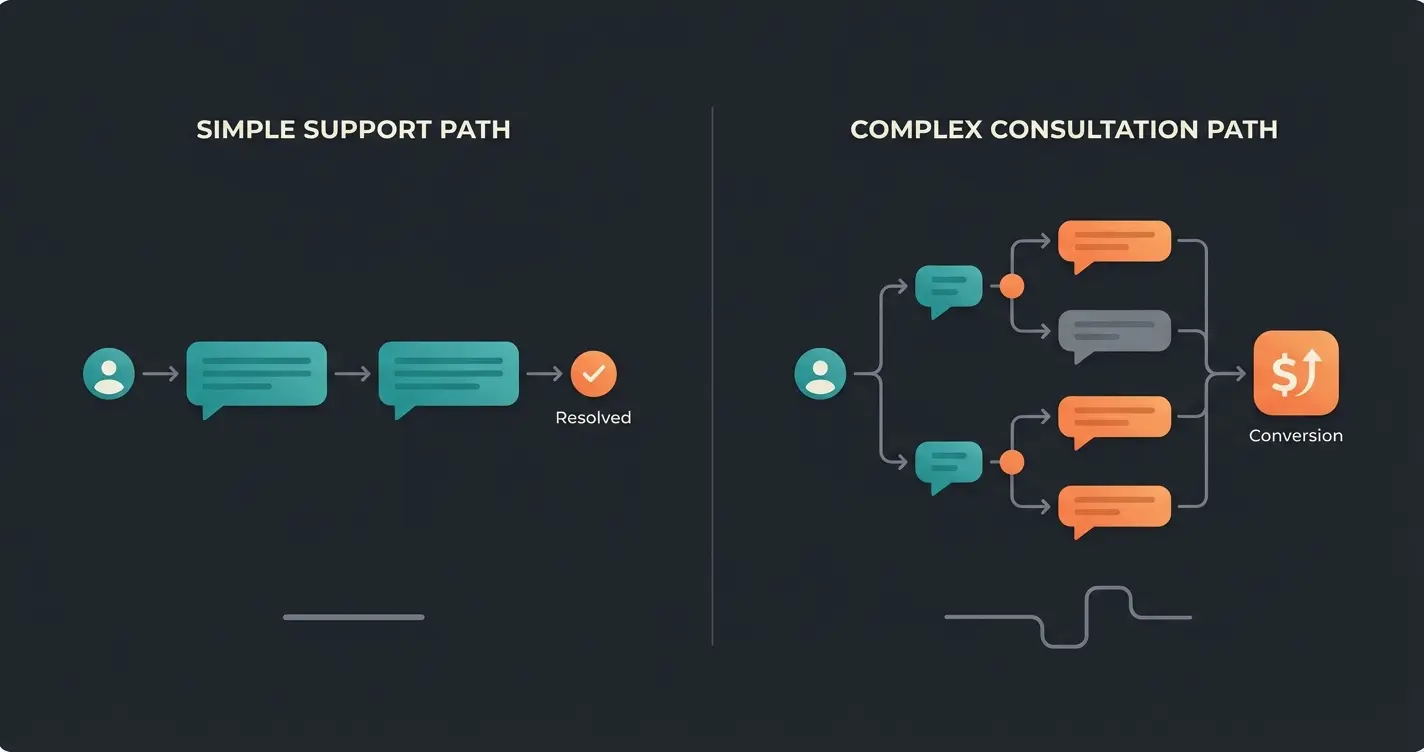
In support, the goal is "Resolution Rate" or "Deflection Rate." The faster the customer gets an answer and leaves the chat, the better. In sales, however, the goal is the opposite: Engagement. We want the customer to stay longer, share more about their needs, and ultimately make a purchase decision. A bot that only answers briefly and concisely "kills" the sales conversation.
This fundamental difference explains why businesses need specialized approaches for different customer journey stages. While support metrics celebrate quick resolutions, sales success requires building relationship and understanding – something traditional bots aren't designed to do.
The Problem of Reactivity
A support bot is like a librarian: You ask a question, they hand you the book. A sales bot must act like a doctor or consultant: It must conduct an anamnesis – a thorough needs assessment.
Consider this example: Customer: "I have dry skin." Support Bot (Standard Fin): "Here's our article about dry skin." (Link) Consultant Bot (Goal): "I understand. Does this occur more in winter or year-round? Are you looking more for a day cream or a treatment regimen?"
The consultant bot's approach demonstrates Consultative AI in action – it doesn't just provide information, it guides the customer toward the right solution through intelligent questioning.
The Cost Reality of Fin
Another critical point is the pricing. Intercom charges for Fin $0.99 per Resolution, as confirmed by fin.ai's analysis. A "Resolution" counts when the customer says "That helped" or leaves the chat without requesting a human, according to eesel.ai's documentation.
Scenario: A customer asks: "Do you deliver to Austria?" Fin says: "Yes." That costs you $0.99. For support tickets that would otherwise cost $5–10 in personnel costs, that's a bargain. For simple pre-sales questions ("Do you have size M?"), however, this is extremely expensive and eats into your margins.
Strategic Consequence: We must not unleash Fin indiscriminately on all visitors. We need an Intercom automation strategy that filters and controls when the AI engages versus when simpler solutions suffice.
Guide: Building an AI Product Consultant with Intercom
To bridge the gap between rigid bots and expensive AI, we recommend a hybrid approach. We transform the Intercom chatbot from a mere "answerer" into a guided consultant. This approach aligns with best practices for AI Chatbot integration in business environments.
Step 1: The Foundation – Data Preparation for Consultation
Fin is only as smart as the data you feed it. Most companies only feed Fin with FAQs (return policies, shipping). For a product consultant, you must input sales knowledge. Understanding the principles of training AI chatbots is essential for this process.
Product Data Sheets as PDFs: Upload detailed PDFs that contain not just technical data, but also "use cases." Fin can read this content. According to YouTube tutorials on Intercom setup, PDF integration significantly improves response quality.
Internal Articles: Create articles in Intercom that are only visible to Fin (not in the public Help Center). Write these articles in "Q&A" style for sales conversations. According to Intercom's help documentation, internal articles provide an excellent way to guide AI responses.
- Example Title: "Product Recommendation for Small Teams vs. Enterprise"
- Content: "If a customer has fewer than 10 employees, recommend Plan A because..."
- Include decision criteria, objection handling, and upsell triggers
Use Snippets: For short, precise facts (e.g., "We offer a 30-day money-back guarantee"), use Snippets. These prevent Fin from hallucinating, as noted by fin.ai's best practices.
Step 2: Defining the "Consultation Logic" (Hybrid Flow)
Don't rely solely on AI. Use Intercom Workflows (Custom Bots) as "guardrails" and Fin as the "brain." This hybrid approach is how AI employees become expert consultants in modern businesses.
Bot starts with buttons: 'How can I help?' → [Support] / [Product Consultation]. If customer clicks Support, Fin answers immediately (cost savings through ticket deflection).
If customer chooses 'Product Consultation,' ask 2-3 qualifying questions via buttons (e.g., industry, budget). This costs nothing and gives the AI context.
Use 'Let Fin answer' function, but control which content Fin can use. Through Audience Targeting, you can ensure Fin gives different answers to VIP customers than to free users.
When Fin detects closing signals (keywords like 'quote,' 'price,' 'demo'), the bot proactively brings in a human sales representative.
According to Intercom's targeting documentation, audience segmentation allows for sophisticated content control, while fin.ai's advanced guides provide additional implementation strategies.
Step 3: Fin "Guidance" and Behavioral Rules
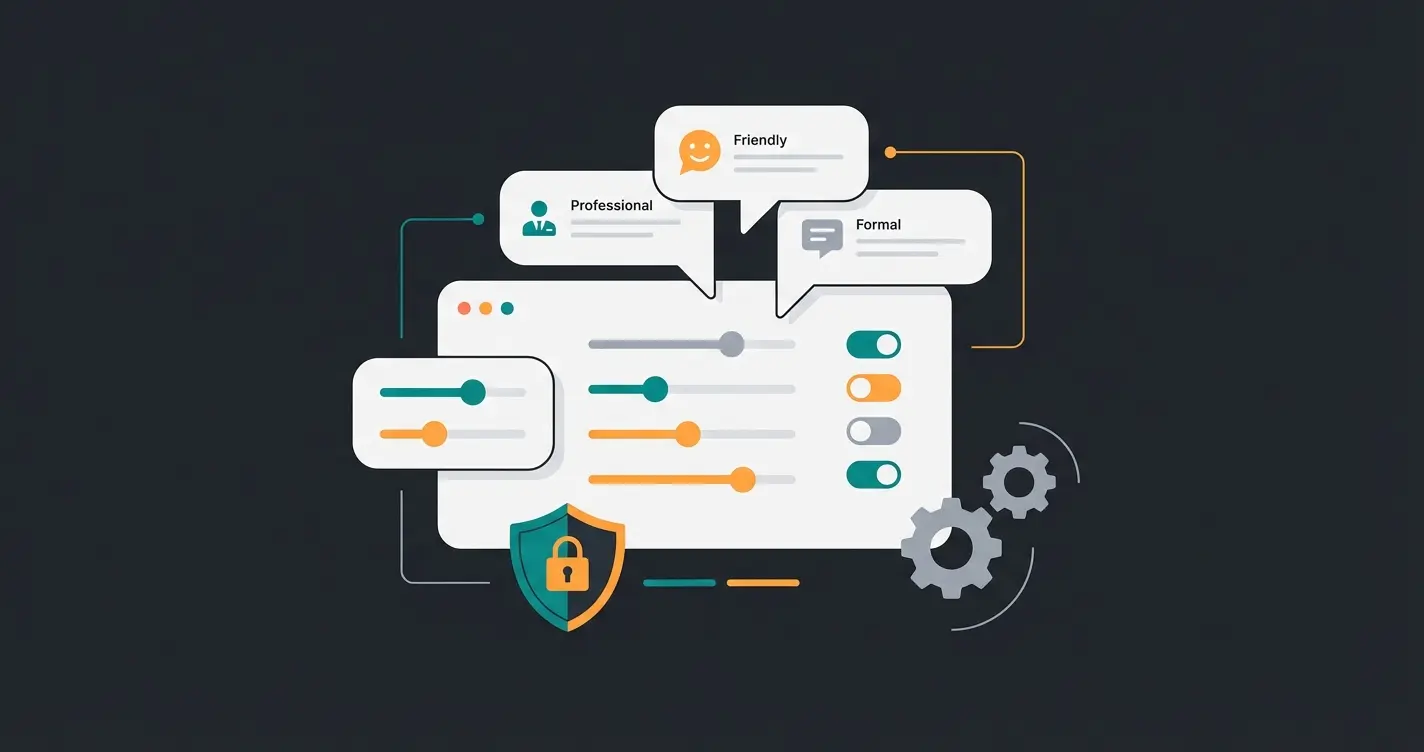
Intercom recently introduced Fin Guidance. This is a game-changer for consultation. You can now give Fin specific instructions on how to behave. According to Intercom's official guidance, these customization options significantly improve response relevance.
- Tone of Voice: Set Fin to 'Professional' or 'Friendly,' matching your brand
- Negative Constraints: Explicitly tell Fin: 'Never mention Competitor X' or 'Don't give discounts without consultation'
- Prioritization: You can instruct Fin to preferentially use certain articles – use this to direct it toward your 'Sales Playbooks' instead of technical manuals
According to Intercom's detailed configuration guide, these behavioral guardrails are essential for maintaining brand consistency while leveraging AI capabilities.
Stop losing sales to reactive support bots. Our AI product consultation platform integrates seamlessly with Intercom to deliver consultative selling experiences that convert.
Start Your Free TrialImplementation in the DACH Region: GDPR, Hosting & EU AI Act
An Intercom chatbot in Germany, Austria, or Switzerland must follow stricter rules than in the USA. The top search results often completely ignore this aspect. Here's your compliance checklist. Understanding the EU AI Act requirements is essential for any business operating in Europe.
Server Location and Data Hosting
Intercom offers Regional Data Hosting in the EU. According to eesel.ai's hosting analysis, the data is hosted on AWS servers in Dublin, Ireland.
Important: This only applies to new workspaces on the "Advanced" or "Expert" plans. You cannot simply migrate an existing US workspace; you often need to start fresh. According to Intercom's regional data documentation, this limitation affects many existing customers.
Limitation: Certain data (billing data, admin data) is still processed in the USA. You therefore absolutely need a DPA (Data Processing Agreement) and should review the Standard Contractual Clauses (SCCs) that Intercom provides. According to Intercom's DPA documentation, these agreements are available for enterprise customers.
The EU AI Act: Transparency is Mandatory
Since August 2024 (with transition periods until 2026), the EU AI Act applies. For chatbots, there's a strict transparency requirement. According to europa.eu, the official regulations are clear, and gettalkative.com provides practical guidance for implementation.
The Rule: Users must know they're speaking with a machine. No impression may be created that it's a human ("Dark Pattern"). Intercom's Solution: Intercom has responded. Previously, "AI Agent" automatically appeared next to the name. Now there's a Toggle to turn this label on or off, as detailed in Intercom's AI labeling documentation.
Our Recommendation: Do NOT turn off the label. Instead, use the "Introductory Message" area to charmingly point it out: "Hello! I'm Fin, [Company]'s digital assistant. I use AI to help you immediately. For complex questions, I'll bring in my human colleagues." This builds trust and fulfills legal requirements.
Checklist for the German Market
- Hosting: Ensure your workspace runs on 'EU (Dublin)'
- DPA: Sign Intercom's Data Processing Addendum
- Cookie Banner: The Intercom Messenger sets cookies/local storage. It must be integrated into your Consent Manager (e.g., Usercentrics, Cookiebot). It may only load once the user has consented, as noted by legalweb.io
- Legal Notice/Privacy Policy: Link these directly in the Messenger start screen
For businesses exploring AI consulting in e-commerce, these compliance requirements are non-negotiable and should be addressed before deployment.
Cost Calculation: Is Fin Really Worth It?
Many users shy away from the $0.99 per resolution. Let's calculate this realistically and compare it with alternatives. For a deeper dive into pricing considerations, see our comprehensive Intercom software guide.
The Pricing Model in Detail
According to gptbots.ai and customerly.io, you need at least an "Essential" (approx. $39/Seat) or "Advanced" (approx. $99/Seat) plan. Fin costs $0.99 per successful Resolution, and there's often a minimum commitment (e.g., 50 Resolutions/month).
ROI Calculation (Example)
Let's assume you have 1,000 support inquiries per month. According to saaspricepulse.com, a ticket costs an average of $5–8 in labor time.
| Scenario | Cost Calculation | Monthly Cost | Savings |
|---|---|---|---|
| Human Agent Only | 1,000 tickets × $6 average | $6,000 | Baseline |
| Intercom Fin (40% deflection) | 400 resolutions × $0.99 | $396 | ~$2,000 net savings |
| Hybrid Approach | 200 qualified leads × $0.99 + Rule-based for rest | ~$200 | Maximum efficiency |
For Support: The ROI is extremely high (5-6x factor). You save the labor time for 400 tickets (approx. $2,400) and pay only about $400 for it.
But Caution in Sales: In sales, a "Resolution" (customer says thanks) is worthless if no purchase follows. Tip: Use Fin in sales only for qualified leads (see Step 2 above). If a visitor just writes "Hello," a simple Custom Bot (included free in the plan) should respond, not the expensive AI.
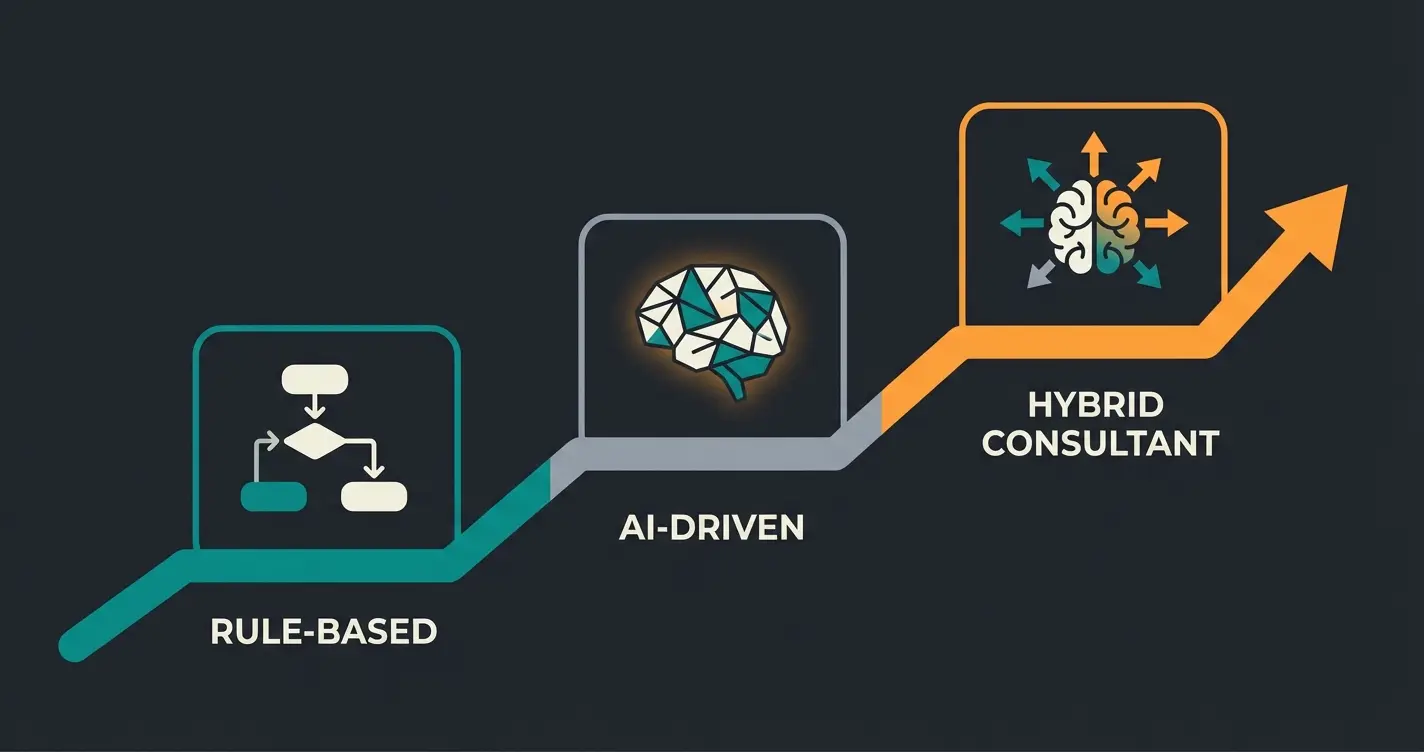
Comparison: The 3 Levels of Intercom Automation
Comparison: The 3 Levels of Intercom Automation
To help you make the right decision, we've compared the three expansion levels. This comparison illustrates why an AI employee approach delivers superior results for sales-focused use cases.
| Feature | Level 1: Custom Bot (Rule-Based) | Level 2: Fin AI (Support Focus) | Level 3: AI Product Consultant (Hybrid) |
|---|---|---|---|
| Technology | Static decision trees | Generative AI (RAG) | Generative AI + Strategic Workflows |
| Best Use Case | Appointment booking, routing, lead capture | FAQ deflection, 'Where is my order?' | Complex product consultation, needs analysis |
| Setup Effort | Medium (paths must be built) | Low (reads Help Center automatically) | High (requires curated data & guidance) |
| User Experience | Rigid ('Click here') | Natural, but reactive | Natural, proactive & goal-oriented |
| Costs | Often included in base plan | $0.99 / Resolution | $0.99 / Resolution + Setup time |
| GDPR Risk | Low (predictable data) | Medium (AI output must be monitored) | Medium (requires clear guardrails/guidance) |
| Revenue Potential | Low - qualification only | Medium - cost savings | High - active sales generation |
The Consultation Loop: Visualizing the Difference
To understand why the AI Product Consultant approach outperforms traditional bots, visualize the difference in conversation flows. The standard support loop is linear: User Question → Bot Answer → Exit. The consultation loop is circular and value-adding.
Customer has a problem but doesn't know the solution. Unlike support where they ask specific questions, they need guidance.
Bot proactively asks about requirements, constraints, preferences, and budget – building a complete picture.
Using the gathered context, Fin matches requirements against your product catalog via curated internal articles.
Bot suggests ONE specific product with clear reasoning why it fits this customer's unique situation.
Bot offers clear next steps: 'Add to Cart,' 'Book Demo,' or 'Schedule Call' – moving toward revenue.
This loop differs massively from the support loop (Question → Answer → Exit). It creates value at every step and positions your bot as a trusted advisor rather than a simple FAQ machine.
Real Cost Calculator: Your Monthly Investment
Based on the research gap analysis, here's a realistic breakdown for a business with 1,000 conversations per month:
| Cost Component | Fin-Only Approach | Hybrid Consultant Approach | Difference |
|---|---|---|---|
| Fin Resolutions | 1,000 × $0.99 = $990 | 300 qualified × $0.99 = $297 | $693 saved |
| Base Platform | $99/seat (Advanced) | $99/seat (Advanced) | $0 |
| Setup Investment | Minimal | 20-40 hours initial | One-time cost |
| Monthly Total | ~$1,089 | ~$396 | $693/month savings |
| Annual Savings | Baseline | $8,316 | Significant ROI |
The hybrid approach not only costs less but also delivers better results. By filtering conversations through rule-based qualification first, you ensure Fin only engages with high-intent visitors worth the $0.99 investment.
Conclusion & Outlook: The Future is Hybrid
The Intercom chatbot has evolved from a simple "signpost" into a powerful tool. But technology alone doesn't solve business problems.
The winners in 2026 won't be the companies that simply "turn on" Fin and hope support tickets disappear. The winners will be those who understand Intercom automation as a hybrid system combining three elements:
- Rule-Based Bots for cost-effective pre-qualification and data protection consent – handling the high-volume, low-value interactions that don't need expensive AI
- Fin AI for intelligent question answering, fed with sales-psychology-optimized content that guides rather than just responds
- Human agents for emotional closing and complex special cases – the high-touch moments that seal deals
Action Recommendation: Don't start with technology today – start with your content. Revise your knowledge base. Write articles not for readers, but for the AI – clearly structured, fact-based, and solution-oriented. Then your Intercom Bot transforms from a cost center into a revenue driver.
Frequently Asked Questions
Custom Bots are rule-based and follow strict if-then logic with button-based navigation – ideal for routing and lead qualification. Fin AI uses generative AI (GPT-4) with Retrieval-Augmented Generation to understand and respond to complex questions naturally. Custom Bots offer control but lack flexibility; Fin offers intelligence but costs $0.99 per resolution.
Fin charges $0.99 per successful resolution on top of your base plan ($39-99/seat). For 1,000 monthly conversations with 40% AI deflection, expect approximately $400 in Fin costs. Strategic filtering through hybrid workflows can reduce this significantly by ensuring only high-value conversations engage the AI.
Intercom offers EU data hosting in Dublin, Ireland, but only for new workspaces on Advanced or Expert plans. You'll need a signed Data Processing Agreement (DPA), proper consent management integration, and awareness that some data (billing, admin) still processes in the US. Cookie consent must be obtained before the Messenger loads.
Yes, but it requires strategic implementation. Standard Fin is optimized for support deflection (reactive). For sales consultation (proactive), you need to: feed Fin with sales-focused content rather than just FAQs, use hybrid workflows for qualification, implement Fin Guidance for sales-appropriate tone, and configure human handoff for closing conversations.
The EU AI Act (effective August 2024 with transitions to 2026) mandates transparency – users must know they're interacting with AI, not a human. Intercom provides an AI label toggle, but we recommend keeping it visible and adding a friendly introduction message that explains the AI's role while building trust with visitors.
Stop settling for basic ticket deflection. Our AI consultation platform works alongside Intercom to deliver the personalized, consultative selling experience your customers expect – and your bottom line demands.
Get Started Free Today