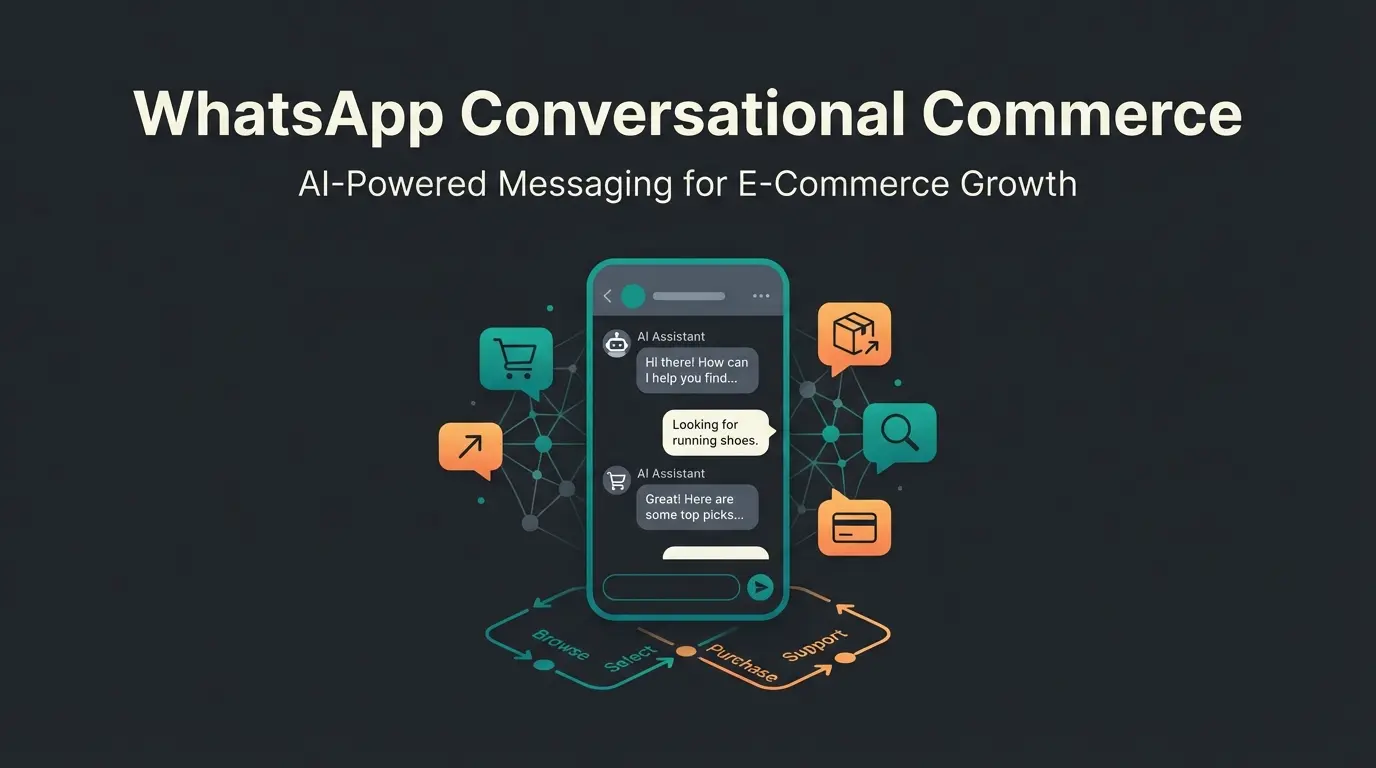
How to Create a WhatsApp Bot 2026: From Simple FAQ Bot to AI Sales Consultant
Learn how to create a WhatsApp bot that sells, not just answers FAQs. Complete 2026 guide with RAG technology, GDPR compliance, and Meta's new pricing model.

Why Most WhatsApp Bots Fail (And Yours Won't)
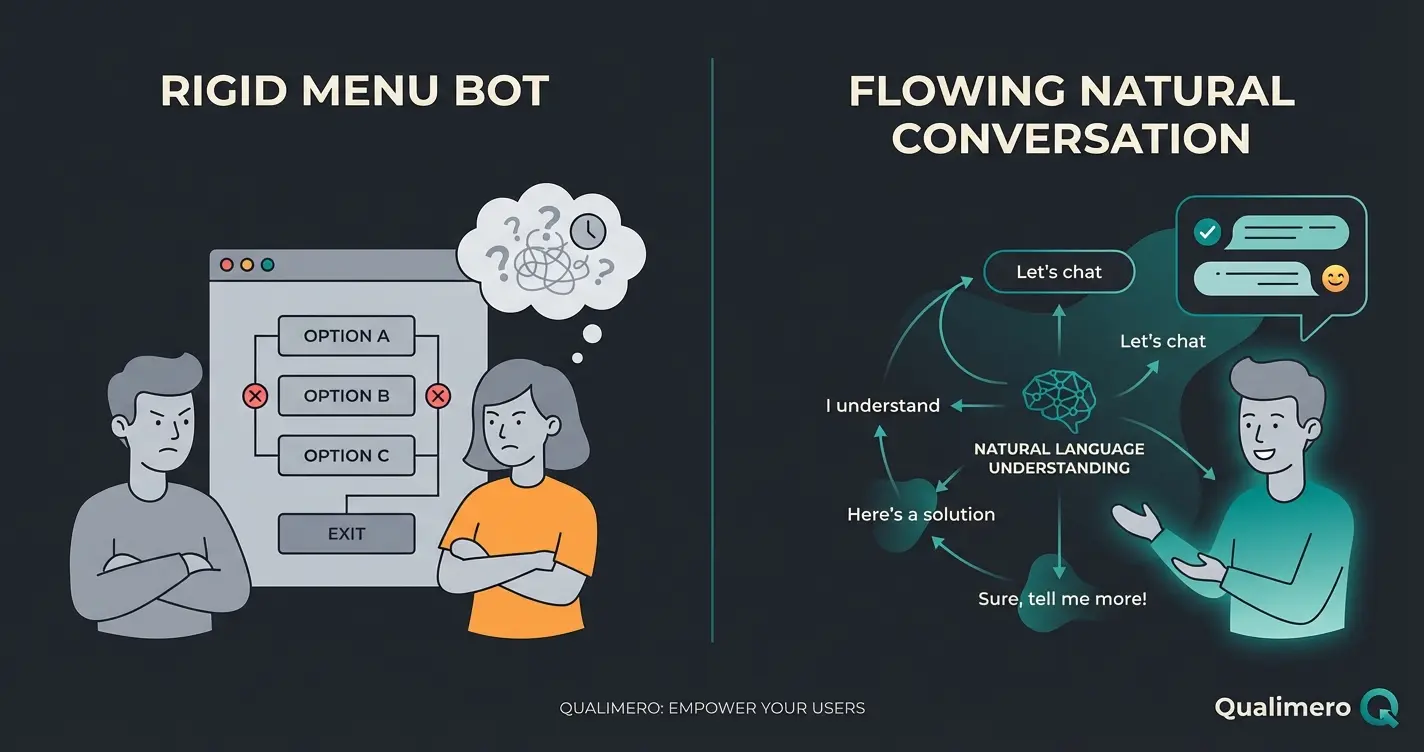
When you search for "create a WhatsApp bot" today, you'll mostly find tutorials that teach you how to build a digital answering machine. The result is often disappointing: A customer writes a question, and the bot responds with a rigid menu: "Hello! What can I help you with? Type A for opening hours, B for returns."
That's the state of 2020. In 2026, customers expect more. They don't want to navigate through menus; they want to be consulted. This fundamental shift represents the difference between bots that frustrate users and those that drive conversions.
Imagine you run an online store for running shoes. The old rule-based bot receives the question: "Which shoe is good for a marathon?" It doesn't understand the keyword "shoe" in context and responds: "Here's the link to our shop." Result: Customer frustrated, purchase abandoned. Now consider the new AI chatbot e-commerce approach: The customer asks the same question, and the bot responds: "For a marathon, I recommend models with high cushioning. Do you run primarily on asphalt or trails? And do you need pronation support?" Result: Customer feels advised, conversion probability increases massively.
In this comprehensive guide, you'll learn not just how to technically create a WhatsApp bot, but how to build an AI sales consultant that clones your best salespeople and makes them available 24/7. We're closing the gap between technical gimmickry and real business value, according to research from Qualimero on conversational commerce effectiveness.
The Essentials: What You Actually Need (Tech Stack)
Before we dive into strategy, we need to clarify the technical foundation. Many beginners confuse the different WhatsApp versions, which leads to compliance issues and limited functionality.
The WhatsApp Business API: The Engine Room
To operate a professional, scalable, and legally compliant bot, you must use the WhatsApp Business API (Application Programming Interface). According to timelines.ai and sofortdatenschutz.de, this is the only way to ensure proper data handling for business use cases.
- WhatsApp App (Private): No automation allowed under any circumstances
- WhatsApp Business App (Small Business): Offers only simple "quick replies" and "away messages." No real chatbot functionality
- WhatsApp Business API (Enterprise/SME): The only interface that allows connection of AI systems, CRM databases, and complex bots. It has no native interface (no app on your phone) but is controlled through third-party software providers
The BSP (Business Solution Provider)
Since the API has no user interface, you need software that serves as your "cockpit." These providers are called BSPs or ISVs. Well-known examples in the DACH region include Userlike, Chatarmin, Sinch, or Superchat, as noted by Chatarmin and Reddit community discussions on business messaging solutions.
Why is this important? Meta (Facebook) hosts the API itself (Cloud API), but for German companies, a German BSP is often crucial for data hosting and GDPR compliance (see Section 7).
The Phone Number
You need a "clean" phone number. This number cannot simultaneously be registered for WhatsApp on a private phone. Once a number has been migrated to the API, it can no longer be easily used in the regular app.
Strategy: From "Butler" to "Expert"
The biggest gap in most tutorials on "how to create a WhatsApp chatbot" is the lack of a sales strategy. Most bots are designed as "support butlers." We're flipping the script—and that's where AI chatbots for conversational commerce become game-changers.
The "Consultant" Model
Your goal is to digitize the knowledge of your best salesperson. Consider this scenario: A customer stands in a store in front of a shelf with 50 skin creams. They're overwhelmed by the Paradox of Choice, as documented by Qualimero research on decision fatigue in e-commerce.
A human salesperson asks about skin type, allergies, and budget. Then reaches for one cream and says: "Take this one." Your WhatsApp bot must do exactly that. It shouldn't say "Here are all our creams" but must guide the customer through targeted questions (qualification) to a recommendation.
Why "Consultation" Drives Revenue
Studies and case studies show that AI-powered consultation can dramatically increase conversion rates—in one case study from 3% to 64%. The reason: The bot takes over the cognitive burden of decision-making for the customer. It reduces the selection to the relevant product. This is where AI product consultation providers are revolutionizing online retail.
AI-guided product consultation vs 3% for traditional browsing
Your best salesperson never sleeps or takes breaks
Handled without human intervention through RAG technology
Handle unlimited conversations simultaneously vs human limits
Differentiation: While your competition uses bots to deflect "Where's my package?" inquiries (cost reduction), you use the bot to actively sell (revenue generation). This strategic shift separates market leaders from followers in the AI customer service automation space.
Step-by-Step Guide: Create Your Own WhatsApp Bot
Here's the roadmap to set up an AI-based sales consultant. We assume you're using a solution that integrates LLMs (Large Language Models like GPT-4), as rule-based bots are obsolete in 2026. This guide on chatbot integration and AI solutions provides additional technical context.
Register with a Business Solution Provider and verify your business in Meta Business Manager
Upload product catalogs, sales guides, and FAQs using RAG technology
Create a system prompt defining tone, behavior, and conversation boundaries
Prevent hallucinations and test edge cases before launch
Define triggers for seamless escalation to human agents
Step 1: API Access & BSP Selection
Register with a Business Solution Provider (BSP). Key criterion: Make sure the provider offers a "Knowledge Base" function or "AI Agents." Providers that only have "Flow Builders" (decision trees) are unsuitable for our purposes.
Verification: You must verify your business in the Meta Business Manager. Have your commercial register excerpt ready. This process typically takes 2-5 business days and is essential for accessing the full API capabilities.
Step 2: The Knowledge Database (The Brain)
This is the most important step. Instead of manually typing responses ("If customer writes 'price,' respond '10 euros'"), you feed the AI with knowledge. This approach powers modern WhatsApp AI bots for product consultation.
Technology: This is called RAG (Retrieval-Augmented Generation), as explained by moin.ai, DataCamp, and LangChain. The AI searches your documents for the answer and reformulates it naturally.
- Product Catalog: Upload your product feed (CSV, XML) or PDF catalogs
- Sales Guides: Have internal training materials for salespeople? Upload them. They contain how to handle objections
- FAQs: Import existing FAQ pages
- Return Policies & Shipping Info: Essential for complete customer service coverage
Step 3: Persona Design (System Prompt)
You need to tell the AI who it is. A generic bot appears boring and fails to build trust with customers. The persona should reflect your brand voice while maintaining professional credibility, as outlined by OpenAI and Spotio best practices for conversational AI.
Step 4: Guardrails & Testing (Preventing Hallucinations)
A major fear is that the AI will invent discounts or talk nonsense. This is where proper configuration becomes critical for maintaining customer trust—a key factor when AI chatbots transform customer service.
- Temperature Setting: Set the AI's "creativity" (Temperature) low (e.g., 0.2 on a scale of 0-1) so it sticks strictly to the facts
- Negative Prompts: "Don't discuss politics. Don't mention competitor prices. Never promise delivery dates you can't verify."
- Testing: Simulate conversations where you try to trick the bot. Have team members attempt to break it before customers do
Step 5: The Human Handover
No bot is perfect. Define the point at which a human must take over. This seamless transition is crucial for automated sales consultation success.
- Trigger: When the customer writes "employee" twice or when the AI detects negative sentiment (Sentiment Analysis)
- Process: The bot pauses, the ticket lands in your support team's inbox, and the employee continues seamlessly in the same chat
- Context Transfer: Ensure the human agent sees the full conversation history to avoid customer repetition
Stop building frustrating decision trees. Start cloning your best salesperson with our AI product consultant platform. Get personalized recommendations, 24/7 availability, and dramatic conversion improvements.
Start Your Free TrialTechnical Deep Dive: Rule-Based Flows vs. AI (RAG)
Why shouldn't you build decision trees anymore in 2026? The answer lies in understanding how consultative AI fundamentally differs from traditional automation.
The Death of the Decision Tree
Previously, you had to plan every path in advance for a WhatsApp chatbot:
- User says "Hello" -> Bot shows menu
- User selects "Shoes" -> Bot asks "Women's or Men's?"
- User selects "Men's" -> Bot asks "Size?"
- And so on for every possible branch...
The Problem: If the user writes: "I'm looking for red Nikes in size 43 for my wife", the old bot breaks down because it can't simultaneously process gender, brand, color, and size when it's stuck at Step 1 ("Hello"). This creates the frustrating "I didn't understand that" loops that drive customers away.
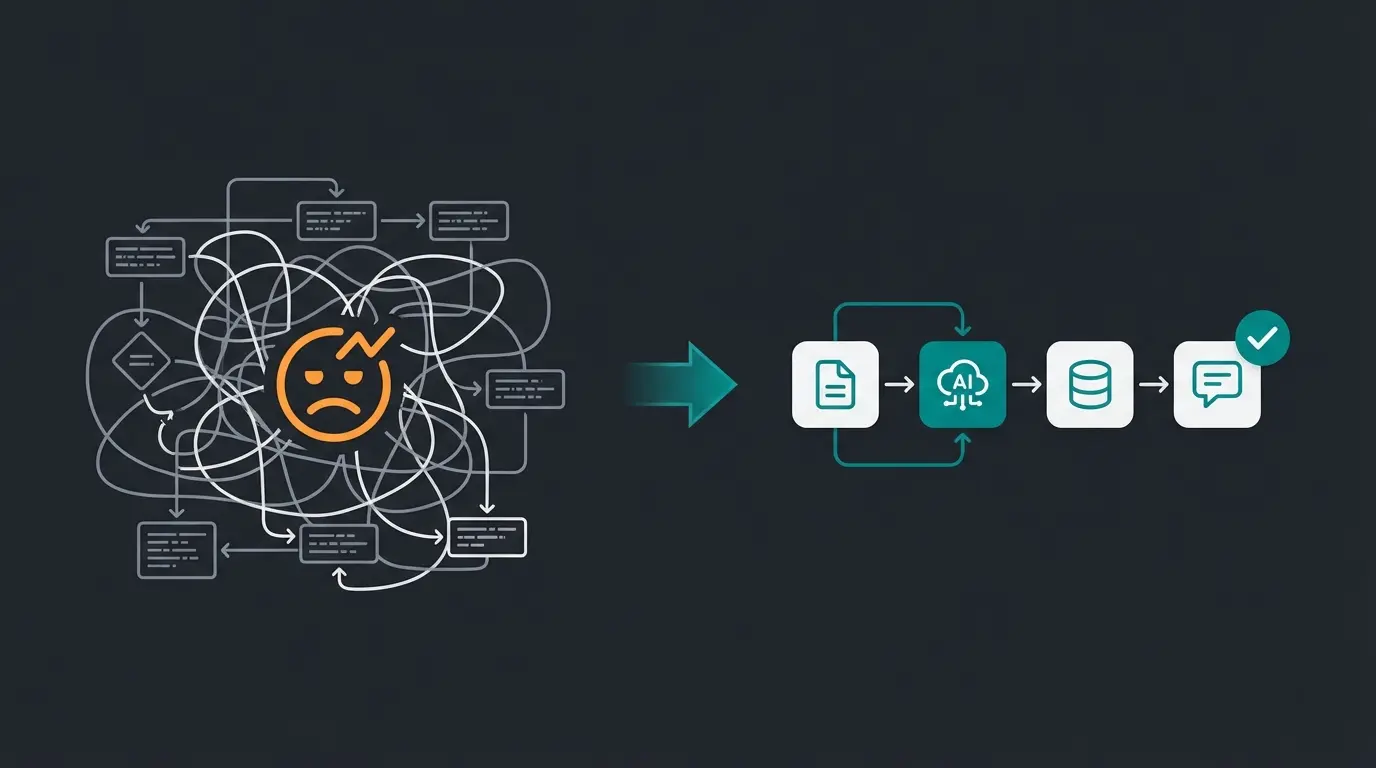
The Solution: RAG (Retrieval-Augmented Generation)
With RAG, the AI understands the complex query immediately. This technology powers AI-powered guided selling solutions across industries. According to DataSolut and n8n.io, RAG represents the current state-of-the-art for enterprise chatbot implementations.
- Retrieval (Fetch): The AI analyzes the sentence "red Nikes in 43 for wife." It searches your uploaded CSV file for: `Brand=Nike`, `Color=Red`, `Size=43`, `Category=Women's`
- Augmentation (Enrichment): It finds 3 matching models and their prices, along with reviews and stock status
- Generation (Creation): It formulates the response: "I've found three great models for your wife: The Pegasus 40 in Red for €120 and..."
Maintenance Advantage: When prices change, you don't need to edit 50 chat flows. You simply upload a new CSV file. The AI immediately reads the new prices. This dramatically reduces the operational burden of keeping your bot accurate.
| Feature | Decision Tree (Old) | AI Consultant (RAG/LLM) |
|---|---|---|
| Setup Time | High (Build every path manually) | Medium (Prepare data & prompting) |
| Flexibility | Low (Understands only keywords) | High (Understands natural language) |
| Maintenance | Nightmare (Every change is manual) | Easy (Data upload is sufficient) |
| User Experience | Frustrating ("Press 1") | Natural ("Like chatting with friends") |
| Scalability | Limited by complexity | Virtually unlimited |
| Multi-language Support | Requires separate flows | Built-in translation capabilities |
Costs & ROI: Meta's New Pricing Model (2025/2026 Update)
A critical point that many outdated articles ignore is the new WhatsApp pricing that has been in effect since July 1, 2025, as detailed by Heltar, Link Mobility, and Chat2Desk.
The End of "Conversation-Based Pricing"
Until mid-2025, you paid per 24-hour conversation. According to Facebook's business documentation, that's over. New: Meta now charges per template message.
- Marketing Templates: (e.g., newsletters, offers) are the most expensive category. Every sent message costs money, regardless of whether a window is open or not
- Utility Templates: (e.g., order confirmation, shipping info) are free when sent within the open 24h service window, as confirmed by AISensy. Outside the window, they cost a small fee
- Service Conversations: When the customer writes and you (or the bot) respond, this is free (Free-Form Messages within 24h), according to GreenAdsGlobal
ROI Calculation (Example)
Let's assume you use the bot for product consultation:
Costs:
- BSP Software: €200/month
- AI Costs (Tokens): approx. €0.05 per consultation
- Meta fees: Minimal for inbound conversations
Benefits:
- A human consultant manages 10 chats/hour. The bot handles unlimited conversations simultaneously
- If the bot conducts 1,000 consultations per month and raises the conversion rate from 2% to 3% (at €100 average cart value):
- Additional revenue: 10 extra sales = €1,000 revenue
- The bot often pays for itself within the first few days since it needs no sleep breaks and qualifies leads even on Sunday evenings
Data Protection & GDPR (The Compliance Factor)
When you create a bot for WhatsApp in Germany or handle EU customer data, GDPR is the first hurdle to clear properly.
Why US Tools Can Be Problematic
Many "No-Code Builders" from the USA host data on American servers. For German companies handling EU citizen data, this is often a no-go due to data transfer regulations and the uncertain status of Privacy Shield replacements.
The Checklist for GDPR Compliance
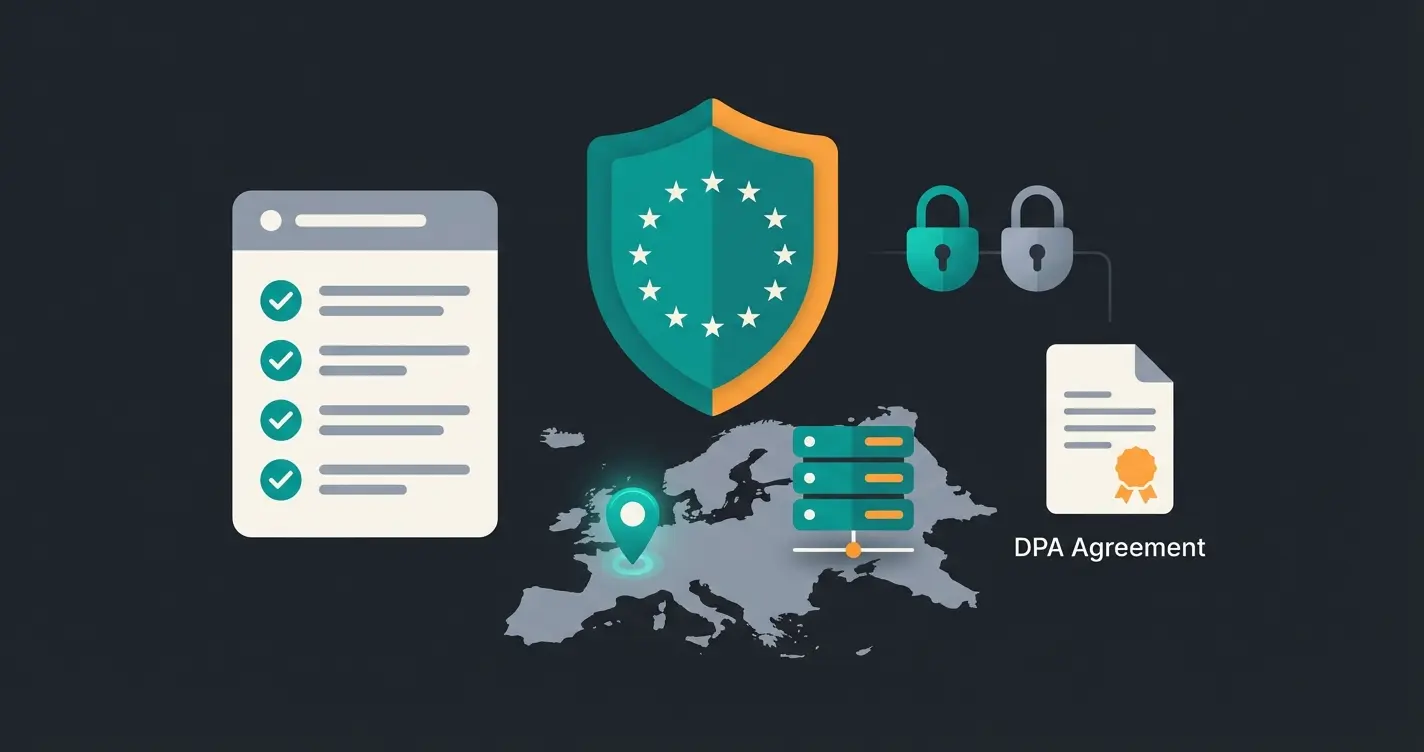
- Server Location: Use a BSP that guarantees servers in the EU (ideally Germany/Frankfurt), as recommended by sofortdatenschutz.de
- Data Processing Agreement (DPA): Sign a data processing agreement with the provider that clearly outlines responsibilities
- Opt-In: You may not simply contact customers outbound. The customer must write first (inbound) or have given explicit opt-in (e.g., via widget on the website)
- AI Transparency: Label the bot as a "Digital Assistant." Don't fake humanity—this may violate consumer protection laws
- Data Minimization: The bot should not request sensitive data (health data, credit card info) in the chat but should link to secured web forms for such information
Practical Use Cases for Your Bot
To bridge the gap between theory and practice, here are three concrete ideas beyond standard support. These demonstrate how the right approach can transform customer engagement.
A. The "Gift Finder" (E-Commerce)
Problem: Christmas is coming, customers don't know what to buy, and decision paralysis leads to abandoned carts.
Bot Solution: "Who are you looking for a gift for? (Partner, Parents, Children?) What are their hobbies? Budget?"
Result: The bot suggests 3 curated products and places the link directly in the chat. This personalized recommendation approach typically outperforms generic browsing by 5-10x in conversion rates.
B. The "Lead Qualifier" (B2B / Services)
Problem: Sales teams waste time with leads who have no budget or decision-making authority.
Bot Solution: Before a human calls, the bot asks: "How large is your company? When is the planned start? Do you have budget responsibility?"
Result: Only qualified leads are passed to the CRM (e.g., HubSpot/Salesforce) and receive an appointment, as detailed by Rasayel. This pre-qualification can save sales teams 40-60% of their time while improving lead quality.
C. The "After-Sales Coach" (Customer Retention)
Problem: Customers buy a complex product (e.g., espresso machine) and use it incorrectly -> Return and negative reviews.
Bot Solution: After purchase, the bot sends (with opt-in): "Hey, your machine has arrived! Shall I quickly show you how to make the perfect espresso?" -> Interactive tutorial.
Result: Fewer returns, higher customer satisfaction, increased lifetime value, and positive reviews that drive organic growth.
Decision Tree vs. AI Consultant: Complete Comparison
Decision Tree vs. AI Consultant: A Complete Comparison
Understanding the fundamental differences between traditional and modern approaches is essential for making the right technology choice for your business.
| Aspect | Traditional Decision Tree | Modern AI Consultant |
|---|---|---|
| User Input Handling | Keywords and button presses only | Natural language understanding |
| Response Generation | Pre-written fixed responses | Dynamic contextual responses |
| Product Knowledge | Hardcoded product info | Real-time catalog integration |
| Learning Capability | None - static | Improves with feedback and data updates |
| Personalization | Limited to basic paths | Highly personalized recommendations |
| Setup Complexity | Complex flow mapping required | Data upload and prompt engineering |
| Update Process | Manual flow editing | Automatic with data refresh |
| Cost per Conversation | Fixed regardless of complexity | Varies with AI token usage |
| Customer Satisfaction | Often frustrating | Natural and helpful |
| Conversion Impact | Minimal | Significant improvement (up to 20x) |
The Anatomy of an AI Product Consultation
Understanding how modern AI consultation actually works helps you design better bot experiences and set realistic expectations for your implementation.
Customer asks natural language question via WhatsApp
AI determines what the customer actually needs (product type, use case, preferences)
System retrieves relevant products from your database matching the criteria
Bot asks clarifying questions to narrow down the perfect match
AI presents 1-3 best options with compelling reasons
Suggests complementary products or premium alternatives
Direct link to purchase or human handover for complex sales
Conclusion: Start Small, But Smart
Creating your own WhatsApp bot in 2026 is no longer a question of programming—it's a question of data quality. The tools are there. The hurdle is no longer "How do I build the flow?" but "How good is my data?"
My recommendation for getting started:
- Don't take your entire product range. Start with one product category (e.g., "Running Shoes" or "Skin Care")
- Prepare a clean PDF/CSV with all information about these products, including descriptions, prices, use cases, and differentiators
- Choose a European BSP with AI integration that offers GDPR compliance
- Build the category-specific consultant and test it for 4 weeks with real customers
- Measure conversion rates, customer satisfaction, and gather feedback for iteration
Stop drawing decision trees. Start cloning your best salesperson. The technology is ready—the question is whether you'll be an early adopter or play catch-up with competitors who moved first.
FAQ: Common Questions About Creating WhatsApp Bots
Yes, for private experiments (e.g., with Python and Twilio Sandbox). But for business use, this is not GDPR-compliant and violates WhatsApp guidelines. Professional solutions typically start at around €50-100 per month, which quickly pays for itself through improved conversion rates and 24/7 availability.
No. Modern BSPs offer "No-Code" interfaces that let you configure everything visually. If you use AI (RAG), you actually need to "build" even less—you primarily upload data and write prompts. The focus shifts from technical implementation to content strategy and persona design.
Yes, most modern providers integrate LLMs like GPT-4o or Claude 3.5 Sonnet in the background to generate responses. They use the WhatsApp API as the "mouth" and ChatGPT as the "brain." You don't need to set up the AI separately—the BSP handles this integration for you.
With good data preparation, you can have a basic AI consultant running within 1-2 weeks. The biggest time investment is preparing your product catalog and writing effective system prompts. Meta business verification takes 2-5 days. Plan for 2-4 weeks of testing before full launch.
Proper guardrails prevent most issues: low temperature settings keep the AI factual, negative prompts block problematic topics, and human handover triggers catch edge cases. When using RAG with your own product database, the AI can only reference information you've provided—it won't invent products or prices that don't exist in your catalog.
Join hundreds of e-commerce businesses already using AI product consultants to boost conversions and delight customers. Our platform makes it easy to create your own WhatsApp sales consultant—no coding required.
Get Started FreeDisclaimer: Prices and guidelines from Meta may change. Information current as of the July 2025 pricing update.

Lasse is CEO and co-founder of Qualimero. After completing his MBA at WHU and scaling a company to seven-figure revenue, he founded Qualimero to build AI-powered digital employees for e-commerce. His focus: helping businesses measurably improve customer interaction through intelligent automation.