Chatbot Benefits: Why Companies Focus on Digital Consultation
Discover the top chatbot benefits for 2026: boost conversions by 30%, enable 24/7 sales, and leverage AI-powered guided selling for maximum revenue growth.

The End of "Dumb" Bots and the Rise of Sales AI
Remember your last frustrating encounter with a chatbot? "I'm sorry, I didn't understand that"—this phrase has become synonymous with the first generation of enterprise bots. But while many companies are still debating whether to deploy a chatbot for answering FAQs, the market has already moved on to something far more powerful.
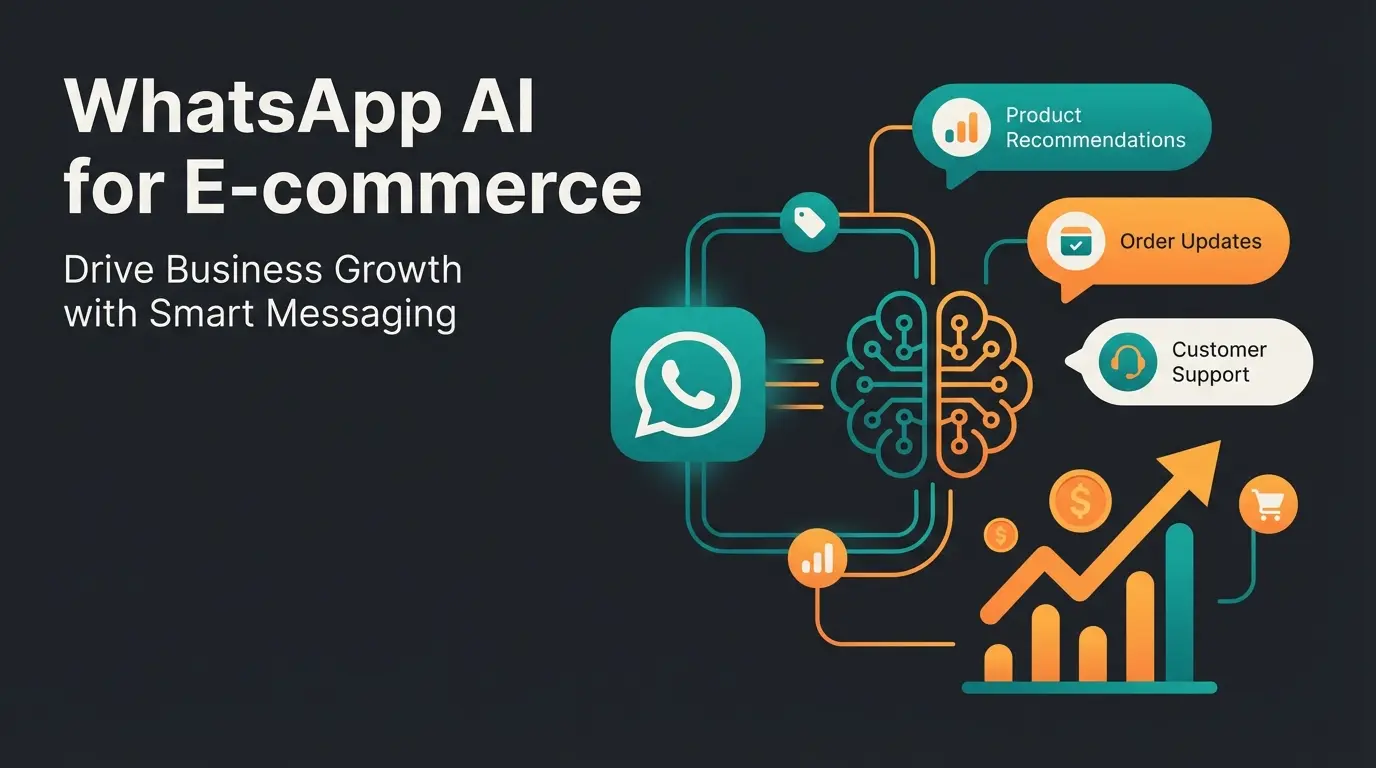
We're standing at the threshold of 2026, and the chatbot benefits have fundamentally shifted. It's no longer primarily about saving personnel in customer service or deflecting tickets. It's about revenue. It's about Agentic Commerce—deploying AI agents that don't just react, but actively consult, sell, and handle complex transactions. According to Mass Market Retailers, this trend is reshaping how businesses approach digital commerce in 2026.
In this comprehensive article, we analyze why the true chatbot benefits for forward-thinking companies lie in digital product consultation. We examine current market data, debunk outdated myths, and show you how guided selling can not only reduce costs but massively increase your conversion rate. If you're interested in how AI customer service is evolving, this article will give you the complete picture.
The Evolution: From FAQ Bot to Digital Sales Advisor
To truly understand the benefits of chatbots in 2026, we need to examine the technological leap currently taking place. The chatbot market in Germany is growing rapidly and is expected to reach a volume of over $1.6 billion by 2033, according to IMARC Group. But growth alone doesn't describe the qualitative transformation underway.
Phase 1: The Reactive Support Bot (Past)
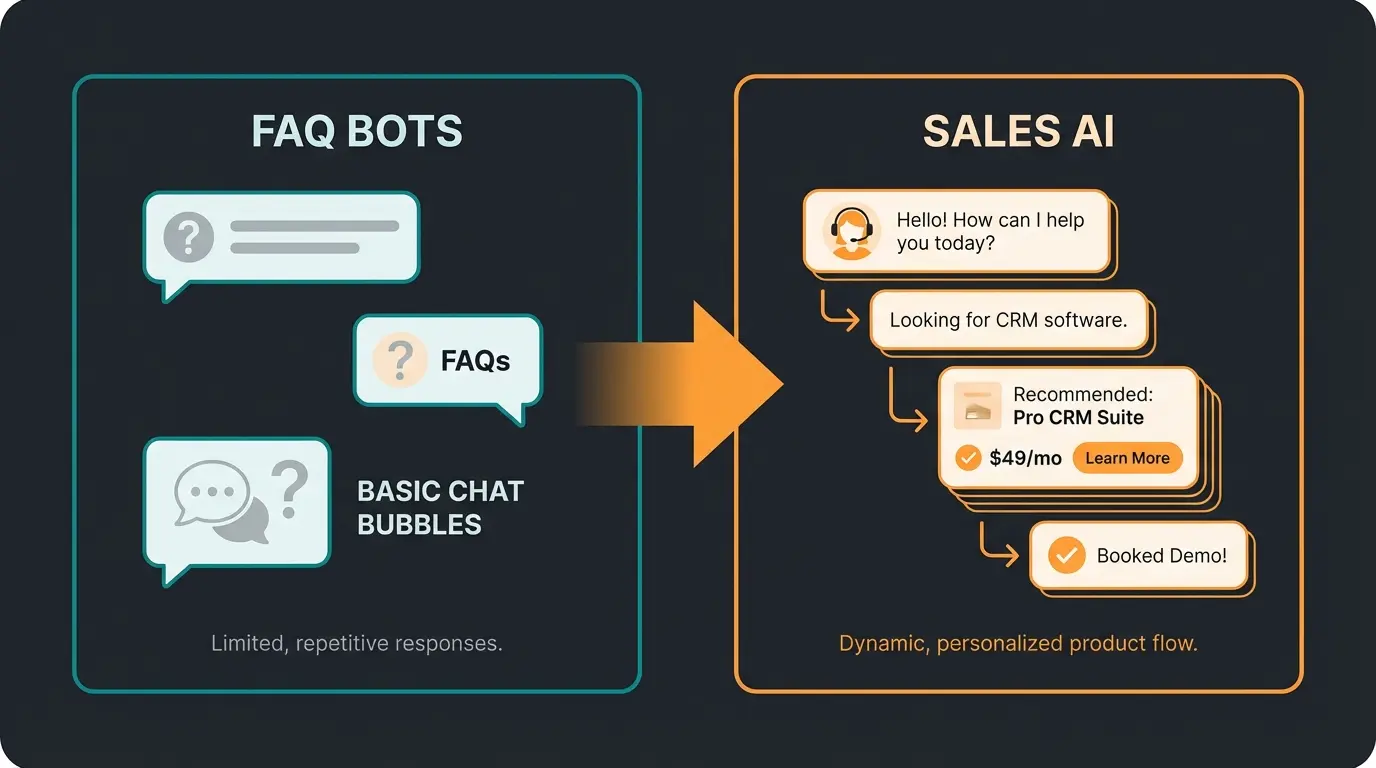
Most companies still use chatbots as "gatekeepers" today. Their primary goal is ticket deflection, and they function through rigid rule-based logic (if X, then Y). The user experience is often frustrating, inflexible, and impersonal. The key performance indicator? Saved service costs—nothing more.
Phase 2: AI-Powered Product Consultation (Present & Future)
Here lies your differentiation potential. Modern systems are based on LLMs (Large Language Models) and RAG (Retrieval-Augmented Generation), as explained by NexGen Cloud. The goal is to increase revenue through conversion and reduce returns. These systems are context-aware, continuously learning, and proactive in their approach. The user experience feels like a conversation with a top salesperson in a store. Key metrics? Generated revenue and customer lifetime value. This is the foundation of modern AI conversational chatbot technology.
| Feature | Classic FAQ Bot (Support) | AI Sales Advisor (Sales & Consultation) |
|---|---|---|
| Primary Goal | Cost reduction (Efficiency) | Revenue increase (Effectiveness) |
| Interaction | Reactive (waits for questions) | Proactive (offers help/solutions) |
| Technology | Rigid decision trees | Generative AI & NLP |
| Data Usage | Collects complaints | Analyzes purchase intent & preferences |
| Example Query | "Where is my package?" | "Which running shoe fits my style?" |
The trend is clearly moving toward Agentic Commerce. By 2026, AI agents will increasingly act autonomously, preparing or executing purchase decisions for customers. Those still relying on pure FAQ bots are missing out on the next-generation chatbot benefits. Understanding the chatbot types comparison is essential for making the right choice.
The 7 Key Benefits of Chatbots (Revenue-Focused)
When you search for chatbot benefits, you typically find lists praising "24/7 availability" and "cost efficiency." That's correct, but it's only half the truth. Below, we reinterpret these standard benefits with a clear focus on profitability and competitive advantage.
1. Conversion Rate Increase (Not Just Efficiency)
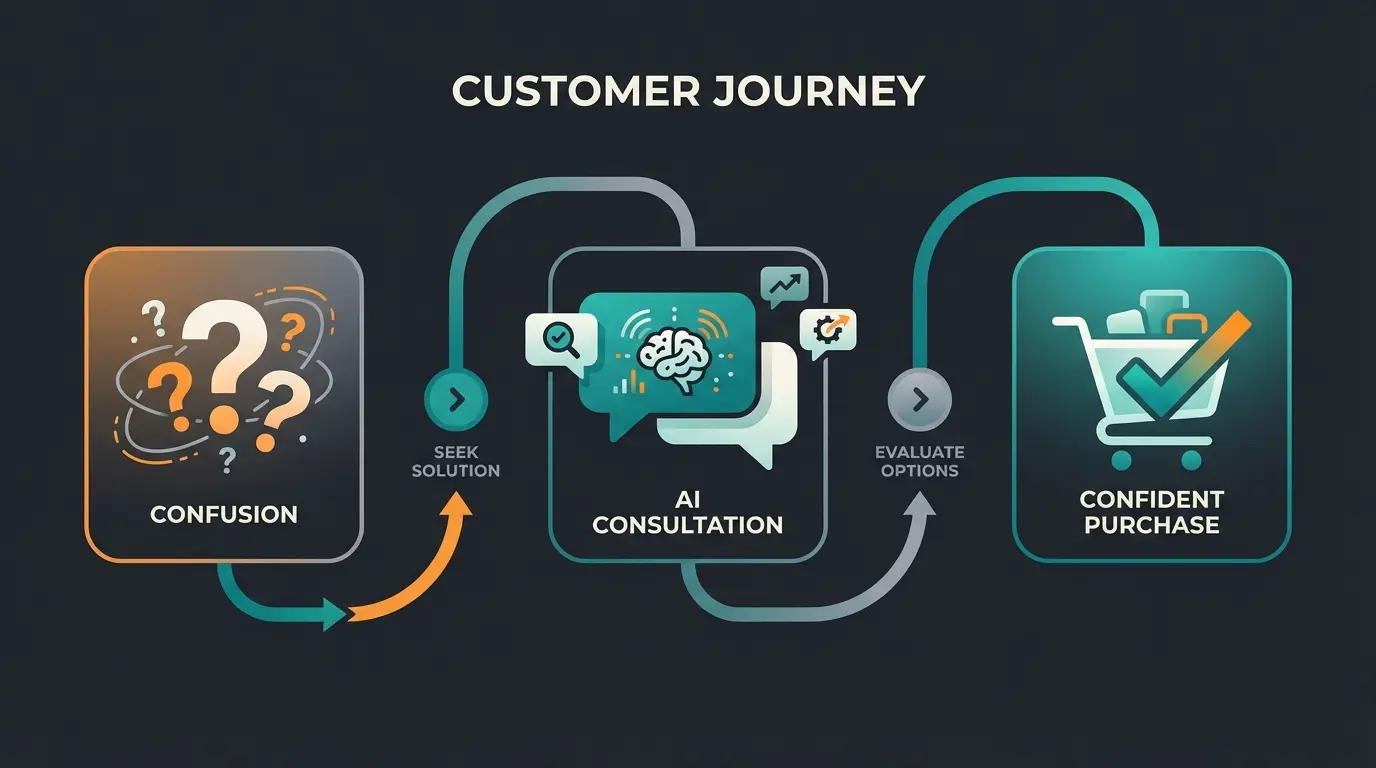
The most powerful chatbot benefit is often the most overlooked: the ability to turn visitors into buyers. Online shops often have conversion rates below 3%. Customers abandon their carts because they're uncertain—"Will this part really fit?" A chatbot functioning as a Guided Selling tool solves this problem. It asks targeted questions ("Are you looking for a laptop for gaming or office work?") to narrow down the selection and guide the customer to the right product.
The numbers speak for themselves: Companies strategically deploying chatbots in sales report average revenue increases of 67%, according to Amra & Elma. In specific industries like e-commerce, conversion rates can increase by up to 30% through chatbot interactions. The strategy is clear: Place the bot not just on the "Contact" page, but proactively on product pages to intervene immediately when purchase doubts arise. This is precisely how AI guided selling transforms browsers into buyers.
2. 24/7 Product Consultation (Making Money While You Sleep)
"Around-the-clock availability" sounds like customer service. But let's look at it from a sales perspective. The internet has no opening hours. According to Master of Code, approximately 29% of all chatbot interactions occur outside regular business hours.
A human salesperson sleeps. The chatbot advises the customer sitting on their couch at 11 PM, ready to make an impulse purchase. Without a bot, this customer bounces when a question arises. With a bot, the question gets answered and the purchase is completed. You scale your "opening hours" without exploding personnel costs for night shifts. 64% of internet users consider this constant availability the most important feature. This makes AI shop consultation not just convenient but essential for modern e-commerce.
3. Hyper-Personalization Through AI
Outdated bots greet everyone with "Hello Guest." Modern chatbot benefits lie in hyper-personalization. Through integration with CRM systems and analysis of browsing behavior, the bot can know that a customer has already viewed black sneakers three times. Instead of asking "How can I help?", the bot asks: "I see you're interested in sneakers. Are you looking for a waterproof model for autumn?"
The result? Personalized addressing and product recommendations can significantly increase revenue. Studies from Sobot show that personalized experiences (often AI-driven) can boost revenue by up to 40%. This is where AI product recommendations become a game-changer.
4. Lead Qualification (Separating the Wheat from the Chaff)
In B2B and for products requiring explanation, sales teams spend too much time on unqualified inquiries. The chatbot takes over pre-qualification, asking about budget, timeframe, and specific requirements. Only "hot" leads are forwarded to human staff, massively increasing sales team efficiency.
According to Tidio, companies using chatbots for lead generation report a 55% increase in high-quality leads. Appointment bookings for demos or consultations happen fully automatically within the chat flow. This is exactly how AI customer service automation delivers measurable results.
5. Support Team Relief (The Classic, Reimagined)
Of course, cost savings remain a valid point. Chatbots can solve up to 80% of routine inquiries instantly, as confirmed by Fullview. This leads to a reduction in support costs of approximately 30%. But here's the twist: Don't view this savings as profit-taking, but as reinvestment. The time your team saves can be invested in complex consultation conversations (high-value interactions), which in turn increase revenue.
6. Return Rate Reduction (The Underestimated Lever)
This is a massive competitive advantage that hardly anyone has on their radar. High return rates in e-commerce eat away at margins. The main reason? The product doesn't meet expectations or doesn't fit. Through better pre-purchase consultation (Guided Selling), the bot ensures the customer chooses the right product.
The logic is simple: If the bot clarifies that the ski boot is suitable for wide feet, the customer with narrow feet won't buy it in the first place—and consequently won't return it. Digital assistants can already clarify nearly 60% of inquiries about returns and cancellations, according to Master of Code, but the real magic lies in prevention. For a real-world example of how companies have scaled with AI, see our success stories.
7. Deep Customer Insights (Understanding *Why* They Buy)
A web analytics tool shows you that a customer left the page. A chatbot tells you why. Customers type their real problems and wishes into the chat window: "Do you have this in vegan leather?" or "Is this compatible with Mac?" This data is gold for your product management and marketing. You identify trends and content gaps (e.g., missing information on the product page) in real-time.
Average revenue boost from strategic chatbot deployment
Conversion rate improvement through guided selling
Bot interactions occurring outside business hours
Routine inquiries solved instantly by AI
Deep Dive: How AI-Powered Product Consultation Works
To fully leverage the benefits of chatbots, we need to move away from the idea that a bot only reacts to keywords. Guided Selling is the process where AI takes the customer by the hand like a human salesperson. Understanding the Chatbot AI comparison helps you choose the right technology for this purpose.
The Process in Detail
Imagine you sell bicycles. A customer comes to the site and is overwhelmed by 50 models. Here's how the guided selling flow works:
The bot recognizes the customer has been on the 'Mountain Bikes' category for 30 seconds without clicking. Bot: 'Hi! Are you looking for a bike for relaxed forest trails or more for downhill action?'
Customer: 'More forest trails, but it needs to be comfortable.' Bot: 'I understand. Do you prefer an e-bike for hill support or classic?'
The bot filters the database in the background. Bot: 'Based on your wishes, I recommend the ForestCruiser 3000. It has special suspension for comfort and is our bestseller for forest trails.'
Bot: 'By the way, we currently have a matching ergonomic saddle on sale. Would you like to see the set?' Customer completes the purchase with confidence.
Why This Approach Works
The psychology is clear: People suffer from the "Paradox of Choice." Too much selection paralyzes decision-making. The bot reduces complexity and creates clarity. Consultation builds trust, and trust leads to purchases. Modern RAG chatbots (Retrieval-Augmented Generation) access your product database in real-time, don't hallucinate, and provide factually correct answers, as documented by Quickchat. For global businesses, multilingual AI chatbots can apply this same approach across markets.
Stop losing sales to confused customers. Our AI-powered chatbot acts like your best salesperson—available 24/7, providing personalized product recommendations that convert browsers into buyers.
Start Your Free TrialROI & Economics: More Than Just Cost Savings
Many decision-makers ask: "What will the bot cost me?" The better question for 2026 is: "What will it cost me NOT to have one?"
The ROI Calculation
While a human support agent costs an average of $6 to $15 per interaction, AI-powered interactions often cost between $0.50 and $0.70, according to Fullview. That's a cost reduction by a factor of 10 to 20. But the revenue lever is even greater.
Studies show an average ROI of approximately 1,275% for chatbots when combining cost savings and revenue increases, as reported by Tidio. According to LitsLink, for every dollar invested, companies receive an average of $8 back. This positions AI as a true AI digital expert within your organization.
Value Contribution Visualization
Consider this simple comparison between scenarios with and without an AI sales bot:
| Metric | Scenario A (Without Bot) | Scenario B (With Sales Bot) |
|---|---|---|
| Visitors | 10,000 | 10,000 |
| Proactive Engagement | 0% | 20% of visitors |
| Conversion Rate | 2% | 2.5% |
| Total Sales | 200 sales | 250 sales (+50) |
| Support Cost Change | Baseline | -30% reduction |
| Net Impact | Standard performance | Higher revenue + lower costs |
The chatbot benefits are therefore dual: Top-Line Growth (revenue) and Bottom-Line Savings (costs). Understanding how AI chatbots marketing strategies work helps you maximize both dimensions.
FAQ: Common Questions About Chatbot Benefits
Absolutely. Small teams especially benefit from scalability. A bot enables a small shop to offer 24/7 service without hiring additional staff. Since many providers now offer 'no-code' solutions, the technical barrier is low. Data shows that SMBs often adopt the technology faster than large corporations, and the ROI is typically seen within 6-12 months.
Rule-based (click-bots) require users to click through predefined menus. They're good for simple FAQs but poor for complex consultation. AI bots (Conversational AI) use NLP (Natural Language Processing) to understand free text input. They learn continuously and can recognize complex contexts like 'I'm looking for a gift for my wife, she likes red wine and crime novels.' For guided selling, AI is essential.
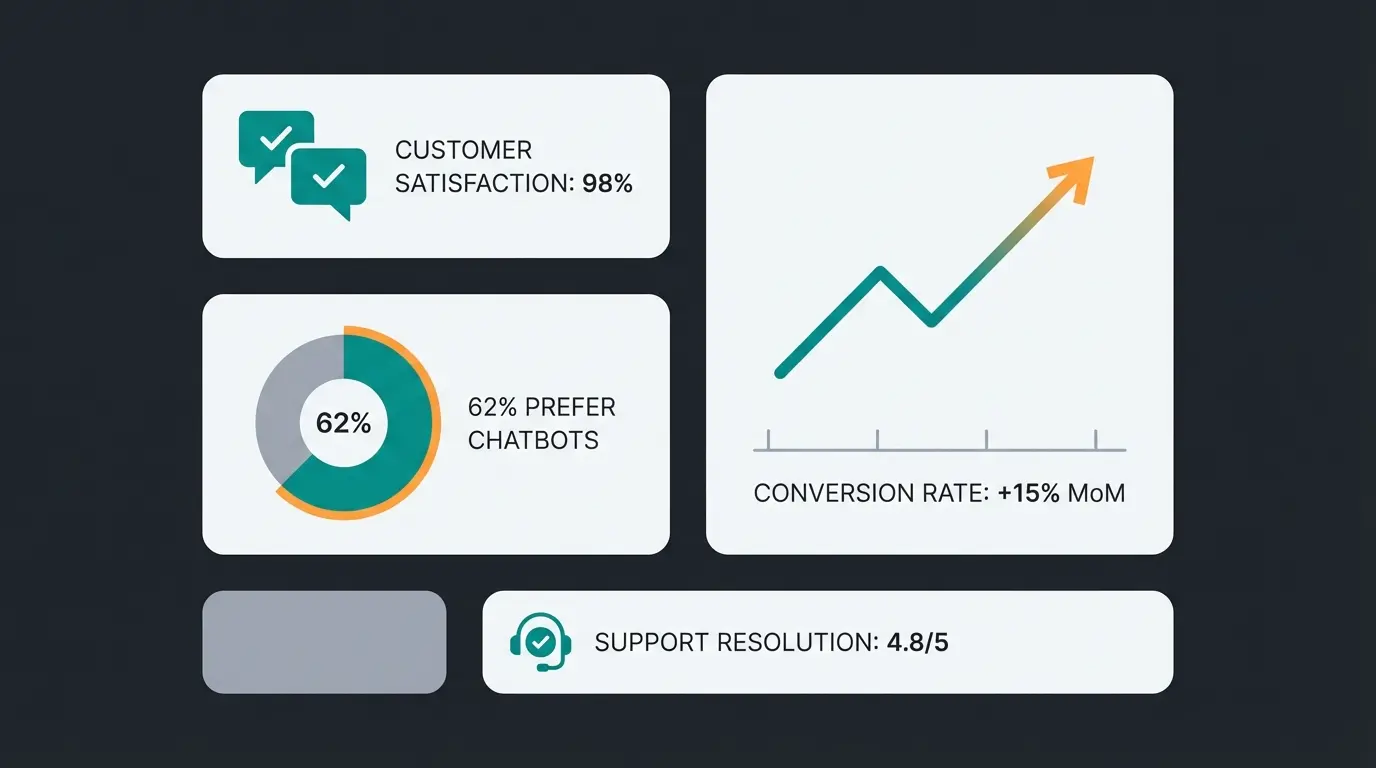
That was once true, but no longer. Acceptance is rising massively. 62% of customers now prefer a chatbot over waiting for a human agent. The key is transparency: The bot should identify itself as such and seamlessly hand over to a human for complex problems (Human Handover). This creates trust rather than frustration.
Often very quickly. Many companies report a positive ROI within 6 to 12 months. Through the immediate reduction of support tickets and the increase in conversion rate, initial successes are often visible in the first month. According to research from EBI AI, some businesses see measurable impact within weeks of deployment.
Yes, modern AI chatbots excel at complex consultations. Using RAG (Retrieval-Augmented Generation) technology, they access your complete product database in real-time, understand context from previous messages, and can guide customers through multi-step decision processes—just like a trained sales associate would in-store.
Conclusion: Invest in Sales Intelligence for 2026
The analysis of chatbot benefits clearly shows: The era of pure support automation is coming to an end. Those who want to remain competitive in 2026 must understand chatbots as an integral part of their sales strategy.
The benefits of chatbots no longer lie solely in being cheaper than humans, but in being more capable in certain areas—such as instant data processing, 24/7 availability, and scalability during traffic spikes. This is what AI Product Consultation delivers when implemented correctly.
Your Checklist for Getting Started
- Define your goal: Do you just want to save tickets or generate revenue? (Tip: Aim for both)
- Choose the right technology: Focus on AI and NLP, not rigid click-trees
- Content is king: Feed the bot with your best sales arguments and product data
- Measure & optimize: Track not just 'resolved tickets' but 'generated cart value'
- Ensure seamless handover: Complex cases should flow smoothly to human agents
Join leading e-commerce brands using AI-powered product consultation to achieve 30% higher conversion rates and 24/7 sales capability. Start your journey to sales-intelligent automation today.
Get Started Free
Lasse is CEO and co-founder of Qualimero. After completing his MBA at WHU and scaling a company to seven-figure revenue, he founded Qualimero to build AI-powered digital employees for e-commerce. His focus: helping businesses measurably improve customer interaction through intelligent automation.