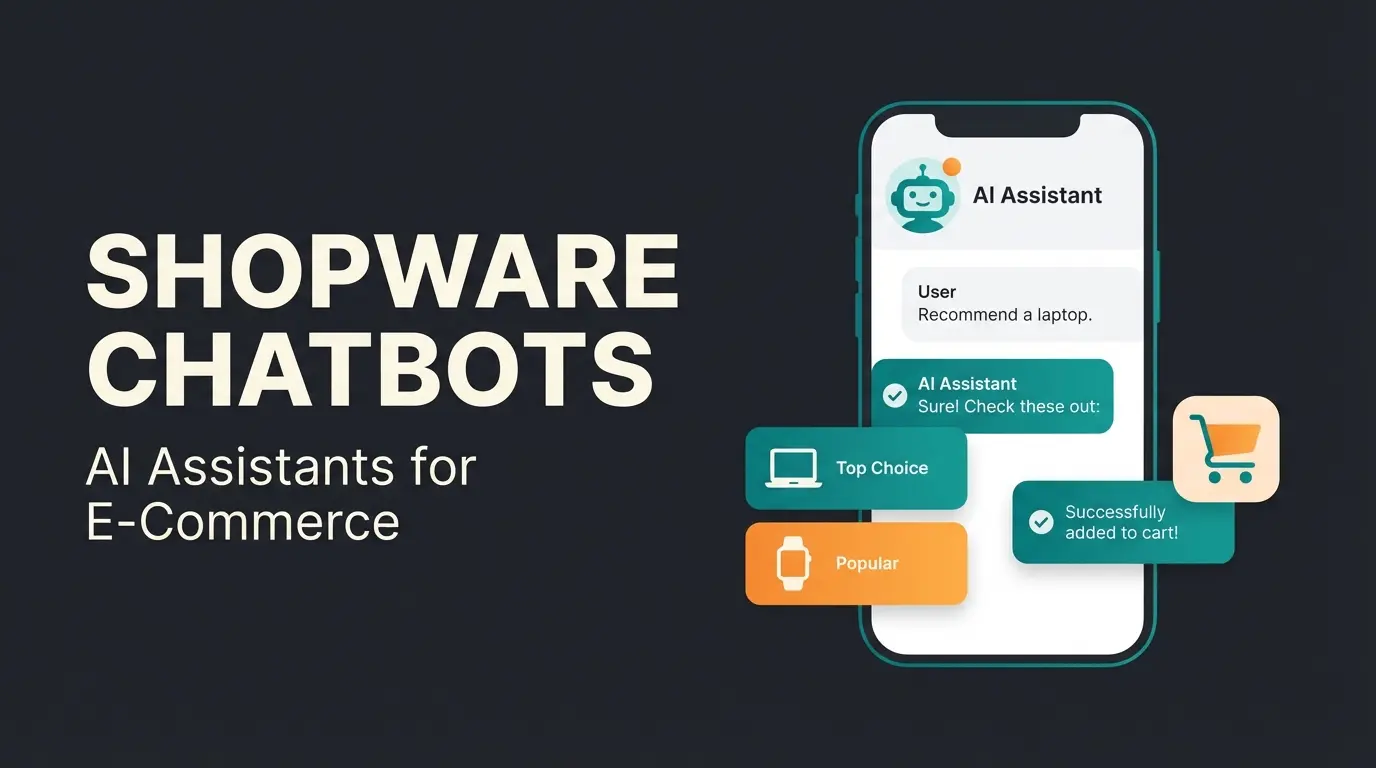
Why 'Press 1 for Support' Is Obsolete
Imagine walking into a specialty store. No salesperson in sight. Instead, there's a terminal at the entrance with three buttons: 'Opening Hours,' 'Returns,' 'Invoice.' If you have a question about a product—say, whether a hiking boot is suitable for wide feet—you're out of luck. The terminal only knows these three buttons.
That's exactly how millions of customers feel today when interacting with outdated WhatsApp Business API chatbots.
For a long time, the WhatsApp Business API chatbot was primarily seen as a tool for increasing customer service efficiency. The goal was simple: deflect tickets, reduce personnel costs, automate standard inquiries. But in 2025 and looking ahead to 2026, the tide has turned. The technology is ready for more.
We're witnessing a massive shift in conversational commerce: away from the reactive 'support bot,' toward the proactive AI product consultant. As AI chatbots become transformative, companies that understand this change are no longer using WhatsApp just to manage complaints—they're generating revenues that were previously only possible through in-person sales conversations.
In this comprehensive guide, you'll learn how to build a business chatbot for WhatsApp that doesn't just filter annoying questions but sells like your best employee—GDPR-compliant, hallucination-free, and ready for the pricing structures of 2025.
What Is a WhatsApp Business API Chatbot?
Before we dive into AI strategy, we need to clarify the foundation. Many companies still confuse the free WhatsApp Business App with the API.
The Difference: App vs. API
For private use or the small flower shop around the corner, the WhatsApp Business App (which you simply download from the app store) may suffice. But for professional businesses that want to scale and take German data protection seriously, it's a dead end. Understanding WhatsApp Business is essential before making this decision.
| Feature | WhatsApp Business App | WhatsApp Business API (Platform) |
|---|---|---|
| Users | Small business owners (1-2 people) | Mid-market & Enterprise |
| Devices | Max 5 devices (limited) | Unlimited (via software partner) |
| Data Privacy | Accesses phone contacts (GDPR issue) | 100% GDPR-compliant (no contact access) |
| Automation | Only simple greeting texts | Full chatbot integration & AI |
| Mass Messaging | Broadcast lists (max 256) | Scalable newsletters (unlimited) |
The German Context: Why the API Is Essential
In Germany, using the regular Business App on company phones is a legal minefield. Since the app transfers contacts from the address book to Meta servers in the USA, you almost inevitably violate GDPR without complex MDM solutions. A WhatsApp Business API chatbot, on the other hand, runs through interfaces provided by so-called BSPs (Business Solution Providers) or software vendors. Data processing can be controlled so that server locations in the EU are used and no metadata flows uncontrollably, as explained by Superchat and HelloMateo.
The Business App restricts you to only 5 connected devices
API allows unlimited device connections through software partners
Only the API solution offers full GDPR compliance for German businesses
The 3 Evolution Levels of WhatsApp Chatbots
Not every chatbot for WhatsApp Business is equally intelligent. To understand where the revenue potential lies, we need to distinguish the three development stages. Most German companies are still stuck at level 1 or 2. For a deeper understanding, check out this consultative AI comparison.
Level 1: The Button Bot (Rule-Based)
This is the simplest form. The bot functions like a decision tree.
- How it works: The user gets a menu ('Select 1 for shipping, 2 for returns')
- Problem: As soon as the customer writes something not in the menu ('Where is my package?'), the bot fails
- User Experience: Rigid and often frustrating. Feels like a voicemail system in text form
Level 2: The FAQ Bot (NLP-Based)
Here, simple language processing (Natural Language Processing) comes into play.
- How it works: The bot recognizes keywords. When a customer writes 'My shoe is pinching,' the bot recognizes 'shoe' and 'problem' and sends the return link
- Problem: It doesn't understand context. If the customer asks: 'Do you have this shoe in red?' the bot might respond with a generic product page instead of specifically checking if that exact model is in stock in red
Level 3: The AI Product Consultant (Your Target Solution)
This is the WhatsApp business chatbot we're aiming for. It uses Large Language Models (LLMs) like GPT-4o or Claude, but enriched with your own company data. Learn more about how AI product consultants are transforming e-commerce.
- How it works: It understands nuances, context, and follow-up calculations
- Added value: This bot advises and actively leads to purchase completion (conversion), instead of just avoiding support tickets
Example Scenario:
Customer: 'I'm looking for a gift for my wife, she likes hiking but not heavy shoes. Budget around €150.'
Level 3 Bot: 'Got it! For light hikes, I recommend our 'UltraLight' series. The 'Alpin' model weighs only 300g and currently costs €139. Would you like me to show you a picture in her size?'
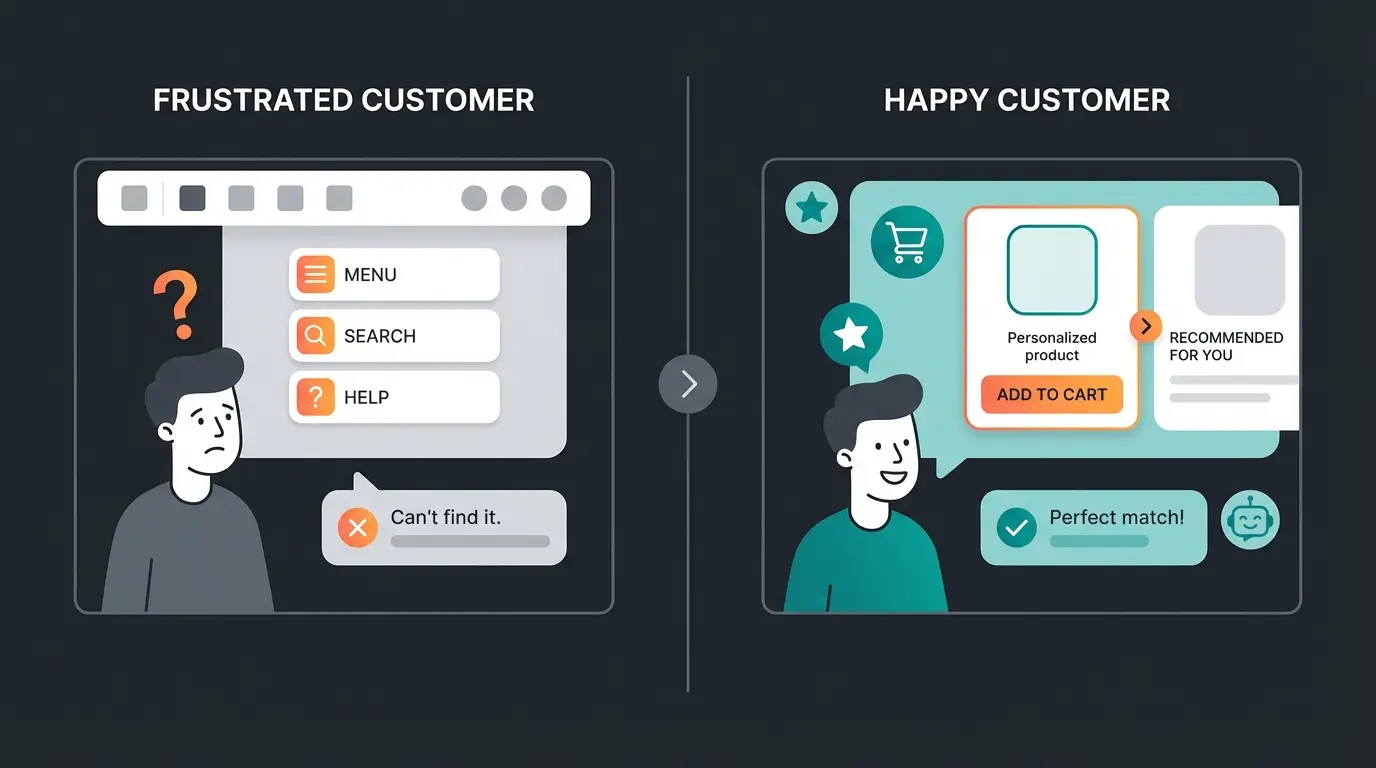
Rigid decision trees, limited menu options, fails on unexpected queries
Basic keyword recognition, handles simple questions, no context understanding
Full context awareness, personalized recommendations, drives conversions
Why German Businesses Need Consultative AI
The German market operates differently than the US market. While excitement for new tech gadgets often prevails in the USA, Germany is dominated by skepticism paired with high quality standards. As AI customer service transforms the landscape, German businesses must adapt strategically.
1. High Expectations for Expertise
German consumers expect competence. A WhatsApp chatbot for business that responds to a technical question about an e-bike with just 'Check our FAQ' is perceived as incompetent. An AI consultant, however, who can specify what torque the motor has and why that matters for mountain rides, builds trust. Research from AP-Verlag confirms these high German consumer expectations.
2. Fear of Hallucinations (False Advice)
A major obstacle for AI in Germany is the concern that the bot will talk nonsense (hallucinations). If an insurance bot states incorrect coverage amounts, that's a liability issue. This is where understanding AI agents and how they're evolving becomes crucial.
The Solution: Modern WhatsApp Business API chatbots use RAG (Retrieval Augmented Generation). The AI isn't allowed to get 'creative' but must strictly base its answers on a stored knowledge database (PDFs, product catalogs). If the information isn't there, the bot responds: 'I don't have information on that, let me connect you with a human.' This creates security, as detailed by Sprylab and Digicomp.
3. Product Complexity
Germany is the land of engineers and specialized mid-market companies. Products like heating systems, specialized tools, or B2B software can't be sold through simple buttons. They require explanation. This is exactly where the AI bot bridges the gap between 'reading the website yourself' and 'calling a sales rep.' For AI product consultation, this capability is game-changing.
Deep Dive: How to Build the AI Consultant (Step-by-Step)
How do you get from theory to practice? Here's the technical roadmap for 2025/2026. This process will help you create a WhatsApp business API chatbot that truly performs.
Step 1: Choose API Access Through a BSP
You can't 'buy' the API directly from Meta. You need a provider (BSP).
Important for Germany: Pay attention to server locations (hosting in Frankfurt/EU) and ISO certifications. Providers like Chatarmin, Userlike, or Superchat have specialized here, as noted by Chatarmin.
Step 2: Build the 'Brain' (RAG Integration)
This is the most important differentiating factor. Instead of just feeding the bot with 'Hello' texts, you connect it to your knowledge.
- Data sources: Upload your product data feeds (CSV, XML), manuals (PDF), and previous support logs
- Chunking & Vectorization: The software breaks this information into small pieces ('chunks'). When a customer asks a question, the bot searches only for matching chunks and formulates an answer from them. This prevents it from inventing knowledge
This approach is explained in detail by YouTube tutorials on RAG implementation.
Step 3: Define Guardrails (The Safety Rails)
To prevent your chatbot for WhatsApp Business from discussing politics or recommending competitors, you need 'System Prompts.'
Example: 'You are a friendly consultant for [Company X]. You exclusively recommend products from our catalog. When uncertain, offer human support. You respond briefly and concisely (max 3 sentences).'
Step 4: The Human Handoff
Even the best AI fails sometimes. A seamless transition is crucial. When the bot notices the customer is frustrated (Sentiment Analysis) or the question becomes too complex, the chat must be handed over to an employee in the same window. The employee must be able to see the previous chat history to avoid asking again.
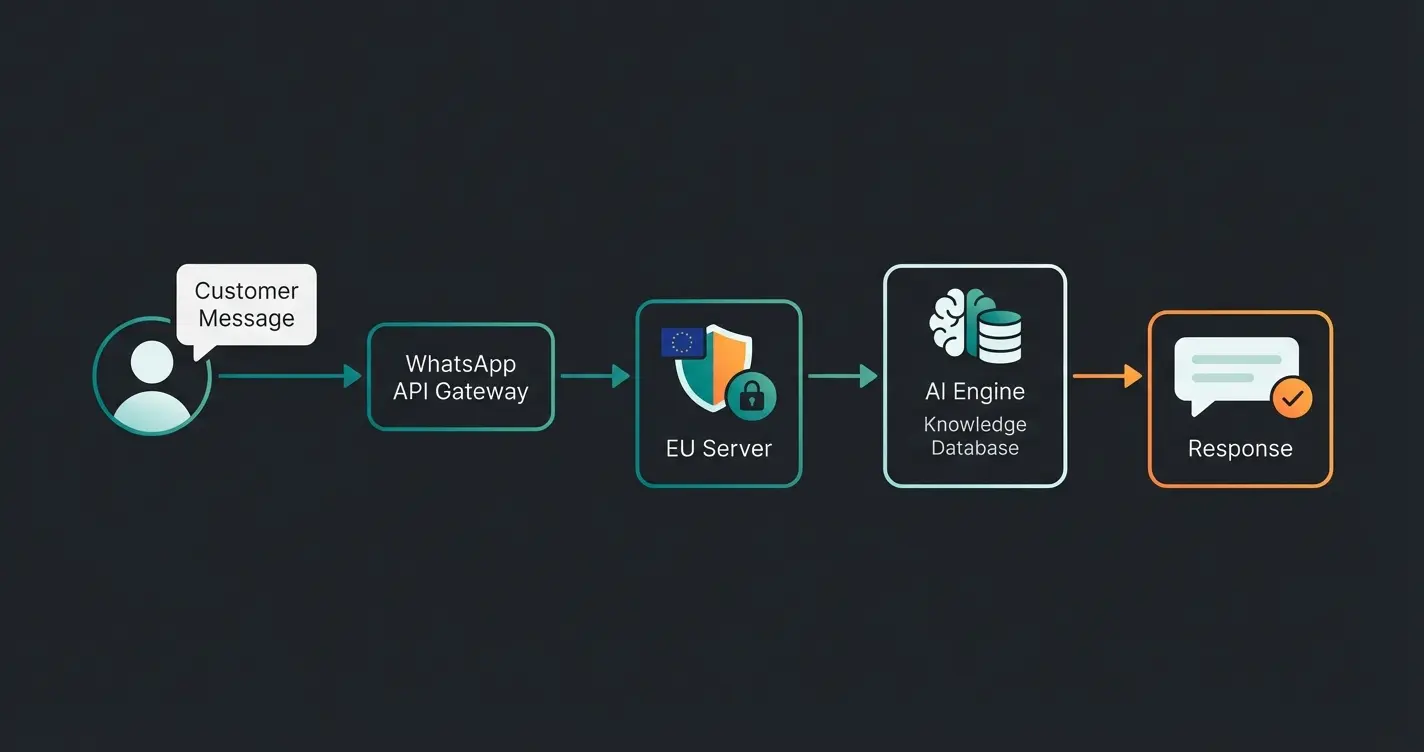
Choose a GDPR-compliant Business Solution Provider with EU hosting
Connect product catalogs, PDFs, and support logs via RAG technology
Set system prompts to keep responses on-brand and accurate
Enable seamless escalation when AI reaches its limits
Build an AI-powered WhatsApp chatbot that sells like your best employee—without the hallucinations or GDPR headaches.
Start Building Your AI ConsultantPricing 2025: The New Cost Trap (And How to Avoid It)
Anyone planning a WhatsApp Business API chatbot in 2025 needs to know about the massive pricing changes from Meta taking effect from July 1, 2025 (or April 2025 for some categories). The old model ('cost per conversation') is being abolished, as detailed by Twilio and Link Mobility.
The New Model: Per-Template Pricing
From mid-2025, you'll pay for each Marketing, Utility, or Authentication message individually when you initiate them. For more details on pricing changes, AISensy provides comprehensive analysis.
| Category | Description | Cost Logic (from July 2025) |
|---|---|---|
| Marketing | Offers, product news | Most expensive category. Charged per message. |
| Utility | Shipping info, order confirmation | Chargeable, BUT free if sent within open 24h service window! |
| Authentication | OTPs, login codes | Always chargeable per message. |
| Service | Responses to customer inquiries | Free (within 24h window). |
The Strategy: Using the 'Service Window'
Here's the key to your AI consultant's ROI. When a customer writes to the chatbot (User-Initiated), a 24-hour window opens. Within this window, service responses are free.
The Trick: Don't use this window just for support ('Package arrives tomorrow'), but for consultation ('By the way, accessory XY goes great with that package'). As long as the customer responds, the window stays open and free. A good AI bot keeps the conversation going and thus maximizes free interaction time, as explained by Omnichat.
Use Cases: Beyond Customer Support
What does this look like in practice? Here are two scenarios showing how companies use the business chatbot for WhatsApp to increase revenue. Discover how AI chatbots revolutionize e-commerce across industries.
Scenario A: E-Commerce (Guided Selling)
Case Study Inspiration: Brands like Snocks or Woodboom have shown how to use WhatsApp as a sales channel. Woodboom shortened the sales cycle from 4 weeks to 4 days through direct chat consultation, as reported by Hello-Charles.
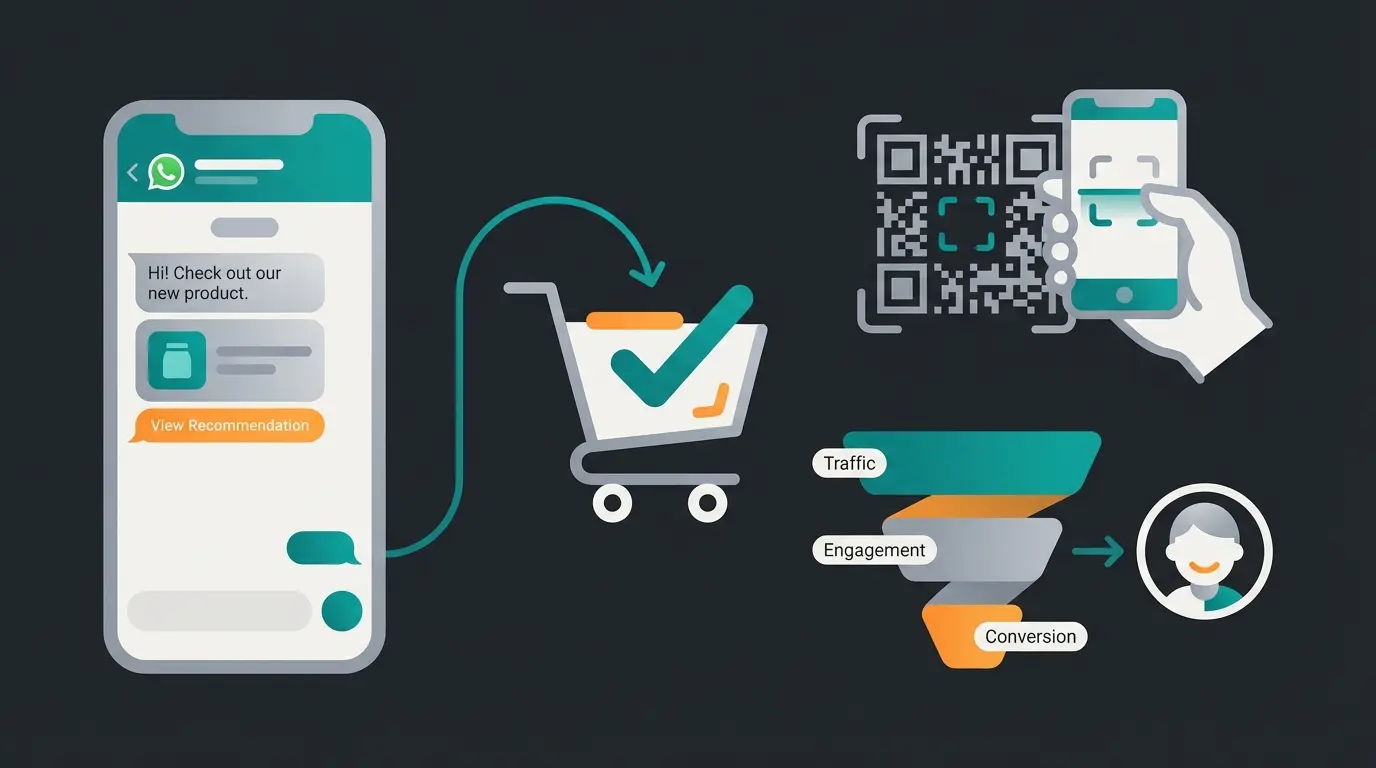
The AI Approach: A customer scans a QR code on a flyer. The bot asks: 'Are you looking for socks for sports or everyday wear?' Based on the answer, the bot guides through the catalog, explains materials, and places the product directly in the shopping cart (via Shopify integration).
Result: Higher conversion rate since the customer doesn't have to search the online shop. Learn more about AI product consultation strategies for e-commerce.
Scenario B: B2B Lead Qualification
Problem: Sales teams waste time with unqualified leads.
Solution: The WhatsApp chatbot for businesses takes over pre-qualification.
- Bot: 'For how many employees are you looking for a software solution?'
- Customer: 'About 500.'
- Bot: 'Perfect, that fits our Enterprise plan. Do you have a budget of over €10k planned?'
Only when criteria are met does the bot automatically book an appointment in the sales team's calendar.
Provider Comparison: Who Can Do 'AI Consultant'?
The market for WhatsApp Business API providers in Germany is confusing. Here's a classification based on current analysis from Chatarmin's comparison and Superchat reviews. For setting up your solution, check out our guide on WhatsApp Business for support and sales.
| Provider | Focus | AI Capability (RAG) | GDPR / Hosting | Suitable For |
|---|---|---|---|---|
| Chatarmin | E-Commerce & Marketing | High (Integrated AI Flows) | ✅ Germany/Austria | D2C brands wanting revenue |
| Superchat | Local businesses / SMB | Medium (Focus on Inbox) | ✅ Germany | Car dealerships, trades, service providers |
| Userlike | Support & Service | High (AI Automation Hub) | ✅ Germany | Mid-market with support focus |
| Charles | Enterprise E-Commerce | High (Conversational Commerce) | ✅ EU | Large brands with high budget |
| Twilio | Developer / API-Only | Very High (but DIY required) | ⚠️ US company (default) | Tech teams building everything themselves |
Recommendation: If you don't have developer resources, avoid pure API providers like Twilio. Use platforms like Chatarmin or Userlike that already include the 'AI building kit.'
Rule-Based vs. AI Consultant Chatbots
Understanding the fundamental differences between traditional rule-based chatbots and modern AI consultants is crucial for making the right technology choice. This comparison helps you understand why WhatsApp AI bots are transforming customer interactions.
| Feature | Rule-Based Chatbot | AI Product Consultant |
|---|---|---|
| Setup Time | 2-4 weeks | 1-2 weeks with pre-built solutions |
| User Experience | Frustrating, limited options | Natural, conversational |
| Ability to Sell | Minimal (can only route) | High (actively recommends and upsells) |
| Maintenance Effort | High (manual updates for every change) | Low (learns from new data) |
| Complex Query Handling | Fails or escalates immediately | Understands context and nuance |
| Personalization | None | Remembers preferences, adapts responses |
| ROI Potential | Cost reduction only | Revenue generation + cost reduction |
Don't Just Automate Problems—Automate Solutions
The WhatsApp Business API chatbot has emancipated itself. It's no longer the dumb gatekeeper turning customers away. With the technological capabilities of 2026, it's your most scalable sales employee.
Summary of the Strategy
- Switch to the API: Without API, no data protection and no intelligent automation
- Integrate your knowledge: Use RAG technology to make the bot a product expert
- Use the pricing model: Shift sales conversations to the free service window by encouraging customers to start the chat (e.g., via 'Click-to-WhatsApp' Ads or QR codes)
- Start small: Begin with one product category, train the AI, then scale
The question is no longer whether you need a chatbot, but whether you see it as a cost center or a revenue engine.
Frequently Asked Questions
The costs consist of three components: 1) Software fee to the provider (e.g., €99 - €499/month), 2) Meta fees from July 2025 per template message (Marketing approx. 11 cents, Utility approx. 4-5 cents in DE). Service conversations are often free. 3) AI costs: possibly small fees for using LLM tokens (OpenAI/Anthropic), depending on provider.
Yes, if implemented correctly. Reputable providers use OpenAI's API through European servers (e.g., Azure Europe) and ensure that your data is NOT used to train public AI models. Look for the DPA (Data Processing Agreement).
Yes, modern multimodal AI models can analyze photos (e.g., of a defective part) or transcribe voice messages and respond to them. This significantly increases accessibility and acceptance.
With pre-built solutions from providers like Chatarmin or Userlike, basic setup takes 1-2 weeks. The RAG knowledge base integration and training typically requires an additional 2-4 weeks depending on catalog complexity. Full optimization is ongoing.
The free Business App is limited to 5 devices, accesses phone contacts (GDPR risk), and only allows simple greeting texts. The API offers unlimited device connections, 100% GDPR compliance, full chatbot integration with AI capabilities, and scalable newsletter functions—essential for professional business use.
Stop using chatbots just for support deflection. Build an AI product consultant that sells 24/7, maintains GDPR compliance, and maximizes your free service window. Join forward-thinking businesses already generating revenue through intelligent WhatsApp automation.
Get Started Free Today
Lasse is CEO and co-founder of Qualimero. After completing his MBA at WHU and scaling a company to seven-figure revenue, he founded Qualimero to build AI-powered digital employees for e-commerce. His focus: helping businesses measurably improve customer interaction through intelligent automation.