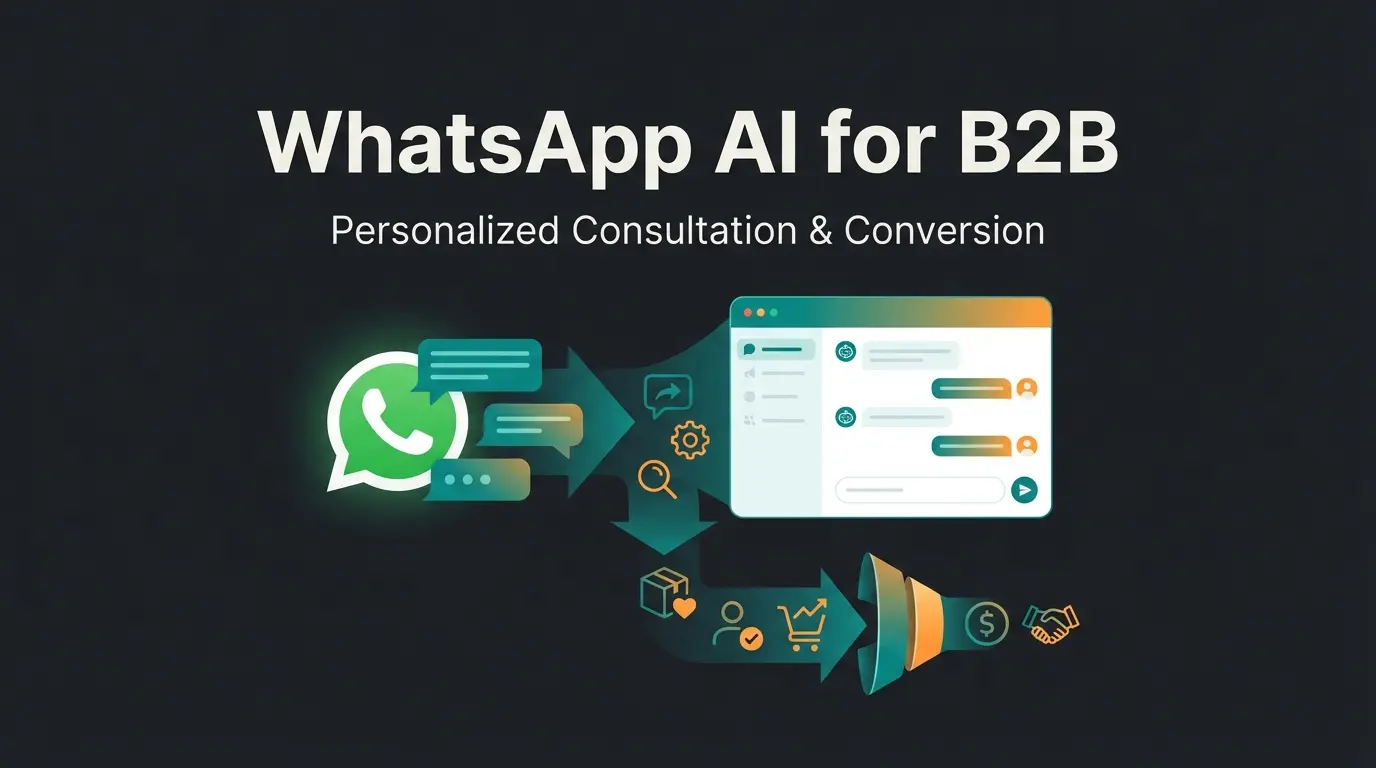
The End of Spray-and-Pray Messenger Marketing
Imagine having a direct line to 60 million people in Germany. You send a message, and 98% of them open it within 15 minutes. That sounds like every marketer's dream. And that was exactly the promise of WhatsApp marketing in recent years. But in 2026, simply being present is no longer enough.
The era of simple WhatsApp newsletter tools that function like digital flyers is coming to an end. Users have become more demanding. They don't want to be spammed—they want solutions. While email marketing struggles with open rates around 20% according to Trengo and HelloMateo, WhatsApp offers the attention, but conversion only happens where real value is created.
In this comprehensive guide, we analyze not only the best WhatsApp marketing examples from recent years (like Maggi, Adidas, or Unilever) but also subject them to a critical 2026 update. We show how modern AI consultation is replacing the manual campaigns of the past and how you can transform from a mere sender into an intelligent sales consultant.
We bridge the gap between mere inspiration and technical implementation. You'll learn how to not just copy WhatsApp campaign examples but make them scalable through automation—turning traditional marketing into genuine conversational commerce.
The Evolution: From Broadcast Lists to AI Sales Conversations
Before we dive into practical examples, we need to understand why the old methods often fail today. The progression of WhatsApp marketing can be divided into three distinct phases, each representing a significant technological and strategic shift.
The 3 Phases of WhatsApp Marketing
Companies used the WhatsApp Business App on a phone. Employees typed responses manually. Newsletters were sent as mass messages, often without segmentation. Problems: Not scalable, legally questionable (GDPR), high block rates.
Press 1 for opening hours, 2 for returns. These bots were rigid. As soon as a customer asked a complex question, the bot failed. Problems: Frustrating user experience, dead ends in dialogue.
Large Language Models understand context, irony, and complex product requirements. WhatsApp Flows enable forms and purchases directly in chat. Advantage: Scalable 1:1 consultation that feels like talking to a top salesperson.
This evolution represents a fundamental shift in how businesses approach customer communication. Understanding different chatbot types is essential for implementing the right solution. According to 2factor.in and WuSeller, WhatsApp Flows have become a game-changer since late 2023, allowing forms and purchase completions directly within the chat interface.
7 WhatsApp Marketing Examples in Detail (And Their AI Upgrade)
In this core section, we analyze legendary campaigns. But instead of just praising them, we show how you can implement these concepts better and cheaper today with modern technology (API & AI). These WhatsApp campaign examples demonstrate the evolution from manual processes to intelligent automation.
Example 1: Maggi Kochstudio – The Service Pioneer
The Original: Maggi was one of the first major players in Germany to use WhatsApp not for advertising but for service. With the chatbot Kim (Kitchen Intelligence by Maggi), users could complete cooking courses or request recipes, as documented by W&V and Nestlé.
- Mechanics: Users wrote keywords like 'Start' or 'Recipe,' and a rule-based bot guided them through a decision tree.
- Why it worked: It solved a daily problem ('What should I cook today?') directly in the user's preferred channel.
- The limitation: The system was rigid and couldn't handle natural language queries.
The AI Upgrade 2026: The old system was inflexible. When a user wrote: 'I still have zucchini and eggs but no cream, what can I cook?'—the old bot was overwhelmed.
- The solution today: An AI agent connected to the recipe database that understands natural language.
- Scenario: User: 'I want to cook something healthy but only have 15 minutes.' AI: 'No problem! How about a zucchini frittata? That takes exactly 12 minutes. Should I send you the recipe and shopping list?'
- Takeaway: Transform rigid menus into flowing conversations using conversational AI.
Example 2: Adidas 'Rent-a-Pred' – Exclusivity & Problem-Solving
The Original: Adidas launched the 'Rent-a-Pred' campaign in London. Amateur football teams missing a player on short notice could request a substitute through a WhatsApp hotline. The twist: The substitute arrived fully equipped with the new Predator shoes and was often a pro (like Kaká), as reported by Medium, SoccerBible, and Digital Training Academy.
- Mechanics: A hotline manually operated by an agency with PR stunt character.
- Why it worked: It solved a real problem (player shortage) and emotionally connected it with the product ('Unfair Advantage').
- The limitation: Manual hotlines are expensive and not available at night.
The AI Upgrade 2026: Instead of a one-time PR stunt, brands like Adidas now use 'Drop Lists' with VIP concierge bots powered by advanced AI chatbots for marketing.
- Scenario: User signs up for the 'Predator Club.' AI analyzes purchase behavior and sends only this user a link via WhatsApp 1 hour before official launch.
- Flow: The purchase is completed directly in WhatsApp via WhatsApp Flows (choose size, pay), without having to visit an overloaded website.
- Result: Higher conversion rates, exclusive customer experience, automated at scale.
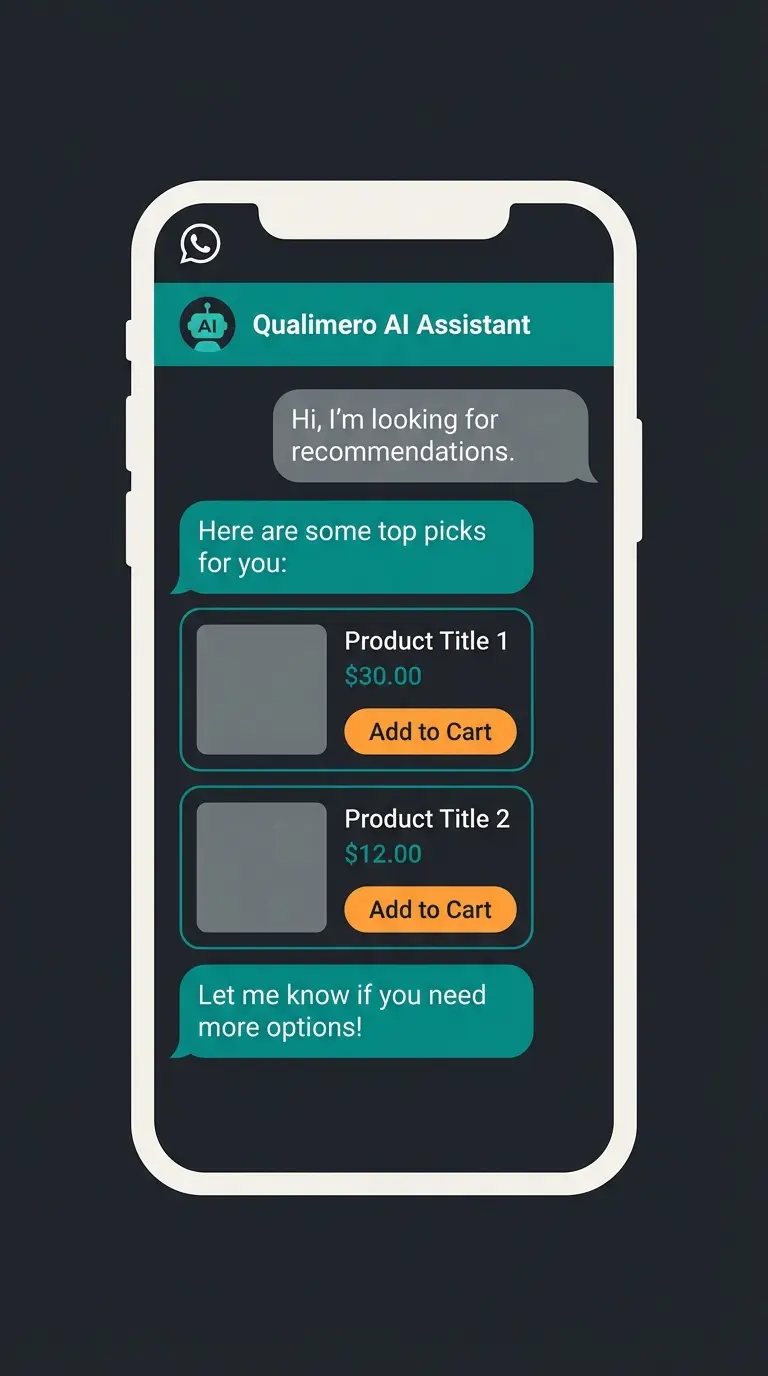
Example 3: Unilever 'Comfort' – MadameBot & Storytelling
The Original: In Brazil, Unilever used the character 'MadameBot' for the fabric softener brand Comfort. Thousands of posters encouraged people to message the brand to 'bring back their beloved clothes.' The bot gave laundry care tips and offered 50% off at the end, as documented by Infobip, Quora, and Sendwo.
- Result: 14 times higher revenue than on normal days, 290,000 messages in just a few days.
- Why it worked: Storytelling combined with practical utility and a clear conversion goal.
- The limitation: The original bot was a text-based script with limited capabilities.
The AI Upgrade 2026: The solution today involves multimodal AI with image recognition.
- Scenario: User takes a photo of a red wine stain on their white shirt and sends it to WhatsApp.
- AI response: Analyzes the image ('Red stain on cotton'). 'Oh no, red wine! Don't worry. Don't rub! Use [Product X] and wash at 40 degrees. Here's a 10% coupon for the stain remover spray.'
- Value: Real problem-solving in seconds that immediately leads to purchase (conversion).
Example 4: Hellmann's 'WhatsCook' – The First Real Live Service
The Original: Hellmann's connected users in Brazil with real chefs. Users sent a photo of their fridge, and a chef typed a live recipe that included Hellmann's mayonnaise, as covered by Bot.space, CM.com, and Digital Training Academy.
- Why it worked: Hyper-personalization at its finest.
- The problem: It was extremely expensive and not scalable (humans can only handle 1-3 chats simultaneously).
The AI Upgrade 2026: This is the perfect use case for Generative AI—what we call the 'Infinite Chef.'
AI can handle thousands of requests simultaneously, 24/7
Compared to €5.00+ per human agent conversation
From approximately €5.00 (human) to €0.05 (AI) per interaction
AI operates around the clock without breaks or sick days
The integration works by having the AI access a database of 5,000 verified recipes (to avoid hallucinations), while formulating the response personally and charmingly each time. This approach leverages the power of an AI chatbot for e-commerce to deliver personalized experiences at scale.
Example 5: The Hidden Champion (B2B Example) – Spare Parts Finder
Many articles ignore B2B. But this is precisely where WhatsApp excels. Consider this scenario for a German machinery manufacturer (fictitious: 'TechParts GmbH') selling spare parts to tradespeople.
- Problem: A tradesperson is on a construction site, a part is broken, and they don't know the article number.
- Solution with AI Consultation: The tradesperson sends a photo of the defective part via WhatsApp.
- AI response: The AI (trained on CAD data and product catalog) identifies the part: 'That's Valve Type 304 (Art. No. 8822). We have 4 units in stock. Should I send it express to the construction site?'
- Tradesperson: 'Yes.' AI triggers the order in the ERP system.
Why is this genius? It reduces hotline costs and accelerates the ordering process from hours to minutes. This exemplifies how an AI product finder can transform B2B sales operations.
Example 6: E-Commerce Fashion – The Style Advisor
Instead of 'Here's our new sale' (Push), a fashion retailer uses a 'Pull' approach with a campaign like 'Find your perfect summer outfit.'
- User starts chat and engages with the AI style consultant.
- WhatsApp Flow: A small window opens within WhatsApp. The user selects: [Gender], [Style: Casual/Chic], [Budget].
- AI generates: 3 outfit suggestions based on current inventory.
- User clicks 'Add to Cart' (within WhatsApp).
The advantage is clear: No media breaks. The customer doesn't leave the app, which massively reduces abandonment rates. This represents the future of WhatsApp Business for retail.
Example 7: Local Business – Appointment Booking
The Original: Call, wait on hold, schedule an appointment. Frustrating for everyone involved.
The AI Upgrade 2026: WhatsApp API connected with a calendar tool (like Calendly or proprietary software).
- User: 'Do you have anything available tomorrow?'
- AI: Checks calendar in real-time. 'Tomorrow (Tuesday) only 10:00 AM or 2:30 PM is available for a haircut.'
- User: '2:30 PM works.'
- AI: Books appointment, sends confirmation, and a reminder 24 hours before.
Result: Reduces no-shows by up to 40%. This simple automation delivers massive ROI for local businesses.
See how AI-powered consultation can replace your traditional campaigns. Our platform delivers personalized shopping experiences at scale with 10x better conversion rates.
Start Your Free TrialStrategy Deep Dive: Push vs. Pull Marketing
Why do many businesses still fail with WhatsApp in 2026? Because they treat WhatsApp like email. Understanding the fundamental difference between Push and Pull approaches is crucial for success.
The Push Trap (Traditional Marketing)
Classic outbound marketing (sending newsletters) is becoming increasingly difficult and expensive.
- Costs: Meta has increased prices for 'Marketing Conversations.' Each initiated message costs money (approximately 11-13 cents in DACH region).
- Risk: If too many users mark your message as spam or block you, your 'Quality Rating' drops. In the worst case, Meta blocks your number.
- Saturation: Users already receive SMS, emails, and push notifications. Another 'Buy me!' channel annoys them.
The Pull Opportunity (Consultation)
Here lies the gold. Inbound Consultation means getting the user to start the conversation. This approach aligns with modern WhatsApp Business setup best practices.
- Costs: 'Service Conversations' (user-initiated) are often cheaper or free within the 24-hour window (depending on Meta's current pricing model).
- Psychology: Those who ask have an acute need (High Intent). Conversion rates for consulting conversations are often 10-20%, while cold newsletters achieve 0.5-2%.
- The role of AI: It makes this approach affordable. Previously, you needed 100 call center agents for 10,000 inquiries. Today, one well-trained AI suffices.
| Feature | Classic Newsletter (Push) | AI Consultation (Pull) |
|---|---|---|
| Trigger | Company sends message | Customer asks question |
| Content | Generic ('Summer Sale!') | Individual ('Here's how to remove your stain...') |
| Technology | Broadcast list / CRM | LLM / RAG / API |
| Goal | Click on link | Problem-solving & direct purchase |
| Block Risk | High | Nearly Zero |
| Conversion Rate | 0.5-2% | 10-20% |
Best Practices & Tech Stack for WhatsApp Marketing
Anyone conducting WhatsApp marketing in Germany cannot avoid two topics: data protection and the right technology. Understanding the WhatsApp Business API costs and requirements is essential.
GDPR & Legal Compliance (The Foundation)
Forget the private WhatsApp app or the 'WhatsApp Business App' on your phone for professional marketing. Both access the phone book and transfer metadata to the USA, which is problematic in the EU according to Superchat, HelloMateo, and Sofortdatenschutz.
The Solution: WhatsApp Business API (Cloud API). The API has no user interface (no phone). It's operated through software partners (BSPs - Business Solution Providers). This is the only way to ensure proper WhatsApp Business guide compliance.
The Tech Stack: What Do You Need?
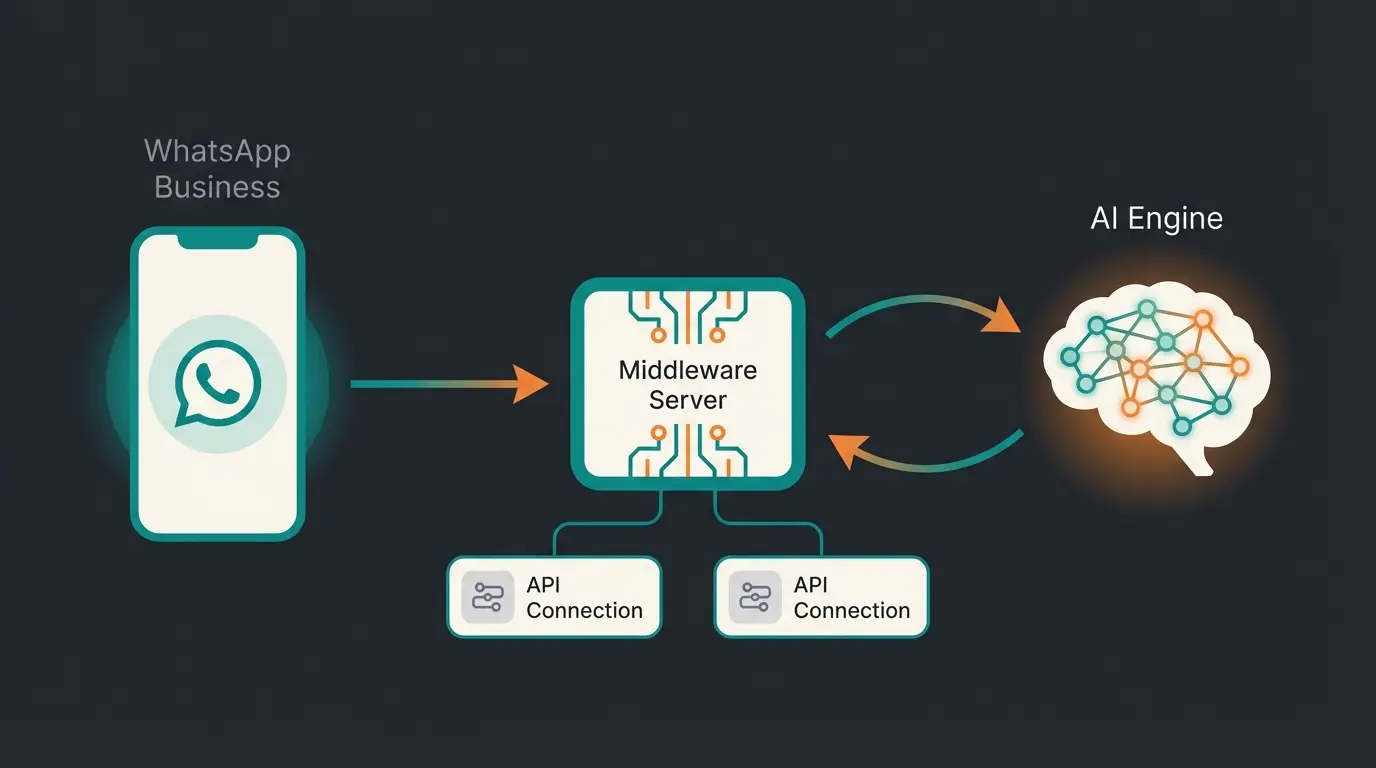
To implement the examples mentioned above, you need three components working together:
- The Frontend (WhatsApp): Where the customer types their messages and receives responses.
- The Middleware (The BSP): Software like Chatarmin, Charles, Superchat, or Trengo that provides the inbox and manages the API connection.
- The Brain (The AI): This is where differentiation happens, ranging from basic flows to advanced RAG systems.
For AI implementation, you have three tiers of sophistication:
- Basic: Simple 'Flow Builders' (If X, then Y) integrated into most tools.
- Advanced: Integration of OpenAI (GPT-4) or Anthropic via API into the BSP with a 'System Prompt' (e.g., 'You are a friendly chef from Maggi...').
- Pro: RAG (Retrieval Augmented Generation) where the AI is fed your PDFs, website data, and product catalogs so it only uses knowledge about your products and doesn't recommend competitor products.
WhatsApp Flows & Payment Integration
WhatsApp Flows: A game-changer since late 2023/2024. They allow forms (appointment booking, seat reservations, configurators) to be displayed directly in the chat. Use this to collect data in a structured way instead of having the customer type 10 questions in a row.
WhatsApp Pay: Already standard in Brazil and India, but in Germany (as of 2025/2026) still limited or only available via workarounds (payment links) according to HelloMateo and Superchat.
Comparison: Chatbot vs. AI Consultant vs. Human Agent
Understanding the differences between support options helps you choose the right approach for your business. This comparison illustrates why AI consultation represents the sweet spot for most organizations.
| Feature | Standard Chatbot (2020) | AI Product Consultant (2026) | Human Agent |
|---|---|---|---|
| Context Understanding | Low (keywords only) | High (understands nuances & typos) | Very High |
| Product Knowledge | Limited (manually entered) | Unlimited (reads entire catalog in real-time) | Limited (requires training) |
| Availability | 24/7 | 24/7 | Mon-Fri, 9-17h |
| Cost per Contact | Very low (< €0.01) | Low (~€0.05 - €0.10) | High (> €5.00) |
| Empathy | None | Simulated (often indistinguishable) | Genuine |
| Scalability | Infinite | Infinite | Linear (more staff needed) |
The Anatomy of the Perfect WhatsApp Sales Chat
A successful dialogue follows this pattern in 2026. Creating a WhatsApp Business Channel with this flow structure maximizes conversions.
Customer scans QR code on product packaging or clicks on 'Click-to-WhatsApp' ad on Instagram/Facebook.
'Hello! Are you looking for spare parts or a new machine?' This filters Support vs. Sales intent immediately.
Customer sends photo or question. AI analyzes and advises: 'For your skin type I recommend Serum A, not B, because...'
'Here is the product. Would you like to order it directly?' Button opens Flow form for size selection and checkout.
30 days later automatic message: 'How are you getting along with the serum? Need a refill?' Driving repeat purchases.
Implementation Guide: How to Start Tomorrow
How do you launch your first AI-powered WhatsApp campaign? Follow these steps to transform your customer communication.
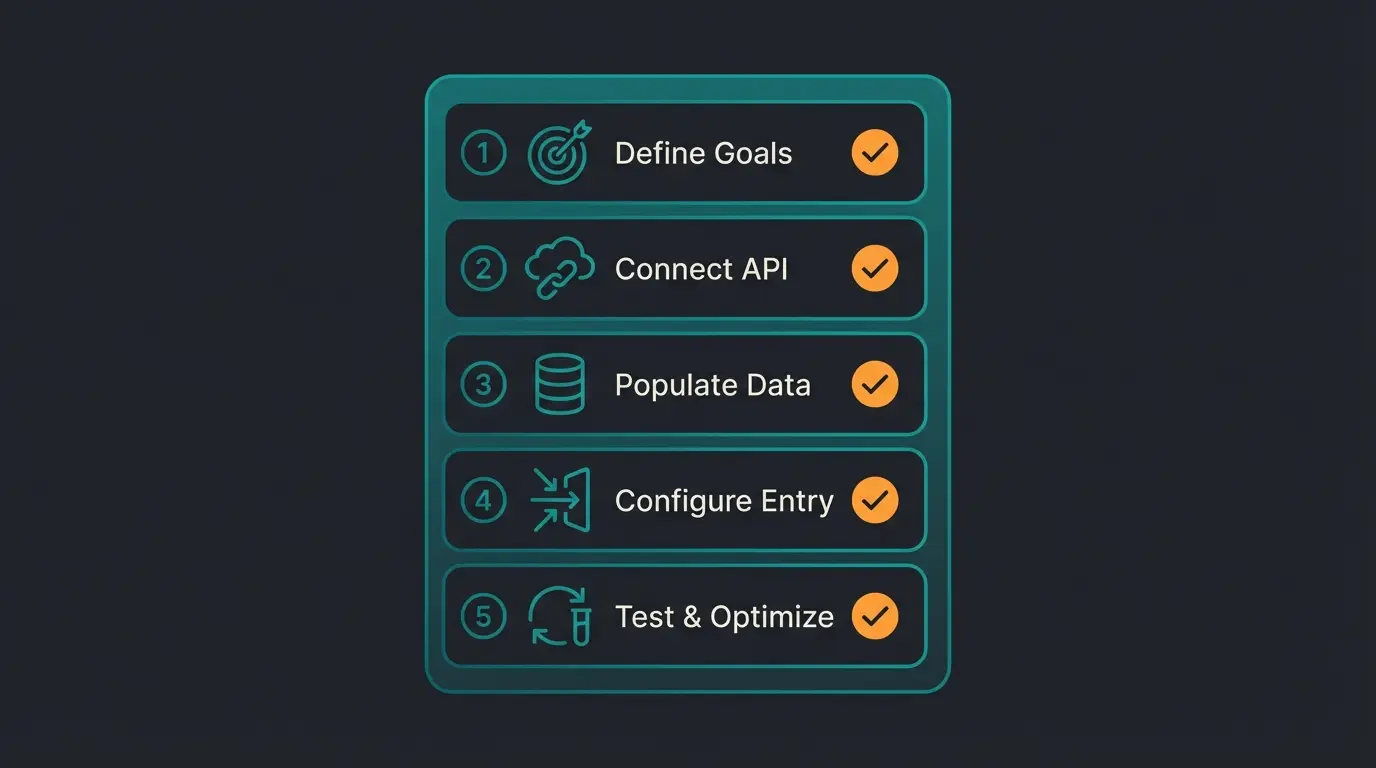
Step 1: Define Your Goal (Consultation Goal)
Stop planning 'newsletters.' Define a consultation scenario instead.
- Bad: 'We send offers every 2 weeks.'
- Good: 'We help customers find the right running shoe model.'
Step 2: Get WhatsApp API Access
Choose a German BSP (e.g., Superchat, Mateo, Chatarmin) to be GDPR-compliant. Apply for your company's verification with Meta through them (green checkmark is optional but builds trust).
Step 3: Connect Data (The Knowledge Base)
For the AI to consult effectively, it needs knowledge. Upload your FAQs, product descriptions, and manuals to your software provider's 'Knowledge Center.' The richer the data, the better the consultation.
Step 4: Create Entry Points
Nobody will message you unprompted. You need strategic 'Entry Points':
- QR Codes on packages ('Scan for assembly instructions')
- Website Widget ('Start consultation via WhatsApp')
- Click-to-WhatsApp Ads on Facebook/Instagram (very effective for lead generation)
Step 5: Test & Train
Start with a small segment. Read the AI's chat logs. Where did it say something incorrect? Correct the 'System Prompt' instructions (e.g., 'Answer more briefly' or 'Use informal address').
Conclusion: Be Helpful, Not Loud
The WhatsApp marketing examples from Maggi, Adidas, and others clearly demonstrate one thing: Success comes to those who solve problems. The difference between 2020 and 2026 is merely the technology that makes this problem-solving scalable.
While your competition still tries to copy email newsletters 1:1 into WhatsApp—annoying customers in the process—you have the opportunity to build a genuine shopping assistant. The future belongs not to whoever shouts the loudest (Push), but to whoever listens and responds best (Pull).
Start today to not just inform your customers, but to advise them. That's the essence of modern WhatsApp marketing best practices.
Frequently Asked Questions (FAQ)
Yes, but only under strict compliance with GDPR. You must use the WhatsApp Business API and obtain explicit opt-in (consent) from users. The standard WhatsApp Business App is not suitable for professional marketing as it accesses the phone book and transfers metadata to the USA.
Costs consist of: 1. Software fee (BSP, approximately €50-200/month), 2. Meta fees per conversation (approximately 11-13 cents for marketing chats in Germany), and 3. Possibly AI token costs (minimal). For consultation-based approaches, the ROI typically far exceeds these costs due to higher conversion rates.
Yes. Modern platforms offer 'No-Code' builders where you upload documents and define the AI's behavior via text instructions. The AI learns from your product catalog, FAQs, and manuals without requiring any coding skills.
Absolutely. Especially in B2B (orders, service, appointment scheduling), WhatsApp's response times and efficiency are unbeatable compared to email ping-pong. Complex product inquiries that previously required phone calls can be handled instantly via AI consultation.
The WhatsApp Business App is free but limited—designed for small businesses with 1-2 people handling messages. The WhatsApp Business API is built for scale, allows automation, AI integration, multiple team members, and is the only GDPR-compliant option for professional marketing in Germany.
Join leading brands using AI-powered WhatsApp consultation. Stop broadcasting—start advising. Our platform turns every chat into a personalized shopping experience with proven 10x conversion improvements.
Get Started Free
Lasse is CEO and co-founder of Qualimero. After completing his MBA at WHU and scaling a company to seven-figure revenue, he founded Qualimero to build AI-powered digital employees for e-commerce. His focus: helping businesses measurably improve customer interaction through intelligent automation.