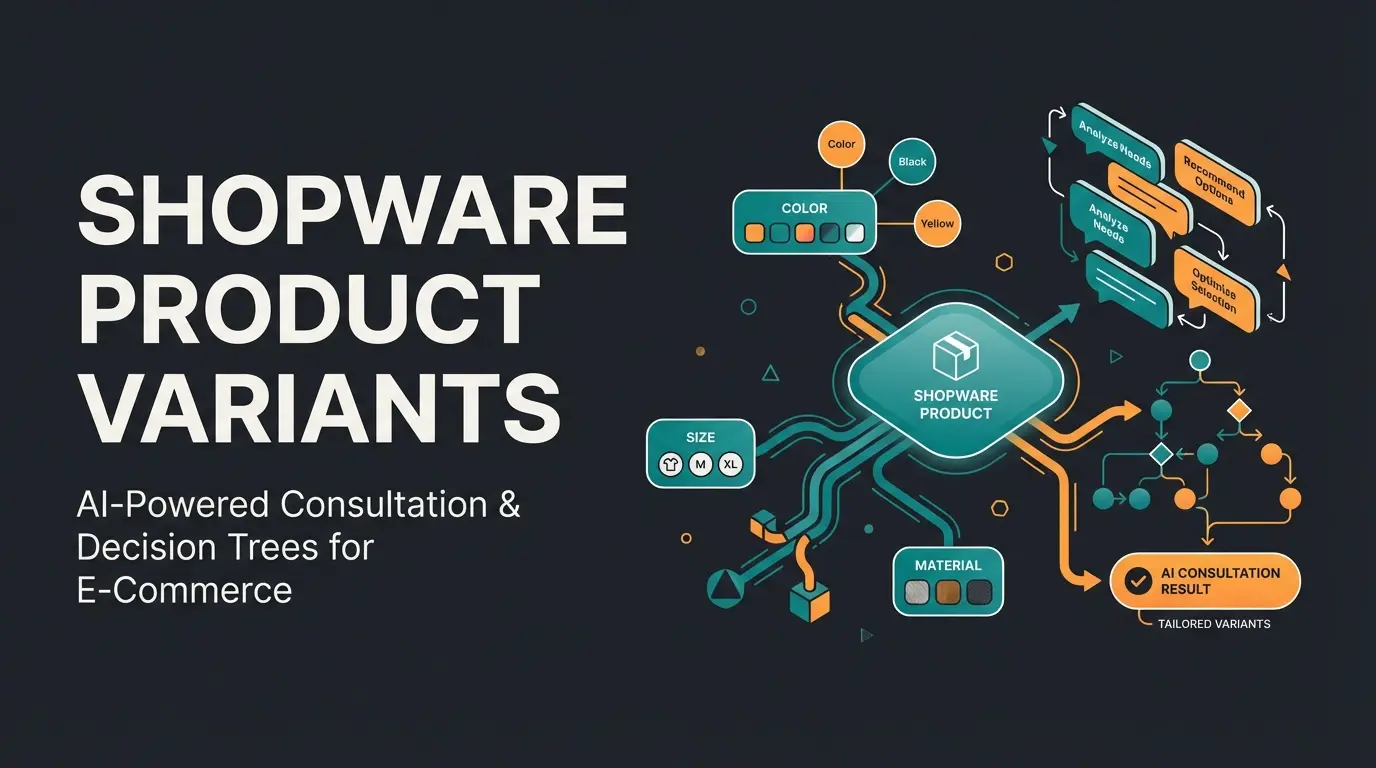
WooCommerce Product Configurator: Why Standard Plugins Fall Short
Discover why standard WooCommerce product configurator plugins fail and how AI-powered guided selling revolutionizes conversions and reduces returns.

Introduction: When Variety Becomes a Trap
Imagine walking into a bicycle store to buy a new bike. The salesperson doesn't greet you but silently leads you into a massive warehouse filled with thousands of individual parts. They hand you a list: "Please select your frame alloy, tire profile, gear shift type, and handlebar width."
For a professional cyclist, this is paradise. For the average customer, it's an absolute nightmare. They will leave the store without buying anything.
This exact scenario plays out daily in thousands of WooCommerce stores. Merchants install powerful WooCommerce product configurator plugins to give their customers maximum freedom. They offer hundreds of variations, colors, and technical specifications. But instead of increasing conversion rates, they often observe the opposite: customers abandon their carts, and shopping baskets remain orphaned.
This phenomenon is known in psychology as the Paradox of Choice. The famous Columbia University study demonstrated that while customers stopped more often when presented with 24 jam varieties, they purchased ten times more frequently when offered only 6 options, as detailed by Winsome Marketing. Too many options without guidance paralyze decision-making ability.
In this article, we analyze why classic WooCommerce configurators often miss their target and why a new generation of tools – AI-powered guided selling systems – provides the answer to declining conversion rates and exploding return costs in e-commerce. We'll show you how to transform your shop from a mere "self-service warehouse" into an intelligent advisor. Understanding AI product consultation is essential for staying competitive in today's market.
What Is a WooCommerce Product Configurator? The Basics
Before we analyze the weaknesses, we need to define what the market currently understands as a "WooCommerce configurator." Those searching for this term today typically find tools that transform static products into modifiable variants.
Technically speaking, a product configurator is a software extension (plugin) for WooCommerce that allows users to individualize a base product by selecting various attributes. The result is a unique product that doesn't exist ready-made on any shelf.
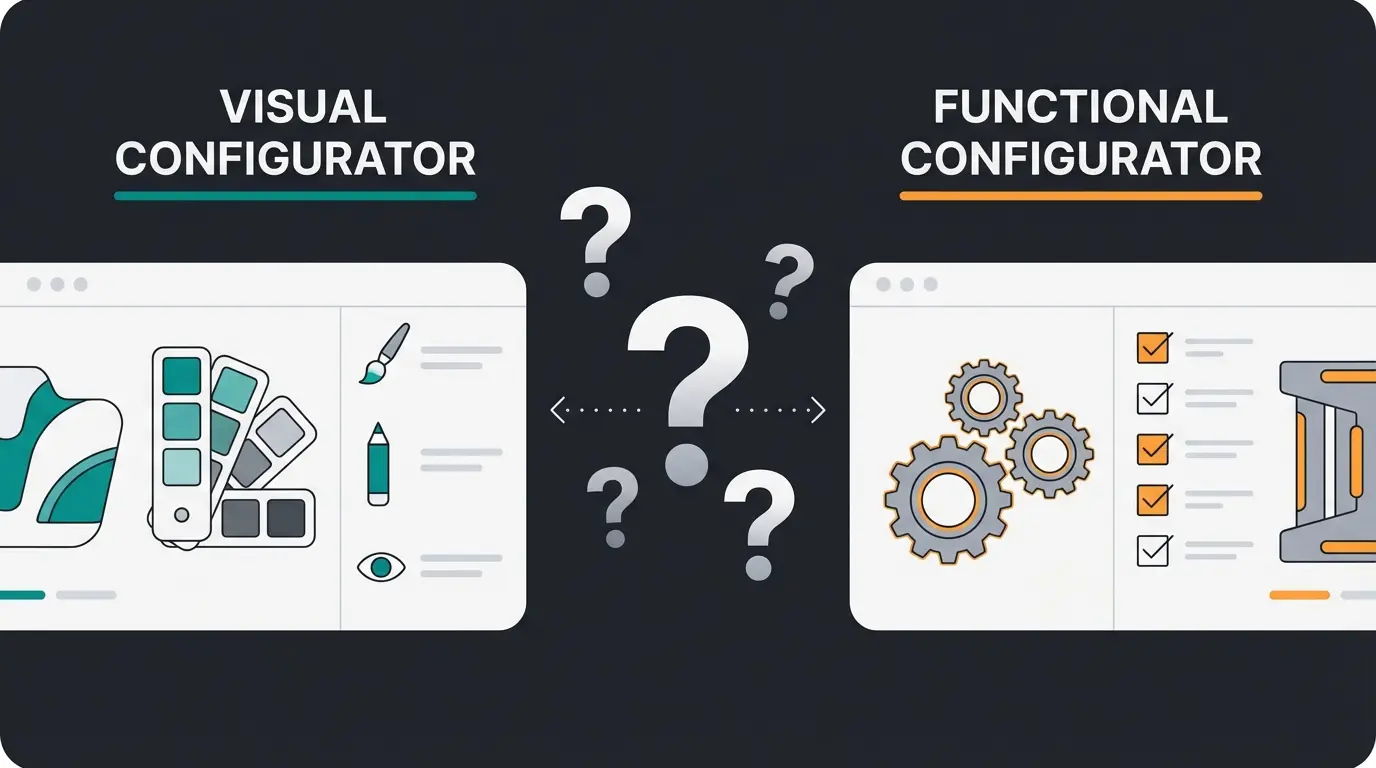
However, we must strictly distinguish between two categories that are often incorrectly lumped together:
The Visual Configurator (Design Focus)
This is purely about aesthetics. The customer knows what they want (e.g., a t-shirt) but wants to customize it visually.
- Function: Changing colors, uploading logos, adding text
- Technology: Often uses "layering" (overlapping transparent PNGs) or WebGL for 3D models
- Target audience: Merchandising, print-on-demand, fashion, gift items
- Example: "I want these sneakers in red with white laces."
The Functional Configurator (Technical Focus)
This is about compatibility and technical feasibility. The customer assembles a complex system.
- Function: Selection of components that must technically fit together (Conditional Logic)
- Technology: If component A is selected, component B cannot be chosen
- Target audience: Computer hardware, bicycles, industrial machinery, custom furniture
- Example: "I need a PC with a processor that fits this motherboard."
The Problem with Current Definitions
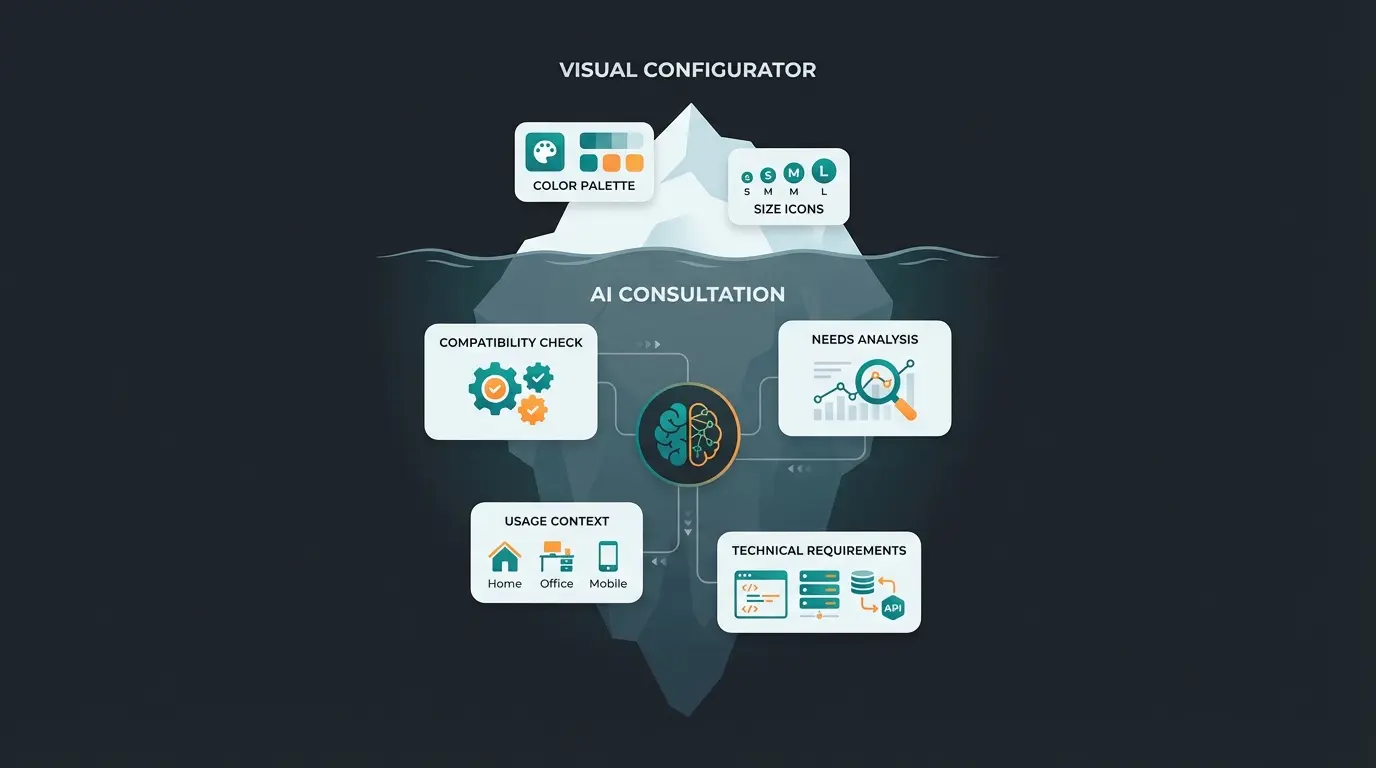
Most articles and plugins focus on the process of assembly. They assume the customer already has the necessary expertise to make the right decisions. But what happens when the customer doesn't know which processor is needed for their video editing software?
This is where classic tools fail. They offer configuration, but not consultation. This gap is where AI consulting in e-commerce becomes crucial for modern online stores.
The Top 5 Standard Plugins: Current Market Standards
To understand what's missing, it's worth examining what's available. Anyone currently searching for "WooCommerce product configurator" will inevitably encounter the market leaders in the plugin space. These tools are technically excellent at what they do (drag & drop, visual representation) but often don't solve the consultation problem.
Here's an analysis of the most popular solutions you should know to understand the difference to AI solutions:
1. Fancy Product Designer
The market leader in "visual design." It's perfect for anything that can be printed. According to VividWorks and WP Configurator, it excels in web-to-print applications.
- Strength: Excellent visual interface where customers can upload images and move text. Ideal for web-to-print.
- Weakness: Less suitable for complex technical dependencies or needs analysis.
2. YITH WooCommerce Product Add-Ons & Extra Options
A classic for list-based options, as documented by YITH and WooCustomDev.
- Strength: Solid WooCommerce integration, allows checkboxes, radio buttons, and text fields. Good for simple upsells (e.g., "Add gift wrapping").
- Weakness: Rather static. It feels like filling out a form, not a shopping experience.
3. WP Configurator
Focuses on visual layers and is often easier to use than complex 3D solutions, as reviewed by WPHive.
- Strength: Good balance of price and performance for visual customizations (e.g., watches, furniture surfaces).
- Weakness: The logic is often linear. It lacks the intelligence to proactively make suggestions to customers.
4. WooCommerce Product Add-Ons Ultimate (Plugin Republic)
A powerful tool for complex fields and calculations, detailed by Plugin Republic.
- Strength: Enables conditional logic and complex price calculations (e.g., price per square meter).
- Weakness: The user interface is often very austere and technical.
5. Visual Product Configurator
Another solid option for layer-based configurations focusing on "skins" (e.g., for glasses or controllers), as covered by Studio Wombat.
- Strength: Easy setup for transparent PNG layers.
- Weakness: Limited capabilities for deep technical dependencies.
The Missing Link: Product Consultation and Guided Selling
Why isn't "Gen 1.0" enough anymore? The e-commerce market is fiercely competitive. Customers are demanding and – more importantly – risk-averse. The fear of making a wrong purchase ("What if this doesn't fit?") is one of the biggest conversion killers. Implementing an AI product finder can dramatically address this challenge.
The Conditional Logic Dilemma
Classic plugins often advertise with "Conditional Logic." That sounds smart but is actually rigid, as explained by Configit:
"IF selection = Intel CPU, THEN show only compatible motherboards."
This prevents technical errors but doesn't help the customer with the decision. The customer still faces the question: "Should I even get an Intel CPU or would AMD be better?"
The Paradigm Shift: Guided Selling
This is where Guided Selling comes into play. Instead of asking customers about technical specifications, a guided selling system asks about the intended use case. This approach aligns perfectly with AI Guided Selling methodologies that are transforming e-commerce.
- Classic approach: "Select your RAM size: 8GB, 16GB, 32GB."
- Guided/AI approach: "What do you primarily use your laptop for? (A) Only Office & Browsing, (B) Video Editing, (C) High-End Gaming."
The difference is enormous. The second question can be answered by anyone. The first question requires specialized knowledge. This approach bridges the gap between a human sales consultant in a store and the anonymous online shop, as noted by NetSuite.
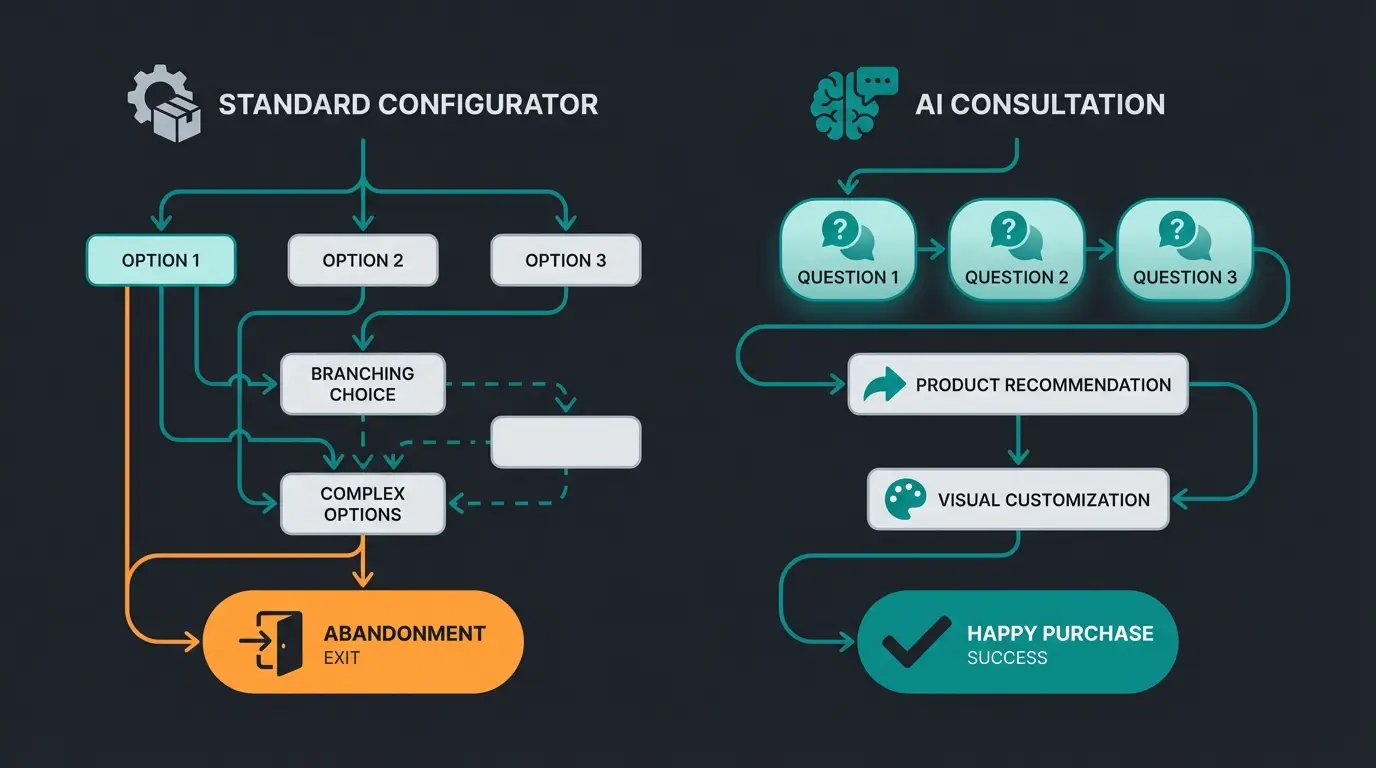
Customer sees hundreds of technical options → Gets overwhelmed → Abandons cart or makes wrong choice
Customer answers simple questions about needs → AI analyzes requirements → Receives personalized recommendation with explanation
Standard: 70% decision anxiety, high returns | AI: 85% purchase confidence, minimal returns
AI Product Configurator vs. Static Logic: The Comparison
To understand why an AI-powered or algorithm-based consultation approach (Gen 2.0) is superior to standard configurators, a direct comparison is worthwhile. We position "standard plugins" not as bad, but as tools for a different purpose (design), while AI tools optimize the sales process. The evolution of Conversational AI has made these advanced interactions possible.
| Feature | Standard Configurator (Gen 1.0) | AI/Guided Selling Configurator (Gen 2.0) |
|---|---|---|
| Primary question to customer | "Which component do you want?" | "What problem do you want to solve?" |
| Required customer knowledge | High (must know technical specs) | Low (only needs to know own requirements) |
| Logic structure | Linear tree (If A → Then B) | Weighted scoring / Neural network |
| User experience | Often long clicking through menus | Chat-based or interactive quiz |
| Result | A list of components | A specific recommendation + explanation |
| Customer risk | "Did I choose the right thing?" | "I feel understood and advised." |
| Suitable for | Simple variants (color, size) | Complex products requiring explanation |
Why "AI" Is More Than a Buzzword
In this context, "AI" doesn't necessarily mean a chatbot like ChatGPT that hallucinates. It's about intelligent recommendation logic. Modern plugins use algorithms to weight answers, as highlighted by Highspot.
Example: An answer like "I travel a lot" weights the attributes "battery life" and "weight" higher than "screen size." The system then calculates the "perfect match" from inventory. This is far more dynamic than rigid if-then rules. Understanding how AI Chatbots transform customer interactions helps explain this evolution.
The 3 Decisive Benefits of an AI-Driven Solution
Why should you go through the effort of switching from a standard dropdown menu to an interactive consultation solution? The data speaks clearly. Implementing AI-powered product consultation delivers measurable results across key metrics.
1. Higher Conversion Rates Through Trust
Studies show that personalized recommendations massively increase purchase probability. Users guided through a decision process abandon less frequently. According to Business Wire, 84% of online shoppers have problems with classic filters.
The effect: When a tool says: "Based on your answers, THIS product is 95% perfect for you, because...", it eliminates decision uncertainty. Trust in the recommendation replaces missing expertise. This is where Consultative AI shines by providing expert-level guidance.
2. Reducing Return Rates (The E-Commerce Challenge)
Germany leads the world in return rates. In some industries like fashion, up to 50-60% of goods are returned, as documented by Neocom and Atamya.
- The cause: Often it's not lack of quality but simply the wrong product for the purpose ("Doesn't fit," "Function different than expected").
- The AI solution: A configurator that clarifies before purchase whether the product suits the user works preventively. Someone asked beforehand "How big is your room?" doesn't buy a dining table that's too large.
- A reduction in return rate by just 5% often has a greater leverage on net profit than a 10% revenue increase, as logistics costs and value loss disappear.
3. The 24/7 Sales Consultant (Scalability)
In a physical store, consultation quality depends on staff. If the top salesperson is sick, revenue drops. A digital advisor is always available, always friendly, and has infinite patience. They can advise 500 customers simultaneously – at 3 AM just as well as Monday morning. This transforms customer service through AI Customer Service automation.
This is particularly relevant for B2B shops, where complex products often cause long sales cycles and many inquiries. A good configurator automatically captures these "pre-sales" questions. Many businesses are now deploying AI employees to handle these interactions at scale.
of online shoppers struggle with traditional product filters
in fashion e-commerce that AI consultation can significantly reduce
increase when choice is simplified and guided (Columbia study)
AI consultants work around the clock without quality degradation
Stop losing customers to decision fatigue. Our AI-powered product consultation guides shoppers to the perfect purchase while reducing returns and boosting conversions.
Start Your Free TrialPractical Implementation: Guided Selling in WooCommerce
You don't need to be a programmer to bring this logic into your shop. There are now plugins that bridge the gap between "quiz" and "product configurator." The AI Consultation Guide provides comprehensive details on implementation options.
Step 1: Choose the Right Plugin
Instead of purely visual configurators (see Section 3), you now need plugins specialized in logic and recommendations. Recommended candidates for 2025 include:
- Product Recommendation Quiz for WooCommerce: A powerful tool for building "quiz funnels" that ultimately place products in the cart, as described by Quiz Plugin and WooCommerce.
- WP Guidant: Specialized in guided sales processes. It filters products based on user answers live from the database, as noted by WordPress.org.
- Morphex / Staggs (Hybrid Solutions): Some newer visual configurators are beginning to integrate quiz elements before the visual part begins.
Step 2: The "Reverse Engineering" Strategy
Don't start with the questions – start with the products. This methodology is also used in Shopware 6 chatbots implementations.
- Define product attributes: What technical characteristics distinguish Product A from Product B? (e.g., "water resistance")
- Map customer needs: What customer problem corresponds to this attribute? (e.g., "I use the product outdoors in the rain" → Needs water resistance)
- Formulate questions: Develop 3-5 questions that probe these needs. Avoid technical jargon!
Step 3: The Hybrid Approach (Best of Both Worlds)
The ultimate solution is the combination. This approach embodies the principles of AI product consultation in modern e-commerce.
- Phase 1 (Consultation): The customer answers 3 questions in the "AI advisor."
- Phase 2 (Result): The system suggests the base model (e.g., "Gaming PC Model X").
- Phase 3 (Visual Configuration): Now the customer can use the classic visual configurator (e.g., Fancy Product Designer) to choose the case color or engrave their name.
This way, you leverage the strength of AI (selecting the right product) and the strength of visual tools (emotionalization and individualization).
Conclusion: From Tool to Assistant
The term "WooCommerce configurator" is evolving. Five years ago, it was only about letting customers make things colorful. Today, in an age of information overload, an online shop's task is different: Curation.
Standard plugins like YITH or WP Configurator remain excellent tools for design aspects. But if you sell complex products requiring explanation, they're no longer sufficient. They leave the customer alone with the complexity.
The integration of Guided Selling and intelligent consultation logic is the next evolutionary step. It transforms your WooCommerce shop from a passive catalog into an active sales consultant. The result is a win-win situation: The customer finds the right product faster (less frustration), and you benefit from more revenue and fewer returns.
Action Recommendations for Shop Owners
- Audit: Review your current product pages. Are you asking for technical details the customer might not understand?
- Pilot: Start with one product category. Create a simple "product finder" (quiz) and measure whether the conversion rate increases compared to direct catalog entry.
- Investment: View configurator software not as a cost center for design, but as an investment in sales automation.
The future of e-commerce belongs not to those who offer the most choice, but to those who make the choice easiest.
A visual configurator focuses on aesthetics – changing colors, uploading logos, and customizing appearances. A functional configurator deals with technical compatibility, ensuring selected components work together. However, neither type provides actual product consultation or helps customers who don't know what they need.
Standard plugins overwhelm customers with too many technical options without guidance, triggering 'decision fatigue' or the Paradox of Choice. Studies show customers are 10x more likely to purchase when presented with curated options rather than extensive choices. Without guidance, customers abandon carts rather than risk making wrong decisions.
Conditional logic is rigid: 'If A, then show B.' It prevents errors but doesn't help decisions. AI-powered guided selling asks about customer needs and use cases, then uses weighted scoring algorithms to match products. Instead of asking 'Which RAM size?' it asks 'What do you use your laptop for?' – making expert-level decisions accessible to everyone.
Yes, this hybrid approach delivers the best results. First, AI consultation guides customers to the right base product through simple questions about their needs. Then, visual configuration allows emotional customization like colors or personalization. This combines intelligent product selection with engaging customization experiences.
Businesses typically see higher conversion rates (customers feel confident in recommendations), reduced return rates (preventing wrong purchases), and increased average order values (accurate upselling). In markets with high return rates like fashion (50-60%), reducing returns by just 5% often impacts profit more than 10% revenue growth.
Join leading e-commerce brands using AI-powered product consultation to increase conversions, reduce returns, and deliver exceptional customer experiences. Start your transformation today.
Get Started Free
Lasse is CEO and co-founder of Qualimero. After completing his MBA at WHU and scaling a company to seven-figure revenue, he founded Qualimero to build AI-powered digital employees for e-commerce. His focus: helping businesses measurably improve customer interaction through intelligent automation.