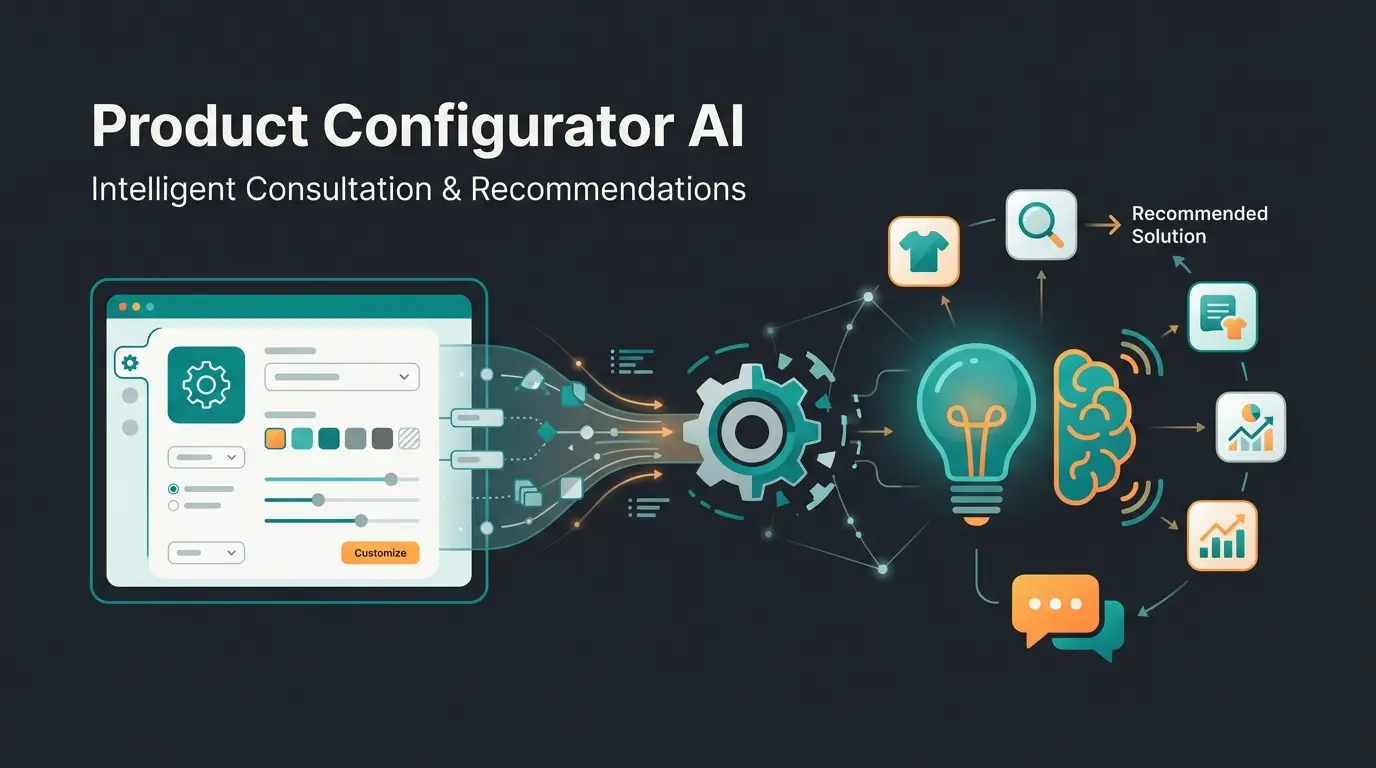
The Silent Death in Shopping Carts: A New Strategy
The digital commerce landscape is experiencing a tectonic shift. While we've grown accustomed to double-digit growth rates over the years, Shopware store operators today face a brutal reality: competition is fiercer, customer attention spans are shorter, and traffic costs (Customer Acquisition Costs, CAC) are rising relentlessly. In this hypercompetitive environment, the conversion rate (CR) is no longer just another dashboard metric—it's the pulse that determines whether an online business survives.
But what does it really mean to boost Shopware conversion in 2025? Is it enough to change the "Add to Cart" button from blue to orange? Will shaving 200 milliseconds off your homepage load time make the difference? The data and market developments speak clearly: traditional conversion rate optimization (CRO) methods are reaching a plateau. We've largely exhausted the technical foundations. Shopware 6 is technologically so advanced that most stores work "well enough." Yet we still see conversion rates stagnating at a mere 1% to 3% across industries. The implication is staggering: we silently accept that 97% to 99% of visitors—whose attention we paid dearly to acquire—leave our stores without spending a single cent.
Conversion Rate in Shopware: An Honest Definition
Before diving deep into optimization strategies, we need to establish the foundation and define what we're discussing. In the Shopware world, the conversion rate is the ratio of visitors who complete a desired action to the total number of visitors. The formula is deceptively simple:
Conversion Rate = (Number of Purchases / Number of Visitors) × 100
But behind this number lies the entire drama of e-commerce. If a store has 10,000 monthly visitors and generates 200 sales, the CR is 2%. Many merchants are satisfied with this because it matches the "industry standard." But consider the flip side: 9,800 potential customers visited the store, perhaps viewed products, invested time—and then left.
Why? For years, the dogma held that technical barriers were the main reason for purchase abandonment. "The checkout was too complicated," "The page loaded too slowly," "My preferred payment method was missing." These factors are valid, and we'll address them in the section on "technical basics." However, in a modern, professionally configured Shopware store, these barriers often aren't the primary problem anymore. The technology works. The checkout is slick. PayPal and Amazon Pay are integrated. And yet customers still don't buy.
Industry standard that most Shopware stores achieve
Percentage of visitors who leave without purchasing
Shopping carts abandoned before checkout completion
Customers leaving due to unexpected shipping costs
The Pivot: From Technical to Psychological Optimization
The answer to stagnating conversion rates lies in an often-overlooked gap in online retail that we can call the "consultation vacuum." Let's compare the situation with brick-and-mortar retail: when a customer enters a specialty store—say, for running shoes or tools—they're rarely left alone. A salesperson greets them, analyzes their needs ("Do you run more on asphalt or trails?"), filters the selection based on the answers, and presents a tailored solution.
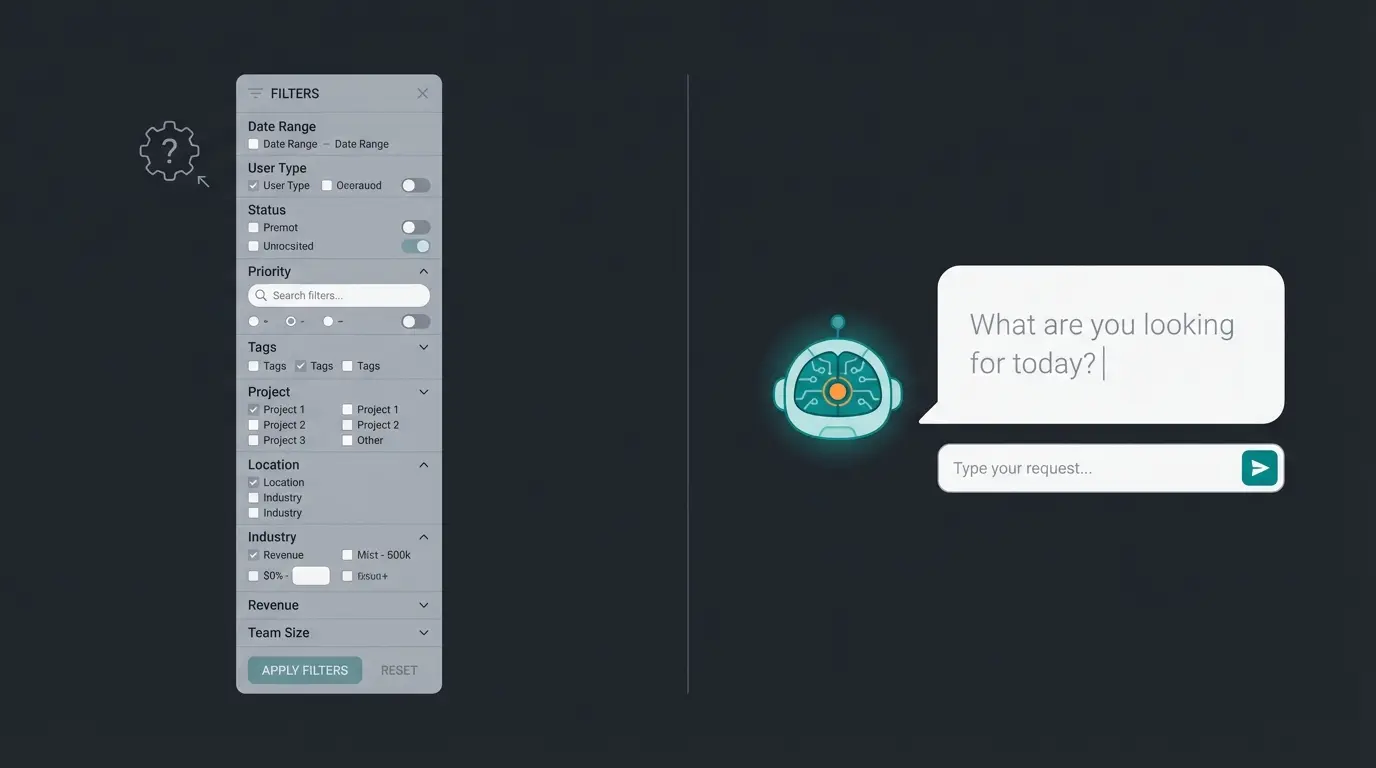
In an online store, however, the customer usually finds a lonely desert. They stand before a massive digital shelf—often with thousands of items—armed only with a search bar and a series of static filters (size, color, price, brand). For simple products (commodities) like copy paper or charging cables, this might work. But as soon as a product requires explanation—whether it's an e-bike, premium cosmetics, technical B2B components, or dietary supplements—the customer quickly feels overwhelmed.
This overwhelm doesn't lead to a support complaint. It leads to silent abandonment. The customer leaves the store to "do more research." They land on comparison portals, forums, read test reports—and ultimately often buy where the decision is made for them or where they have maximum security through lenient return policies: at the major marketplace giants.
| Experience Type | Customer Input | Flexibility | Result Quality | Emotional Impact |
|---|---|---|---|---|
| Static Filter | Requires technical specs knowledge | Rigid, predefined options | Generic product list | Overwhelming, frustrating |
| AI Consultant | Natural language, actual needs | Dynamic, contextual | Best match + explanation | Understood, confident |
This report will demonstrate that boosting Shopware conversion today means filling this consultation vacuum. We'll analyze how to use technical basics as an indispensable foundation while achieving the decisive revenue leap through AI-powered Shopware product recommendation and conversational commerce. We'll explore how tools like Qualimero don't just serve as support relief but act as proactive sellers who significantly, measurably, and sustainably increase conversion rates. We're moving away from passively providing articles toward actively and intelligently guiding customers.
Technical Basics: The Hygiene Factors for Shopware 6
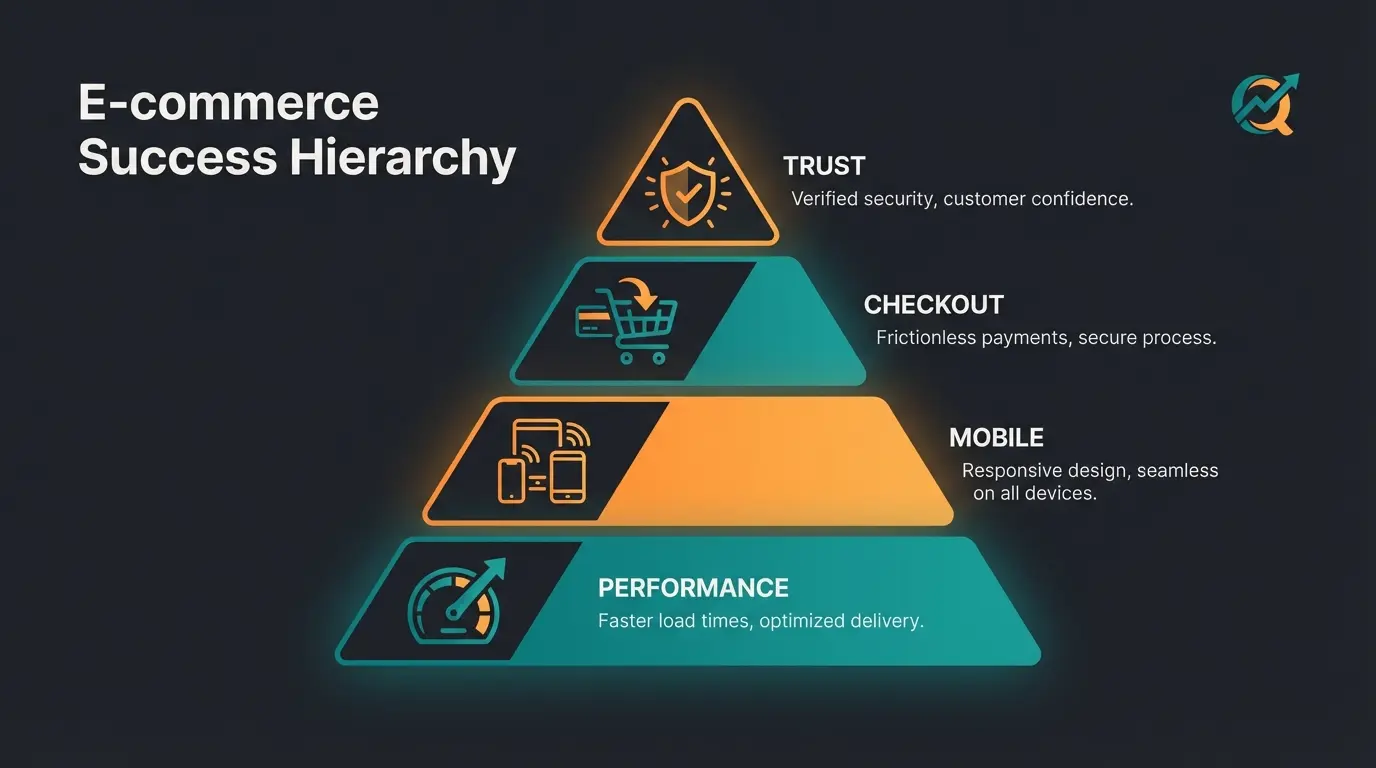
Before we turn to advanced strategies of AI consultation and conversational commerce, we must ensure your Shopware store's technical foundation is solid. You don't build a house on sand. If your store doesn't perform technically, even the best digital salesperson won't work miracles. These technical measures are no longer differentiators in 2025—they're absolute requirements, so-called "hygiene factors." Without them, you lose customers massively. With them, you've merely earned the ticket to compete.
Performance: Speed Is Not Optional, It's Mandatory
Nothing kills conversion faster than wait time. User patience is at a historic low. Studies consistently show that even a 100-millisecond delay can reduce conversion rates by up to 7%. In the Shopware ecosystem, there are specific levers for performance optimization that go beyond mere "image compression."
Hosting & Server Configuration
Shopware 6 is built on modern technologies like Symfony and Vue.js. This makes the system powerful but also resource-hungry. Simple shared hosting for $5 a month isn't adequate for serious e-commerce.
- RAM & CPU: Ensure your hosting plan provides sufficient dedicated resources. Shopware requires adequate PHP memory limits to smoothly process complex operations like checkout or filtering in large catalogs.
- Database Performance: Use fast NVMe SSD storage for your MySQL/MariaDB databases. Database queries are often the bottleneck when many customers filter and search simultaneously.
- PHP Version: Always use the latest Shopware-supported PHP version (e.g., PHP 8.2 or higher). Each new PHP major version brings significant 'out of the box' performance improvements as code executes more efficiently.
Caching Strategies: The Turbo for Shopware
Caching is essential to reduce server load and minimize response times. According to Upsun's optimization guide, proper caching implementation can dramatically improve store performance.
- HTTP Caching / Reverse Proxy: For high-traffic stores, using a reverse proxy like Varnish is essential. Varnish stores finished HTML pages in memory and delivers them in milliseconds without Shopware even 'waking up.' This is especially important for category and CMS pages (Shopping Experiences).
- Redis: Use Redis for caching sessions and shopping carts. By default, Shopware stores this data in the database. With many simultaneous accesses, this can block the database (Table Locks). Redis is an in-memory store that reads and writes much faster.
Image Optimization & Lazy Loading
Images are often the heaviest elements on a page. According to Shopware's documentation on lazy loading, implementing modern loading techniques is crucial for performance.
- Modern Formats: Use formats like WebP or AVIF, which are significantly smaller than classic JPGs or PNGs at equal visual quality. Shopware supports automatic thumbnail generation in these formats.
- Lazy Loading: Enable lazy loading in Shopping Experiences. This means images only load when the user actually scrolls to that section. This reduces initial load time ('Time to Interactive') and improves Core Web Vitals, which are important for Google rankings.
Mobile First: Respecting the Thumb Zone
In many B2C industries, 70% to 80% of traffic now comes from mobile devices. Yet stores are often still designed on desktop monitors in the office.
- Responsive Design Isn't Enough: It's not sufficient for the page to merely 'shrink down.' Elements must be touch-friendly. Buttons must be large enough for thumbs.
- Avoid Layout Shifts (CLS): Ensure content doesn't 'jump' during loading. If a customer wants to click a button and it suddenly shifts because an image loaded, it leads to frustration and abandonment.
Checkout Optimization: Paving the Path to Purchase
The checkout is the most critical point in the funnel. Here it's decided whether an interested visitor becomes a buyer. Approximately 70% of shopping carts are statistically abandoned.
| Optimization Lever | Explanation & Impact |
|---|---|
| Guest Checkout | Don't force customers to register. Guest checkout massively lowers the barrier. Around 19% of purchase abandonments result from mandatory account creation. |
| Payment Methods | The German market is special. While credit cards are important, PayPal and purchase on invoice still dominate. 'Buy Now, Pay Later' (e.g., Klarna) is increasingly important to lower entry barriers for higher cart values. |
| One-Page Checkout | Reduce steps. Shopware offers plugins for one-page checkouts that request all data on a single page. This reduces clicks and gives customers the feeling of being 'almost done.' |
| Transparency | Show shipping costs as early as possible. Unexpected additional costs in the final step are the most common reason for abandonment (approximately 48%). |
Trust Elements: Signaling Security
Trust is the currency of the internet. A visitor who doesn't trust your store won't enter sensitive data like credit card numbers. According to Shopware's conversion optimization basics, trust signals are essential for converting visitors.
- Trust Seals: Trusted Shops or Händlerbund are established standards in the DACH region. Displaying trust badges demonstrably increases conversion, especially for new customers unfamiliar with your brand.
- Social Proof: Integrate product reviews prominently. Products with reviews (even few) convert significantly better than those without.
- SSL & Privacy: Naturally, the entire store must be encrypted. GDPR compliance notices directly at checkout ('Your data is securely transmitted') can dispel final doubts.
Why Customers Really Abandon—It's Not the Checkout
When we look at purchase abandonment statistics, the number "70% cart abandonment rate" often dominates the discussion. Merchants stare at this figure and desperately optimize the checkout process. But this number obscures the real drama happening much earlier: Pre-Cart Abandonment. Most visitors don't even make it to the "Add to Cart" button. They leave the store on category or product pages. Why?
The Paradox of Choice (Choice Overload)
Shopware is a powerful system that allows merchants to manage huge catalogs with complex variants. But for customers, this variety often becomes a curse. Psychological studies, like the famous "jam experiment" cited by UCLA Anderson Review, impressively demonstrate: too much choice doesn't lead to more sales but to decision paralysis. When a customer faces 24 varieties of jam, they're fascinated but buy less often than when facing only 6 varieties.
Transferred to Shopware: Imagine a customer searching your store for "hiking boots." Shopware delivers 143 results. They can filter by brand (Meindl, Lowa, Hanwag...), price (€0-500), color (brown, black, blue...), size (38-48), material (leather, Gore-Tex...). But they can't filter by their actual need: "I need a boot for very wide feet that's slip-resistant on wet rocks, doesn't pinch, and is suitable for an Alpine crossing."
Shopware's static filters (and most other shop systems) are technically correct but semantically "dumb." They know product attributes but no usage context. The customer clicks through 10 product pages, opens 5 tabs, compares technical data like "Vibram sole" vs. "Contagrip sole"—and is mentally exhausted by the end. This phenomenon is called "Decision Fatigue". The more options and the more complex the comparison criteria, the higher the cognitive load.
The Gap Between Searching and Finding
Customers often come to the store with a problem, not a product ID.
- Problem: "My back hurts when I sleep."
- Shop Offering: "Mattress H3, pocket spring, 7-zone."
The customer must perform the translation themselves: "Does pocket spring help with back pain?" If the store doesn't help them with this, uncertainty arises. Uncertainty is the biggest conversion killer. A customer who's uncertain doesn't make a purchase decision. They abandon. Not because they're dissatisfied, but because they fear making the wrong decision—especially with expensive or complex products (high-involvement products). Add to this the fear of return hassles.
The Showrooming Trap
What does an exhausted and uncertain customer do? They use your store as an information source (because you have good images and data sheets) but then don't buy. They engage in "showrooming." They go back to Google, search for test reports, or land at Amazon. Why Amazon? Not necessarily because of price, but because of security. They know: if I made the wrong decision, returns there are extremely easy.
Traditional conversion optimization tries to solve this problem with "better images," "360-degree views," or "clearer texts." But this is still passive communication. The text talks at the customer; it doesn't talk with them. It doesn't respond to individual concerns.
The Consultation Vacuum
Here lies the biggest gap in modern e-commerce: consultation is missing. No one would expect in a car dealership that customers pick out a car themselves based on data sheets, take the keys off the board, and drop the contract in a mailbox. In e-commerce, we expect exactly that—and then wonder about 2% conversion rates. We treat the online store like a self-service warehouse, not a sales floor.
To sustainably boost Shopware conversion, we must stop viewing the store as a static catalog. We must transform it into an interactive space where active consultation takes place. We must help customers make the right decision before they give up in frustration.
Visitors arrive via ads, SEO, or social media
AI assistant asks about needs and preferences (the missing step most shops skip)
Personalized recommendations eliminate uncertainty
Streamlined purchase with preferred payment methods
Boost Shopware Conversion with AI Product Consultation
We've identified that the lack of interactive consultation and the resulting decision paralysis are main reasons for low conversion rates. The solution lies in the technology currently revolutionizing every area of our lives: Artificial Intelligence (AI). But caution—we're not talking about simple chatbots that recite FAQs or annoying pop-ups. We're talking about Conversational Commerce and Shopware Guided Selling through specialized AI agents like Qualimero.
The Difference: FAQ Bot vs. Sales AI
There's often confusion about the term "chatbot." Many store operators think of the small windows in the bottom right that offer three questions on click ("Where's my package?", "What are the hours?", "Register return"). These bots are service bots. Their primary goal is cost efficiency and support request automation. They're "defenders" on the team.
To boost conversion, however, we need Sales Bots (or better: AI sales consultants). Their goal is revenue growth. They're the "strikers."
| Feature | Classic FAQ Bot / Rule-Based | AI Sales Consultant (e.g., Qualimero) |
|---|---|---|
| Primary Goal | Reduce support tickets (cut costs) | Boost conversion & increase cart value (revenue) |
| Technology | Static decision trees ('If A clicked, show text B') | Generative AI (LLMs), RAG technology (context understanding) |
| Flexibility | Only understands exact keywords or programmed paths | Understands context, nuances, colloquialisms, and typos |
| Product Knowledge | Usually only knows standard answers or FAQ links | Dynamically accesses entire product catalog (PIM) |
| Interaction | Passive (waits for question or click) | Active (asks follow-up questions for needs analysis, guides customer) |
| Result | Customer has information (or frustrated at dead ends) | Customer has perfect product in cart and feels consulted |
How Qualimero Works as a Game Changer in Shopware
Qualimero is a specialized Shopware AI solution developed exactly for this scenario: transforming the online store from a "silent servant" to an "active consultant." Available as an app in the Shopware Store, Qualimero connects directly to your shop system and functions as an intelligent layer between customer and catalog.
The Technology Under the Hood
- Data Integration (RAG - Retrieval-Augmented Generation): Qualimero reads your Shopware product catalog. The AI learns not just product names but understands descriptions, technical attributes (properties), inventory levels, and prices. It uses 'Retrieval-Augmented Generation' to generate answers. This means: when a customer asks a question, the AI first searches the catalog for relevant facts (Retrieval) and then formulates a natural answer from them (Generation). This prevents 'hallucinations' (inventing facts) since the AI is strictly bound to your product data.
- Sales Psychology: Unlike general AI models like ChatGPT, which are often verbose, Qualimero is trained on sales conversations. The AI knows how to conduct needs analyses ('What will you primarily use the product for?') and how to handle objections ('Isn't that too expensive?' -> 'It's an investment in longevity because...').
- Proactive Engagement: The AI doesn't wait silently. It can be configured to address customers at strategic points—similar to a good store salesperson who notices when a customer is undecided in front of a shelf (e.g., after 30 seconds on a product page).
Why This Boosts Shopware Conversion
- Orientation Instead of Search: The customer doesn't need to know the product name or which category it's in. They describe their problem; the AI delivers the solution. This bridges the gap between the customer's lay knowledge and the shop's expert knowledge.
- Trust Building: Through competent answers (based on your product data), the customer builds trust. They feel 'understood.' The feeling of being consulted massively increases purchase probability.
- Reduced Abandonment Rate: When questions are answered immediately ('Does this battery fit my 2019 model?'), there's no more reason to abandon the purchase or research elsewhere. Response time is seconds, 24/7.
- 24/7 Availability: Your best salesperson never sleeps, never gets sick, never takes breaks, and is in a good mood even at 3 AM on Sunday. This is crucial for international trade or customers who shop in the evening.
The End of Static Filters
Classic Shopware Guided Selling plugins are often based on manually created question trees. The merchant must laboriously define: "Question 1: Male/Female -> If Male, show Question 2a..." This is rigid, maintenance-intensive, and doesn't scale.
An AI agent like Qualimero generates these paths dynamically. If you import 500 new products tomorrow, the AI knows immediately without you adjusting any decision tree. That's scalable consultation. You can expand your assortment without increasing your consultation capacity (personnel).
See how AI-powered consultation can increase your conversion rate. Over 100 Shopware stores already use Qualimero to guide customers to confident purchases.
Start Your Free TrialPractical Example: From Overwhelmed Visitor to Buyer
Theory is important for understanding the concept, but practice shows the true value. Let's look at a concrete scenario that plays out daily in thousands of Shopware stores—and how AI changes the outcome. We'll examine a B2C store for home improvement supplies and tools, an industry with many technical details and high consultation intensity.
The Scenario
The customer, Marcus (42), wants to convert his attic. He needs a new cordless drill. He's a motivated DIYer but not a professional. He has little understanding of the fine differences between volts, amperes, torque, and brushless motors. He simply wants "something decent" that will survive his project.
Situation A: The Classic Shopware Store (Status Quo)
- Entry: Marcus googles 'buy cordless drill' and lands on your category page for power tools.
- The Shock (Choice Overload): He sees 48 products. The filter bar on the left offers technical options like 'Battery Capacity (Ah),' 'No-Load Speed,' 'Chuck Clamping Range,' 'Max. Torque hard/soft.'
- The Search: Marcus is overwhelmed. What does 'chuck clamping range' mean for his attic? He clicks on the first product with 'Pro' in the name. He reads '18V, 5.0Ah, Brushless Motor.' He doesn't know if he needs that. He sees the price: €249.
- The Comparison: He opens three more tabs with other models. One costs €99, another €400. What's the difference? Why does one cost four times as much?
- The Uncertainty: 'Is the €99 one enough for the attic rafters? Or will it burn out after 200 screws?' He finds no answer in the technical data sheet that only lists numbers.
- The Abandonment: Marcus thinks: 'I'll ask my neighbor or go to the hardware store on Saturday where I can ask someone.' He closes the tab.
Result: €0 revenue. High bounce rate. Marcus later buys at the hardware store or Amazon, where he relies on the 'bestseller' label.
Situation B: The Store with Qualimero AI Sales Consultant
- Entry: Marcus lands on the same category page. He again sees 48 products and the complex filters.
- The Interaction: After 15 seconds (or immediately, depending on settings), the Qualimero assistant appears in the bottom right. Not with an annoying pop-up blocking the screen, but as a discreet invitation: 'Hi! Are you planning a specific project or need help with the technical specs?'
The Dialog:
- Marcus types: 'I want to convert my attic. Need a drill that can handle it but doesn't cost a fortune.'
- Qualimero analyzes: The AI recognizes the intent 'attic conversion' (implies high load, lots of wood, many screws) and the constraint 'price sensitivity' ('doesn't cost a fortune').
- Qualimero responds: 'For an attic conversion, you need a device with decent power (at least 18 volts) and endurance, since you'll be driving many long screws into wooden beams. A small 12V entry-level model would quickly reach its limits here. Do you already have batteries from a specific brand (e.g., Makita or Bosch) at home? That would save money since you'd only buy the tool without the battery.'
The Consultation & Trust Building:
- Marcus: 'No, I don't have anything from those brands yet.'
- Qualimero: 'Got it. Then I recommend a set with two batteries (at least 4.0 Ah) so you can keep working while one charges. Nothing's more annoying than a forced break during attic conversion. Here are my two favorites for your project:'
- Product A (€189): 'The price-performance champion. Robust, includes 2 batteries. Perfectly suited for attic conversion.'
- Product B (€249): 'The pro choice. Somewhat lighter and more compact, which is noticeably easier on your arms during overhead work in the attic.'
The Close: Marcus immediately understands the added value ('lighter for overhead work' is a concrete benefit; 'brushless motor' was just a technical term). He chooses Product B because comfort is important to him.
- Qualimero (Upselling): 'Great choice! Should I add the matching Torx bits? You'll need those for most construction screws in attic building.'
- Marcus: 'Yes, please.'
Result: €259 revenue (drill + bits). Happy customer who feels competently consulted. The conversion happened in under 3 minutes.
Simple Integration: Shopware AI in 15 Minutes
Many store operators shy away from new technologies out of fear of complex, lengthy IT projects. The term "AI integration" often sounds like months of development, expensive consulting hours, and potential code chaos that crashes the store. With modern SaaS solutions (Software as a Service) like Qualimero, however, the opposite is true. Integration is designed for "plug & play" and intelligently uses Shopware 6's open architecture.
Step-by-Step: 15 Minutes to Your AI Salesperson
The process is designed so store managers or e-commerce leaders can perform it without necessarily involving a developer.
Download Qualimero via the Shopware Community Store or add it through the App Manager in the backend. As an app (not a deep core plugin), conflict risk with other extensions is minimal.
Connect the app with your Qualimero account via API key for secure data exchange. Shopware 6's excellent API interfaces (Admin API & Store API) ensure stable, performant connections.
Qualimero reads your product data via API: titles, descriptions, properties, prices, inventory, and category assignments. No manual AI training required—the AI learns from your existing shop.
Adjust the chat widget to your corporate design. Choose colors, upload your logo, and define tonality. Should the AI be casual or conservative? It's configurable.
Activate the plugin in the frontend. Done. The AI consultant is immediately ready on all pages.
Technical Security & Data Protection (GDPR)
A critical point for store operators in the DACH region is data protection. Where is the data stored? What happens with customer inputs?
Qualimero is a German company (headquartered in Düsseldorf). This is a massive strategic advantage over many US solutions.
- Server Location: Data processing takes place on servers in Europe.
- Compliance: The solution is designed for the strict requirements of the GDPR and the upcoming EU AI Act. You risk no warnings from unauthorized data transfer to unsafe third countries.
- Shopware Compatibility: Since Shopware itself is based on Symfony and Vue.js with a modern API-first architecture, Qualimero integrates seamlessly into the performance structure. The chat script loads asynchronously, meaning it doesn't block page rendering ('Render Blocking'). Your PageSpeed values and Core Web Vitals (LCP, CLS) won't be negatively affected, which is essential for SEO.
Beyond the Cart: Cross-Selling and Personalization
Conversion Rate Optimization (CRO) is often only considered up to the first "Buy" click. But the real economic success in e-commerce lies in maximizing Average Order Value (AOV) and long-term Customer Lifetime Value (CLV). Here too, using an AI solution like Qualimero offers completely new possibilities compared to static Shopware functions.
Intelligent Upselling vs. 'Customers Also Bought'
Classic cross-selling in Shopware is usually implemented via the Rule Builder or Dynamic Product Streams.
Scenario: Customer adds "flashlight" to cart.<br>Shopware Logic: Display a slider in the cart or at the bottom of the detail page: "Accessories: Batteries, Replacement Bulb."
This is technically correct but passive. Customers often overlook these sliders ("banner blindness") or are already mentally at the payment stage.
AI-Powered Upselling in Conversation
An AI like Qualimero can place cross-selling contextually and psychologically, exactly at the moment of highest purchase intent—during the consultation.
Example: The customer asks in chat about a premium gas grill for steaks.
Qualimero: "The Weber Genesis is an excellent choice for steaks! Since you mentioned perfect searing is important to you: many of our customers use this special cast-iron grate (Sear Grate) for that. You'll get steakhouse-style grill marks with it. Should I show it to you?"
The probability the customer buys this additional product is many times higher in dialogue than with a silent display at checkout. They understand the direct benefit ("steakhouse-style marks") in relation to their goal. Studies show personalized recommendations can increase revenue by 10-30%. It doesn't feel like "selling" but like "helping."
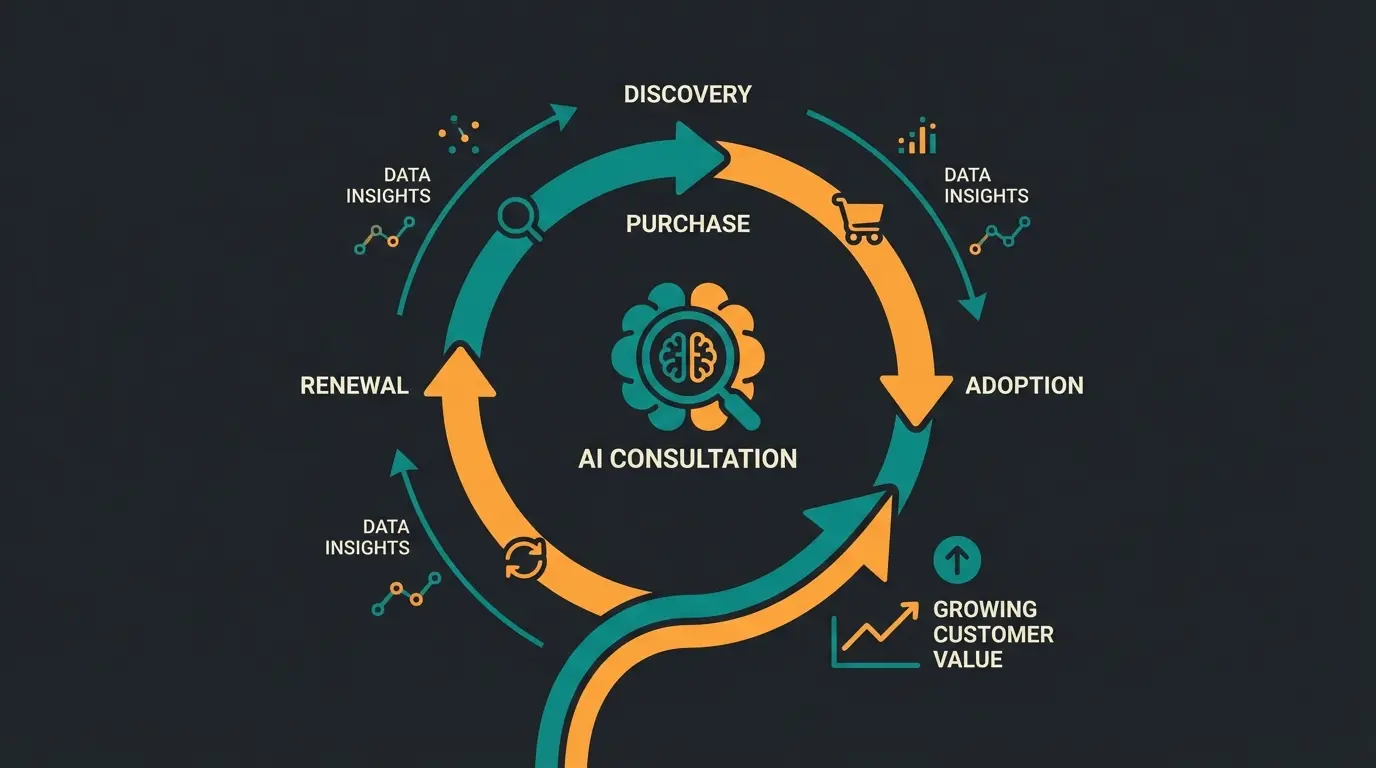
Leveraging Data for Retention (CRM)
The conversations your customers have with the AI are a goldmine of data ("Zero-Party Data"). You learn not just what was bought (transaction data) but why (intent data).
- Insight: 'Customer X bought the running shoes because they're training for a marathon in September.'
- Action: This information is gold. Use it for your email marketing (e.g., via CleverReach or Klaviyo integrations).
- Follow-up: Send the customer an automated email 3 months later: 'How's the marathon training going? Here are our best energy bars for race day and blister patches for the long runs.'
This transforms a one-time buyer into a loyal repeat customer. You use consultation competence not just for the first purchase but build a relationship. This is the ultimate lever to not only boost the initial Shopware conversion but maximize the profitability of the entire shop (CLV).
Conclusion: What Really Matters for Shopware Success
E-commerce stands at a turning point. The era when you could simply "put products online," run some Google Ads, and hope for buyers is over. Traffic is too expensive to waste through passive catalog pages and high abandonment rates.
To sustainably boost Shopware conversion in 2025, we must abandon the notion that more technical checkout optimizations or marginal design changes will bring the breakthrough. Of course, performance, mobile UX, and trust elements must be right—these are hygiene factors without which nothing works. But the real differentiator, the true growth driver, is the return of consultation.
Customers in a complex world long for orientation. They don't want 500 options; they want the one right option for their individual problem. They want certainty.
Strategy Summary for Your Shopware Store
- Technology: Ensure a fast, secure, and mobile-optimized store (Shopware 6 basics).
- Psychology: Recognize 'Choice Overload' and 'Pre-Cart Abandonment' as the true enemies of conversion.
- Solution: Rely on AI-powered Shopware product recommendation instead of static filters and endless article lists. Fill the consultation vacuum.
- Tool: Use specialized Sales Agents like Qualimero that are easy to integrate, scalable, and GDPR-compliant.
- Goal: Transform your store from an anonymous 'self-service warehouse' into a digital 'premium flagship store' with 24/7 expert consultation.
The online store of the future doesn't passively wait for orders. It actively, competently, and empathetically guides customers to purchase.
Frequently Asked Questions
A good conversion rate for Shopware stores typically ranges from 1.5% to 3%, depending on your industry and product type. However, stores implementing AI-powered consultation regularly achieve rates of 2.5% to 4% or higher. The key isn't just hitting a benchmark but continuously improving by addressing the real reasons visitors don't convert—primarily decision paralysis and lack of guidance.
Static filters require customers to know technical specifications (e.g., '3000 lumens' or 'brushless motor') and create rigid, predefined paths. AI product recommendation understands natural language and actual customer needs ('I need something for overhead work in my attic'). It dynamically adapts to each conversation, translates technical specs into benefits, and guides customers to confident decisions rather than overwhelming them with options.
Modern solutions like Qualimero are designed for plug-and-play implementation. The complete integration typically takes 15-30 minutes: installing the app via Shopware's store, connecting your account via API key, waiting for automatic product data synchronization, customizing the design, and going live. No developer involvement is required for basic setup.
Yes, when using European-based solutions like Qualimero (headquartered in Germany with servers in Europe). These solutions are designed specifically for GDPR and the upcoming EU AI Act compliance. Customer conversation data is processed within the EU, eliminating concerns about unauthorized data transfers to unsafe third countries that could result in legal issues.
Absolutely. One of the biggest drivers of returns is customer uncertainty—people buy multiple options intending to return what doesn't fit, or they choose incorrectly because they didn't understand which product matched their needs. AI consultation increases purchase confidence by ensuring customers understand exactly why a product is right for them. Confident customers are significantly less likely to return products, improving your net conversion rate.
See firsthand how AI-powered consultation transforms browsers into confident buyers. Start your free trial and get your first results within 48 hours—no technical setup required.
Start Free Qualimero Trial