Executive Summary: Your Decision at a Glance
For busy decision-makers: Here's the direct comparison between these two e-commerce giants. Understanding the core differences between Shopify vs Magento is essential before diving deeper into technical specifications.
| Feature | Shopify (Plus) | Magento (Adobe Commerce) |
|---|---|---|
| Core Principle | SaaS (Subscription model, worry-free) | Open Source / PaaS (Ownership, DIY approach) |
| Target Audience | Startups to Enterprise (up to ~$500M GMV) | Enterprise & complex B2B corporations |
| Time-to-Market | Very fast (weeks) | Slow (months to years) |
| Maintenance Effort | Minimal (automatic updates) | High (security patches, server updates) |
| Cost Structure | OpEx (Ongoing subscription & transaction fees) | CapEx (High initial & development costs) |
| GDPR (Germany) | Solvable (Servers in Ireland, standard contracts) | Full control (Server location freely selectable) |
| AI & Innovation | High: Plug-and-play app ecosystem | Medium: Powerful (Adobe Sensei), but complex integration |
| Flexibility | High (via apps & API), but core is closed | Unlimited (full code access) |
The verdict upfront: Choose Shopify if you're a merchant wanting to focus on marketing, sales, and customer experience. Choose Magento if you're essentially an IT company that happens to sell products, or if your backend processes are so unique that no standard logic applies. For a broader perspective on platform choices, you might also want to explore our Shopware alternatives comparison.
The Fundamental Difference: Renting vs. Building
To truly understand Shopify vs Magento, you need to examine the technical foundation. This isn't just a feature comparison—it's a philosophical divide in how businesses approach e-commerce infrastructure.
Shopify: The Rental Penthouse (SaaS)
Shopify is a Software-as-a-Service (SaaS) solution. You rent the infrastructure. Shopify handles hosting, security, PCI compliance, and scaling. According to GoMage, this approach is becoming the dominant trend in modern e-commerce.
- Advantage: You never have to patch a server again when traffic explodes on Black Friday
- Disadvantage: You have no access to the database code or core server—you play by the landlord's rules
Magento: The Custom-Built House (Open Source / PaaS)
Magento (now Adobe Commerce) is open source. You download the software and install it on a server of your choice (or use Adobe Cloud). As Fullestop reports, this approach offers maximum flexibility but comes with significant responsibility.
- Advantage: You own everything. You can change every pixel and every line of code
- Disadvantage: When the roof leaks (security vulnerability) or the heating fails (server down), you're solely responsible—or your expensive agency is
This fundamental difference affects every aspect of your e-commerce operation, from daily management to long-term strategic planning. If you're considering other platform options, our Shopware vs Shopify comparison provides additional insights.
The German Fear Factor: GDPR & Legal Compliance
A topic often missing from international comparisons but crucial for German merchants: Is Shopify legally usable in Germany? This question keeps many business owners up at night, especially given the strict European data protection regulations.
The Shopify Situation
For a long time, there were concerns about US data transfers (keyword: Privacy Shield invalidation). According to Lass-Machen and MStage, the current situation in 2025 looks much better:
- Current Status 2025: Shopify is aware of the European market's importance. Customer data from European merchants is primarily processed on servers in Ireland
- Measures: Shopify offers robust Data Processing Agreements (DPAs) and Standard Contractual Clauses (SCCs)
- To-Do for Merchants: You still need a clean Consent Management Platform (cookie banner) like Usercentrics or Consentmanager, which can be easily integrated via app
As noted by eShop-Guide, implementing proper consent management is straightforward with Shopify's app ecosystem.
The Magento Situation
Since you host Magento yourself (on-premise), you determine the server's location. This gives you maximum control but also maximum responsibility.
- Advantage: You can guarantee that data never leaves Frankfurt
- Risk: You're solely responsible for data security. An unpatched Magento shop is a massive risk for data breaches—and thus for GDPR fines
Feature Deep Dive: The Classic Showdown
Let's compare the core features relevant to small and medium-sized businesses. This Magento vs Shopify breakdown covers the areas that matter most for day-to-day operations.
B2B Functionality
This was long Magento's stronghold. According to Reddit discussions and analysis from MageMontreal, the landscape has shifted significantly.
Magento: Offers extremely deep native B2B features: company hierarchies, complex approval processes, individual price lists per customer, and quote requests. This depth remains unmatched for highly complex B2B scenarios.
Shopify Plus: Has caught up massively with 'B2B on Shopify.' Company profiles, net price lists, and draft orders are now included in the core. According to DigitalSuits, for 90% of B2B merchants, this is sufficient. Only those who need to replicate extremely complex, historically grown ERP logic 1:1 in their shop absolutely require Magento.
For businesses exploring B2B AI capabilities, our guide on WooCommerce B2B AI offers valuable insights that apply across platforms.
Performance & Scaling
Shopify: Uses a global CDN (Content Delivery Network). A shop in Munich loads just as fast as in New York. Scaling happens automatically—you don't pay more for server capacity during load spikes. As PlumRocket notes, this removes a significant operational burden.
Magento: Performance depends 100% on your hosting and code quality. Magento is known for being resource-hungry. A fast Magento shop requires expensive hosting and extensive caching optimization (Varnish, Redis). According to Codaone, achieving optimal Magento performance requires significant technical investment.
Internationalization (Multi-Store)
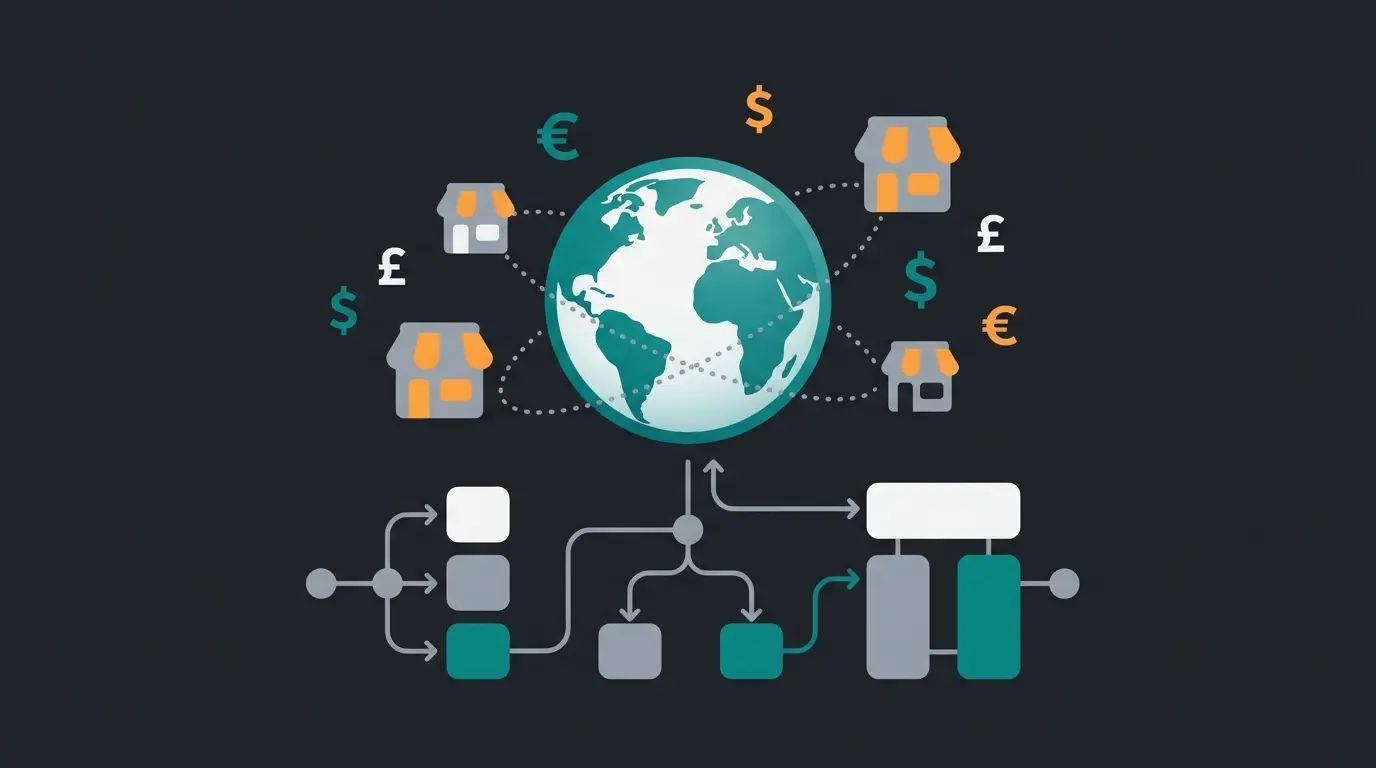
Magento: The king of multi-store architecture. You can control hundreds of stores from one backend, with shared product catalogs but different prices/languages. This capability is particularly valuable for large enterprises with complex regional requirements.
Shopify: Uses 'Shopify Markets.' This allows controlling currencies, languages, and prices per country. For separate brands or extremely different assortments, separate instances ('Expansion Stores') are often used, which makes data management somewhat more complex but isolates performance. According to LitExtension, this approach works well for most international expansion scenarios.
The Game-Changer: Customer Experience & AI-Readiness
Here lies the biggest gap in most comparisons. In 2025, you're no longer competing on assortment—you're competing on consultation. This is where the Shopify oder Magento debate takes on new dimensions.
The Problem: The Silent Catalog
Classic online shops (whether Magento or Shopify) are digital warehouses. The customer searches 'red running shoes,' gets 50 results, and is left alone. This represents a fundamental failure in customer experience.
- In brick-and-mortar retail, they ask: 'I run 10km on asphalt and have knee pain—what do you recommend?'
- In online shops, this question fails at the search bar
- The gap between customer needs and shop capabilities represents massive lost revenue
The Solution: AI-Guided Selling
Here's where the true difference between Shopify vs Magento shows in the modern era. It's about Time-to-Innovation—how quickly can you deploy cutting-edge customer experience tools?
Shopify: The AI Express Lane
Shopify pursues an 'API-First' and app-centric approach. This philosophy makes modern AI integration remarkably straightforward.
- Integration: Want to integrate AI-powered product consultation (like a digital salesperson)? In the Shopify App Store, you'll find solutions installable with just a few clicks
- Data Flow: Shopify's APIs are standardized. An AI app can immediately read your product data, understand it, and advise customers
- Example: A merchant installs a 'Consultation AI.' Within 24 hours, the bot advises customers on complex products based on shop descriptions
- Shopify Magic: Shopify also integrates its own AI tools directly into the backend for product texts and image editing
According to Shopify's official documentation, these AI capabilities continue to expand rapidly. Our comprehensive guide on AI product consultation explores these possibilities in depth.
Magento: The Integration Tanker
Magento is powerful but slow to adapt. As PlumRocket explains, the integration complexity can be significant.
- Adobe Sensei: Adobe offers an extremely powerful AI with 'Sensei,' but it's primarily aimed at enterprise-level (search, recommendations) and often comes with high license costs
- Custom AI: Integrating a modern, chat-based product consultation into Magento often requires a custom development project
- Hurdle: Since every Magento shop is heavily individualized in code (custom themes, extensions), 'plug-and-play' AI solutions often don't work immediately. Agency integration costs arise
For those interested in implementing AI consultation solutions, our articles on AI-powered product consultation and AI e-commerce consultation provide practical implementation guidance.
Magento dominates with feature-rich, customizable online catalogs. Customers search, filter, and hope to find what they need.
Shopify scales rapidly with seamless multi-channel integration. Social commerce and mobile-first approaches become essential.
AI-driven guidance transforms shopping. Customers receive personalized recommendations through intelligent conversation, not keyword searches.
Don't let your products sit in a silent catalog. See how AI-powered consultation can increase conversions and customer satisfaction—regardless of your platform.
Start Your Free AI Consultation TrialThe Cost Truth (TCO): The Iceberg Effect
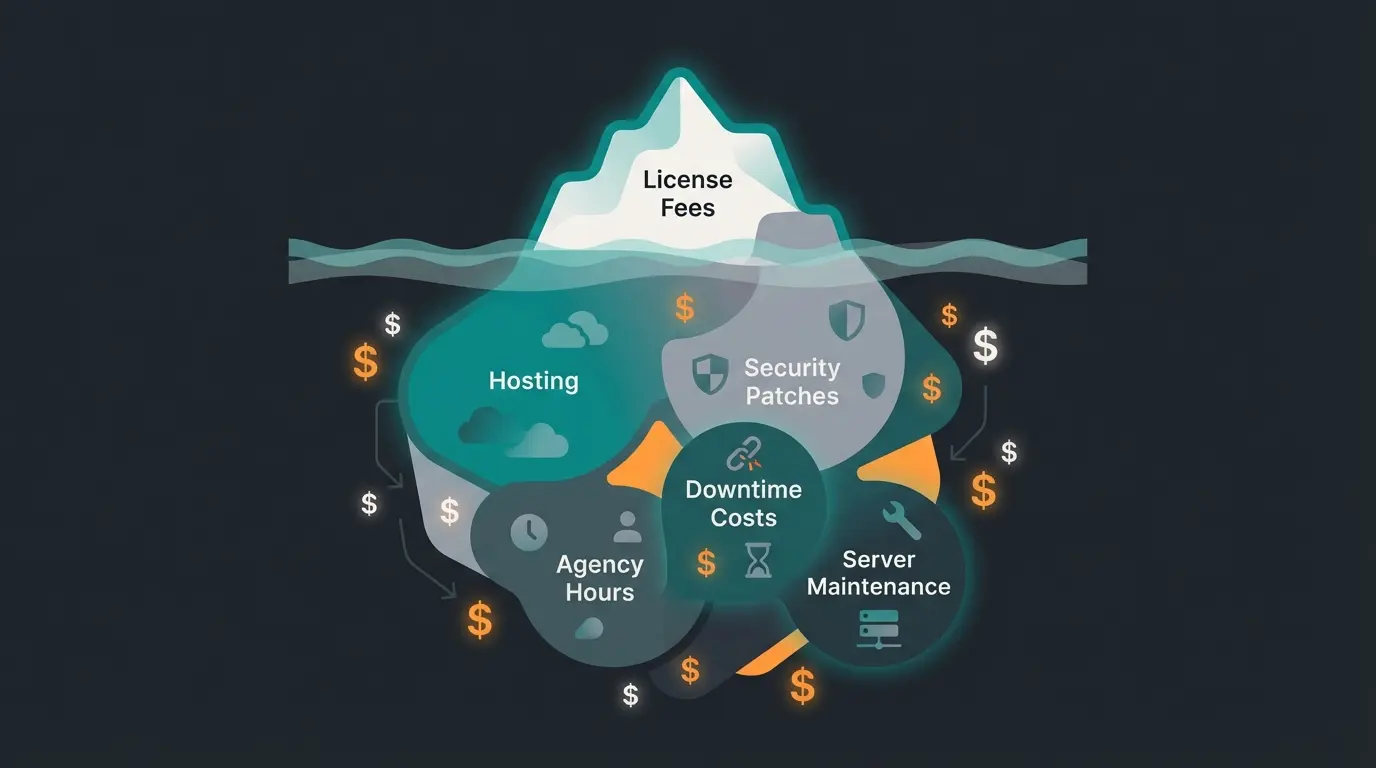
Many merchants are deceived by license costs alone. A realistic look at Total Cost of Ownership (TCO) over 3 years for a merchant with $5M revenue reveals the hidden reality. Understanding true Shopify costs and pricing requires looking beneath the surface.
Cost Scenario: $5M Revenue / Year (DACH Region)
| Cost Item | Shopify Plus | Magento 2 (Adobe Commerce) |
|---|---|---|
| License / Fee | ~$2,500/month (or 0.25% of revenue) | ~$3,500-5,500/month (license) |
| Hosting | $0 (Included) | $1,700-3,500/month (high performance) |
| Setup / Relaunch | $55,000-165,000 | $165,000-440,000 |
| Maintenance & Patches | $0 (Automatic) | $2,200-5,500/month (agency retainer) |
| Apps / Extensions | ~$1,100/month | ~$550/month (but expensive installation) |
| Transaction Fees | 0.15%-0.25% (using external gateways) | 0% (depending on payment provider) |
| Time-to-Market | 3-4 months | 6-12 months |
The Analysis: Shopify has higher variable costs (revenue share with Plus, transaction fees). Magento has massive fixed costs (hosting, personnel/agency). According to LitExtension and Reddit discussions, these differences become more pronounced at scale.
The 'Hidden Cost' Factor: With Magento, security updates (patches) are mandatory. Implementing these can cost several thousand dollars in agency services per update and carries the risk of downtime. With Shopify, this happens in the background at no cost. As SheroCommerce notes, these ongoing maintenance requirements significantly impact total ownership costs.
Studies show significantly reduced total cost of ownership over 3 years
Average agency retainer for ongoing patches and updates
Compared to 3-4 months for Shopify implementations
Result: Studies frequently show a 30-40% lower TCO with Shopify over 3 years, primarily through eliminated personnel costs and maintenance. For comparison with other platforms, see our detailed guide on Shopware costs in 2025.
Migration: Why Everyone's Fleeing Magento to Shopify
A look at Google Trends and agency reports shows a clear movement: Magento to Shopify migrations. According to MeldEagle, this trend has accelerated significantly. Why are so many making the switch?
- Magento 1 End-of-Life Trauma: Many merchants had to migrate from M1 to M2, which was effectively a complete rebuild. This cost trust and budget.
- Agency Dependency: Merchants are tired of opening a ticket with their agency for every small change (swap a banner, change a font). Shopify enables 'no-code' changes by the marketing team.
- Talent Shortage: Good Magento developers are rare and expensive (hourly rates often exceed $150).
- Innovation Stagnation: While Magento merchants are still applying security updates, Shopify merchants have already activated the latest AI features.
For those considering platform changes, our comprehensive guide on Magento to Shopware migration offers valuable insights into the migration process. Additionally, comparing WooCommerce vs Shopify may help inform your decision.
Platform Decision Flowchart: Which System Fits You?
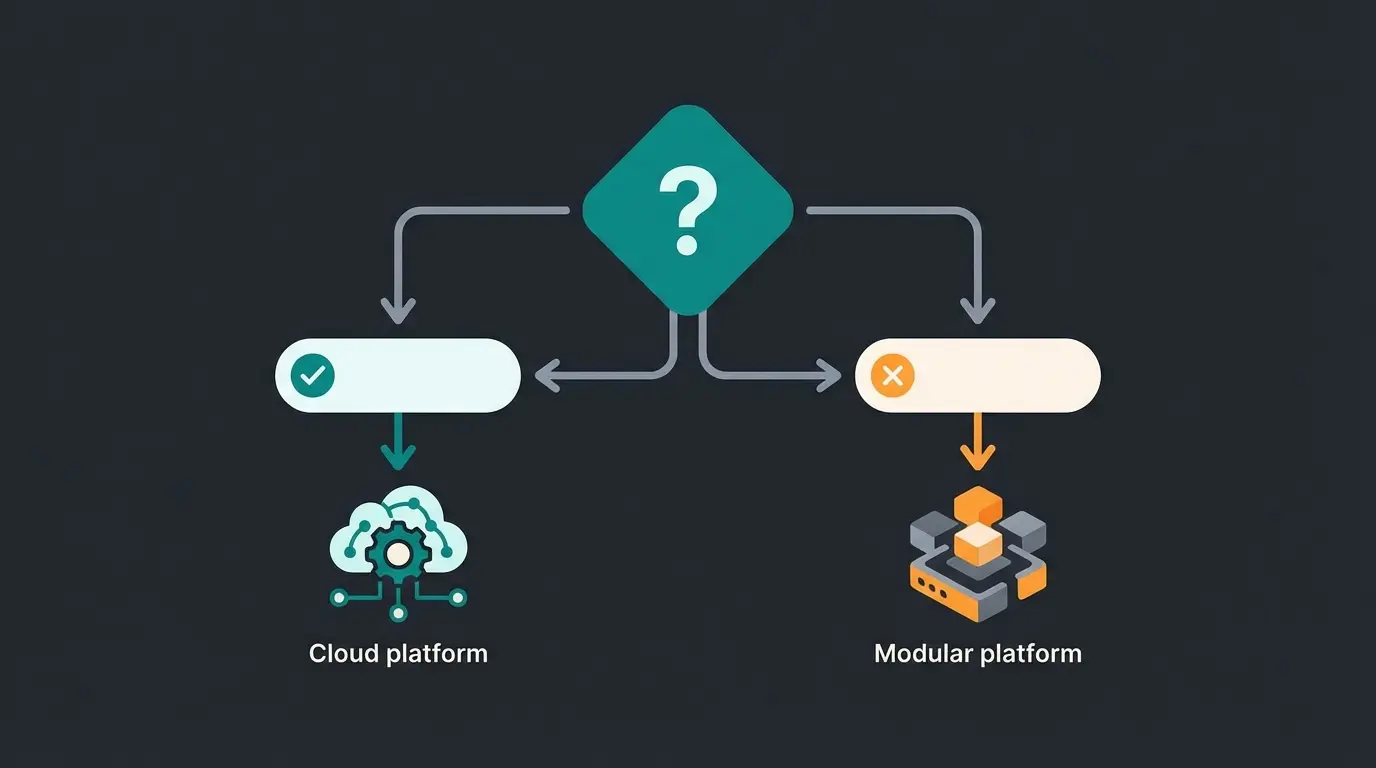
Making the Shopify oder Magento decision requires honest assessment of your organization's capabilities and priorities. Use this decision framework to guide your choice.
If YES: Magento becomes viable. If NO: Lean heavily toward Shopify or similar SaaS solutions.
If YES with unique ERP logic: Magento may be necessary. If standard processes work: Shopify excels.
If YES: You need AI consultation capabilities. Shopify's app ecosystem makes this dramatically easier to implement.
If you need to launch in weeks: Shopify. If you can wait 6-12 months: Magento is an option.
Conclusion & Recommendation: Who Wins in 2025?
The battle of Shopify vs Magento is decided—but not by knockout. Instead, we see clear market segmentation based on business needs and organizational capabilities.
Choose Magento (Adobe Commerce) If:
- You're a complex B2B manufacturer with extremely individual production processes that require deep customization
- You have an internal IT department with 5+ developers who can maintain and optimize the platform
- You absolutely require full data sovereignty on your own servers in Germany (e.g., critical infrastructure sector)
- You're prepared to invest six-figure sums in building a long-term 'asset' that you fully own
Choose Shopify (Plus) If:
- You're a merchant or brand (D2C & B2B) with focus on growth and customer acquisition
- You want to use AI technology to better advise customers instead of spending budget on server maintenance
- You need fast time-to-market and flexibility to adapt quickly to market changes
- You want to reduce dependency on developers and empower your marketing team
For those implementing AI solutions, our resources on WooCommerce plugins for AI demonstrate how similar principles apply across platforms.
FAQ: Common Questions About Shopify vs Magento
Not necessarily. While fees increase with revenue, Magento's hosting and maintenance costs often rise disproportionately with high traffic. The TCO calculation must be done individually, considering all hidden costs including agency retainers, security patches, and potential downtime losses.
Yes, products, customers, and orders can be migrated using specialized tools like Matrixify. Passwords often cannot be migrated (customers must request new ones), and the design must be rebuilt. The biggest challenge isn't data transfer—it's adapting your processes from custom development to working with standard solutions and apps.
Yes, with Shopify Plus. Features like net prices, EU VAT ID verification (via apps), and individual price lists are standard. For very complex German B2B requirements (e.g., OCI punchout for procurement systems), specialized apps or middleware solutions exist that integrate seamlessly.
Both platforms support solid SEO fundamentals. Shopify provides built-in SEO features and numerous optimization apps. Magento offers more granular control for technical SEO but requires more expertise to implement. For most businesses, the difference in SEO potential is negligible compared to content quality and strategy.
Shopify implementations typically take 3-4 months for a full-featured store. Magento implementations range from 6-12 months or longer for complex B2B scenarios. This time difference significantly impacts your total investment and opportunity cost of delayed market entry.
Whether you choose Shopify, Magento, or another platform—the future belongs to shops that guide customers intelligently. Discover how AI-powered product consultation transforms browsers into buyers.
Explore AI Consultation Solutions
Lasse is CEO and co-founder of Qualimero. After completing his MBA at WHU and scaling a company to seven-figure revenue, he founded Qualimero to build AI-powered digital employees for e-commerce. His focus: helping businesses measurably improve customer interaction through intelligent automation.