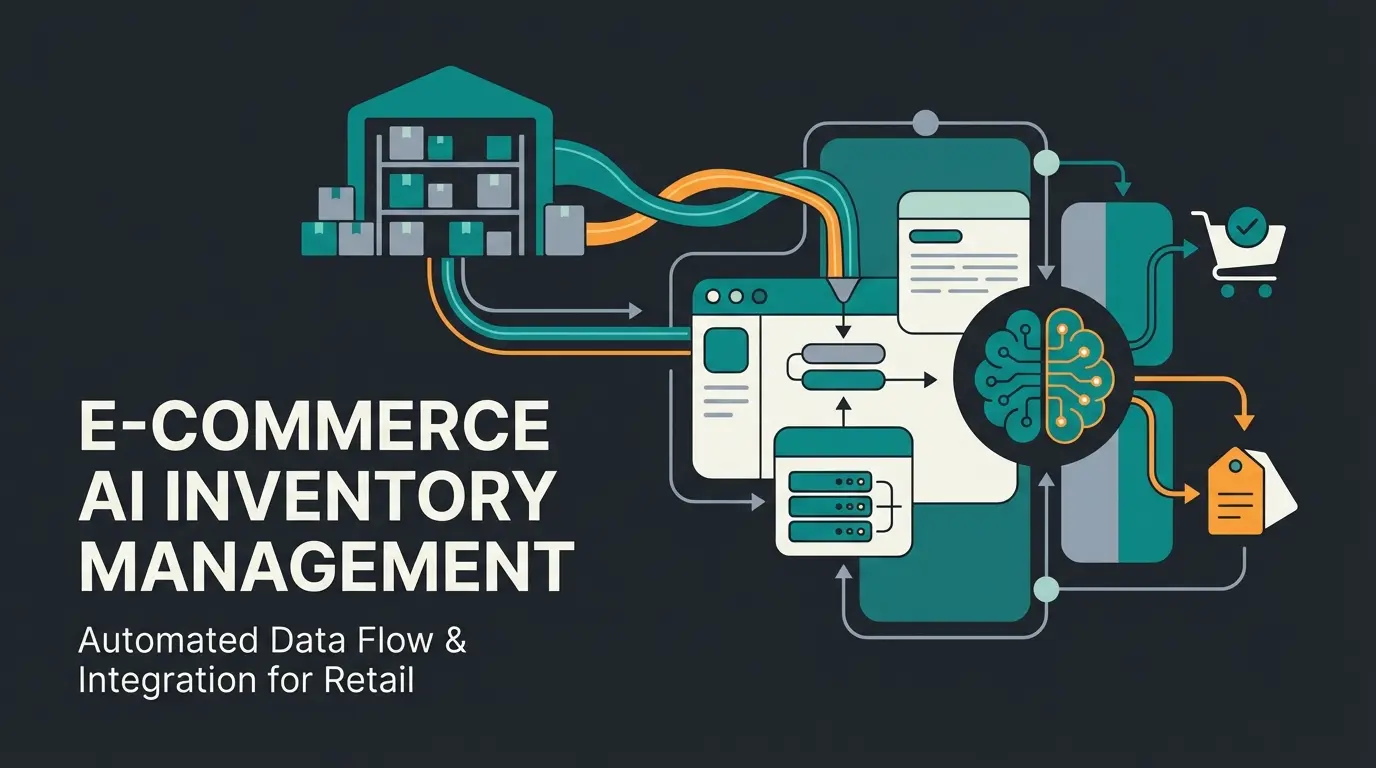
Introduction: From Server Admin to AI Sales Strategist
German e-commerce stands at a historic turning point. For years, the mantra of many online retailers was: 'My server, my data, my control.' But while many companies still spend resources applying security updates for legacy systems or manually updating PHP versions, international competitors are pulling ahead with a new weapon: Artificial Intelligence (AI) and Agentic Commerce.
The problem is obvious: Many shops are technically excellently managed warehouses – static, passive, and waiting for customers to know exactly what they're looking for. But consumer expectations are changing radically. They're not searching for item numbers; they're searching for solutions.
This is where Shopware Cloud comes into play. In this article, we argue that switching to the cloud is far more than a decision for 'less maintenance effort.' It's the strategic decision to position your data infrastructure to serve as fuel for the next generation of e-commerce: AI-powered product consultation. For more details, see our Shopware Cloud vs Self-Hosted in detail.
We analyze why Shopware Cloud (SaaS and PaaS) is the necessary prerequisite for scalable AI applications, how you can master data protection hurdles (GDPR), and why now is the right time to transition from 'administration' to 'innovation.' Just as AI employees are transforming customer interactions, your cloud infrastructure must evolve to support these intelligent systems.
Shopware Cloud Explained: SaaS vs. PaaS vs. On-Premise
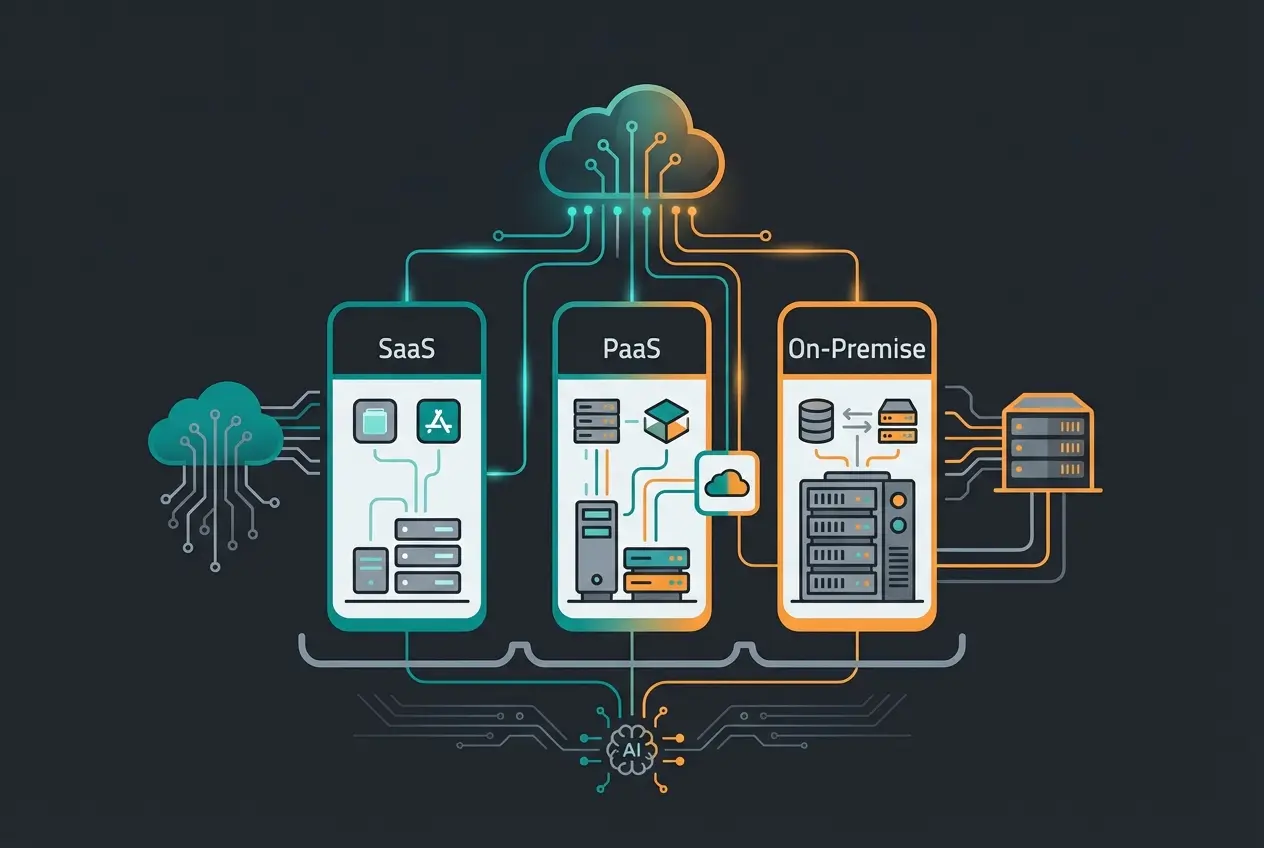
To understand the strategic importance of the cloud for AI, we first need to clarify the terminology. The market is full of half-knowledge about hosting models. Shopware has massively restructured its offerings in recent years, particularly with the introduction of the Rise, Evolve, and Beyond plans and the new Fair Usage Policy for the Community Edition, as detailed on Qualimero.
Here is the definitive classification of operating models:
1. Shopware SaaS (Software as a Service)
This is the 'true' Shopware Cloud. You rent the software including infrastructure.
- Target audience: Retailers who want to focus 100% on sales and marketing
- Technology: Automatic updates, autoscaling (important for AI load spikes), no server administration
- Editions: Available in Rise, Evolve, and Beyond plans
- AI relevance: Highest integration. Features like the AI Copilot are often available here first or exclusively natively, according to Shopware
2. Shopware PaaS (Platform as a Service)
The middle ground for technically demanding projects.
- Target audience: Retailers with their own development teams who need special backend customizations but don't want to maintain the infrastructure themselves
- Technology: You have access to the codebase and deployment pipelines, but the server environment is managed by Shopware (via Platform.sh)
- AI relevance: High. Enables integration of custom AI microservices directly into the hosting environment
3. Self-Hosted / On-Premise
The classic approach. You host Shopware on your own servers or with a host of your choice.
- Target audience: Companies with extremely specific compliance requirements or legacy IT that is not cloud-capable
- Restriction: Since 2025, a revenue cap (GMV) of 1 million euros applies to the free Community Edition, increasing pressure to switch to commercial plans as noted by Qualimero
- AI relevance: Limited. AI features often need to be retrofitted via plugins; scalability for compute-intensive AI processes must be built yourself
Comparison Table: Hosting Models in AI Context
| Feature | Self-Hosted (On-Prem) | Shopware Cloud (SaaS) | AI-Optimized Cloud (PaaS) |
|---|---|---|---|
| Maintenance Effort | High (Server, OS, Updates) | Zero (Managed by Shopware) | Medium (DevOps Focus) |
| Scalability | Manual / Limited | Automatic (Autoscaling) | Flexibly configurable |
| AI Integration | Via Plugins / API | Native (AI Copilot Core) | Native + Custom AI Services |
| Time-to-Market | Weeks to Months | Days | Weeks |
| Data Access for AI | Silo Risk | Unified API Access | API + Direct DB Access |
| Cost Model | License + Hosting + Personnel | Monthly Subscription | Subscription + Usage |
The Hidden Advantage: Why Cloud is the Foundation for AI
Many competitors and agencies sell Shopware Cloud with the argument of cost savings on IT maintenance. That's correct, but it falls short. The true USP (Unique Selling Proposition) of the cloud lies in its function as a Data Engine for Artificial Intelligence.
Why does modern AI (like LLMs - Large Language Models) work better in the cloud than on your own server in the basement?
1. Unified Data Access & API-First Architecture
AI models are data-hungry. For an AI agent to advise a customer ('Which sleeping bag is suitable for Norway in October?'), it must access product data, inventory levels, and attributes within milliseconds. Shopware 6 was developed with an API-first approach. In Shopware Cloud, these interfaces (Store API, Admin API) are highly performant and available as standard.
- The problem with On-Premise: Firewalls, outdated PHP versions, or slow database queries often prevent real-time access for external AI tools
- The Cloud advantage: The infrastructure is designed to process thousands of API calls per minute – exactly what an AI agent needs during high traffic
2. Elastic Scalability (Burst Performance)
AI workloads are unpredictable. A marketing newsletter goes out, 5,000 customers storm the shop, and 500 of them simultaneously start a conversation with the AI consultant. A classic server would buckle under this load or would need to be permanently oversized (and therefore expensive). Shopware Cloud uses technologies like Kubernetes and AWS Auto Scaling. It breathes with demand. When AI needs computing power, it gets it immediately.
3. The 'Agentic Commerce' Vision
Shopware has articulated a clear vision with the Agentic Commerce Alliance: The future belongs to autonomous agents that act on behalf of customers, as outlined by Shopware's official documentation. These agents need a standardized environment to communicate with each other (e.g., a customer's price negotiation bot talks to the retailer's sales bot). A fragmented landscape of thousands of differently configured on-premise servers makes this almost impossible. The cloud creates the standard on which these interactions can take place.
Server-based, manual updates, traditional hosting with limited scalability
Headless architecture, API-first design, automated infrastructure management
Cloud + AI Consultant integration enabling autonomous sales agents and personalized product recommendations
Beyond Chatbots: The Era of AI Product Consultation
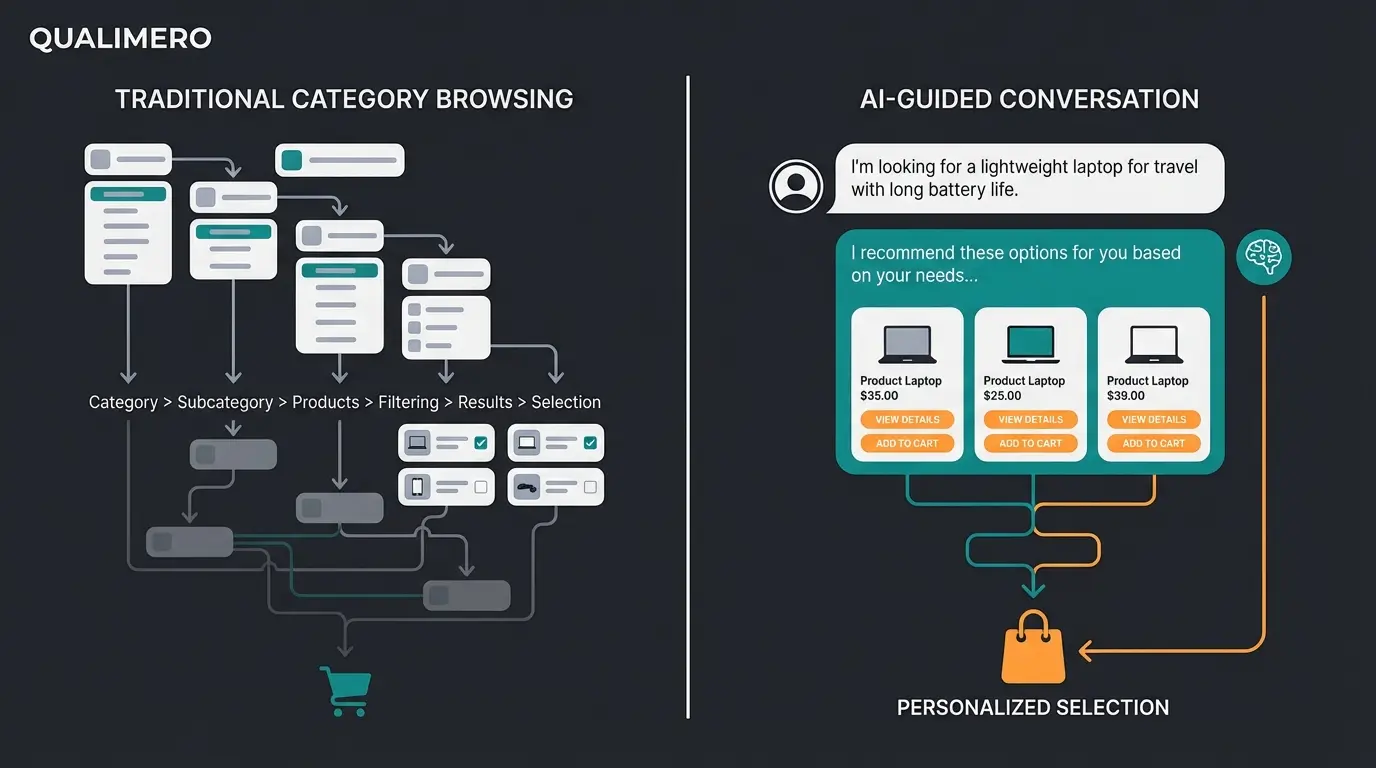
When we talk about AI in e-commerce, most people think of support chatbots ('Where is my package?'). That's reactive cost reduction. The real money, however, lies in proactive revenue growth through genuine consultation.
This is where your Shopware Cloud setup differentiates itself from the competition. Use the cloud infrastructure to deploy Consultant AIs, not just support bots. Companies like those using AI product consultation are already seeing the difference.
The Difference: Support vs. Consultation
Support Bot (Standard):
- Customer: 'Do you have hiking boots?'
- Bot: 'Yes, here's the link to the hiking boots category.'
- Value: Low. The customer still has to filter themselves.
Consultant AI (Shopware Cloud + AI):
- Customer: 'I need hiking boots.'
- AI: 'Happy to help. Are you planning light day hikes in the low mountains or alpine multi-day tours with heavy luggage?'
- Customer: 'Alpine tours, but I have wide feet.'
- AI (accesses attributes via API): 'Understood. For wide feet and alpine terrain, I recommend the Meindl Bernina. It has the special Comfort-Fit last and Category B/C soles for scree. Shall I check the size?'
This proactive approach is exactly what AI Employee Flora demonstrates – transforming passive browsing into guided consultation experiences.
Technical Implementation in Shopware Cloud
To realize this, Shopware offers the AI Copilot as part of the commercial plans (Rise, Evolve, Beyond), which is constantly being expanded according to Atwix and Shopware's AI documentation.
- Image Keyword Assistant: The AI analyzes product images and automatically tags them (e.g., 'red', 'leather', 'lace-up'). This makes products discoverable for search queries that don't appear in the title, as reported by Brainstreamtechnolabs
- AI Export Assistant: Enables exporting specific data sets using natural language (e.g., 'Show all orders from yesterday with cart value over €100'). This is essential for generating training data for external AI models
- Search by Context: Customers can search in natural sentences. The cloud infrastructure ensures that this computationally intensive semantic search (vector search) remains performant, as highlighted by Shopware's features page
Similar consultation capabilities are being deployed across industries, from AI Employee Kira helping garden enthusiasts find the right products to AI-powered customer service handling complex inquiries automatically.
AI consultants provide round-the-clock product advice without staffing costs
Proactive AI consultation drives significantly higher conversion rates than passive filtering
Advanced AI handles the majority of product questions without human intervention
Cloud API architecture enables near-instant product data retrieval for AI agents
See how AI-powered product consultation on Shopware Cloud can increase your conversion rates and customer satisfaction. Our AI employees work 24/7, providing expert-level advice at scale.
Start Your AI TransformationData Privacy & Security in the German Market (GDPR)
A main reason for the hesitation of German SMEs toward the cloud is concern about data protection. 'Am I even allowed to put my customer data in a cloud where AI runs?'
The answer is a clear yes – if you understand the architecture.
1. Server Location Frankfurt (AWS)
Shopware Cloud (SaaS/PaaS) runs primarily on Amazon Web Services (AWS) in the Frankfurt (eu-central-1) region, as confirmed by Shop-Studio.io.
- Legal security: Data does not leave German jurisdiction for hosting
- Certification: Data centers are certified according to ISO 27001, SOC 1/2/3, and C5 (BSI)
2. AI and Personally Identifiable Information (PII)
Shopware has designed the AI Copilot to work in a data protection-compliant manner.
- No training with your data: Shopware ensures that your business data is not used to train the public AI models (like GPT-4)
- Anonymization: For features like 'review summarization' or the 'Export Assistant', personal data (PII) is either not sent to the AI at all or pseudonymized beforehand, unless necessary for direct task fulfillment
3. Data Processing Agreement (DPA)
As a SaaS customer, you conclude a DPA (Data Processing Agreement) directly with Shopware AG (German company), as outlined on Shopware's official site. Shopware acts as the main contractor and regulates subcontracting relationships with AWS. This massively simplifies your compliance documentation compared to self-operation, where you would have to audit each service provider individually.
Is Shopware Cloud Right for Your Business?
Not every shop benefits from switching to the cloud immediately. Use this checklist as a decision guide.
Switch to Shopware Cloud (SaaS/PaaS) if...
- ✅ You think AI-first: You want to use features like the AI Copilot, semantic search, and automated product texts immediately without configuring plugins
- ✅ Scaling causes pain: Your shop slows down during traffic spikes (Black Friday), and you don't want to worry about load balancers anymore
- ✅ You want to grow in B2B: With the Evolve plan, you get access to B2B Components (budgets, rights & roles) that are natively integrated in the cloud, as detailed by Qualimero's analysis
- ✅ You prioritize time-to-market: You want to launch new landing pages and campaigns in hours, not weeks
Stay On-Premise (for now) if...
- ❌ Legacy ERP constraint: You have a 20-year-old ERP system that can only be connected via direct database write access (no API). (PaaS could be a possible bridge here)
- ❌ Extreme data sovereignty: Your internal compliance guidelines categorically prohibit any hosting with US hyperscalers (even if servers are in Germany)
- ❌ Budget limitation: You're a very small shop with under €1 million GMV and have the technical skills to securely operate the Community Edition yourself
For businesses ready to leverage AI regardless of their current infrastructure, solutions like AI lead generation can bridge the gap while you plan your cloud migration.
Strategic Migration: 'Data Hygiene' as AI Preparation
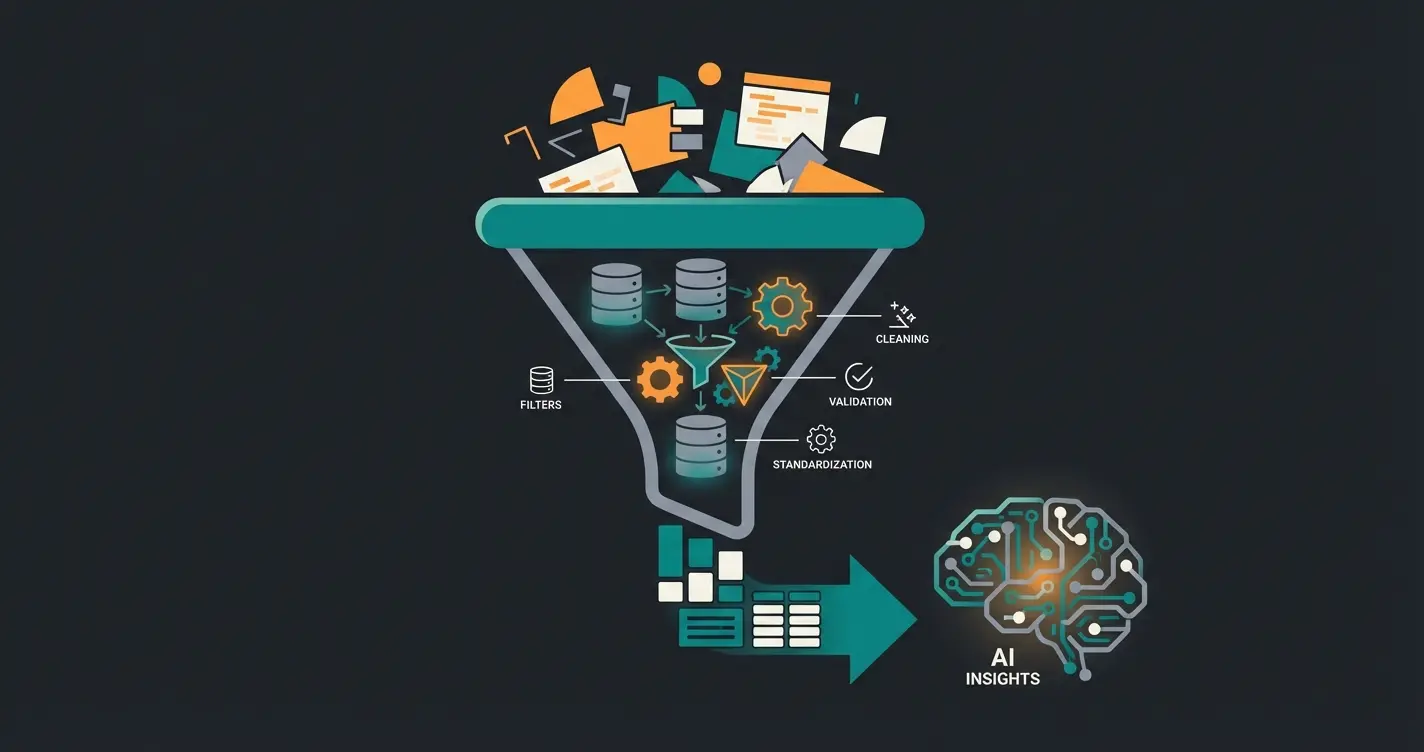
A switch to the cloud is the perfect time for spring cleaning. When migrating from Shopware 5 or another system to Shopware 6 Cloud, you shouldn't just copy data ('Lift and Shift').
The principle: Garbage In, Garbage Out. An AI is only as smart as the data it reads.
- Clean up attributes: Use the migration to standardize product attributes. An AI consultant cannot filter if one t-shirt says 'Color: Blue' and another says 'Farbe: Blau'
- Remove dead weight: Don't migrate customers who have been inactive for 5 years. This saves storage space and improves the performance of AI analyses (e.g., with 'Customer Classification')
- AI-powered enrichment: Use the AI Copilot immediately after migration to generate missing product descriptions or tag images. This way, you start in the cloud directly with an 'AI-ready' catalog
Organizations like those using AI Chat solutions have demonstrated how clean, well-structured data dramatically improves AI consultation quality.
Comparison: Standard Hosting vs. AI-Enhanced Cloud
To truly understand the competitive advantage of AI-enhanced Shopware Cloud, consider this comprehensive comparison across three approaches:
| Dimension | Self-Hosted | Standard Cloud | AI-Enhanced Cloud |
|---|---|---|---|
| Maintenance Effort | High – manual updates, security patches, server monitoring | Low – managed infrastructure, automatic updates | Low – plus AI-optimized configurations |
| Setup Time | Weeks to months | Days to weeks | Days – with AI features pre-configured |
| Sales Automation Level | None – purely manual | Basic – standard automation rules | Advanced – AI agents handle consultations |
| Customer Interaction Depth | Static FAQ pages | Rule-based chatbots | Context-aware AI consultants |
| Revenue Impact | Baseline | Efficiency savings | Active revenue generation through AI sales |
| Scalability for AI Workloads | Must build custom infrastructure | Scales automatically | Optimized for AI burst processing |
The AI Assistant Sophie exemplifies how businesses can achieve the 'AI-Enhanced Cloud' level, delivering personalized consultation at scale.
Real-World Implementation: AI Consultation Success Stories
The transition from theory to practice reveals compelling results. Companies implementing AI-powered product consultation on Shopware Cloud infrastructure are seeing measurable improvements across key metrics.
Consider how AI Employee Theresa transformed customer interactions from reactive support into proactive sales consultation. By leveraging the unified data access of Shopware Cloud, the AI agent could instantly retrieve relevant product information, cross-reference customer preferences, and provide personalized recommendations in real-time.
Similar success has been achieved in handling social media inquiries where the API-first architecture allows AI to seamlessly integrate across multiple customer touchpoints.
For businesses with mobile-first customers, whatsapp automation demonstrates how cloud infrastructure enables omnichannel AI consultation that meets customers wherever they prefer to engage.
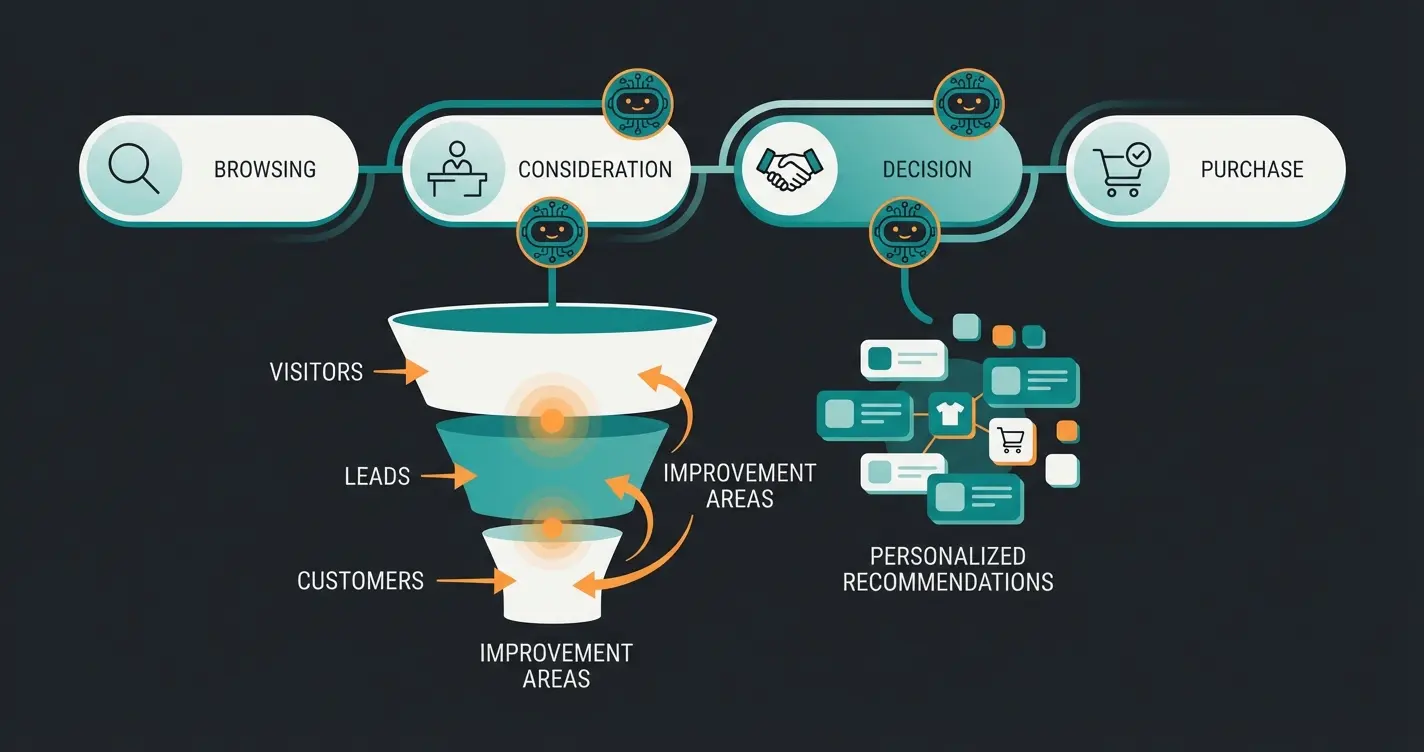
The key differentiator in all these cases is the underlying cloud infrastructure. Without the unified API access, elastic scalability, and standardized data architecture that Shopware Cloud provides, these AI implementations would require extensive custom development and would struggle to handle real-world traffic patterns.
Conclusion & Future Outlook: The Future is Autonomous
The 'Cloud vs. On-Premise' discussion is often conducted technically but is actually a strategic debate. Those who are still patching servers today will lack the time tomorrow to train sales agents.
Shopware Cloud offers, with the Rise, Evolve, and Beyond plans as well as integration into the Agentic Commerce Alliance, the most robust foundation for the e-commerce of the future. It's secure (Frankfurt), scalable (AWS), and most importantly: it speaks the language of AI.
Our recommendation: Don't wait until your competition launches the first fully autonomous sales consultant. Use the cloud migration as an opportunity to modernize your data infrastructure and transform your shop from a passive catalog into an active advisor.
Just as AI product consultation success stories have shown, the businesses that invest in AI-ready infrastructure today will dominate their markets tomorrow.
Practical Tips for Getting Started
- Check your plan: Use the Shopware pricing calculator to see if Rise, Evolve, or Beyond suits you. Remember the GMV limits of the Community Edition
- Test the AI Copilot: Get a demo of the cloud environment and specifically test the 'Export Assistant' and 'Image Keyword' features
- Start small: If necessary, first migrate a sub-shop or a country market to the cloud to gain experience with API performance for AI tools
- Partner strategically: Consider working with AI consultation specialists who understand both Shopware architecture and conversational AI implementation
Frequently Asked Questions
Yes, Shopware Cloud is fully GDPR compliant. The infrastructure runs on AWS servers in Frankfurt (eu-central-1), ensuring data stays within German jurisdiction. Shopware AG provides a Data Processing Agreement (DPA) directly with customers, and the AI Copilot is designed to not use your business data for training public AI models. Personal data is either excluded or pseudonymized when processed by AI features.
Shopware SaaS provides the highest level of managed infrastructure with native AI Copilot integration – ideal for businesses wanting turnkey AI features without technical overhead. Shopware PaaS offers more flexibility for custom AI microservices integration while still maintaining managed infrastructure. SaaS is best for AI-first businesses focusing on sales and marketing, while PaaS suits those with development teams needing custom AI implementations.
Absolutely. Shopware 6's API-first architecture makes it ideal for integrating external AI tools. The Store API and Admin API provide high-performance, standardized access to product data, inventory, customer information, and order history. Cloud infrastructure handles thousands of API calls per minute, which is essential for real-time AI consultation. External AI solutions can leverage these APIs to deliver personalized product recommendations and consultation.
Shopware Cloud operates on a monthly subscription model (Rise, Evolve, Beyond plans) rather than traditional license plus hosting plus personnel costs. While the subscription fee may seem higher than self-hosting, you eliminate server administration overhead, gain automatic scaling for AI workloads, and access native AI Copilot features. For businesses prioritizing AI-driven sales, the ROI typically comes from increased conversion rates and 24/7 AI consultation availability.
Data quality is critical – remember 'Garbage In, Garbage Out.' During migration, standardize all product attributes (consistent color names, size formats, etc.), remove inactive customer records, and ensure complete product descriptions. After migration, immediately use the AI Copilot's Image Keyword Assistant to auto-tag product images and the content generation features to fill gaps. Starting with an 'AI-ready' catalog dramatically improves consultation quality from day one.
This article is based on current research on Shopware 6.7+, the Cloud plans (as of 2025), and the Agentic Commerce Alliance.
Ready to hire an AI employee and transform your Shopware Cloud into an intelligent sales platform? The future of e-commerce consultation starts with the right infrastructure – and the right AI partner.
Join forward-thinking e-commerce businesses already using AI-powered product consultation. Our AI employees integrate seamlessly with Shopware Cloud to deliver expert-level advice, increase conversions, and work around the clock.
Get Started with AI Consultation
Lasse is CEO and co-founder of Qualimero. After completing his MBA at WHU and scaling a company to seven-figure revenue, he founded Qualimero to build AI-powered digital employees for e-commerce. His focus: helping businesses measurably improve customer interaction through intelligent automation.