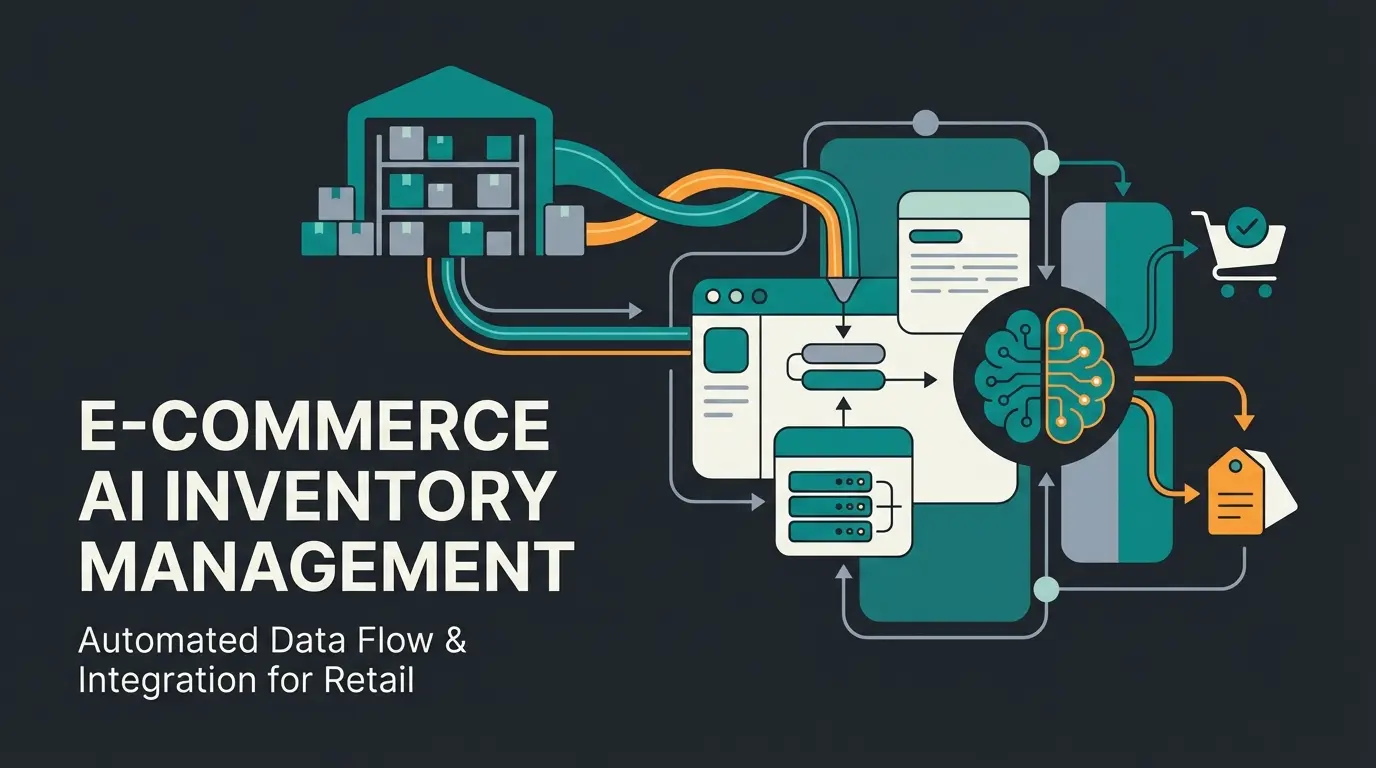
Introduction: Why Your Backend Determines Your Sales Success
Have you ever wondered why some online shops seem to know exactly what their customers want, while others only display static product lists? The secret often lies not in the frontend, but deep in the engine room: in the inventory management system.
For a long time, the inventory management system (also known as merchandise management or ERP) was considered the boring mandatory program of commerce—a digital filing cabinet for counting stock and writing invoices. But in 2025, the tables have turned. A modern cloud inventory management solution is far more than an administrative tool today. It's the central brain that determines whether your new AI tools become brilliant salespeople or hallucinating chatbots.
In this comprehensive guide, you'll discover why the switch to the cloud is inevitable, how you can turn your online inventory management into the foundation for real "Product Intelligence," and which providers have already made the leap from mere administrator to intelligent consultant. Companies leveraging AI product consultation are already seeing the competitive advantage of connecting their inventory data to intelligent systems.
What Is Cloud Inventory Management? (Definition)
A cloud inventory management system (often also referred to as SaaS inventory management or Cloud ERP) is a software solution for controlling business processes that is not installed locally on your own servers, but is provided via the internet.
Unlike classic on-premise solutions, which often run sluggishly and isolated on a company computer, a browser-based inventory management system acts as a central hub. It connects purchasing, warehouse, sales, and accounting in real-time and makes this data available from anywhere—whether in the home office, in the warehouse via tablet, or for external AI agents.
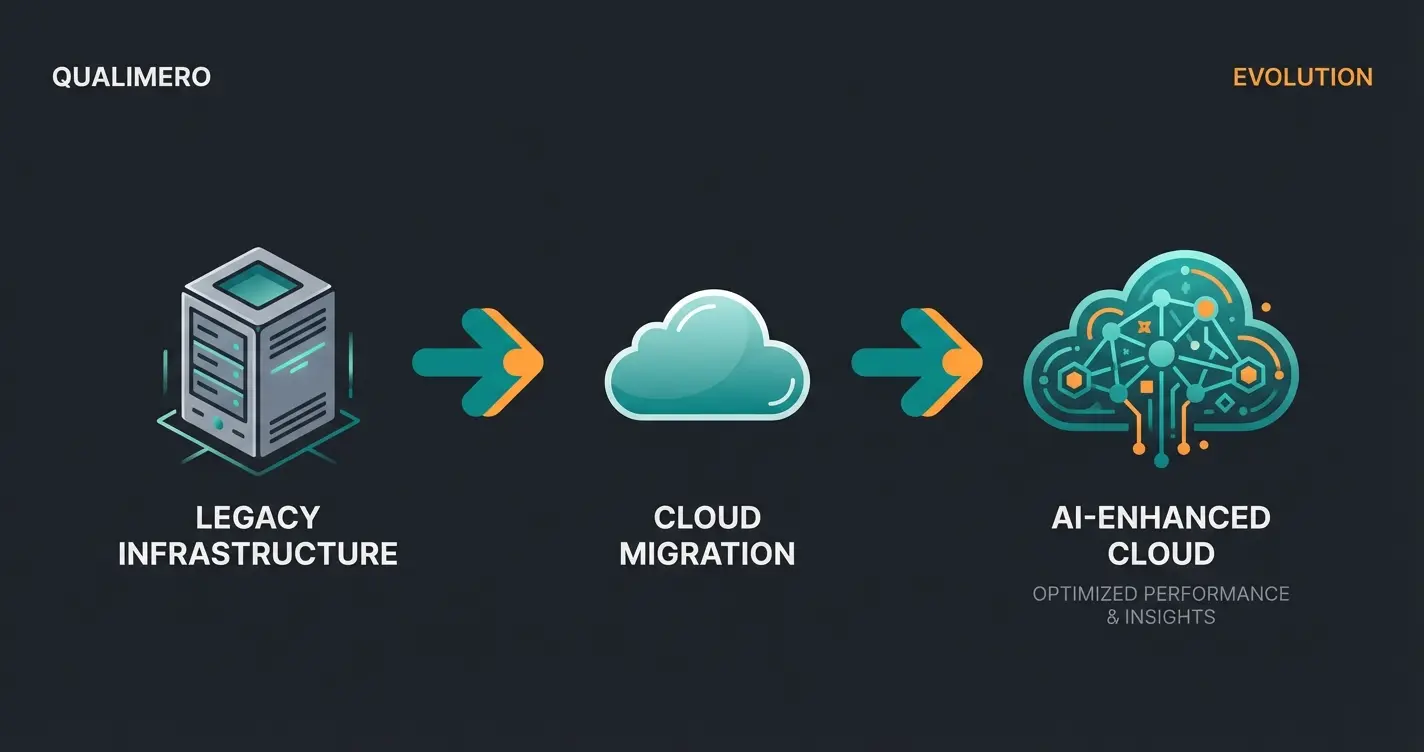
The Evolution of Inventory Systems
- Generation 1 (On-Premise): Local installation, access only in the office, updates once a year (expensive and risky). Data is "trapped."
- Generation 2 (Cloud 1.0): The software runs in the browser, but it's basically just the old software on someone else's server.
- Generation 3 (Cloud Native & AI-Ready): API-first approach. The system is designed to exchange data in real-time with shops, marketplaces, and AI tools.
Cloud vs. On-Premise: Why the Future Is Online
The discussion of "cloud or own server" is often still shaped by security concerns in Germany. But the facts in 2025 speak a clear language. According to current studies by Bitkom Research, 90% of German companies already use cloud applications, and almost two-thirds state that they would no longer be able to work without cloud solutions.
Why this massive shift? It's not just convenience—it's economic viability and technological necessity.
German companies using cloud applications
Long-term cost reduction vs on-premise
Companies wanting EU-based cloud hosting
Cost Comparison (TCO - Total Cost of Ownership)
At first glance, subscription models (SaaS) appear more expensive than a one-time license purchase. But this is a fallacy. Long-term studies over 10 years show that cloud ERP systems are 30-50% cheaper in total cost of ownership (TCO) than on-premise solutions, as documented by Bizowie.
| Criterion | On-Premise (Local Server) | Cloud Inventory Management (SaaS) |
|---|---|---|
| Investment (CAPEX) | High (server hardware, licenses) | Low (no hardware needed) |
| Operating Costs (OPEX) | Maintenance, electricity, IT staff, updates | Monthly subscription fee (predictable) |
| Updates & Security | Manual, often delayed, security risk with old versions | Automatic, always current, professional security teams |
| Access | Usually only via VPN or in office | Anywhere via browser-based system |
| Data Connectivity | Closed silo (hard for AI to reach) | Open API (real-time data for AI & shops) |
The Factor of Digital Sovereignty
A valid objection to the cloud has long been data protection. However, the market has adapted here. 82% of German companies want cloud providers from Europe, according to Bitkom. Modern providers like weclapp or Xentral therefore explicitly host in German data centers to ensure GDPR compliance and independence from the US Cloud Act.
The strategic argument: The most important advantage of the cloud, however, is not cost savings, but speed. In an on-premise world, connecting a new AI tool takes months. In a SaaS inventory management system with an open API, it often takes just minutes. This is why businesses implementing AI lead generation are choosing cloud-native solutions.
Key Functions of Modern Cloud Systems
Of course, an online inventory management system must master the basics. Without solid warehouse management, commerce collapses. But to remain competitive in 2025, "managing" is no longer enough.
1. The Essentials: Operational Excellence
- Inventory Management: Real-time synchronization across all channels (Amazon, Shopify, retail store). No more overselling.
- Order Processing: Automated import of orders, creation of invoices and delivery notes.
- Purchasing & Disposition: Reorder points and automatic order suggestions.
2. The Differentiator: Product Intelligence & Data Enrichment
This is where the wheat separates from the chaff. Most competitors treat article data as an afterthought (article number, price, name—done). A modern cloud inventory management system must, however, function as a PIM (Product Information Management) or be closely integrated with one.
- Deep Attributes: Storage of details like "fit," "material composition," "sustainability certificate," "care instructions."
- Multimedia Data: Linking of images, videos, and 3D models directly to the item master.
3. Headless Capability
The trend is moving toward "Headless Commerce" as noted by Tailor.tech and SmartBusinessCloud. This means that the backend (your inventory management) is decoupled from the frontend (the shop).
Why is this important? You can open up new sales channels (e.g., selling via WhatsApp, smart speakers, or in the metaverse) without having to change your core processes. The cloud inventory management delivers the data via API to any endpoint.
Online Inventory: Foundation for AI-Powered Consultation
This is the point that most "best-of" lists ignore. You're looking for software that manages your packages. But you should be looking for software that revolutionizes your sales.
The Problem: Data Graveyards
Many companies sit on a mountain of data in their inventory management but only use it passively. Consider this scenario:
- Customer asks in chat: "Do you have a running shoe for wide feet that's vegan?"
- Classic answer: "Please use the search function in the shop." (Customer is frustrated).
The Solution: Active Data & AI Consultants
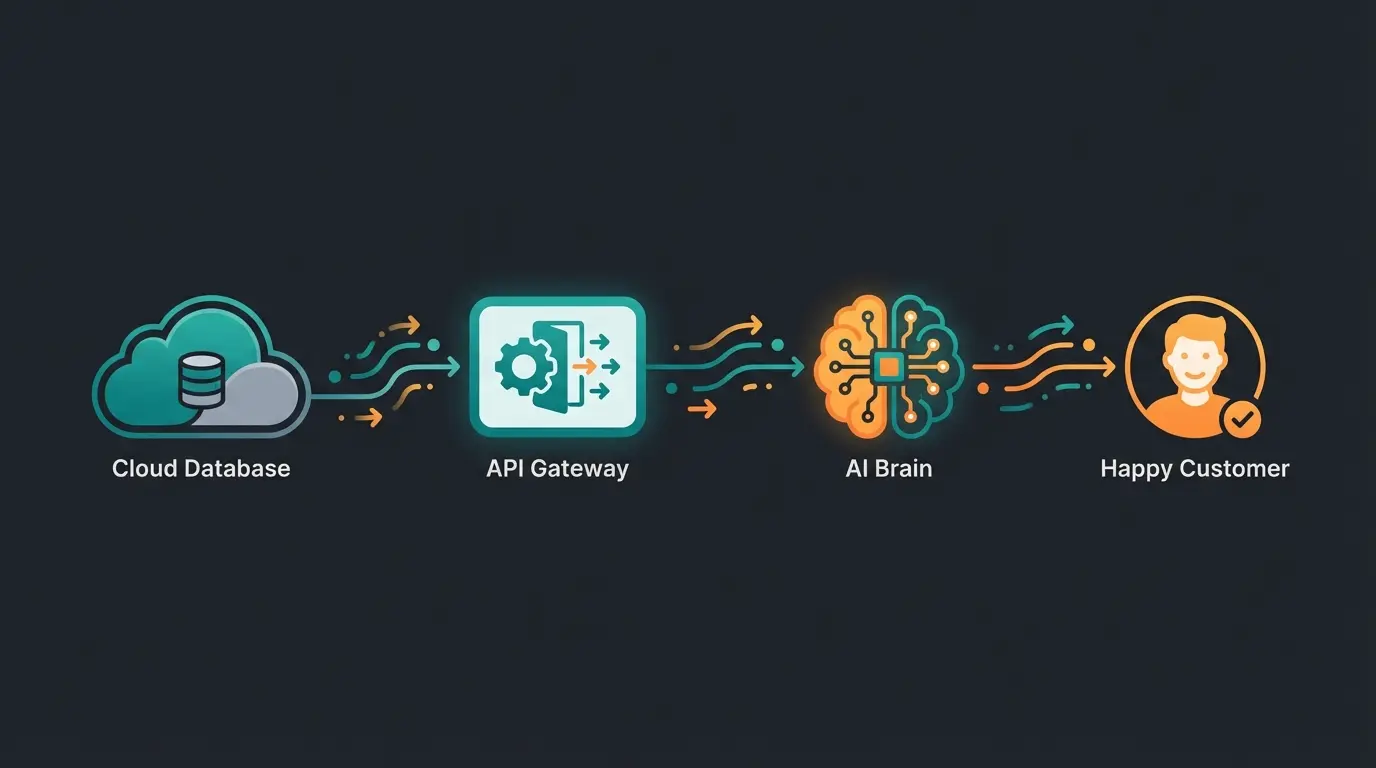
When your online inventory management provides cleanly maintained, structured data (attributes) and has an API, you can connect modern AI agents (Agentic AI), as explained by ContentManager.de. This is exactly how solutions like AI Employee 'Kira' leverage inventory data to provide intelligent consultation.
Cloud inventory stores: Item 123 = 'Sneaker', Attribute = 'Wide Fit', Material = 'Synthetic (Vegan)', Stock = '5 units'
AI queries in real-time: 'Give me all shoes with property wide + vegan that are in stock'
Chatbot responds with advice: 'I recommend Model X—designed for wide feet, 100% vegan, 5 in your size. Shall I reserve it?'
Checklist: Is Your Inventory System Ready for AI?
- API-First: Is there a documented REST API that can read all article data (not just prices)?
- Attribute Depth: Can you create custom fields and export them in a structured way?
- Real-Time Capability: Are inventory changes transmitted immediately (push) or only hourly (pull)? For AI consultation, real-time is mandatory.
Businesses that have implemented this approach, like those using AI Product Consultation, report significant improvements in customer satisfaction and conversion rates.
Discover how connecting your inventory system to intelligent AI agents can transform passive product data into active sales consultants. Book your free assessment today.
Get Your Free AI Readiness CheckSelection Criteria: Finding the Best Cloud Software
The market for cloud inventory management solutions is huge. In addition to the classic functions, you should prioritize the following criteria in 2025:
1. Interfaces & Ecosystem
An isolated solution is worthless. Look for native integrations to:
- Shop Systems: Shopify, Shopware 6, WooCommerce.
- Marketplaces: Amazon, eBay, Kaufland, Otto.
- Shipping Providers: DHL, DPD, Hermes.
- AI Tools: ChatGPT integrations (e.g., for automatic product texts) or support bots.
Companies implementing comprehensive solutions like AI Chat have seen how proper system integration dramatically improves customer interactions.
2. Scalability & Performance
Startups grow quickly. A system that works great with 50 orders a day can collapse at 5,000 orders.
- Ask for reference customers with high order volumes.
- Check whether the system has "throttling" on API calls (rate limits) that could slow down your AI.
3. Usability (Browser-Based Interface)
Your employees have to work with it every day. A browser-based inventory management should be intuitive.
- Test the mobile view: Can a warehouse worker pick with a tablet?
- How fast do the pages load? (Cloud performance is critical).
4. AI-Readiness (The New Standard)
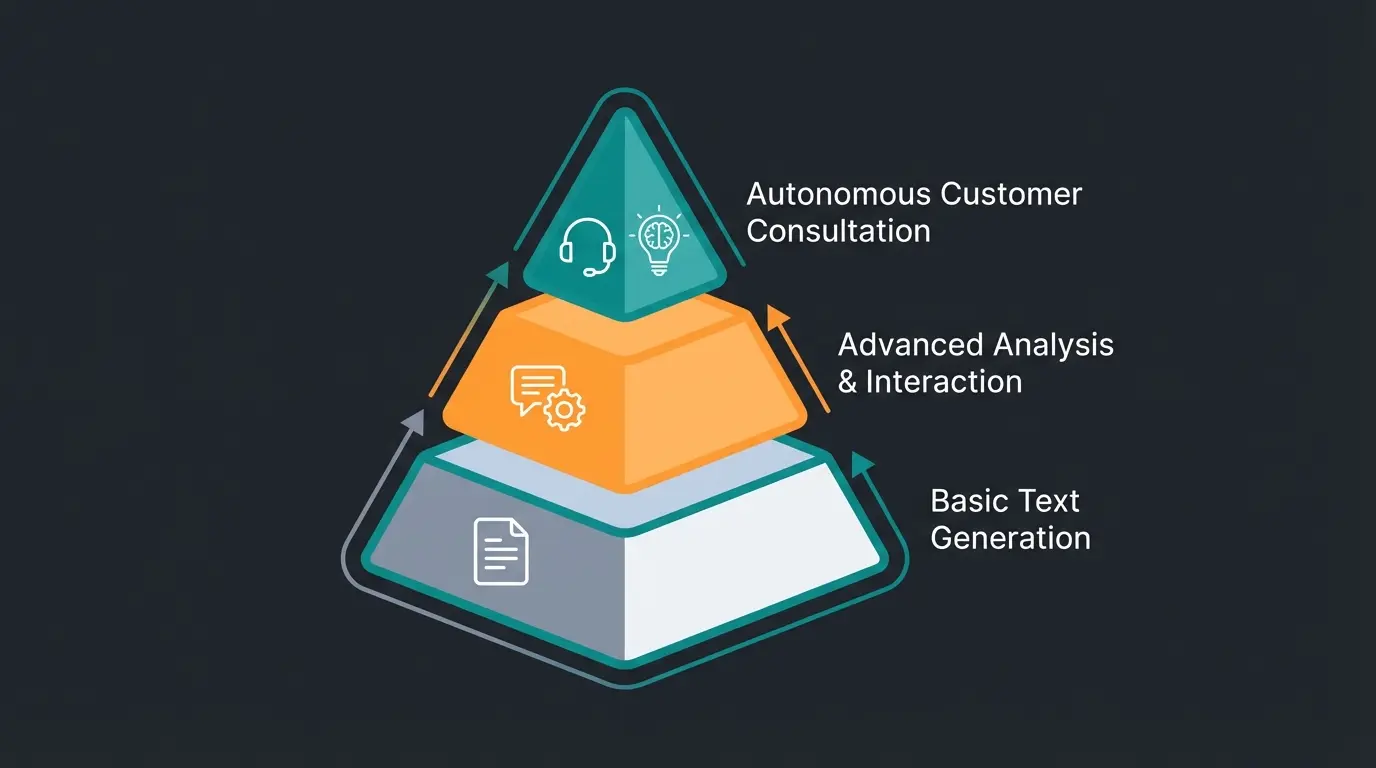
Ask the provider specifically: "What AI features are planned?" According to ERP-4-Business, there are distinct levels of AI integration:
- Level 1 (Basic): AI writes product texts or emails (offered by some providers like desk4 or Billbee).
- Level 2 (Advanced): AI analyzes sales data for forecasting.
- Level 3 (Visionary): The system offers interfaces for "Agentic AI" to autonomously advise customers.
Top Providers at a Glance (Quick Comparison)
Here's a look at some of the most relevant players in the German market, rated according to their suitability for modern, data-driven strategies.
| Provider | Focus & Strength | AI Factor | Target Group |
|---|---|---|---|
| Xentral | Process automation & interfaces, good basis for headless approaches | Strong automation investment, good API for external tools | Startups to mid-market, fast-growing brands |
| weclapp | Broad feature set (CRM, project management), intuitive browser interface | Increasing AI functions for workflows and forecasts | Service providers and retailers wanting all-in-one |
| Billbee | Unbeatable marketplace connections (Etsy, Amazon, Avocadostore), cost-efficient | Focus on operational processing rather than deep data analysis | Solopreneurs, small teams, early-stage D2C brands |
| Pickware | Direct Shopware integration, no interface problems, guaranteed real-time data | Benefits directly from Shopware's AI features | Retailers exclusively on Shopware |
Xentral (The Scaler)
Xentral positions itself strongly as an ERP for high-growth e-commerce brands. According to Xentral, their platform is designed for rapid scaling with extensive automation capabilities.
weclapp (The All-Rounder)
One of the most popular cloud ERPs in Germany, often awarded for usability. weclapp continues to expand their AI capabilities for workflow optimization and demand forecasting.
Billbee (The Multichannel Entry Point)
Originally for small retailers, now very powerful for multichannel sellers. As noted by Billbee, their focus remains on operational efficiency for small teams.
Pickware (The Shopware Native)
A special case: An inventory management system that is directly integrated into Shopware, eliminating interface problems entirely.
The Evolution: From Administrator to Consultant
Understanding the progression of inventory management systems helps contextualize where your business should be heading. The Digital Magazin highlights how AI and automation are transforming warehouse management.
| Aspect | Legacy Inventory System | Modern Cloud System | AI-Ready System |
|---|---|---|---|
| Accessibility | Office only, VPN required | Anywhere via browser | Real-time API access for all systems |
| Updates | Annual, expensive, risky | Automatic, continuous | Instant feature deployment |
| Data Usage | Passive storage | Active reporting | AI-powered sales consultation |
| Customer Interaction | None | Order status queries | Intelligent product recommendations |
| Integration Capability | Limited file exports | Standard APIs | Agentic AI compatibility |
Businesses like those implementing AI Employee Flora demonstrate what becomes possible when your inventory system truly supports AI-powered consultation.
Conclusion: From Data Manager to Sales Driver
Switching to a cloud inventory management system in 2025 is not a question of "whether" but "when." The advantages in terms of cost (TCO), flexibility, and security are overwhelming.
But the real game-changer lies not in saving server costs. It lies in the activation of your data. As long as your product data gathers dust in a local server room, it's dead capital. In a modern SaaS inventory management system, it becomes the fuel for the next generation of e-commerce: AI-powered consultation.
The approach demonstrated by AI Employee Theresa shows how connecting inventory data to intelligent AI systems creates genuine competitive advantage. Similarly, AI Assistant Sophie illustrates the transformation possible when data flows freely to customer-facing AI systems.
Whether you're implementing social media support or comprehensive customer service automation, the foundation remains the same: your inventory system must be ready to feed intelligent AI agents with accurate, real-time product data.
Ready to transform your inventory data into a competitive advantage? Consider how AI employees for customer service can leverage your product information to deliver personalized recommendations and drive conversions. Book a free initial consultation to assess your current system's AI readiness.
Frequently Asked Questions
Cloud inventory management (SaaS) runs on remote servers accessed via browser, offering automatic updates, anywhere-access, and open APIs for integration. On-premise systems require local server installation, manual updates, and typically offer limited connectivity. Cloud systems cost 30-50% less over 10 years when considering total cost of ownership.
Modern cloud systems provide structured product data (attributes, specifications, availability) through APIs that AI agents can query in real-time. This enables AI consultants to give personalized recommendations like 'We have the blue sneaker in size 42, and it matches your running style better than the red one.' Without clean, accessible data, AI tools cannot provide intelligent consultation.
Prioritize: 1) Documented REST API that exposes all product attributes, not just prices; 2) Custom field capabilities for deep product attributes; 3) Real-time stock synchronization (push, not hourly pull); 4) Native integrations with major shop systems and AI tools; 5) GDPR-compliant European hosting.
Yes, when choosing the right provider. 82% of German companies prefer European cloud providers for data sovereignty. Leading systems like weclapp and Xentral explicitly host in German data centers, ensuring GDPR compliance and independence from regulations like the US Cloud Act.
Xentral is particularly strong for high-growth brands, offering robust process automation and excellent API capabilities. weclapp works well for businesses wanting an all-in-one solution with CRM and project management. Billbee excels for multichannel sellers starting out, while Pickware is ideal for Shopware-exclusive retailers.
Stop letting your product data sit idle. Connect your inventory system to intelligent AI agents that can recommend the perfect products to every customer. Start your journey to AI-powered e-commerce today.
Hire an AI Employee Now