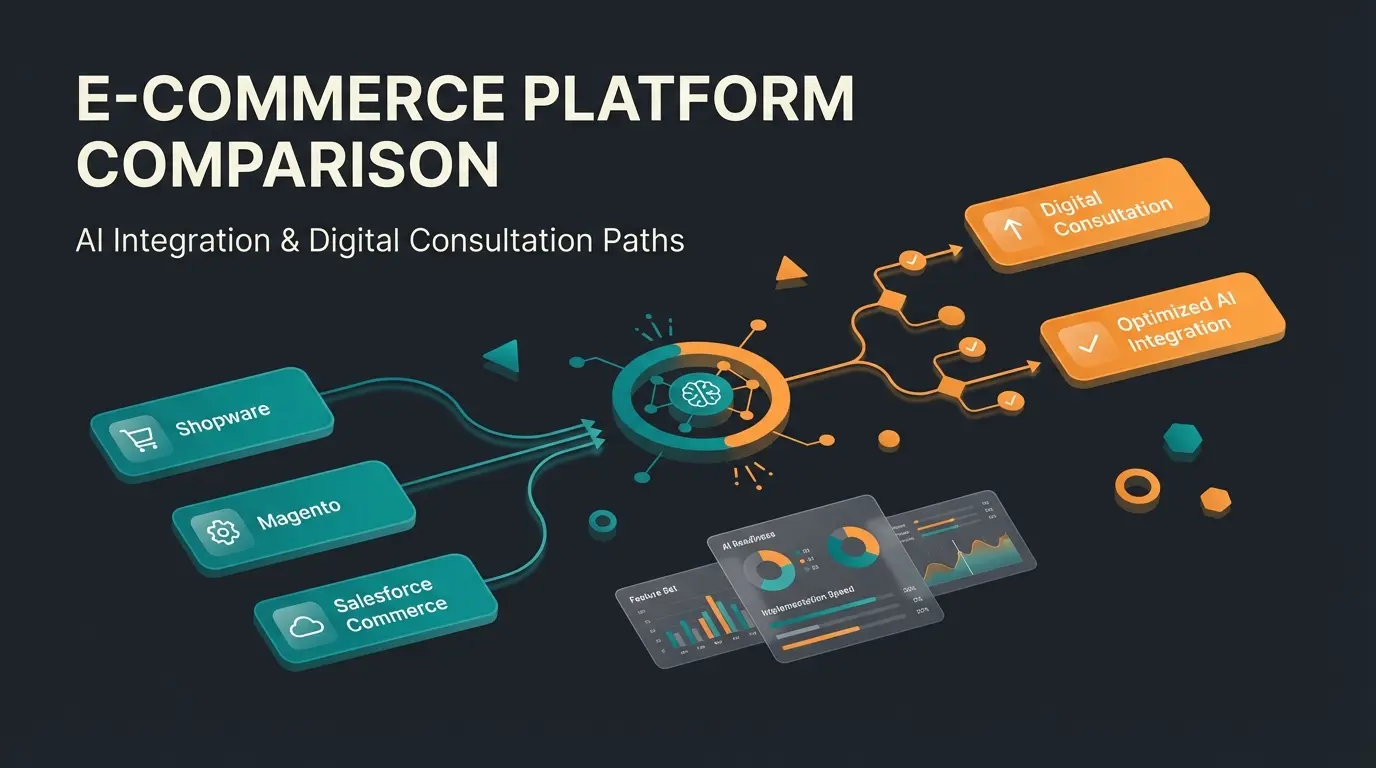
Executive Summary: The Decision at a Glance
The choice between Magento (Adobe Commerce) and WooCommerce isn't purely a technology question—it's a decision about your business model, your capital allocation, and your future strategy. While Magento has traditionally been considered the undisputed king for complex enterprise solutions, WooCommerce has massively caught up through updates like High-Performance Order Storage (HPOS).
However, in 2026, the focus is shifting: it's no longer just about who can manage the larger product catalog, but who can better advise the customer. This is where AI opens up an entirely new dimension that reshuffles the deck. Whether you're comparing Shopware vs WooCommerce or exploring other platforms, understanding this shift is crucial for making the right decision.
| Criteria | Magento (Adobe Commerce) | WooCommerce (WordPress) | Our Verdict |
|---|---|---|---|
| Target Audience | Mid-market to Enterprise (B2B & B2C) | Startups, SMEs to upper mid-market (D2C) | Magento for complex B2B structures; WooCommerce for agility |
| Initial Costs | High (€30,000 - €100,000+) | Low to Medium (€5,000 - €30,000) | WooCommerce wins significantly on entry price |
| Running Costs (TCO) | Very High (Hosting, patches, specialized devs) | Moderate (Hosting, premium plugins) | WooCommerce leaves more budget for marketing & AI |
| Scalability | Unlimited (architecture-based) | High (Thanks to HPOS, now up to millions of orders) | Tie for 95% of all merchants |
| B2B Features | Natively very strong (Company Accounts, Quotes) | Solvable via plugins (B2B Market) | Magento remains B2B king out of the box |
| Legal Compliance (German market) | Requires configuration (MageSetup/FireGento) | Excellent via plugins (Germanized, German Market) | WooCommerce is often legally compliant faster in DACH region |
| AI-Readiness | Focus on backend efficiency & Adobe Sensei | Focus on frontend sales & agility | WooCommerce offers faster time-to-market for new AI tools |
The Fundamental Difference: The Engine Metaphor
To understand whether you need Magento or WooCommerce, a technical comparison often helps less than a functional analogy. This woocommerce vs magento comparison becomes clearer when you think of it in practical terms.
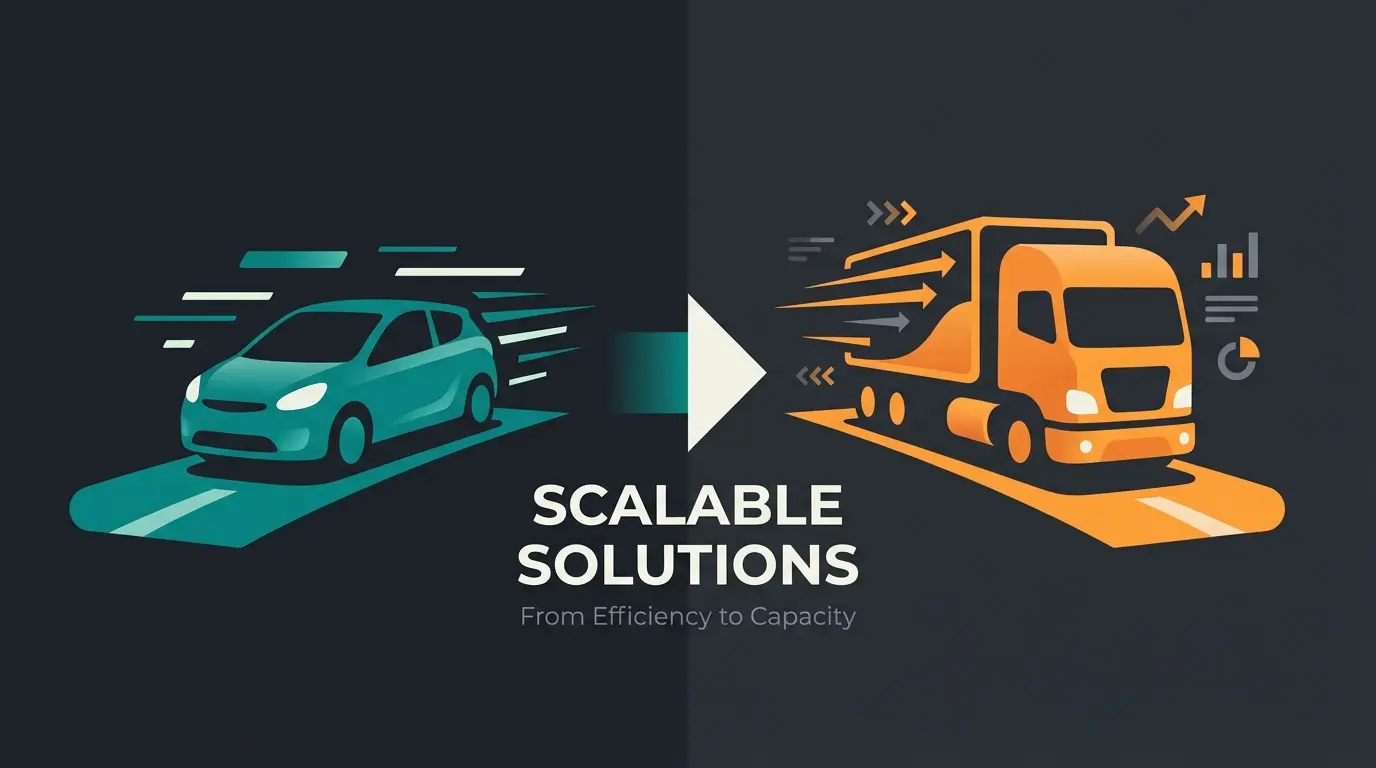
Think of WooCommerce like a tuned VW Golf GTI. It's fast, agile, and based on a platform (WordPress) that every mechanic knows. Spare parts (plugins) are cheap and available everywhere. With the right tuning (hosting, caching), it can keep up with sports cars on the highway. It's perfect for getting from A to B quickly while looking good. But: if you try to hitch a 40-ton trailer, the chassis will suffer.
Think of Magento like a Scania heavy-duty truck. It's not built to just pop down to the bakery. It's sluggish when starting and consumes a lot of fuel (server resources). But: if you need to transport 50 tons of steel (complex B2B price lists, 500,000 SKUs, multi-warehouse logistics) over the Alps, the Golf isn't an option. The truck pulls this load with ease—provided you have a specialized driver and a maintenance team. For a detailed breakdown of Magento's capabilities, check out our Magento design guide.
Who Needs What?
- Choose WooCommerce if: Your focus is on marketing, content, and agility (D2C brands). You'd rather invest budgets in customer acquisition and modern AI tools than in server maintenance.
- Choose Magento if: Your business model requires deep technical complexity (e.g., individual prices for 10,000 B2B customers, connection to SAP R/3, multi-store setups for 20 countries from one backend).
Deep Dive: Technology, Performance & Scalability
For a long time, the saying was: 'WooCommerce is for hobby shops, Magento is for professionals.' In 2026, this statement is factually incorrect. Let's examine the myths based on current data. This magento woocommerce comparison reveals surprising developments.
The Scalability Myth (and the HPOS Update)
One of the strongest arguments against WooCommerce was formerly the database structure. Orders were stored in the same table as blog posts (`wp_posts`). With 50,000 orders, the database became slow.
That has changed: With the introduction of High-Performance Order Storage (HPOS), WooCommerce has broken through this limit according to WooCommerce and Admin Columns. Orders now have their own optimized database tables.
- The Result: Up to 5x faster order processing and massive scalability according to InMotion Hosting.
- Reality 2026: A WooCommerce shop can now easily manage millions of products and orders, provided the hosting (e.g., Kinsta, WP Engine) is right.
Magento, on the other hand, was always designed for high loads. Through technologies like Varnish Cache (Full Page Cache) and a separate database architecture for checkout and catalog (in the Commerce Edition), it's designed for extreme load peaks.
With new HPOS database architecture
HPOS meets scalability needs of 99% of merchants
Now possible with proper hosting setup
Conclusion: For 99% of merchants, WooCommerce's scalability is now sufficient. Only the top 1% (Zalando-level) absolutely requires Magento's architecture. If you're exploring other options, our Shopify vs WooCommerce comparison offers additional insights.
Ease of Use & Development: DIY vs. Agency Dependency
This is where the biggest cultural difference in the Magento WooCommerce comparison shows up.
- WooCommerce: Based on WordPress. The backend is intuitive. Marketing teams can often build landing pages themselves (via Elementor or Gutenberg) without calling a developer. The pool of available developers is huge, hourly rates in Germany often range between €80 and €100 according to Index.dev and RemoteCrew.
- Magento: The backend is powerful but complex. For frontend changes (e.g., a new banner in checkout), a deployment by a developer is often required. Magento developers are rare and expensive. In the DACH region, hourly rates for certified Magento experts often range from €120 to €150+ according to Elogic and MageMonkeys.
For businesses looking to maximize their WordPress investment, exploring the best WooCommerce plugins can significantly enhance functionality without developer costs.
Cost Analysis: The TCO Iceberg
Many decision-makers only compare license costs. This is a fatal mistake. We need to look at the Total Cost of Ownership (TCO) over 3 years.
The Visible Part (Licenses & Hosting)
- WooCommerce: The software is free (open source). Hosting for professional shops costs approx. €50 - €300/month. Premium plugins (SEO, subscriptions) cost approx. €500 - €1,000/year.
- Magento Open Source: License-free. However, hosting is demanding (dedicated servers, Elasticsearch, Varnish) and rarely starts below €300 - €500/month.
- Adobe Commerce (formerly Enterprise): License costs are based on revenue (GMV) and often start at $22,000 - $40,000 per year according to MGT Commerce and various industry sources.
The Invisible Part (The Iceberg Under Water)
This is where costs often explode unexpectedly with Magento:
- Security Patches: Magento regularly releases critical security updates. These are not installed with one click. An update can cost 1-3 developer days. With WooCommerce, updates are often automated or completed in minutes.
- Developer Hours: Since Magento is more complex, implementing a feature (e.g., 'gift wrapping in checkout') often takes 2-3x as long as in WooCommerce.
- Time-to-Market: How much revenue do you lose because your agency needs 6 months for the relaunch instead of 2 months with WooCommerce?
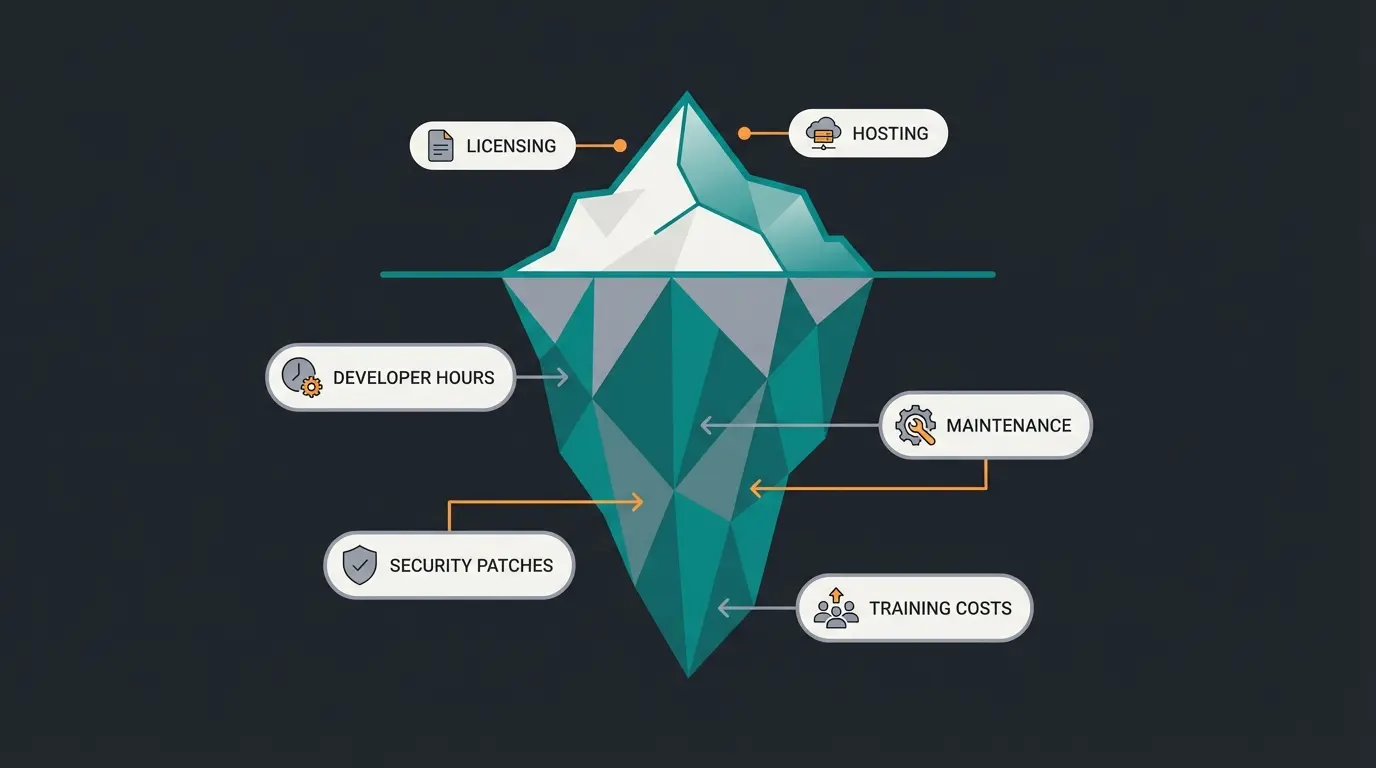
Specialized developers are rare and expensive
Larger talent pool keeps costs lower
Magento updates require significant dev time
Budget freed for AI & marketing investment
The German Factor: Legal Compliance & B2B in DACH
The German market places globally unique requirements on e-commerce systems (GDPR, button solution, base price regulation). Understanding these requirements is essential for any magento vs woocommerce decision in the DACH region.
WooCommerce: The Home Advantage Through Plugins
A strong ecosystem has established itself in Germany. Plugins like Germanized for WooCommerce according to Vendidero and WordPress.org or German Market make the shop almost legally compliant out of the box.
- Automatic calculation of delivery times
- Legally compliant checkboxes in checkout
- Integration of Trusted Shops
- Invoice generation (PDF) included
Magento: Powerful But Configuration-Intensive
Magento is a US product. It doesn't know the 'base price regulation' by default.
- Solution: The community maintains the MageSetup module (formerly FireGento) on GitHub to adjust taxes and legal notice texts for Germany/Austria.
- Challenge: B2B requirements like complex VAT validations (VAT ID verification via VIES) are included in Adobe Commerce but often need to be retrofitted in the Open Source version.
B2B Specifics
Germany is a B2B country. This is where Magento traditionally scores:
- Magento: Offers native features like 'Company Accounts' (one customer has multiple sub-users with different permissions), 'Requisition Lists' (reorder lists), and 'Negotiable Quotes' (request quote instead of buying) according to Sitemap.io and Iovista.
- WooCommerce: Requires plugins like B2B Market for this. These are now very powerful but sometimes feel 'bolted on,' while they're deeply integrated into Magento's core.
For those considering other platform options for the DACH market, our comprehensive Shopware vs Magento comparison provides additional context.
Stop losing customers to decision fatigue. Our AI sales consultant guides shoppers to the perfect product—regardless of your platform.
Start Your Free TrialThe Consultation Gap: Why Filters Are Dead
Here we come to the crucial point that most comparisons ignore. Most articles compare features (filters, search, checkout). But features are commodities. The real differentiator in this woocommerce vs magento debate lies elsewhere.
The Problem: Both Magento and WooCommerce are, in their standard form, only digital catalogs. They passively wait for the customer to set the right filters ('Color: Red', 'Size: L'). But what if the customer doesn't know what they need?
- Example: A customer is looking for a heat pump. They don't know the technical data. Filters don't help them. They need consultation.
- Example: Someone wants running shoes but doesn't know their pronation type. A filter for 'stability' means nothing to them.
Closing the Gap with AI
This is your opportunity for differentiation. Instead of pouring budget into a monolithic Magento system, modern merchants are betting on WooCommerce + AI Layer. The concept of AI product consultation is revolutionizing how customers interact with online stores.
The Concept of the 'AI Sales Consultant': Imagine your shop doesn't just have a search bar, but an AI that acts like a salesperson in a store.
- 'I see you're looking for running shoes. Do you run more on asphalt or in the forest?'
- 'For forest trails, I recommend Model X because it has more grip than Model Y.'
- 'Based on your room size, this air conditioning unit would be most efficient for your needs.'
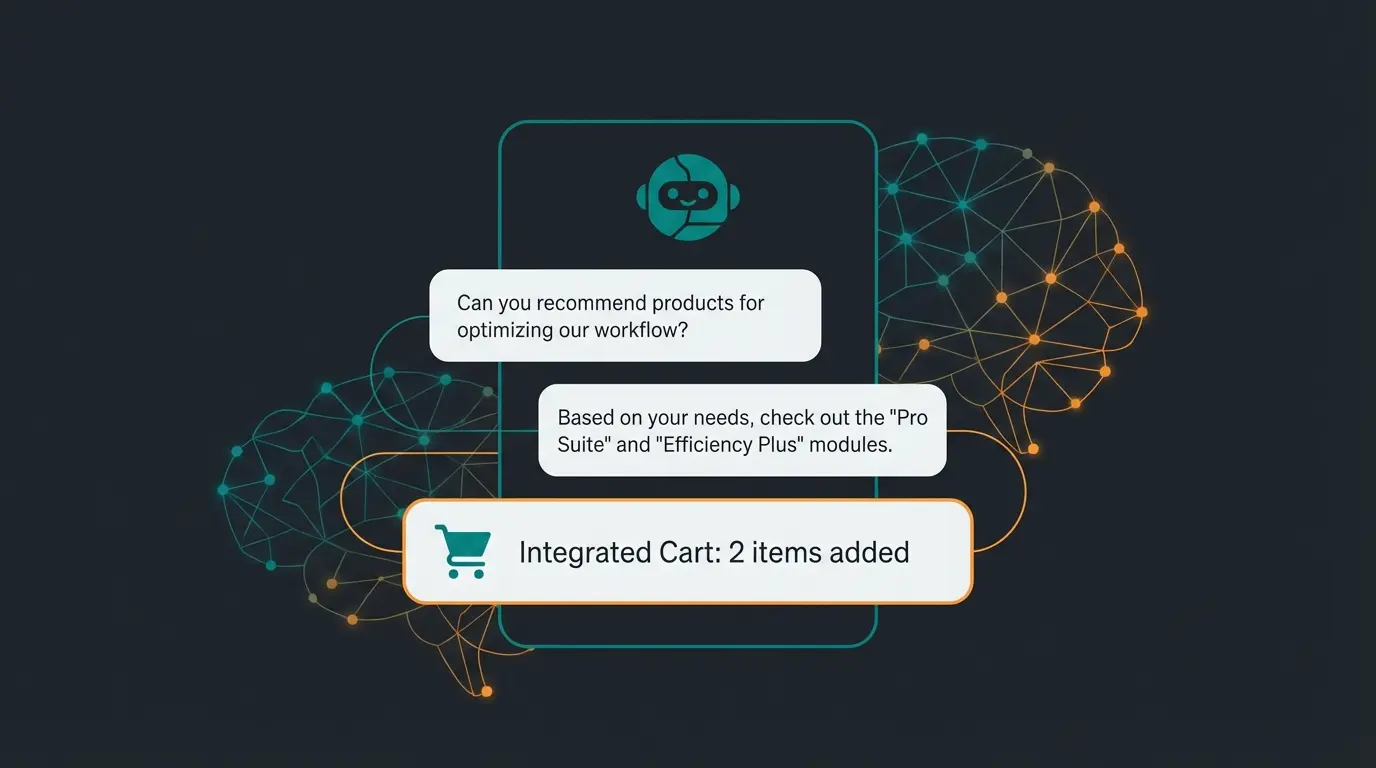
Why WooCommerce Has the Advantage Here
Through the open API and lower operating costs of WooCommerce, it's easier and cheaper to integrate modern AI tools (like OpenAI-based sales agents or plugins like Tidio Lyro or StoreAgent) according to Minami.ai and Visser.
- Magento Scenario: The budget is eaten up by maintenance and hosting. Innovations take months.
- WooCommerce Scenario: The saved budget flows into integrating an AI consultant that actively increases the conversion rate by closing the 'consultation gap'.
This shift toward conversational commerce represents the future of e-commerce, and businesses leveraging AI chatbots are already seeing significant conversion improvements.
Static product catalog with filters and search—customer must know what they want
Better filters, faceted search, product recommendations—still passive waiting
Chatbots answer basic questions—limited understanding of customer needs
Active guidance mimicking in-store experience—understands context and advises proactively
Platform Decision Flowchart
Making the right platform choice requires honest assessment of your business requirements. Use this decision framework to guide your magento woocommerce comparison:
| Question | If Yes → Magento | If No → WooCommerce |
|---|---|---|
| Do you have an in-house development team? | Native complexity manageable | Plugin-based solutions more practical |
| Is your catalog over 50,000 SKUs? | Architecture benefits matter | HPOS handles your scale |
| Do you need multi-warehouse logistics? | Native multi-source inventory | Plugins or simpler fulfillment |
| Revenue exceeds €10M annually? | TCO makes more sense at scale | Save budget for growth initiatives |
| Complex B2B with approval workflows? | Native Company Accounts essential | B2B plugins sufficient |
| Integration with SAP/Oracle ERP? | Pre-built enterprise connectors | Custom API integrations viable |
For businesses just starting their e-commerce journey, understanding what is Shopify and comparing it in our WooCommerce vs Shopify analysis can also be valuable.
Conclusion & Recommendation
The battle of Magento vs WooCommerce has no blanket winner, but clear winners for specific scenarios.
Scenario A: The Enterprise Tanker (Pro Magento)
- Revenue: > €5 - 10 million online revenue
- Structure: Complex B2B hierarchies, connection to SAP/Microsoft Dynamics, multi-warehouse logistics
- Resources: Internal IT team or budget for specialized agency (> €50,000/year maintenance)
- Verdict: Stick with Adobe Commerce. The stability and native B2B depth are unmatched here.
Scenario B: The Agile Speedboat (Pro WooCommerce)
- Revenue: €0 - 10 million (scaling is no longer a limit thanks to HPOS)
- Focus: D2C, brand building, content marketing, quick adjustments
- Strategy: Lower 'cost of sales'
- Verdict: Choose WooCommerce. Use the saved money to invest in AI consulting tools. Transform your shop from a passive catalog into an active sales consultant.
Regardless of platform choice, integrating AI e-commerce solutions and leveraging AI consulting for e-commerce will define success in 2026. Consider exploring the best Shopify apps if you're also evaluating that ecosystem.
FAQ: Common Questions About Platform Migration
Yes, this is a common trend ('re-platforming'). Tools like Cart2Cart or specialized agencies can transfer products, customers, and order histories. The main reason is often the reduction of ongoing operating costs. Migration typically takes 2-4 weeks for medium-sized catalogs.
Yes, but security with WordPress is a matter of configuration. With managed hosting (e.g., Kinsta, Raidboxes), 2FA, and firewalls, it's enterprise-ready. The biggest security risk usually sits in front of the screen (weak passwords) or lies in neglected plugins. Regular updates and security audits are essential regardless of platform.
No. If you 'only' need individual prices and net invoices, WooCommerce with B2B plugins is completely sufficient. Only if you need to map complex approval workflows (Purchase Orders) and corporate structures does Magento have the edge. Many successful B2B operations run on WooCommerce with the right plugin stack.
Most merchants switching from Magento to WooCommerce see ROI within 12-18 months through reduced development costs alone. When combined with AI tool implementation, conversion improvements can accelerate this to 6-9 months.
WooCommerce's open architecture and REST API make AI tool integration straightforward and cost-effective. Magento's Adobe Sensei focuses on backend analytics, while third-party AI integrations often require custom development. WooCommerce typically offers 3-5x faster time-to-market for new AI features.
Whether you choose Magento or WooCommerce, AI-powered product consultation is your competitive advantage. See how our solution integrates seamlessly with both platforms.
Get Started Free
Lasse is CEO and co-founder of Qualimero. After completing his MBA at WHU and scaling a company to seven-figure revenue, he founded Qualimero to build AI-powered digital employees for e-commerce. His focus: helping businesses measurably improve customer interaction through intelligent automation.