The Shopify App Store: Jungle and Goldmine Combined
Anyone opening or scaling a Shopify store today faces an overwhelming choice. With over 8,000 available extensions in the Shopify App Store, the platform represents a powerful ecosystem. But this abundance is both a curse and a blessing. For merchants, the question is no longer: "Is there an app for that?" but rather: "Which is the best Shopify app for my goal—and which ones will just slow down my store?"
We're looking toward 2025 and beyond with a strategic lens. The days when simple pop-ups and standard newsletters were sufficient are over. The market has evolved. Today's customers expect from online shops what they know from premium retail: consultation, understanding, and relevance. This shift from pure transaction to intelligent interaction represents the AI selling revolution that's reshaping e-commerce.
In this comprehensive guide, we don't simply analyze the most popular tools. We strategically categorize the top Shopify apps—from the absolute must-haves for the European market (GDPR compliance) to the new generation of AI-powered sales consultation that's revolutionizing e-commerce. According to buildwithtoki.com, the quality standards for Shopify apps have significantly increased.
This article helps you close the content gaps your competition has missed and transform your shop from a mere sales floor into an intelligent sales environment.
Quality Criteria: Separating the Wheat from the Chaff
Before we dive into our Shopify apps recommendation, we need to define what makes an app "good." Many merchants install apps based on colorful screenshots and delete them a week later—often leaving behind residual code fragments in the theme that slow down the shop.
The 'Built for Shopify' Badge
Shopify has massively tightened its quality standards. Look for the diamond symbol "Built for Shopify" in the App Store. According to Shopify's official documentation, these apps meet the strictest requirements for speed, security, and user-friendliness.
- What it means: These apps meet the strictest requirements for speed, security, and user-friendliness
- Why it matters: They won't slow down your shop (no negative impact on Core Web Vitals) and integrate seamlessly into the admin area
- Verification: Apps must pass rigorous technical reviews and maintain ongoing compliance
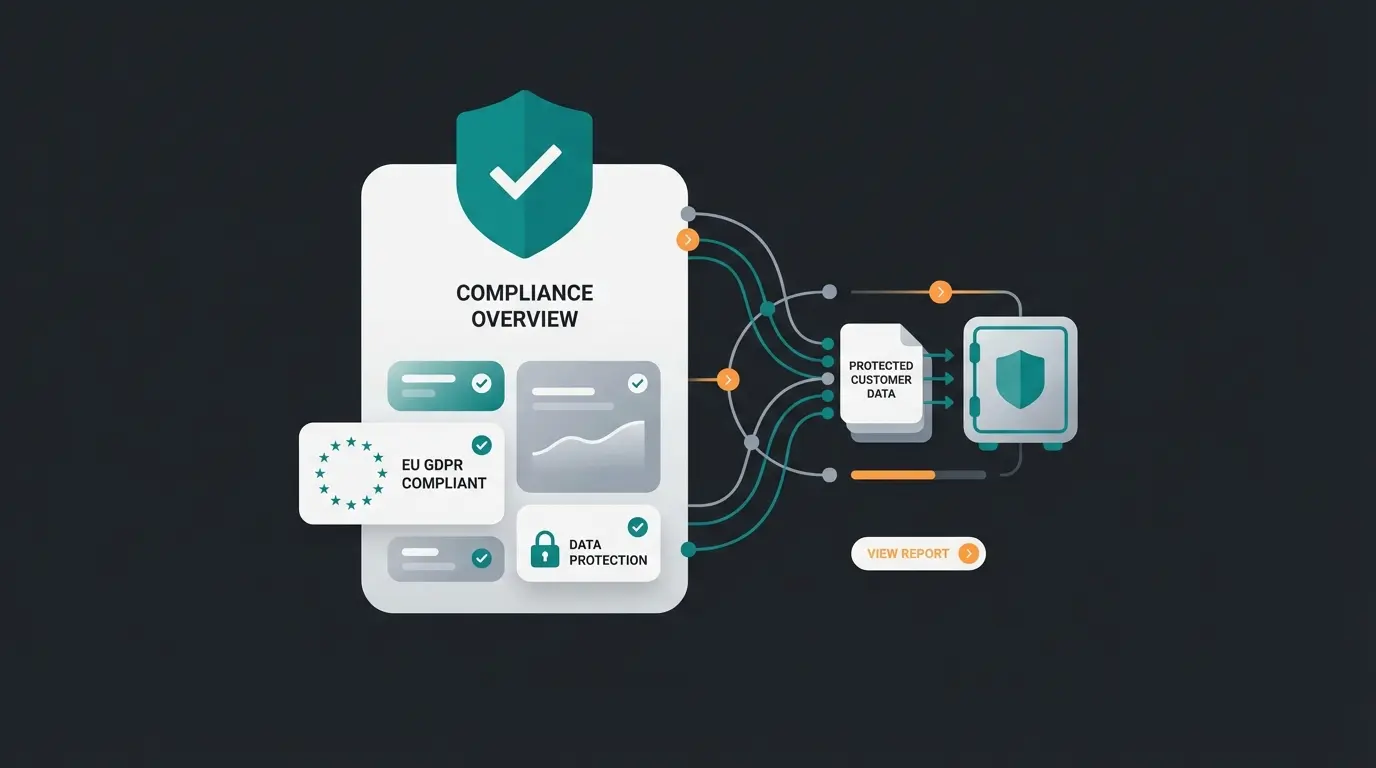
GDPR and Compliance: The European Factor
For merchants in Europe, this is the knockout criterion. An app can have fantastic marketing features—but if it stores customer data unsolicited on US servers or sets cookies without consent, you risk expensive legal warnings. Understanding AI customer service compliance is essential for any European merchant.
Support vs. Sales Focus
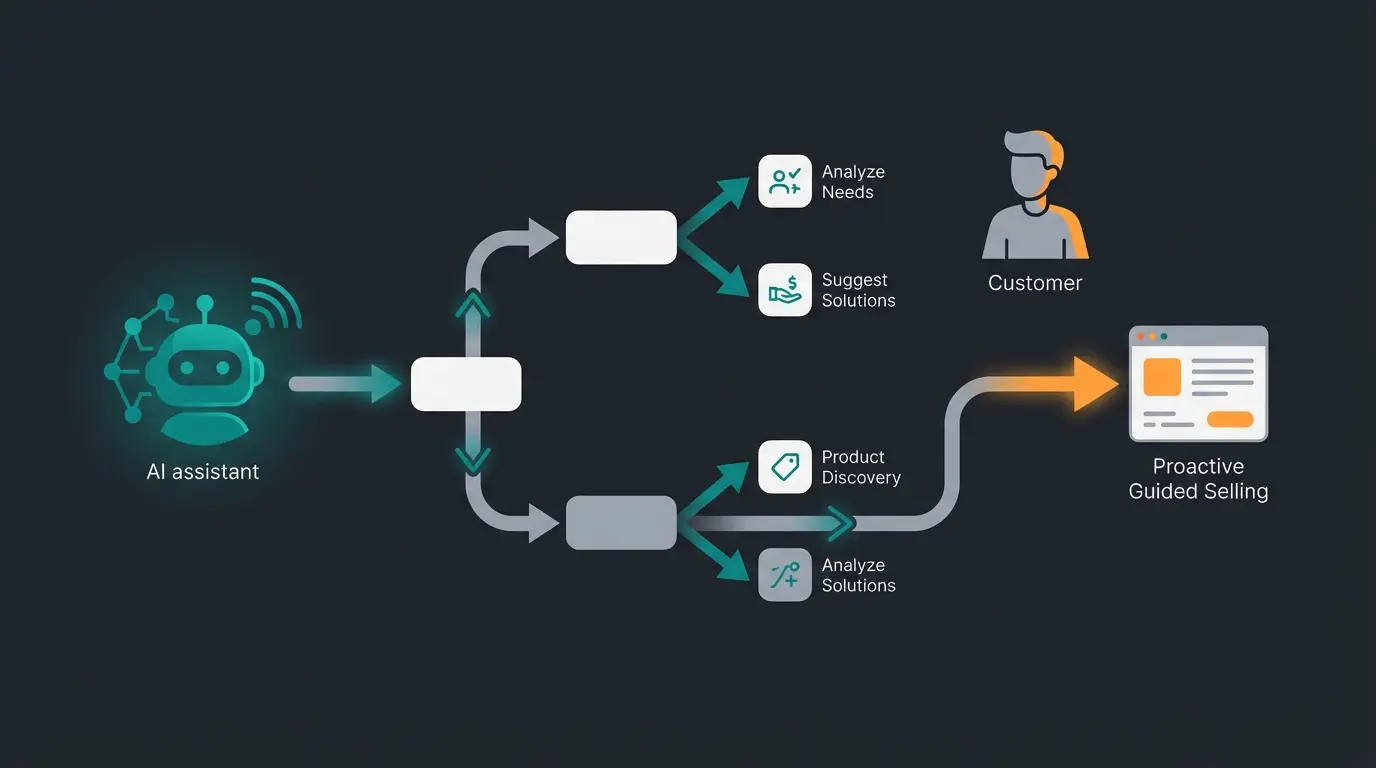
Most "top lists" throw everything into one pot. We strictly differentiate between Support Tools that react to problems (returns, defects) and Sales Tools that proactively act to generate revenue. This distinction is crucial for understanding why traditional chatbots fall short—they're designed for reactive support, not proactive selling.
Apps in the Shopify App Store creating decision paralysis
Conversion rate when customers receive good consultation
Typical e-commerce conversion rate without guidance
Potential improvement with AI sales consultation
Must-Have Apps for Legal Security and Compliance
Before you make your first euro in revenue, your shop must be legally secure. In Europe, this is the foundation upon which everything else builds.
Cookie Consent and GDPR: Pandectes or Consentmo
The "cookies" topic has become more complex. Since the introduction of Google Consent Mode V2, a simple "OK" button is no longer sufficient. You must send signals to Google about whether the user has consented, otherwise you'll lose valuable tracking data for your ads. According to Pandectes, proper consent management is essential for maintaining ad effectiveness.
Recommendation: Pandectes GDPR Compliance. It's one of the few apps that natively and cleanly integrates Google Consent Mode V2 without requiring code modifications. It automatically scans your shop for cookies and blocks scripts before the user consents (Auto-Blocking). As noted by Shopify, this app meets their strict compliance standards.
Alternative: Consentmo (formerly GDPR/CCPA + Cookie Management) is also widely used and offers solid features for the European market. According to Thrivatic, both options provide robust solutions for German merchants.
Invoicing: Sufio or Order Printer Pro
Shopify doesn't create legally compliant German invoices by default (with sequential invoice numbers, displayed VAT, etc.). Recommendation: Sufio or Billbee (if you sell multi-channel). According to Shopify, Sufio automatically creates beautiful, brand-compliant PDF invoices and sends them to customers. It's also compatible with complex EU tax rules (OSS procedure).
Marketing and Growth: Your Shop's Engines
When the foundation is solid, it's time for traffic and retention. Here, two giants dominate the market.
Email Marketing: Klaviyo vs. Shopify Email
This is where opinions often diverge based on budget, but the distinction is important.
Shopify Email: Ideal for beginners and merchants with limited budgets. According to Groove Commerce, you get 10,000 emails per month free, then very affordable pricing ($1 per 1,000 emails). It's directly integrated into the Shopify Admin and easy to use. The downside: limited segmentation and automation capabilities.
Klaviyo: For ambitious brands that want to leverage data. According to Aureate Labs, it's free up to 250 contacts, then prices rise quickly. The advantage: extremely powerful segmentation (e.g., "Customers who viewed Product X but didn't buy and are VIP"). Integration with other apps (like Reviews or Loyalty) is unmatched. As Email Tool Tester confirms, if you can afford it, choose Klaviyo. The data power pays for itself through higher conversion rates.
Social Proof and Reviews: Judge.me
Reviews are the currency of the internet. Recommendation: Judge.me—the undisputed price-performance champion. According to Store Census, it's one of the most widely adopted review solutions in the Shopify ecosystem.
- Free Plan: Already offers unlimited review requests and photo/video reviews
- SEO: Integrates "Rich Snippets" (the yellow stars in Google search results) even in the free tier—a feature competitors like Yotpo or Loox often charge for
- Design: Widgets are fast and adapt to your theme ("Built for Shopify" status)
- Performance: According to Judge.me, their app processes millions of reviews daily
The Hero Section: AI and Product Consultation
Here lies the biggest content gap in current comparisons. Most articles list tools like Tidio or Gorgias under "AI" or "Chatbots." That's not wrong, but it's incomplete. Understanding the different types of chatbots is essential for making the right choice.
The Problem: Tidio and Gorgias are excellent support tools. They're designed to close tickets ("Where is my package?", "How do I return this?"). They are reactive. But as our AI consultation guide explains, the future belongs to proactive solutions.
The Solution: The future belongs to AI Sales Assistants. These tools are proactive. They simulate the experienced sales associate in a retail store who approaches the customer and asks: "What exactly are you looking for a solution to?" This represents the core of AI Product Consultation.
Why Product Consultation Outperforms Support
In brick-and-mortar retail, customers convert at 20-30% when they receive good consultation. Online, the conversion rate often sits at 1-3%. Why? Because the customer is left alone with the catalog. The entire premise of AI Chatbots E-Commerce is built on solving this fundamental problem.
Imagine you have an employee who greets every visitor personally 24/7, analyzes their needs, and suggests exactly the right product from your catalog—in seconds. This is what Consultative AI delivers.
Core Functions of Real AI Sales Consultation
- Catalog Understanding: The AI doesn't just learn keywords but understands connections (e.g., that a "breathable jacket" pairs well with "summer hiking")
- Guided Selling: Instead of waiting, the AI guides the customer through targeted questions to the right product
- Revenue Focus: The goal isn't to end the conversation (support) but to increase average order value (AOV) through sales
- Context Awareness: Understanding purchase history, browsing behavior, and seasonal relevance
| Feature | Standard Chatbot (Tidio/Gorgias) | AI Sales Consultant |
|---|---|---|
| Primary Goal | Reduce support tickets & efficiency | Increase revenue & conversion rate (CRO) |
| Interaction | Reactive (waits for customer question) | Proactive (approaches customer / guided selling) |
| Intelligence | Often based on keywords & FAQ scripts | Understands product context & customer needs (LLM) |
| Data Basis | Order status, shipping policies | Deep product attributes, cross-selling logic |
| Result | Satisfied customer after purchase | Customer finds the right product & buys |
The difference between AI Agents and traditional chatbots is significant. While standard chatbots follow scripted responses, AI agents can reason, understand context, and make intelligent product recommendations based on a deep understanding of your catalog and customer needs. This is the foundation of modern AI consulting e-commerce strategies.
See how AI-powered product consultation can increase your conversion rates by guiding customers to the perfect product—just like a knowledgeable sales associate would.
Start Free TrialUpselling and Cart Optimization
When the customer (thanks to AI consultation) has the product in their cart, it's time to maximize value.
ReConvert Upsell and Cross Sell
Post-purchase upselling is the easiest way to increase revenue without endangering conversion. After the customer pays, they're shown another matching offer on the "Thank You" page. Since payment details are already entered, the barrier is extremely low. According to Digismoothie, post-purchase offers can increase AOV by 10-15%.
Alternative: Apps like "Frequently Bought Together" simulate Amazon's logic ("Customers also bought...").
Bundles for Higher Order Values
Apps like the Shopify Bundles App (free from Shopify) or Fast Bundle help create product packages. As Never Stop Innovations explains, the psychology is simple: "Buy a routine, not a product." Instead of just selling the shampoo, sell the "Healthy Hair Set" (Shampoo + Conditioner + Treatment) with a 10% discount. This immediately increases AOV.
Design and Page Building: First Impressions Matter
Shopify themes are good but often rigid. For landing pages (e.g., for ads), you need more flexibility.
PageFly or GemPages
Both apps are powerful page builders that work via drag-and-drop. According to Lions Branding, these tools significantly improve conversion rates for targeted campaigns.
- Use Case: Build specific landing pages for your marketing campaigns. A product page optimized specifically for "Women's Running Shoes" converts better than the standard product page
- AI Integration: According to GemPages, newer versions of these builders use AI to suggest layouts or generate text
- Performance: Both offer "Built for Shopify" certification for optimal loading speeds
Building the Perfect European Shopify Stack
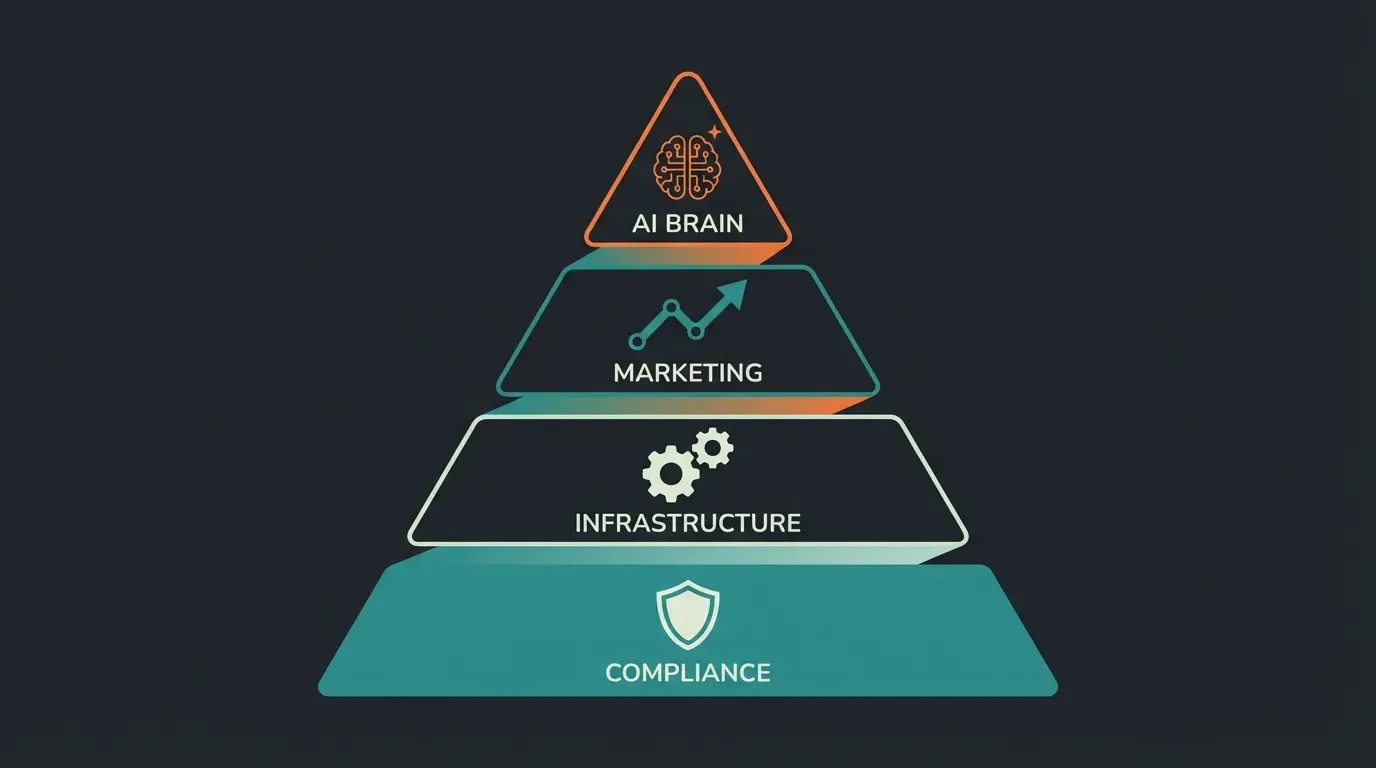
Many merchants install apps randomly. This makes the shop slow and confusing. Here's a visual hierarchy for a stable, compliant Shopify store:
Consent Tool (Pandectes/Consentmo) + Legal Texts (IT-Recht/Händlerbund). Without this, you cannot legally operate.
Invoicing (Sufio/Billbee) + Shipping (DHL/Sendcloud). Essential operational backbone.
Email (Klaviyo/Shopify Email) + Reviews (Judge.me). Drive traffic and build trust.
AI Sales Consultation. This is where you differentiate from competitors using only standard filters.
For merchants looking to understand how different platforms compare, our Shopware chatbots guide offers insights that apply across e-commerce platforms. The principles of AI product consultation remain consistent regardless of your chosen platform.
Installation Guide: Getting Started Right
Installing Shopify apps correctly ensures optimal performance and avoids common pitfalls that can slow down your store or create compliance issues.
Step-by-Step App Installation Process
- Navigate to the Shopify App Store from your admin dashboard
- Search for the app using specific keywords (e.g., 'GDPR consent')
- Review the app listing: check 'Built for Shopify' badge, ratings, and recent reviews
- Click 'Add app' and review the permissions requested
- Complete installation and configure settings immediately
- Test functionality on your store's frontend before going live
- Monitor performance impact using PageSpeed Insights after 24 hours
Common Installation Mistakes to Avoid
- Installing without reading permissions: Some apps request more data access than necessary
- Skipping configuration: Default settings rarely match your specific needs
- Not testing mobile: Many apps look different on mobile devices
- Ignoring theme compatibility: Always verify Online Store 2.0 compatibility
- Installing too many apps at once: Add apps one at a time to identify performance issues
Frequently Asked Questions About Shopify Apps
Quality over quantity is the rule. Most successful stores run 10-15 well-chosen apps. Each additional app can impact loading speed, so only install what directly contributes to compliance, operations, or revenue. Focus on the pyramid approach: compliance first, then infrastructure, growth, and finally intelligence tools like AI consultation.
Traditional AI chatbots are reactive—they wait for customer questions and handle support queries like 'Where is my order?' AI sales consultants are proactive—they initiate conversation, understand customer needs, and guide them to the right product like an in-store sales associate. The former closes tickets; the latter generates revenue.
Many free apps are excellent (like Judge.me's free tier or Shopify's native apps). However, always check: the 'Built for Shopify' badge, recent update dates, user reviews mentioning performance, and what permissions the app requests. Free apps with hidden costs often monetize your customer data.
Check for EU server locations, CMP (Consent Management Platform) compatibility, and Google Consent Mode V2 support. Use dedicated consent apps like Pandectes or Consentmo. Connect with legal text providers specific to your market. Regularly audit what data each app collects and where it's stored.
Yes, significantly. In-store retail converts at 20-30% with good consultation, while online typically sees 1-3%. AI sales consultants bridge this gap by providing personalized guidance at scale. Merchants implementing AI product consultation typically see conversion improvements of 15-40% and higher average order values.
Conclusion: The Future is Personal
The look at the best Shopify apps for 2025 clearly shows: The era of pure "tools" is over. We're moving into an era of "assistants." While apps for legal compliance (GDPR) and marketing automation (Klaviyo) are mandatory, AI-powered product consultation is the differentiator.
AI consultation closes the gap between anonymous online shopping and personal advice in specialty retail. Merchants who understand that customers aren't just looking for products but solutions to their problems will win. By equipping your shop with intelligent consultation, you not only save support costs but create a shopping experience that binds customers and fills shopping carts. For a deeper understanding, explore our comprehensive Shopify conversion optimization guide.
Your Action Plan for Success
- Secure your foundation: Implement GDPR-compliant consent management and legal texts
- Build trust: Install Judge.me and actively collect customer reviews
- Enable intelligence: Deploy AI sales consultation to transform visitors into buyers
- Optimize continuously: Monitor performance and iterate based on data
Note: The e-commerce landscape changes quickly. When installing apps, always check the last update date and compatibility with your theme (Online Store 2.0).
Join forward-thinking merchants using AI-powered product consultation to deliver personalized shopping experiences that convert browsers into loyal customers.
Get Started Today
Lasse is CEO and co-founder of Qualimero. After completing his MBA at WHU and scaling a company to seven-figure revenue, he founded Qualimero to build AI-powered digital employees for e-commerce. His focus: helping businesses measurably improve customer interaction through intelligent automation.