Introduction: The Elephant in the E-Commerce Room
When you search for Shopify experiences or a comprehensive Shopify review, you typically find two camps: unconditional fans celebrating the simple 'no-code' operation, and critics complaining about transaction fees or the American origins of the software. But after over a decade in e-commerce and analyzing hundreds of stores for this Shopify test 2026, we need to address a problem that hardly anyone mentions.
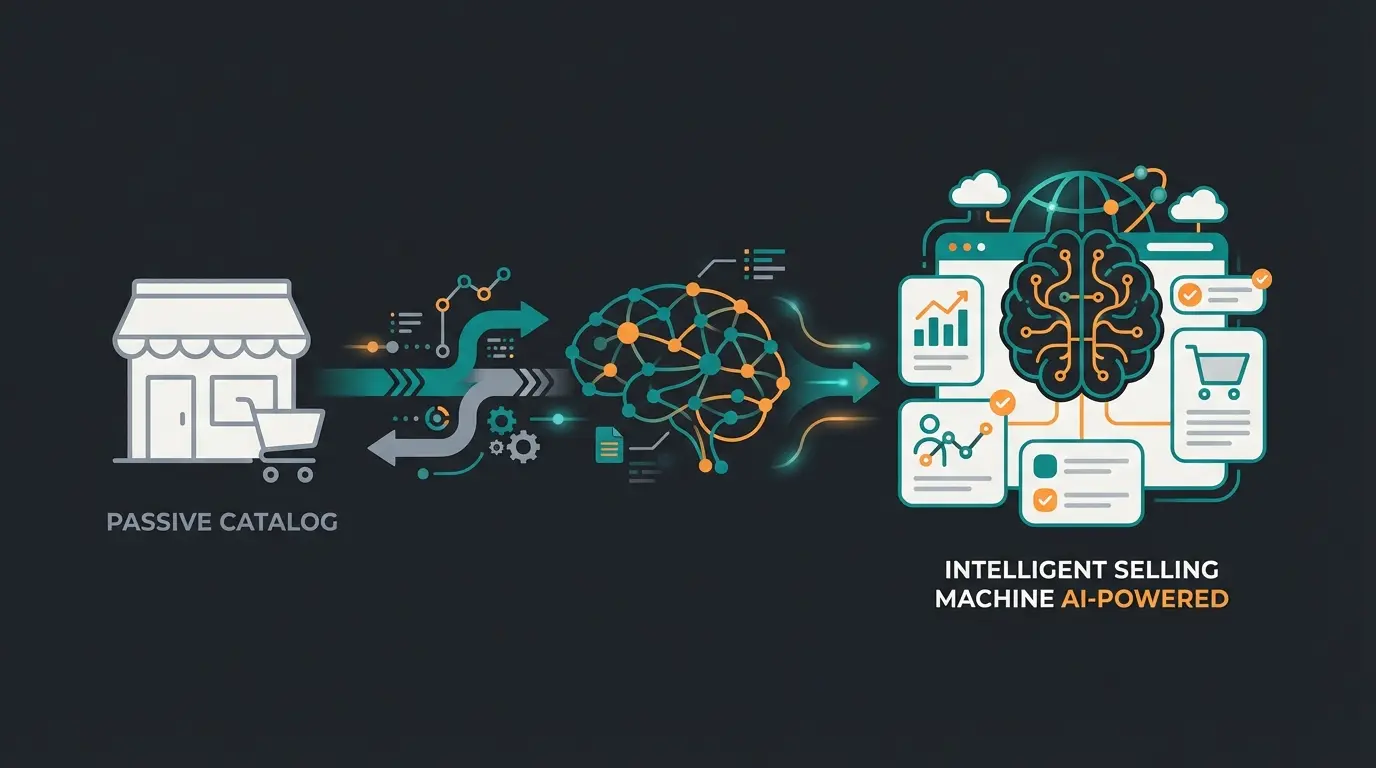
Shopify is technologically brilliant. It's stable, scales from zero to 100 million euros in revenue, and looks great doing it. But here's the truth: A standard Shopify store is fundamentally limited. It functions as a passive catalog. It waits for customers to know exactly what they want, place it in their cart, and proceed to checkout. But in an era where customers expect personalized consultation, simply 'displaying' products is no longer sufficient.
In this comprehensive Shopify evaluation, we'll examine not just the classic categories like pricing and legal compliance, but dig deeper into the fundamental question: How do you transform Shopify from a 'self-service shop' into an intelligent selling machine? This is where AI in customer service becomes a game-changer for modern e-commerce businesses.
The Basics: How Good Is Shopify Really? (Quick Check)
Before diving into strategy, we need to complete our due diligence. Does the platform deliver on its promises? Here's the fact-check based on current 2025/2026 data, drawing insights from trusted sources like coding9.de and eshop-guide.de.
1. Costs and Fees: Is Shopify Expensive?
A common criticism in every Shopify assessment concerns ongoing costs. Unlike open-source solutions (like WooCommerce), you pay a subscription fee here. However, this eliminates costs for hosting, maintenance, and security updates. Understanding these pricing structures is essential for making the right platform choice.
Here is the current pricing structure for Germany (as of 2025/2026, prices net):
| Plan | Monthly Price | Transaction Fees (Online)* | Staff Accounts | Ideal For |
|---|---|---|---|---|
| Basic | ~€36 | 2.9% + €0.30 | 2 | Beginners & Solopreneurs |
| Shopify | ~€105 | 2.7% + €0.30 | 5 | Growing Brands (from ~€10k revenue) |
| Advanced | ~€384 | 2.5% + €0.30 | 15 | Scaling Businesses & Teams |
| Plus | from ~€2,300 | Negotiable (often < 2%) | Unlimited | Enterprise & High-Volume |
Note on fees: Transaction fees apply when using Shopify Payments (credit cards, etc.). If you use an external payment provider (without activating Shopify Payments), Shopify charges an additional penalty fee of up to 2%.
2. Ease of Use: Building a Store Without an IT Degree?
On this point, our Shopify opinion is unequivocal: There is currently no system on the market that makes starting easier for beginners. Our Shopify store setup guide walks through the entire process step by step. According to webshop-anbieter.de and unternehmerkanal.de, the platform excels in user accessibility.
- Theme Editor: The 'Online Store 2.0' framework allows you to drag-and-drop sections on any page. You see live what you're doing, making customization intuitive and immediate.
- Backend Dashboard: The interface is clean and organized. Creating products, managing orders, and accessing customer analytics are all intuitive and require minimal learning curve.
- Zero Technical Worries: Hosting, SSL certificates, and caching are all handled by Shopify. You don't need to configure servers or worry about infrastructure maintenance.
3. Legal Compliance in Germany (GDPR & Imprint)
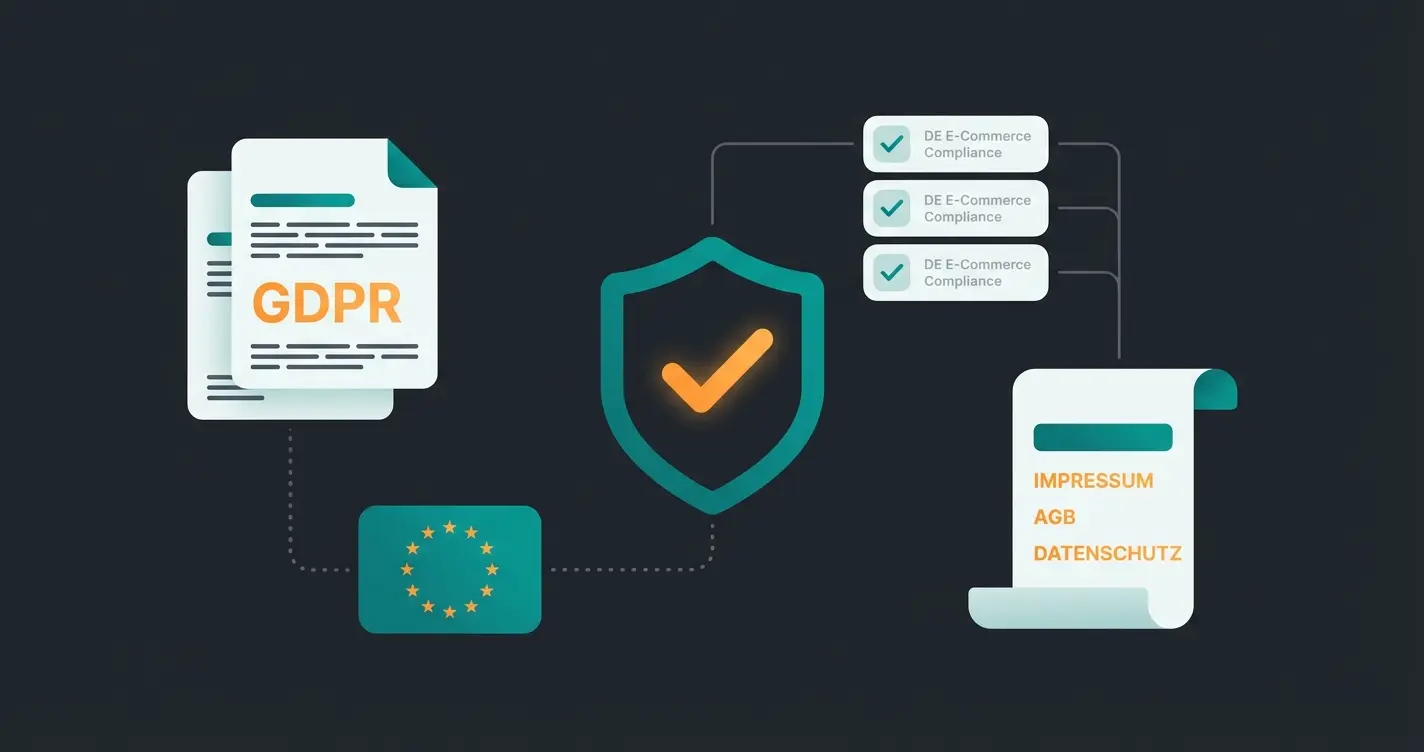
The most persistent myth claims: 'Shopify isn't legal in Germany.' This is false, but it does require work. Shopify is a Canadian/US company, so the standard store isn't preconfigured for German legal requirements (button solution, basic price regulation, imprint obligation). However, as confirmed by Shopify's own resources, compliance is achievable with the right setup. For a complete breakdown, see our Shopify Germany guide.
How to make Shopify 'warning-proof' for German markets:
- Legal Text Apps: Use apps like the IT-Recht Kanzlei AGB interface or Händlerbund. These automatically sync current terms and conditions, cancellation policies, and imprint into your store.
- Cookie Consent: A simple 'OK' banner isn't sufficient. Use apps like Consentmo or Usercentrics to implement proper consent management that meets GDPR requirements.
- Server Location: Shopify now hosts a significant portion of European merchant data on EU servers, considerably simplifying GDPR compliance.
The Major Disadvantage of Standard Shopify Stores
If you check off the points above, you have a functioning store. But do you have a selling store? This distinction is crucial for understanding why so many merchants struggle despite having technically sound setups.
Our analysis of Shopify experiences from successful brands reveals a clear pattern: Standard themes often function merely as 'warehousing.' Consider this typical customer journey:
- The customer arrives on the site
- They see 50 t-shirts or 20 skin creams
- They might use a filter (size, color)
- They become uncertain ('Does this cream suit my combination skin?')
- They abandon the purchase
The Problem: 'Paralysis of Choice'
In a physical store, a salesperson would now approach the customer: 'Can I help you? What exactly are you looking for?' In standard e-commerce, this doesn't happen. The customer is left alone with the selection, often overwhelmed by options without guidance.
Most Shopify reviews ignore this aspect and only evaluate how beautifully images are displayed. But beauty doesn't sell when orientation is missing. German consumers particularly value detailed product information and consultation ('Beratung')—a cultural expectation that standard Shopify themes fail to address. This is where exploring Shopware alternatives might provide insights into platforms that prioritize consultation features.
Average abandonment rate for stores without personalized guidance
Average order value increase with AI-guided product recommendations
Fewer returns when customers receive proper product consultation before purchase
Shopify + AI: Turning Visitors Into Buyers
Here lies the massive opportunity for 2026. While competitors debate the color of the 'Buy' button, you can transform Shopify from a catalog into a consultant through AI (Artificial Intelligence). Understanding AI E-Commerce fundamentals is becoming essential for competitive advantage.
Shopify Magic: Backend Assistance Tools
Shopify has integrated its own AI tools with 'Shopify Magic.' According to Shopify's documentation and insights from eesel.ai, these are excellent for saving time:
- Text Generation: Generates product descriptions at the push of a button, saving hours of copywriting work
- Sidekick: An AI assistant that answers questions about your sales or sets up discounts for you automatically
- Image Editing: AI-powered background removal and background generation, as detailed by latori.com
However: These tools help you with your work. They don't yet directly help the customer with their purchase decision. This is where the real transformation opportunity lies—and where AI product consultants become essential.
The Game Changer: Frontend Consultation (Active Sales AI)
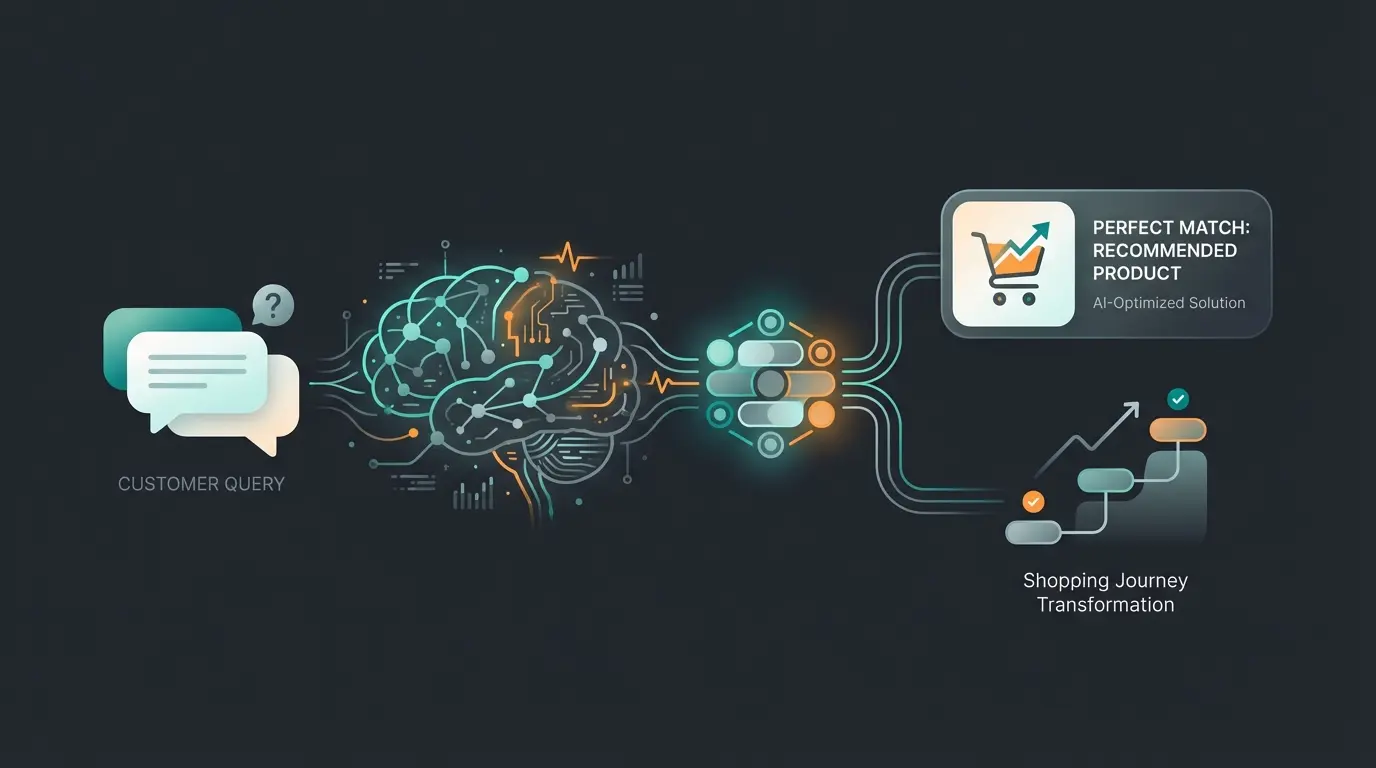
To bridge the gap of missing consultation, leading stores deploy 'Guided Selling' apps and AI chatbots that go beyond standard support. This represents the future of AI Selling in e-commerce. Let's examine how AI-powered sales consultants transform the customer experience:
| Feature | Standard Shopify Store | Shopify + AI Sales Consultant |
|---|---|---|
| Product Search | Search bar & filters (Passive) | Needs analysis through dialogue (Active) |
| Customer Guidance | Customer must know what they want | AI asks: 'What problem do you want to solve?' |
| Conversion Lever | Price & availability focus | Trust & product fit optimization |
| Result | High abandonment for complex products | Higher average order value (AOV) & fewer returns |
Practical Example: Imagine you sell running shoes.
- Without AI: The customer filters by 'Size 42' and 'Blue.' They see 20 models. They don't know if the 'Speed 500' is good for their knee problems. They go to Amazon or Google to read reviews—and they're gone, potentially never to return.
- With AI: A widget asks: 'Where do you usually run? (Forest/Road)', 'Do you have joint pain?' The AI recommends one specific model and explains why: 'The Speed 500 is ideal for you because its cushioning protects your knees on asphalt.' This is AI product consultation in action.
Our Assessment: Shopify offers the best technical foundation (API-First approach) for connecting such external AI tools. This is the true USP compared to closed builders like Wix or Jimdo. Understanding this advantage is crucial for anyone evaluating AI consulting e-commerce options.
Stop losing customers to decision paralysis. Our AI product consultation seamlessly integrates with Shopify to guide every visitor to their perfect purchase—24/7, in any language.
Start Your Free TrialThe German E-Commerce Trust Pyramid
German consumers approach online shopping with specific expectations that differ from other markets. Understanding this hierarchy is essential for success in the DACH region. AI Chatbots play an increasingly important role at the top of this pyramid.
GDPR conformity, proper imprint, correct legal texts—the non-negotiable base that prevents warnings and builds initial trust
Fast loading times, intuitive navigation, mobile optimization—the technical layer that ensures smooth browsing experiences
Detailed specifications, comparison features, comprehensive FAQs—the informational layer Germans expect before purchasing
AI-driven product advice, personalized recommendations, real-time guidance—the differentiator that converts browsers into buyers
This pyramid visualizes why standard Shopify stores, while excellent at the first two levels, often fail to convert German customers. The expectation of 'Beratung' (consultation) is culturally ingrained, and AI solutions bridge this gap effectively.
Real Costs Calculator: What Shopify Actually Costs
Beyond the monthly subscription, understanding total cost of ownership is crucial for proper business planning. Here's what a professional German Shopify setup actually costs, incorporating insights from uptain.de:
| Cost Category | Basic Plan | Shopify Plan | Advanced Plan |
|---|---|---|---|
| Monthly Subscription | €36 | €105 | €384 |
| Legal Text App (Monthly) | €15-25 | €15-25 | €15-25 |
| Cookie Consent Tool | €10-20 | €10-20 | €10-20 |
| Premium Theme (One-time) | €200-350 | €200-350 | €200-350 |
| Email Marketing App | €0-30 | €0-50 | €0-100 |
| AI Consultation Tool | €50-200 | €50-200 | €50-200 |
| Domain (Yearly) | €14 | €14 | €14 |
| Monthly Total (Estimated) | €111-311 | €180-400 | €459-709 |
Who Should Use Shopify? (Our Honest Opinion)
Based on analyzed data and Shopify experiences from various industries, here's our straightforward assessment. This honest evaluation considers insights from open.de and brandcrock.com.
✅ Ideal For:
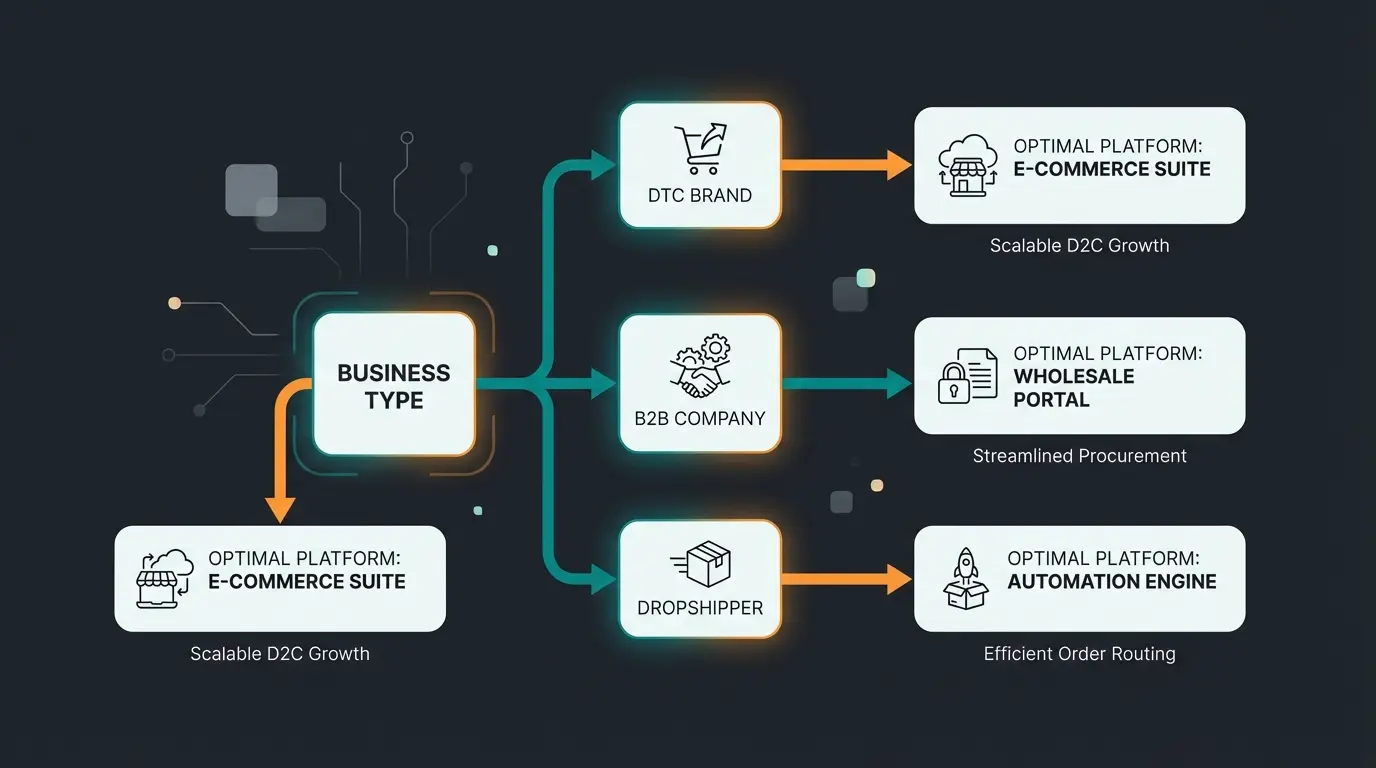
- DTC Brands (Direct-to-Consumer): Anyone building a brand can hardly avoid Shopify. The integrations with Instagram, TikTok, and Google Shopping are market-leading and continuously improved.
- Dropshipping Beginners: Through apps like DSers or Zendrop, logistics integration is seamless. However, caution: The market is saturated—without branding (and AI consultation), success will be difficult.
- Scaling Businesses: Anyone looking to grow from €100,000 to €10 million in revenue finds a stable home in Shopify Plus without server nightmares, as noted by niccos.com.
⚠️ Suitable Only With Additional Effort:
- Consultation-Intensive Products: Anyone selling complex technical components, nutritional supplements, or skincare must invest in consultation tools. The standard store isn't sufficient for high conversion rates with these product categories. This is where AI sales consultation becomes non-negotiable.
- Pure B2B Business: Shopify has improved with 'B2B on Shopify' (in the Plus plan), but German mid-market companies with complex price tiers and individual customer catalogs are often better served by Shopware. Shopware provides strong SEO capabilities as an alternative.
Shopify Alternatives Compared
How does Shopify perform in direct comparison? Based on analysis from gecheckt.at and litextension.com, here's what you need to know:
Shopify vs. WooCommerce
- WooCommerce (WordPress plugin) is 'free' but maintenance-intensive. You're responsible for security, hosting, and updates yourself.
- Decision: Do you have more time than money and technical understanding? -> WooCommerce. Want to sell instead of tinker? -> Shopify
The key differentiator is operational overhead. WooCommerce requires ongoing technical maintenance, while Shopify handles infrastructure completely. For businesses focused on growth rather than server management, Shopify typically proves more cost-effective despite the subscription model.
Shopify vs. Shopware
- Shopware is the German market leader. Strong in data protection, extremely customizable for B2B, and open source.
- Decision: Are you a German mid-market company with complex warehouse interfaces and B2B focus? -> Shopware. Are you a modern brand focused on social media and speed? -> Shopify
Both platforms excel in different scenarios. AI sales assistants can be integrated into either platform, but the implementation approach differs significantly based on each platform's architecture.
Conclusion: Our Final Assessment
Conclusion: Our Final Assessment
After analyzing all factors—from costs to future-readiness through AI—we arrive at the following verdict:
Overall Rating: 4.6 / 5 Stars ⭐⭐⭐⭐⭐
Shopify isn't perfect. The transaction fees when using third-party payment methods are an annoyance, and the GDPR setup is frustrating. We examine all Shopify disadvantages in detail in a dedicated guide, and for a focused cost-benefit analysis, check our hands-on Shopify evaluation. However, the overall package is unmatched: Shopify delivers the best 'walls and shelves' for your business, and the technology fades into the background and simply works.
FAQ: Common Questions About Shopify Experiences
Yes, Shopify typically offers a free trial period (usually 3 days), followed by an introductory offer (e.g., €1 for the first month). According to impulsaecommerce.com, this is sufficient to completely set up the store before regular fees apply.
Yes, but not 'out of the box.' You must install apps for cookie banners and legal texts and correctly integrate the privacy policy. Thousands of German stores now use Shopify legally. The key is proper setup from the start with compliant apps.
Absolutely. This is Shopify's greatest strength. The 'Theme Store' offers professional designs, and the editor works via drag-and-drop. Code access (Liquid) is possible but not necessary for getting started, as confirmed by tante-e.com.
Beyond the monthly base fee, you should budget for: a custom domain (~€14/year), legal text app (~€10-25/month), possibly a premium theme (one-time ~€200-350), and transaction fees (avoidable by using Shopify Payments). Plan for approximately €50-100 extra monthly for essential apps.
Yes, Shopify's API-first approach makes it ideal for integrating third-party AI consultation tools. This is actually one of Shopify's key advantages over closed systems. AI product consultation apps can significantly improve conversion rates for complex products by guiding customers to the right purchase decision.
Join hundreds of successful e-commerce brands using AI product consultation to increase conversions, reduce returns, and deliver the personalized shopping experience your customers expect.
Get Started Free Today
Lasse is CEO and co-founder of Qualimero. After completing his MBA at WHU and scaling a company to seven-figure revenue, he founded Qualimero to build AI-powered digital employees for e-commerce. His focus: helping businesses measurably improve customer interaction through intelligent automation.