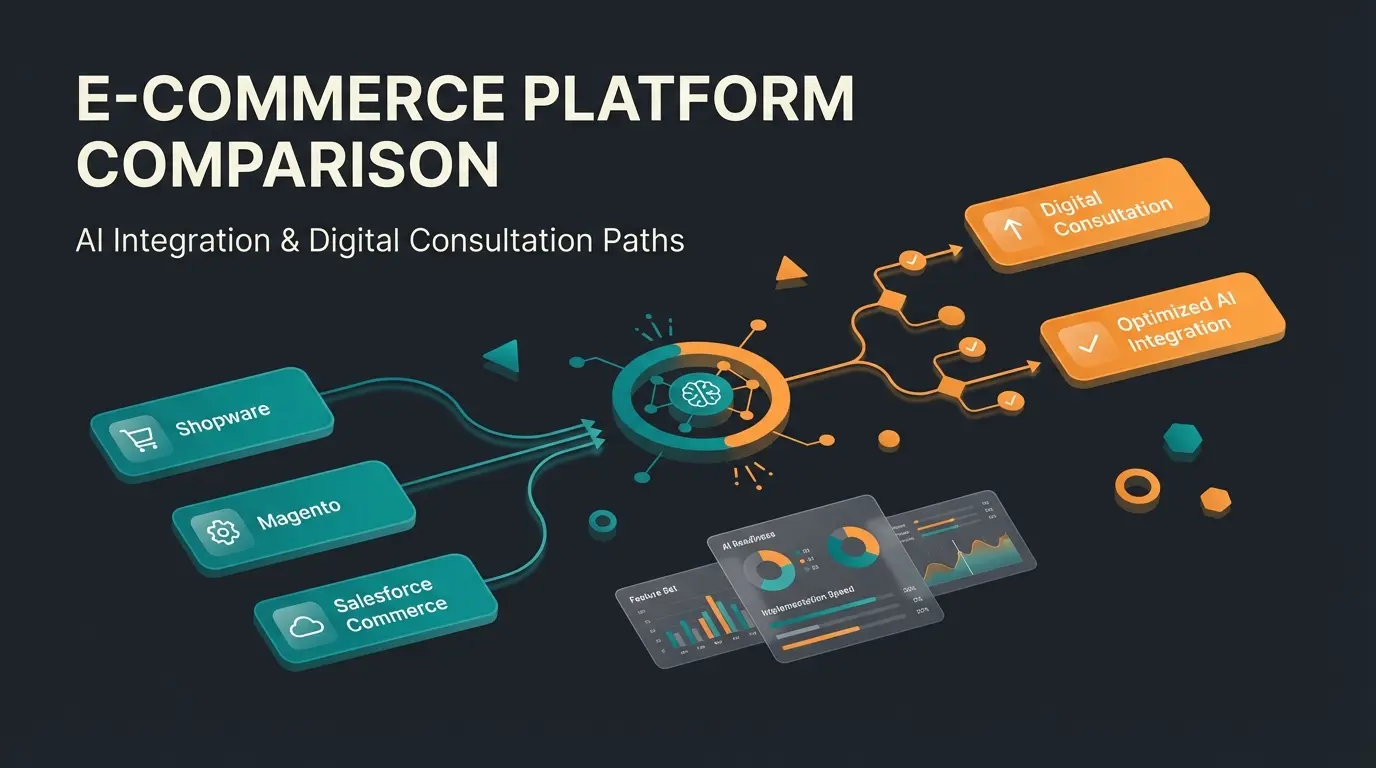
Executive Summary: Your Quick Decision Guide
Choosing the right e-commerce platform is no longer a purely technical decision—it's a strategic choice that directly impacts your profitability. When you're deciding between Shopware vs PrestaShop in 2025, you're confronting two fundamentally different philosophies for building your online business.
Shopware 6 is the undisputed market leader in the DACH region (Germany, Austria, Switzerland). It's the first choice for brands that want to scale, have complex B2B requirements, and value legal compliance "Made in Germany." With the new pricing plans (Rise, Evolve, Beyond), Shopware clearly targets mid-market and enterprise customers. According to Shopware, their platform powers over 11.5% of top German online shops, demonstrating their dominant market position in the region.
PrestaShop (now in version 8.2, released September 2024) is the flexible challenger from France—ideal for international market entry, smaller budgets, and merchants who enjoy customizing their setup. It dominates markets like Spain and Italy but struggles with a smaller market share in Germany, holding approximately 1.5% of the German e-commerce landscape.
Direct Comparison: Shopware vs PrestaShop at a Glance
Before diving deep into the details, here are the hard facts for e-commerce decision-makers. This comparison table gives you the essential information you need to make an informed choice between these two powerful platforms.
| Feature | Shopware 6 (Germany) | PrestaShop 8 (France) |
|---|---|---|
| Target Audience | Mid-market to Enterprise (GMV > €1M) | Startups, SMBs, International (GMV < €1M) |
| Pricing Model | Rise: from €600/month | Community: Free (Self-Hosted) | Core: Free (Open Source) | Hosted: ~€24/month |
| Technology | Symfony & Vue.js (Modern, API-First) | PHP & Symfony (Hybrid, some Legacy Code) |
| Market Share (DE) | Market Leader (~11.5% of Top Shops) | Niche in DE (~1.5%), Strong in Southern Europe |
| B2B Focus | Very Strong (Native B2B Suite, Roles & Rights) | Weak (Requires Complex Modules) |
| Support | Professional Manufacturer Support (Included in Plans) | Community or Paid Support Tickets |
| Guided Selling | Digital Sales Rooms (Manual/Video for B2B) | Only via Third-Party Modules (Often Static) |
| AI Maturity | AI Copilot (Backend Efficiency) | Modules (ChatGPT Text Generation) |
| Native Guided Selling | Manual Video Tools & Rule-Based Funnels | Dependent on 3rd Party Plugins |
This comparison reveals a critical insight: while both platforms excel at their core functions, neither offers automated, intelligent product consultation as a native conversion driver. This represents a significant opportunity for merchants willing to implement AI-powered product consultation solutions.
Deep Dive: Shopware 6 – The Powerhouse for DACH Markets
Shopware has undergone massive transformation in recent years. Moving away from pure on-premise systems toward a "Cloud-First" strategy with the Rise, Evolve, and Beyond plans, Shopware has repositioned itself as a comprehensive enterprise solution while maintaining accessibility for growing businesses.
The Strengths of Shopware 6
- Technological Superiority: Shopware 6 is built on a modern tech stack (Symfony, Vue.js). The API-First architecture means you can connect any frontend (Headless), which is crucial for future-proofing your investment. According to BitBag, this architecture provides exceptional flexibility for custom integrations.
- Shopping Experiences (Erlebniswelten): Shopware understands that e-commerce today means "Emotional Shopping." The native page builder allows marketing teams to create landing pages without programming knowledge, enabling rapid campaign deployment.
- B2B Dominance: With features like "Employee Management" (customer employee logins), quick order lists, and individual pricing, Shopware is light-years ahead of PrestaShop in the B2B sector. As noted by iCreativeTechnologies, these native B2B capabilities eliminate the need for complex third-party integrations.
- Shopware AI Copilot: Shopware has natively integrated AI. According to Bay20, the Copilot helps merchants in the backend by generating product descriptions, summarizing reviews, and creating export rules—significantly improving operational efficiency.
The Weaknesses of Shopware 6
Despite its impressive capabilities, Shopware isn't without limitations. The entry point for commercial plans starts at €600 per month (Rise Plan), according to LitExtension. For small startups, this can be a significant barrier. While the free Community Edition exists, it requires substantial technical expertise for hosting and maintenance.
Additionally, Shopware's power comes with complexity. If you only want to sell 50 t-shirts, you're essentially using a cannon to shoot sparrows. The learning curve can be steep, and implementation typically requires agency support for optimal results.
The "Guided Selling" Problem in Shopware
Shopware advertises "Digital Sales Rooms"—which sounds like automated consultation, but it isn't. According to Shopware's documentation, it's a tool for human sales representatives to guide B2B customers through the shop in video sessions.
Deep Dive: PrestaShop – The Flexible Entry Point
PrestaShop is extremely popular worldwide because it virtually eliminates entry barriers. With version 8.2 (released September 2024), stability has been further improved, according to Ewonta. This open-source platform continues to evolve while maintaining its commitment to accessibility.
The Strengths of PrestaShop
- Cost Structure: The software itself is open source and free. There are no monthly license fees (except for the hosted version). According to ShopWired, this makes it attractive for bootstrapping projects and budget-conscious entrepreneurs.
- Module Diversity: The PrestaShop Addons Marketplace is massive. For almost every problem, there's a module available for €50–100, providing extensive customization possibilities.
- Internationalization: PrestaShop is internationally oriented from the ground up and is the standard in markets like France, Spain, and Italy, making it ideal for European expansion strategies.
The Weaknesses of PrestaShop
The "Frankenstein Effect": Since PrestaShop relies on modules for many functions, a shop often consists of 30–50 plugins from different developers. According to BitBag, this leads to conflicts, performance problems, and security vulnerabilities—what experts call "Module Chaos."
Hidden Costs: A "free" shop can quickly become expensive when you purchase quality modules for SEO, legal compliance, and checkout optimization. According to PrestaShop, support is also paid and often starts at €300 for tickets, as noted in their support documentation.
German Market Compatibility: To operate PrestaShop legally in Germany (Basic Price Regulation, GDPR, Button Solution), special modules and customizations are necessary ("PrestaShop Legal Compliance"). Shopware delivers this "out of the box," saving significant implementation time and reducing compliance risks.
AI Capabilities in PrestaShop
PrestaShop has no native AI engine like Shopware. Merchants must purchase modules like "ChatGPT Content Generator," according to WebKul and PrestaShop Addons. While these help with writing texts, they don't provide intelligent customer guidance on the frontend—a critical limitation for conversion optimization.
The "Consultation Gap": Why Shops Lose Sales Despite Traffic
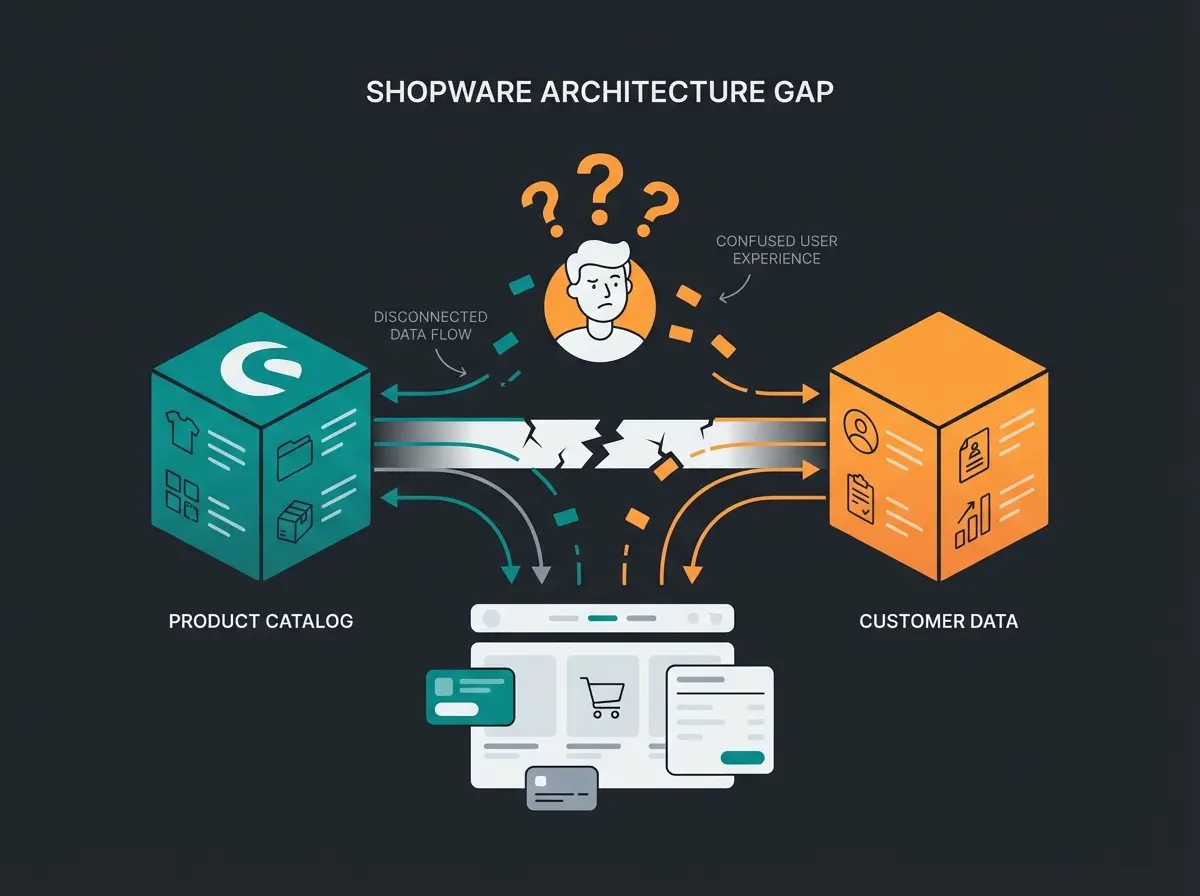
Here's the crucial point that most comparison articles ignore entirely. Both Shopware and PrestaShop are fundamentally databases with images. They present customers with a catalog featuring filters (color, size, price). This works perfectly when the customer knows exactly what they want (e.g., "iPhone 15 Pro, 256GB, Black").
The Challenge of Undecided Customers
But what about undecided customers who arrive with questions like:
- "Which e-bike is suitable for my back problems?"
- "Which skin cream is compatible with my allergy?"
- "Which running shoe works for both asphalt and trail running?"
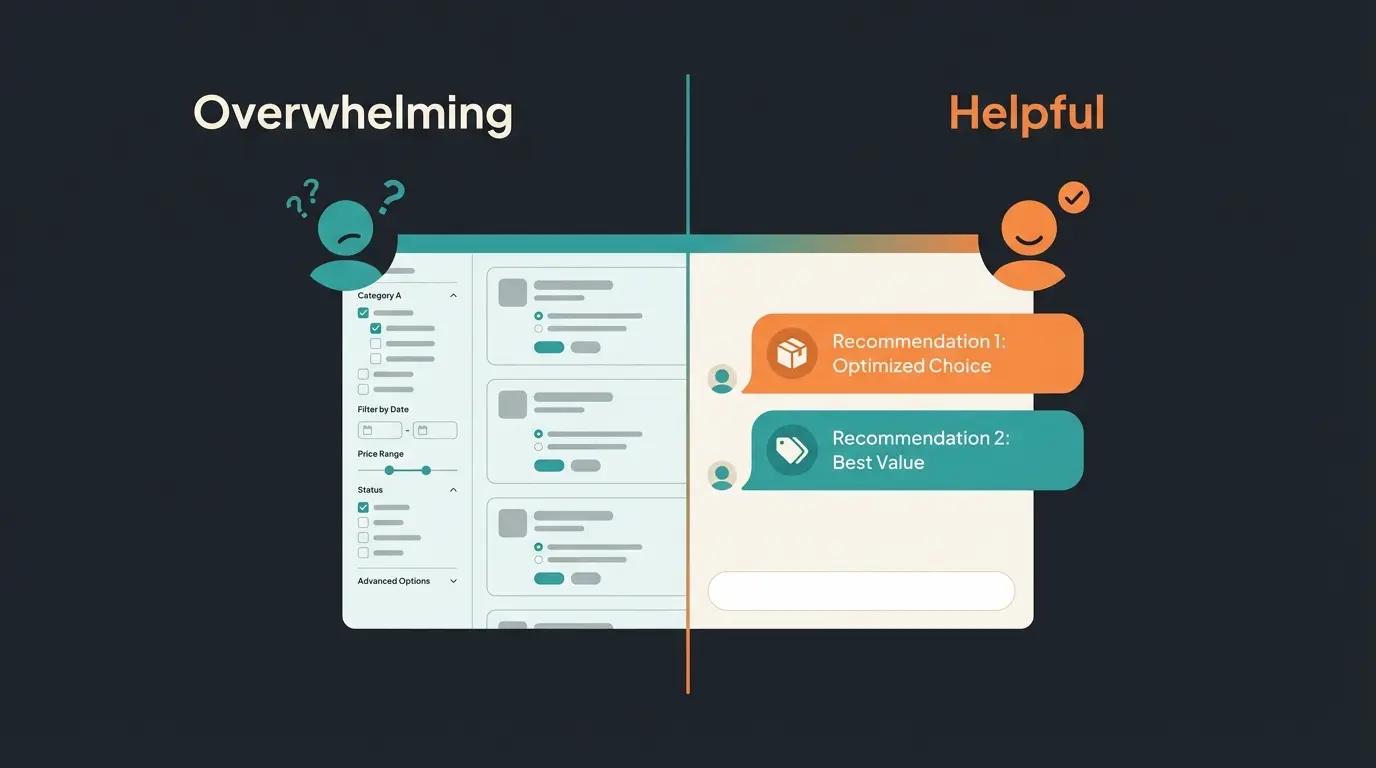
In a physical store, the customer approaches a sales associate. In an online shop (whether Shopware or PrestaShop), they face a filter sidebar with 50 options. The result is Choice Overload—selection paralysis. The customer abandons their cart and leaves. This is where AI product consultation becomes essential for modern e-commerce success.
Average cart abandonment due to decision paralysis and overwhelming options
Potential conversion lift with intelligent guided selling implementation
Average order value increase when customers receive personalized recommendations
The Platform Deficit
Shopware offers filters and "Product Streams" but no real consultation. The Digital Sales Rooms, as mentioned, are manual and don't scale. PrestaShop offers faceted search. According to YouTube tutorials on PrestaShop chatbots, most chatbot modules are simple "if-then" rule sets or FAQ bots ("Where's my package?"), not product consultants.
This creates the Consultation Gap. Your infrastructure (Shopware/PrestaShop) is solid, but your "sales staff" is missing. Understanding KI E-Commerce principles becomes essential for bridging this gap and transforming browsers into buyers.
The Solution: AI-Powered Product Consultation (Guided Selling)
To remain competitive in 2025, you need to extend your platform with an Experience Layer. Instead of just listing products, you need to advise customers—providing the personalized guidance they expect from premium retail experiences.
Backend AI vs. Frontend AI: Understanding the Difference
It's important to distinguish between two types of AI currently flooding the market, as they serve fundamentally different purposes:
- Efficiency AI (Backend): This is what Shopware AI Copilot and PrestaShop ChatGPT modules do. They help you save time (writing texts, tagging images). This is good for your cost structure but provides no direct value to customers during the purchase process.
- Sales AI (Frontend): This is Automated Product Consultation. An AI that acts like a salesperson, determines customer needs, and suggests matching products. This is where AI sales assistants deliver measurable ROI through increased conversions.
Customer is asked qualifying questions instead of being left alone with filters: 'What will you use this bike for?'
AI understands context, not just keywords. 'Back problems' translates to technical attributes like 'upright seating position' or 'suspended seatpost'
Customer receives top 3 matches with explanations: 'This model suits you because it's particularly back-friendly'
Personalized guidance leads to confident purchases with higher satisfaction and lower return rates
The Advantage: This works 24/7, scales infinitely (unlike Shopware's Digital Sales Rooms), and is more intelligent than static PrestaShop filters. The AI consultation bridge enables both B2B and B2C operations to benefit from automated expertise.
Feature Showdown: "Guided Selling" vs. "Chatbots"
Many merchants think: "I already have a chatbot." But there's a massive difference between a service bot and a sales consultant. Understanding how AI Chatbots transform customer interactions is crucial for making the right technology investment.
| Feature | Standard Chatbot (PrestaShop Module) | AI Product Consultant (Guided Selling) |
|---|---|---|
| Primary Purpose | Support ("Where's my package?", "Returns") | Revenue ("Which product fits me?") |
| Technology | Decision Trees (If A, then B) | Large Language Models (LLM) & Vector Search |
| Understanding | Reacts to Keywords | Understands Context & Needs |
| Integration | Often Isolated Chat Window | Integrated into Customer Journey |
| Outcome | Saves Support Costs | Increases Conversion Rate & Average Order Value |
Practical Example: The Difference in Action
A customer searches for "gift for wife, likes wellness":
- Standard Search/Bot: Shows products with the word "wellness" in the title—generic and unhelpful.
- AI Consultant: Suggests a relaxation bath set, a premium scented candle, and a bathrobe, then explains why this makes a wonderful wellness package—personalized and conversion-optimized.
This distinction illustrates why AI guided selling represents a fundamental shift from reactive support to proactive sales assistance.
Transform your Shopware or PrestaShop store with AI-powered product consultation. Increase conversions by guiding customers to the perfect products—24/7, automatically.
Start Your Free TrialCost Analysis (TCO): The Truth About "Free"
A decisive factor in the Shopware vs PrestaShop decision is the Total Cost of Ownership (TCO). Looking beyond initial pricing reveals the true investment required for each platform.
Shopware 6 Cost Breakdown (Rise Plan)
- License: €600/month (€7,200/year) according to LitExtension
- Hosting: Included (SaaS) or approximately €100–200/month (Self-Hosted)
- Maintenance: Lower with SaaS since Shopware handles updates
- Hidden Costs: Premium themes or special B2B plugins may cost extra, but are typically higher quality and better supported
PrestaShop Cost Breakdown (Self-Hosted)
- License: €0
- Hosting: Approximately €30–100/month
- Modules: A professional shop needs approximately 20 modules (SEO, Checkout, Payment, Legal, Security). Costs: approximately €1,500–2,000 (one-time + annual updates) per ShopWired
- Maintenance: High. When a PrestaShop update arrives, all modules often need manual review. Conflicts are frequent and time-consuming to resolve.
- Support: No official support included. Support plans cost from €300/month according to PrestaShop
The E-Commerce Tech Stack: Where AI Consultation Fits
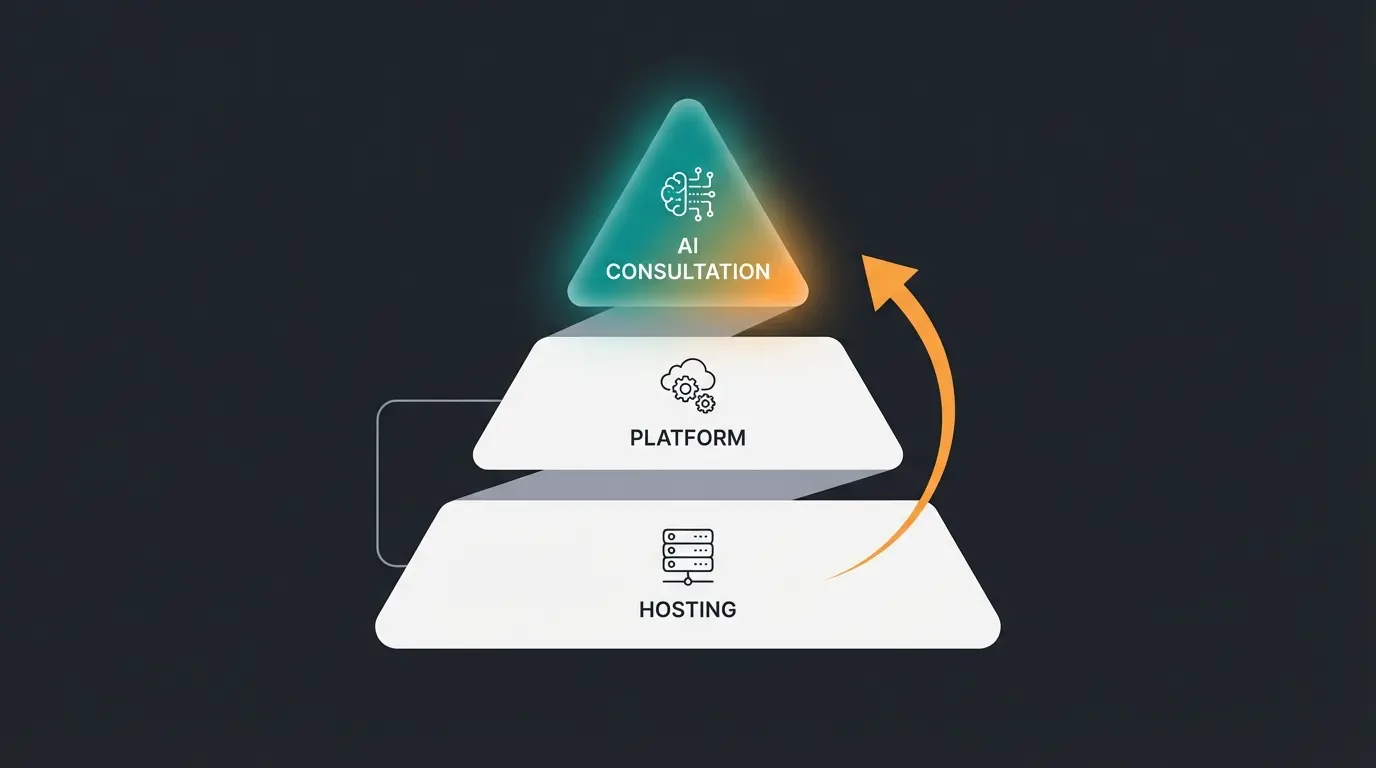
Understanding where AI product consultation fits in your technology architecture helps clarify why the platform alone isn't enough. This layered approach demonstrates how AI-powered consultation complements rather than replaces your existing infrastructure.
AWS, Hetzner, or cloud infrastructure providing the technical foundation for your store
Your e-commerce platform handling catalog, checkout, and order management
The critical layer that transforms passive catalogs into active sales assistants
The ultimate objective—turning browsers into confident buyers through guided experiences
This visualization shows why implementing AI product consultation is essential regardless of your platform choice. The consultation layer fills the gap that neither Shopware nor PrestaShop addresses natively.
Backend AI vs. Frontend AI: A Critical Distinction
The market is flooded with AI solutions, but understanding the difference between efficiency-focused and sales-focused AI helps prioritize investments. For merchants exploring conversational commerce, this distinction is fundamental.
| Dimension | Efficiency AI (Shopware Copilot) | Sales AI (Product Consultation) |
|---|---|---|
| Primary Goal | Save merchant time | Generate revenue |
| User | Merchant/Admin | Customer/Shopper |
| Application | Product descriptions, image tagging, rule creation | Product discovery, needs analysis, recommendations |
| Outcome | Faster workflows, reduced operational costs | Higher conversion rates, increased AOV |
| ROI Measurement | Time saved, operational efficiency | Revenue increase, conversion lift |
German Market Considerations: GDPR and Legal Compliance
For merchants targeting the DACH region, legal compliance isn't optional—it's essential. This section addresses the specific requirements that often tip the scales in the Shopware vs PrestaShop decision for German-speaking markets.
Shopware's German Advantage
As a German company, Shopware builds GDPR compliance (DSGVO), the Button Solution, and Basic Price Regulation compliance directly into the platform. The support documentation is available in German, and the partner ecosystem understands German legal requirements intimately. According to TopAdvisor, this native compliance reduces implementation time and legal risk significantly.
PrestaShop's German Challenge
PrestaShop requires specific modules for German legal compliance, including Cookie consent management, proper checkout button labeling, basic price display, and legal text integration. While achievable, this adds complexity, cost, and ongoing maintenance requirements that Shopware handles automatically.
Conclusion & Recommendation: Making Your Decision
The Shopware vs PrestaShop decision ultimately depends on your business DNA, growth trajectory, and technical resources. Both platforms have proven track records and loyal user bases for good reasons.
Choose Shopware 6 If:
- You're based in the DACH region (Germany, Austria, Switzerland) and need maximum legal security
- Your annual revenue (GMV) exceeds €1 million or you're scaling quickly toward that goal
- You serve B2B customers and need complex price lists, role management, and employee accounts
- You have budget for professional agency support and license costs (from €600/month)
- You value predictable costs and comprehensive manufacturer support
Choose PrestaShop If:
- You're a startup with limited budget wanting to start lean and iterate quickly
- You're expanding strongly into Southern European markets (France, Spain, Italy)
- You have internal developer resources to manage the "module puzzle" effectively
- You want full code control without vendor lock-in (SaaS) and maximum flexibility
- You're comfortable with hands-on technical management and troubleshooting
The "Secret Weapon" for Both Platforms
Whether you choose German market leader Shopware or flexible PrestaShop: Both systems fail to solve the customer consultation problem. To not only generate traffic in 2025 but actually convert visitors into buyers, you should integrate AI-powered product consultation into your technology stack.
- With Shopware, it supplements the manual Digital Sales Rooms with a scalable B2C solution
- With PrestaShop, it brings necessary intelligence into the static module system
Close the gap between catalog and customer. Invest not only in infrastructure (the shop) but in the sales experience (the consultation). Only then can you differentiate yourself from Amazon and other marketplace giants.
FAQ: Common Questions About Shopware vs PrestaShop
Shopware 6 is technically more modern (Server-Side Rendering, fast loading times) and offers very good native SEO tools. PrestaShop can keep pace with the right modules but requires more manual configuration through "SEO Pack" modules. Both platforms can achieve excellent SEO results, but Shopware typically requires less optimization effort out of the box.
Yes, Shopware offers a migration assistant for platform transitions. However, since data structures differ significantly, you should plan this with an experienced agency—especially to preserve SEO rankings during the transition. Budget 4-8 weeks for a clean migration with proper URL redirects and data validation.
Shopware, as a German company, places extreme emphasis on security and data protection, with regular security audits and rapid patch releases. With PrestaShop, security depends heavily on the quality of installed third-party modules, which can often be gateways for hackers if not properly maintained. Choose modules carefully and keep everything updated.
Shopware's Rise plan costs €600/month with hosting included in SaaS mode. PrestaShop's 'free' core typically requires €1,500-2,000 in modules plus €30-100/month hosting plus ongoing maintenance costs. When you factor in agency support for maintenance, both platforms often converge in total cost of ownership for professional operations.
Both platforms support third-party integrations through APIs. AI consultation solutions typically deploy as a JavaScript widget or API integration that layers on top of your existing product catalog. Implementation usually takes 2-4 weeks and doesn't require platform changes—just proper data synchronization between your catalog and the AI system.
Whether you choose Shopware or PrestaShop, don't let the consultation gap cost you conversions. Implement AI-powered product consultation and transform your catalog into a 24/7 sales consultant.
Get Started Free
Lasse is CEO and co-founder of Qualimero. After completing his MBA at WHU and scaling a company to seven-figure revenue, he founded Qualimero to build AI-powered digital employees for e-commerce. His focus: helping businesses measurably improve customer interaction through intelligent automation.