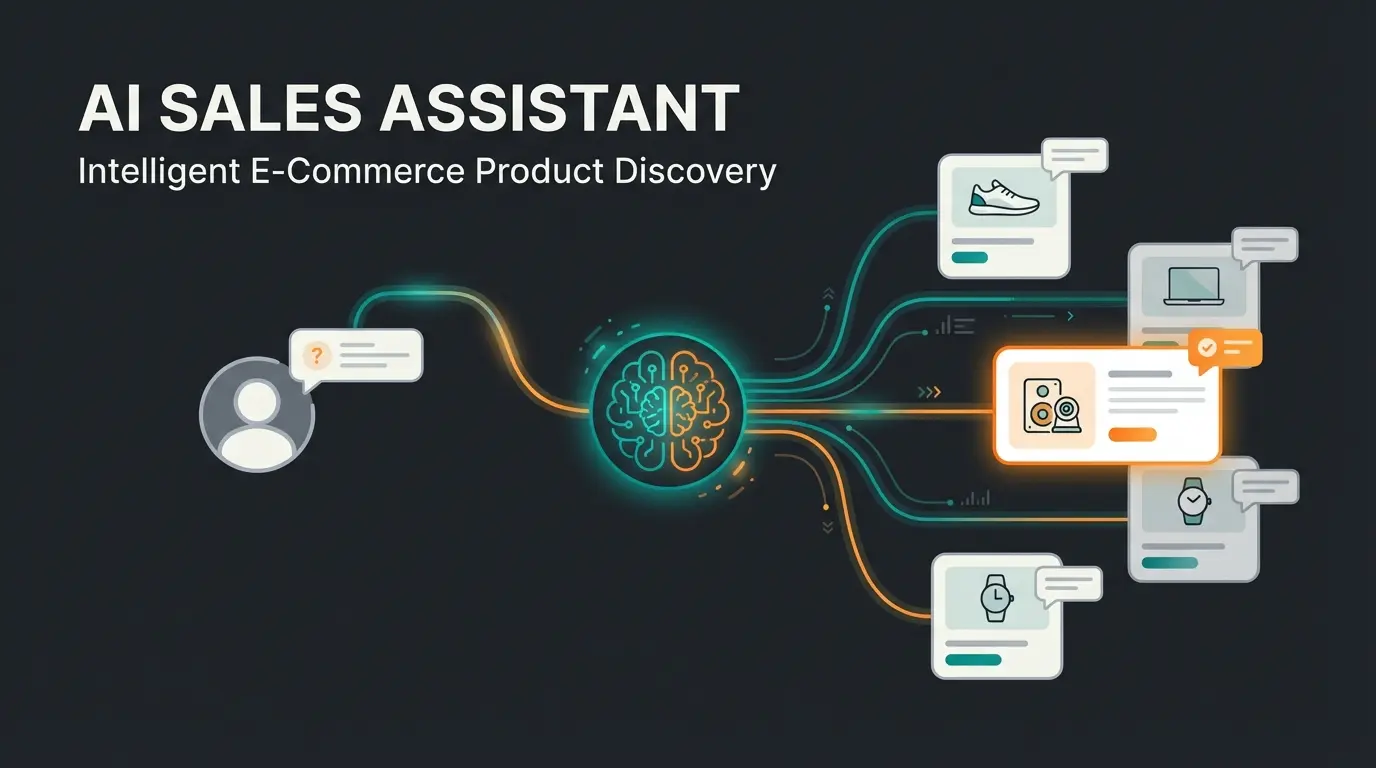
The "Empty Store Syndrome" in E-Commerce
Imagine walking into a massive department store. The shelves are overflowing with thousands of products. The selection is overwhelming. But there's not a single sales associate in sight. You have a specific question, you're unsure which product solves your problem—and because no one is there to advise you, you leave empty-handed.
This exact scenario plays out millions of times daily in German online shops. We invest heavily in traffic, SEO, and design, but leave customers alone at the critical moment of purchase decision. When you search for "Shopware purchase advice," you likely have one of two goals: Either you're looking for advice about purchasing Shopware as a system, or—and this is what this article addresses—you're searching for tools to better advise your customers within your Shopware store.
The bitter truth is: Classic faceted search and static filters ("Color: Red," "Size: L") are no longer sufficient. Customers don't want to filter products; they want to find solutions to their problems. In this comprehensive guide, you'll discover why static plugins have had their day, how Shopware's native "Guided Shopping" fits into the picture, and why Artificial Intelligence (AI) is the only way to bring scalable, genuine consultation to your Shopware 6 store.
What Is Digital Purchase Consultation in Shopware?
Before we dive into the technical implementation in Shopware 6, we need to sharpen the concept of digital purchase consultation. There's often confusion between search, filtering, and consultation—and understanding the difference is crucial for choosing the right solution.
The Paradox of Choice: Why More Options Mean Less Revenue
A psychological phenomenon that should keep every shop owner awake at night is the Paradox of Choice. A famous study by psychologists Sheena Iyengar and Mark Lepper, often called the "Jam Experiment," illustrates this perfectly. According to Psychology Tricks, a stand with 24 jam varieties attracted more attention but resulted in only a 3% purchase rate. A stand with just 6 jam varieties achieved a 30% purchase rate. This finding, also documented by CMSwire and Medium, demonstrates a clear pattern.
Large selection leads to decision paralysis
Curated selection drives purchases
Less choice can mean more sales
The result is unambiguous: Too many options lead to decision paralysis (Analysis Paralysis). When customers are overwhelmed, they don't buy the "wrong" product—they buy nothing at all. Research from Build Grow Scale and Zoovu confirms this pattern across industries.
The Difference Between Filter and Advisor
Many Shopware shops attempt to solve this problem with filters. But this is a fallacy:
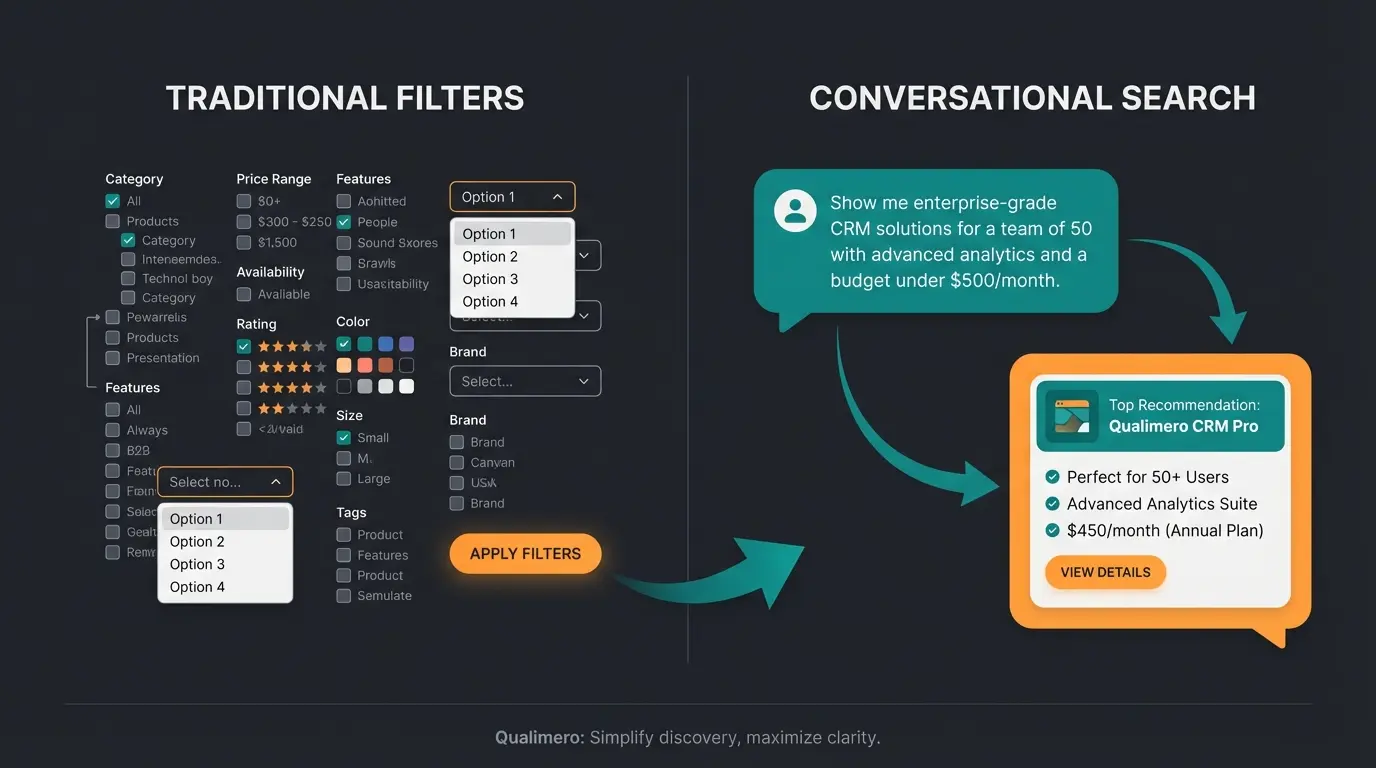
- Filters (Faceted Search): Assume the customer already knows the solution. They must know they need "Gore-Tex," "Shaft Width 32," and "Vibram Sole." This is technical.
- Digital Purchase Consultation (Guided Selling): Asks about the need. "I'm looking for a hiking boot for light mountain tours in summer, and I have wide feet." The system translates this need into technical attributes. This is psychological.
A genuine AI product consultation must therefore take on the role of an experienced salesperson: It must ask questions, understand answers, and provide reasons for a recommendation instead of just listing results. As noted by Luigi's Box, this shift from technical filtering to needs-based consultation is what separates successful digital advisors from simple search tools.
Current Solutions in the Shopware Ecosystem
If you search the Shopware Store or documentation for consultation solutions today, you'll primarily encounter two categories, both with legitimate use cases but also massive limitations.
Option A: Static Product Advisors (The Quiz Plugins)
These are the classic plugins found in the Shopware Store under terms like "Product Guide" or "Advisor Tool."
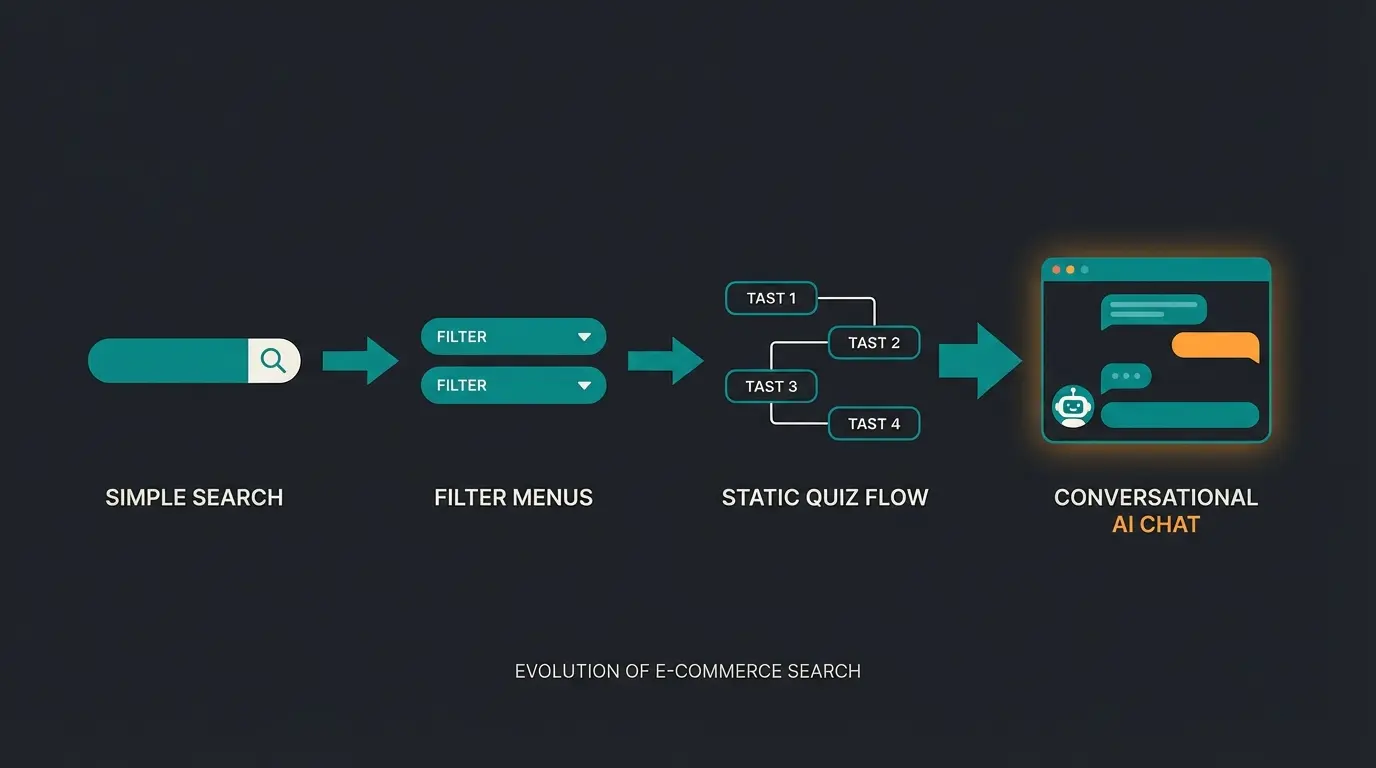
- How they work: They're based on rigid "if-then" rules (Decision Trees). The merchant manually defines in the backend: If customer clicks 'Red,' show products from Category X.
- Advantages: According to Boost Commerce, they're inexpensive to acquire, easy to install, and offer full control over the path.
- Disadvantages (The "Maintenance Trap"): As Qualimero's provider comparison shows, these tools come with significant drawbacks.
The limitations of static plugins become apparent quickly. High maintenance effort: Every new product line requires manual adjustment of the decision trees. With large assortments, this quickly becomes unmanageable. Dead ends: When a customer chooses a combination for which no products exist (e.g., "Budget" + "Premium Feature"), the quiz often ends on an empty results page ("0 results"). This is conversion killer number one. Lack of personalization: Every customer goes through the same rigid path, regardless of their history or context. Research from Medium's UX analysis confirms these frustrations drive customers away.
Option B: Shopware Guided Shopping (The Live Video Feature)
Shopware introduced the "Guided Shopping" feature with version 6.4 (now often mentioned in the context of "Digital Sales Rooms"). This is a technically impressive solution, but one that's often misunderstood.
- How it works: According to Shopware's official documentation, it enables interactive live video events directly in the shop. A salesperson presents products via video stream to a group or individual customer (1:1), can control their shopping carts, and highlight products.
- Advantages: Maximum human proximity, perfect for high-priced B2B products or exclusive shopping events (the digital "Tupperware party" principle). iCreative Technologies highlights its effectiveness for luxury and complex B2B scenarios.
- Disadvantages (The Scalability Brake): Several critical limitations exist.
The constraints of video-based consultation are significant. Personnel intensive: It always requires a human on the merchant's side. You cannot offer consultation at 3 AM. Not for mass market: You cannot advise 5,000 visitors simultaneously in 1:1 conversations. Technical complexity: As Shopware documentation notes, it often requires additional infrastructure (PWA, Mercure Hub, video service accounts like daily.co).
Option C: The Gap
What's missing is a solution that is scalable like a plugin (available 24/7, no personnel) but acts intelligently like a human (understands context, conducts dialogues). This is exactly where AI enters the picture—and where AI sales assistants demonstrate their true value.
Why AI Is the Superior Purchase Advisor
The term "AI" is often used inflationary in marketing. But in the context of Shopware purchase advice, there's a fundamental difference between "AI washing" (simple algorithms sold as AI) and genuine AI Sales Assistants based on Large Language Models (LLMs) and NLP (Natural Language Processing).
Dynamic Dialogues Instead of Rigid Trees
While static plugins fail with unexpected inputs, a true AI can understand context.
Example: A customer searches for "something for my grandpa's 80th birthday, he loves gardening but has back pain." A Static Solution cannot process this query since there's no filter for "grandpa" or "back pain." An AI Solution understands the semantics. It connects "gardening" + "back pain" with products like ergonomic garden shears or raised beds and actively suggests these. This capability, highlighted by Retresco, represents the fundamental shift from keyword matching to intent understanding.
Scalability and 24/7 Availability
Unlike Shopware's "Guided Shopping" (video), AI never sleeps. It can advise thousands of customers simultaneously without increasing your personnel costs. According to Envive AI, AI-powered personalization can increase revenue by 10-15%, with peak cases reaching up to 25%. Sales Group AI confirms these conversion improvements across multiple industries.
Utilizing Unstructured Data
An often-overlooked advantage: AI can utilize information that isn't cleanly stored in your database. It can read product descriptions, PDFs, operating instructions, and FAQs, using this knowledge for consultation. When a PDF manual states that a device is "not suitable for saltwater," the AI knows this—a static filter only knows this if you've manually maintained the attribute "Saltwater Resistant: No." AI product finders leverage this capability to provide more comprehensive recommendations.
Conversion Uplift Through Psychological Security
AI advisors reduce the cognitive load on customers. Instead of comparing 50 technical data sheets, the customer receives a curated selection with reasoning ("I recommend this model because..."). This creates trust and drastically reduces abandonment rates. The impact of AI-powered e-commerce on customer confidence is well-documented.
Stop losing customers to decision paralysis. Our AI sales assistant guides shoppers to the perfect product 24/7, increasing conversions by up to 25%.
Start Your Free TrialComparison Table: Which Tool for Which Purpose?
To make your decision easier, we've compared the three approaches across all relevant dimensions.
| Feature | Static Filters / Quiz Plugins | Shopware Guided Shopping (Video) | AI Sales Assistant (Automated) |
|---|---|---|---|
| Technology | Decision Trees (If/Then) | Live Video Streaming | NLP / Machine Learning / LLM |
| Personnel Effort | High (Initial creation & maintenance) | Very High (Live staff required) | Low (Automated) |
| Availability | 24/7 | Only during business hours | 24/7 |
| Scalability | High | Low (1:1 or 1:Few) | Very High (Unlimited) |
| User Experience | Rigid, often frustrating ('0 results') | Excellent, human touch | Dynamic, conversational |
| Data Basis | Only structured attributes | Salesperson's knowledge | Structured & Unstructured Data |
| Cost Model | One-time or subscription (Cheap) | License + Personnel costs (Expensive) | Performance/Usage-based (Medium) |
| Best Use Case | Simple products (e.g., printer cartridges) | Luxury goods, B2B machinery | Complex assortments (Fashion, Tech) |
This comparison clearly shows that AI guided selling offers the optimal balance between scalability, intelligence, and cost-effectiveness for most e-commerce scenarios.
Implementation of Shopware Purchase Advice in Version 6
Integrating a modern AI purchase advisor into Shopware 6 is easier than ever today, thanks to the flexible architecture (API-first) and Shopping Experiences (formerly Erlebniswelten).
Step 1: Placement in Shopping Experiences
The advisor shouldn't be hidden. Use Shopware Shopping Experiences to prominently place the AI assistant:
- Homepage: As a "teaser" for undecided visitors ("Not sure what you're looking for? Start the advisor").
- Category Pages: This is where demand is highest. Replace or supplement sidebar filters with the AI advisor.
- CMS Blocks: Modern AI solutions can often be added as a simple JavaScript snippet or directly as a custom CMS element in Shopping Experiences (drag & drop). According to Kennersoft and Shopware's CMS documentation, this flexibility makes integration straightforward.
Step 2: Data Connection (Feed vs. API)
For the AI to know what's in your warehouse, it needs data.
- Product Feed: The simplest method. A daily export of your product data (XML/CSV) that the AI ingests.
- Real-time API: For prices and availability, the AI should ideally access the Shopware API live so no out-of-stock products are recommended. Shopware's API documentation provides comprehensive guidance on setting up these connections.
Step 3: AI Grounding
A risk with AI is that it "hallucinates" (invents things). For serious purchase consultation, Grounding is essential. This means the AI is technically forced to only use facts that exist in your product data. When choosing a provider, ensure this mechanism is implemented. The importance of grounding for reliable AI product consultation cannot be overstated.
Position AI advisor prominently in Shopping Experiences—homepage, category pages, and custom CMS blocks
Connect via product feed (daily XML/CSV) or real-time API for live inventory and pricing
Ensure AI only uses verified product data, then test thoroughly before launch
Checklist: What to Look for When Selecting a Tool
Before deciding on a solution, check these points. Particularly in the German market (DACH), there are specific requirements to consider.
Performance and Page Speed (Core Web Vitals)
Every additional script impacts load time. A slow shop doesn't convert, no matter how good the consultation is. Tip: Ensure the advisor script loads "asynchronously" or only loads when the user interacts (Lazy Loading). Shopware 6 is performant, but poorly optimized plugins can ruin your score. Guidance from 2Hats Logic, Shopware performance docs, and iCreative Technologies all emphasize this critical factor.
Data Privacy (GDPR Compliance)
An AI consultation processes customer inputs. Server Location: Is data processed within the EU? Consent Manager: The tool must seamlessly integrate with Shopware's Cookie Consent Manager (or tools like Usercentrics). It may only load after the customer has consented. Shopware's privacy documentation provides detailed requirements for GDPR compliance.
Mobile Optimization
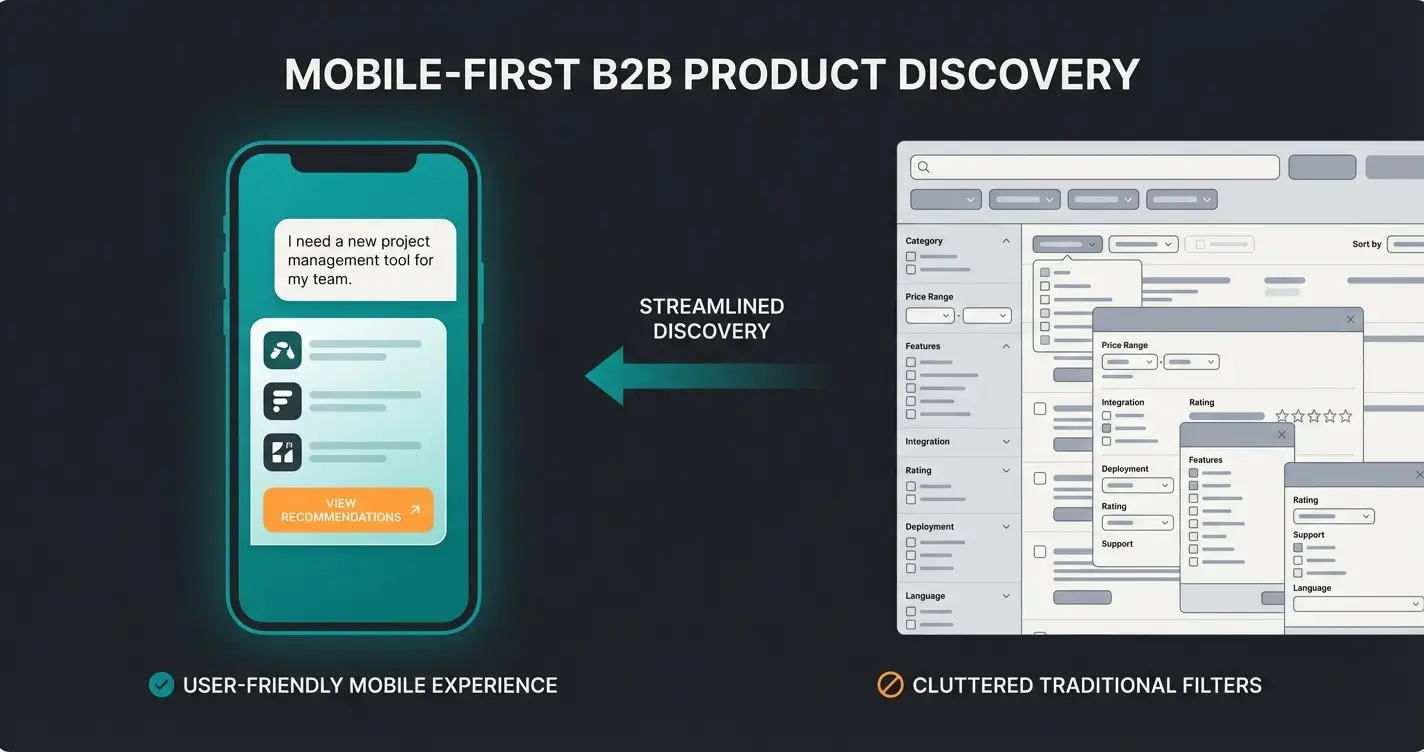
Over 70% of traffic today comes from mobile devices, but conversion is often lower there. UX Check: Static filters are a nightmare on phones (tiny checkboxes, endless scrolling). An AI chat interface or a well-designed "swipe" advisor is often significantly superior on mobile. Be sure to test any solution "Mobile First."
Fallback Scenarios
What happens when the AI doesn't know the answer? Good systems offer a seamless handover to human support or at least provide a contact form. This is where Shopware 6 chatbots with proper fallback mechanisms demonstrate their value.
The Technology Behind Intelligent AI Advisors
Understanding how AI agents differ from simple rule-based systems helps you make better purchasing decisions. Modern AI sales assistants leverage several key technologies:
- Natural Language Processing (NLP): Enables understanding of customer intent beyond keywords—interpreting phrases like "something waterproof for my hiking trip" rather than requiring exact attribute matches.
- Large Language Models (LLMs): Provide the conversational capability to engage customers naturally, ask clarifying questions, and explain recommendations in human-like dialogue.
- Semantic Search: Goes beyond keyword matching to understand meaning, connecting concepts like "outdoor activities" with relevant product categories automatically.
- Context Memory: Maintains conversation history so customers don't repeat themselves, creating a coherent consultation experience.
These technologies combine to create what AI chatbots for conversational commerce achieve: genuine conversations that feel like talking to a knowledgeable sales associate, not clicking through a rigid quiz.
Real-World ROI: What AI Consultation Delivers
The business case for AI-powered purchase advice is compelling. Based on implementations across e-commerce, AI consulting in e-commerce delivers measurable improvements:
AI personalization lifts sales significantly
Automated consultation handles common questions
Interactive AI vs. static filters
No scheduling, no staffing gaps
These results come from the fundamental advantage that Shopware AI automation provides: the ability to deliver personalized, expert-level consultation at scale without proportional increases in cost.
FAQ: Frequently Asked Questions
Shopware's Guided Shopping is a video-based solution requiring live staff for real-time video calls with customers—excellent for high-value B2B products but not scalable for mass-market 24/7 consultation. AI purchase consultation runs automatically around the clock, understanding natural language queries and providing personalized recommendations without any human intervention, making it ideal for scaling customer service across your entire product range.
Thanks to Shopware 6's API-first architecture and flexible Shopping Experiences (CMS), integration is straightforward. Most modern AI solutions can be added as a JavaScript snippet or custom CMS block via drag-and-drop. Data connection typically involves either a daily product feed export (XML/CSV) or real-time API integration. The initial setup usually takes 2-4 weeks including testing, with minimal ongoing maintenance.
Yes, if you choose the right provider. Key factors to verify: data processing within the EU, integration with your consent management platform (like Shopware's Cookie Manager or Usercentrics), clear data retention policies, and proper anonymization of conversation data. Always request a Data Processing Agreement (DPA) from your AI provider.
Not if implemented correctly. Best practices include asynchronous script loading, lazy loading (only loading when users interact), and ensuring the solution is optimized for Core Web Vitals. A properly implemented AI advisor should add minimal latency—typically under 100ms—and should never block initial page rendering.
AI consultation excels at standard product recommendations and common questions, handling 70-80% of consultation needs automatically. However, for complex issues, complaints, or highly individualized requests, human fallback remains important. The best approach combines AI for scalable consultation with seamless handover to human agents when needed.
Conclusion: The Future Is Conversational
The days when we could leave customers alone with bare product lists and complex filter bars are over. Competition is just one click away, and often the shop with the best price doesn't win—the one with the best guidance does.
Key Takeaways
- Static plugins are cheap but maintenance-intensive and often conversion killers through "zero results" pages.
- Shopware Guided Shopping is a powerful tool for live video sales but not a solution for automated 24/7 consultation in the mass market.
- AI purchase consultation fills the gap: It scales infinitely, understands human language, and psychologically guides customers to purchase completion.
The integration through Shopware's AI product consultation capabilities and Shopping Experiences makes implementation accessible, while proper attention to performance and GDPR compliance ensures long-term success.
Your Action Plan
Don't wait until Amazon or other major players have set the standard for AI consultation. Start now with a pilot category in your Shopware shop. Use the flexibility of Shopping Experiences to integrate an AI assistant that doesn't just serve your customers—it delights them. The e-commerce of the future is no longer just "search and find" but "ask and advise."
Join leading Shopware merchants already using AI-powered purchase consultation. Start with a free trial and see the conversion difference within 30 days.
Start Free Trial Now