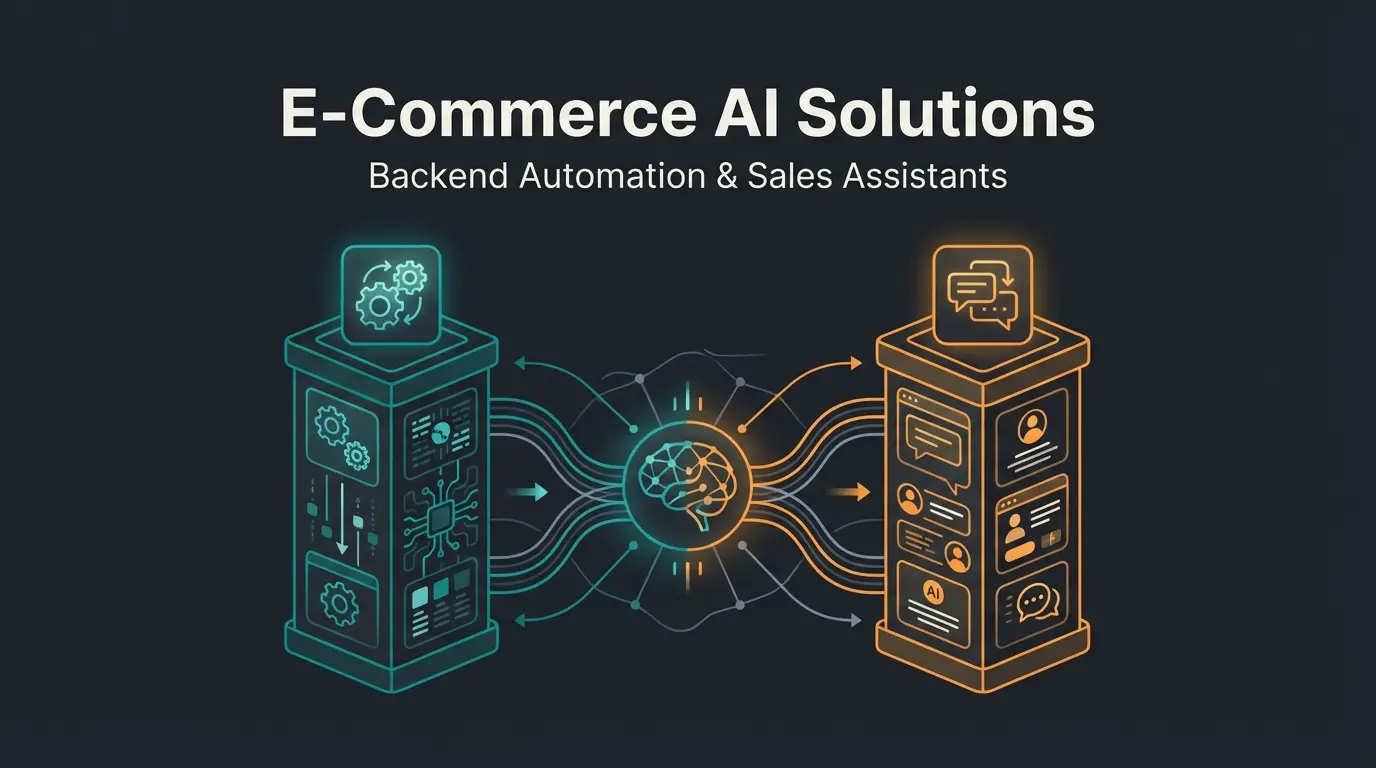
Introduction: The Two Faces of AI in E-Commerce
Artificial Intelligence (AI) is no longer a futuristic buzzword—it's an operational necessity in modern e-commerce. Yet when shop owners search for Shopware AI today, they typically encounter a one-sided narrative: backend efficiency improvements. The focus is on writing product descriptions faster, automatically tagging images, or exporting data. That's valuable, no question. But it's only half the story.
While 90% of discussions revolve around how merchants can save time, the most important question often remains unanswered: How does AI help customers make purchasing decisions?
In this comprehensive guide, we'll illuminate the current state of Shopware Artificial Intelligence—from the native AI Copilot features to the next evolutionary stage: AI-powered product consultation (Digital Sales Assistant). We'll show you how to use AI in E-Commerce not just to simplify your work, but to significantly increase your conversion rate by replacing "silent" searching and filtering with intelligent dialogue.
What You'll Learn in This Article
- Which AI features Shopware 6 offers natively (and what they cost)
- Why backend automation doesn't automatically mean more revenue
- How to use frontend AI (Guided Selling) to bridge the gap between anonymous online shops and expert salespeople
- A preview of the future of 'Agentic Commerce' with Shopware 6.7
Part 1: The Status Quo – Shopware AI Copilot Features
Shopware has made a significant leap forward with the introduction of the AI Copilot. This suite of tools primarily aims to accelerate merchants' daily processes. Let's take a detailed look at what Shopware currently delivers "out of the box."
The Architecture: Rise, Evolve, and Beyond
First, some context: The native AI features are not part of the free Community Edition. They're tied to the commercial plans Rise, Evolve, and Beyond, as confirmed by LitExtension and Scope01. This is an important strategic consideration for merchants still on Shopware 5 or Community Edition 6—access to native AI is a compelling argument for upgrading to a commercial plan.
Key Features of the Shopware AI Copilot
Based on current analyses and release notes from Atwix and Shopware's official documentation, the features can be categorized into three areas: Content Creation, Data Management, and Checkout Optimization.
1. Content Generation (The Time Saver)
This is probably the most frequently used feature. The AI Copilot uses generative AI (similar to ChatGPT) to:
- Create product descriptions based on bullet points
- Write Shopping Experiences texts, check spelling, and translate them
- Summarize product reviews: Instead of reading hundreds of reviews, customers receive an AI-generated summary of pros and cons on the detail page
Assessment: Extremely useful for SEO and time-to-market, but it's "only" content creation—not active sales promotion.
2. Visual and SEO Assistance
The Image Keyword Assistant allows the AI to analyze uploaded images and automatically assign relevant keywords (alt tags, metadata). According to Shopware, this massively improves internal search and SEO ranking without anyone having to manually tag each image. Additionally, merchants can use Text-to-Image functionality to generate royalty-free images for their Shopping Experiences via prompts, as noted by Shopware's feature pages.
3. Data and Customer Management (Backend Efficiency)
This is where the strength of Shopware AI in administration really shows:
- AI Export Assistant: Instead of writing complex database queries, merchants can generate CSV exports in natural language (e.g., 'Export all orders from yesterday worth over €100')
- Customer Classification: The AI analyzes order history and assigns labels (e.g., 'Bargain Hunter', 'VIP') that can then be used for marketing campaigns in the Rule Builder, as detailed by Codixio
- Product Properties: The AI suggests properties (color, size, material) based on the product description, enormously accelerating filter maintenance
4. Personalization in Checkout
A small but nice feature: The Custom Checkout Message. Based on the shopping cart, the AI generates a personal message for the order confirmation page (e.g., 'Have fun hiking with your new shoes!'). This strengthens customer loyalty but is a post-sales measure.
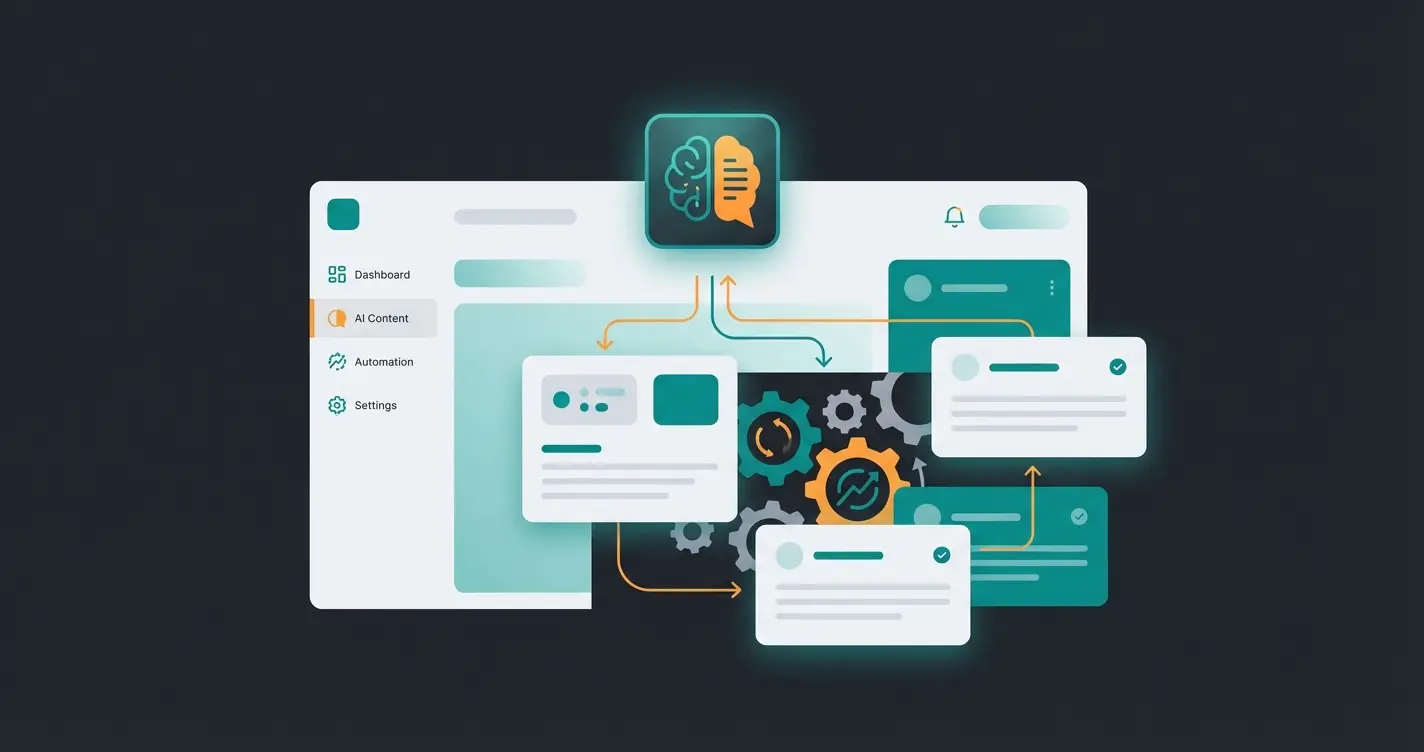
Interim Conclusion on Native AI
Native Shopware features are excellent for reducing operating costs and accelerating processes. They answer the question: 'How can I manage my shop more efficiently?'
However, they do not answer the question: 'How do I help my customer find the right product when they're overwhelmed?' This is a gap we'll close in the next section, where we explore how AI-powered customer service can transform the shopping experience.
Part 2: The Missing Puzzle Piece – AI for Product Consultation
While the AI Copilot works in the engine room (backend), customers often stand alone in the showroom (frontend). Shopware's standard search and filters (faceted search) are technically solid but psychologically often inadequate.
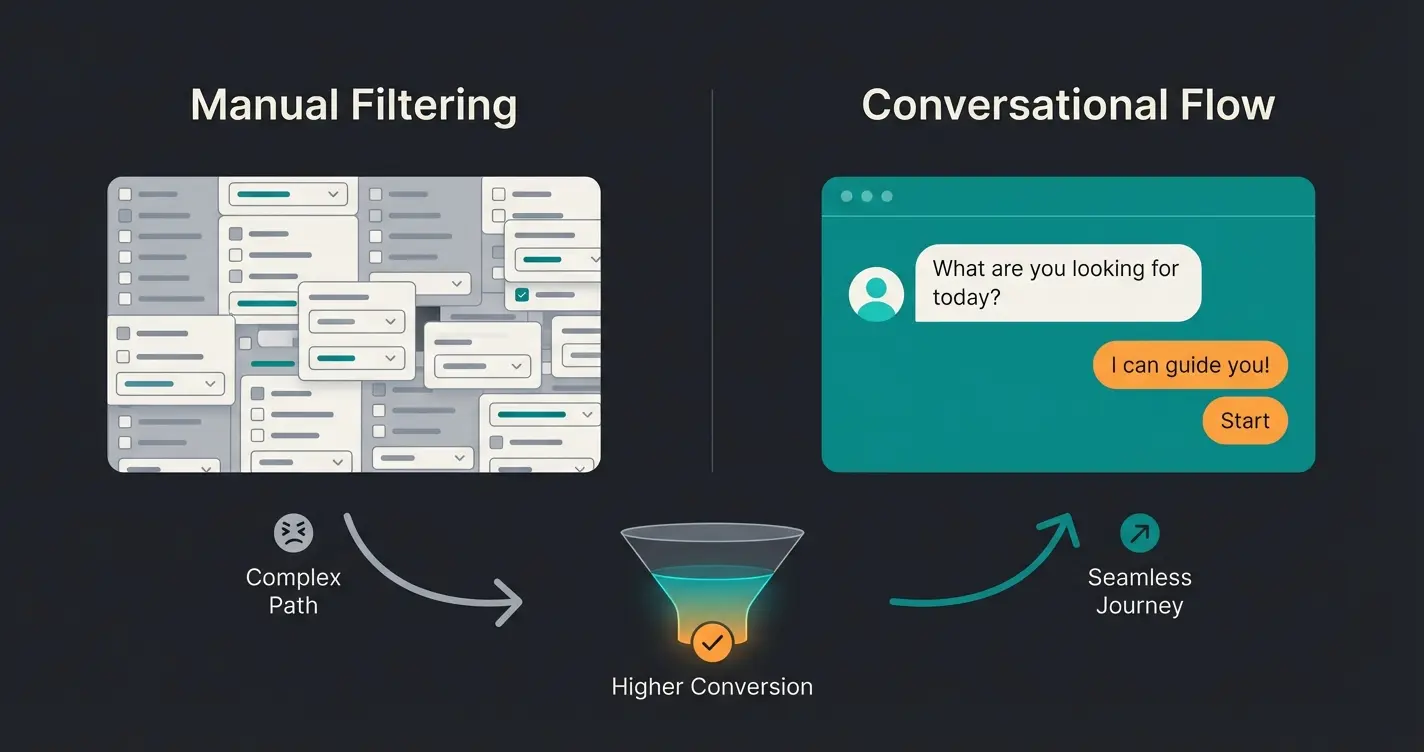
The Problem: Filter Fatigue (Choice Overload)
Imagine you're walking into a bicycle shop.
- Scenario A (Classic Online Shop): The salesperson stays silent and points to a shelf with 500 bicycles. Next to it hangs a list of checkboxes: 'Frame Height', 'Derailleur', 'Suspension Travel'. If you don't know what you need, you're lost.
- Scenario B (Good Consultation): The salesperson asks: 'Where do you want to ride? More in the city or in the forest? Do you have back problems?'
Most online shops—including those running Shopware 6—operate according to Scenario A. They assume customers know the technical attributes. But AI in E-Commerce must be able to replicate Scenario B. This is where AI product consultation becomes essential.
The Solution: Digital Sales Assistants (Guided Selling)
This is where 'frontend AI' comes into play. It's not about generic chatbots that answer 'Where's my package?' (support), but about product consultants that actively steer the sales process. An effective AI product finder can dramatically transform customer engagement.
The Difference: Support Bot vs. Sales AI
Many merchants confuse Conversational AI with support automation. Tools like Userlike (Lime Connect) or Tidio, referenced on SourceForge and in the Shopware Store, are great for support, but a true sales AI must do more than just answer questions. It must ask questions.
| Feature | Classic Chatbot / FAQ Bot | Digital Product Consultant (Sales AI) |
|---|---|---|
| Trigger | Customer asks a question ('How long is delivery?') | AI asks a question ('Who are you buying a gift for?') |
| Goal | Avoid tickets, relieve support | Increase conversion, boost cart value |
| Logic | Reactive (Waits for input) | Proactive (Guides through the funnel) |
| Data Basis | Knowledge base / FAQ | Product data feed & sales psychology |
Why Guided Selling Drives Conversions
Statistics show that personalized recommendations can increase revenue by up to 30%, according to research from My-Coco and Business Dasher. When an AI takes customers by the hand through AI Selling approaches:
- It reduces abandonment rates: Customers who don't know which product fits often don't buy anything. Consultation provides security.
- It increases cart value (AOV): A consultant can logically justify complementary accessories (cross-selling): 'For this grill, you need this cover because it stays outside.'
- It collects zero-party data: Through dialogue, you learn why customers buy (e.g., 'gift for wife'), not just what they buy.
Through personalized AI recommendations
Focuses on merchant efficiency, not customer conversion
Customers leave when overwhelmed by filter options
Part 3: Strategic Implementation in Shopware
How do you bring this 'consulting intelligence' into your Shopware shop? There are two main paths: Using specialized plugins or integrating external conversational commerce platforms. Implementing an AI Chatbot for E-Commerce can be transformative.
1. Native Plugins for Guided Selling
In the Shopware Store, you'll find extensions like 'Guided Shopping Journey' or 'Product Finder', available through the official marketplace.
- How they work: These are often rule-based (not necessarily AI). You define question paths in the backend (e.g., Question 1: 'Men's or Women's?', Question 2: 'Sporty or Elegant?').
- Advantage: Deep integration into Shopware Admin, direct cart handover.
- Disadvantage: High manual maintenance effort. You have to build the logic yourself. True AI plugins that dynamically generate these paths are still emerging.
2. External Conversational AI & WhatsApp Commerce
Platforms like Charles or MoinAI offer deep integrations with Shopware 6, as documented by Hello Charles and MoinAI.
- Charles: Focuses on WhatsApp. Consultation takes place in the messenger. The advantage: Extremely high open rates (>90%) and very personal connection. The integration synchronizes products and carts between WhatsApp and Shopware, as explained in their integration guide.
- MoinAI / Userlike: These offer chat widgets for the shop. Newer versions use LLMs (like GPT-4) to not only provide support but also recommend products from the feed, as noted by Lime Technologies.
3. The DIY AI Integration (ChatGPT API)
For technically savvy merchants or agencies, using plugins that directly connect to the OpenAI API (ChatGPT) is an option, such as solutions from Biloba IT documented on their website and the Shopware Store.
- Use Case: You can configure a 'consultant prompt' that has access to your product export file.
- Risk: 'Hallucinations' (the AI invents products). Strict 'grounding' (restriction to existing data) is necessary here.
Stop losing customers to filter fatigue. Our AI-powered product consultants guide visitors to the perfect purchase with intelligent dialogue.
Start Your Free TrialPart 4: Visual Comparison – Admin AI vs. Sales AI
To plan your shop's strategic direction, this direct comparison helps. Use this table to decide where you need to invest. Understanding the difference between AI consulting approaches is crucial for success.
| Feature | Admin AI (Shopware Copilot) | Sales AI (Digital Assistant) |
|---|---|---|
| Target Audience | Shop Manager, Content Manager | End Customer, Website Visitor |
| Main Goal | Time Savings, Process Optimization | Revenue Increase, Customer Satisfaction |
| Example Function | 'Write an SEO description for this sneaker.' | 'What's your running style? Here are 3 matching shoes.' |
| Technology | Generative AI (Text/Image), Classification | Conversational AI, Decision Trees, LLMs |
| KPI Impact | Reduction of Operating Costs (OpEx) | Increase in Conversion Rate (CR) & AOV |
| Availability | Native in Shopware Rise/Evolve/Beyond | Via Plugins or Third-Party Software |
Simple keyword matching - finds exact terms in product names
Size, color, price filters - requires customer expertise
Backend optimizations - helps merchants, not customers
Interactive dialogue: 'I need a trail bike' → 'Here are 3 MTBs for you'
Part 5: Future Outlook – Shopware 6.7 and Agentic Commerce
Anyone investing in Shopware AI today needs to know where the journey is heading. Shopware has a clear vision for the future, running under the term 'Agentic Commerce'. This becomes particularly relevant with the upcoming release of Shopware 6.7 (planned for May 2025), as detailed on Shopware's roadmap and covered by Ecomwise.
What is Agentic Commerce?
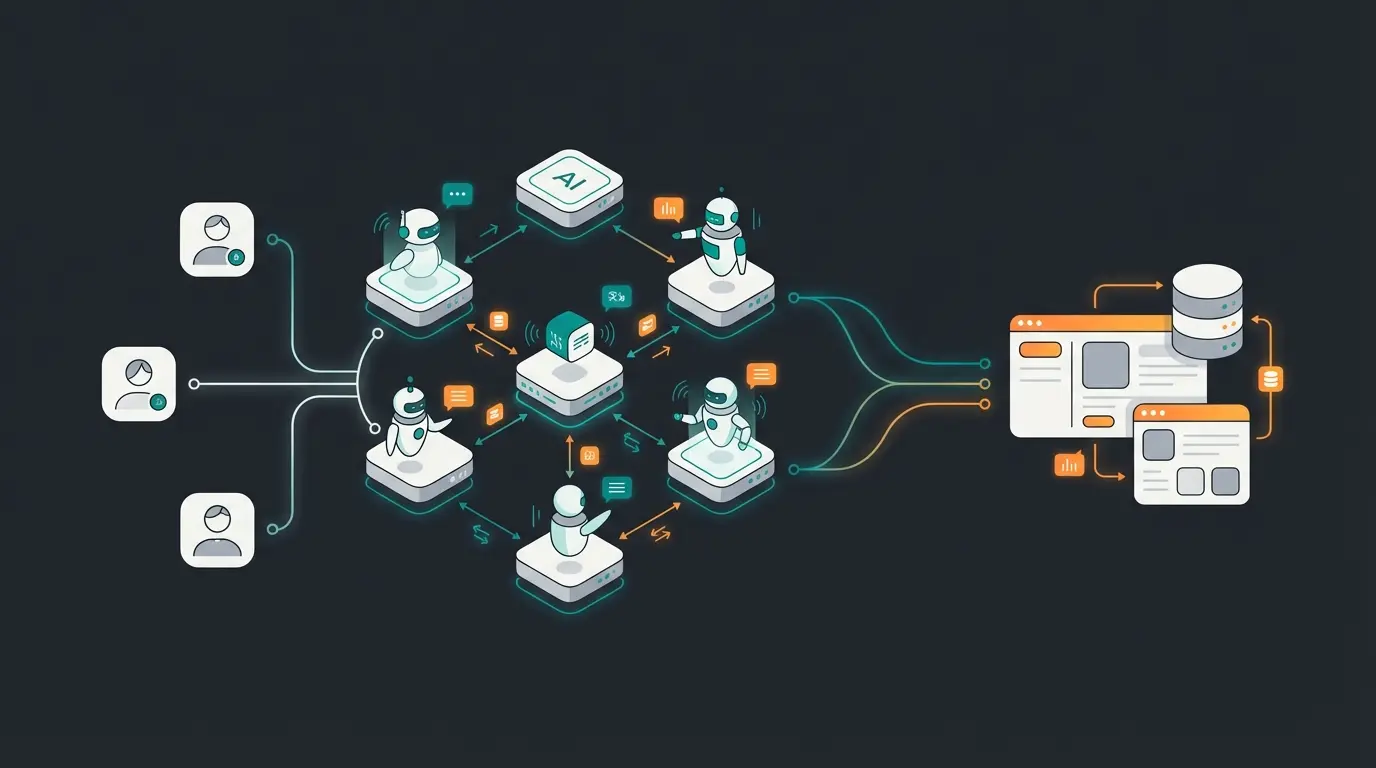
Until now, humans have used AI as a tool (Copilot). In the future, AI agents will act autonomously, as explained by Shopware's vision statement. This evolution represents a fundamental shift in how AI sales agents will operate.
- In the Backend: An agent notices a product is going 'out of stock', checks supplier prices, and automatically reorders or suggests a price increase.
- In the Frontend: Customers send their personal AI bot: 'Find me the best red dress under €100 in size M'. The customer's bot negotiates with the shop's bot.
The Agentic Commerce Alliance
Shopware has founded the Agentic Commerce Alliance to create standards so these AI agents can communicate with each other, as documented by TechIntelPro and the Agentic Commerce organization. For you as a merchant, this means: Your shop must be technically capable of serving not only humans (HTML frontend) but also machines (API-First). Shopware 6 is predestined for this through its API-First approach.
Shopware 6.7: Accessibility as an AI Enabler
An often overlooked aspect of Shopware 6.7 is the strict implementation of the European Accessibility Act (EAA), as detailed in Shopware's accessibility documentation. What does this have to do with AI?
An accessible site (semantic HTML, clear structures for screen readers) is much easier for AI bots to 'read' and understand. By optimizing your shop for accessibility, you're simultaneously optimizing it for future AI agents. This is where understanding how AI transforms accessibility becomes crucial.
Conclusion: Automate Your Sales, Not Just Your Work
The analysis of current Shopware AI capabilities clearly shows: We're at a turning point. Leveraging AI lead generation and AI consultation strategies can set your shop apart from the competition.
- Level 1 (Essential): Use the Shopware AI Copilot (in Rise/Evolve plans) to reduce your internal costs. Let AI handle product texts, translations, and image tags. This creates breathing room.
- Level 2 (Excellence & Revenue Driver): Invest the time and budget you've gained in Frontend AI. Implement guided selling solutions or intelligent chatbots that advise your customers. This is where untapped potential lies to differentiate yourself from Amazon and others—through consultation expertise that scales.
Action Recommendations
- Check your current Shopware plan. Is an upgrade to 'Rise' worth it for the Copilot?
- Analyze your abandonment rates on category pages. If these are high, your customers lack orientation → A case for a Digital Sales Assistant.
- Prepare for Shopware 6.7 to stay future-proof technically (Vite, Vue 3) and legally (EAA).
FAQ: Common Questions About Shopware AI
No, the native AI Copilot features generally require a commercial plan (Rise, Evolve, or Beyond) and the 'Commercial Extension,' as confirmed by Shopware's official documentation. Users of the Community Edition must rely on third-party plugins.
The AI Copilot uses your shop's stored data (product information, order history) but sends this data to external providers like OpenAI for processing (e.g., text generation). Shopware assures that this data is not used to train public AI models.
No. An AI can solve standard inquiries and provide purchase consultation (Guided Selling), but complex complaints or emotional escalations still require human empathy. The ideal mix is an AI that seamlessly hands over to a human (Human Handover), as offered by tools like Userlike or Charles.
The native features are included in the plan rental costs (starting at approximately €600/month for Rise). External plugins for guided selling or chatbots usually have their own monthly SaaS fees that vary depending on usage volume.
Traditional chatbots are reactive—they wait for customers to ask questions about support topics. AI Product Consultants are proactive—they ask strategic questions to understand customer needs and guide them to the right product, actively driving sales rather than just answering FAQs.
Join leading Shopware merchants who are already using AI product consultation to increase conversions by up to 30%. Get started with a personalized demo today.
Book Your Free Demo