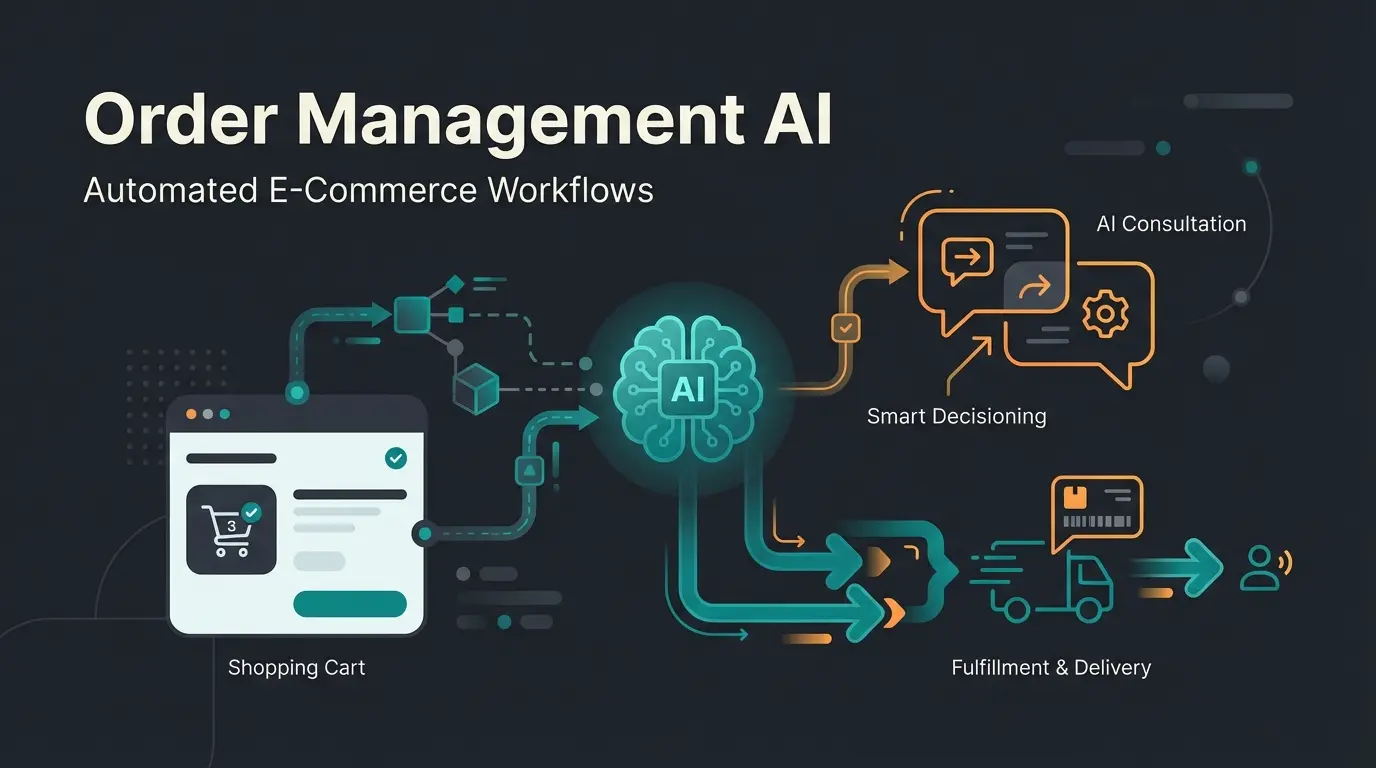
Introduction: The End of Passive Inventory Management
Imagine walking into a store, searching for a specific pair of running shoes, only to find an empty shelf. You ask an employee for help. In the old world, they disappear into the stockroom, return after ten minutes, and simply say: "We don't have it anymore." You leave. Sale lost.
In the digital world, this exact scenario plays out millions of times every single day. A customer lands on your online store, sees the status "Out of Stock," and within seconds, they're shopping at your competitor. According to amraandelma.com, 91% of customers won't wait until an item becomes available again. Even more alarming: research from opensend.com shows that 69% immediately purchase from a competitor, and 9% permanently switch retailers after just one negative experience with missing inventory.
The global price tag for this problem? According to mirakl.com, retailers lose $1.2 trillion USD in revenue annually due to out-of-stock situations.
Global retail losses from out-of-stock situations
Customers who abandon instead of waiting for restock
Immediately purchase the same item elsewhere
Change retailers after just one stockout experience
Most businesses search for inventory management software to bring order to their warehouse, reduce costs, and keep accounting satisfied. That's important, but it's yesterday's thinking. In 2026, it's no longer enough to simply know what is sitting in your warehouse. Your software must actively use that knowledge to save sales.
This article reveals why the era of passive inventory tracking is over and how new AI-powered systems (Agentic AI) are flipping the script: transforming from cost manager to revenue generator.
What Is Modern Inventory Management? The Fundamentals
Before we dive into the technological revolution, we need to establish the foundation. Anyone searching for inventory tracking software today must ensure that the three classic pillars of merchandise management are solidly represented.
Definition: More Than Just Counting
An inventory management software (often part of an ERP or merchandise management system) serves as the digital brain of your physical retail operation. It monitors, controls, and optimizes the flow of goods from procurement to sale. This encompasses everything from tracking stock levels across multiple locations to managing supplier relationships and ensuring timely order fulfillment.
The 3 Pillars of Inventory Control
Every professional inventory management program must cover these core areas to function effectively in today's demanding retail environment:
- Procurement: Automatic reorder suggestions based on minimum stock levels, supplier management and price maintenance, monitoring of delivery schedules, and optimization of purchase order timing to minimize carrying costs while preventing stockouts.
- Storage: Real-time tracking of inventory across multiple warehouse locations, support for batch and serial numbers for traceability, optimization of picking routes and storage locations (chaotic vs. static warehousing), and integration with warehouse management systems for maximum efficiency.
- Sales & Fulfillment: Reservation of inventory upon order receipt to prevent overselling, synchronization with sales channels (Shopify, Amazon, POS systems), returns management (a critical factor for inventory accuracy), and real-time availability updates across all touchpoints.
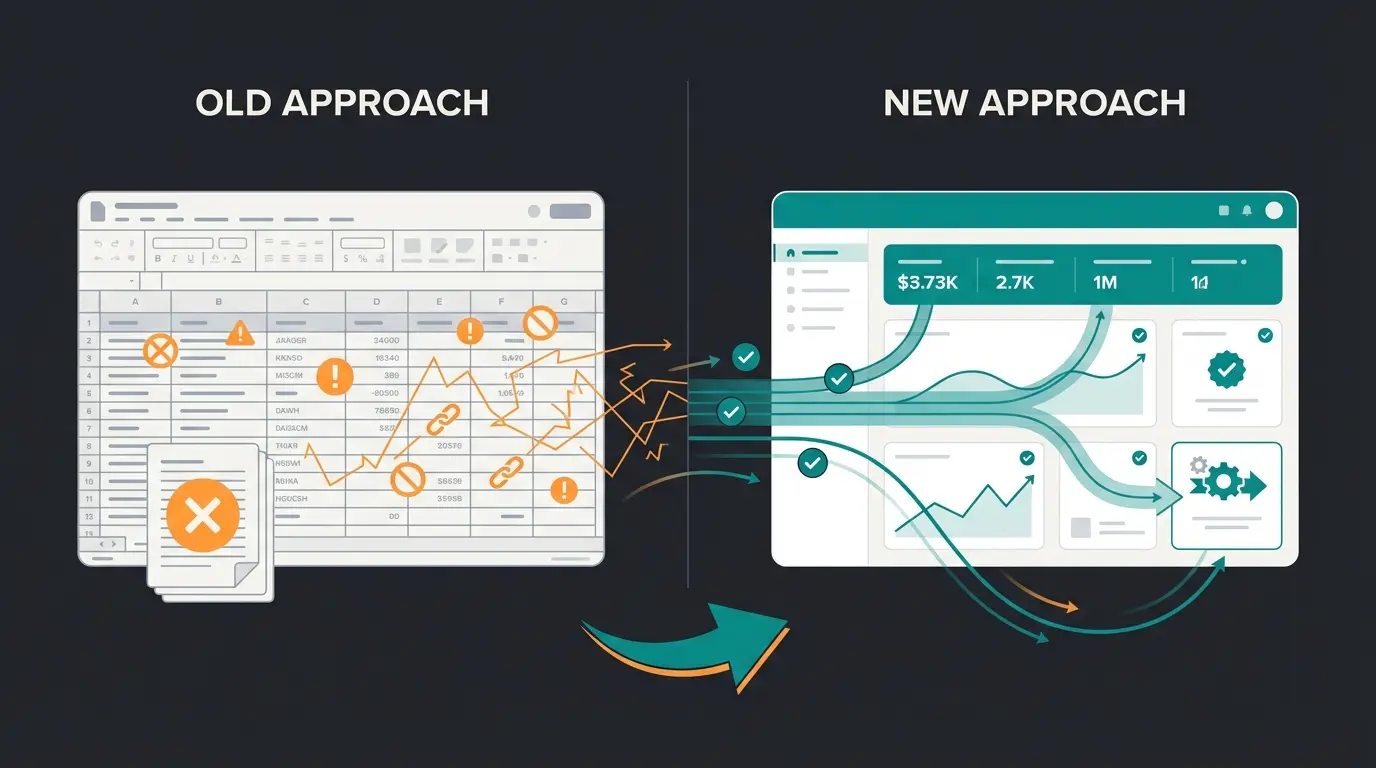
Why Excel Is No Longer an Option
Many small businesses start with Excel spreadsheets for inventory tracking. However, Excel is static, error-prone, and lacks real-time capability. According to ifhkoeln.de and ehi.org, e-commerce revenue is projected to grow significantly by up to 5.7% in 2025. In this environment, manual list management represents a business-critical risk. Without automatic inventory management, you risk overselling (leading to cancellations and damaged reputation) or tying up dead capital through overstock situations.
The Problem with Standard Tools: Data Silos and Revenue Killers
Most current top search results for inventory management software lead you to solid ERP systems or cloud solutions like weclapp, sevDesk, or JTL. These tools excel at managing processes. They ensure the numbers are correct and keep the tax authorities satisfied.
However, they have one critical weakness: They treat inventory as a logistical burden, not as a sales asset.
The "Out-of-Stock" Dilemma
Standard software operates in binary mode:
- Stock > 0: Item is purchasable
- Stock = 0: Item is "Sold Out"
The system simply reports to the shop: "Not available." For the customer, this is a dead end. The software knows the item is missing, but it doesn't understand what the item actually is. It doesn't know that an almost identical product is sitting on the next shelf, ready to ship immediately. This fundamental limitation turns every stockout into a lost opportunity rather than a chance to guide the customer toward an alternative solution.
Data Silos Prevent Consultation
In many companies, there's a strict separation between systems:
- The Warehouse (Backend): Knows what's physically available, quantities, locations, and reorder points.
- Sales/Shop (Frontend): Knows what the customer wants, their preferences, and their purchase history.
This separation costs money—significant money. When inventory tracking software doesn't communicate intelligently with the frontend, "lost sales" occur constantly. A customer searching for red sneakers in size 42 who sees "Sold Out" simply abandons the session. An intelligent system would know: "The blue sneakers in size 42 are available, and the 'Runner Pro' model in red is also in stock and might be an even better fit."
Standard tools are essentially "dumb" databases. They manage scarcity instead of offering alternatives, turning potential sales into missed opportunities.
The Revolution: Agentic AI and Active Product Consultation
Here begins the paradigm shift for 2026. The biggest trend in software development is the leap from "Predictive AI" (forecasting when to reorder) to "Agentic AI" (AI agents that act autonomously). According to trendreport.de, this represents a fundamental shift in how businesses interact with their technology infrastructure.
Research from machinelearningmastery.com and projections from xpert.digital indicate that Gartner predicts approximately 40% of all enterprise applications will contain AI agents by 2026. For inventory management software, this means: The system transforms from bookkeeper to salesperson.
Excel spreadsheets, manual counting, high error rates, no real-time visibility, reactive ordering
Cloud ERP systems (weclapp, sevDesk), automated counting, multi-channel sync, predictive reordering
AI-integrated systems, active consultation, dynamic sales suggestions, autonomous decision-making
How Does "Active Inventory Management" Work?
An AI-powered inventory management system connects two data worlds that were previously separated:
- Live Inventory Data: What is available where? Real-time stock levels across all locations, incoming shipments, and reserved quantities.
- Product Attributes & Context: What is the product? Its characteristics, suitable alternatives, compatibility information, use cases, and customer segment fit.
By combining these data streams, the system gains the ability to not just report status but to actively guide customers toward satisfying outcomes—even when their first choice isn't available.
Scenario: The "Save the Sale" Moment
Let's revisit the running shoe example, this time with a modern, AI-integrated software solution:
- Situation: Customer searches online for "Speed X Running Shoe, Size 42"
- Inventory Status: Stock = 0
- Standard Software Response: Displays "Sold Out." Customer leaves the shop. Revenue lost.
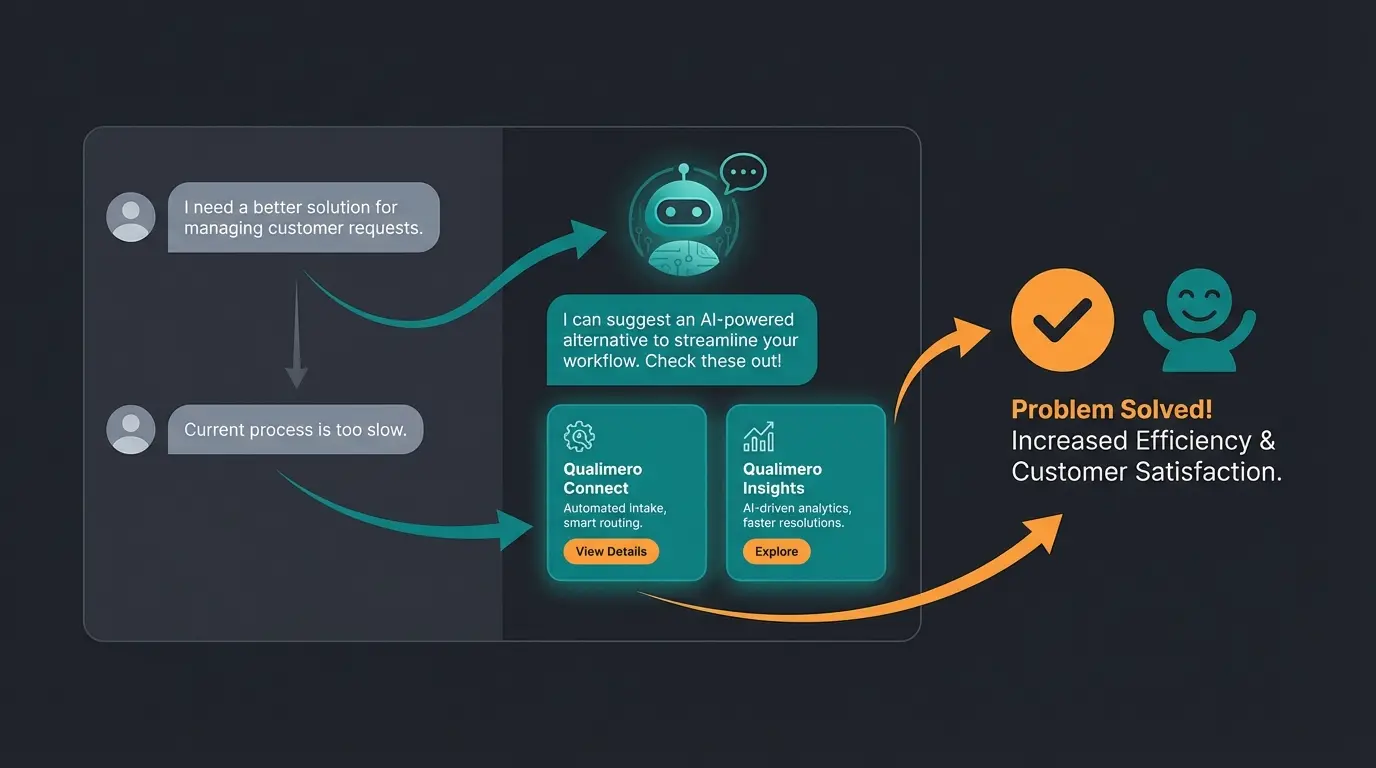
- AI Software Response (Agentic Commerce): The AI recognizes the stock-out in milliseconds. It analyzes the attributes of the searched shoe (cushioning level, terrain type, price range, performance characteristics). It scans the available inventory for the best matches based on these criteria.
Result: Instead of a dead end, a chat window or product page displays: "The Speed X is unfortunately out of stock. But good news: The 'Runner Pro' is available, features the same cushioning technology, and ships today. Based on your preferences, it might actually be an even better fit because..."
The Outcome: Instead of abandonment, you achieve conversion. Inventory is not just managed—it's actively leveraged to solve customer problems and capture revenue that would otherwise walk out the door.
Agentic AI in B2B Commerce
This revolution is equally transformative in B2B commerce. When a wholesaler cannot deliver a spare part, the customer often faces a production standstill—potentially costing thousands per hour. According to commercetools.com, composable commerce architectures enable this kind of intelligent inventory utilization.
Research from inboundlogistics.com shows that automatic inventory management with AI can proactively suggest compatible replacement parts that are immediately available, or redirect inventory from other branches in real-time. This transforms potential crises into demonstrations of superior service capability.
Stop losing sales to 'out of stock' messages. Discover how AI-powered product consultation turns every customer interaction into a conversion opportunity.
Start Your Free TrialComparison: Standard Bots vs. AI Inventory Intelligence
Many providers today advertise "AI," but often they mean only simple chatbots or sales forecasting algorithms. Understanding the difference is critical for making informed software decisions.
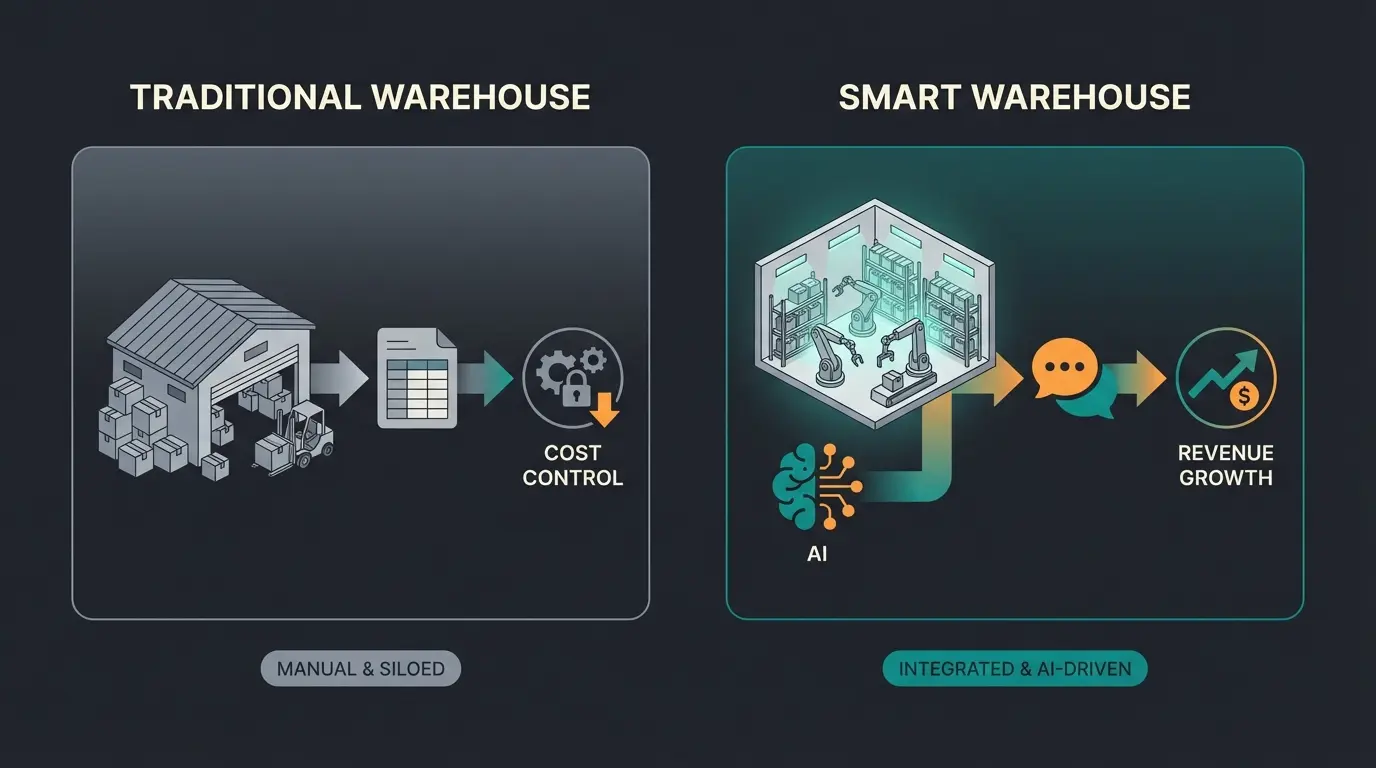
| Feature | Standard Inventory Management (Gen 2) | Intelligent Inventory with Agentic AI (Gen 3) |
|---|---|---|
| Primary Focus | Management & Cost Control | Revenue Growth & Customer Experience |
| Response to "Out-of-Stock" | Displays "Not Available" | Actively suggests available alternatives |
| Data Utilization | Historical data for reordering | Real-time data for sales conversations |
| Role of Software | Passive tool (database) | Active agent (consultant) |
| Customer Interaction | None (backend only) | Direct (via chat/shop frontend) |
| Automation Level | Static rules (If stock < X, then order) | Autonomous decisions (inventory distribution, dynamic pricing) |
Critical distinction: While standard tools often only provide reactive "FAQ bots" (e.g., "Where is my package?"), modern systems operate as genuine product consultants with deep knowledge of current inventory status, product specifications, and customer context. This is the difference between answering questions and driving revenue.
Legal Compliance: GoBD and Regulatory Requirements
With all the enthusiasm for AI and revenue growth, businesses operating in regulated markets cannot ignore compliance requirements. In Germany, for example, the GoBD (Principles for the Proper Management and Storage of Books, Records, and Documents in Electronic Form and for Data Access) sets strict standards.
Any inventory management software deployed in regulated environments must meet stringent compliance standards. According to getmoss.com and scopevisio.com, this includes:
- Traceability: Every inventory change (receipt, dispatch, correction) must be logged with complete audit trails. Who changed what, when, and why?
- Immutability: Once recorded, inventory movements cannot be deleted or overwritten without trace. Cancellations must be recorded as counter-entries, maintaining complete transaction history.
- Process Documentation: You must be able to document how your software operates and how processes flow, as noted by smartdocu.de.
- Data Security: Protection against data loss and unauthorized access is mandatory, as emphasized by omr.com and bitkom.org.
2026 Checklist: What to Look for in Modern Software
When evaluating a new inventory management software today, you shouldn't focus solely on price. Use this comprehensive checklist to make a future-proof investment that will serve your business for years to come:
1. Core Functions (Must-Haves)
- Multi-Channel Sync: Real-time synchronization between warehouse, online shop (Shopify, WooCommerce, Magento), and marketplaces (Amazon, eBay, Walmart).
- Mobile App: Barcode scanning via smartphone or dedicated mobile data collection device for error-free picking, receiving, and cycle counting.
- Integrations: Seamless connection to accounting systems (QuickBooks, Xero, DATEV) and shipping carriers (UPS, FedEx, DHL, DPD).
- Reporting & Analytics: Comprehensive dashboards showing inventory turnover, dead stock, carrying costs, and demand patterns.
2. Compliance & Security
- Regulatory Certification: Clear confirmation of compliance with relevant standards (GoBD, SOX, or industry-specific requirements).
- Server Location: Preferably local or regional data centers for data sovereignty and regulatory compliance.
- Encryption & Access Controls: Role-based permissions, two-factor authentication, and data encryption at rest and in transit.
3. "Next Gen" Features (Revenue Drivers)
- Agentic AI Capabilities: Can the system autonomously make suggestions or recognize and recommend alternatives without human intervention?
- Dynamic Inventory Management: Can the software intelligently distribute inventory across different warehouses based on regional demand patterns, shipping costs, and delivery time optimization?
- Frontend Integration: Are there APIs or plugins that intelligently display inventory data in the shop (e.g., "Only 3 left" scarcity signals or "Show alternative" when items are unavailable)?
- Predictive Analytics: Beyond reordering, can the system predict demand shifts, identify trending products, and optimize stock allocation proactively?
4. Scalability
- Cloud-Native Architecture: According to industry analysts, cloud solutions will become the industry standard by 2026. On-premise solutions are often inflexible, difficult to maintain, and require significant IT resources.
- API-First Design: Ensures the system can integrate with future technologies and platforms as your business evolves.
- Usage-Based Pricing: Scales with your business without requiring major infrastructure investments.
Conclusion: Invest in a Salesperson, Not Just a Stockkeeper
The market for inventory management software stands at a turning point. The days when software existed solely to replace Excel spreadsheets are definitively over. Given rising customer expectations and the massive revenue losses from out-of-stock situations—$1.2 trillion annually—retailers can no longer afford to manage their inventory passively.
The winners in e-commerce and retail in 2025 and 2026 will be those who "activate" their inventory data. They use automatic inventory management and AI not just to save time in the warehouse, but to rescue the customer experience at the frontline of sales.
Action Recommendation: Evaluate your current system with fresh eyes. Does it simply tell your customers "No, we don't have it"? Or does it say: "We don't have that, but here's the perfect alternative that's available right now"? The difference between these two responses is the difference between stagnation and growth, between lost customers and loyal advocates.
Search for a solution that understands inventory management as an integral part of your sales strategy, not just a back-office function. Because at the end of the day, merchandise sitting on shelves is just cost—sold merchandise is profit. The question isn't whether to invest in smarter inventory systems, but whether you can afford not to.
Frequently Asked Questions
Inventory management software focuses on tracking stock levels, managing reorders, and synchronizing inventory across sales channels. Warehouse management software (WMS) concentrates on physical warehouse operations like picking routes, storage optimization, and labor management. Modern solutions often combine both capabilities, with AI-powered systems adding active sales consultation features that transform inventory data into revenue opportunities.
Traditional AI in inventory management focuses on predicting reorder points based on historical data. Agentic AI goes much further by actively using inventory knowledge to drive sales. When an item is out of stock, AI can instantly analyze product attributes and suggest available alternatives to customers, potentially saving sales that would otherwise be lost. This transforms inventory from a cost center into an active revenue driver.
Businesses typically see ROI through multiple channels: reduced stockouts (which cost retailers $1.2 trillion annually globally), lower carrying costs through optimized stock levels, fewer oversells and cancellations, and—with AI-powered systems—recovered sales through intelligent alternative suggestions. Most businesses achieve positive ROI within 6-12 months, with AI-enabled systems showing significantly higher returns due to their revenue-generating capabilities.
Modern cloud-based inventory management solutions typically offer enterprise-grade security including encryption at rest and in transit, role-based access controls, regular security audits, and compliance certifications. For regulated industries, look for providers with relevant certifications (GoBD, SOX, GDPR compliance) and data centers in appropriate jurisdictions. Cloud solutions often provide better security than on-premise alternatives due to dedicated security teams and continuous updates.
Implementation timelines vary based on business complexity, but modern cloud-native solutions can often be deployed in weeks rather than months. Basic inventory sync typically takes 1-2 weeks, while full AI consultation features may require 4-8 weeks for training on your product catalog and customer interaction patterns. The key is choosing a solution with pre-built integrations for your existing e-commerce platform and ERP system.
Join forward-thinking retailers who are turning stock data into sales opportunities. See how AI-powered inventory intelligence can boost your conversion rates and customer satisfaction.
Get Started Free