
The 2025 Reality: Why Technical Optimization Alone Falls Short
Does your conversion rate feel stuck, even though your shop runs flawlessly on a technical level? You've optimized loading times, shortened the checkout process, and implemented trust elements—yet the major revenue breakthrough remains elusive. Welcome to the "optimization plateau." For more details, see our increase your conversion rate. For more details, see our Ecommerce CRO Guide.
In the world of Shopware conversion optimization, the same advice has dominated for years: test button colors, enable guest checkout, improve page speed. Don't get me wrong—these "hygiene factors" are essential. But in 2025, they're no longer enough to stand out from the competition.
The real conversion killer today isn't technology—it's customer overwhelm.
This guide reveals why classic CRO (Conversion Rate Optimization) has hit its limits and how you can usher in a new era of customer guidance in your Shopware 6 shop using AI-powered product consultation (Guided Selling) and Digital Sales Rooms. We're moving from "Search & Find" to "Consult & Convince."
Current State: The German E-Commerce Conversion Landscape
The German e-commerce market is highly competitive. According to current data from Yaguara and Landmark Global, the average e-commerce conversion rate in Germany sits at approximately 2.22%. For a detailed breakdown by industry and region, see our Average Ecommerce Conversion Rate analysis and our guide on What Is a Good Conversion Rate for Online Stores?. While this exceeds Italy's rate (0.99%), it falls significantly behind the United Kingdom (over 4%).
What does this mean for your Shopware shop? If you have 100 visitors, only two purchase on average. The remaining 98 don't necessarily leave because your site is slow or the checkout is complicated. They often leave because they aren't sure which product is right for them.
Standard conversion rate across German e-commerce
Without purchasing—often due to decision paralysis
What's achievable with proper customer guidance
Potential conversion increase with AI consultation
The Evolution of Shopware Conversion Optimization
- CRO 1.0 (2015-2020): Focus on usability. Is the cart button visible? Does the shop work on mobile?
- CRO 2.0 (2020-2024): Focus on performance and trust. Core Web Vitals, Trusted Shops badges, one-page checkouts.
- CRO 3.0 (from 2025): Focus on relevance and consultation. The shop takes on the role of an expert sales advisor.
Most agency guides still concentrate on CRO 1.0 and 2.0. However, Shopware 6.7 and new AI tools offer capabilities that go far beyond these basics. Our Ecommerce CRO Guide covers the full spectrum of modern optimization strategies. To truly leverage Shopware AI features, you need to understand this evolution.
The Foundation: Quick-Win Checklist for Shopware 6
Before we address the advanced strategies (product consultation), we must ensure the fundamentals are in place. A consultation tool accomplishes nothing if the checkout fails technically. Here's the current state of the art for Shopware conversion optimization in 2025.
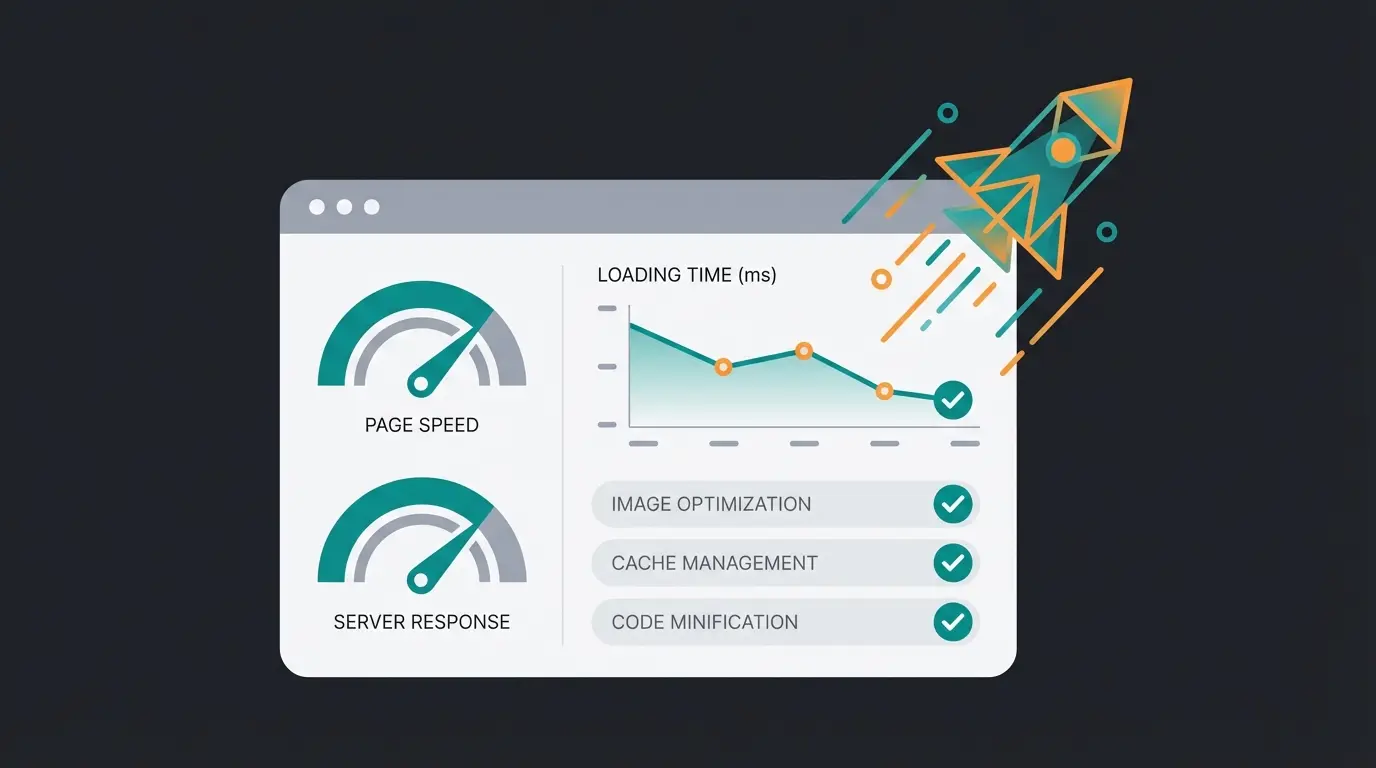
Technical Performance: Speed & Core Web Vitals
Nothing kills conversions faster than wait times.
- Upgrade to Shopware 6.7: The latest version delivers massive performance improvements. According to Shopware's official benchmarks, shops experience an increase in orders per second of 108% in flash sale scenarios (with Varnish caching) and a latency reduction of up to 85%.
- Use PHP 8.3: Ensure your hosting runs on PHP 8.3. Tests from Pagespeedy and Tideways demonstrate that this combination with Shopware 6.7 drastically reduces backend response times.
- Varnish & Redis: For high-traffic shops, these caching technologies aren't optional—they're mandatory to keep Time to First Byte (TTFB) under 300ms.
Checkout & Trust Elements
- Payment Mix: Offer the local standard. In Germany, PayPal, invoice payment (often via Klarna or Ratepay), and increasingly Apple Pay/Google Pay are essential, as noted by Shopware and Sign und Sinn.
- Guest Checkout: Don't force registration. A guest checkout significantly reduces abandonment rates according to Ecorn Agency.
- Trust Badges: Place quality seals (Trusted Shops, TÜV) and reviews near the "Buy" button, not just in the footer. Research from WebFX confirms this placement matters significantly.
The Psychological Problem: Choice Paralysis in E-Commerce
Why don't customers buy even when they need the product and the price is right? Psychology provides the answer: Choice Paralysis (the paradox of choice).
The Jam Paradox Explained
A famous study, frequently cited in the context of "Guided Selling" according to CMSWire, demonstrates this clearly:
- When customers were presented with 24 options (jam varieties), only 3% purchased.
- When options were reduced to 6, the purchase rate jumped to 30%.
This ten-fold increase illustrates the immense power of simplifying choices for customers—exactly what AI-driven consultation achieves in modern e-commerce.
The Problem with Standard Shopware Filters
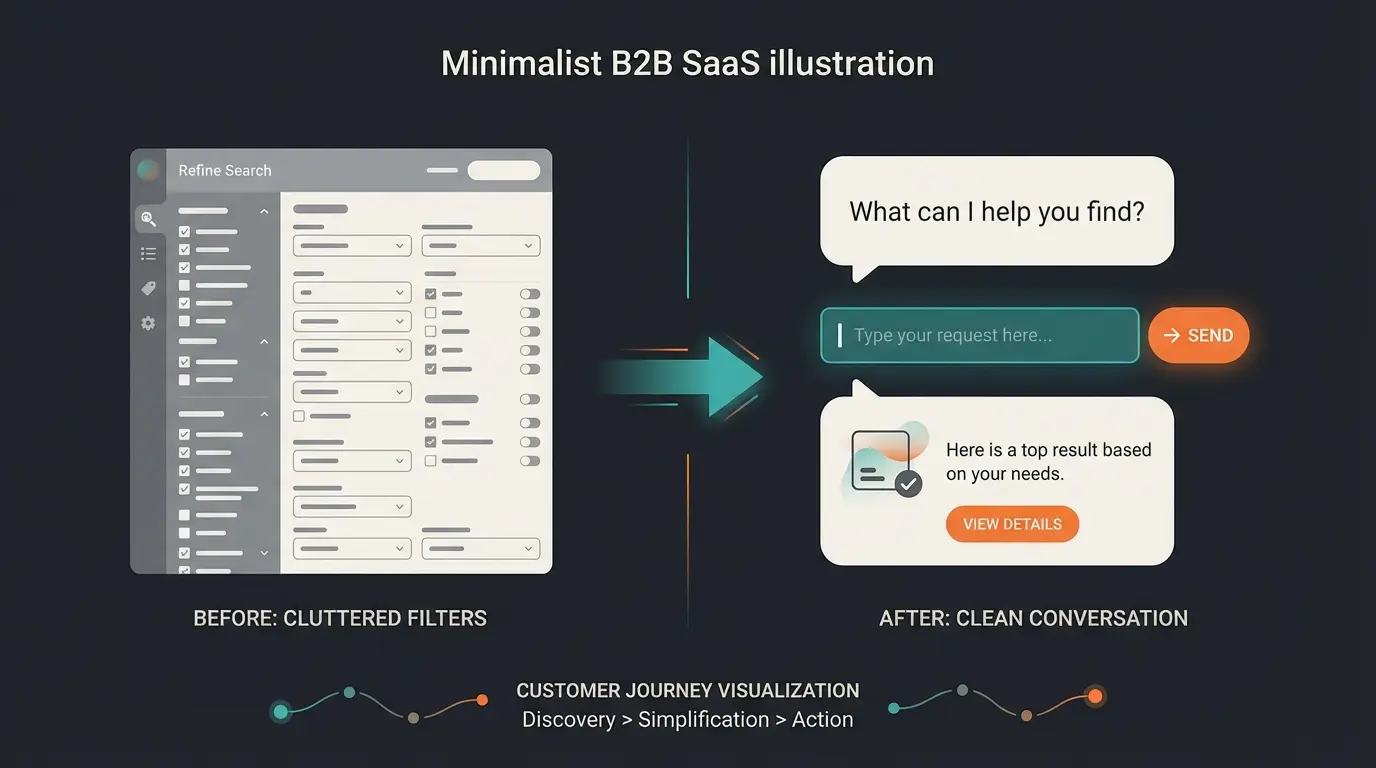
In a standard Shopware setup, we try to solve this problem with filters. But filters are often technical, not needs-oriented.
- Customer thinks: "I need a monitor for home office that's easy on my eyes."
- Shopware filter offers: "Panel Type: IPS/VA/TN", "Refresh Rate: 60Hz/144Hz", "Brightness: 300cd/m²".
The customer must translate their need into technical specifications first. If they fail at this, they abandon. This represents the greatest untapped potential for Shopware conversion optimization—and where digital product consultants create massive value.
The Game Changer: Digital Consultation Over Static Filters
The solution to the "Choice Paralysis" problem is shifting from a search-based user experience (UX) to a consultation-based UX. We call this Consultation-Led CRO.
What is Digital Product Consultation (Guided Selling)?
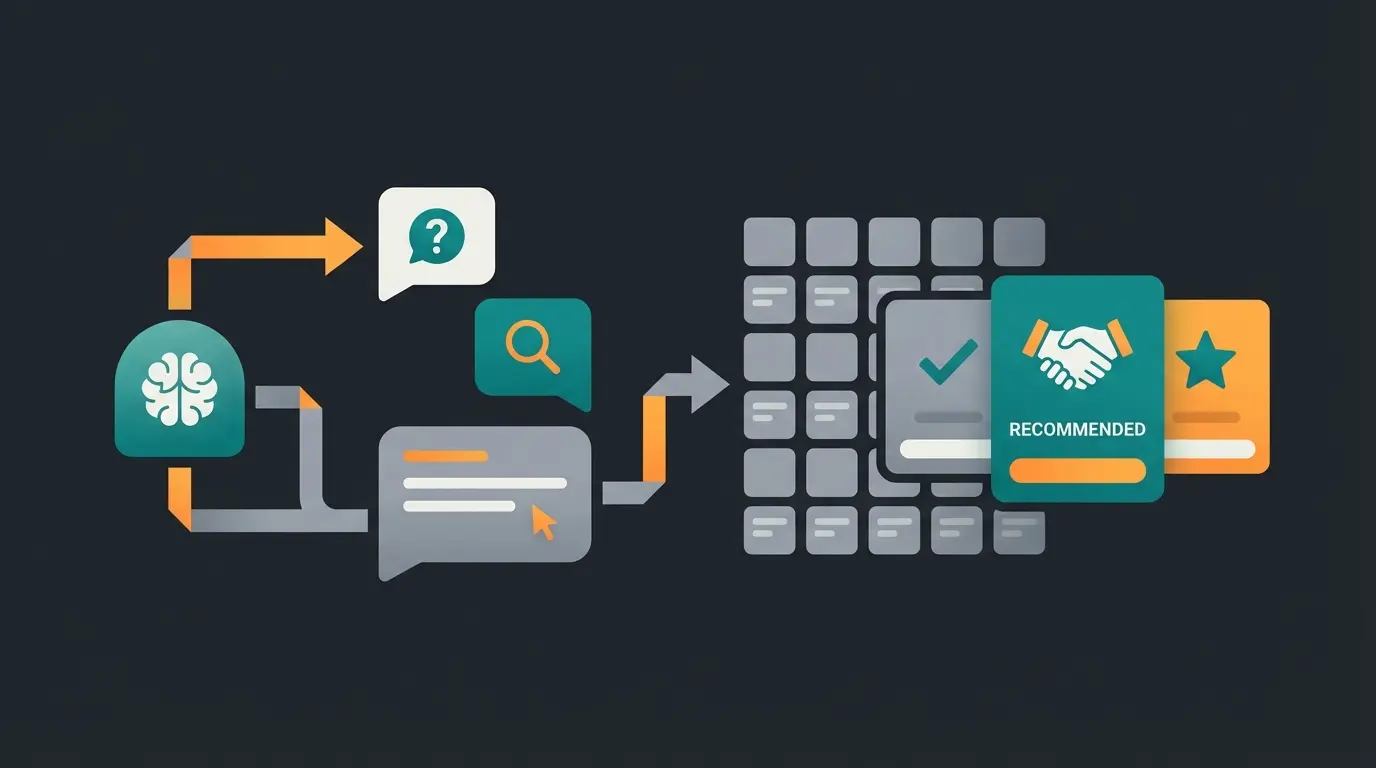
Instead of throwing 500 products at customers and saying "Good luck filtering," a digital consultant guides them by the hand. This can happen through interactive questionnaires, chatbots, or AI assistants. Implementing AI-powered product advice transforms passive browsing into active guidance.
Why This is the New Conversion Lever
- Complexity Reduction: From 500 products to the 3 perfect matches.
- Trust Building: The customer feels understood ("The shop knows what I need").
- Data Enrichment: You learn not just what was purchased, but why (e.g., "Customer is looking for a gift for a 5-year-old child").
| Feature | Standard Shopware Filters | AI / Guided Selling |
|---|---|---|
| Entry Point | Technical ("Select category") | Needs-oriented ("What are you looking for?") |
| Knowledge Required | Customer must know technical terms | Customer describes their problem |
| Result | List with 50+ products | 3 top recommendations with explanations |
| Psychology | Overwhelm (selection paralysis) | Confirmation (solution found) |
| Conversion | Average (~2.2%) | High (often >4-6%) |
Customer navigates complex filters, requires technical knowledge, often leads to abandonment
Recognize that 98% leave without buying—not due to tech issues, but decision paralysis
Deploy guided selling that asks needs-based questions instead of showing technical filters
Present 3 perfect matches with personalized explanations, dramatically increasing conversions
Stop losing 98% of visitors to decision paralysis. Implement AI-powered product consultation that guides customers to their perfect purchase—just like an expert sales advisor.
Start Your Free TrialDeep Dive: AI as Sales Consultant in Shopware
How do you implement this in Shopware 6? There are various integration levels, from simple plugins to fully integrated AI. Understanding Shopware AI (Shopware KI) capabilities is essential for choosing the right approach.
Level 1: Rule-Based Advisors (Product Advisor Plugins)
For many shops, this is the simplest entry point. The Shopware Store offers various plugins (e.g., "Product Advisor" or "Interactive Product Finder") that function like quizzes, as documented on Shopware's Store.
- How it works: You define questions ("Who is the gift for?") and link answers to product attributes.
- Advantage: Complete control over recommendations.
- Disadvantage: High manual maintenance effort for large assortments.
Level 2: AI-Powered Search & Navigation (e.g., Doofinder)
Tools like Doofinder integrate seamlessly into Shopware 6 and use AI to personalize search results. They learn from user behavior. According to Shopware's documentation, case studies show that intelligent search functions can increase conversion rates by up to 30%.
Features like "Search by Image" or voice-controlled search massively reduce barriers for mobile users. This represents a significant step toward AI Product Consultation capabilities.
Level 3: Generative AI as Sales Consultant (The "Real" Copilot)
This is where it gets exciting. Through the integration of LLMs (Large Language Models) like GPT-4 into Shopware, you can conduct genuine dialogues.
- Application: A chat window that doesn't just answer support questions ("Where's my package?") but actively sells.
- Example: "I'm looking for running shoes for asphalt, I weigh 85kg, and have wide feet." -> The AI filters the Shopware database in the background and suggests suitable models.
- Shopware AI Copilot: Shopware already offers native AI features like "Search by Context" or "AI-Generated Product Properties" that create the data foundation for such systems.
Building on these foundations, AI-powered sales consultants can handle complex product inquiries that would previously require human expertise.
B2B Special: Digital Sales Rooms as Conversion Boosters
In the B2B sector, Shopware conversion optimization is even more complex. Decisions are often made by committees (Buying Committees), and products require explanation. A simple checkout isn't enough here.
The Gap in B2B Sales
Until now, B2B sales often ran offline or via phone/PDF. The online shop was merely an order form. This is where AI-driven product consultation fills a critical gap.
The Solution: Shopware Digital Sales Rooms (DSR)
Shopware offers Digital Sales Rooms as a powerful tool that digitalizes traditional sales, as detailed on Shopware's website.
- What is it? An interactive presentation space within the shop. A sales representative can guide a customer "live" through the shop (co-browsing), highlight products, and clarify questions via video chat.
- Why it converts: It combines e-commerce efficiency with the persuasive power of a personal sales conversation.
- Case Study: The Wortmann Group (Tamaris) uses DSR to send digital lookbooks and curated offers to B2B customers, saving travel costs and shortening decision paths according to Shopware's case study.
Strategy for B2B: Don't just use DSR for existing customers. Offer "Guided Product Tours" as a lead magnet on your website. Setting up an AI-powered consultation hub creates a centralized approach to B2B engagement. The conversion from a personal demo to purchase completion is many times higher than from an anonymous shopping cart.
Practical Scenario: The "Gaming Monitor" Comparison
Let's visualize the difference with a concrete example.
Scenario: A father wants to buy his son a gaming monitor for Christmas. He has no idea about technology.
The "Old" Way (Standard Shopware)
- Father clicks on category "Monitors".
- He sees filters: Response Time (1ms, 5ms), Panel (IPS, VA), Sync (G-Sync, FreeSync).
- He's confused. What do you need for a PlayStation 5?
- He leaves the shop to read reviews on Google (and then probably buys from Amazon).
- Result: Bounce (abandoned session).
The "New" Way (Consultation-Led CRO)
- Father clicks on category "Monitors".
- An overlay or chatbot asks: "What will the monitor primarily be used for?" Options: Office, Image Editing, Gaming (PC), Gaming (Console).
- Father selects Gaming (Console).
- Next question: "Which console will be used?" -> PlayStation 5.
- System automatically filters in the background for "HDMI 2.1", "4K", and "120Hz".
- Result: "Here are the 3 best monitors for PS5. This one is our best value pick."
- Result: Purchase (Conversion) + Upselling (matching HDMI cable).
This transformation is exactly what active product advice delivers—turning confused browsers into confident buyers. Implementing AI-powered product consultation not only increases conversions but also reduces returns by ensuring customers purchase the right products from the start.
Measuring Success: New KPIs Beyond Conversion Rate
When you focus on consultation, you must adapt your success metrics. The classic conversion rate (Orders / Sessions) only tells half the story.
Introduce these metrics to your analytics dashboard:
- Consultation Engagement Rate: How many visitors start the product advisor or chat?
- Completion Rate: How many users answer all questions through to the product recommendation? (A low value indicates overly complex questions).
- Consultation-to-Cart Rate: How many users add a recommended product to the cart? (This value should be significantly above the shop average).
- Zero-Result Rate: How often does your search or advisor deliver no results? This is a direct content gap you must close.
These advanced metrics help you optimize your AI product consultation implementation continuously. As research from Linear Design, DAC Group, and Blubolt confirms, shops that measure consultation-specific KPIs consistently outperform those relying solely on traditional metrics.
Ideal percentage of visitors starting AI consultation
Users finishing the consultation journey
Recommended products added to cart
Maximum acceptable queries without results
Conclusion & Outlook: The Future is Conversational
Shopware conversion optimization in 2025 is no longer just about removing friction (Frictionless Commerce)—it's about providing guidance.
Customers are drowning in options. The shop that throws them the life preserver of relevant selection wins the race.
Your Action Steps for Today
- Check your foundation: Is Shopware 6.7 installed? Is PHP 8.3 running? Is the checkout mobile-optimized?
- Identify "fear categories": Where do you have high abandonment rates and complex products?
- Start a pilot: Implement a digital product advisor (plugin or AI) for one category.
- Leverage Shopware AI: Activate the Copilot features to automate your data quality.
The shift from "Self-Service" to "Guided Selling" is the biggest lever you currently have. Use it before your competitors do.
Frequently Asked Questions
While basic product advisor plugins work with Shopware 5.x, the full AI capabilities including the Copilot features require Shopware 6.5 or newer. For optimal performance and all native AI integrations, Shopware 6.7 is recommended. If you're still on an older version, consider upgrading to access these conversion-boosting features.
Implementation time varies by complexity. Rule-based product advisors (Level 1) can be set up within days using existing plugins. AI-powered search integration (Level 2) typically takes 2-4 weeks including configuration and testing. Full generative AI consultation (Level 3) requires 4-8 weeks for proper integration, training on your product data, and optimization.
Based on industry benchmarks, shops implementing AI consultation typically see conversion rate improvements of 30-50% within the first 6 months. Combined with reduced return rates (customers buy the right products initially), the ROI often exceeds 300% annually. The exact numbers depend on your product complexity and average order value.
AI consultation excels at guiding purchase decisions and answering product-related questions, handling 70-80% of pre-purchase inquiries automatically. However, it works best as a complement to human service for complex issues, complaints, and relationship-building. Think of it as having an expert salesperson available 24/7, with human backup for edge cases.
Digital Sales Rooms are integrated directly into your Shopware environment, allowing real-time co-browsing, instant product demonstrations with actual shop data, direct cart additions during the call, and automatic documentation of customer preferences. Unlike generic video tools, everything happens within your commerce ecosystem, creating a seamless path from consultation to purchase.
Join leading e-commerce brands using AI consultation to turn decision paralysis into confident purchases. Our platform integrates seamlessly with Shopware 6 and delivers measurable results within weeks.
Get Started Free Today
Lasse is CEO and co-founder of Qualimero. After completing his MBA at WHU and scaling a company to seven-figure revenue, he founded Qualimero to build AI-powered digital employees for e-commerce. His focus: helping businesses measurably improve customer interaction through intelligent automation.