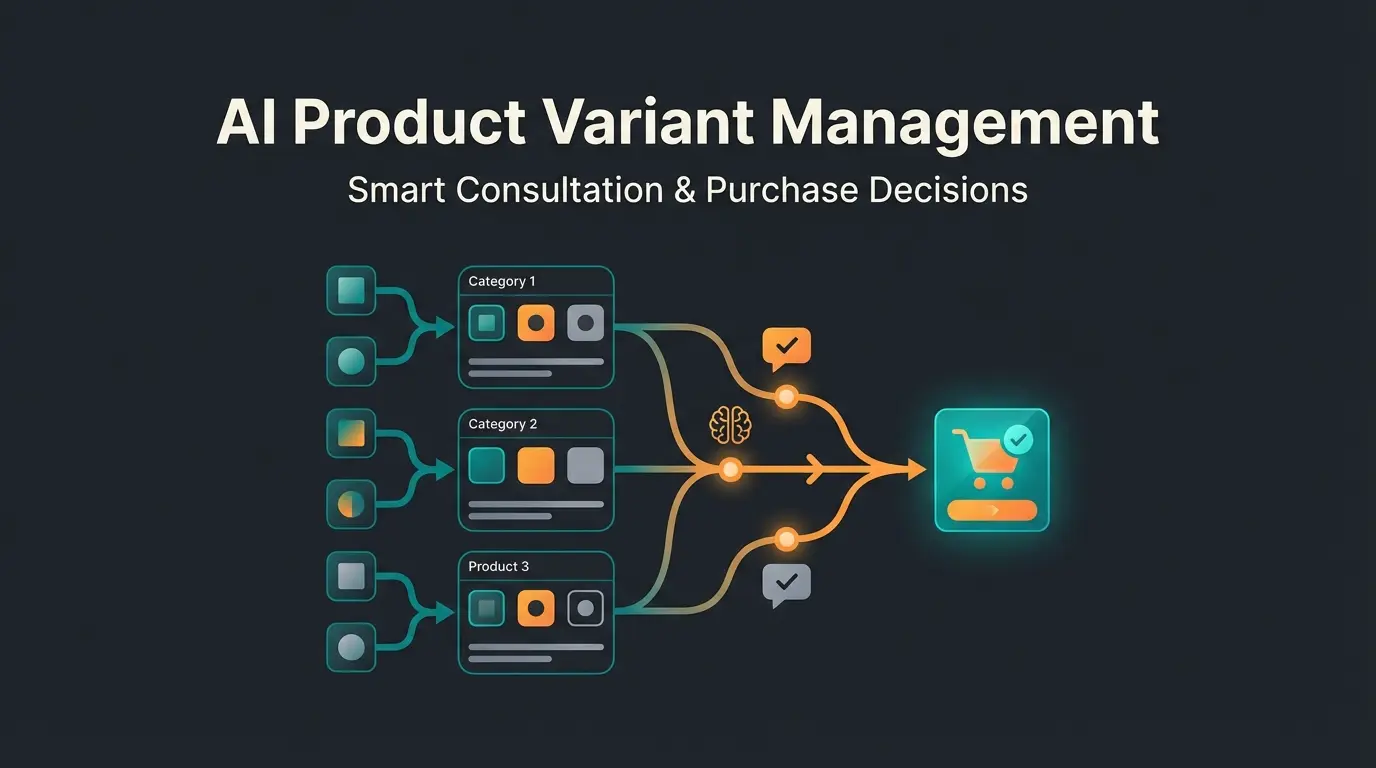
Introduction: The Hidden Costs of Returns
In e-commerce, returns are the silent profit killer. While merchants invest enormous energy into traffic generation and conversion optimization, the reverse logistics process often devours a significant portion of their margins. Current data from the EHI Retail Institute paints a stark picture: a single return costs an online retailer on average between €5 and €10—in complex cases even up to €20, as reported by SAZsport. These costs aren't just shipping—they include processing costs for inspection, refurbishment, depreciation, and restocking.
Particularly in the fashion sector, return rates of 50% are not uncommon, according to Sendcloud and Neocom research. That means every second product sold comes back. Many Shopware merchants respond to this purely reactively—they optimize the return shipping process, print labels faster, and automate refunds. This is important, but it's only half the battle.
This article takes a different approach. We'll examine not only how to efficiently process Shopware returns (the "silver" of e-commerce), but how to prevent them entirely through the use of Artificial Intelligence (AI) and Guided Selling (the "gold"). We'll analyze the current state of Shopware's native capabilities, evaluate the best plugins, and demonstrate how you can transform from a mere logistics operator into a digital consultant. For a comprehensive understanding of customer support in Shopware environments, you can explore our Shopware customer support guide.
Current State: How Shopware Manages Returns Today
Before we discuss optimization, we need to understand the technical foundation. Shopware 6 offers vastly different capabilities for handling returns depending on your license model. There's often confusion between the free Community Edition and the commercial plans, so let's clarify.
Native Features: Shopware Rise & Evolve vs. Community Edition
Shopware has introduced native Returns Management with its commercial plans (Rise, Evolve, Beyond), which is deeply integrated into the admin area. According to the official Shopware documentation, this functionality provides comprehensive control over the return process.
- Shopware Rise & Evolve: Starting with the Rise plan, you have access to official "Returns Management." Merchants can create returns directly from an order, select articles, and manage status (e.g., "Return requested," "In progress," "Completed"). Customers can initiate returns in their "My Account" area, dramatically reducing support workload. However, automatic inventory updates often don't occur automatically and must be triggered manually or via the Flow Builder.
- Shopware Community Edition (CE): Here lies a significant gap. The free version of Shopware 6 offers no integrated RMA module (Return Merchandise Authorization), as noted by Area-Net. Those using CE must either handle returns entirely manually (via email and manual credit notes) or rely on third-party plugins.
The Logistics Layer: Plugins for Physical Processing
Regardless of your Shopware version, you'll need interfaces to your shipping providers to generate return labels. The "big players" in the Shopware ecosystem are indispensable for operational excellence. Understanding how these integrate with broader AI e-commerce consultation strategies can further enhance your operations.
- Pickware ERP: For many Shopware merchants, this is the gold standard according to StoreTown Media. Pickware integrates inventory management directly into the backend. Returns aren't just tracked by status but processed logistically: scan incoming goods, automatically update inventory, assess item condition.
- DHL Returns & Shipping Adapter: A "must-have" for the German market as highlighted by the Shopware Store. It enables customers to generate a DHL label (QR code or PDF) in the frontend and merchants to create these labels directly in the admin area.
- Third-Party RMA Plugins: For CE users, various plugins exist (e.g., from Webkul or 8mylez) that retrofit the missing native returns portal, allowing customers to provide reasons, photos, and exchange requests.
Why Traditional Return Prevention Often Fails
If you search for "reduce returns," you'll typically find the same advice: "Take better product photos," "Write detailed descriptions," "Use size charts." Don't misunderstand—these are important hygiene factors. A blurry photo or missing material specification is a guaranteed revenue killer. But in a competitive market, these measures are no longer sufficient. Why? The answer lies in understanding the fundamentals of AI customer service and how they apply to the pre-purchase experience.
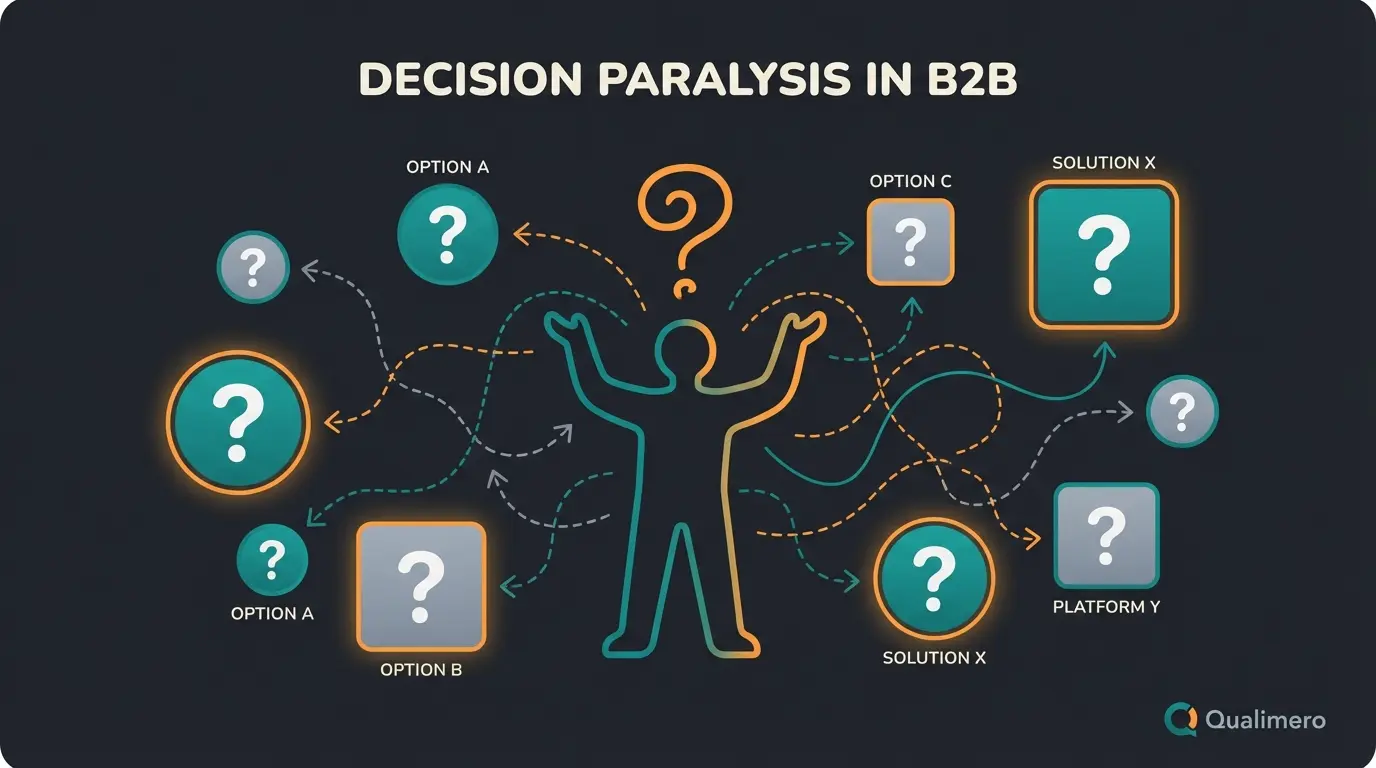
The Problem of Decision Paralysis
Customers often don't return products because the product is bad, but because it was the wrong product for their specific needs. This psychological barrier is often overlooked in traditional e-commerce optimization, yet it's a critical factor that AI personalization in customer service can address.
- The "Bracketing" Phenomenon: Customers order selection shipments (e.g., three sizes or two colors) because they're uncertain. Studies from Return Prime show this behavior is increasing.
- Information Overload: A customer looking for a ski jacket is often overwhelmed by filters like "water column: 10,000mm." They don't know what they need, so they order on speculation.
Traditional online shops function like self-service warehouses: everything is there, but no one helps with the selection. This is exactly where the lever for genuine return prevention lies. The solution requires moving beyond static content toward conversational AI consulting that actively engages customers.
The Game Changer: Reducing Returns Through AI Consultation
This is where your unique selling proposition comes into play. Instead of merely managing returns (reactive), we use AI to advise customers before the purchase so thoroughly that the return never occurs in the first place (proactive). This approach represents a fundamental shift in e-commerce strategy that's explored in depth in our Shopware AI consulting guide.
AI Beyond Text Generation
Shopware has introduced fantastic tools with the AI Copilot for generating product descriptions, summarizing reviews, or classifying images, as detailed by Shopware News and explored by EXWE. That saves time in the backend. But for return prevention, we need a different type of AI: Conversational AI or Guided Selling. Understanding the differences is crucial, which is why our chatbot AI comparison guide provides valuable insights.
The Concept of the Digital Sales Consultant
Imagine a skilled salesperson standing next to your customer. They wouldn't ask: "Which category do you want?" but rather: "What will you be using this product for?" This transformation is at the heart of the AI guided selling revolution that's reshaping e-commerce.
Tools like Neocom or 8select, which can be integrated into Shopware via plugin according to the Shopware Store and 8select, transform the static filter into a dialogue.
Why This Reduces Return Rates
The mechanism behind AI-powered consultation addresses the root causes of returns that traditional methods cannot touch. Businesses looking to understand this transformation should explore our comprehensive AI product consultation providers 2025 overview.
- Reduction of Selection Orders: When the AI tells the customer: "Based on your information, size M fits 98%," the impulse to order size L "just in case" decreases dramatically.
- Expectation Management: Through needs analysis, customers buy the product that solves their problem, not the product that just looked good in the photo.
- Psychological Security: The customer feels "advised" and validated. This reduces buyer's remorse, which often leads to returns.
Per item processing cost according to EHI Retail Institute
Every second fashion item is returned
AI-guided selling can cut return rates significantly
Handling, inspection, and restocking labor
Strategic Comparison: Reactive vs. Proactive
To illustrate the significance of this shift, let's examine the numbers and strategies in direct comparison. This strategic framework helps merchants understand where to invest their optimization efforts for maximum impact on profitability. The data reveals why forward-thinking retailers are shifting from damage control to prevention.
| Feature | Reactive Management (Standard) | Proactive Prevention (AI Strategy) |
|---|---|---|
| Focus | Efficiency of return processing | Quality of purchase decision |
| Tools | DHL Plugin, Pickware, RMA modules | Guided Selling (Neocom, 8select), Size Advisors |
| Cost Impact | Reduces processing costs per return (e.g., from €10 to €7) | Eliminates the return completely (savings: 100%) |
| Customer Experience | "The return was easy" | "I found the right product immediately" |
| Margin Impact | Low (damage limitation) | High (revenue protection & CLV increase) |
The contrast couldn't be clearer: while reactive management makes the inevitable less painful, proactive prevention eliminates the pain entirely. This is why leading e-commerce businesses are investing heavily in AI chatbots for customer service—they understand that the best return is the one that never happens.
Discover how AI-powered product consultation can reduce your return rates by up to 30% while improving customer satisfaction. See real results from merchants who've made the switch.
Start Your Free TrialPractical Steps for Shopware Merchants
How do you implement this strategy in your Shopware store? Here's a proven 3-step plan that balances immediate wins with long-term transformation. Each step builds upon the previous one, creating a comprehensive approach to returns optimization.
Step 1: Data Analysis & Understanding Return Reasons
Before you install tools, you need to know why products are being returned. Use data from Shopware or your ERP system to identify patterns. This diagnostic phase is crucial—without it, you're flying blind. A real-world example of how this works can be seen in the Gartenfreunde AI employee case study.
- Are they fit problems? (Indicator for size advisor)
- Is it "didn't like it"? (Indicator for poor visualization)
- Is it "doesn't match description"? (Indicator for wrong expectations → Guided Selling needed)
Pro Tip: Use the Shopware AI Copilot to generate summaries from return reasons or reviews to identify patterns, as detailed in Shop-Studio's analysis. This AI-assisted analysis can surface insights that manual review would miss.
Step 2: Establish the Logistics Foundation (Hygiene)
Ensure that your process is solid for when returns do occur. This foundation enables efficient handling while you work on prevention strategies. Consider this your safety net—essential but not the endgame. For broader context on support systems, review our Shopware technical support guide.
- For Shopware Rise/Evolve: Activate the native returns module and configure the Flow Builder so customers automatically receive emails upon status changes (e.g., "Return received").
- For Community Edition: Install a solid RMA plugin (e.g., from Webkul or store alternatives) to end the email ping-pong.
- Label Printing: Automate label printing via DHL/Shipcloud Adapter.
Step 3: The Excellence Phase – Implement Guided Selling
Identify your category with the highest return rate (usually apparel, sporting goods, or technical products). This is where AI-powered consultation delivers the highest ROI.
- Integrate a Guided Selling Plugin (e.g., Neocom or 8select)
- Train the advisor: What questions would your best in-store salesperson ask?
- Position the "advisor" prominently on the category page ("Not sure which model fits? Start the advisor")
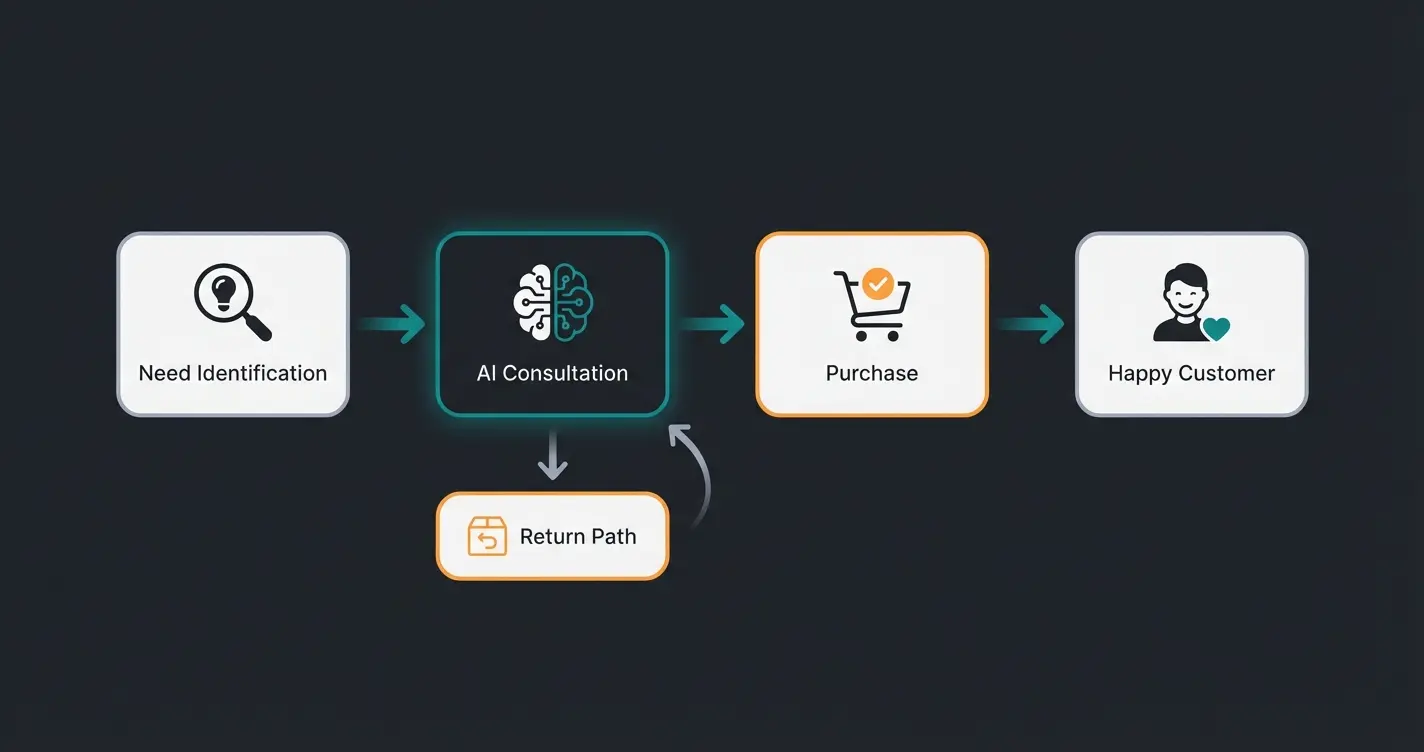
Visitor arrives with purchase intent but uncertainty about which product fits
Guided Selling asks targeted questions about use case, preferences, and requirements
AI recommends the ideal product with 95%+ accuracy, reducing bracketing
Customer buys with conviction, dramatically reducing buyer's remorse
Self-service portal enables efficient processing with automated status updates
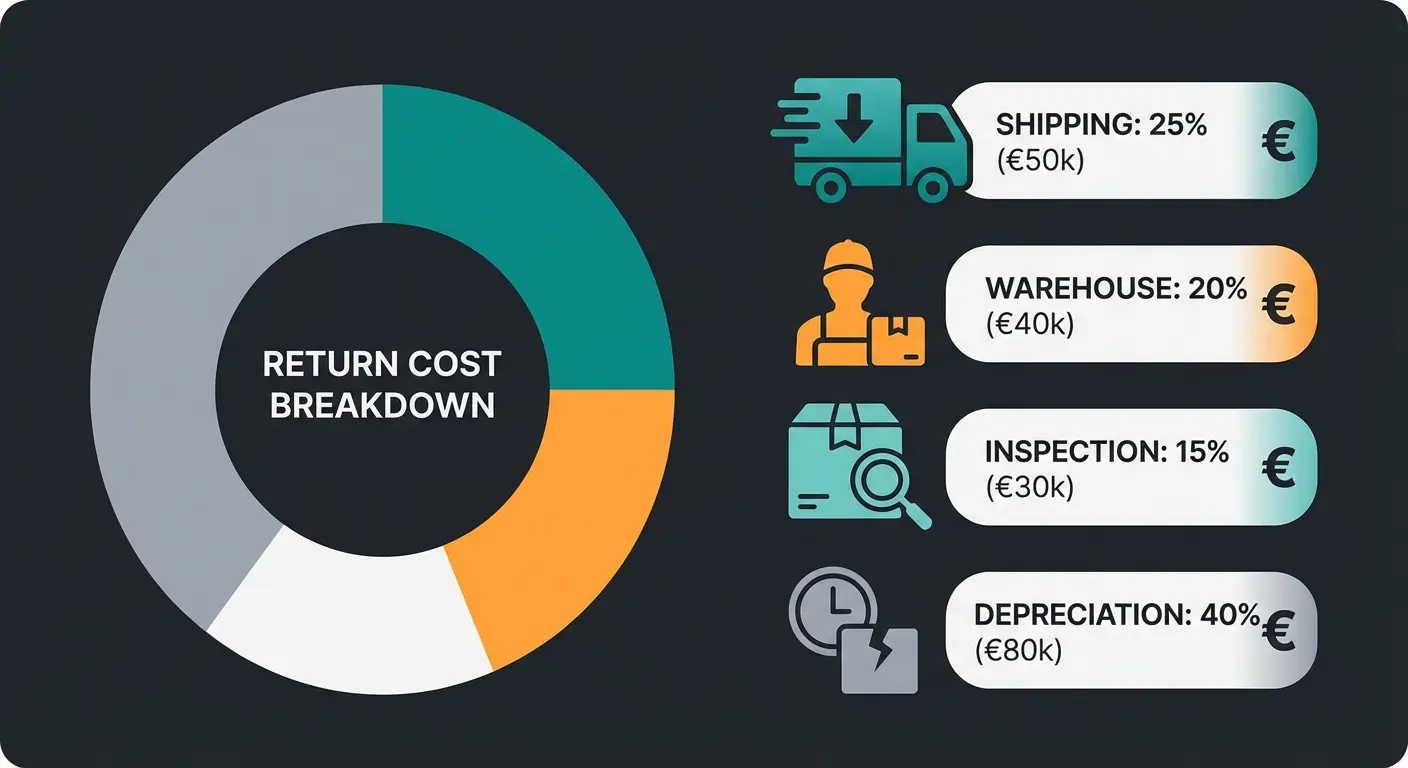
Infographic: The True Costs of a Return
Understanding the complete cost structure of returns helps justify investment in prevention technologies. Many merchants only consider shipping costs, missing the larger picture of operational expenses that erode margins.
Baseline: Average costs of €10.00 per item (based on EHI study data from FashionUnited and Utopia):
- Shipping & Logistics (35%): Outbound shipping (often subsidized) + return label + fuel surcharges
- Personnel & Handling (45%): Package reception, unpacking, visual inspection (Is the item damaged?), repackaging, restocking
- Value Loss & Refurbishment (20%): B-grade classification, cleaning (for textiles), missing original packaging
- Opportunity Costs (Not measurable but real): While the item is stuck in the return process, it cannot be sold to another customer (out-of-stock risk)
FAQ: Common Questions About Shopware Returns
Here we answer the most pressing questions that merchants and developers frequently ask about optimizing their Shopware returns management.
There's no one-size-fits-all "best" option—it depends on your version and needs. For Logistics & Warehouse: Pickware ERP is the gold standard for deep integration. For Customer Communication (RMA) in the Community Edition: The RMA Plugin from Webkul or Returnless offer solid self-service portals. For Shipping Labels: The official DHL Adapter or Sendcloud are excellent choices.
In the commercial plans (Rise, Evolve), you'll find this under Settings > Cart > Returns. Ensure your customers have access to their customer account. In the Community Edition, you must first install and activate a corresponding plugin since the feature is not natively available.
No, a 0% rate is unrealistic in e-commerce (defects, shipping damage will always occur). However, AI-powered consultation (Guided Selling) can massively reduce the rate of "selection orders" and "wrong purchases"—often by 20-30%. Additionally, AI helps with size consultation (Size Prediction), which is the biggest lever in fashion retail.
The ROI varies by industry and current return rate, but merchants typically see payback within 3-6 months. With average return costs of €10 and a 30% reduction in returns, a shop processing 10,000 returns monthly saves €30,000/month. When you factor in improved customer lifetime value and higher conversion rates from better consultation, the returns multiply.
Basic implementation can be completed in 2-4 weeks, including plugin installation, initial question tree setup, and integration testing. Full optimization with refined recommendation logic typically takes 2-3 months as you gather data and refine the AI's understanding of your product catalog and customer needs.
Conclusion: From Processor to Consultant
The topic of Shopware returns is often treated dismissively as a pure logistics problem. Analysis of top search results shows: almost all focus on how to get the package back faster. This represents a missed opportunity and a fundamental misunderstanding of where value is created in e-commerce.
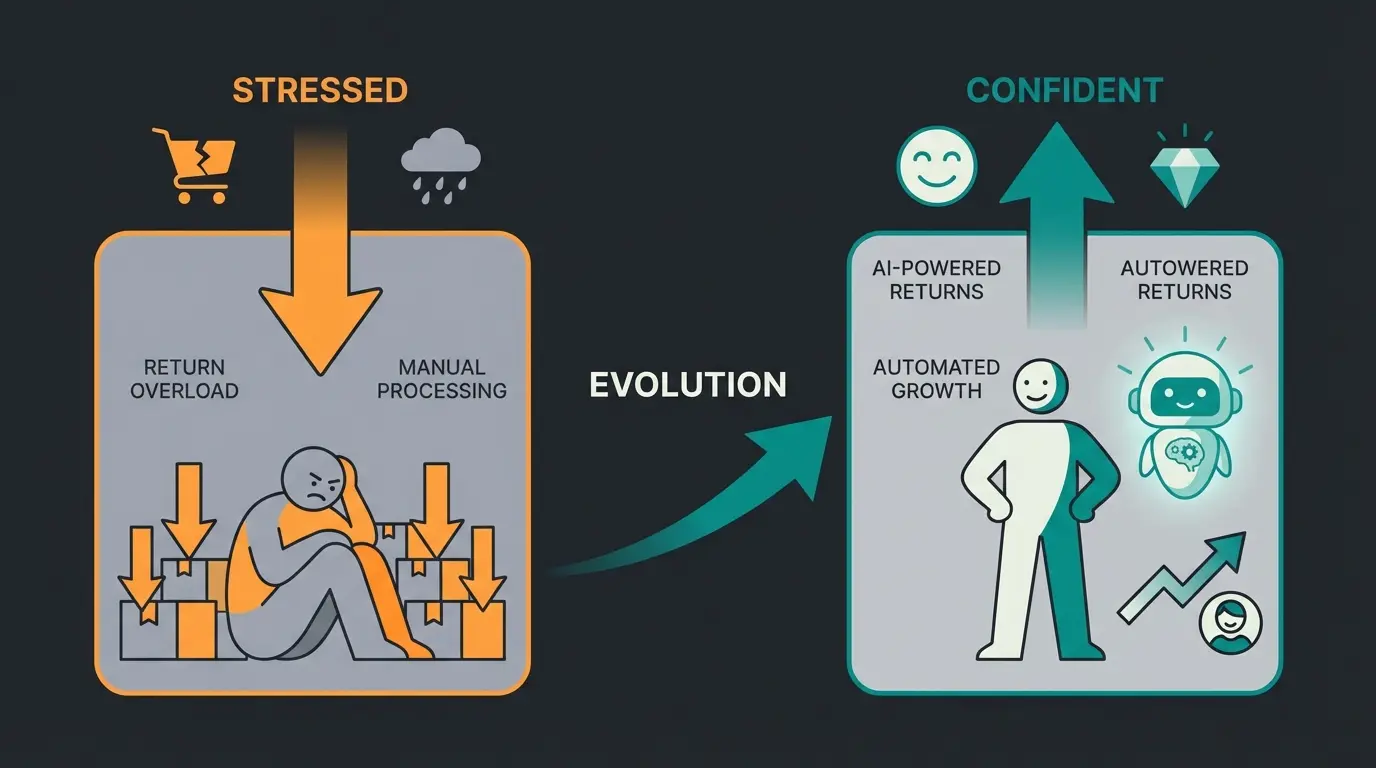
But the true competitive advantage lies not in faster reverse logistics, but in prevention. By using Shopware's technical capabilities (Rise/Plugins) for basic logistics while simultaneously increasing your customers' decision confidence through AI-powered consultation (Guided Selling), you attack the problem at its root. This transformation from reactive processor to proactive consultant represents the future of e-commerce excellence.
The merchants who understand this distinction will thrive. Those who continue treating returns as merely a logistics challenge will find their margins perpetually squeezed. The path forward is clear: invest in consultation, not just in return labels. Your customers will thank you with loyalty—and your margin will thank you with growth. To see how AI is transforming product consultation across industries, discover how an AI product finder increases conversion for forward-thinking retailers.
Join leading Shopware merchants who've reduced returns by up to 30% with AI-powered product consultation. Get started today and see results within weeks, not months.
Start Free Trial Now
Lasse is CEO and co-founder of Qualimero. After completing his MBA at WHU and scaling a company to seven-figure revenue, he founded Qualimero to build AI-powered digital employees for e-commerce. His focus: helping businesses measurably improve customer interaction through intelligent automation.