
Introduction: The Elephant in the Room
The e-commerce landscape in Germany is undergoing a massive transformation. For a long time, the question of Shopware vs OXID was a neck-and-neck duel, especially among the solid German Mittelstand (mid-sized businesses). But the signs have changed drastically. At the latest since OXID effectively discontinued the free Community Edition in August 2022 and introduced licensing fees, merchants have been searching for alternatives en masse, according to tmedia-agentur.de. Simultaneously, Shopware is cementing its position as the undisputed market leader in the German B2C and B2B sectors, as confirmed by Shopware's market reports.
However, this article is not an ordinary technical comparison that merely checks off feature lists. If you're a CEO or e-commerce manager facing the decision to migrate from OXID or start fresh, you need to know an uncomfortable truth: The best software in the world won't double your revenue if it doesn't advise your customers.
Most migration projects don't fail because of technology—they fail because old processes (the customer finds the product themselves in the filter tree) are simply copied into a new system. In this comprehensive 2025 guide, we analyze not only the hard facts between Shopware and OXID but also show how you can achieve the decisive competitive advantage through the use of AI and Digital Product Consultation—something no standard software delivers out of the box. Understanding how AI product consultation transforms customer interactions is essential for modern e-commerce success.
Part 1: The Hard Facts – The Status Quo 2025
Before we talk about strategy, we need to illuminate the economic and technical realities of both systems. More has happened here in the last 24 months than in the ten years before that.
Licensing Models and Costs: The End of Free
The strongest argument for open-source software was always the cost-free nature of the entry-level versions. This has changed for both providers, albeit with different strategic orientations.
The OXID Situation (Since August 2022)
In August 2022, OXID eSales drastically changed the licensing terms. The previously free Community Edition (CE) became paid software. According to web-grips.de, the costs for using the CE now include monthly fees (often cited around €111/month for maintenance/license, though prices may vary).
- Costs: Monthly fees now apply for CE usage (approximately €111/month for maintenance/license, prices vary)
- Consequence: The argument 'We'll take OXID because there are no license costs' is gone. For many small to medium-sized merchants, this was the trigger to question the system.
- Support: Despite the fees, support for the CE is often limited compared to the Professional (PE) or Enterprise (EE) editions, as noted by webect.de.
The Shopware Situation (As of 2025)
Shopware has also modernized its pricing model and focuses on the Rise, Evolve, and Beyond plans. According to webwirkung.ch, Shopware Rise starts at €600 per month for ambitious merchants.
- Shopware Rise: Entry for ambitious merchants starts at €600 per month
- Shopware Evolve & Beyond: These plans target mid-sized and enterprise customers (prices on request, often from €2,400/month) and offer dedicated B2B support and features according to Shopware's pricing page
- Community Edition & Fair Usage Policy (March 2025): Shopware continues to offer a free Community Edition. However, a Fair Usage Policy was introduced in March 2025 as reported by Shopware. Merchants processing more than €1 million GMV (gross merchandise volume) per year through the shop must switch to a paid plan to maintain access to the Shopware Store and account services, as explained by themeware.design.
Technology Stack: Modern vs. Legacy
Here the difference becomes most apparent. The future viability of your platform depends directly on the underlying technology.
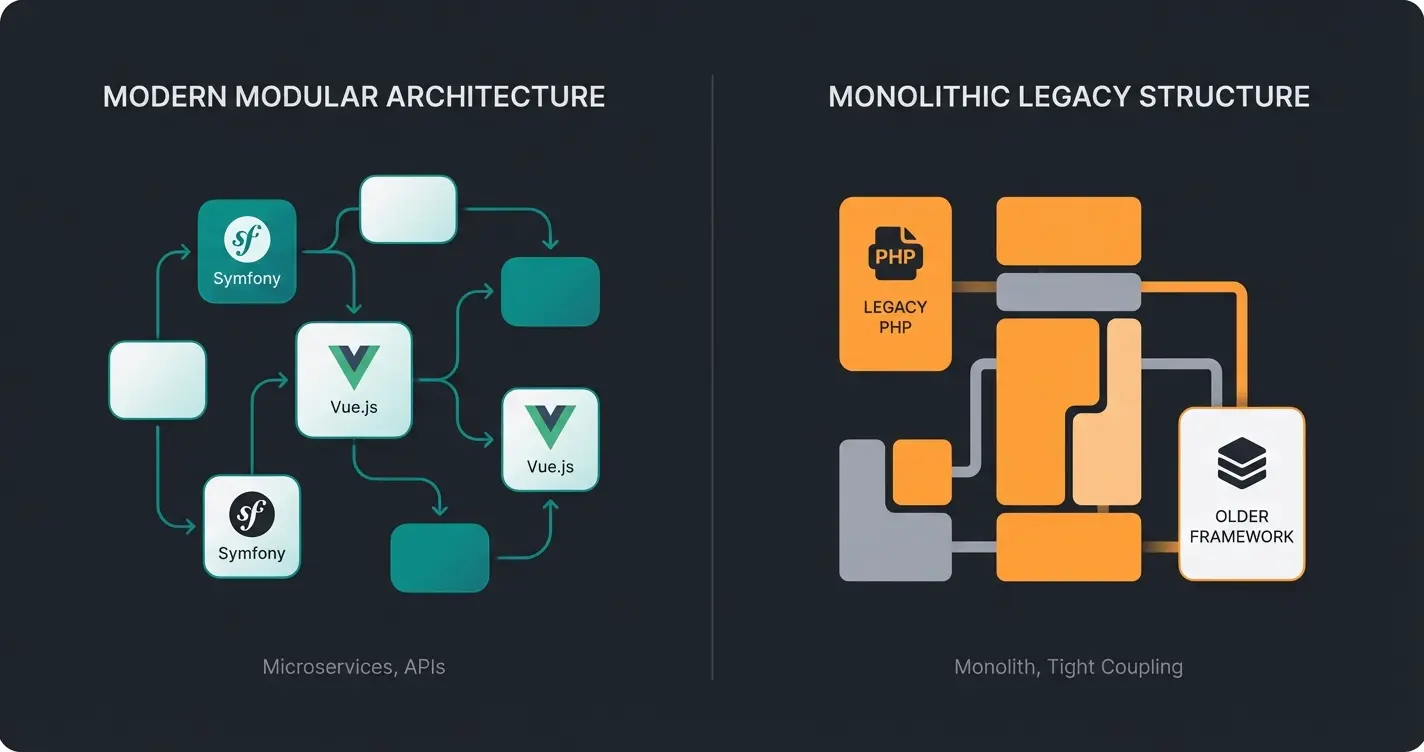
Shopware 6 (The Standard): Based on Symfony (backend) and Vue.js (frontend/administration). It follows a strict API-first approach. This means every feature of the shop can be controlled via an interface (API). This makes Shopware extremely flexible for connecting third-party systems (ERP, PIM) and—crucial for our strategy—for AI tools, as detailed by enno.dev and omr.com. This architecture enables Shopware automation capabilities that were previously impossible.
OXID eShop: Based on an older PHP framework. While the system has been continuously developed (e.g., conversion to Twig Engine), the core carries the burden of over 15 years of development. The architecture is considered more rigid and monolithic compared to Shopware 6. Developers increasingly find it difficult to connect modern frontend technologies (like Headless Commerce) as seamlessly as with Shopware, according to exwe.de and solution25.com.
Market Shares and Distribution
The EHI Study 2025 confirms for the fourth consecutive time: Shopware is the market leader in Germany. According to Shopware's official announcements, 11.5% to 12% of the top 1,000 online shops in Germany use Shopware. OXID is increasingly losing market share and is primarily still used by existing B2B customers who shy away from the effort of switching.
Why this matters: Market leadership means a larger ecosystem. There are more agencies, more plugins, and more integrations for Shopware than for OXID. This lowers the long-term Total Cost of Ownership (TCO) since you don't have to pay a developer for every function.
Comparison Table: Shopware 6 vs. OXID (2025)
| Feature/Aspect | Shopware 6 | OXID eShop |
|---|---|---|
| Architecture | API-First, Symfony, Vue.js (Modern) | Legacy PHP Stack, monolithic |
| License Costs (Entry) | Free (< €1M GMV) / from €600 (Rise) | Paid (also CE, approx. €111+) |
| B2B Focus | Strongly growing (B2B Suite, Evolve Plan) | Traditionally strong, but technologically outdated |
| Frontend | Twig (Standard) or Headless (PWA) | Twig / Smarty (Legacy), Headless more difficult |
| AI Integration | Native (AI Copilot), deeply integrated | Rudimentary / via third-party providers |
| Ecosystem | Huge (Market leader DE) | Shrinking (Agencies often switching) |
| Future Security | High (Visionary in Gartner Quadrant) | Uncertain (Focus on existing customers) |
Part 2: The Hidden Weakness of Both Platforms
If you look at the table above, the decision seems clear: Shopware wins technically and economically. But here many companies make a mistake. They think: 'We'll migrate to Shopware, and then our revenues will increase.'
This is a fallacy.
The Search Box Dilemma in B2B
Both OXID (in its standard form) and Shopware (out of the box) are based on the same outdated selling principle: The digital catalog.
- The customer comes to the shop.
- They must know what they're looking for (search term) or click through categories.
- They must use filters (color, size, material, DIN standard).
Consider what happens in reality: OXID shows 500 screws. The customer is overwhelmed. Shopware Standard shows 500 screws, but with prettier pictures ('Shopping Experiences'). The customer is still overwhelmed. Both systems leave the customer alone with the complexity. This is where understanding the difference between Shopware B2B vs B2C approaches becomes critical.
The 'Consultation Gap' is the real risk in a migration. If you switch from OXID (where the customer might have known the article numbers by heart) to Shopware without digitizing the consultation, you lose revenue.
User Experience Is More Than Design
Many agencies sell Shopware because of the 'Shopping Experiences' (Erlebniswelten). This is great for fashion or lifestyle products. But in the B2B sector, UX doesn't mean 'beautiful images' but 'quick problem-solving.'
Standard shop systems fail here. They function as vending machines, not as salespeople. A real salesperson asks: 'What do you need this for?' A shop only asks: 'Which article number?' This fundamental shift in approach is what conversational commerce AI addresses directly.
Static lists, difficult search, customer must know exactly what they need. High support call volume for product questions.
Emotional images, storytelling, Shopping Experiences. Better visuals but same catalog-based logic underneath.
Interactive Q&A, problem-solving, guided selling. AI understands customer needs and recommends solutions.
Part 3: Shopware + AI – The New Power Duo for 2025
Here lies your opportunity for differentiation. Instead of just switching platforms (from OXID to Shopware), you should switch the sales model.
Why Shopware Is the Better Host for AI
Thanks to the API-first architecture, Shopware 6 is predestined to serve as the foundation for intelligent consultation tools. While you often have to intervene deeply in the core with OXID to manipulate data flows, Shopware can be seamlessly connected with AI services. The Shopware AI features available today showcase what's possible with this modern architecture.
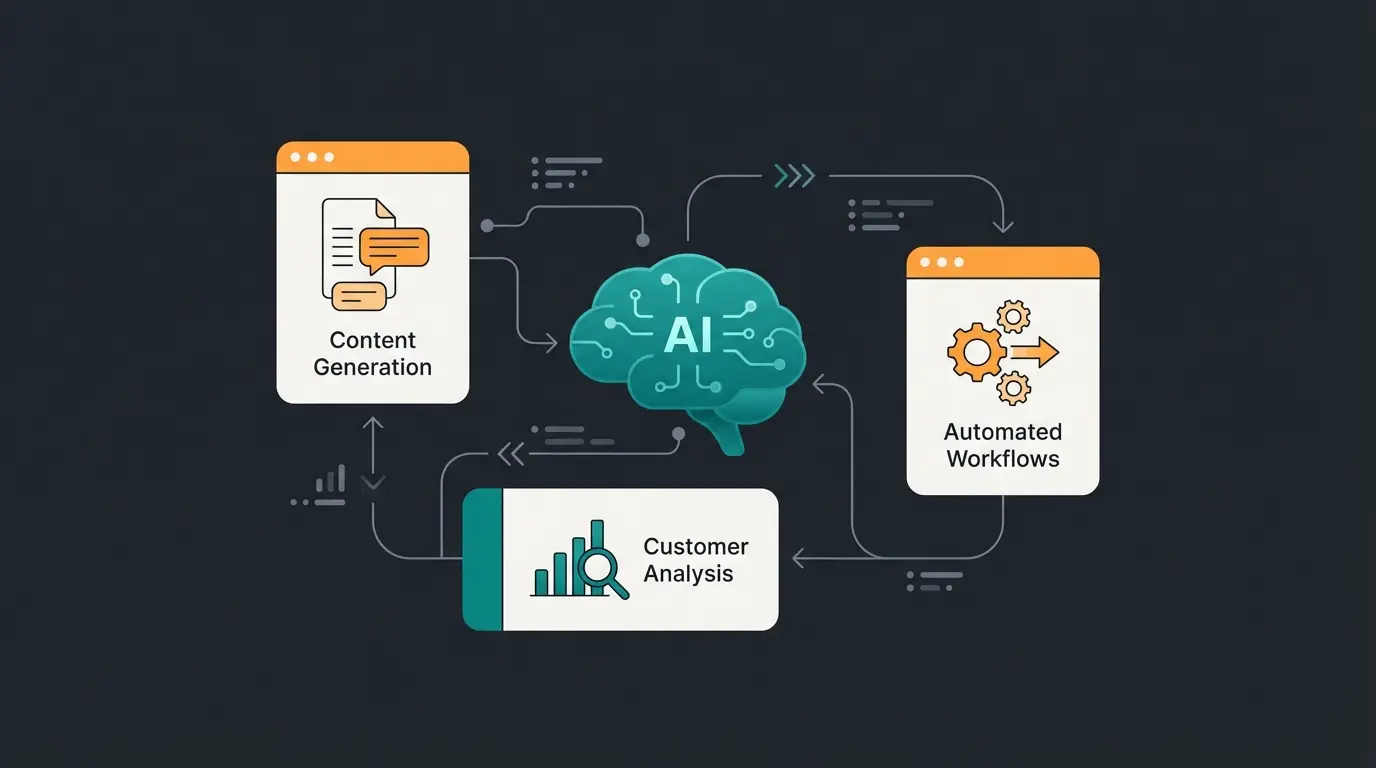
Shopware offers native functions with the AI Copilot that OXID lacks, as detailed by Shopware's AI documentation:
- Content Creation: Automatic product descriptions and translations
- Image Analysis: AI recognizes products in images and assigns keywords
- Customer Classification: AI analyzes order histories and tags customers (e.g., 'At risk of churning')
- Checkout Messages: Personalized messages after purchase
The Gamechanger: Digital Product Consultation
But the real magic happens when you go beyond the standard features and implement Guided Selling. Imagine integrating an AI consultant built on Shopware. This is where Shopware AI chatbots transform the customer experience.
Scenario: The Spare Parts Purchase
The old way (OXID / Standard Shop): The customer searches for 'seal pump'. They receive 40 results. They must open technical data sheets (PDFs) to check whether the seal is heat-resistant. Result: High abandonment rate, call to support ('Does this part fit?').
The new way (Shopware + AI Consultation): The customer is greeted by a chatbot or an interactive assistant.
- AI: 'Which machine are you looking for a spare part for?'
- Customer: 'Model X-200, year 2018.'
- AI: 'Understood. Is the machine exposed to high heat?'
- Customer: 'Yes, about 80 degrees.'
- AI: 'Then I recommend Seal A (Article 123). The standard Seal B would melt at this temperature.'
- Result: Immediate purchase, no support effort, return avoided.
This kind of intelligent interaction exemplifies how AI chatbots in e-commerce can transform passive browsing into active selling. Additionally, implementing such systems requires attention to EU AI Act compliance to ensure your AI solutions meet regulatory requirements.
Feature vs. Consultation Matrix
To illustrate the difference, let's look at capabilities in comparison:
| Capability | OXID (Standard) | Shopware 6 (Standard) | Shopware 6 + AI Consultation |
|---|---|---|---|
| Product Search | Keyword-based (Full text) | Keyword + Filter (Elasticsearch) | Problem-based (Semantic) |
| Consultation | None (Customer must know what they want) | Static Shopping Experiences | Interactive Dialog (Q&A) |
| Up-Selling | 'Customers also bought...' (Static) | Dynamic Product Groups (Rule-based) | Predictive ('You also need...') |
| Data Maintenance | Manual | AI-supported (Copilot) | Automated (Data enrichment) |
| B2B Sales | Catalog provision | Digital Sales Rooms (Video) | Automated sales representative |
AI consultation handles routine product questions automatically
Guided selling increases purchase completion rates
Better product matching reduces incorrect purchases
Customers reach buying decision more quickly with AI guidance
A platform switch alone won't solve your conversion problems. Discover how AI-powered product consultation can turn your catalog into a sales consultant that works 24/7.
Get Your Free Potential AnalysisPart 4: Migration Strategy – Minimizing Risks
If you decide to switch from OXID to Shopware, it's a complex IT project. Agencies like solution25 or web-grips offer specialized services for this. But what do you need to watch out for?
The Technical Hurdles of Migration
A migration is never 'Plug & Play'. Specific challenges when switching from OXID to Shopware include:
Passwords: OXID often uses MD5 with salt for passwords. Shopware uses more secure methods by default (bcrypt/sodium). Customers often can't log in after migration. The solution, as documented by golle-it.de and Shopware documentation, is a special plugin or script that checks the old OXID password on first login and then re-encrypts it in the new Shopware format (re-hashing).
URL Structure & SEO: OXID has a different URL logic than Shopware. Mandatory: 301 redirects must be set up for all old product and category URLs, otherwise you'll lose your Google ranking overnight.
Data Attributes: In OXID, attributes are often stored flat. Shopware 6 uses a dynamic 'properties' system. This data must be cleanly mapped, otherwise the filters in the new shop won't work.
The Decision Flowchart for Your Decision
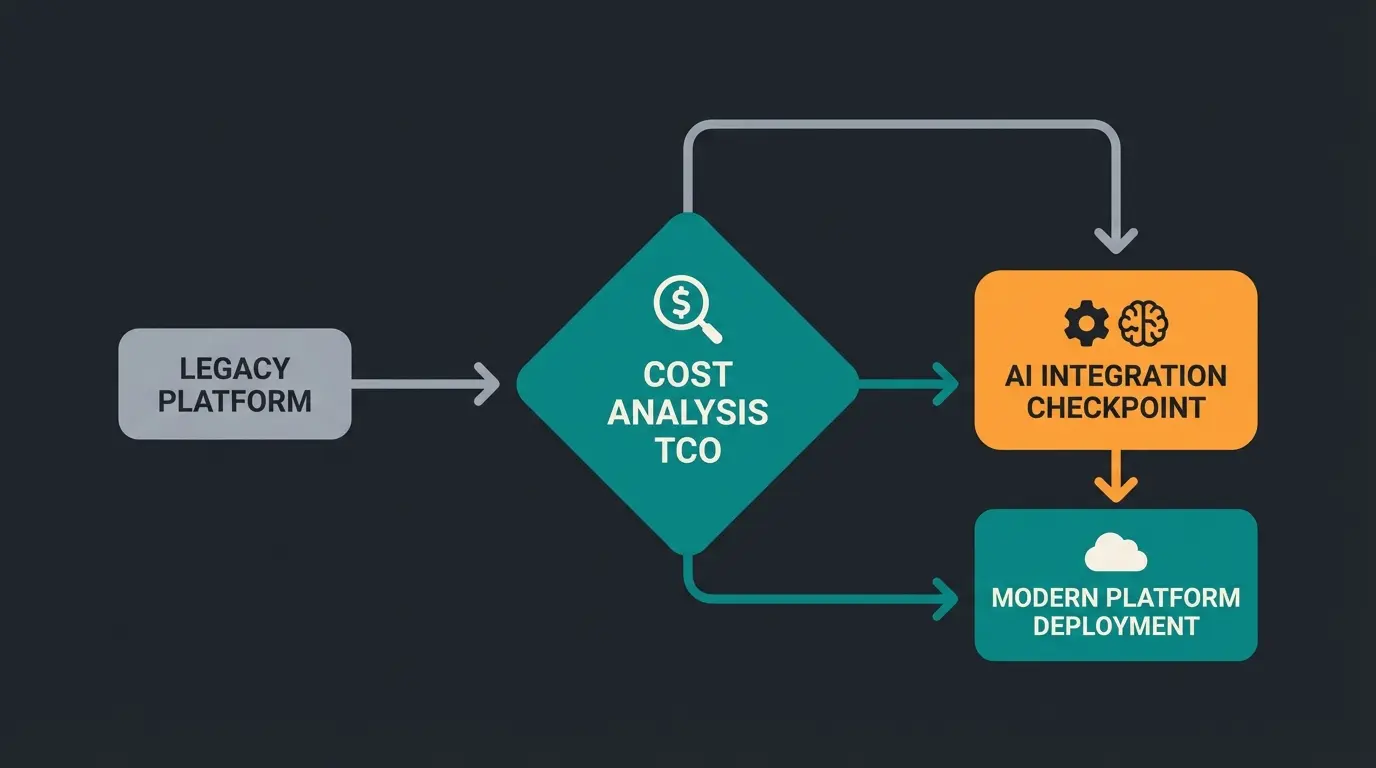
Should you switch? Use this mental decision tree:
- Are you satisfied with OXID's ongoing costs? Yes: Continue to question 2. No: Consider switching to Shopware (TCO analysis).
- Is your current shop technologically flexible enough for AI integrations? Yes: Stay with OXID if it works. No (Monolith): Switch to Shopware 6 (API-First) urgently recommended.
- Do you sell products that require explanation? No (Commodities): Standard Shopware 6 is sufficient. Yes (Complex B2B): Shopware 6 + AI Consultation Layer is necessary.
Strategy: Migrate Knowledge, Not Just Data
The biggest mistake is copying only the database. Use the migration to digitize your sales knowledge.
- Analyze support tickets: What do customers ask most frequently?
- Feed this knowledge into an AI solution that sits on top of Shopware.
- Build 'Guided Selling' processes for your top-seller categories.
This approach aligns perfectly with Shopware B2B features that are specifically designed to handle complex product catalogs and customer requirements. Effective migration also means upgrading your Shopware customer support capabilities to handle the transition smoothly.
The Hidden Cost of Not Consulting
Understanding the True Cost of Migration
Competitors in the Shopware vs OXID comparison space talk about license fees extensively. What they fail to mention is the cost of lost conversion due to poor consultation in standard shops. When a B2B customer can't find what they need or can't determine if a product fits their requirements, they don't just abandon cart—they call a competitor.
This is where the consultation gap becomes a hidden cost multiplier. Every support call costs money. Every abandoned cart is lost revenue. Every return due to wrong product selection costs shipping both ways plus restocking. Standard shop systems, whether OXID or Shopware, don't address this fundamental problem because they're built on catalog logic, not consultation logic.
Conclusion: Shopware Wins the Platform War
The comparison of Shopware vs OXID in 2025 is clear-cut. OXID has maneuvered itself into obscurity for many merchants through licensing changes and technological stagnation. Shopware 6 offers a significantly safer foundation for the future with its modern architecture, market leadership, and fair (if tightened) pricing models.
But the platform is only the foundation. In a world where products are interchangeable, the merchant who consults best wins.
Our Recommendation
- Migrate to Shopware 6 to remain technologically future-proof and convert license costs more efficiently into performance.
- Don't settle for the standard. A 'naked' Shopware shop is often not enough in the B2B sector.
- Invest in 'Digital Consultation.' Use Shopware's API capabilities to integrate AI-powered consultation assistants.
Don't cling to old software that only costs money but doesn't sell. Plan your migration strategically. Want to know how much revenue potential is hidden in your 'dead' catalog data?
FAQ: Common Questions About the Switch
No, OXID continues to exist and has loyal enterprise customers. But for the broad market and new customers, it hardly plays a role anymore since the ecosystem (agencies, plugins) is shrinking while Shopware is growing. The August 2022 licensing change was a turning point that accelerated the decline in market relevance.
The Community Edition is free up to €1M GMV. After that, the Fair Usage Policy applies (from March 2025). Commercial plans start at €600/month (Rise). Hosting and agency costs are additional. For B2B merchants with complex requirements, the Evolve plan starting around €2,400/month provides dedicated support and advanced features.
Products, customers, and orders can be imported relatively well via Shopware's Migration Assistant. Difficulties arise with individual customizations, template logic, and passwords, which require manual effort. Plan for 301 redirects for all URLs to preserve your SEO rankings.
Absolutely. Shopware has caught up massively with the B2B Suite (in Evolve/Beyond) and Digital Sales Rooms, offering more modern B2B features than classic OXID. However, for complex B2B products, combining Shopware with AI consultation provides the biggest competitive advantage.
Depending on shop complexity, expect 3-6 months for a full migration. Simple catalog shops can be faster, while complex B2B setups with custom integrations may take longer. The key is not rushing—proper URL redirects, data mapping, and password handling are critical for success.
Stop treating your online shop like a vending machine. With AI-powered product consultation on Shopware 6, you can finally bridge the gap between platform capabilities and real sales performance. Get a personalized analysis of your conversion potential.
Start Your Free Consultation
Lasse is CEO and co-founder of Qualimero. After completing his MBA at WHU and scaling a company to seven-figure revenue, he founded Qualimero to build AI-powered digital employees for e-commerce. His focus: helping businesses measurably improve customer interaction through intelligent automation.