Introduction: Why Standard Shops Fall Short in 2025
The decision to have a Shopware shop developed in 2025 goes far beyond commissioning technical infrastructure. E-commerce has fundamentally transformed. While responsive design and fast loading times were considered the "gold standard" just a few years ago, they've become mere hygiene factors today.
The market stands at a crossroads. Customer acquisition costs (CAC) are rising, and user attention spans are shrinking. The biggest problem for many online retailers is no longer technology, but what's known as the "Day 1 Problem": The shop goes live, the technology works perfectly, but conversion rates stagnate at the industry-standard 1.5% to 3%. According to research from Envive AI and Red Stag Fulfillment, these conversion benchmarks have remained frustratingly stable despite technological advances.
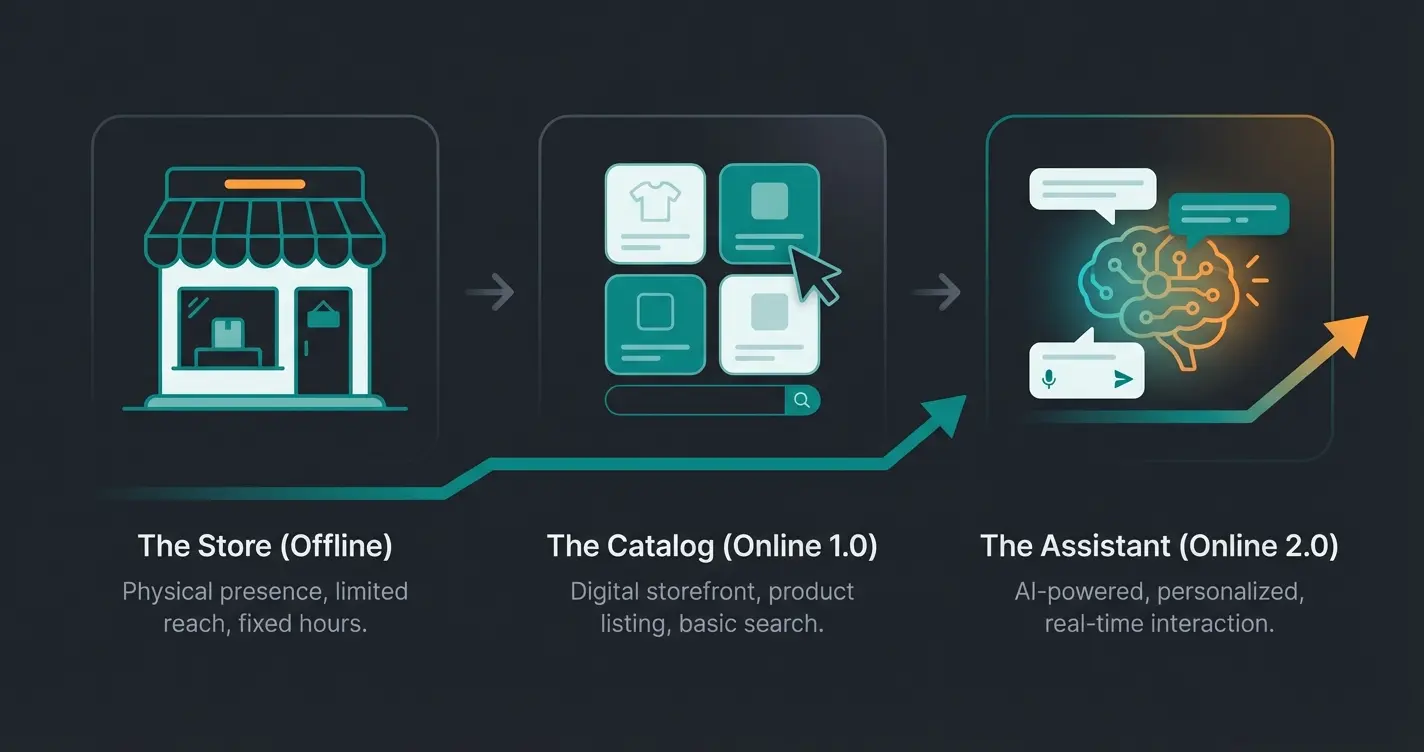
Why? Because most online shops still function like digital warehouses: The customer must search, filter, and decide on their own. The salesperson is missing.
In this comprehensive guide, you'll learn not only what it costs to have a Shopware shop developed and how the process works. We'll show you how through the use of Artificial Intelligence (AI) and Conversational Commerce, you can transform your shop from a silent catalog into an active top seller. We'll look behind the scenes of the new 2025 pricing models, analyze the Fair Usage Policy, and provide you with a blueprint for next-generation e-commerce.
Cost Analysis 2025: What Does Shopware Development Cost?
One of the most common questions is: "How much does a Shopware shop cost?" The answer has become more complex in 2025, as Shopware has completely transitioned its licensing model to subscriptions and introduced new rules for the free version.
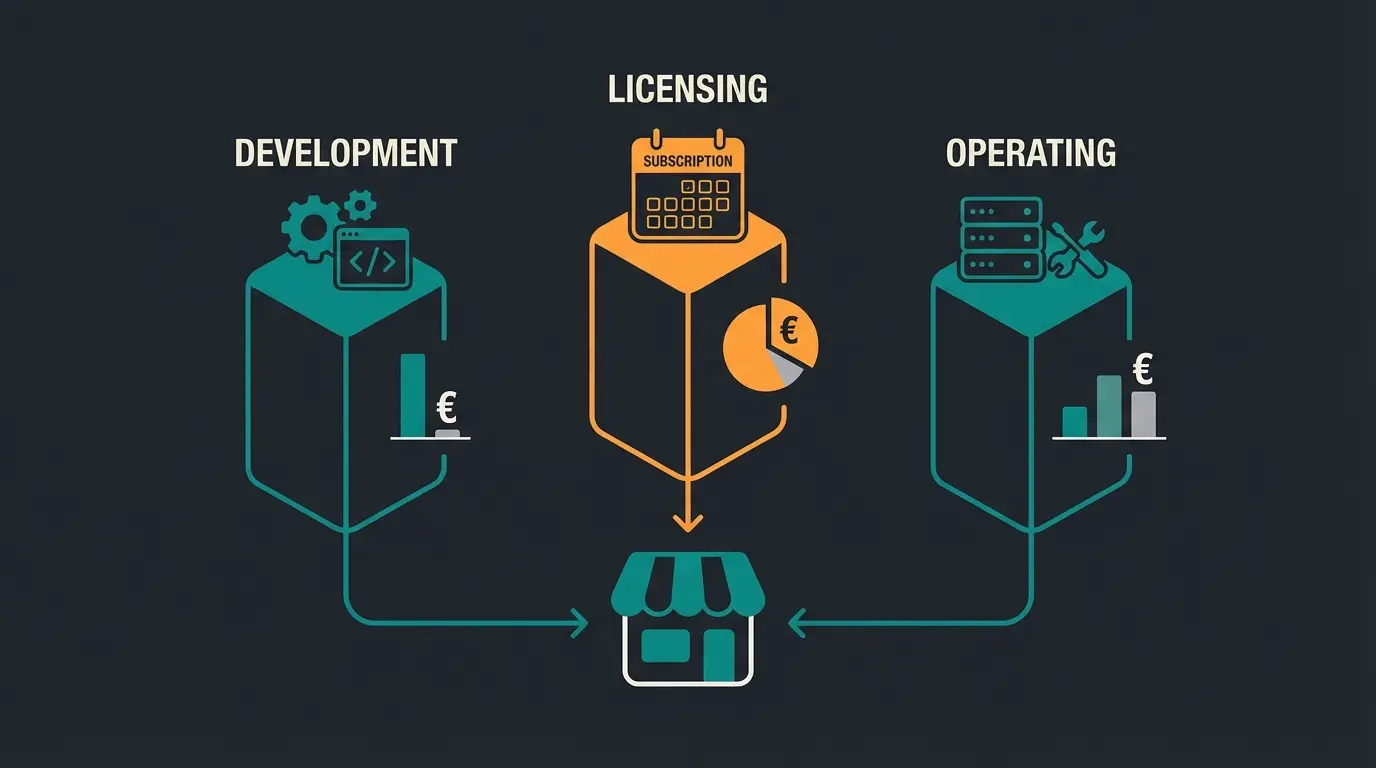
We divide the costs into three pillars: One-time costs (Development), Ongoing license costs, and Operating costs (TCO).
Development Costs (Agency Services)
The costs for initial development depend heavily on the degree of customization. Here's a realistic estimate for the DACH region (Germany, Austria, Switzerland) based on current hourly rates of €100 to €160, as detailed by Qualimero's agency cost analysis.
| Project Type | Budget Range | Suitable For | Included Services |
|---|---|---|---|
| Basic / MVP | €10,000 – €25,000 | Startups, small product ranges, standard processes | Standard theme (customized), basic configuration, standard payment methods, no complex interfaces |
| Professional | €25,000 – €75,000 | Established SMEs, brand manufacturers | Custom UX/UI design, ERP integration (e.g., SAP, Weclapp), B2B features, initial AI integrations (e.g., product texts) |
| Enterprise | €75,000 – €200,000+ | Corporations, internationalization, complex B2B | Headless architecture, multi-country/multi-currency, deep PIM/ERP integration, custom AI sales agents & workflows |
Shopware License Costs (Ongoing)
Shopware has discontinued the one-time purchase license model (formerly Professional Edition). Since 2025, the following subscription models apply, often tied to Gross Merchandise Value (GMV), as outlined by Shopware's official pricing and IMI Digital's analysis.
The New Plans at a Glance
- Shopware Rise (from €600/month): Target group: Professional B2C shops. Features include social shopping, CMS rules, and standard support. Limitation: Often sufficient for starting out, but restricted for B2B functions.
- Shopware Evolve (from approx. €2,400/month): Target group: Ambitious B2B and B2C retailers. Features include the B2B Suite (budgets, rights & roles), Flow Builder Pro, and extended support. Important: Anyone wanting to implement true B2B processes typically ends up in this plan.
- Shopware Beyond (from approx. €6,500/month): Target group: Market leaders and corporations. Features include multi-inventory (multiple warehouses), 24/7 support, and a dedicated Customer Success Manager.
The Fair Usage Policy (Community Edition)
Until recently, even high-revenue shops could use the free Community Edition (CE). However, since March 24, 2025, the Fair Usage Policy applies according to Shopware's official announcement and detailed by ThemeWare:
- Under €1M GMV (annual revenue): The CE remains free to use (including store access).
- Over €1M GMV: Merchants must switch to a paid plan (Rise, Evolve, Beyond) to maintain access to updates and the plugin store.
- Consequence: Successful merchants can no longer avoid license costs. This must be factored into budget planning for 2025/2026.
Total Cost of Ownership (TCO) & Hidden Costs
Those looking to have a Shopware shop developed often forget the "hidden" costs that arise after go-live.
- Hosting: For a high-performance Shopware 6 shop (especially with Elasticsearch/Opensearch), plan for €150 to €500 per month.
- Maintenance & Updates: Shopware evolves rapidly (see version 6.7). Plan for approximately 10-15% of initial costs per year for maintenance contracts.
- Plugins & Apps: Many features (e.g., special SEO tools, marketplace connections) require monthly rental fees. A typical shop often has €200-500 in monthly app costs.
MVP approach with standard features
Entry-level professional subscription
Community Edition usage limit
Percentage of initial development cost
The Development Process: From Idea to Intelligent Shop
The process of having a Shopware shop developed typically follows a proven pattern. However, to stand out in 2025, we add a crucial new phase: The "Intelligence Layer."
Phase 1: Discovery & Strategy (The Foundation)
Before a single line of code is written, the strategy must be in place.
- Target Audience Analysis: Who buys? (B2B procurement vs. B2C impulse buyers).
- Data Audit: How clean is your data in the ERP? (Bad data = Bad AI).
- Requirements Specification: Definition of all interfaces and functions.
Phase 2: UX/UI Design & "Shopping Experiences"
Shopware 6 offers a powerful CMS with its "Shopping Experiences" (Erlebniswelten) feature.
- Atomic Design: Building reusable design components.
- Mobile First: Since over 70% of traffic is mobile, the design must start here.
- The Difference: A standard design looks nice. A performance design psychologically guides users to purchase completion.
Phase 3: Technical Development & Migration
This is where developers work on implementation.
- Setup: Installation on a staging environment (dev server).
- Migration: Transfer of customer and order data (e.g., from Shopware 5 or Magento).
- Interfaces: Connection to ERP (SAP, Microsoft Dynamics, Weclapp) and PIM systems.
Phase 4: The Intelligence Layer (Your Competitive Edge)
This is where the wheat is separated from the chaff. Most agencies stop after Phase 3. A modern partner implements sales intelligence now.
- AI Training: Feeding the AI with product knowledge, FAQs, and sales arguments.
- Conversational Commerce Integration: Setting up digital consultants that don't just provide "support" but actively engage in cross-selling.
- Dynamic Content: Setting up rules (Rule Builder) that change content in real-time based on customer behavior. Learn how AI transforms static rules into dynamic selling power.
Phase 5: Testing, Go-Live & Hypercare
After extensive testing (browsers, devices, payment), the launch takes place. The "Hypercare" phase guarantees quick responses to initial teething problems in the first 4 weeks.
Target audience analysis, data audit, requirements specification
Mobile-first design, Shopping Experiences, conversion optimization
Setup, migration, ERP/PIM integration
AI training, conversational commerce, dynamic personalization
Quality assurance, go-live, hypercare support
The AI Revolution: From Catalog to Digital Sales Expert
When you search for "Shopware shop development" today, you'll mostly find offers for digital catalogs. The problem: A catalog doesn't advise. It passively waits for inputs.
The Problem with Static Filters
Imagine you sell running shoes.
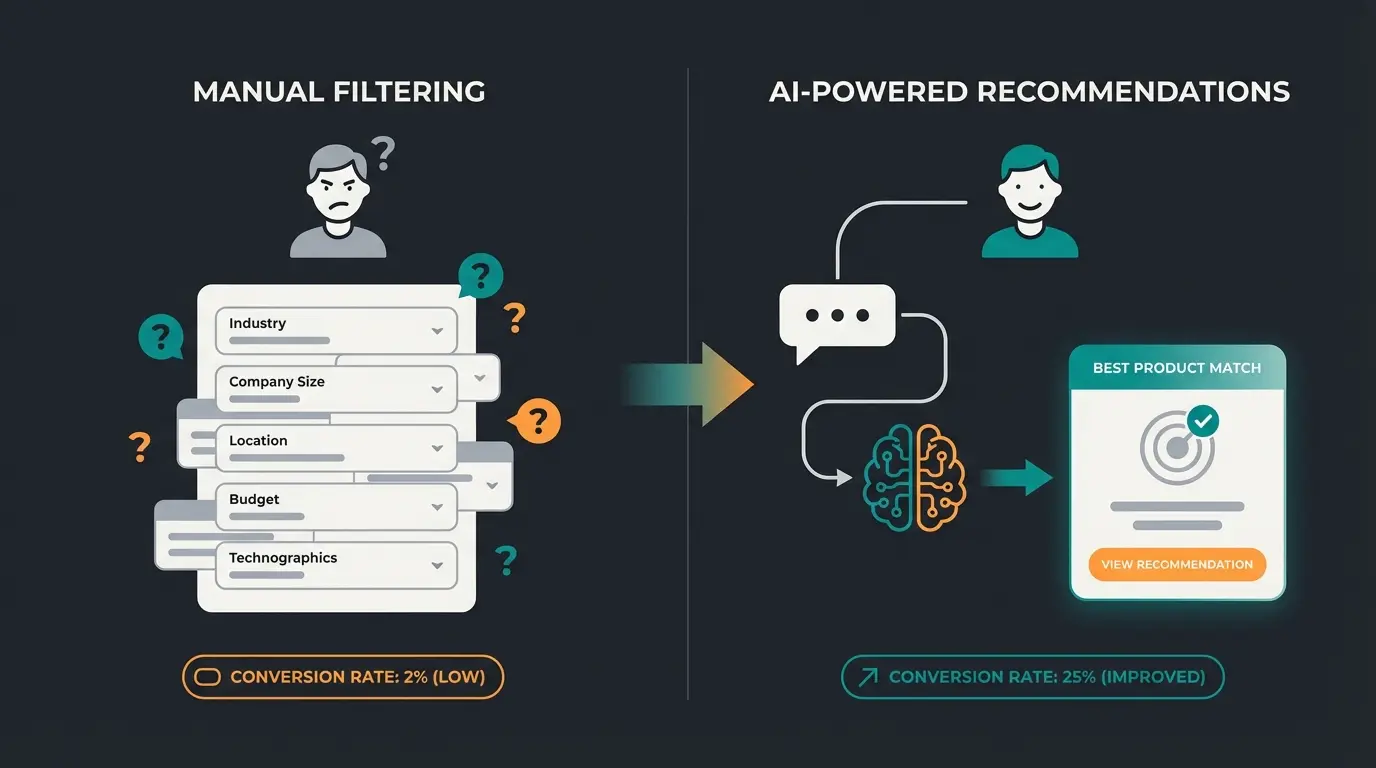
- Standard Shopware: The customer filters by "Men's," "Size 43," "Blue." They see 50 results. They're overwhelmed. They leave the shop.
- The Result: High bounce rates and low conversion.
The Solution: AI Product Consultation
In a modern Shopware setup, we integrate an AI layer (e.g., via OpenAI API or specialized services exploring Shopware AI features) that acts like a top salesperson. This approach to AI-driven product consultation fundamentally changes how customers interact with your store.
Scenario in an AI-Powered Shop:
- Customer: "I'm looking for running shoes for forest trails, but I have knee problems."
- AI Shop: Understands the context ("cushioning," "stability," "off-road").
- Response: "For forest trails and to relieve strain on your knees, I recommend models with high cushioning and grippy soles. Based on our range, these 3 models are ideal for you: [Product A], [Product B]. Would you like me to explain the differences?"
Native AI Features in Shopware (2025)
Shopware has already made significant strides with the AI Copilot and new Agentic AI functions, as detailed by Shopware's AI announcements and Atwix's platform analysis:
- Image Keyword Assistant: Analyzes images and automatically sets SEO tags.
- Content Generation: Creates product texts and Shopping Experiences content at the push of a button.
- Review Summaries: Condenses hundreds of reviews into a single conclusion.
- Customer Classification: Automatically segments customers for marketing campaigns.
Static Shop vs. Smart AI Shop: The Key Differences
Understanding the fundamental differences between traditional e-commerce and AI-enhanced shopping experiences is crucial for making the right investment decision. This comparison highlights why the transition to intelligent commerce is not optional but essential for competitive success.
| Feature | Standard Shopware Shop | AI-Powered Shopware Shop |
|---|---|---|
| Customer Navigation | User searches manually through categories | User is actively guided by AI consultant |
| Product Filtering | Attribute-based filtering (color, size, price) | Needs-based filtering ("I need a bike for mountains") |
| Customer Support | Generic FAQ pages, delayed responses | Instant, personalized product answers 24/7 |
| Complex Products | High bounce rate, customer confusion | AI explains features, suggests best matches |
| Cross-Selling | Static "related products" blocks | Dynamic recommendations based on conversation context |
| Conversion Rate | Industry standard 1.5-3% | Significantly higher through personalized guidance |
The difference becomes especially clear when dealing with complex, advice-intensive products. While a standard shop leaves customers to figure things out themselves, AI-powered product advice creates the boutique experience that drives conversions.
See how AI product consultation can boost your Shopware store's conversion rates. Our intelligent assistants provide expert-level guidance to every customer, 24/7.
Start Your Free TrialAgency vs. Freelancer vs. AI-First Partner
Who is the right partner to implement your project? The choice significantly impacts not just your initial investment but your long-term competitive position.
Option A: The Freelancer
- Costs: Affordable (€80 - €100/hr).
- Advantage: Direct contact, flexible.
- Disadvantage: "One-man show." If they're sick, the project stops. Often lacks the strategic depth for complex B2B or AI topics.
- Recommendation: For small shops or MVP projects.
Option B: The Traditional Shopware Agency
- Costs: Medium to High (€120 - €160/hr).
- Advantage: Certified developers, experience with large projects, security.
- Disadvantage: Often focused on "code" and "design." Marketing and AI strategy are often just add-on services, not core competencies. AI integration cuts costs significantly when approached strategically.
- Recommendation: For standard relaunches and technical migrations.
Option C: The AI-First E-Commerce Partner
- Approach: Thinks from the "sale" perspective, not just "code."
- Advantage: Integrates AI consultants from Day 1. Builds shops optimized for conversion, not just technology.
- Differentiation: Defines "customization" not as "pretty colors" but as "tailored sales logic."
- Recommendation: For companies that want to gain market share in 2025's competitive landscape.
When evaluating AI Product Consultation providers, look for partners who understand both the technical implementation and the strategic business value of intelligent commerce.
The New Shop Architecture: Three Essential Layers
Modern Shopware development requires thinking in architectural layers. Each layer builds upon the previous one, and the top layer—the AI Consultant Layer—is what separates market leaders from the competition.
Shopware 6 hosting infrastructure with Redis, Elasticsearch/Opensearch, and high-performance servers
ERP/PIM integration ensuring clean, structured product data flows seamlessly into the shop
Intelligent interface between users and catalog, providing personalized guidance and recommendations
The AI Consultant Layer represents a paradigm shift. It sits between the customer and your product catalog, actively facilitating sales conversations rather than waiting passively for user input. This is where Shopware 6 chatbots evolve from simple support tools into proactive sales agents.
Checklist: Requirements for a Modern Shopware Project
Before commissioning an agency, use this checklist to ensure your project is future-proof.
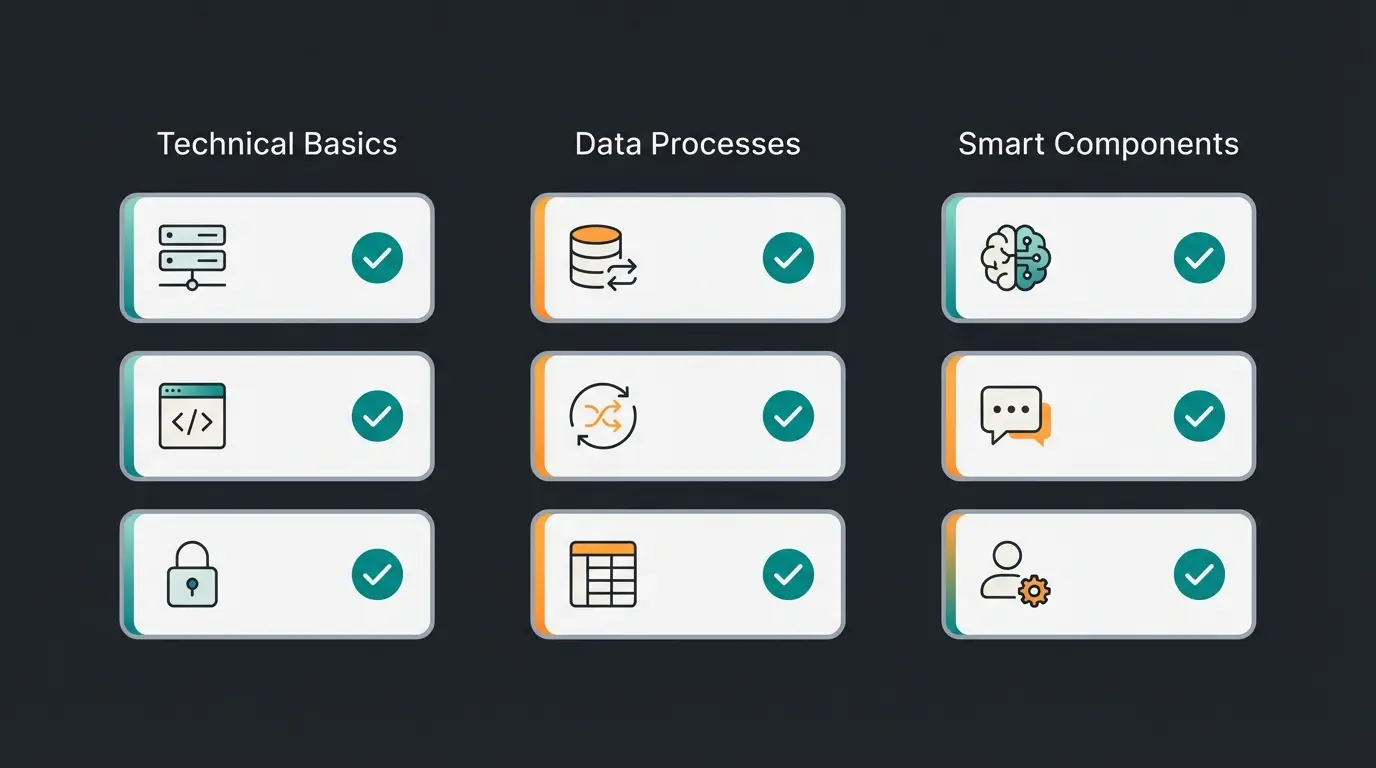
Technical Basics (Must-Have)
- Shopware 6.7+: Ensure the latest version is used (performance & accessibility updates) as detailed in Shopware's version 6.7 release notes.
- Hosting: High-performance hosting (e.g., at Profihost, Timme, or Maxcluster) with Redis & Elasticsearch/Opensearch.
- Legal Compliance: Integration of tools like the "Legal Texts Manager" or Händlerbund interfaces.
Data & Processes
- ERP Sync: Is real-time synchronization of stock levels and prices guaranteed?
- PIM System: Is product data centrally maintained? (Essential for AI training).
The Smart Components (Competitive Advantage)
- Product Knowledge Base: Is product data available in a way that an AI can "understand"? (Not just technical tables, but application examples and use cases).
- Conversational Interface: Is a chat/consultant planned that has access to the shopping cart?
- Dynamic Personalization: Are categories or homepages rearranged based on customer behavior?
When comparing platforms, understanding the full scope of AI capabilities available in Shopware versus alternatives helps make an informed decision.
Real-World Success: AI Employees in Action
The transformation from static catalog to intelligent sales assistant isn't theoretical—it's already delivering measurable results for forward-thinking businesses.
Consider how an AI Employee can revolutionize customer interactions in specialized retail. Or explore how KI Mitarbeiterin Flora demonstrates the power of personalized product consultation in action. These implementations showcase the tangible benefits of moving beyond traditional e-commerce approaches.
The key insight from these success stories: AI consultation doesn't just improve customer experience—it fundamentally changes the economics of online retail by enabling personalized service at scale.
FAQ: Common Questions About Shopware Development
Here we answer the questions that are often overlooked in most agency pitches.
A Basic shop can go live in 8-12 weeks. A complex Enterprise project with ERP integration and custom B2B processes typically takes 4 to 9 months. Tip: Use an MVP approach (Minimum Viable Product). Go live quickly with a core version and iterate, rather than developing for 12 months in isolation.
No, it shouldn't replace them but scale their expertise. A human consultant can only serve one customer at a time. An AI can advise 1,000 customers simultaneously—24/7, in 20 languages. For complex B2B negotiations, the AI can pre-qualify leads and then hand them over to humans (hybrid model).
It's not a question of "worth it" but of necessity. Shopware 5 has reached End of Life (EOL). There are no more security updates from the manufacturer. Additionally, the old technology (Zend Framework) is not compatible with modern AI applications. A switch is critical for business continuity, as confirmed by Qualimero's migration analysis.
Shopware will require you, per the Fair Usage Policy, to upgrade to a paid plan (Rise, Evolve). If you ignore this, you lose access to security updates and the Extension Store, which poses a massive security risk.
Standard chatbots are reactive—they answer pre-defined questions. AI product consultation is proactive—it understands customer needs, asks clarifying questions, and actively recommends specific products. Think of it as the difference between a FAQ page and a knowledgeable sales expert who understands your entire product catalog.
Conclusion: Invest in Intelligence, Not Just Code
Having a Shopware shop developed in 2025 is a strategic directional decision. The technology (Shopware 6) is powerful, but it's only the tool.
The difference between a shop that costs money and a shop that makes money lies in how you engage the customer. While your competitors are still discussing pixels and colors, you have the opportunity to build a genuine relationship with your visitors through AI-powered consultation and dynamic sales processes.
The evolution of e-commerce is clear: From offline stores, to online catalogs, to intelligent AI assistants. Businesses that embrace this transformation today will capture market share from those still building static digital warehouses. The question isn't whether to integrate AI—it's how quickly you can implement it before your competitors do.
Don't settle for a digital catalog. Partner with AI-first experts who build shops that actively sell. Transform your e-commerce with intelligent product consultation that converts browsers into buyers.
Get Started Today