Why a Static Catalog No Longer Cuts It in 2025
Anyone planning or operating a Shopware online shop in 2025 faces an entirely different e-commerce landscape than just three years ago. Shopware has established itself as the undisputed "king" of German e-commerce—a platform that combines open-source flexibility with enterprise-level power. For more details, see our learn more about Shopware. However, technology alone no longer guarantees revenue.
While most agencies and guides focus on how to build a shop (installation, plugins, design), a crucial question is often ignored: How does this shop actually sell when no human salesperson is present?
In an era when customers are accustomed to hyper-personalized experiences from TikTok and Netflix, the classic online shop—a database with a search bar and filters—often feels like a relic. Especially in B2B or with complex products, customers often fail not because of availability, but because of choice paralysis.
This article is not a typical "how-to-install" tutorial. It's a strategic guide for business owners and e-commerce managers. We'll examine the new 2025 cost structure (including the critical Fair Usage Policy), compare Shopware with competitors, and show you how to bridge the gap between technical platform and real sales conversations through AI-powered product consultation. For a deeper dive into AI capabilities, check out our comprehensive Shopware AI automation guide.
Why Choose Shopware? The Foundation for DACH Markets
Before we discuss AI and sales psychology, we need to understand the technical foundation. Why do leading German mid-sized companies and enterprise customers choose a Shopware online shop?
Made for Germany: Legal Compliance and Data Protection
Shopware originates from Schöppingen (North Rhine-Westphalia), and you can tell by looking at the software—in a positive sense. Unlike American solutions like Shopify, where GDPR compliance often needs to be laboriously added via apps, Shopware is designed "out of the box" for the German market.
- Legal Texts & Taxes: The logic for VAT calculations (especially for cross-border trade within the EU) and base price displays is deeply embedded in the core.
- Data Protection: As a self-hosted or PaaS solution, you maintain full control over your customer data, which is essential for B2B companies with sensitive contracts.
B2B Powerhouse for Complex Catalogs
This is where the wheat separates from the chaff. While Shopify excels at T-shirts and cosmetics, it quickly hits its limits with complex technical products. Shopware 6 was developed with an architecture that embraces variant complexity.
Example: An industrial customer sells hydraulic pumps. A single pump has 50 variants (pressure, thread, material). Shopware can natively map this variant logic without the database performance buckling under the load.
In the higher plans, the B2B Suite (Evolve & Beyond) includes features like individual price lists per customer, budget approvals for buyers, and quick order forms. For a detailed breakdown of what each edition offers, see our Shopware editions comparison.
Headless Architecture and API-First Approach
"Headless" is the industry buzzword, but what does it mean for your revenue? It means the frontend (what the customer sees) is decoupled from the backend (database, logic).
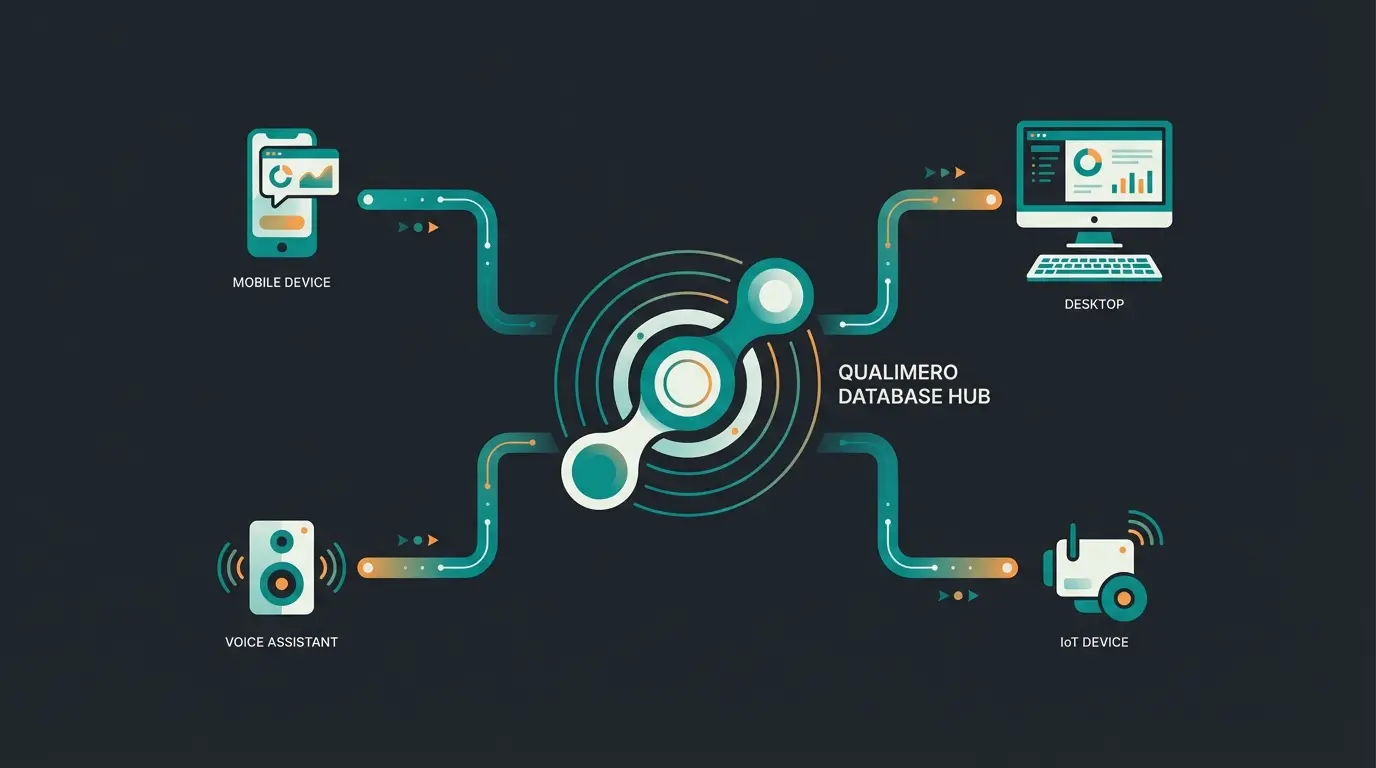
Why this matters: You can use your Shopware online shop as the engine while displaying products everywhere—in a mobile app, on a voice assistant, in an Instagram feed, or even in a machine (IoT) that automatically reorders spare parts.
The True Costs of a Shopware Shop (2025 Update)
The year 2025 marks the biggest upheaval in Shopware's pricing policy. The era of one-time purchase licenses ("Lifetime License") is definitively over. Shopware now relies entirely on subscription models and has introduced a Fair Usage Policy that affects every shop operator.
License Costs at a Glance
| Edition | Target Audience | Price (Monthly) | Key Limits / Features |
|---|---|---|---|
| Community Edition (CE) | Beginners / Startups | €0* | New 2025: Capped at €1M GMV (Gross Merchandise Volume) per year. Those exceeding this must upgrade. No manufacturer support. |
| Shopware Rise | Professional B2C Shops | from €600 | Includes manufacturer support, Flow Builder, Rule Builder. Suitable for ambitious merchants. |
| Shopware Evolve | B2B & Scaling | from ~€2,400 | Contains B2B Components (budgets, role permissions), Advanced Search, extended support. |
| Shopware Beyond | Enterprise | from ~€6,500 | 24/7 Support (1h response time), Multi-Inventory (multiple warehouses), dedicated Account Manager. |
For a comprehensive breakdown of what you can expect to pay for infrastructure, explore our detailed Shopware hosting costs guide.
The Hidden Costs: Total Cost of Ownership
Many merchants only look at license fees. But analysis of top search results shows that the real cost drivers are often concealed. A Shopware online shop is not a static product but a living ecosystem.
For Redis, Elasticsearch, and performant Shopware 6 setups
Professional design, configuration, and custom development
Updates, security patches, and ongoing support contracts
Per employee for pre-sales question handling
The Silent Margin Killer: Personnel & Support is the point that hardly anyone considers. When your shop is complex, customers call or write emails ("Does Part A fit with Part B?").
The math: A support employee costs approximately €45,000 per year (employer gross). If your shop works technically but doesn't explain the products, you'll quickly need 2-3 employees just to answer pre-sales questions. This is your biggest savings potential through automation—which we'll explore in Section 5.
Shopware vs. The Competition: An Honest Comparison
To ensure Shopware is the right choice, it's worth examining the alternatives. For a comprehensive head-to-head analysis, read our full Shopware vs Shopify comparison.
Shopware vs. Shopify
Shopify represents the "Apple approach": everything works immediately, looks good, but you're trapped in a "walled garden."
- When Shopify? You sell standard products (fashion, decor), don't want to worry about servers, and have no complex B2B requirements.
- When Shopware? You need custom checkout processes, have complex product configurations, require deep ERP integrations, or want data sovereignty in Germany.
Shopware vs. Magento (Adobe Commerce)
Magento was long the market leader but is now often considered cumbersome and extremely expensive to maintain ("Legacy Complexity").
- The Problem: Magento developers are rare and expensive. The architecture is often oversized for mid-sized businesses.
- Shopware's Advantage: Shopware 6 uses modern technologies (Symfony, Vue.js) that are popular with developers. According to Solution25, it's "lighter" than Magento but almost as powerful.
The Missing Piece: From Catalog to Digital Sales Consultant
This is the most important section of this article. If you analyze the Google search results, you'll find that almost everyone talks about "features" (Flow Builder, Rule Builder). But hardly anyone discusses how to help the customer find the right product.
The Problem: The Filter Trap
A typical Shopware online shop offers filters: color, size, price, material. This works for T-shirts ("Red, Size L"). It fails for complex products.
E-Bike Example: A customer isn't searching for "an e-bike with 85Nm torque and 625Wh battery." They're looking for "a bike that lets me comfortably ride mountains on weekends without sweating, and that I can occasionally take on the train."
The Reality: The customer faces 50 filters, becomes overwhelmed, and abandons the purchase—or calls support (more costs!). Understanding why AI eliminates customer waiting times is crucial for modern e-commerce success.
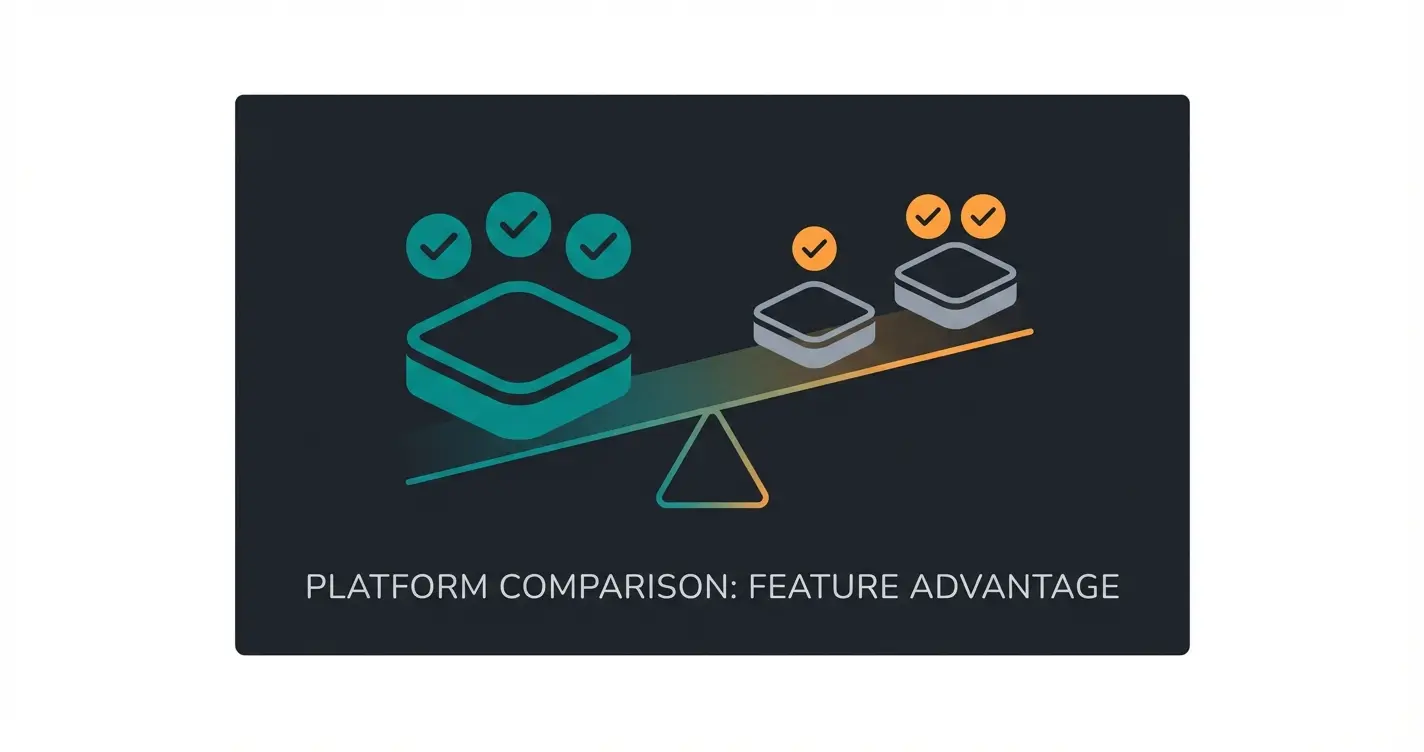
Simple Excel-style product catalog with basic search functionality
Standard Shopware filtering by technical specifications and attributes
Shopware + AI that understands customer needs and recommends solutions
The Old Solution: Shopware AI Copilot (Backend Focus)
Shopware has invested heavily in AI in 2025. The Shopware AI Copilot is a powerful tool, but it's primarily built for you as the merchant, not for the customer. According to Unleashed Technologies and Atwix, its capabilities include:
- Generating product descriptions
- Translating reviews
- Creating export files
- Automatically tagging images
This saves you time in the office but doesn't help the customer with their purchase decision. The gap between backend efficiency and frontend experience remains wide.
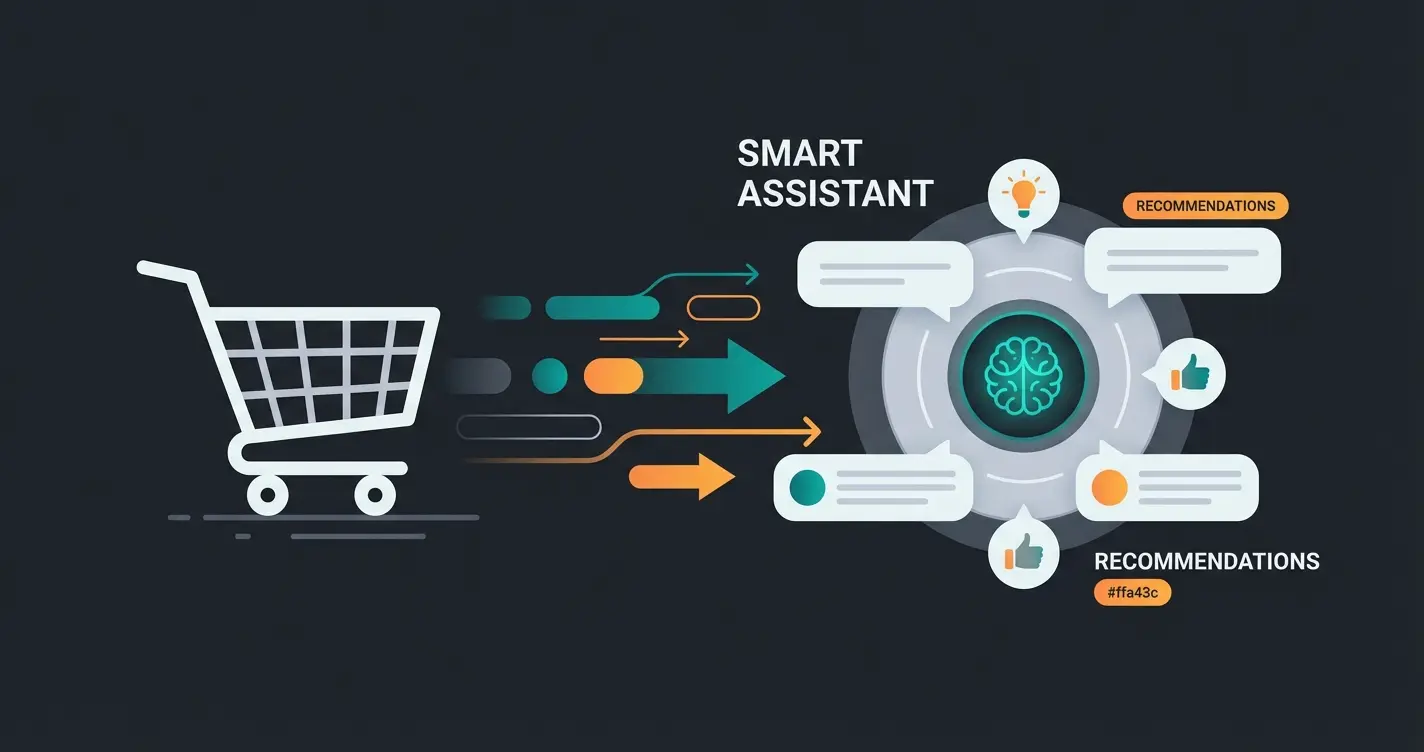
The New Solution: Frontend AI and Guided Selling
To stand out in 2025, you need to transform your Shopware shop from a passive catalog into an active consultant. This is where specialized AI product consultation providers come into play, integrating seamlessly with Shopware.
Imagine your shop had a digital employee available 24/7:
- Needs Analysis: Instead of asking for technical data, the AI asks about the use case ("What do you want to accomplish?")
- Matching: The AI matches responses with your complex Shopware product data
- Explanation: The AI doesn't just recommend a product—it delivers the "why" ("This e-bike is perfect because the folding mechanism is ideal for the train")
This approach represents the future of conversational commerce and AI product consultation. For businesses ready to implement this strategy, understanding AI consulting requirements for e-commerce is essential.
The ROI of AI Consultation
Guided customers convert significantly more often than search-only users
AI handles standard consultation questions automatically
Customers who buy the right product don't send it back
These metrics demonstrate why leading e-commerce businesses are investing in AI chatbot solutions and AI chatbots for e-commerce. Real-world implementations, like our AI Employee success story with Gartenfreunde, prove the tangible business impact.
See how AI-powered product consultation can reduce support costs by 80% while tripling your conversion rates. Get started with intelligent guided selling today.
Start Free TrialStep-by-Step: Setting Up a Consultation-First Shopware Store
How do you implement this strategy technically? Here's a modern project plan for 2025.
Phase 1: Architecture and Hosting
Choose the right edition based on your revenue (see Fair Usage Policy).
Tip: Start with Shopware Rise if you want professional support but don't yet need complex B2B permissions. This saves approximately €1,800 per month compared to Evolve.
Hosting: Use specialized Shopware hosters (e.g., Timme Hosting, Profihost, or maxcluster) that are optimized for performance. For detailed SEO configuration guidance, check our Shopware SEO technical guide.
Phase 2: Data Structure (The Foundation of Consultation)
Shopware 6 is extremely flexible with "Properties" and "Custom Fields."
Task: Don't just maintain your data technically ("Weight: 5kg"), but application-oriented. Use Custom Fields for attributes like "Suitable for Beginners" or "Weather Resistance." This data becomes the fuel for your AI consultation.
Phase 3: Integrating Intelligent Consultation
Instead of just installing the standard theme, integrate a Guided Selling Software (such as Zoovu, Neocom, or specialized Shopware plugins).
- Integration: These tools typically connect to Shopware via API, pull the product feed, and display the "consultant" as a widget in the frontend.
- Placement: Build the consultant prominently on the homepage and category pages ("Not sure which part fits? Start the Product Finder")
Phase 4: Checkout Automation
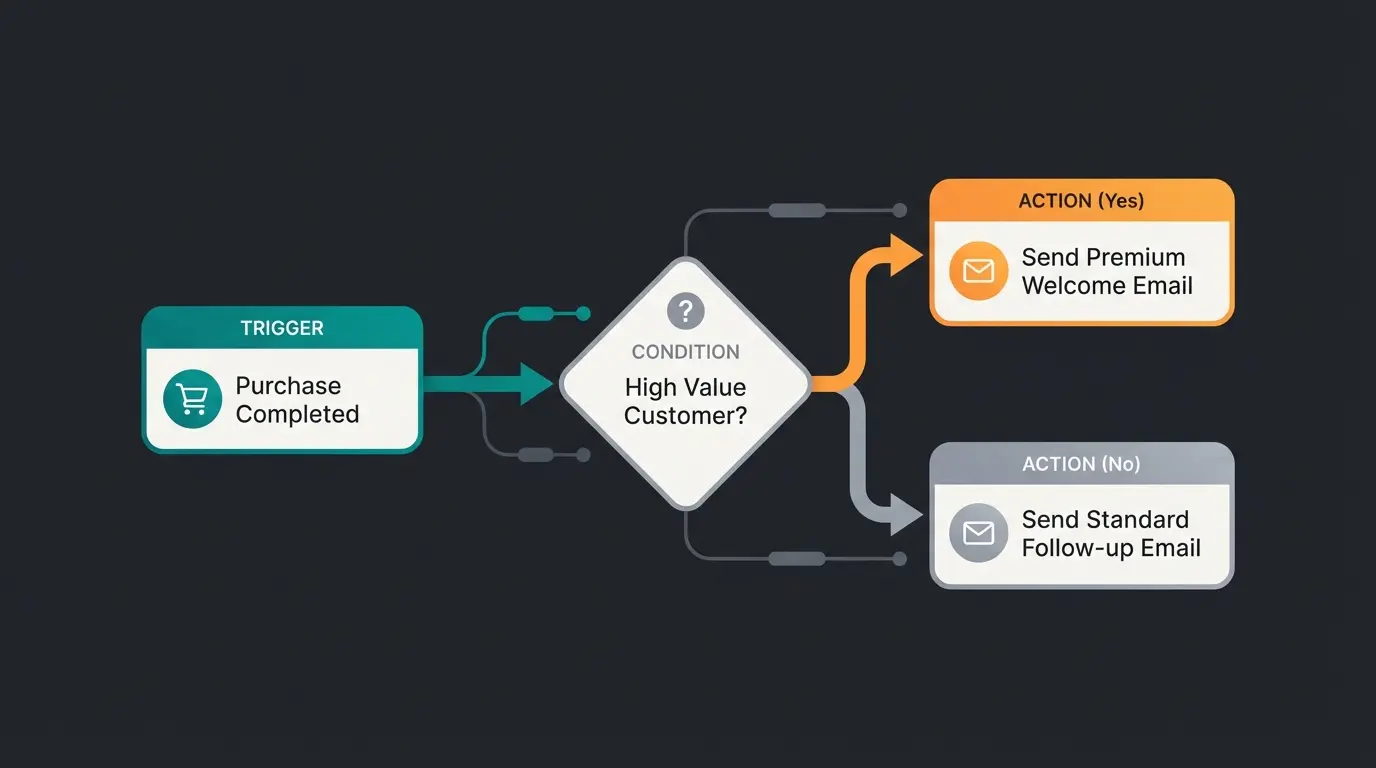
Use Shopware's Flow Builder to continue engagement after purchase.
Scenario: Customer buys an expensive coffee machine.
Flow: Wait 14 days → Send email with care tips and link to matching cleaning products.
AI Boost: According to Shopware and Brainstreamtechnolabs, use the "Custom Checkout Message" feature of the AI Copilot to display a personalized message based on the shopping cart immediately after purchase.
Feature Comparison: Shopware Editions and AI Capabilities
To clarify the differences at a glance, here's an overview of the editions in the context of the new AI strategy.
| Feature | Shopware Community | Shopware Rise | Shopware Evolve | Shopify Advanced |
|---|---|---|---|---|
| License Cost | €0 (up to €1M GMV) | from €600/mo. | from ~€2,400/mo. | ~€360/mo. |
| B2B Features | Only via plugins | Basic (via plugins) | Native B2B Suite | Limited (B2B on Shopify) |
| Server Access | Full (Root) | Full (Root) | Full (Root) | None (SaaS) |
| Shopware AI Copilot | No | Yes (Backend) | Yes (Backend) | No (Shopify Magic) |
| Frontend Consultation | Via third-party | Via third-party | Via third-party | Via apps |
| Support | Community forum | Manufacturer (8h) | Manufacturer (4h) | 24/7 Chat |
Note: "Frontend Consultation" (Guided Selling) is not natively included in high quality in any shop system. This is your opportunity to gain a competitive advantage through integration of an external solution that standard shops don't have.
Conclusion: Shopware Is the Engine, AI Is the Driver
A Shopware online shop is one of the most solid investments a merchant in the DACH region can make in 2025. The platform is secure, scalable, and ready for the future. The introduction of the Fair Usage Policy and new pricing models makes planning more complex but also more transparent: those who operate professional e-commerce pay for professional software.
But technology alone no longer wins market share. The "Blue Ocean" strategy for 2025 reads: Combine Shopware's technical excellence with the psychological intelligence of AI consultation.
Stop just listing products. Start digitally consulting your customers. Those who take this step transform their shop from a cost center (IT project) into a true sales machine.
FAQ: Common Questions About Shopware Online Shops
The Community Edition is open source and license-free, but since March 2025, it's subject to conditions. You may only use it for free as long as your revenue (GMV) is under €1 million per year. Beyond that, you must switch to a paid plan. Additionally, hosting and maintenance costs always apply.
For a professional start (Shopware Rise), you should plan for a budget of €30,000 to €50,000 in the first year (setup, design, license fees for 12 months, hosting). Large B2B projects quickly reach six-figure sums. Detailed breakdowns are available from specialized agencies.
In most cases: Yes. Shopware offers the B2B Suite (in Evolve/Beyond) with features like budget approvals, quick orders, and customer-specific prices that are deeply anchored in the system. Shopify is catching up but remains less flexible with complex data structures.
The native Shopware AI ("Copilot") helps you as a merchant with your work: it writes texts, translates reviews, and analyzes images. However, it does not conduct sales conversations with your customers. For that, you need specialized add-ons for "Guided Selling" or AI product consultation.
Traditional chatbots answer FAQs with scripted responses. AI product consultation tools actively guide customers through their purchase decision, understanding their needs and matching them with complex product catalogs—essentially replacing the expertise of a human sales consultant.
Join forward-thinking e-commerce businesses using intelligent product consultation to outperform competitors. See how AI transforms customer experience and drives revenue.
Get Started Now
Lasse is CEO and co-founder of Qualimero. After completing his MBA at WHU and scaling a company to seven-figure revenue, he founded Qualimero to build AI-powered digital employees for e-commerce. His focus: helping businesses measurably improve customer interaction through intelligent automation.