
Introduction: Why Standard Shops Fail in the Garden Sector
The Home & Garden market in Germany stands at a turning point in 2025. After years of volatility, e-commerce is showing growth again—and the garden and DIY segment is among the winners of this recovery, with projected growth of up to 3.6% according to gabot.de. However, competition is intensifying: marketplaces dominate 55% of revenue as reported by retail-news.de, and customers expect more than just product listings. They expect consultation, inspiration, and seamless logistics for bulky goods.
This guide is not a simple theme comparison. It is a strategic blueprint for merchants, garden centers, and nurseries who want to use Shopware 6 not just to sell products, but to digitally enable complex garden projects. We illuminate how you can master seasonal peak loads, automate freight shipping, and close the gap between in-store expertise and online retail through AI-powered product consultation.
The Market Situation in 2025
Current data from bevh and IFH Köln shows that German e-commerce is back on a growth trajectory. With total revenue of 80.6 billion euros in 2024 (+1.1%), the market has stabilized according to dekra-akademie.de and bevh.org. Particularly exciting for you: The Home & Garden sector is benefiting disproportionately from catch-up effects.
Yet many merchants leave potential untapped because their shop systems cannot master the specific hurdles of the industry:
- Logistics nightmare: How do you calculate shipping costs when a customer puts a 5-euro spade (parcel) and a 500-kilo fountain (freight) in the shopping cart?
- Consultation gap: Customers often don't know what they need. They search for "fast-growing privacy screen," not "Prunus laurocerasus 'Rotundifolia'."
- Seasonal scaling: Servers that sleep in November must perform at full capacity in April.
Why Shopware 6? Shopware 6 has established itself in the DACH region as the preferred solution for complex B2C and B2B scenarios. Through its "API-First" approach and the powerful Rule Builder, exactly those scenarios can be mapped where modular systems fail. This makes it the ideal platform for Home & Garden retailers facing these unique challenges.
Total market showing +1.1% growth year-over-year
Projected growth rate for Home & Garden segment
Share of revenue flowing through marketplaces like Amazon and Otto
Industry-Specific Challenges & Shopware Solutions
Success in the Home & Garden sector rises and falls with the technical mastery of three core areas: seasonal performance, complex logistics, and variant management. Let's examine how Shopware 6 addresses each of these critical challenges that standard e-commerce platforms simply cannot handle.
Seasonal Peak Loads & Performance Management
In garden retail, a common saying applies: "April makes the year." When the first rays of sunshine arrive, traffic explodes. A shop outage on a sunny Saturday in May is catastrophic for your annual revenue. This extreme seasonality is unique to the Home & Garden sector and requires specialized infrastructure planning.
The Technical Answer: Scaling & Scheduled Tasks
Shopware 6 offers robust tools for handling seasonal demand. Critical is the management of background processes, as documented by Shopware and Firebear Studio.
- Message Queue & Asynchronous Processes: Shopware outsources demanding tasks (like sending order confirmations or indexing products) to a "Message Queue." This means the customer doesn't have to wait at checkout until the server finishes calculating.
- Scheduled Tasks (Cronjobs): For a garden shop, updating inventory (especially for living plants) is essential. Via Scheduled Tasks, you can control when these synchronizations happen.
Logistics for Bulky Goods & Live Plants
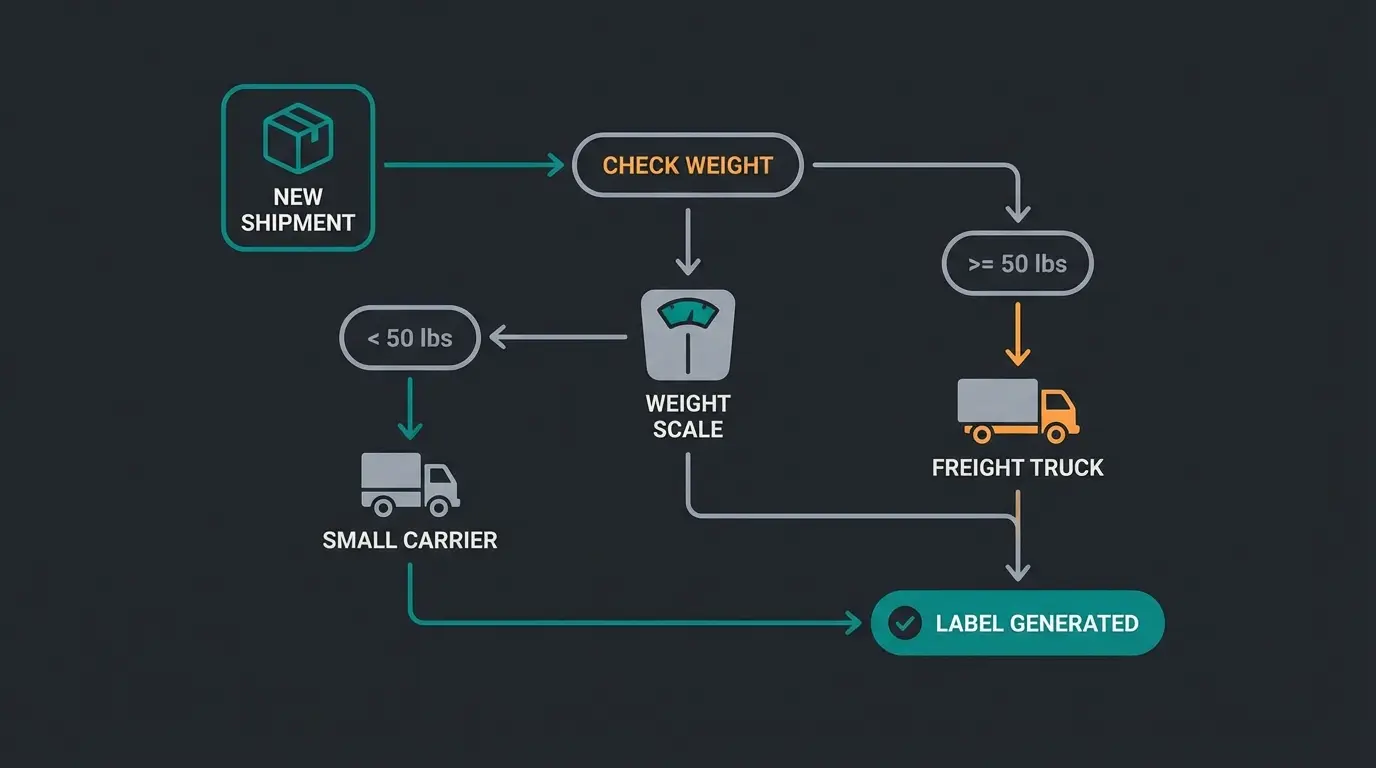
This is the most common pain point in the Home & Garden sector. A customer orders: 1x Garden shears (parcel-capable), 1x 20kg bag of fertilizer (heavy parcel), and 1x Garden house kit (freight/bulky goods). A standard shop would often fail here or calculate flat-rate, margin-damaging shipping costs. This is where Shopware's Rule Builder becomes essential.
The Solution: The Shopware Rule Builder
The Rule Builder is the heart of complex logistics configuration. It allows you to define business rules without programming knowledge, as explained in the Shopware documentation and rhiem-intermedia.de. Implementing AI product consultation alongside your Rule Builder configuration can further enhance the customer experience by guiding them through complex product selections.
Strategy for the Shipping Cost Matrix:
- Use tags: Mark products in the backend with tags like "Bulky Goods," "Freight," or "Live Plants" as recommended by Shopware.
- Create rules: Condition: "Line item with tag" IS "Bulky Goods." Action: When this condition is true, the shipping method "DHL Parcel" is hidden and only "Freight" is displayed according to Shopware shipping rules.
- Mixed calculation: Via the Advanced Price Matrix in Shopware, you can define: 0-30 kg = $6.90; 30.1-100 kg = $34.90; From 100 kg or Tag "Bulky Goods" = $99.00 (Freight curbside delivery) as detailed by erock-marketing.de and Shopware pricing documentation.
Variant Management for Complex Products
Garden furniture is complex. A lounge set comes in 3 colors, 4 upholstery types, and with/without protective cover. Managing these variants efficiently is crucial for both customer experience and inventory accuracy.
- Shopware Property System: Use Properties to create filterable attributes (e.g., Material: Rattan, Wood, Aluminum). This enables customers to quickly narrow down their choices.
- Dynamic Product Groups: Create categories that populate themselves. A category "Winter-Hardy Furniture" automatically pulls all products that have the attribute "Material = Teak" AND "Inventory > 0." This saves enormous maintenance effort during seasonal changes and ensures customers only see available products.
| Challenge | Standard Shop Approach | Specialized Garden Shop Solution |
|---|---|---|
| Shipping Logic | Flat rate shipping regardless of product type | Weight & dimension-based matrix with freight integration |
| Search Function | Simple keyword search | Problem-solution search with AI consultation |
| Product Page | Static description only | Project bundles with complementary products |
| Returns Management | Standard return policy | Reduced returns through guided product selection |
| Variant Display | Basic dropdown menus | Visual configurators with real-time preview |
The New Standard: AI-Driven Project Consultation
Here lies your opportunity to outpace the competition. Most top search results offer only lists of themes or agencies. But you offer solutions. This is where AI-driven consultation becomes your unique selling proposition in the crowded Home & Garden market.
The Problem: Filters Are Insufficient
A customer searching for "pond pump" often doesn't know what capacity they need. They filter by price, buy the cheapest one, and return it because it's too weak for their 10,000-liter pond. Returns in the Home & Garden sector are extremely expensive due to logistics costs (bulky goods!). This is exactly where guided selling outperforms traditional filtering approaches.
The Solution: Consultative AI Instead of FAQ Bots
Integrate an AI product advisor directly into your Shopware Shopping Experiences. Advanced plugins like the "AI Product Advisor" or "Intelligent Product Consultant" are available for Shopware 6, as shown by Shopware AI extensions, Shopware product advisors, and Shopware intelligent recommendations. The Gartenfreunde AI Employee case study demonstrates exactly how this works in practice.
How It Works Technically
Instead of a search bar, you offer a guided dialogue that mimics the expertise of an in-store consultant:
- The Dialogue: AI: "What would you like to do?" → Customer: "Lay a new lawn." AI: "What are the light conditions?" → Customer: "Lots of shade." AI: "Approximately how large is the area?" → Customer: "50 square meters."
- The Result: The AI filters your database in the background and suggests not all grass seeds, but exactly the "Premium Shade Grass" and matching starter fertilizer.
- The Added Value: The customer buys the technically suitable product, reducing returns while increasing average order value through intelligent cross-selling.
The AI Product Consultation success story shows how this approach transformed a lawn specialist's online business. When AI eliminates waiting times, customers get immediate answers to complex gardening questions, just as they would from an in-store expert.
Instead of searching keywords, customer explains their situation: 'My lawn has moss in the shade'
AI processes the description and identifies relevant product categories and specifications
AI asks clarifying questions about area size, soil type, and maintenance preferences
AI presents 2-3 perfect products with explanation of why they fit
AI recommends complementary products (fertilizer + seeds + spreader) to complete the project
Integration in Shopware: These advisors can be embedded as CMS elements directly into the Shopping Experiences as explained by Shopware CMS documentation. You can prominently place the advisor on the category page "Lawn": "Unsure which lawn suits you? Start the 30-second check here." For more on implementing this approach, see our guide on Shopware AI consultation.
The Business Impact of AI Consultation
The benefits of implementing AI consultation boosts extend beyond just reducing returns:
- Reduced Returns: The customer buys the technically appropriate product, dramatically reducing costly returns on bulky garden items.
- Higher Average Order Value (AOV): Through intelligent cross-selling (seeds + fertilizer + spreader) during the consultation conversation, order values increase by 20-40%.
- Data Enrichment: You learn that 40% of your customers have problems with shade grass, and can adjust your purchasing accordingly.
- Competitive Differentiation: While competitors sell "search filters," you sell "project advice"—a completely different value proposition.
See how AI-powered product consultation can reduce returns, increase order values, and provide expert-level guidance to your customers 24/7.
Start Your Free TrialDesign & User Experience: The Gardener in the Garden
The design of a Home & Garden shop must serve two realities: inspiration on desktop (planning phase) and quick solutions on smartphone (standing in the garden). Understanding these distinct use cases is essential for maximizing conversions across all devices.
Visuals First: Using Shopping Experiences
Shopware 6 replaces the old "Shopping Worlds" with "Shopping Experiences." This is golden for your industry. The AI-powered email marketing guide explains how to extend this visual approach into your email campaigns as well.
- Storytelling: Don't sell the grill, sell the barbecue evening. Use large-format images and videos that show products in use. This emotional connection drives conversions in the Home & Garden sector.
- Look & Feel: Themes like "ThemeWare Outdoor" or "Garden & Nature" are specifically optimized for this industry according to ecommerceroot.com and the Shopware theme marketplace. They offer built-in features like "Hover effects" for detail views or special headers for trust elements ("Free shipping from...").
- Zoom Function: With garden furniture, customers want to see the weave structure of the rattan. High-resolution images with deep zoom are mandatory for converting browsers into buyers.
Mobile First: The In the Garden Use Case
Many hobby gardeners search for solutions while they have the problem right in front of them. Scenario: The customer stands in front of their aphid-infested rose bush. They pull out their phone. Requirement: Your shop must load extremely fast on mobile (PageSpeed) and offer simple navigation.
Solution: Use "Sticky Add-to-Cart" buttons on mobile product pages so the purchase completion is always just one click away, even on long description pages. This is where the AI consultation bridge between mobile and desktop experiences becomes crucial—customers should get the same expert guidance regardless of device.

The Essential Tech Stack for Home & Garden
A Shopware shop is only as good as its ecosystem. Based on the requirements of the industry (logistics, bundles, automation), this is the recommended tech stack for 2025. Each component plays a crucial role in delivering the seamless experience Home & Garden customers expect.
Warehouse Management (ERP) & Inventory
Without clean inventory, no success. This is especially critical for Home & Garden retailers dealing with seasonal products and perishable plants.
- Pickware: Since Pickware is directly integrated into Shopware, it's the first choice for many merchants. It enables mobile barcode scanners in the warehouse—essential for avoiding mix-ups with similar-looking plants or components according to Pickware documentation.
- External ERPs: For larger volumes, connections to PlentyMarkets or JTL via connectors are common and provide the scalability needed for seasonal peaks.
The Top 3 Must-Have Plugins
| Category | Recommended Plugin Type | Why Essential for Home & Garden |
|---|---|---|
| Sales | Bundle Builder (e.g., "Ultimate Bundle Plugin") | Enables selling sets (Table + 4 Chairs + Cover) as one item with synchronized inventory of individual parts |
| Logistics | DHL Shipping / Freight Adapter | Automatic label printing and tracking. Important: Support for "Preferred Day" and "Bulky Goods" shipping options |
| Consultation | AI Product Advisor | Replaces the specialist salesperson and guides customers interactively to the right product, reducing returns |
The bundle functionality is particularly powerful for garden retail, as demonstrated by YouTube tutorials and Shopware bundle extensions. The AI Product Consultation providers comparison can help you choose the right solution for your specific needs.
Marketplace Integrations
Since 55% of revenue flows through marketplaces, you should not view your Shopware shop as an island. Use middleware (like Channable or Brickfox) to automatically list your products from Shopware on Amazon, Otto (very strong in the furniture sector!), and ManoMano. This multi-channel approach ensures you capture customers wherever they prefer to shop.
Case Study Analysis: What Makes the Best Successful?
Let's examine successful "Hidden Champions" in the German Shopware environment (anonymized best-practice example based on market analyses). Understanding what works for top performers helps you implement proven strategies in your own shop.
The Pond Technology Specialist
Challenge: Technically complex products requiring explanation, high return rate on pumps due to incorrect sizing.
Strategy implemented:
- Content Commerce: Each category (e.g., "Pond Filters") begins with a Shopping Experience that explains how a filter works before products are listed. This educational approach reduces confusion and builds trust.
- Advisor Tools: A "Pond Volume Calculator" is directly integrated. The customer enters dimensions, the shop calculates liters and automatically filters the appropriate pumps. No guesswork required.
- Trust Building: Prominent integration of Trusted Shops (buyer protection is decisive for expensive technology) and clear shipping information ("Freight: We'll call you"). German customers especially value these trust signals.
Result: The shop sells not on price, but on competence. The return rate dropped significantly, while average order values increased as customers confidently purchased higher-quality products that matched their actual needs.

The Seasonal Cycle: Optimizing Your Garden Shop Year-Round
Understanding the seasonal nature of Home & Garden e-commerce is crucial for success. Unlike other retail sectors, garden shops experience extreme fluctuations in traffic and revenue throughout the year. Smart retailers use this knowledge to their advantage.
Build SEO content, train AI consultants, optimize product data, prepare spring campaigns
Launch pre-order campaigns, scale server capacity, activate marketing automation
Monitor server load, optimize conversion rates, provide 24/7 AI consultation support
Analyze peak season data, optimize underperforming products, plan fall transitions
Shift to winterizing products, gather customer feedback, plan next year's strategy
The off-season in winter is the ideal time to strategically reposition your Shopware shop. Use this time to train your "Digital Consultants" and sharpen your logistics rules. Merchants who prepare during slow months dominate during peak season.
Conclusion & Checklist: Your Path to a Modern Garden Shop
The Home & Garden market is growing, but it no longer forgives technical mistakes. Those who want to be successful in 2025 must digitally map the complexity of logistics and consultation. Shopware 6 offers the perfect foundation for this with the Rule Builder and Shopping Experiences.
Your 5-Step Checklist for Getting Started
- Clarify logistics: Define your shipping classes (parcel vs. bulky goods) and implement them in the Rule Builder. Check interfaces to your freight carrier for seamless integration.
- Maintain data: Use Properties consistently. Without clean data, no filters and no AI consultation will work effectively.
- Automate consultation: Install an AI product advisor or build guided shopping guides for complex categories to reduce support load.
- Create bundles: Create attractive sets (e.g., "Raised Bed Starter Kit") to increase cart value and simplify the buying decision.
- Ensure performance: Set up Scheduled Tasks monitoring so your shop runs stably even during the spring rush.
The Next Step: Take Action Now
Don't wait for the next season. The "off-season" in winter is the ideal time to strategically reposition your Shopware shop. Use the time to train your "Digital Consultants" and sharpen your logistics rules. The merchants who prepare now will capture market share when spring arrives.
Shopware 6's Rule Builder enables complex shipping calculations for mixed carts containing both parcels and freight items. Its API-first architecture supports seamless ERP integration essential for seasonal inventory management, and the Shopping Experiences feature allows the visual storytelling that garden products require.
AI consultants guide customers through technical specifications they don't understand—like pond pump capacity or lawn seed coverage rates. By asking clarifying questions about the customer's specific situation (pond size, shade conditions, soil type), the AI recommends products that actually match their needs, preventing the expensive returns common with bulky garden items.
Shopware's Rule Builder combined with a freight adapter plugin is the optimal solution. You can tag products as 'bulky goods' and create rules that automatically switch shipping methods and calculate costs based on weight, dimensions, and product tags. This prevents margin-damaging flat-rate shipping while giving customers accurate costs.
Configure Shopware's Message Queue for asynchronous processing to prevent checkout slowdowns during peak periods. Monitor Scheduled Tasks to ensure inventory syncs don't fail during high-traffic periods. Consider cloud hosting with auto-scaling capabilities and prepare your infrastructure during the slow winter months.
Yes, Shopware 6 excels at hybrid B2B/B2C models common in garden retail. You can create customer groups with different pricing, payment terms, and product visibility. Landscapers can see wholesale prices and net pricing while homeowners see retail prices with consumer-friendly payment options—all from the same product catalog.
Join successful Home & Garden retailers who've implemented AI product consultation to reduce returns, increase average order values, and provide expert-level guidance around the clock.
Get Started Today