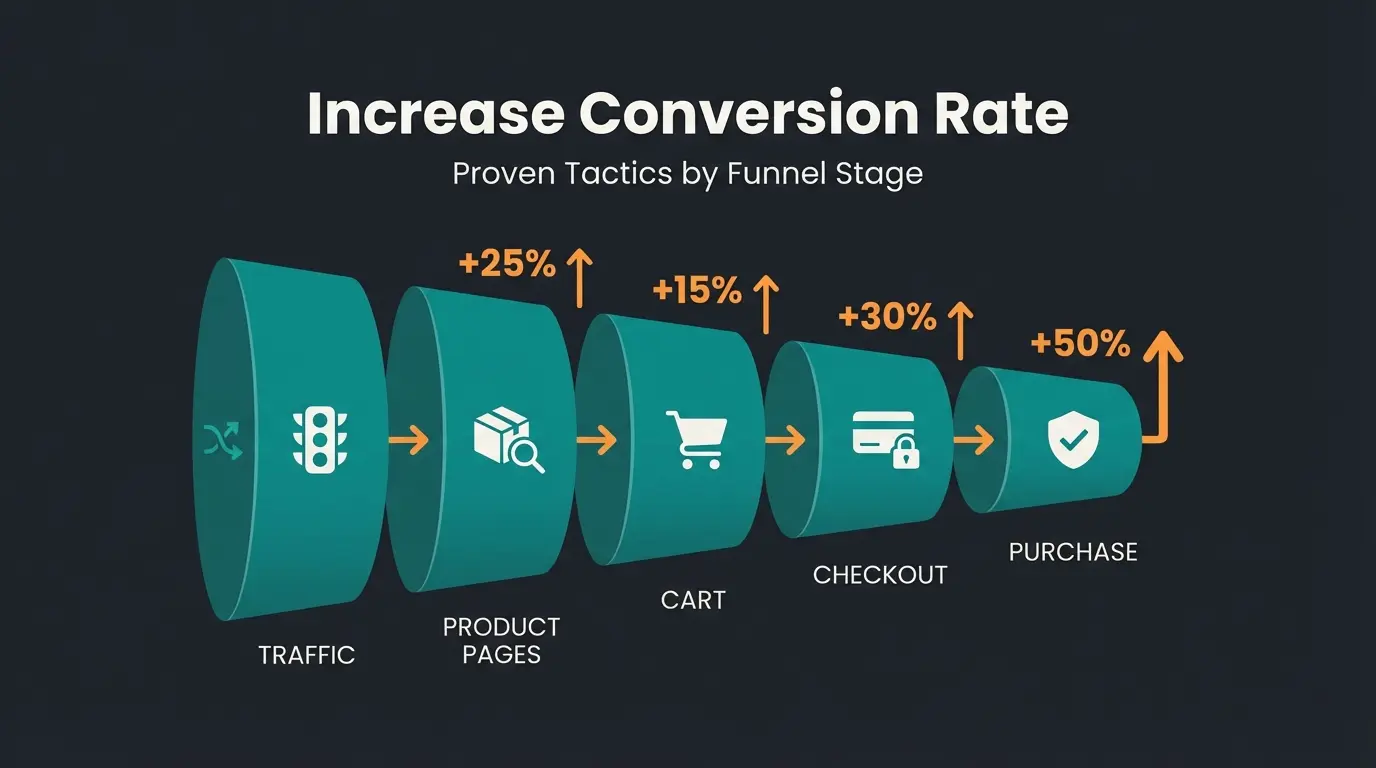
Online Store Conversion Rate: Benchmarks and How to Improve (2026)
What is a good online store conversion rate? 2026 benchmarks by industry and device, calculation formulas, and proven strategies to boost your ecommerce conversion rate.

What is the conversion rate for online stores?
The conversion rate for an online store is the percentage of visitors who complete a desired action, most commonly a purchase. If 1,000 people visit your store and 25 buy something, your conversion rate is 2.5%.
That is the macro-conversion: the sale. But there are micro-conversions that matter just as much. Newsletter signups, add-to-cart clicks, product page views, account registrations. Each one signals intent, and each one is a conversion rate you can track and improve.
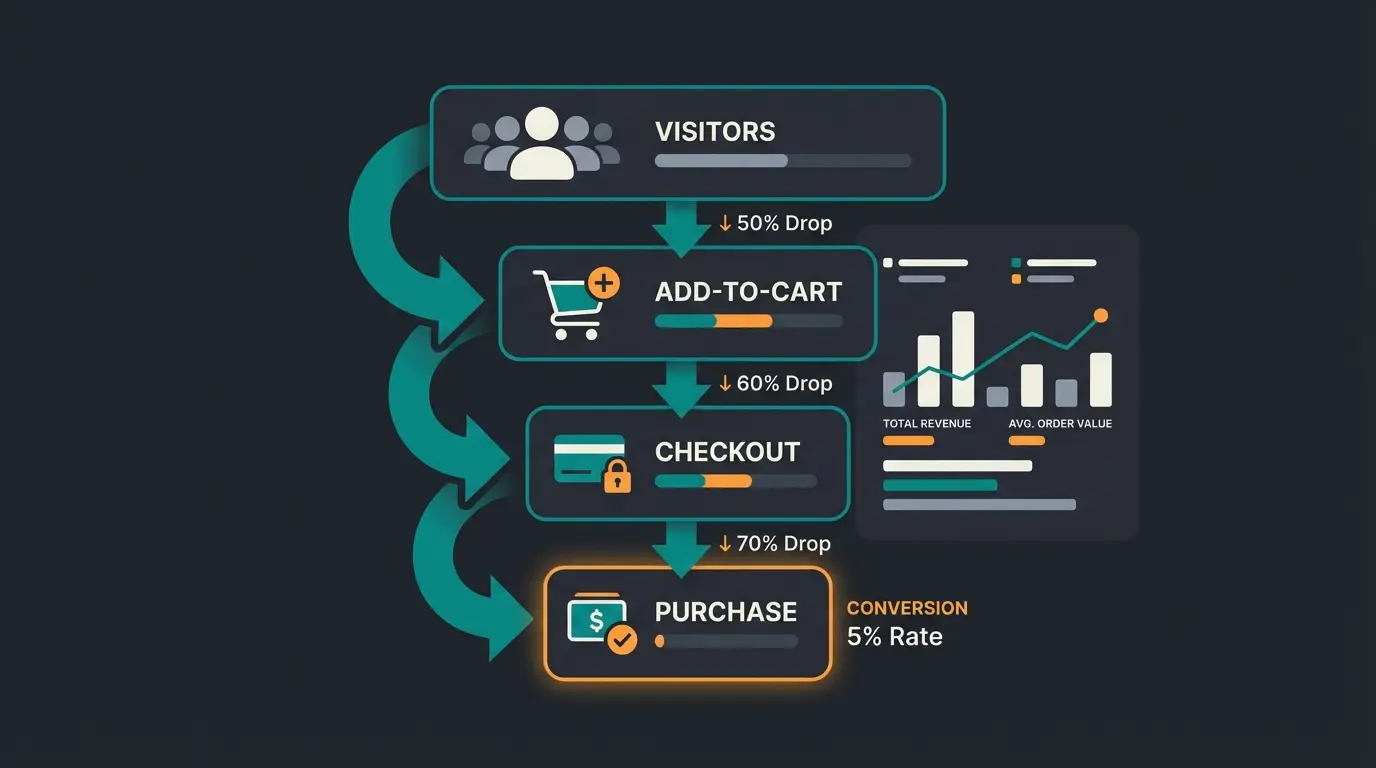
I have worked with over 25 online retailers across the DACH region and beyond. The single most common mistake I see is fixating on the purchase conversion rate while ignoring everything upstream. A store with a 2% purchase rate but a 15% add-to-cart rate has a checkout problem. A store with a 2% purchase rate and a 3% add-to-cart rate has a product page problem. The conversion rate tells you where to look. It does not tell you what to fix.
This matters because traffic is expensive. Whether you spend on SEO, paid ads, or social media, every visitor who leaves without converting is money lost. The difference between a 1.5% and a 3% conversion rate on 10,000 monthly visitors is 150 additional sales, with zero extra ad spend.
How to calculate and measure conversion rate
The formula is straightforward: Conversion Rate = (Number of Conversions / Number of Visitors) x 100. If your store had 8,000 visitors last month and 200 purchases, your conversion rate is 2.5%.
Simple enough. But the details matter. Are you counting sessions or unique visitors? Bot traffic or human traffic only? Google Analytics defaults to sessions, which inflates your visitor count and deflates your apparent conversion rate. A returning customer who visits three times before buying counts as three sessions but one conversion.
| Metric | Formula | Example |
|---|---|---|
| Purchase CR | (Purchases / Sessions) x 100 | (200 / 8,000) x 100 = 2.5% |
| Add-to-Cart CR | (Add-to-Carts / Sessions) x 100 | (960 / 8,000) x 100 = 12% |
| Checkout CR | (Checkouts Started / Sessions) x 100 | (480 / 8,000) x 100 = 6% |
| Cart-to-Purchase CR | (Purchases / Add-to-Carts) x 100 | (200 / 960) x 100 = 20.8% |
| Checkout Completion | (Purchases / Checkouts Started) x 100 | (200 / 480) x 100 = 41.7% |
The tools you use also affect what you see. Shopware Analytics, Shopify Analytics, and Google Analytics 4 each calculate slightly differently. GA4 uses event-based tracking and can show different numbers than your platform's built-in analytics. My recommendation: pick one source of truth and stick with it. Cross-referencing three dashboards creates confusion, not clarity.
- Set up GA4 ecommerce tracking with purchase, add_to_cart, begin_checkout, and view_item events
- Filter out bot traffic in your analytics settings, bots can inflate sessions by 10-20%
- Segment by device and channel from day one, aggregate numbers hide the real story
- Compare month-over-month, not day-over-day, conversion rates fluctuate with traffic quality
- Track micro-conversions separately to identify exactly where visitors drop off
Benchmarks: what is a good conversion rate?
The global average ecommerce conversion rate reached 2.5% in Q3 2025, up 0.4 percentage points year over year, according to industry benchmark reports. Adobe's ecommerce benchmark data shows similar ranges across regions. But averages are misleading. Your conversion rate depends on your industry, your traffic sources, and what you sell.
A food and beverage store converting at 3% is underperforming. A luxury jewelry store converting at 1.5% is outperforming its peers. Context is everything.
| Industry | Average CR | Top Performers |
|---|---|---|
| Food and Beverage | 6.1% | 8-10% |
| Health and Beauty | 3.9% | 5-7% |
| Fashion and Apparel | 2.5% | 4-5% |
| Electronics | 2.2% | 3.5-4.5% |
| Home and Garden | 1.4% | 2.5-3.5% |
| Luxury and Jewelry | 1.2% | 2-3% |
| B2B Ecommerce | 2.0% | 3-4% |
Food and beverage leads because of low price points and impulse buying. Luxury sits at the bottom because customers research extensively before committing. For a deeper breakdown with more verticals, see Average Ecommerce Conversion Rate by Industry.
Conversion rate by device
Largest screens, easiest checkout experience
Middle ground, often used for browsing at home
Highest traffic share, lowest conversion rate
Desktop still converts at roughly 2x the rate of mobile. The gap has narrowed from over 1.5 percentage points five years ago, but it persists. Mobile cart abandonment hits 80%, compared to 66% on desktop. Smaller screens, harder-to-fill forms, and slower connections all contribute.
The paradox: mobile drives the majority of traffic for most stores, yet converts the least. If your analytics show 70% mobile traffic, your aggregate conversion rate will look low even if desktop performance is strong. Segment your data. Always.
Conversion rate by traffic channel
| Traffic Channel | Average CR | Why |
|---|---|---|
| Email Marketing | 5-9.6% | Subscribers already know your brand and opted in with purchase intent |
| Organic Search | 2.1-4.5% | Visitors actively searching for solutions or products |
| Direct Traffic | 3.3% | Returning customers and brand-aware visitors |
| Paid Search | 1.5-2.5% | Intent-driven but includes comparison shoppers |
| Referral | 2-3% | Depends heavily on the referring site's relevance |
| Paid Social | 0.5-1.5% | Interruption-based, visitors were not actively shopping |
| Organic Social | 0.9% | Lowest intent, mostly browsing and discovery |
Traffic channel often matters more than industry vertical. A beauty brand with 80% cold paid social traffic will underperform a health brand with 60% email and organic traffic. Before diagnosing a conversion problem, check your traffic mix.
Why is my conversion rate low? Common causes
I have audited hundreds of online stores. The causes of low conversion rates repeat themselves with remarkable consistency. Most stores do not have one big problem. They have five or six small ones that compound.
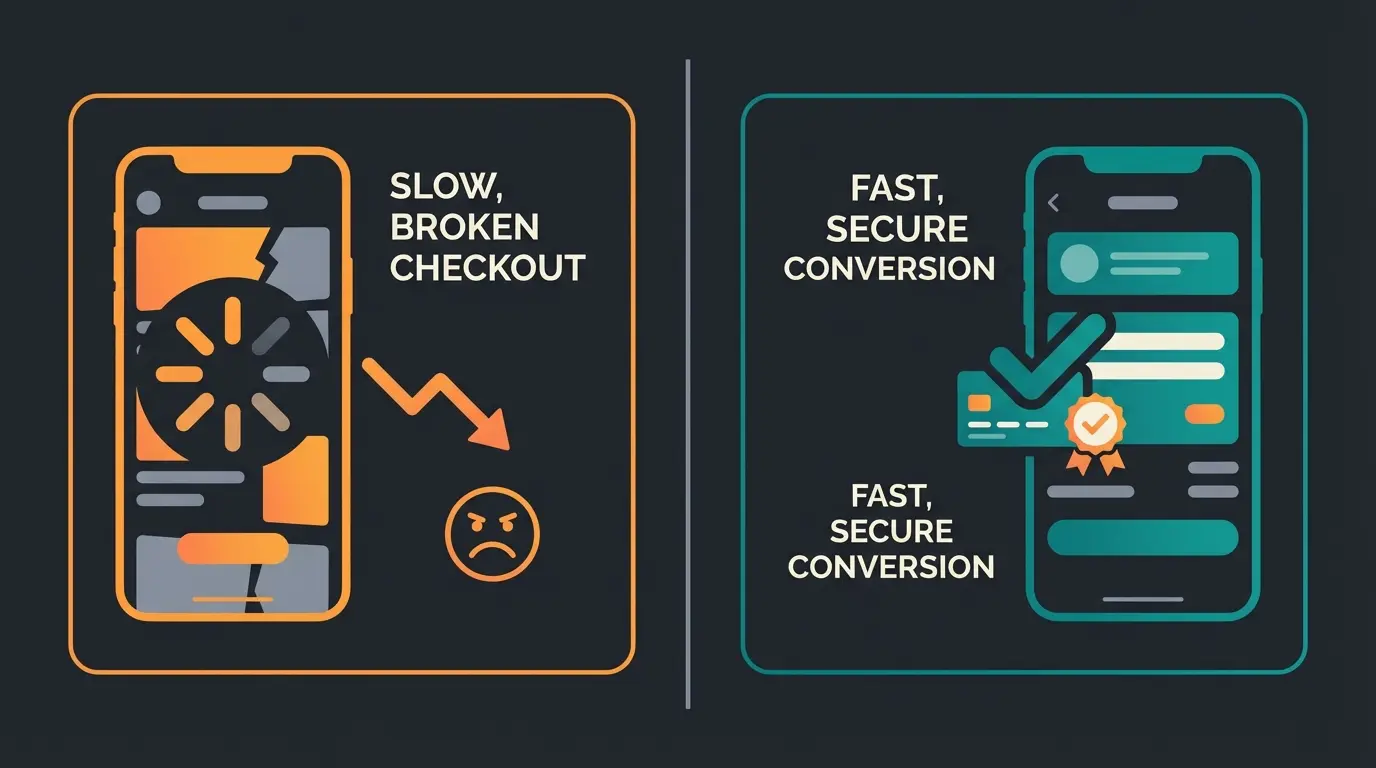
- Slow page load times. Every additional second of load time drops conversion by roughly 7%. If your product pages take 4+ seconds on mobile, you are losing customers before they see your products.
- Poor mobile experience. Tiny buttons, horizontal scrolling, checkout forms designed for desktop. Mobile is where most visitors land. If it feels broken, they leave.
- Missing trust signals. No customer reviews, no trust badges, no clear return policy. First-time visitors need reasons to trust you with their credit card.
- Complicated checkout. Forced account creation, too many form fields, no guest checkout option. According to Baymard Institute, 17% of cart abandonments happen because checkout is too long or complicated.
- Hidden costs. Unexpected shipping fees at checkout are the number one reason for cart abandonment. Show total costs early.
- Weak product descriptions. Generic manufacturer copy does not sell. Customers need to understand what a product does for them, not just what it is.
- No live customer support. When a visitor has a question about sizing, compatibility, or shipping and cannot get an answer in real time, they leave. This is especially true for consulting-intensive products, and it applies to every channel your customers already use, including WhatsApp Business.
- Missing payment options. If you do not offer the payment methods your customers prefer, you lose them at the final step. In Europe, that means offering PayPal, Klarna, and local options alongside credit cards.
- Poor on-site search. If visitors cannot find what they are looking for within two clicks, they bounce. Poor search functionality is one of the most underestimated conversion killers.
- No personalization. Every visitor sees the same homepage, the same recommendations, the same experience. In 2026, static stores lose to stores that adapt to individual visitors.
The good news: most of these are fixable without rebuilding your store. The bad news: fixing them one at a time is slow. The stores that see the biggest jumps tackle three or four simultaneously.
How to improve your online store conversion rate
Knowing your conversion rate is step one. Improving it is where the work starts. After implementing changes across dozens of stores, these are the levers that consistently move the needle.
Optimize your product pages
Product pages are where buying decisions happen. High-quality images from multiple angles, clear pricing, detailed specifications, and genuine customer reviews. The stores I work with that invest in product page optimization see an average 15-25% lift in add-to-cart rates within the first month.
Simplify checkout
Every unnecessary field in your checkout form costs you sales. Guest checkout should be the default, not the exception. Auto-fill where possible. Show a progress indicator. For a detailed walkthrough, see our guide on checkout optimization strategies.
Recover abandoned carts
With cart abandonment rates between 66% (desktop) and 80% (mobile), recovery is not optional. Automated email sequences, exit-intent popups, and retargeting ads can bring back 5-15% of abandoners. Small percentages on large numbers make a real difference. Read more about how to recover abandoned carts.
Build trust from the first click
Trust badges, SSL certificates, transparent return policies, and real customer reviews are non-negotiable. Social proof is especially powerful: displaying review counts and ratings directly on product listings increases click-through rates and reduces purchase hesitation.
Personalize the experience
Static, one-size-fits-all stores are falling behind. Personalized product recommendations, dynamic landing pages based on traffic source, and real-time product advisory through AI are becoming table stakes for high-performing stores. Recommendations only work when they suggest genuinely complementary products, which is exactly what our guide to Shopify cross-selling breaks down. For a comprehensive approach, see our How to Increase Your Conversion Rate guide.
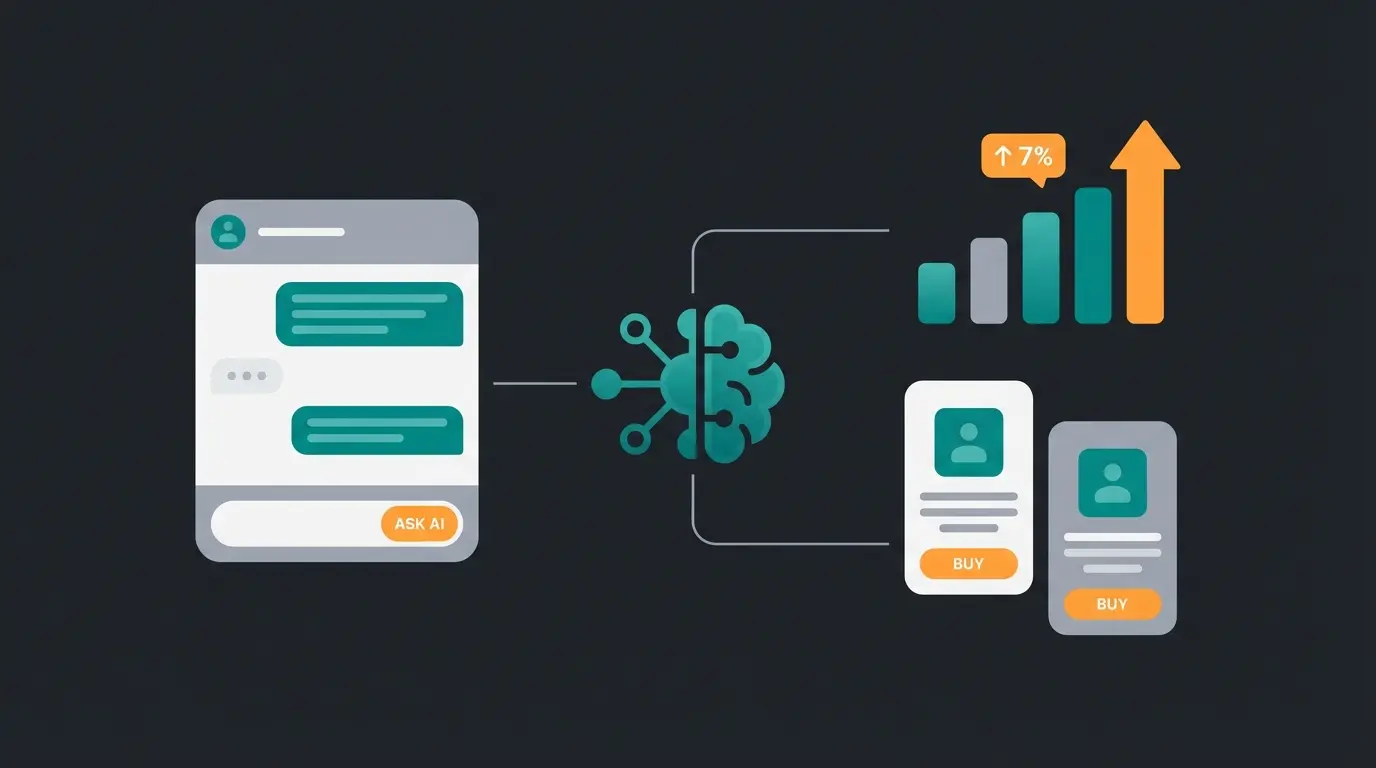
A Qualimero AI employee identifies the exact moments visitors hesitate, answers their questions in real time, and guides them from browsing to buying. Our clients see up to 7x higher conversion rates.
Book a free demoAI-powered conversion optimization in ecommerce
Here is what I have seen change over the past two years: the stores that are pulling ahead on conversion are not just running more A/B tests or tweaking button colors. They are deploying AI employees that actively consult visitors, recommend products, and resolve objections in real time.
This is not about replacing your team. It is about scaling the kind of personalized advice that only your best salesperson could give, and making it available 24/7, across every channel. Most stores buy this as a managed setup rather than building it in-house, an approach we cover in detail in our guide to an AI assistant as a service.
Static product filters and FAQ pages cannot replicate what a knowledgeable team member does. When a customer asks "which lawn treatment works for clay soil in March?", a filter gives them 40 results. An AI employee trained on your product data gives them the right answer, with the right product, in under two seconds.
Gartenfreunde: seasonal garden retailer with AI employee Kira
Rasendoktor: 100% of webchat inquiries handled by AI employee Hektor
Average across Qualimero clients with consulting-intensive products
Neudorff: AI employee Flora handles plant protection advisory at scale
I expected resistance from store owners when we first pitched this. The opposite happened. The ones with consulting-intensive products, home and garden, DIY, health supplements, saw the gap immediately. Their support teams were overwhelmed, especially during seasonal peaks. An AI employee did not just improve conversion. It made scaling possible without hiring.
That said, AI is not a magic fix. It works best when your product data is clean, your training is thorough, and your expectations are realistic. The first two weeks are calibration. The results come after. For a deeper look at how conversion rate optimization works as a discipline, see our Ecommerce Conversion Rate Optimization guide.
Conclusion: conversion rate as a growth lever
Your conversion rate is not just a metric. It is the multiplier on every euro you spend on traffic. A store converting at 1.5% needs twice the ad budget of a store converting at 3% to generate the same revenue. That is not a rounding error. That is the difference between profitable growth and burning cash.
The absolute number matters less than the trend. Whether you are at 1.2% or 3.5%, what matters is whether you are improving. Benchmark against your own past performance first, then against your industry. For a broader strategic framework, see our Shopware Conversion Optimization Guide.
Start with calculation and measurement. Move to benchmarking. Then fix the biggest leaks. Our Ecommerce Conversion Rate Optimization guide walks through this process step by step. The stores that combine systematic CRO with AI-powered product advisory are the ones pulling away from the pack right now. That is the standard.
More traffic alone does not grow revenue. A Qualimero AI employee converts browsers into buyers with real-time product advice. Clients report up to 7x higher conversion rates and +35% cart value.
Start your free trialFrequently asked questions
A good conversion rate depends on your industry and traffic sources. The global average is 2.5%. Stores converting above 3.2% are in the top 20%, and above 4.7% puts you in the top 10%. Food and beverage stores average 6.1%, while luxury stores average 1.2%.
Divide the number of conversions (usually purchases) by the number of sessions, then multiply by 100. For example, 200 purchases from 8,000 sessions equals a 2.5% conversion rate. Use a consistent data source like Google Analytics 4 or your platform's built-in analytics.
The global average ecommerce conversion rate is approximately 2.5-3% as of early 2026, up from 2.1% in 2023. This varies significantly by industry: food and beverage leads at 6.1%, while luxury and jewelry sits at 1.2%.
Mobile converts at roughly 1.8% compared to 3.9% on desktop. The gap comes from smaller screens, harder-to-navigate checkouts, and slower connections. Mobile cart abandonment reaches 80%. Prioritize mobile checkout optimization, guest checkout, and fast page load times.
AI employees provide real-time product advisory, answer customer questions 24/7, and guide visitors to the right products. Qualimero clients report up to 7x higher conversion rates and +35% cart value increases. AI works best for consulting-intensive products where customers need guidance before purchasing.
Track conversion rate weekly for trends and monthly for strategic decisions. Avoid daily checks, as conversion rates fluctuate with traffic quality and volume. Segment by device and channel for actionable insights rather than relying on aggregate numbers.

Lasse is CEO and co-founder of Qualimero. After completing his MBA at WHU and scaling a company to seven-figure revenue, he founded Qualimero to build AI-powered digital employees for e-commerce. His focus: helping businesses measurably improve customer interaction through intelligent automation.