Introduction: Looking for New Inventory Software or Revenue?
Anyone searching for a plentymarkets alternative has usually endured quite a journey. Perhaps it was the price increase in January 2023 that was the final straw, as reported by alphanauten.de. Perhaps it's the "revenue share" policy where you're charged for your own success, as noted on trusted.de. Or it's simply the realization that the "Swiss Army knife" (all-in-one ERP) can do everything a little bit, but nothing perfectly anymore.
The typical reaction is to look at the competition: "Should I switch to JTL? Or to Shopware?"
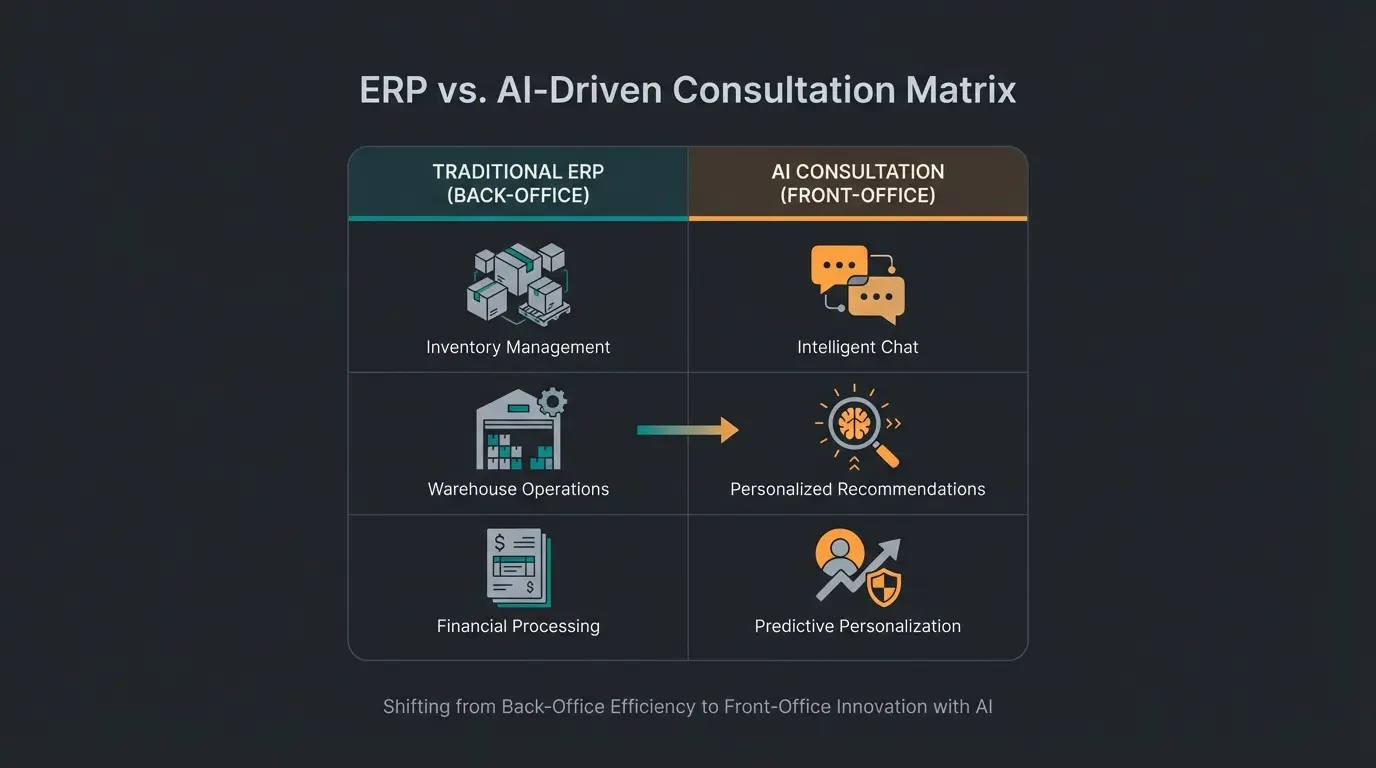
However, this article proposes a radically different perspective. If you want to leave Plentymarkets, you're probably not doing it just to scan packages differently. You're doing it because your e-commerce growth has stagnated. Most plentymarkets comparison articles on the web focus on backend efficiency (warehouse, shipping, accounting). That's important, but it's only half the truth.
The real danger for your shop isn't the warehouse—it's the frontend. While you're wrestling with plugin updates in the Plentymarkets backend, your customers' expectations have drastically changed. In 2025, customers no longer want to click through static filter lists. They want consultation, speed, and answers.
In this comprehensive guide, we'll analyze not only which ERP can replace Plentymarkets but how you can shift your business from administration mode to growth mode through a technology shift toward Composable Commerce and AI (Artificial Intelligence).
Why Merchants Are Leaving Plentymarkets
To find the right alternative, we must understand why the "Plentymarkets model" no longer works for many merchants. Plentymarkets was the gold standard for multichannel retailers for years. But the market landscape has shifted dramatically.
The "All-in-One" Trap: Monolith vs. Best-of-Breed
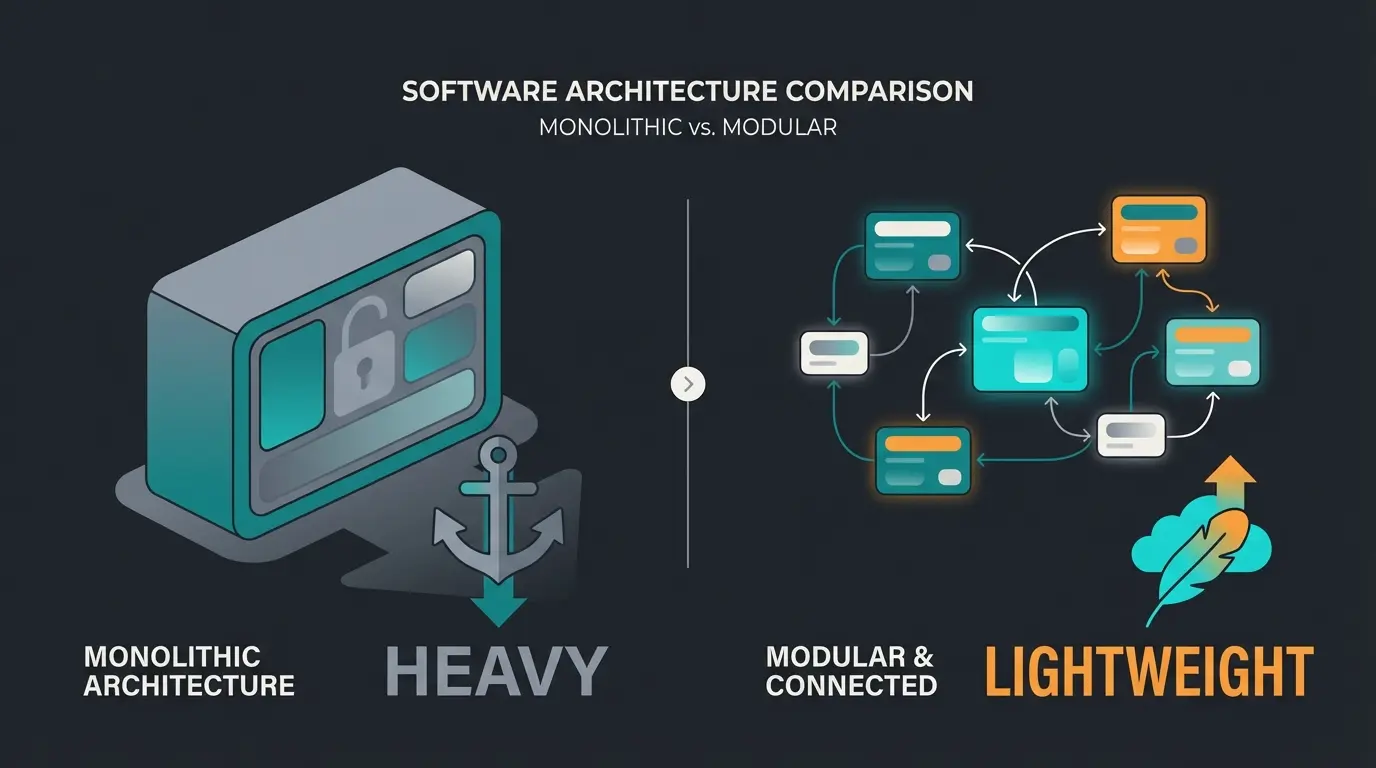
Plentymarkets is a classic monolith. It tries to be ERP, PIM (Product Information Management), shop frontend (Ceres), CRM, and marketplace connector all in one system.
- The Advantage: Everything is in one place.
- The Disadvantage: When one part becomes outdated, it drags down the entire system.
Reports from the community, including insights from alphanauten.de, show that updates often "break" processes elsewhere or that shop performance (Core Web Vitals) suffers under the backend's load. In an era where specialization matters, a tool that can do "everything a little bit" is often a hindrance.
The Frontend Problem: Ceres vs. Modern UX
Plentymarkets' standard template, Ceres, is functional but lacks the flexibility of modern headless solutions or the agility of a Shopify theme.
- Static Experience: The shop is based on classic categories and filters. This is "product management," not "selling solutions."
- Performance: Users report declining page speed scores, which directly affects Google ranking and conversion.
- Dependency: Design customizations often require specialized agencies or deep code modifications, which is expensive and slow, as documented by shopexperten.de and mediaria.de.
Cost Structure and Revenue Share Model
A massive criticism point in the community is the pricing model. In addition to the base fee (which has sometimes increased significantly), transaction-based fees apply. One user reported back-payments in the four-figure range due to revenue share models, even when certain marketplace functions weren't being used at all, according to trusted.de.
In comparison, modern stacks often offer more predictable costs: A lean ERP (flat rate) + a shop system (SaaS) + specialized tools.
Classic Plentymarkets Alternatives in ERP Comparison
Before we discuss the frontend revolution, we need to clarify the basics. If you want to replace Plentymarkets as an ERP (inventory management system), these are the three most relevant paths in the German-speaking market—and increasingly relevant for international merchants as well.
Option A: JTL-Wawi – The Cost-Efficiency King
JTL is the most common answer when asking about plentymarkets competition.
- Concept: A powerful, locally installed inventory management system (on-premise/hosting) that is free at its core.
- Advantages: No revenue share, extremely strong in Amazon/eBay listing, huge community.
- Disadvantages: The usability is "technical" and less modern than cloud tools. You often need a service partner for hosting and setup. It's a power-user tool—very functional but not very intuitive, as noted by jtl-software.de and erock-marketing.de.
Conclusion: Those who need to watch every penny and primarily sell on marketplaces often end up here. But it doesn't solve the frontend problem if you only use the JTL shop.
Option B: Billbee – The Lean Cloud Solution
Billbee is often underestimated but is the most liberating alternative for many former Plentymarkets users (especially D2C brands).
- Concept: A pure cloud middleware. It connects shops (Shopify, Shopware) with marketplaces and handles order processing.
- Advantages: Extremely cost-effective and transparent. "Plug & play" approach. Invoice and shipping label automation is first-class, as highlighted by lsww.de and billbee.io.
- Disadvantages: Not a "heavy" ERP. No complex warehouse management with chaotic storage at enterprise level (though improvements are being made).
Conclusion: Perfect for merchants who want to embrace Composable Commerce: Billbee handles the backend, Shopify handles the frontend.
Option C: Shopware and Shopify (The Focus Shift)
Many merchants switch instead of Plentymarkets directly to a strong shop system and connect a smaller ERP.
- Shopify: The TCO winner (Total Cost of Ownership). Studies from shopify.com and magexo.cz show that Shopify is often 33% cheaper to operate than complex on-premise or enterprise solutions, since maintenance and hosting are eliminated.
- Shopware 6: The German enterprise alternative. Powerful, but here too: you often need an agency and budget for setup, as noted by industry analysts.
The Blue Ocean: Why an ERP Switch Alone Isn't Enough
Here lies the strategic mistake that 90% of merchants make: They swap Plentymarkets for JTL or Billbee and hope that revenue increases. It won't. You've only optimized the administration of scarcity.
To truly grow, you must solve the frontend problem.
The Gap: The "Silent Salesperson"
Plentymarkets (and also standard Shopware/JTL shops) present products. They don't actively sell them.
- Status Quo: A customer searches for "running shoes." They get 50 results and filters for "size," "color," "price."
- The Problem: The customer doesn't know which shoe is right for their running style (overpronation, asphalt, 10km). They're overwhelmed and abandon the cart.
- The Result: High abandonment rates, high return rates (because the wrong product was purchased).
The Solution: AI Guided Selling (The Game Changer)
The true plentymarkets alternative is a stack that automates consultation. Instead of leaving customers alone with filters, modern shops use AI-powered sales assistants.
Users interacting with AI chatbots or guided selling achieve conversion rates over 12%, according to amraandelma.com
Standard conversion rate without AI assistance—a 4x difference in purchase probability
Customers who receive consultation spend more due to higher purchase confidence, as documented by hellorep.ai
AI eliminates the search for the right product, dramatically accelerating the buying journey
Research from amraandelma.com and hellorep.ai confirms these dramatic improvements in e-commerce performance through AI-powered consultation.
Composable Commerce: The Architecture of Growth
Instead of buying one massive system (Plentymarkets), successful merchants today build a "best-of-breed" stack, as outlined by lastingdynamics.com and medienwerft.de:
- Backend: A lean ERP (e.g., Billbee or Xentral) for logistics.
- Frontend: A high-performance shop system (e.g., Shopify).
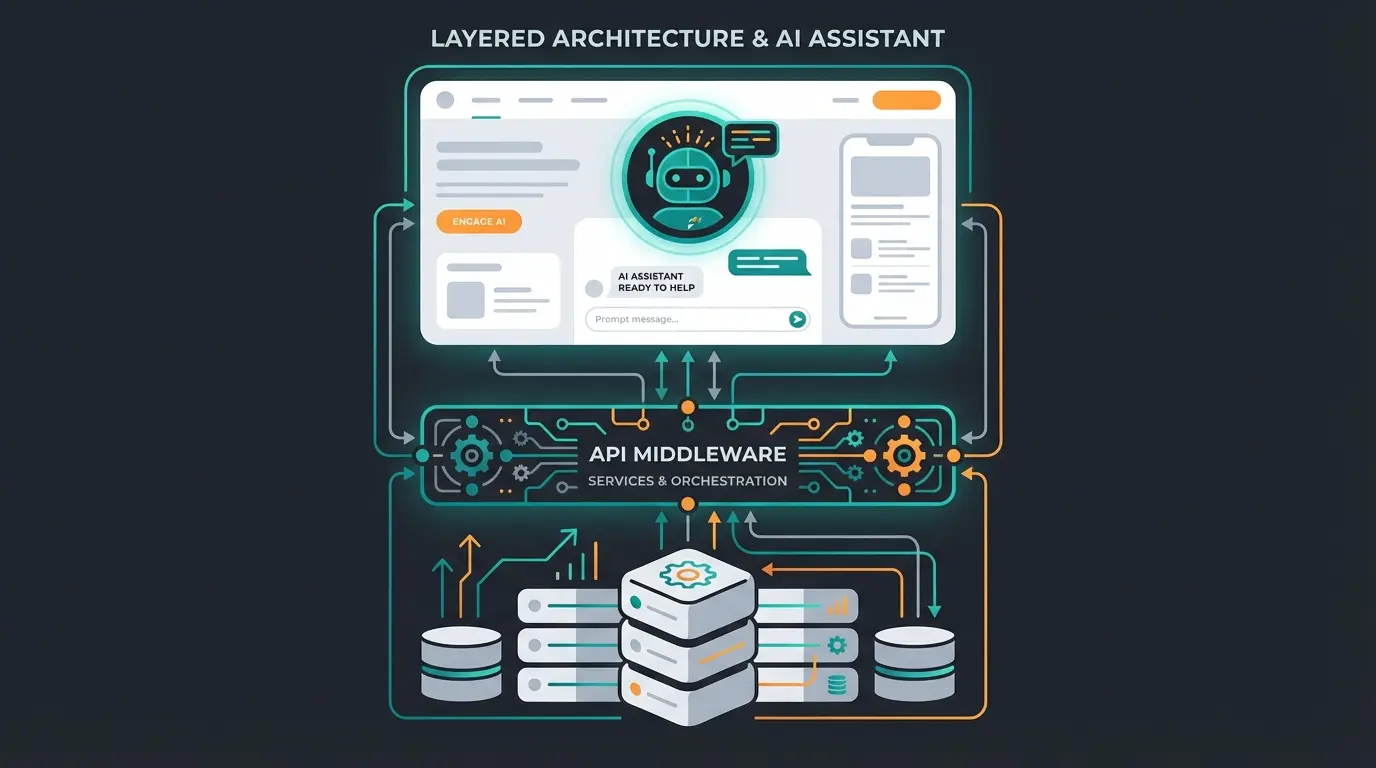
- Intelligence Layer: A specialized AI solution that sits on top of the shop and acts as a "salesperson."
This approach is more agile. If a better AI comes to market, you only swap that module, not the entire ERP. This is the core of "Composable Commerce"—a strategy gaining massive importance in mid-market businesses to avoid getting stuck in the "monolith trap," as explained by actindo.com and novomind.com.
See how AI-powered product consultation can boost your conversion rates by 4x—without replacing your entire tech stack.
Start Your Free TrialFeature Comparison: Plentymarkets vs. Modern AI Stack
In this table, we compare the status quo (Plentymarkets) with the modern alternative (Lean ERP + Shopify + AI).
| Feature | Plentymarkets (All-in-One) | Modern Stack (Billbee/JTL + Shopify + AI) | Your Advantage When Switching |
|---|---|---|---|
| Primary Focus | Administration & Marketplace Connection | Customer Experience & Conversion | Focus shifts from "managing" to "selling" |
| Shop Frontend | Ceres (Often rigid, template-based) | Shopify / Headless (Highly flexible) | Better Core Web Vitals, Mobile-First UX |
| Product Consultation | Static Filters & Search | AI Guided Selling (24/7) | Active consultation instead of passive search |
| Setup Time | Months (often requires agency) | Weeks (Plug & Play components) | Faster go-to-market (Time-to-Value) |
| Cost Structure | Base fee + Transaction fees + Agency costs | SaaS fees (predictable) + Pay-per-Use | Often lower TCO through eliminated maintenance |
| Conversion Rate | Average (~1.6% - 3%) | High (>10% possible through AI uplift) | Direct ROI through better traffic utilization |
| Flexibility | "Take it or leave it" (Monolith) | Modular (Interchangeable) | Future-proof through Composable approach |
Strategic Guide: How to Make the Switch Without Chaos
Switching from a system like Plentymarkets often feels like open-heart surgery. But with the "decoupled" strategy, you can minimize risks.
Keep Plentymarkets for warehouse/shipping initially, but disable the Ceres shop. Set up a Shopify store and connect it via connector.
Install AI-powered product consultation instead of classic filters. Your AI conducts dialogues: 'Looking for a gift or something for yourself?'
Once frontend and sales are running, swap the expensive Plentymarkets backend for a leaner solution like Billbee or JTL.
Step 1: Frontend Decoupling (The Headless Trick)
You don't have to change the ERP immediately.
- Strategy: Keep Plentymarkets for warehouse/shipping for now, but turn off the Ceres shop.
- Action: Set up a Shopify shop and connect it via connector (e.g., from agencies like one-dot as mentioned by one-dot.de or mediaria) with Plentymarkets.
- Benefit: You immediately benefit from a better frontend and can integrate AI tools without touching logistics.
Step 2: Intelligence Layer Integration
Once the new frontend is in place, don't install classic filters—install a Product Consultation AI.
- Why? Because this is where you differentiate from the competition. While competitors are still maintaining "category trees," your AI conducts dialogues: "Are you looking for a gift or something for yourself?" – "What colors do you prefer?"
- Setup: Modern AI tools can often be integrated into Shopify with "one-click" and automatically index your product catalog.
Step 3: Backend Replacement (The Final Cut)
When frontend and sales are running, you can replace the expensive Plentymarkets backend with a leaner solution.
- Scenario: Switch to Billbee or JTL.
- Advantage: Since your frontend (Shopify + AI) is decoupled from the backend, the customer notices nothing from this switch. No downtime, no revenue loss.
Deep Dive: Why Filters Are Dead and Consultation Is the Future
Let's dive deeper into the content gap that other articles ignore. Why is moving away from Plentymarkets toward an AI solution so critical for revenue?
The Paradox of Choice
Plentymarkets is excellent at managing thousands of variants. But for the customer, this is a nightmare. Psychological studies show: Too much choice leads to purchase abandonment.
- Plentymarkets Approach: Show all 500 variants. Let the customer filter.
- AI Approach: Ask the customer about their needs. Show the 3 best options.
The Zero-Party Data Goldmine
Consider this customer statement: "I need a cream for dry skin, but without perfume because I'm allergic."
This data (zero-party data) is invaluable for your marketing and product development. A rigid monolith can neither capture nor utilize this data. A modern AI stack stores these preferences in CRM (e.g., Klaviyo or HubSpot) for hyper-personalized emails.
The Evolution of E-Commerce: From Catalogs to Conversations
Understanding where the market is heading helps contextualize why the plentymarkets alternative question needs reframing. The e-commerce industry has undergone three major shifts, and we're now entering the fourth.
Platforms like Plentymarkets emerged as all-in-one solutions combining inventory, order management, and basic storefronts.
Shopify and marketplace integrations enabled selling everywhere—but the experience remained catalog-based.
Decoupled architectures allowed best-of-breed tool selection and improved frontend experiences.
AI-powered consultation replaces static browsing—customers tell their needs, systems recommend solutions.
The merchants who recognize this shift early gain a significant competitive advantage. Instead of asking "Which ERP should I use instead of Plentymarkets?" the better question is: "How do I build an architecture that can evolve with customer expectations?"
Practical Tips and Decision-Maker Checklist
Before you cancel your Plentymarkets contract (watch those deadlines!), work through this checklist:
- Inventory Assessment: Which Plentymarkets functions do you actually use? Merchants often pay for modules (PIM, CRM) they barely utilize.
- Data Hygiene: A system change is the best time to clean up product data. An AI needs clean data to provide good advice.
- Hidden Costs Calculation: Compare Plentymarkets (License + Revenue Share + Agency hours for updates + Server performance loss) versus Alternative (Shopify fee + App costs (AI) + Billbee fee). Often the modern stack is cheaper despite multiple invoices because expensive agency hours for maintenance are eliminated.
- Test Run: Consider starting AI consultation on a landing page or for one category first to measure the conversion uplift before switching everything over.
The Switching Calculator: Do You Need a Full ERP Change?
Before committing to a full migration, answer these diagnostic questions to determine your optimal path forward:
- Primary Pain Point Assessment: Is your main frustration high monthly fees or low conversion rates? If it's conversion, an AI layer might solve your problem faster than an ERP swap.
- Feature Utilization Audit: List every Plentymarkets feature you use weekly. If it's mainly inventory and shipping, a lean ERP like Billbee covers 90% of needs at a fraction of the cost.
- Frontend Satisfaction Score: Rate your current shop experience from 1-10. If below 6, frontend modernization should be priority one.
- Technical Debt Evaluation: How many custom plugins and modifications run on your Plentymarkets instance? High customization makes migration harder but also signals the monolith's limitations.
If your answers point toward conversion problems rather than backend inefficiency, you might not need to replace Plentymarkets at all—just augment it with an intelligent frontend layer while planning a longer-term backend transition.
Conclusion: The Best Plentymarkets Alternative Is a Mindset Shift
The search for a plentymarkets alternative shouldn't end with swapping one complex tool for another (e.g., JTL). That solves your logistics problems but not your revenue problems.
The market is moving away from rigid "all-in-one" systems toward Composable Commerce. Tomorrow's winners bet on:
- Lean Backends (for efficiency).
- Excellent Frontends (for experience).
- Artificial Intelligence (for consultation and sales).
If you're switching today, don't just switch the software. Switch the strategy. Stop just managing products and start actively selling them through intelligent, automated consultation.
Are you ready to transform your shop from a "warehouse clerk" to a "top salesperson"?
The first step isn't importing the CSV file into a new ERP—it's the decision to finally provide customers with the consultation they expect in 2025.
JTL-Wawi offers a free core version for locally installed inventory management. However, you'll still need hosting and potentially service partner costs. Billbee offers affordable entry-level plans, and combining it with Shopify's basic tier creates a cost-effective composable stack. The real question is whether 'free' software provides the revenue-generating capabilities you need.
JTL-Wawi excels at Amazon/eBay listing management with its robust marketplace connectors. However, if conversion optimization is your goal, combining JTL with an AI-powered frontend solution delivers better results than any standalone ERP. The backend handles marketplace logistics while the AI layer improves direct sales performance.
Migration complexity depends on your customization level. Basic product data and order history can typically be exported via CSV. The "headless" strategy minimizes risk: keep Plentymarkets running for backend operations while building your new frontend separately. Once the new frontend proves its value, you can migrate backend functions incrementally without business disruption.
Absolutely. This is often the smartest first step. Modern AI consultation tools can integrate with existing shop frontends via JavaScript widgets or API connections. You can test conversion improvements before committing to a full migration. If the AI delivers results, it builds the business case for further modernization.
Based on current data, AI-powered consultation can increase conversion rates from the typical 1.6-3% range to over 10% for engaged users—a potential 4x improvement. Combined with 25% higher average order values and faster purchase decisions, the ROI typically covers migration costs within 6-12 months. The key is measuring your current conversion baseline before making changes.
Discover how AI-powered product consultation transforms your e-commerce performance—without the pain of a complete system migration.
Get Started Free
Lasse is CEO and co-founder of Qualimero. After completing his MBA at WHU and scaling a company to seven-figure revenue, he founded Qualimero to build AI-powered digital employees for e-commerce. His focus: helping businesses measurably improve customer interaction through intelligent automation.