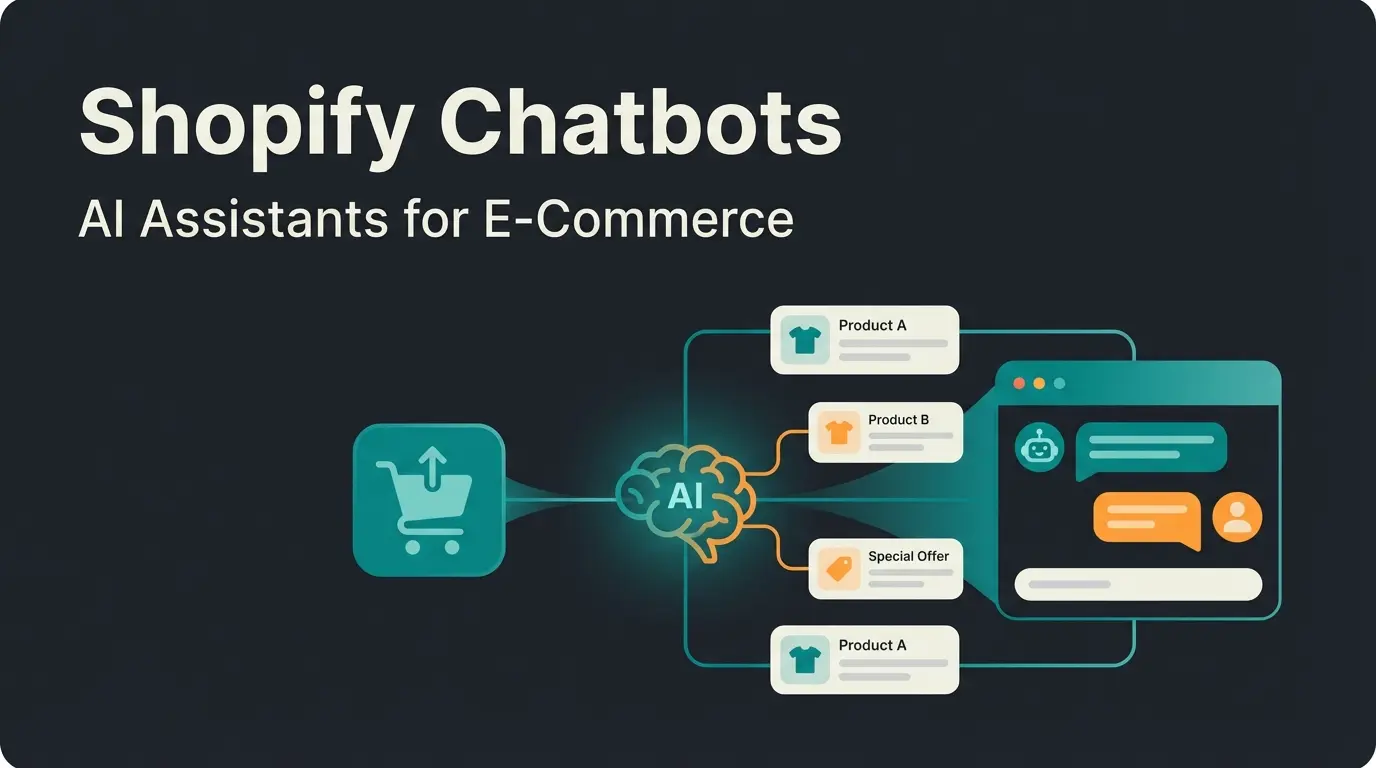
What are AI product recommendations on Shopify?
AI product recommendations on Shopify are product suggestions generated from data rather than from a rule you maintain by hand. They span three tiers: Shopify's built-in algorithmic related-products lists, third-party engines that personalise per visitor, and conversational AI advisors that ask the shopper questions before recommending anything. The three are not interchangeable.
Most merchants open this topic with the wrong question. "Which recommendation app should I install?" assumes the answer is an app. Two of the three tiers above are already sitting in your admin at no cost, and the third depends far more on your product data than on your vendor choice.
Shopify's own guide, updated in April 2026, splits recommenders into content-based, collaborative, and hybrid filtering. That taxonomy describes how a model computes a suggestion. It says nothing about whether the shopper understood why the suggestion appeared, which is the part that decides whether they buy.
That gap matters because the page these widgets land on is usually already struggling. Baymard Institute benchmarked product page implementations at 60 top-grossing ecommerce sites and found 82% rate mediocre or poor, with an average of 24 structural usability issues each. A carousel does not fix a page that fails to answer the shopper's actual question.
Recommendations are also part of your service surface, not just your merchandising. Every suggestion a shopper cannot interpret becomes a pre-sales question somewhere, which is why this topic sits directly underneath Shopify customer service rather than beside it.
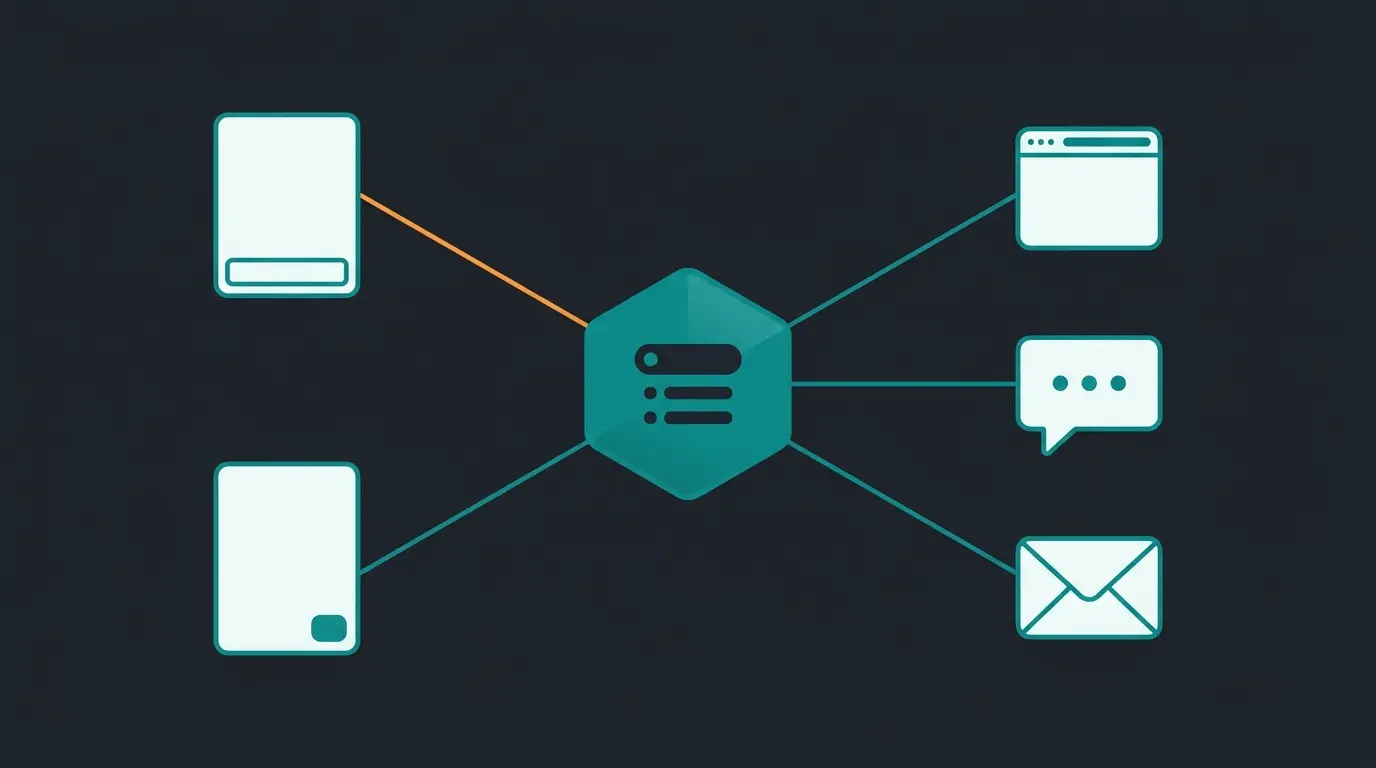
The Ajax `related` intent. Zero cost, zero configuration, generated from order history and description similarity.
Complementary products picked by hand in the free Search & Discovery app. Still zero cost, but manual work per SKU.
A third-party app that scores per visitor using session and segment behaviour. Paid, and hungry for traffic volume.
An AI employee that asks about the use case, then justifies one product. Paid, and hungry for structured catalog data.
Shopify's native recommendations: what you get for free
Shopify ships product recommendations at no extra cost. The Ajax product-recommendations endpoint returns related or complementary items for a given product ID, and the free Search & Discovery app lets you curate the complementary ones. No third-party app is required to display either surface in your theme.
Here is the exact surface, checked against the live Shopify Ajax product recommendations API reference in August 2026. The endpoint takes a required `product_id`, an optional `limit` that ranges from 1 to 10 with a default of 10, and an optional `intent`.
GET /recommendations/products.json?product_id=13&limit=4&intent=related

# intent accepts exactly two values: related, complementary
# omitting intent defaults to related
# 422 is returned for any other value
# 404 is returned if the product is not published to the Online Store channel
Two values. That is the whole intent vocabulary. If you have read elsewhere that the endpoint also serves a frequently-bought-together intent, that claim does not survive contact with the documentation, and I see it repeated on this topic constantly.
The second thing worth knowing is who generates what. The Shopify product recommendations documentation is unambiguous: "Only related recommendations are auto-generated by Shopify. Complementary recommendations need to be manually set up." So the free tier is half automatic and half data entry.
You can also read the strategy straight out of the tracking parameters. Shopify appends `pr_prod_strat=description` to recommended product URLs, which tells you plainly that description similarity is doing part of the work. Your product copy is already an input, whether you treated it as one or not.
For a store selling 300 SKUs of consumables where shoppers already know what they want, this is genuinely enough. Turn on related products, curate complementary pairs for your top 30 sellers, measure the conversion report in Shopify Analytics, and stop. Not every store has a problem here.
Recommendation engine vs. AI product advisor: two different jobs
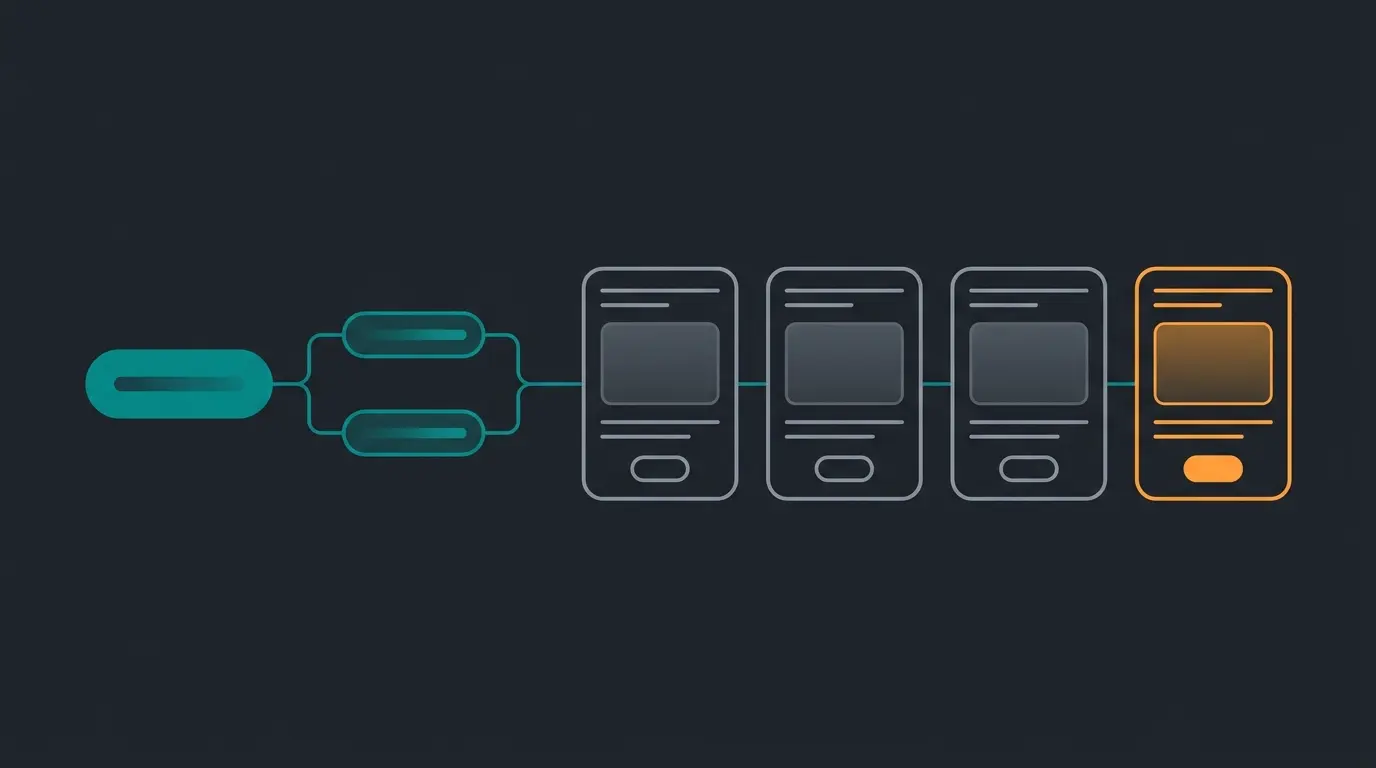
A recommendation engine answers "what else do people like you buy?" from behavioural data. An AI product advisor answers "which of these is right for my situation?" by asking the shopper about their use case first. The engine optimises basket size on shoppers who already chose. The advisor converts shoppers who have not chosen yet.
This distinction is the one thing the entire search results page for this topic gets wrong. Apps are sorted by feature count and price, as though a carousel and a conversation were two brands of the same product. They are not. They consume different data, fire at different moments, and move different numbers.
| Dimension | Recommendation engine | AI product advisor |
|---|---|---|
| Input data | Order history, session behaviour, description similarity | Structured product attributes plus the shopper's stated situation |
| What triggers it | A page view. The shopper is passive | A question. The shopper is active |
| What it optimises | Average order value and items per order | Conversion on undecided visitors, and return rate |
| Typical placement | Product page carousel, cart, post-purchase | Collection page, product page, and off-site channels |
| 12-SKU catalog | Weak. Not enough association data to learn from | Works immediately if the attributes are structured |
| Shopper without category vocabulary | No help. They cannot start the funnel it depends on | Translates the problem into product language |
| Objection after the suggestion | Silent. The next click is the only feedback | Answers it, then revises the recommendation |
Look at row five and row six. Those are the shoppers an engine structurally cannot serve, because an engine needs a chosen product to reason from. If the shopper never reaches a product page with intent, there is nothing to recommend against.
The volume involved is not marginal. Baymard's meta-analysis of 50 separate studies puts the average cart abandonment rate at 70.22%, a figure that has held between roughly 68% and 71% for a decade despite a generation of checkout redesigns. Uncertainty is not a checkout problem you can style away.
Why consultative AI sells more than a recommendation widget
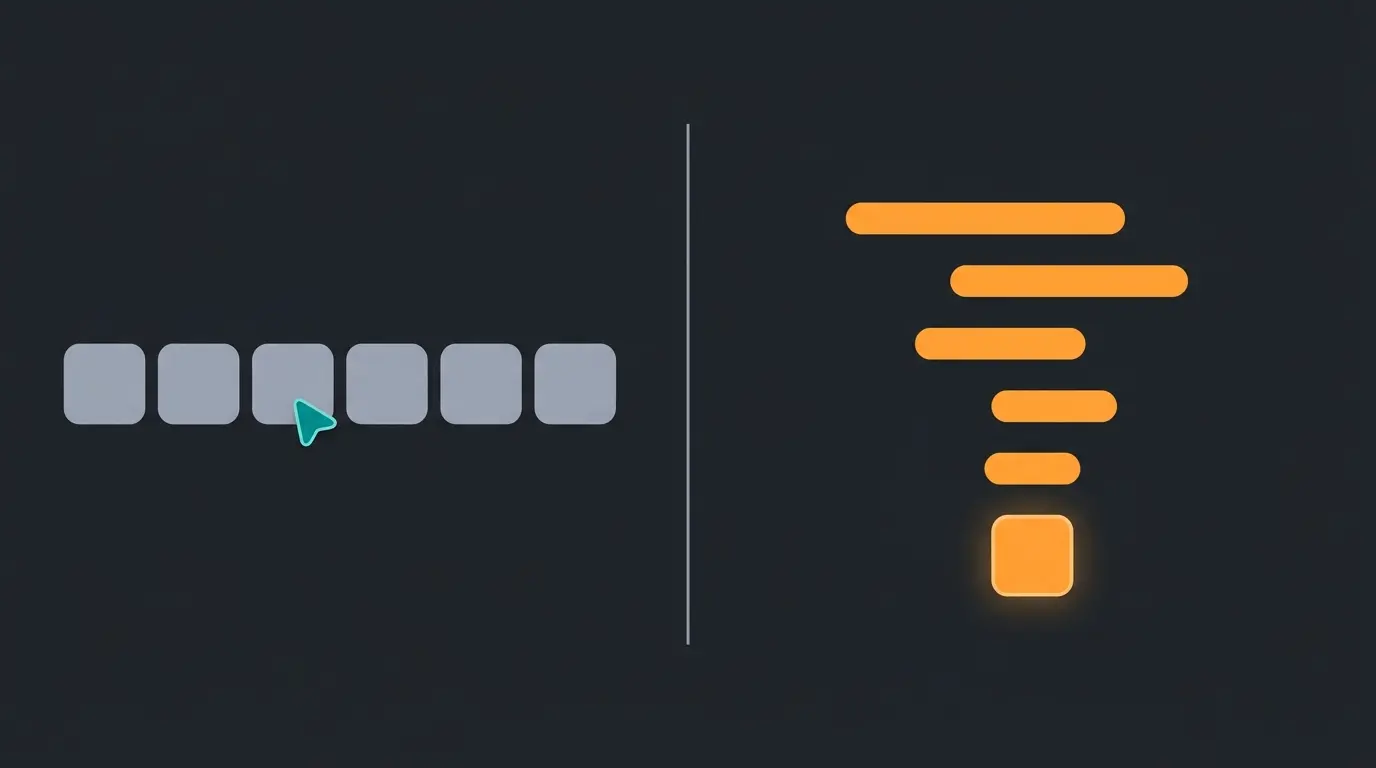
A recommendation widget presents options. A consultative AI gives a reason. Shoppers buying explanation-heavy products, anything with compatibility, dosage, sizing, load rating or legal constraints, need the reason more than the option, because the blocker is not discovery. It is uncertainty about whether the product fits their case.
The mechanism is worth stating precisely, because "AI sells more" is a claim, not an explanation. Three things happen in an advisory exchange that a carousel cannot do. It states why a product fits the situation described. It handles the objection that follows. And it revises when the shopper's next answer rules the first suggestion out.
That third behaviour is the real separator. A quiz app branches through a fixed decision tree, which means it can only ask questions someone anticipated and can only answer within the paths someone built. Ask it something adjacent and it returns nothing useful. In our Shopify projects, the questions that convert are almost never the ones on the quiz.
HELLA's technical customer service saw exactly this pattern before deploying an advisor. The recurring inquiries were "Can I mount this light bar on my roof?", "Which cable kit do I need?", and "Does this headlight fit my bull bar?". None of those is a discovery question. Every one is a fit question, and a carousel has no answer for any of them.
Which store profiles actually benefit? The honest list is narrower than the app store implies.
- Technical products with compatibility rules. Automotive parts, lighting, hardware, spare parts, anything with a fitment matrix.
- Regulated products. Plant protection, supplements, electrical goods, anything where the wrong pick creates a liability rather than a return.
- Configurable or dimensioned goods. Awnings, carports, flooring, blinds. The shopper has a measurement, not a product in mind.
- High-consideration purchases above roughly 300 EUR. The research phase is long enough that a wrong answer costs the sale outright.
- Catalogs where filters have become a wall. If a customer needs to understand seven attributes to use your faceted navigation, the navigation is the problem.
- Seasonal businesses with peaky demand. Advice capacity has to scale on the days when your team is already at its limit.
One more constraint that vendors skip: advisory conversations do not replace a human team, they filter what reaches it. The complicated 5% still needs a person, which is why an advisor works best when it hands off cleanly into Shopify live chat rather than pretending it can close everything alone.
How AI reads your Shopify catalog: metafields and data hygiene
An AI advisor can only reason about attributes that exist as structured data. Shopify metafields are where that data lives: dimensions, compatibility, material, application area, certifications. If those attributes appear only inside prose product descriptions, the advisor's answers degrade. The data model is the real gate on quality, not the model choice.
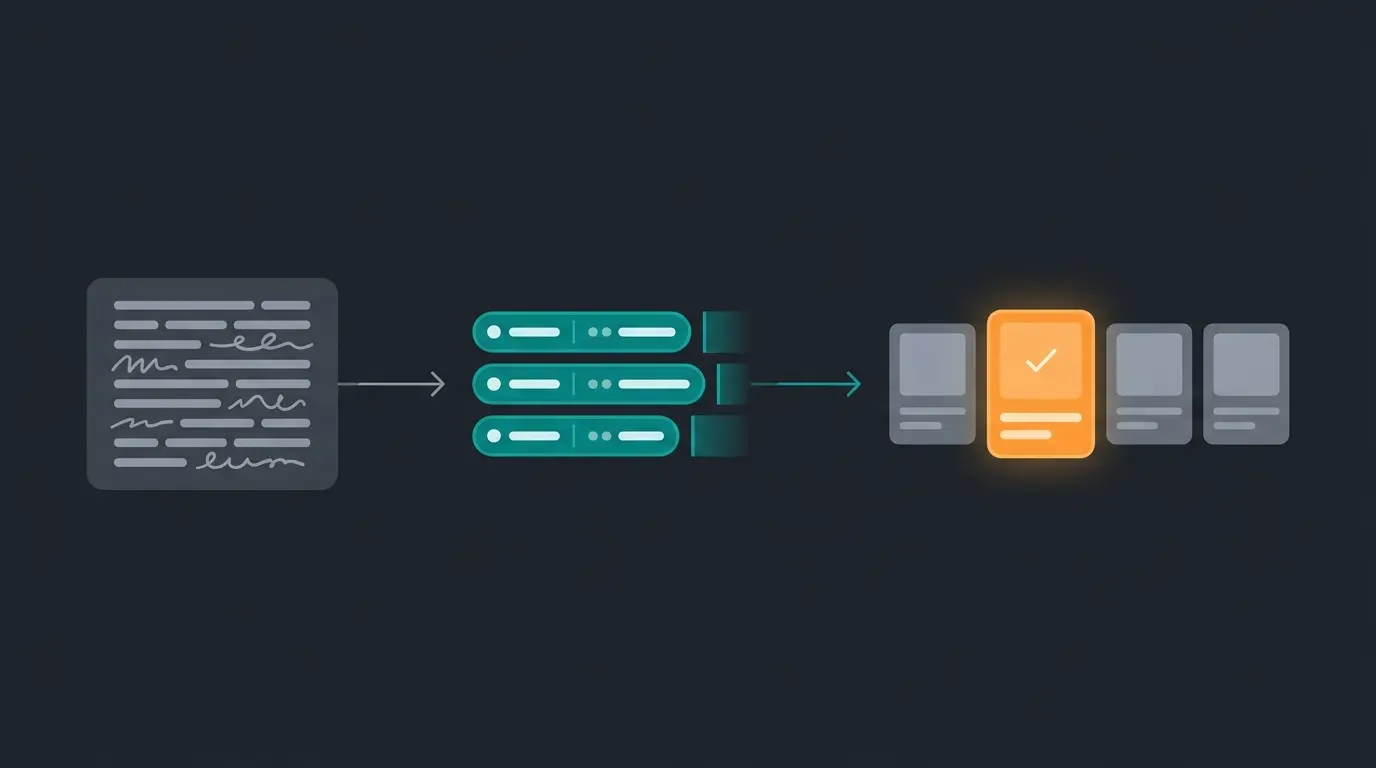
A metafield, per the Shopify metafields documentation, is a key-value pair with three components: an identifier combining a namespace and a key such as `custom.warranty_info`, a value, and a type that defines how the value is interpreted. The namespace is not decoration. It establishes ownership and prevents collisions between apps.
The piece merchants skip is the definition. Shopify's docs put it plainly: metafield definitions "establish data schemas that enable type validation, Shopify admin integration, query filtering, access control, and performance optimization." A metafield without a definition is a loose string. A defined metafield is queryable, validated, and safe for an advisor to reason over.
Shopify also ships standard definitions for common cases such as ISBN numbers, product ingredients, and care instructions. Use them where they fit. Interoperability across the ecosystem is worth more than a bespoke namespace that only your team understands.
| Encoding | How it looks | What the advisor can do with it |
|---|---|---|
| Buried in the description | "...suitable for most 12V systems and fits many common bull bars." | Guesses. "Most" and "many" are not queryable. Answers become hedged or wrong. |
| Structured metafield | `custom.voltage` = 12 (integer), `custom.mount_type` = [bull_bar, roof_rail] (list.single_line_text) | Filters the catalog to exactly the SKUs that fit, then explains why. |
The hygiene rules that decide whether this works are unglamorous and rarely discussed. Units must be consistent across the catalog, so no mixing millimetres and centimetres in the same field. Attributes must not live only in variant titles, because "Blue / 40mm / Left" is a display string, not data. And values need filling across the whole catalog, not just the flagship SKUs.
That last one is where most projects actually stall. Attribute coverage on the top 50 products is easy and gets done in an afternoon. Coverage on the long tail is a genuine content project, and it is the single most common reason an AI advisor underperforms in month one. No app removes this work. Anyone who tells you otherwise is selling.
- Every decision-relevant attribute has a metafield definition, not just a value
- Units are consistent across the entire catalog, with the unit in the definition rather than the value
- No attribute exists only inside a variant title or a product description
- Attribute coverage is measured as a percentage of SKUs, not assumed
- Compatibility and exclusion rules are explicit, including what a product does not fit
- Storefront access is enabled on the definitions the advisor needs to read
The business case: conversion, AOV and returns
AI product advice moves three numbers, not one. It lifts conversion by resolving pre-purchase uncertainty, lifts average order value by recommending the fitting product rather than the cheapest, and lowers returns by preventing the wrong-product purchase in the first place. The third is the one most merchants forget to measure.
Start with the AOV lever, because it is the best documented. Beauty group Orveon Global reported an immediate lift after rolling out AI-powered merchandising across its brands, and their ecommerce lead put a number on it rather than an adjective.
That is an engine result, and it is a good one. Advisory deployments move a different mix. Gartenfreunde, a specialist retailer for garden and wellness products, was handling up to 50 consultation-heavy inquiries a day through a single sales employee during peak season. After deploying an AI employee trained on their product knowledge, they report a 7x higher conversion rate, a 45% click-through rate on recommendations, and 6x return on investment.
The returns lever shows up most clearly at HELLA Lightstyle. Auxiliary vehicle lighting carries ECE approval rules, reference numbers, wiring constraints and mounting limits, and their shoppers modify vehicles at weekends when the office is closed. Their AI product advisor delivers technical consultation 24/7, 100% legally compliant product recommendations, and 60% fewer support inquiries.
Gartenfreunde, measured on advisor-generated suggestions
HELLA Lightstyle, automotive lighting. Source: HELLA Lightstyle AI product advisor
Gartenfreunde, first deployment year
Across our client base as a whole, we see roughly 35% higher cart value and 60% higher checkout rate. Those are cross-client averages spanning Shopware, Shopify and custom storefronts, not Shopify-specific figures, and I would not plan a business case on them. Plan on your own baseline instead.
Now the number nobody on this topic discusses. The National Retail Federation forecast $849.9 billion in returns for 2025, an overall return rate of 15.8%, with online sales running materially higher at an estimated 19.3%. Every returned wrong-fit product was a recommendation failure that a fit conversation could have caught before checkout.
Make the claim falsifiable or do not make it. Conversion effects show up in Shopify Analytics as sessions-converted segmented by whether the advisor was engaged. AOV effects show up in the product recommendation conversion report. Returns are the slow one: you need at least one full return window, usually 60 to 90 days, before the curve means anything.
How to implement AI product recommendations on Shopify
Implementation runs in four steps: audit what native Search & Discovery already covers, structure the product attributes that matter into metafields, choose between an engine and an advisor based on how much explaining your products need, then place the surface where the decision actually stalls. That is usually the collection and product pages, not the cart.
- Audit the free tier first. Enable related products in your theme, curate complementary pairs for your top sellers in Search & Discovery, and run it for four weeks. Read the product recommendation conversion report before you spend anything. If native coverage closes the gap, you are done and you saved a subscription.
- Structure the attributes. Create metafield definitions for every attribute a customer asks about before buying. Take the questions from your own support inbox, not from a template. Then measure coverage as a percentage of SKUs and fix the long tail.
- Decide engine or advisor, or both. Use the comparison table above. High traffic plus low explanation need points to an engine. Low traffic plus high explanation need points to an advisor. Most consultation-heavy stores end up running native recommendations alongside an advisor, which is the combination we deploy most often.
- Place it where the decision stalls, then measure. Collection pages for shoppers who have not narrowed down. Product pages for shoppers stuck on fit. Track advisor engagement against converted sessions from week one, and set the returns baseline before launch so you have something to compare against later.
Step two is where timelines slip, every single time. Budget more for attribute work than for integration, because the integration is the easy half. If you want to see what a finished advisory setup looks like on a consultation-heavy catalog, our AI product consultation page walks through the deployed version.
Beyond the storefront: multichannel advice
Product advice does not stop at the storefront. The same advisor logic and the same catalog data can answer through WhatsApp, email or live chat, which matters because a meaningful share of pre-purchase questions arrive outside the session in which the shopper first browsed. The catalog data you structured once serves all of them.
Persistent memory is the part that makes this feel different rather than merely available. A returning shopper who described their vehicle, their garden size or their installation constraints last week should not have to describe it again. An engine has no concept of this. It sees a session, scores it, and forgets.
For DACH merchants the channel that matters most is usually messaging, and connecting Shopify and WhatsApp is where advisory conversations continue after the tab is closed. Same product data, same reasoning, different surface.
Frequently asked questions about Shopify AI product recommendations
Yes. Related product recommendations are generated automatically at no extra cost, and the Search & Discovery app used to curate complementary products is also free. You only pay when you add a third-party personalisation engine or an AI advisor on top of the native surface.
You call `GET /{locale}/recommendations/products.json` with a required `product_id`. Optional parameters are `limit`, which ranges from 1 to 10 and defaults to 10, and `intent`, which accepts `related` or `complementary` and defaults to `related`. An unpublished product returns 404, an invalid intent returns 422.
Related products are one of the two recommendation intents Shopify generates natively from order history and description similarity. AI recommendations is a broader term covering that native output plus third-party personalisation engines and conversational advisors, which use different data and answer different shopper questions.
Not for the native tier. Related products work through the Ajax API and your theme with no app installed, and complementary products need only the free Search & Discovery app. You need a paid app or a custom integration only for per-visitor personalisation or conversational product advice.
Statistical engines need order volume more than SKU count, so they stay weak on new or low-traffic stores regardless of catalog size. An AI advisor works from attributes instead, so it can perform on a 12-SKU catalog, but below roughly 40 SKUs of self-evident products the setup rarely pays back.
Two usual causes. The SKU is new and has no order history for the `related` intent to work from, which is the cold-start problem, or your product descriptions are too generic for description-similarity matching. Curating complementary products manually in Search & Discovery is the fastest fix for both.
It depends entirely on where the data is processed and how long it is retained. For DACH merchants, check that conversation data stays in EU data centres, that retention periods are configurable, and that the provider signs a data processing agreement under Article 28 GDPR. Ask before you install, not after.
If your products need explaining before they sell, a carousel will not close that gap. We build AI employees that ask about the use case, justify the recommendation, and hand off cleanly when a human is genuinely needed. Bring your Shopify catalog to a 30-minute session and we will show you what your attribute data can already support.
Book a demo
Kevin is CTO and co-founder of Qualimero. As an AI architect with over 15 years of experience as CTO and CPO in the tech industry, he designs the AI systems that automate tens of thousands of customer interactions daily for Qualimero's clients — reliably, securely, and at scale.