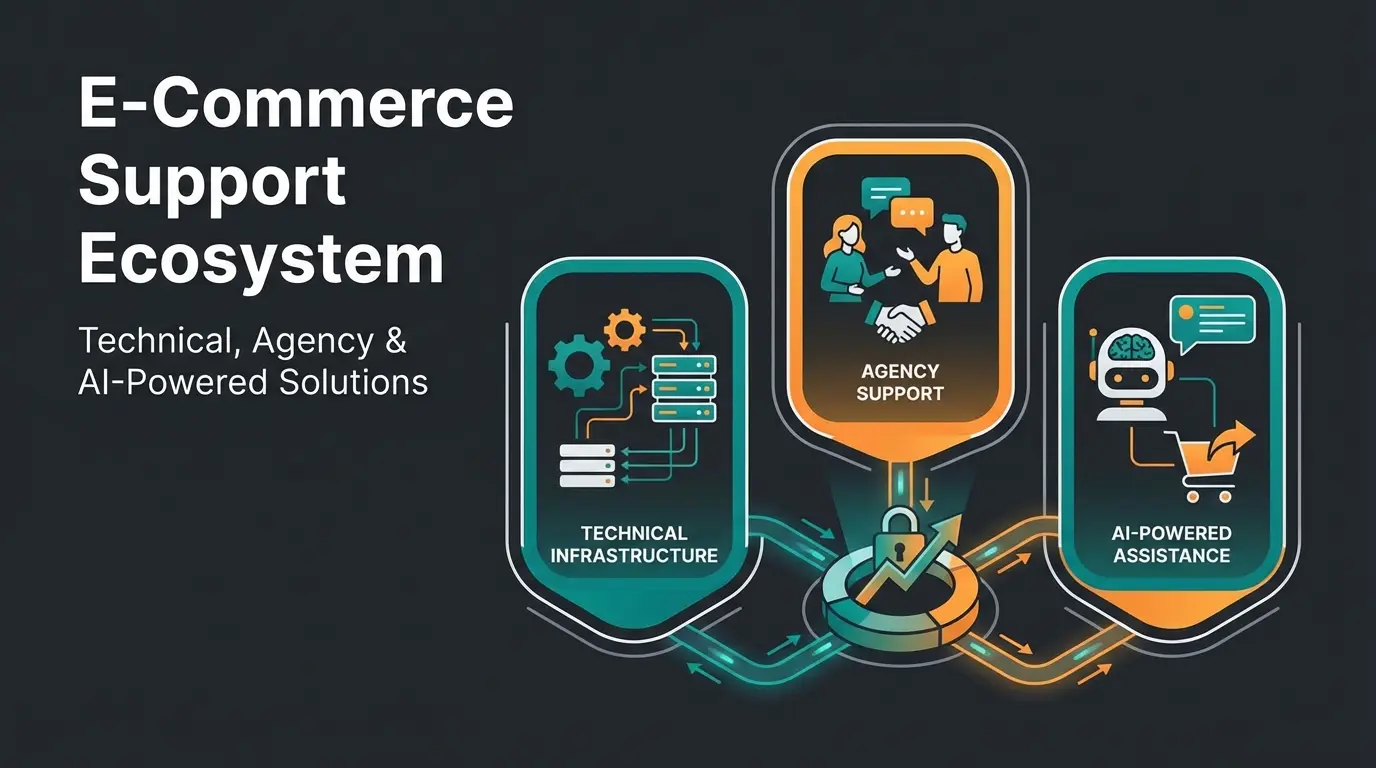
Introduction: Why the Silent Salesperson Is Obsolete
Imagine walking into an exclusive specialty store in downtown Manhattan. The shelves are stocked, the products look fantastic—but there's not a single salesperson in sight. You have a question about the fit of a jacket or the compatibility of a technical device. Nobody answers. What do you do? You leave.
This exact scenario plays out thousands of times daily in Shopify stores worldwide. While we invest significant time and money in traffic (ads, SEO) and design, we leave customers alone at the most critical moment: at the point of sale.
For a long time, Shopify live chat was considered merely a necessary evil—a cost factor for handling complaints or answering "Where is my package?" questions. But in 2025, the tables have turned. Data from LiveChat shows that websites with live chat achieve up to 20% higher conversion rates. Even more impressive: customers who chat spend an average of 60% more per order according to Zoho research.
In this comprehensive guide, you'll discover why you should no longer view live chat for Shopify as a support ticket system, but rather as your highest-revenue sales channel. We analyze the best Shopify chat apps, illuminate the critical GDPR aspects for European merchants, and show you how new AI technology bridges the gap between online shops and personal consultation. As AI Chatbots transform e-commerce, understanding these tools becomes essential for competitive success.
Why Shopify Stores Need Live Chat in 2025
The e-commerce market is fiercely competitive. According to PageFly and E-Commerce Germany, Shopify holds approximately 24-27% market share in various European markets, meaning the competition is often just one click away. A live chat for Shopify is no longer a "nice-to-have" but a decisive competitive advantage.
Speed Is the New Currency
Online shopper patience is at an all-time low. Research from Forrester reveals an alarming figure: 53% of online customers abandon their purchase if they can't find a quick answer to their question.
- The Problem: A 24-hour email response time is unacceptable in 2025 for someone who wants to buy now.
- The Solution: Live chat provides instant gratification. The question "Will the package arrive before the weekend?" can be clarified in seconds, securing the purchase.
Trust Through Visibility
Especially in privacy-conscious markets, trust is the most important currency factor. An anonymous shop without visible contact options quickly appears untrustworthy. A visible chat widget signals: "We're real. We're here. You can reach us."
This drastically reduces purchase hesitation, particularly for first-time buyers who don't yet know the brand. It functions as the digital equivalent of a store owner's friendly nod when you enter their shop. This is why a well-run Shopify customer service setup has become such a critical differentiator for modern e-commerce brands.
The Shift: From Answering Machine to AI Consultant
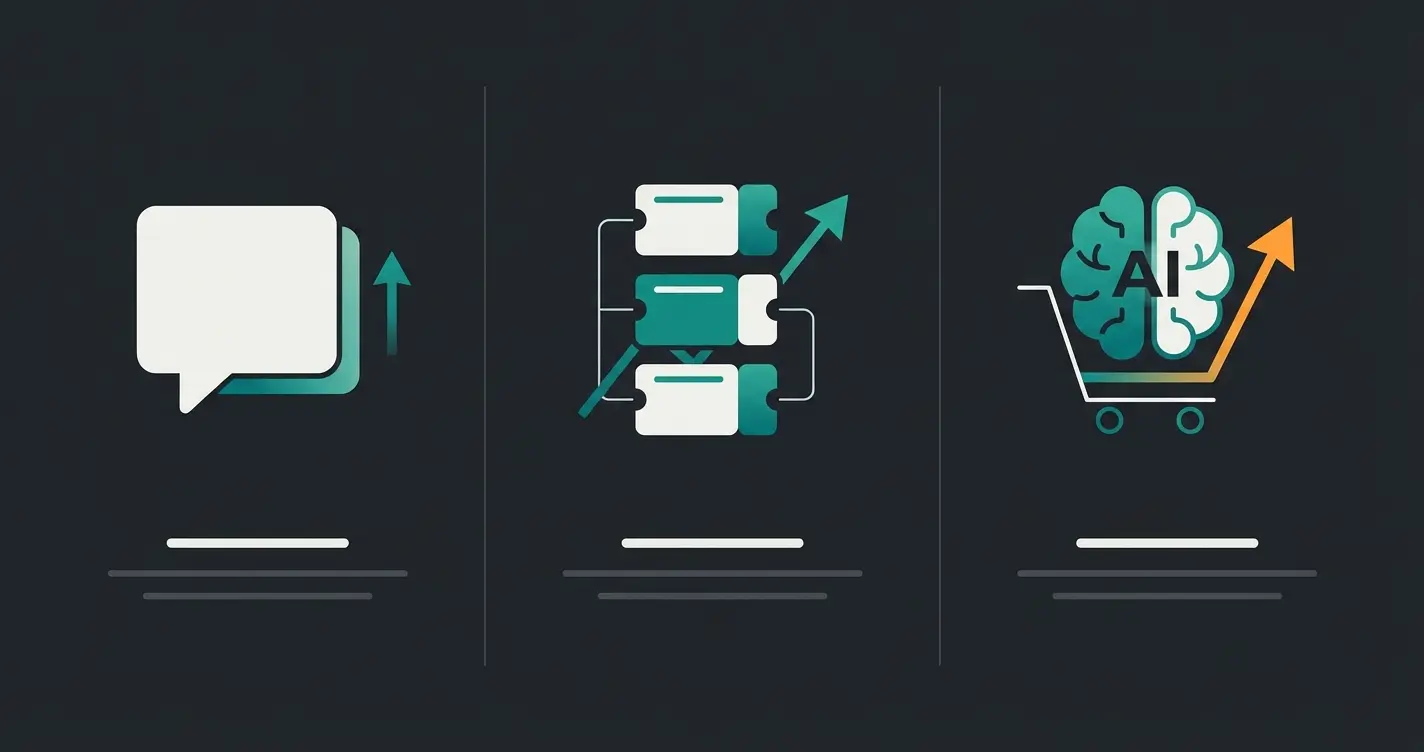
We're in the midst of an evolution in customer communication. Understanding the history of chatbots helps contextualize where we are today:
High friction, slow response times (24+ hours), high abandonment rates
Faster responses (minutes), but often frustrating as they don't understand context
Instant, personalized, sales-driven conversations that guide customers to the right products
The 3 Types of Shopify Chat Solutions
Before installing a Shopify chat app, you need to understand that not all tools pursue the same goal. The market in 2025 divides into three clear categories. Choosing the wrong category is the most common mistake merchants make. For a deeper understanding, explore our Consultative AI comparison of different chatbot approaches.
Type 1: The Basic Widget (The Mailbox)
- Examples: Shopify Inbox, Shopify WhatsApp widget, simple Messenger
- How it works: A simple chat window that sends messages directly to your phone or backend
- Advantage: Usually free and extremely quick to install
- Disadvantage: It doesn't scale. When you sleep, support sleeps. Automation is limited to simple "away notices" or static FAQ lists according to Eesel.ai
- Suitable for: Hobby shops or startups with fewer than 5 inquiries per day
Type 2: The Support Helpdesk (The Administration)
- Examples: Gorgias, Zendesk, HelpScout
- How it works: These tools specialize in organizing chaos. They bundle emails, social media, and chat in a ticket system
- Advantage: Perfect for post-purchase support (returns, defects). Deep integration with Shopify order data (e.g., cancel order with one click)
- Disadvantage: Often expensive and "reactive." They're built to solve problems, not actively sell. Pricing models are often based on ticket volume—the more customers you have, the more you pay according to Tidio and Gorgias pricing pages
- Suitable for: Large brands with dedicated support teams processing hundreds of tickets daily
Type 3: The AI Sales Consultant (The Innovation)
- Examples: Specialized AI sales apps, next-generation consultation tools
- How it works: These systems use Generative AI (LLMs) to understand your product catalog. They don't wait for complaints but act like a salesperson
- Advantage: Can conduct complex consultation conversations ("I'm looking for a gift for my wife, she likes red wine and Italian design"). Works 24/7
- Disadvantage: Requires a mindset shift—away from "support" toward "sales"
- Suitable for: Merchants who want to increase their revenue (AOV and conversion) and sell consultation-intensive products (fashion, tech, cosmetics, furniture)
This shift toward AI Product Consultation represents the next frontier in e-commerce customer experience.
Top Shopify Live Chat Apps Compared (2025)
To make your decision easier, we analyze the current market leaders and how they compare to specialized AI solutions. As AI employees evolving across industries, understanding these tools becomes critical for staying competitive.
Shopify Inbox: The Free Standard
Shopify Inbox is Shopify's native solution.
- Pros: Completely free, integrates seamlessly into the admin area, displays customer cart contents
- Cons: Very rudimentary automation ("instant replies"). No real AI that can hold conversations. Customers often have to wait until a human has time
- Verdict: The best entry point, but a dead end for growing brands
Tidio: The All-Rounder
Tidio is very popular and offers a mix of live chat and chatbots.
- Pros: Simple visual editor for chatbots ("Flows"), freemium model
- Cons: The AI function ("Lyro") is severely limited. The free tier often includes only 50 AI conversations—with good traffic, that's used up in a few hours according to Tidio's own documentation and Eesel.ai analysis. After that, it quickly becomes expensive
- Verdict: Good for small teams, but AI limits can slow growth
Gorgias: The E-Commerce Specialist
Gorgias is the gold standard for support teams.
- Pros: Extremely deep Shopify integration (edit orders in chat). Omnichannel (Instagram, email, chat in one place)
- Cons: Pricing model based on "Billable Tickets." This means: if you're successful and have many customer inquiries, you're "punished" with higher costs as noted by Gorgias pricing. Focus is heavily on support, less on proactive consultation
- Verdict: A must for large support teams, but often overkill for pure sales optimization
AI Sales Consultants: The New Category
In contrast to Gorgias (support focus) or Shopify Inbox (manual), AI sales consultants close the gap of automated consultation. These solutions understand not just "Where is my package?" but "Which product is right for me?" The goal: increasing average order value (AOV) through upselling and cross-selling around the clock.
| Feature | Shopify Inbox | Gorgias | Tidio | AI Sales Consultant |
|---|---|---|---|---|
| Primary Focus | Manual Communication | Support Tickets & Helpdesk | Hybrid (Chat & Bots) | Automated Sales Consultation |
| Price | Free | $$$ (Ticket-based) | $$ (Volume-based) | $$ (Value-based) |
| AI Understanding | ❌ (Static FAQs only) | ✅ (Assistive AI) | ✅ (Lyro - limited) | ✅ (Generative Sales AI) |
| Product Recommendations | ❌ (Manual by agent) | ❌ (Manual) | ⚠️ (Limited) | ✅ (Automatic & Contextual) |
| 24/7 Availability | ❌ (Auto-reply only) | ✅ (Via bots) | ✅ | ✅ (Full consultation) |
| Setup Effort | Low | High | Medium | Low (Plug & Play) |
For a dedicated breakdown of chatbot automation on the platform, see our Shopify Chatbot guide covering setup, AI training, and ROI benchmarks.
Decision Guide: Support Bot vs. Sales AI
Many merchants wonder: "Do I really need AI? Isn't a normal bot enough?" The answer depends on what kind of conversations your customers want to have.
Scenario A: The Support Case (Reactive)
- Customer: "I want to return my order #1234."
- Requirement: Clear processes are needed here. A classic rule-based bot (If X, then Y) or a helpdesk like Gorgias is strong here.
- Goal: Reduce costs, close ticket quickly.
Scenario B: The Consultation Case (Proactive)
Customer: "I have dry skin that gets red quickly in winter. Which cream from your range helps best? And is it vegan too?"
- The Problem: A classic bot fails here. It doesn't understand the context ("winter," "redness") and can't make connections between skin type and product attributes. It would answer: "Here's a link to our creams." — The customer is frustrated and doesn't buy.
- The Solution (Sales AI): A generative AI understands the nuances. It answers: "For dry skin prone to redness in winter, I recommend our 'Winter Repair Cream.' It contains soothing aloe vera and is 100% vegan. Would you like to see the matching cleanser too?"
- Goal: Generate revenue, strengthen customer loyalty.
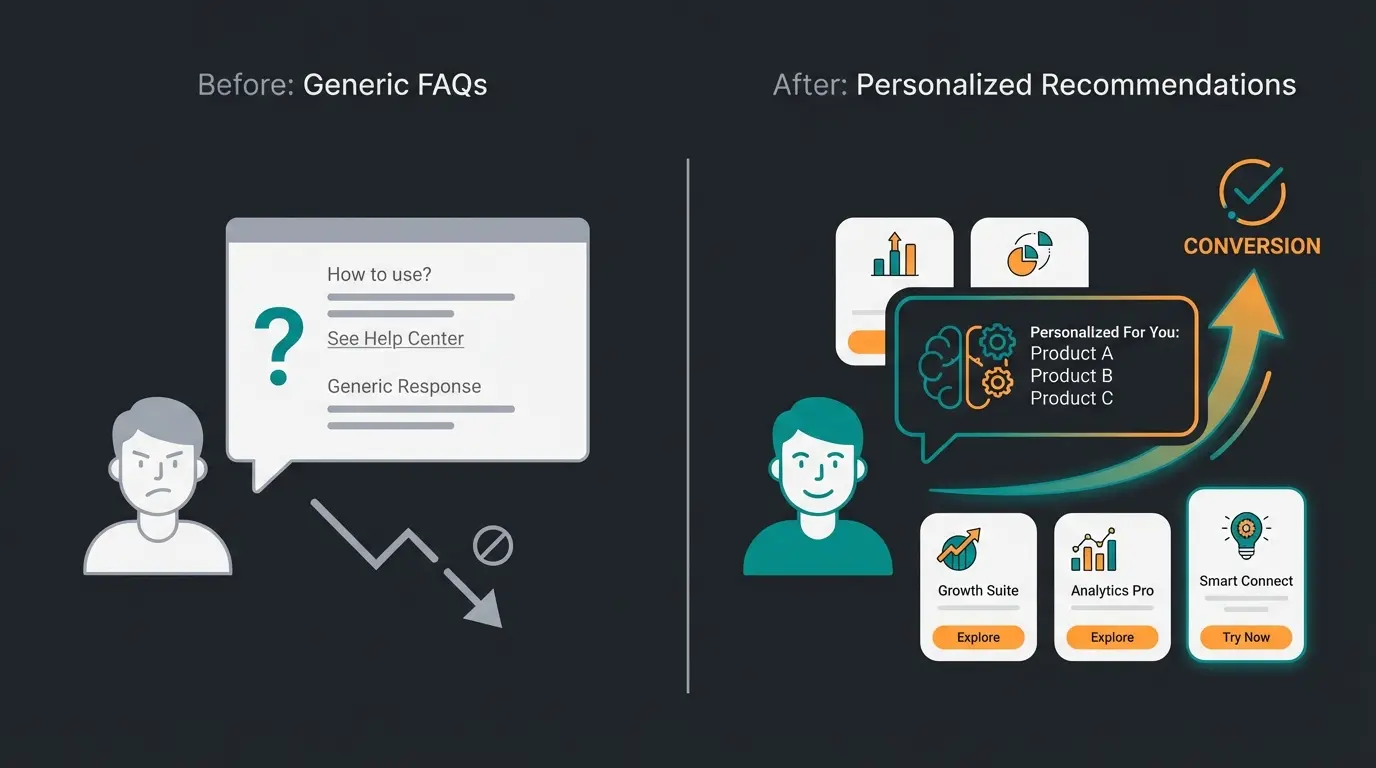
This is precisely why AI Selling is revolutionizing how modern e-commerce businesses approach customer interaction.
Stop losing sales to unanswered questions. Our AI consultation solution turns every chat into a conversion opportunity—24/7, in any language.
Start Free Trial NowEssential Features for GDPR Compliance
If you sell in Europe, different rules apply than in the US. A Shopify live chat that isn't legally compliant can quickly lead to fines and legal issues. According to TWIPLA analysis, many US apps (including Shopify itself which uses US servers/CDNs) are under scrutiny from data protection authorities.
GDPR Compliance (Data Protection)
Data protection is the elephant in the room.
- Server Location: It's essential that the chat provider offers Standard Contractual Clauses (SCCs) and ideally hosts data in the EU or at least adheres to Privacy Shield successor agreements
- Data Processing Agreement (DPA): You must conclude a DPA with the chat provider. Check whether the provider easily provides this according to Gorgias compliance documentation and Tidio GDPR information
- Cookie Consent: The chat may often only load after the user has consented in the cookie banner (e.g., Usercentrics, Cookiebot)
Multi-Language Support
Many shops sell across the EU and beyond.
- A static bot often needs to be set up twice (once for English, once for other languages)
- A modern AI solution should automatically detect the browser language or translate on-the-fly. This saves hundreds of hours of configuration effort
Catalog Integration (Real-Time Inventory)
Nothing is worse than when the chatbot recommends a product that's sold out.
- The chat solution must have a live connection to your Shopify inventory
- It should understand variants (e.g., "The shirt is still available in L, but no longer in M")
These technical requirements align with broader trends in AI e-commerce transforms as explored in our comprehensive e-commerce guide.
Customers abandon purchases without quick answers (Forrester Research)
Websites with live chat see higher conversion rates
Customers who chat spend more per order on average
AI consultants never sleep, capturing sales around the clock
Implementation: How to Start in 3 Steps
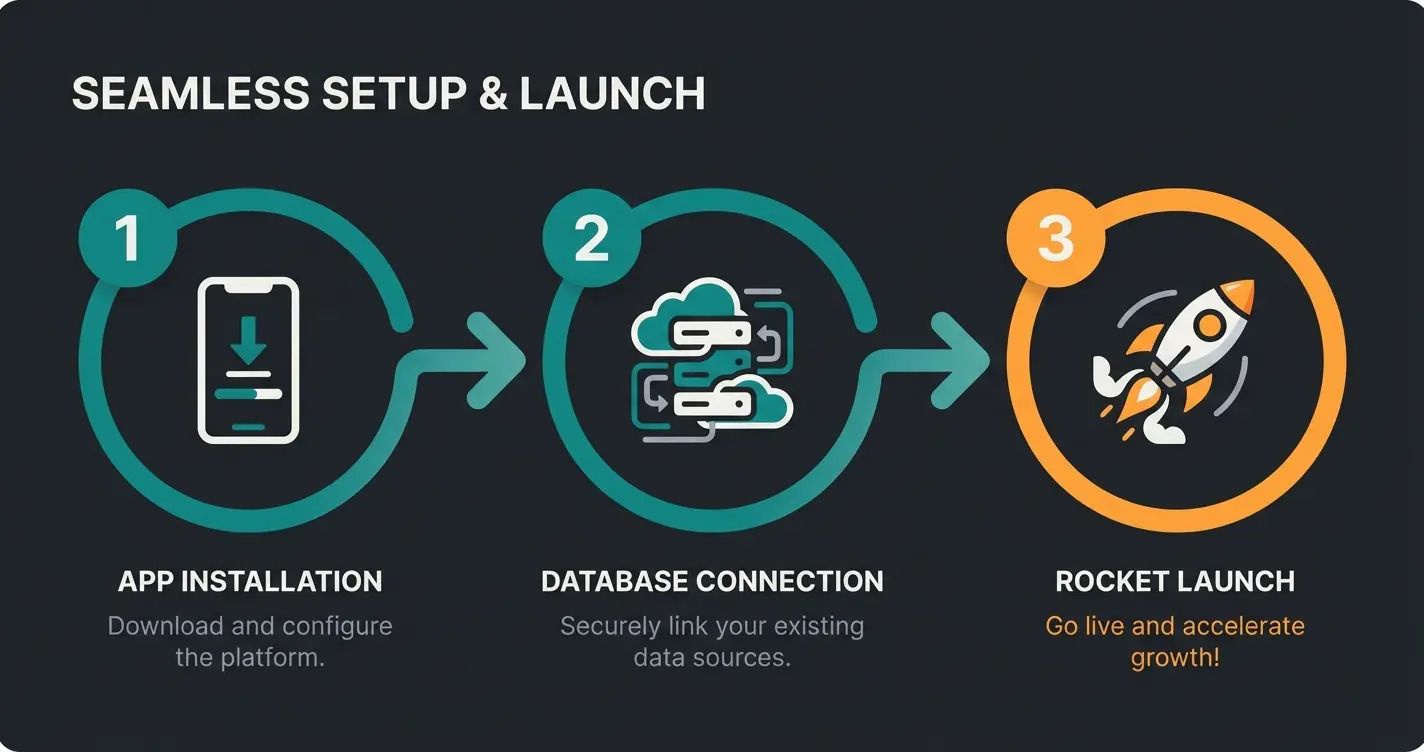
Introducing a live chat for Shopify doesn't have to be an IT project lasting several weeks. Modern apps are "no-code" solutions.
Step 1: Installation & Design
- Download the app from the Shopify App Store
- Customize the chat widget to your branding (colors, logo)
- Important: Position the widget so it doesn't cover the "Add to Cart" button on mobile!
Step 2: Connect Knowledge & Catalog
- For AI solutions: Connect your product catalog
- Upload your FAQs, shipping conditions, and return policies. The AI "reads" these documents and trains itself
- Define the "Tone of Voice": Should the AI be casual (emojis) or formal? Match it to your brand
Step 3: Test & Go-Live
- Test the chat yourself in incognito mode. Ask trick questions ("What does shipping to Canada cost?", "Do you have blue socks?")
- Only activate the chat at times when you (or the AI) can actually respond
- Pro-Tip: Start with a "soft launch" only on product pages to test server load and quality before activating the chat on the homepage
For merchants running other platforms, similar principles apply—check out our guide on Shopware 6 chatbots for platform-specific implementation advice.
The Proactive Consultation Advantage
One of the most significant gaps in the current Shopify live chat landscape is the focus on reactive support rather than proactive consultation. Most content and tools frame live chat as a customer support mechanism for fixing problems and answering "Where is my package?" questions. This misses the massive opportunity for proactive product consultation.
Think about the difference: A customer browsing your skincare collection doesn't know they need help until they're overwhelmed by choices. A proactive AI can identify browsing patterns and initiate helpful conversations: "I notice you're looking at moisturizers. Would you like help finding the right one for your skin type?"
This approach transforms your chat from a cost center (handling complaints) to a revenue center (driving sales). The AI product consultants of 2025 understand this fundamental shift and are built specifically for pre-purchase engagement. How that logic extends into your storefront merchandising is covered in our guide to AI-driven product advice.
The Pre-Purchase Anxiety Gap
Most articles and tools focus on post-purchase support (returns, shipping). There's a significant gap in addressing pre-purchase anxiety and decision paralysis. Customers often:
- Feel overwhelmed by too many product options
- Worry about making the wrong choice
- Need validation that a product will meet their specific needs
- Want personalized recommendations they can trust
A Sales AI addresses all these concerns proactively, reducing cart abandonment and increasing average order value simultaneously.
The Hybrid Reality: AI First, Human Fallback
Smart merchants understand that bots can't do everything. The "AI First, Human Fallback" model has emerged as the preferred approach for quality-conscious businesses. This acknowledges that:
- AI handles 80-90% of routine inquiries and product consultations instantly
- Complex edge cases get seamlessly escalated to human agents
- Customers never feel "stuck" in a bot loop
- Human agents can focus on high-value, complex interactions
This hybrid approach delivers the best of both worlds: the scalability and availability of AI with the nuance and empathy of human support when needed.
FAQ: Common Questions About Shopify Live Chat
Shopify Inbox is a good starting point for very small stores with minimal traffic. However, it lacks true AI capabilities and cannot scale with your business. If you have more than 5-10 inquiries per day or sell consultation-intensive products, you'll quickly outgrow its limitations. Consider it a temporary solution while you evaluate more robust options.
Ensure your provider offers Standard Contractual Clauses (SCCs), provides a Data Processing Agreement (DPA), and ideally hosts data within the EU. Additionally, integrate your chat with your cookie consent management platform so the chat only loads after user consent. Always check the provider's compliance documentation before implementation.
Traditional live chat requires human agents available during business hours, limiting availability and scalability. AI chat provides 24/7 coverage, handles multiple conversations simultaneously, and can proactively drive sales through product recommendations. Studies show AI chat can increase conversion rates by 20% and average order values by up to 60%, typically delivering ROI within the first month of implementation.
Modern generative AI can understand nuanced questions like "Which running shoe is best for someone with flat feet who runs marathons?" The key is proper catalog integration and training. The AI needs access to your product data, attributes, and customer-relevant information. Quality AI solutions can match or exceed average salesperson performance for product recommendations.
Modern Shopify chat apps are designed for quick implementation. Basic setup typically takes 30 minutes to an hour. For AI solutions, connecting your product catalog and training the AI on your specific business rules may take an additional day or two. Most merchants can go live within a week, with optimization continuing over time based on conversation data.
Conclusion: Chat Is Your New Top Salesperson
E-commerce in 2025 no longer forgives passivity. Customers expect answers in real-time. Those who make them wait lose them to Amazon or the competition.
But simply installing a Shopify chat app is no longer enough. Tomorrow's winners clearly distinguish between support (minimizing costs) and consultation (maximizing revenue).
- Use Shopify Inbox if you're just starting out and have no budget
- Use Gorgias if you're drowning in support tickets
- Use AI Sales Consultants if you want to transform your online shop into a digital flagship store where every customer is personally, competently, and immediately advised—24 hours a day, 7 days a week
The future belongs to merchants who understand that chat isn't just a support channel—it's their most powerful sales tool. Don't just add a chat bubble; add a team member who never sleeps, speaks every language, and knows your entire product catalog by heart.
Transform your Shopify store with AI-powered consultation that sells while you sleep. Join thousands of merchants already seeing 20%+ conversion increases.
Get Started Free Today
Lasse is CEO and co-founder of Qualimero. After completing his MBA at WHU and scaling a company to seven-figure revenue, he founded Qualimero to build AI-powered digital employees for e-commerce. His focus: helping businesses measurably improve customer interaction through intelligent automation.