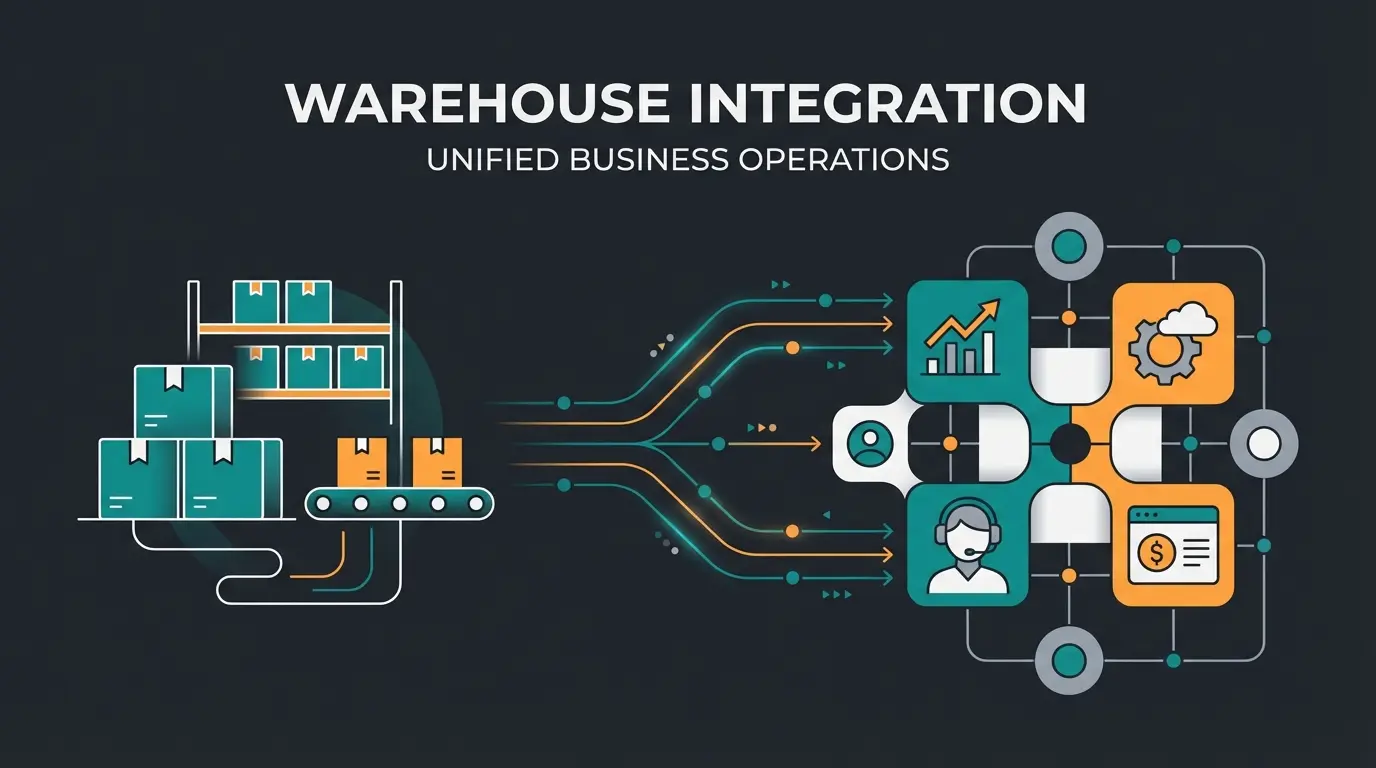
Introduction: The End of Either-Or Thinking
It's the classic dilemma for business executives and startup founders: "Should I first invest in organizing my internal operations (ERP) or in maximizing my sales (CRM)?"
For years, this debate was framed under the keyword ERP vs CRM as if these were two competing philosophies. The finance department insisted on ERP for clean balance sheets and inventory tracking. Sales demanded a CRM for lead tracking and pipeline management. The result? Two separate worlds operating in isolation.
But we're now in 2025. The enterprise software market is growing rapidly—the ERP market in Germany alone is projected to grow at an annual rate (CAGR) of 8% to nearly $9 billion by 2030, according to Grand View Research. Meanwhile, CRM projects fail more often than necessary, frequently because they lack operational context, as noted by Softwarepartner.
In this article, we'll resolve this apparent conflict. We'll not only clarify the fundamental differences and definitions but also demonstrate why AI agents are reshuffling the deck right now. We're moving away from static data storage toward active product consultation, where the CRM "thinks" with the knowledge of the ERP.
What Is a CRM? (The Front-Office Engine)
Definition and Core Purpose
CRM stands for Customer Relationship Management. It's the technological tool for the "front-office"—those areas that have direct contact with the outside world. If you think of a company as a human body, the CRM is the voice and the ear. It listens to the market and communicates the company's message.
The primary goal of a CRM is revenue growth through better customer relationships. It's all about empathy, context, and timing.
Key Functions of a Modern CRM
Based on current market standards (like Salesforce, HubSpot, or Microsoft Dynamics), today's CRM encompasses far more than just an address book:
- Lead & Pipeline Management: Visualization of the sales funnel. Where does the customer stand? Are they a cold lead or about to close?
- Marketing Automation: Personalized email campaigns, lead scoring, and nurturing sequences based on user behavior.
- 360-Degree Customer View: A central file that bundles every email, call, and note related to a customer.
- Service & Support: Ticketing systems that ensure no customer complaint gets lost.
The AI Transformation in CRM
Until recently, CRM was a passive database. Today, it's transforming through tools like HubSpot Breeze or Salesforce Agentforce into an active assistant. According to Manobyte and Mbudo, these AI-powered tools are revolutionizing how businesses interact with customers.
- Before: A salesperson manually enters: "Customer is interested in Product X."
- Today: An AI agent analyzes the customer's email, recognizes buying intent, drafts a response, and prioritizes the lead in the salesperson's dashboard.
What Is an ERP? (The Back-Office Backbone)
Definition and Core Purpose
ERP stands for Enterprise Resource Planning. It's the "back-office"—the engine room of the company. In our body analogy, the ERP is the brain (logic) and the backbone (stability). It manages resources: capital, materials, personnel, and time.
The primary goal of an ERP is efficiency improvement and cost reduction through optimized processes and data availability.
Key Functions of a Modern ERP
Especially in manufacturing and trading companies, where production and commerce dominate, the ERP (often also called inventory management system) is indispensable. Core modules include:
- Supply Chain Management: Procurement, warehouse management, inventory tracking, logistics, and shipping.
- Finance & Controlling: Accounting, invoicing, collections, balance sheets, and liquidity planning.
- Production Planning (MRP): Bills of materials, work schedules, capacity planning, and manufacturing control.
- Human Resources (HR): Payroll, time tracking, and master data management.
The AI Transformation in ERP
ERP systems are also becoming more intelligent. Providers like SAP with their copilot Joule or solutions like Weclapp and Xentral are increasingly integrating AI not just to manage data but to predict processes. As detailed by SAP and demonstrated in YouTube tutorials, these AI capabilities are transforming business operations.
- Before: The ERP reports: "Inventory for Part Y is zero."
- Today: An AI agent in the ERP predicts based on seasonal trends and delivery times that a shortage will occur in 4 weeks and automatically suggests a reorder. This predictive capability is highlighted by Alfapeople.
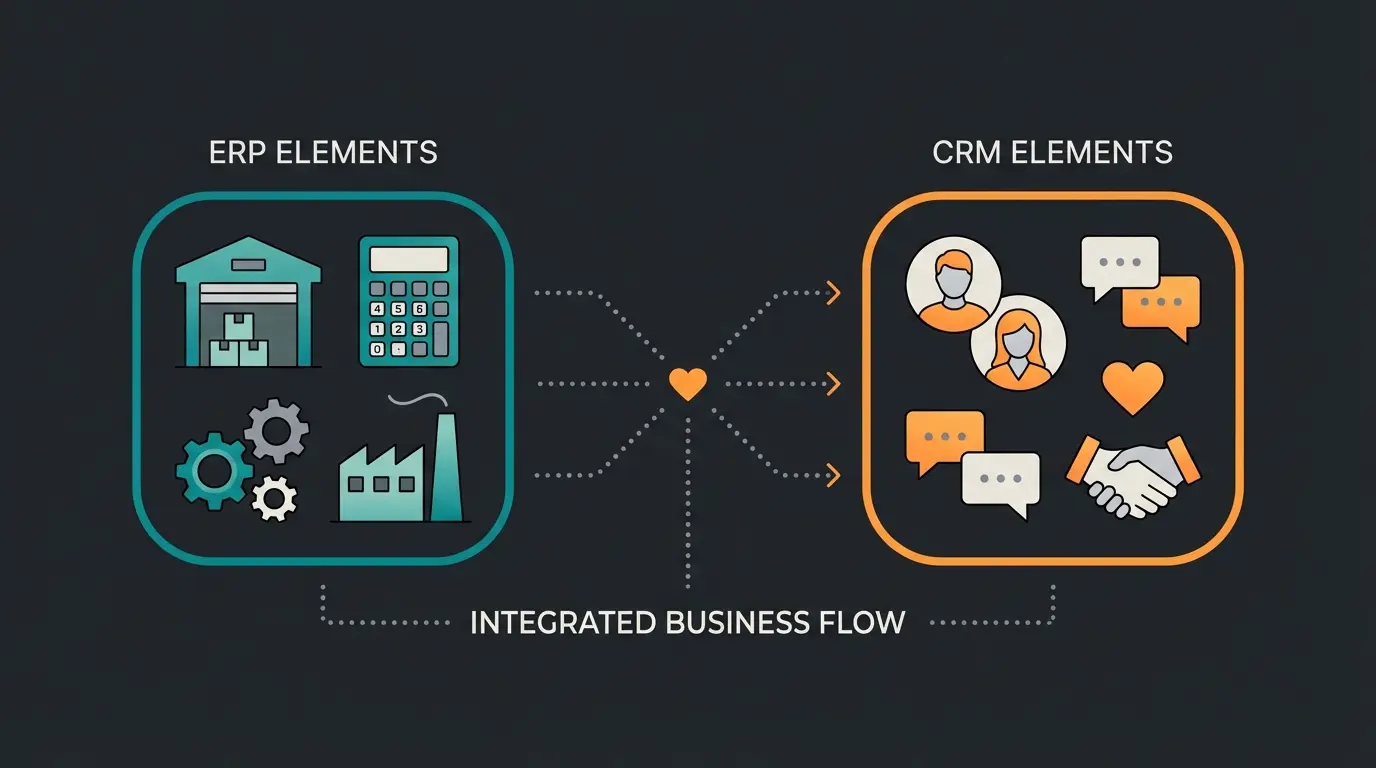
ERP vs CRM: Key Differences (Comparison Table)
To facilitate the decision of "ERP or CRM" (or better: the prioritization), a direct comparison of the core aspects helps. Understanding the difference between ERP and CRM is essential for making the right technology investment.
| Criteria | ERP (Enterprise Resource Planning) | CRM (Customer Relationship Management) |
|---|---|---|
| Primary Focus | Internal processes & resources (Back-Office) | External relationships & sales (Front-Office) |
| Main Goal | Efficiency, cost control, delivery capability | Revenue growth, customer satisfaction, retention |
| Typical Users | Accounting, warehouse, procurement, production, HR | Sales, marketing, customer service |
| Data Focus | Hard Facts: Prices, inventory, bills of materials, transactions | Soft Factors: Conversation notes, interests, sentiment, history |
| Time Horizon | Past & Present: "What did we deliver/sell?" | Future: "What will we sell? What opportunities exist?" |
| Traditional AI Role | Automation of routine tasks (e.g., invoice matching) | Analysis of customer behavior & lead scoring |
| New AI Role 2025 | Predictive Planning: Supply chain forecasts, autonomous procurement | Autonomous Agents: Independent customer consultation & deal closing |
The Restaurant Analogy for Quick Understanding
Imagine a restaurant:
- The CRM is the waiter (Front-Office). They know the regulars, remember that Table 4 loves red wine, are charming, and ensure guests return.
- The ERP is the kitchen and pantry (Back-Office). It ensures there are enough steaks, calculates the price per dish, organizes the cooks' schedules, and makes sure no food is wasted.
The Problem: If the waiter (CRM) sells a dish that the kitchen (ERP) no longer has in stock, the guest is unhappy—no matter how charming the waiter was.
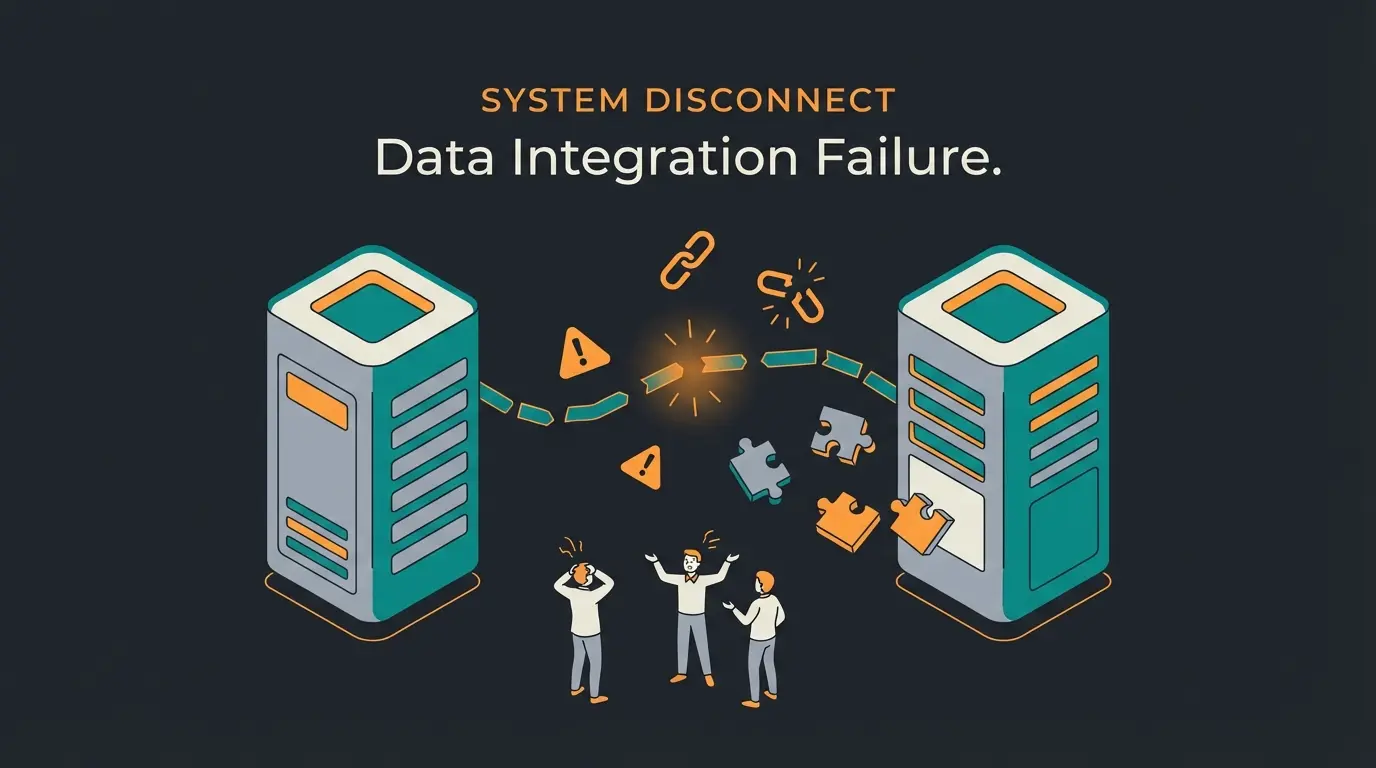
Why Separation Creates Problems Today (The Silo Trap)
The historical separation of "ERP vs CRM" has led to massive data silos in many companies. A report from Salesforce and MuleSoft shows that 80% of companies see data silos as the main blocker for innovation, as documented by Salesforce DevOps.
See data silos as the biggest obstacle to automation and AI
Projected CAGR for the ERP market through 2030
Expected ERP market value in Germany by 2030
The Scenario of the 'Blind' Salesperson
A typical problem in mid-market companies looks like this: A sales representative uses a CRM (e.g., HubSpot or Pipedrive). They see that a customer is interested in a large machine. They offer a discount and promise delivery in two weeks to close the deal.
The Reality in the ERP:
- The machine has a delivery time of 8 weeks (parts shortage).
- The granted discount pushes the margin below the allowed minimum (increased raw material costs recorded in the ERP).
- The customer still has open invoices and is actually blocked for new credit (financial accounting).
The result: The salesperson celebrates the deal in the CRM, while order processing in the ERP is throwing their hands up in despair. The company loses money or reputation.
Why Simple Interfaces Are No Longer Enough
Previous solutions often consisted of simple synchronizations: If the address changes in the CRM, it gets updated in the ERP. That's data hygiene, but not operational intelligence.
The context is missing. A CRM doesn't know why a product isn't available. An ERP doesn't know that a customer urgently needs an alternative right now.
This creates a gap for consultation-intensive products that neither the ERP (too technical/rigid) nor the CRM (too superficial) can fill alone.
The Solution: How AI Turns ERP Data Into Real Consultation
Here lies your opportunity for differentiation and the real value of understanding the ERP CRM comparison. We need to stop viewing ERP and CRM as separate silos. The future belongs to AI-powered integration, where AI agents function as bridges.
The Concept: 'The Brain vs. The Voice'
Imagine your company has a super-brain:
- The Brain (ERP): It knows every screw, every delivery time, every technical specification, and every margin. It's logical but mute.
- The Voice (CRM): It can speak, chat, and write emails. It's empathetic but lacks technical depth.
The AI Agent (The Bridge): Modern AI agents (like in Salesforce Agentforce or SAP Joule) use technologies like RAG (Retrieval-Augmented Generation). This means: The AI agent in the CRM "reads" the ERP brain in real-time before responding.
Customer asks a technical question in the chat or CRM interface
AI agent identifies the customer's need (compatibility, availability, pricing)
Agent queries ERP in real-time for specs, inventory, and delivery times
AI formulates a helpful, accurate answer combining ERP data with CRM context
Customer receives instant, accurate information and can make immediate decisions
Practical Example: The AI Product Consultant
Let's take a B2B machinery manufacturer. A customer asks in the chatbot (CRM): "Is spare part X compatible with my 2018 machine, and when would it arrive?"
Without AI Integration (Traditional):
- The chatbot (CRM) says: "I'll forward your inquiry to a representative."
- Time lost: 24 hours.
- Employee must manually check in the ERP.
With AI Agent Integration (Modern):
- The AI agent in the CRM recognizes the intent ("compatibility check" + "availability").
- It accesses the ERP via API.
- It checks the bill of materials for the 2018 machine (ERP data). → Result: Compatible.
- It checks real-time inventory (ERP data). → Result: 3 units in stock.
- It formulates the response in the CRM: "Yes, that part fits perfectly for your 2018 model. We have 3 units in stock that can arrive by the day after tomorrow if you order today."
- Added Value: The deal is closed immediately.
Why This Matters for Your Business
Most articles only explain that you should synchronize data. They don't explain the operational value. By describing how AI translates hard ERP facts into soft CRM consultation, you bridge a massive gap. You address the problem of "consultation-intensive products," where the distinction between "managing resources" and "managing customers" blurs.
Discover how AI-powered product consultation can connect your systems and deliver instant, accurate customer advice.
Start Your Free TrialWhen Do I Need What? (Decision Guide)
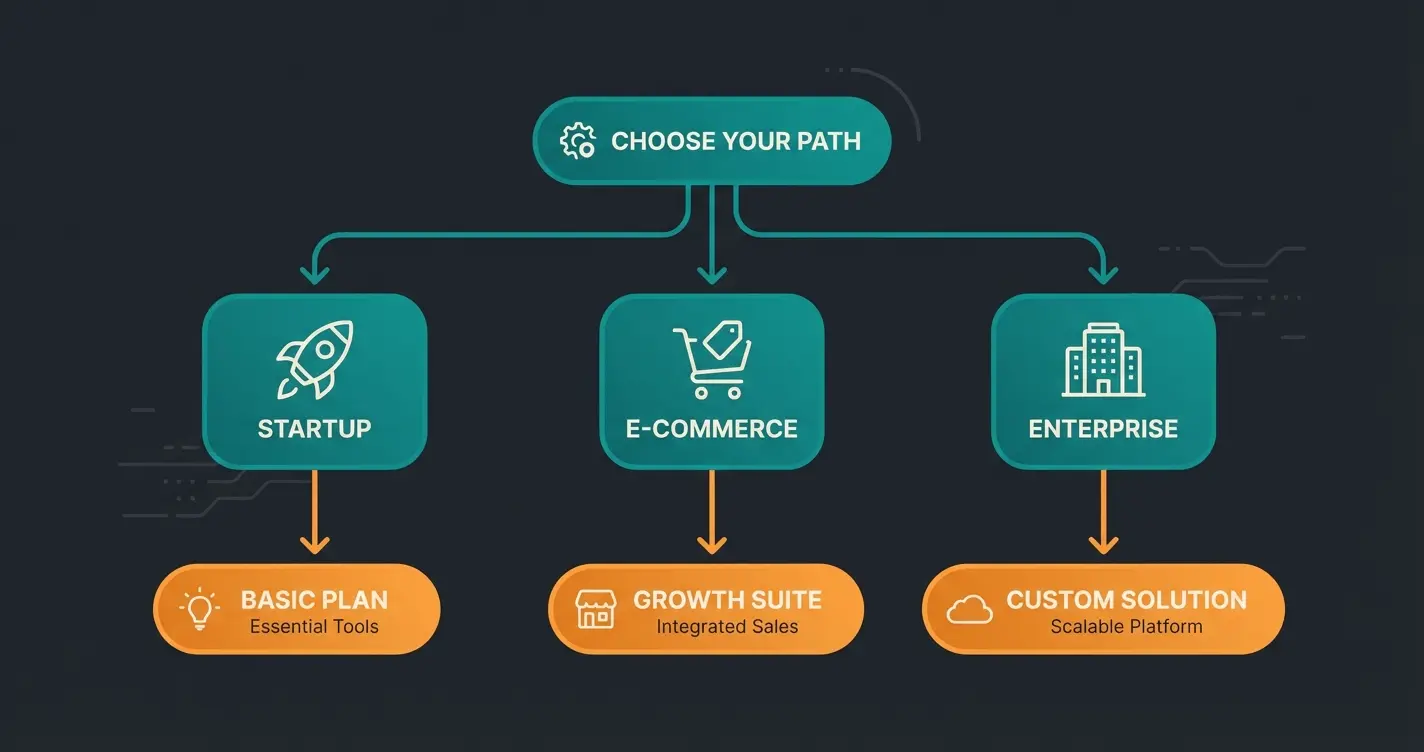
Not every company needs full AI integration immediately. Here's a guide for different business stages when considering ERP or CRM investments:
Scenario A: The Young Service Startup
- Focus: Customer acquisition, quick deals.
- Need: CRM First.
- Why: You don't have complex inventory or supply chains. Your "product" is time or software. An ERP would be "overkill" here. A good CRM (e.g., HubSpot, Pipedrive) is enough to write quotes and invoices.
Scenario B: Traditional Retail / E-Commerce
- Focus: Order processing, margin, logistics.
- Need: ERP First (or All-in-One).
- Why: If you have 5,000 items in your shop, inventory management is survival-critical. A CRM is useless if you can't deliver. Often, modern ERPs (like Xentral, Weclapp) already offer integrated CRM-light functions that are sufficient for the start, as noted by ERP-4-Business and Weclapp.
Scenario C: Mid-Market with Complex Products (Hidden Champion)
- Focus: Long-term customer relationships, custom manufacturing, service.
- Need: Best-of-Breed (ERP + CRM) + Integration Layer.
- Why: You need the specialized functions of both worlds. The ERP must control complex manufacturing (SAP, Microsoft Dynamics), the CRM must manage complex buying centers (Salesforce).
- The AI Lever: This is exactly where investing in AI agents pays off—agents that make the technical knowledge of the ERP usable for sales in the CRM.
Conclusion: The Future Belongs to Integration
The question "ERP vs CRM" is a relic from a time when software systems were islands. In 2025 and beyond, the answer is clear: ERP and CRM together.
- The ERP remains the indispensable backbone for operational excellence.
- The CRM is the growth engine for customer relationships.
- AI is the new nervous system connecting both.
For mid-market companies, this means: Stop thinking in silos. When you evaluate software today, don't just ask about the features of individual tools. Ask: "How well can this CRM access my ERP data to autonomously advise my customers?"
Those who build this bridge transform their administration from a cost center into a real competitive advantage. The trends in CRM, ERP, and business automation for 2025 point clearly toward integrated, AI-powered solutions, as analyzed by Excellium and IT-Matchmaker.
FAQ: Common Questions About ERP and CRM
Yes, many modern ERP systems (like Weclapp or Myfactory) have integrated CRM modules. For small businesses, this is often sufficient. However, once sales needs complex marketing automation or in-depth lead analytics, these modules reach their limits and a specialized CRM becomes necessary.
It depends on your business model. Trading and manufacturing companies should start with ERP to ensure delivery capability. Service providers and agencies usually benefit first from a CRM to boost revenue. The key is understanding which system addresses your most pressing operational bottleneck.
AI agents can act as intelligent mediators. Instead of rigid interfaces that only copy data, AI agents can actively query information from one system to solve tasks in the other (e.g., 'Check inventory in ERP and write the customer a delivery confirmation in CRM'). This creates operational intelligence, not just data synchronization.
ERP focuses on 'hard facts'—prices, inventory levels, bills of materials, and transactions from past and present operations. CRM focuses on 'soft factors'—conversation notes, customer interests, sentiment, and interaction history that help predict future sales opportunities.
The traditional either-or debate is increasingly outdated. Modern businesses recognize that both systems serve essential but different purposes. The real question has shifted from 'which one?' to 'how do we integrate them effectively?' AI-powered integration layers are making this question the new strategic priority.
See how AI can bridge your ERP and CRM systems to deliver instant, accurate product advice that closes deals faster.
Get Started Free