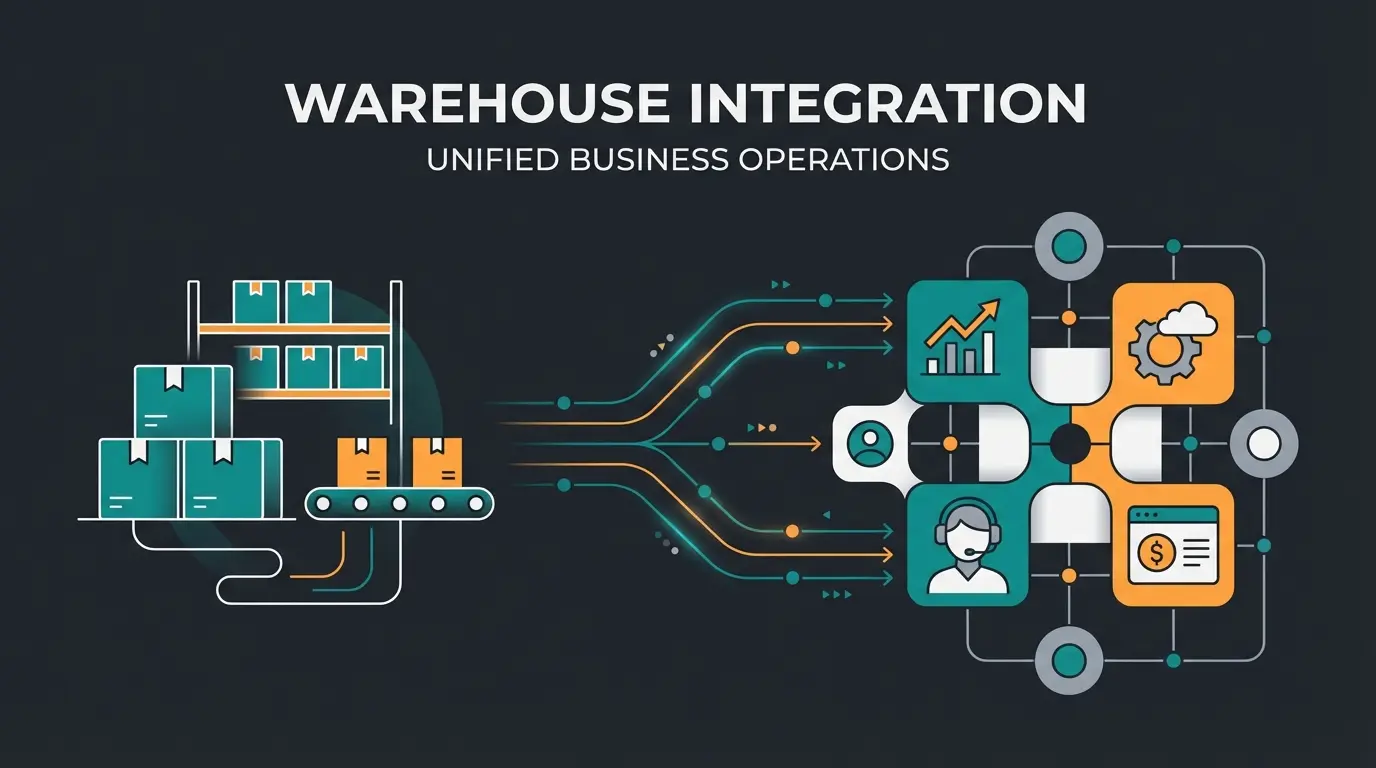
Does Excel Run Your Business More Than You Do?
You're not alone. For most founders and small business owners, the journey starts exactly there: a patchwork of spreadsheets, isolated invoicing tools, and an email inbox bursting at the seams. But at some point, this "creative chaos" stops being charming and starts throttling your growth. Orders get lost, inventory counts don't match reality, and important decisions are made from gut feeling because reliable data is nowhere to be found.
This is where the ERP system (Enterprise Resource Planning) typically enters the picture. But the term alone triggers flight reflexes in many small business owners: too expensive, too complex, too rigid – a monster better suited for taming corporations like Volkswagen or Siemens than an agile startup with 10 employees.
But the tide has turned. We're now in 2025/2026, and the enterprise software market is undergoing its biggest revolution since the invention of cloud computing. It's no longer just about storing data. The new generation of ERP solutions for small businesses wants to be more: not just a digital archive, but an active partner that thinks alongside you.
In this comprehensive guide, you'll discover not only which ERP systems for small businesses currently dominate the market and what they cost. We'll also reveal why mere resource management is no longer enough and how Artificial Intelligence (AI) is transforming the ERP's role from "bookkeeper" to "business consultant." If you're looking for ways to enhance customer interactions, you might also explore how AI product consultation is revolutionizing the way businesses engage with their customers.
What Is an ERP System Actually? (The Modern Definition)
Before we dive into the depths of providers and features, we need to clarify the foundation. The classic definition is rather dry:
The goal has always been centralization. Instead of having five different island solutions that don't communicate with each other, there's a "Single Source of Truth."
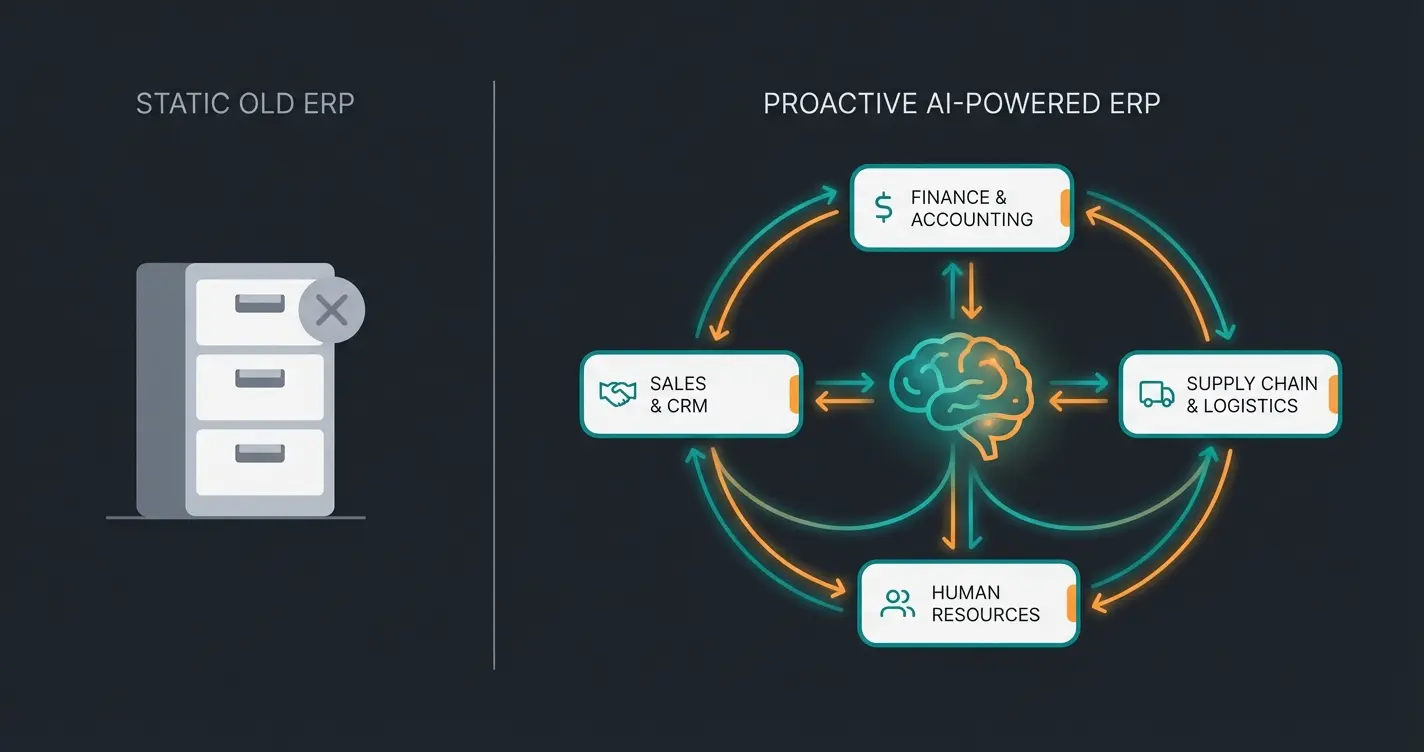
The Paradigm Shift: From Filing Cabinet to Brain
For small businesses and startups, this definition falls short today. A modern ERP for small business is no longer just a digital filing cabinet where you throw in data and hope to find it again someday.
Think of the system more as the central nervous system or the brain of your company:
- ERP 1.0 (Past): You ask the system: "How many blue t-shirts do we have left?" → The system answers: "5 pieces."
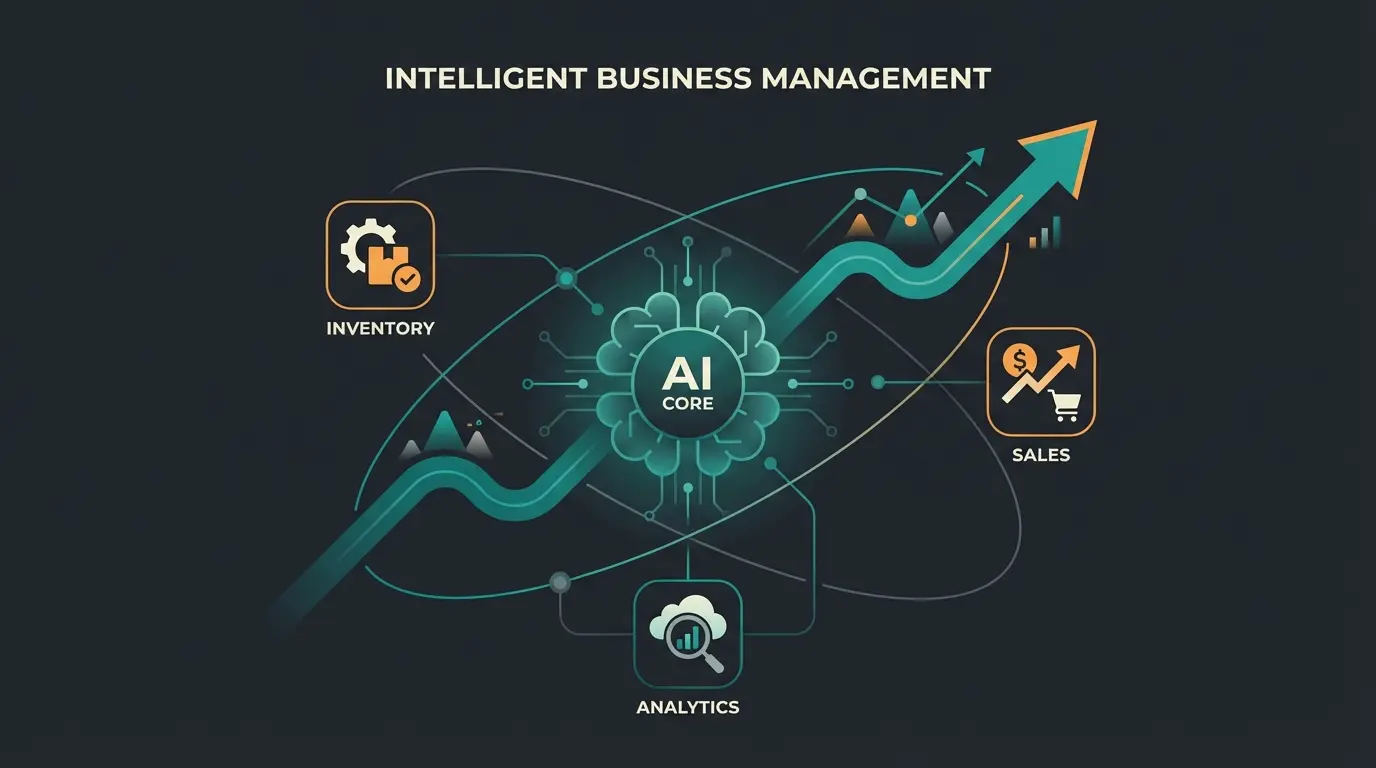
- ERP 2.0 (Future & AI): The system reaches out proactively: "We only have 5 blue t-shirts left. Since a marketing campaign starts on Friday and delivery time is 3 days, I've already drafted a reorder. Should I send it?"
This difference is enormous. While classic systems passively wait, modern, intelligent systems act proactively. For small teams that often don't have their own data analysis department, this transformation is a matter of survival. Companies looking to enhance their AI lead generation capabilities are already seeing the benefits of this proactive approach.
When Does an ERP Make Sense for Small Business?
Many founders ask themselves: "Am I still too small for an ERP?" The answer is almost always: if you're asking yourself this question, you're probably already too late. The ideal time for implementation is before chaos takes over.
Here's a checklist. If you answer "yes" to more than two of these points, it's time for an ERP for your small firm:
- The Excel Death: Your Excel sheets have become so complex that only one person in the company understands them. When that person gets sick, operations grind to a halt.
- Data Silos: You have to enter customer data separately in the CRM, invoicing program, and shipping tool (and make typos doing so).
- Inventory Blindness: You sell products that physically aren't in stock anymore, or find goods you thought were sold out.
- Response Time: A customer asks about order status, and you need to click through three different systems to give an answer.
- Financial Blindness: You only know at the end of the month (or quarter) how much profit you actually made.
- Growth Pain: You want to scale (e.g., expand to a new marketplace like Amazon), but your manual processes don't allow for increased order volume.
Why "ERP Startup" Is Its Own Category
Startups have different needs than the classic mid-sized business. They don't need software designed for 20 years that costs millions. They need:
- Scalability: The system must grow with you (from 10 to 1,000 orders per day).
- Speed: Implementation can't take 6 months.
- Openness: API interfaces to Shopify, Amazon, PayPal, and similar platforms are mandatory.
Data is isolated across multiple spreadsheets. No single source of truth. High error rate from manual entry.
Data is centralized in one system. Better accuracy but still passive – you must query it for insights.
Data becomes active and advisory. The system proactively alerts you, suggests actions, and optimizes decisions.
Most small businesses stop at Stage 2. Here's why you should aim for Stage 3 – and how modern solutions like AI customer service are already making this leap.
Best ERP Systems for Small Business Compared (2025)
The German market for ERP software is densely populated. To help you navigate, we've analyzed the most relevant providers for small businesses and startups. We focus here on cloud solutions, as on-premise installations (local servers) are usually uneconomical for small businesses.
1. Weclapp: The All-Rounder for Services and Commerce
Weclapp is one of the most popular cloud ERP solutions in Germany and has won multiple awards. According to weclapp.com, their pricing structure offers flexible options for growing businesses.
- Focus: Very strong for service providers (agencies, consultants) and in e-commerce.
- Functions: CRM, inventory management, project management, accounting preparation.
- Prices: Starts at approximately €39 per user/month in the Starter package (with annual payment). More comprehensive packages like "ERP Commerce" run approximately €99-149 per user/month. Additional costs for modules like contract management or helpdesk (each approximately €55/month).
- Advantages: Very intuitive user interface, quick setup, German server location (GDPR compliant).
- Disadvantages: Sometimes reaches limits with very complex manufacturing processes; reporting could go deeper according to OMR reviews.
2. Xentral: The E-Commerce & Startup Specialist
Xentral has strongly positioned itself as "The Next Gen ERP" through investors like Frank Thelen and Sequoia, targeting e-commerce startups massively. Their official pricing page outlines the following tiers:
- Focus: Online retailers, D2C brands, FBA sellers (Fulfillment by Amazon).
- Functions: Extremely strong interfaces to shops (Shopify, Shopware) and marketplaces. Automation of shipping and logistics.
- Prices: Starter: From €349/month (includes 500 orders/month and unlimited users). Business: From €649/month (for more automation and processes). Pro: From €849/month.
- Advantages: "Lean ERP" approach. Scales very well when a startup grows from garage to logistics center. The "Helpbot" and Academy offer good self-service.
- Disadvantages: Entry price is often too high for micro-businesses (solo self-employed). Focus is clearly on commerce, less on services.
3. Odoo: The Modular Building Kit (Open Source)
Odoo takes a different approach. It's a suite of hundreds of apps that are seamlessly integrated. As noted by Datenpol, the pricing model is highly competitive:
- Focus: Tech-savvy startups and companies that need absolute flexibility.
- Functions: Everything – from website to ERP to marketing automation.
- Prices: One App Free: A single app (e.g., just accounting) is free. Standard: All apps for approximately €19.90 per user/month (cloud hosting included). Custom: From approximately €29.90 per user/month for companies that want to customize the code (Odoo Studio).
- Advantages: Unbeatable price-performance ratio for licenses. Extremely broad feature set.
- Disadvantages: The "hidden" costs lie in setup. Using Odoo "out of the box" is possible, but customization is often needed, which incurs consultant costs. Support is often only optimal in English/French, even though German partners exist, as Prefortune points out.
4. Haufe X360 (formerly lexbizz): The SMB Professional
A 360-degree solution targeting the classic mid-sized market but also interesting for growing small firms.
- Focus: Solid commercial processes, financial accounting.
- Advantages: Strong brand behind it (Haufe), very reliable, good DATEV integration.
- Disadvantages: Tends to be somewhat more complex and expensive in implementation than the "young guns" like Weclapp or Xentral.
| Feature | Excel | Standard ERP (e.g., Xentral) | AI-Enhanced Solution |
|---|---|---|---|
| Data Storage | Manual, error-prone | Centralized, automated | Intelligent, contextual |
| Inventory Tracking | Spreadsheet formulas | Real-time updates | Predictive restocking alerts |
| Proactive Alerts | None | Basic thresholds | AI-driven recommendations |
| Product Consultation | Not possible | Reports only | Active advisory suggestions |
| Implementation Time | Immediate | 2-4 weeks | Days with pre-built AI |
The Missing Link: Why Databases Can't Replace Advice
Now we come to the crucial point that most comparisons ignore. If you look at the systems mentioned above (Xentral, Weclapp, Odoo), they are excellent administrative tools. They bring order to chaos. They ensure invoices are written and packages are shipped.
But: They are fundamentally passive. They are databases.
The Problem of "Dumb" Data
A classic ERP displays data. The interpretation of this data is 100% on you.
- The ERP says: "Product A revenue dropped 10%."
- The ERP does not say: "Product A revenue is dropping because a competitor lowered their price. You should launch a discount campaign or offer bundle XY."
For small businesses that often don't have a sales director or data scientist, this is a problem. They have all the data but often don't know which decision is the right one.
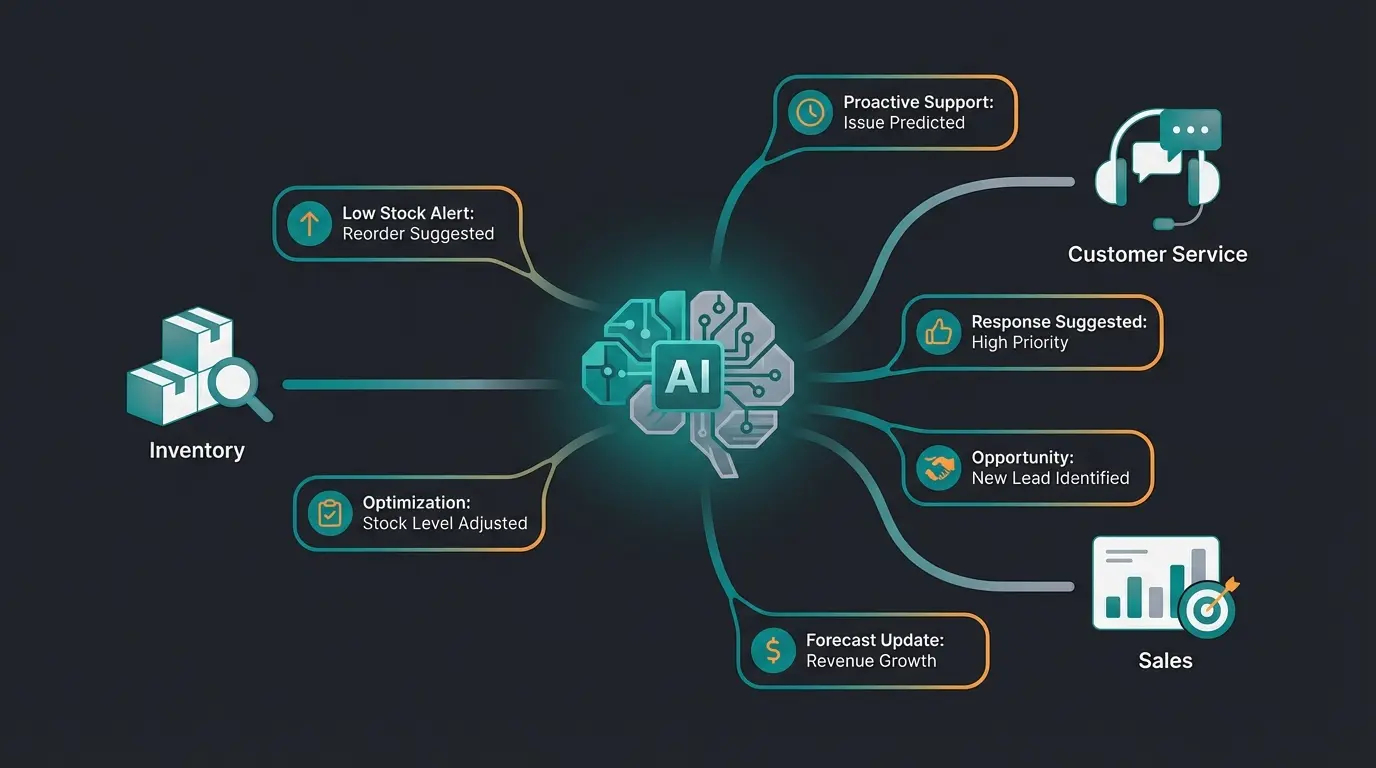
The Solution: Consultative AI
This is where a huge market gap is emerging that new AI-powered ERP solutions or add-ons are filling. We're moving away from pure Resource Planning toward Decision Optimization.
Current trends for 2025/2026 show the rise of "Autonomous AI Agents" as reported by BornCity and Cloud Consultings. These AI agents don't just act as chatbots – they take over complex workflows.
Your advantage: You're no longer just buying software that manages your work, but software that improves your work. That's the difference between a digital warehouse worker and a digital co-founder. See how companies are already leveraging this with solutions like AI employee Kira for intelligent business automation.
Discover how AI-powered consultation can turn your business data from passive storage into an active advisor. See the difference intelligent automation makes.
Start Your Free TrialAffordable ERP vs. "Cheap" ERP: The Cost Trap
When you search for "affordable ERP" or "ERP for SMB costs," you'll often find enticing offers. But beware: the license price is just the tip of the iceberg.
The True Cost Structure (TCO - Total Cost of Ownership)
| Cost Type | Description | Typical Costs (Small Business) |
|---|---|---|
| License Costs | Monthly fee for usage (SaaS) | €20-150 per user/month |
| Implementation | Setup, data import, process configuration | Often 10-15% of total costs. For complex projects quickly €5,000-30,000 |
| Training | Employees must understand the system | €500-2,000 per day (or time lost through self-study) |
| Customization | When standard doesn't suffice | Most expensive factor! With Open Source (Odoo) often the main cost driver |
| Maintenance & Support | Updates, hotline | Usually included with cloud solutions; for on-premise approx. 18% of purchase price annually |
According to Xentral's implementation guide and Haufe X360, these hidden costs can significantly impact your budget.
Practical Example: Implementation Reality Check
A small online retailer implements Xentral:
- License costs (Starter): approximately €4,200 per year
- Setup (Partner): One-time approximately €5,000-10,000 for clean setup (shop integration, DATEV, training)
- Conclusion: The first year costs closer to €15,000 than €4,000
Tip: A somewhat pricier system that's intuitive to use and requires less training (like Weclapp or modern AI tools) is often cheaper in the end than a "cheap" open-source system requiring weeks of configuration. This is similar to how businesses find that product consultation AI assistants provide better ROI than cheaper alternatives.
Most small businesses underestimate total ERP costs by at least 50%
Realistic timeline for proper ERP setup with training
Temporary productivity drop during transition period
Average return on investment for well-implemented ERP systems
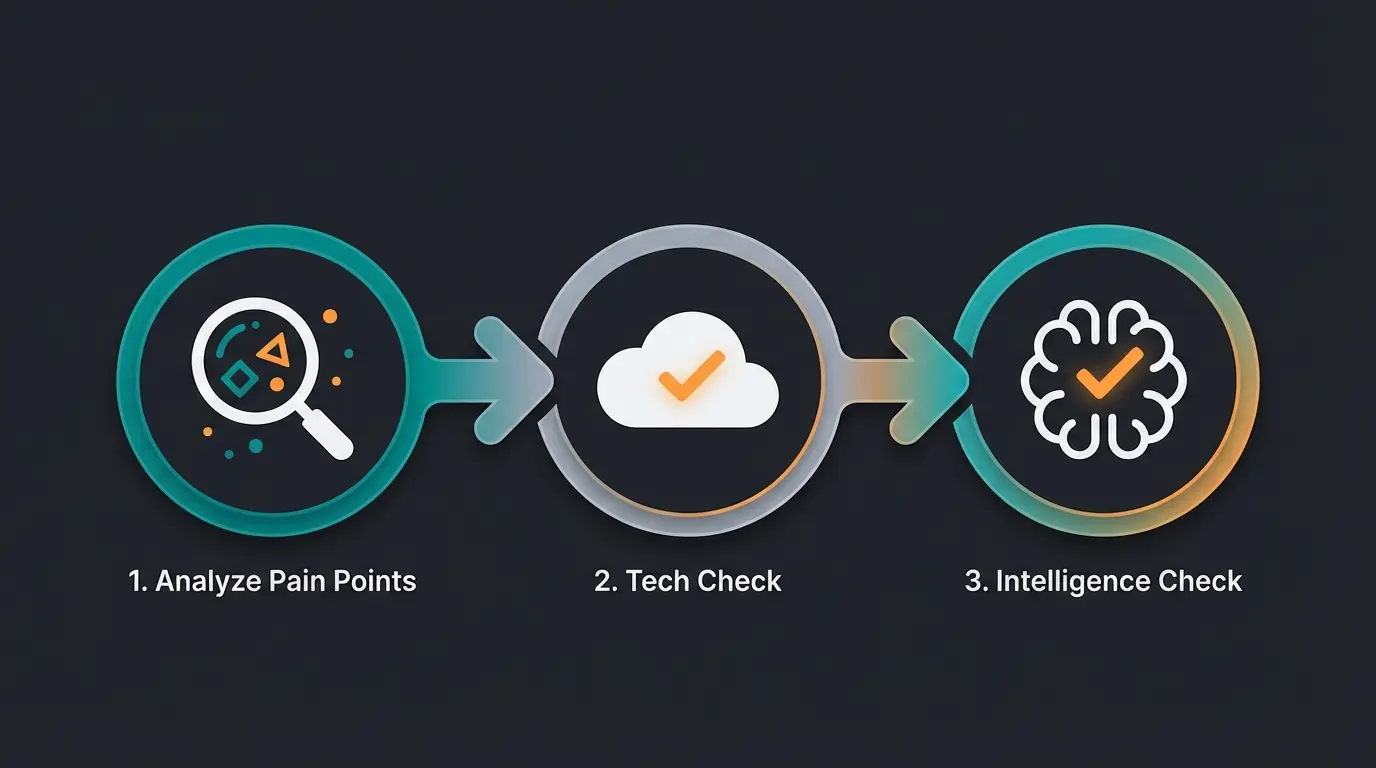
How to Choose the Right System (In 3 Steps)
Don't be dazzled by feature lists. Approach this strategically.
Step 1: Status Quo & Pain Points (The "Pain Analysis")
Don't write down what you want (e.g., "AI features"), but what hurts:
- "We need 4 hours per week for invoices."
- "We have 5% returns due to wrong items."
- "We don't know which products are slow movers."
This defines your must-have requirements. Companies like those featured in our AI product consultation success story started exactly this way – identifying their pain points first.
Step 2: The Tech Check (Cloud Is Mandatory)
For small businesses in 2025, there's really no debate anymore: Cloud ERP (SaaS) is the standard, as confirmed by IT-Matchmaker's research.
- No own servers needed
- Updates come automatically
- Access from anywhere (home office, business travel)
- Scalability (easily add users)
On-premise only makes sense for very specialized industrial operations with extreme data protection requirements or poor internet connectivity.
Step 3: The Intelligence Check (Consultant vs. Database)
Here's where the wheat separates from the chaff. Ask the vendor (or test it yourself):
- "Does the system warn me before an error occurs?"
- "Does the system help me sell more, or does it just manage shortages?"
- "How much manual input does the system need?"
If you find a system that takes over operational decisions for you (e.g., through AI-powered order suggestions or automated customer communication), you have a competitive advantage over competitors who only use their ERPs as data graveyards. This is exactly what lead qualification with AI accomplishes – turning passive data into active sales opportunities.
The Future Belongs to Intelligent Systems
The market for ERP for small businesses is in upheaval. The days when you had to choose between "unaffordable" (SAP) and "unusable" (DIY solutions) are over. Tools like Weclapp, Xentral, or Odoo have democratized professional inventory management.
But the next step is already at the door. 2026 will be the year when AI agents and consultative systems make the difference.
Our Recommendations
- Start now: Don't wait until Excel collapses. The businesses seeing success with sales consulting AI started early.
- Think in processes, not features: A bad process only becomes a faster bad process through an ERP.
- Look for the partner, not just the tool: An ERP that helps you make better product decisions is worth more than one that just costs €10 less per month.
Invest in a system that doesn't just manage your past but actively shapes your future. Explore how AI employee Theresa demonstrates what intelligent business automation can achieve.
For businesses ready to take the leap into AI-enhanced operations, exploring an AI employees platform can provide the intelligent edge your ERP system might be missing. Whether you need product consultation with AI or sophisticated automation like WhatsApp automation AI employees, the technology is ready now.
FAQ: Common Questions About ERP for Small Business
Plan for solid cloud solutions with monthly license costs between €30 and €100 per user. For initial setup and training with professional systems (like Xentral or Weclapp), you should additionally budget €2,000 to €10,000, depending on the complexity of your processes. The first-year total often reaches 2-3x the license cost alone.
Yes, there are open-source solutions like Odoo Community or ERPNext that are license-free. However, these require technical know-how for hosting, maintenance, and setup. For companies without an IT department, the "hidden costs" (time investment, external consultants) are often higher than with a paid cloud solution.
It depends on the business model. For e-commerce startups, Xentral is often leading due to its interfaces. For service providers and agencies, Weclapp is very strong. Those seeking maximum flexibility and low cost often choose Odoo. The key is matching the system to your specific pain points and growth trajectory.
If you only trade time for money (e.g., freelancers), a simple invoicing tool (like SevDesk or Lexoffice) often suffices. But as soon as you purchase, store, and ship goods, a small ERP almost always pays off to keep track of inventory and margins.
For small businesses using modern cloud solutions, expect 2-4 weeks for basic setup with proper data migration and initial training. More complex implementations with custom integrations can take 2-3 months. The key is not rushing – proper implementation prevents costly corrections later.
Ready to move beyond passive data management? Book a free initial consultation to discover how AI-enhanced solutions can transform your business operations from reactive to proactive.
Join thousands of small businesses already using AI-powered tools to turn their data into actionable insights. Your competitors are upgrading – don't get left behind.
Get Started Free Today
Lasse is CEO and co-founder of Qualimero. After completing his MBA at WHU and scaling a company to seven-figure revenue, he founded Qualimero to build AI-powered digital employees for e-commerce. His focus: helping businesses measurably improve customer interaction through intelligent automation.