
The End of Passive Inventory Management
Imagine your warehouse could speak. Not just to say: "Shelf 4B is empty," but to whisper to a customer in your webshop: "This blue mountain bike is sold out, but the red model is technically identical, available for immediate delivery, and actually fits your body height better."
Until today, inventory management software has primarily been one thing: a giant calculator. It served to track stock levels, generate invoices, and ensure accounting was accurate. That's important, but it's administration. In an era where customers expect real-time answers and markets are volatile, administration alone is no longer sufficient.
We're in 2026. The demands on retailers have changed dramatically. While most inventory management systems (IMS) still stubbornly manage data in tables, a new era is beginning: The evolution from pure storage to sales.
In this comprehensive inventory management software comparison, we analyze not only the current top players in the market like JTL, weclapp, or Xentral. We also uncover the critical gap that almost every comparison ignores: Your system's ability to serve as a data foundation for AI-powered customer consultation. Companies have successfully scaled with AI employee solutions that leverage exactly this kind of product data integration.
This article is your guide to finding not just software that counts your packages, but a solution that helps you sell them.
What is Inventory Management Software? Definition & Distinction
Before we dive into the comparison, we need to clarify terminology. Terms like ERP and IMS are often used interchangeably, but the difference is crucial for your strategy.
Inventory Management System (IMS) vs. ERP
An inventory management system focuses on the physical flow of goods. It answers the questions:
- What have I purchased?
- What's in the warehouse?
- What has been sold?
- When do I need to reorder?
An ERP (Enterprise Resource Planning) system goes further. It encompasses the IMS but additionally integrates human resources (HR), financial accounting, controlling, and often CRM (Customer Relationship Management) as well.
Cloud vs. On-Premise: The Fundamental Choice
Even in 2026, this distinction remains relevant, although the trend is clear:
Cloud (SaaS): The software runs on the provider's servers (e.g., weclapp, Xentral). The advantages include access from anywhere, no maintenance required, and rapid updates—which is especially important for AI features. The disadvantages are ongoing subscription costs and externally hosted data.
On-Premise: The software is installed locally (e.g., classic JTL-Wawi installations, though hybrid solutions are increasingly common here too). The advantages are often one-time license costs and full data control. The disadvantages include requiring your own IT infrastructure, often cumbersome updates, and greater difficulty connecting to modern AI tools.
Top 5 Inventory Management Systems Compared (Market Standard)
Based on current market research and user reviews, the following systems dominate the market. We evaluate them not only by their classic functions but also take a first look at their "Consultation Capabilities"—their ability to provide data for modern consultation.
The 2026 Comparison Table
| Software | Type | Target Group | Strength (Logistics/Admin) | Consultation Capabilities (AI Potential) |
|---|---|---|---|---|
| JTL-Wawi | On-Premise/Hybrid | E-Commerce & Mail Order | Extremely strong ecosystem, free entry, powerful warehouse management | Medium: First AI features for text (ChatGPT), but core architecture is classic |
| Xentral | Cloud (SaaS) | Growing D2C Brands & Startups | Lean ERP, strong automation, next-gen interface | High: AI Copilot for reporting integrated, open API for agents |
| weclapp | Cloud (SaaS) | SMBs & Service Providers | All-in-One (CRM + ERP), very user-friendly, team focus | Medium: AI roadmap exists, focus on process automation, less on customer consultation |
| Billbee | Cloud (SaaS) | Small Retailers & Multichannel | Cost-effective, pure order processing, no heavy ERP | Low: Focus purely on fulfillment, less on deep data storage for AI |
| Shopify (Sidekick) | Platform Feature | E-Commerce Pure Players | Integrated in shop system, no external IMS needed for small shops | Very High: Sidekick acts as true assistant with deep data access |
Detailed Provider Analysis
1. JTL-Wawi: The E-Commerce Heavyweight
JTL is the standard in Germany for many online retailers. The software is free in its basic version and modularly expandable.
Logistics Power: With JTL-WMS, it offers warehouse management that perfectly handles even chaotic storage systems.
AI Status: JTL has recognized that AI is important. New features allow generating product descriptions via ChatGPT and automatic translations, as documented on JTL's official site.
The Problem: It remains a tool for administration. The data is often buried deep in SQL databases. Real-time interaction with the end customer via this data requires complex middleware.
2. Xentral: The Darling of Modern Startups
Xentral has established itself as a lean ERP for modern brands. It connects warehouse, production, and accounting in the cloud.
Logistics Power: Strong interfaces to fulfillment providers and shops like Shopify or Amazon.
AI Status: With the "Xentral AI Copilot," users can ask questions about their data (e.g., "Which products have the highest return rate?"). This is a big step toward "Active Data," but currently focuses on internal analytics rather than external customer consultation.
3. weclapp: The All-Round Talent
Weclapp scores with an extremely clean interface and deep integration of CRM and inventory management.
Logistics Power: Solid warehouse management, but often less "granular" than JTL for extremely complex logistics scenarios.
AI Status: Weclapp integrates AI primarily for automating routine tasks (e.g., document assignment). The roadmap shows efforts to embed AI more deeply, but currently it's primarily an efficiency tool for employees rather than customer-facing consultation.
4. Shopify Sidekick: A Glimpse into the Future
Although Shopify is primarily a shop system, many small retailers use the internal IMS functions. According to Sidekick AI, this represents the new generation of integrated assistance.
AI Status: "Shopify Sidekick" is the prime example of the new generation. The assistant knows not only inventory levels but understands context ("Why is product X selling poorly?"). It can execute actions instead of just displaying data. As noted by GetMesa, this is where the line between software and employee becomes blurred.
Of inventory systems still prioritize logistics over sales enablement
Potential increase when AI uses live inventory data for consultation
Of legacy systems lack real-time API capabilities for AI integration
The New Standard: IMS Meets AI (Your Competitive Advantage)
The systems mentioned above are good at telling you that you still have 5 red bicycles. But none of them actively help you explain to the customer why they should buy that bicycle when they're browsing your shop at 11 PM.
This is the content gap in most comparisons: They view IMS as a backend tool. We view it as a knowledge database for sales. Businesses achieving remarkable results with AI product consultation demonstrate exactly this paradigm shift.
From "Static Data" to "Active Data"
Most retailers use their inventory management as a "data graveyard." Item numbers, EANs, weights, and stock levels sit there passively.
The old model (Passive Data): A customer asks in chat: "Does this saddle fit the bike?" The support employee must look in the IMS, check the specs, maybe walk to the warehouse. That takes time.
The new model (Active Data): An AI layer (AI Agent) sits on top of your inventory management. It reads the technical data ("Seat post diameter 27.2mm") and stock levels ("Immediately available") in real-time.
Scenario: The Difference in Practice
Situation: A customer is looking for a gift for his wife who loves hiking but has knee problems.
Key Insight: The inventory management is no longer just warehouse administration—it's the brain of the salesperson. This is exactly how KI mitarbeiterin flora operates, turning product data into personalized customer conversations.
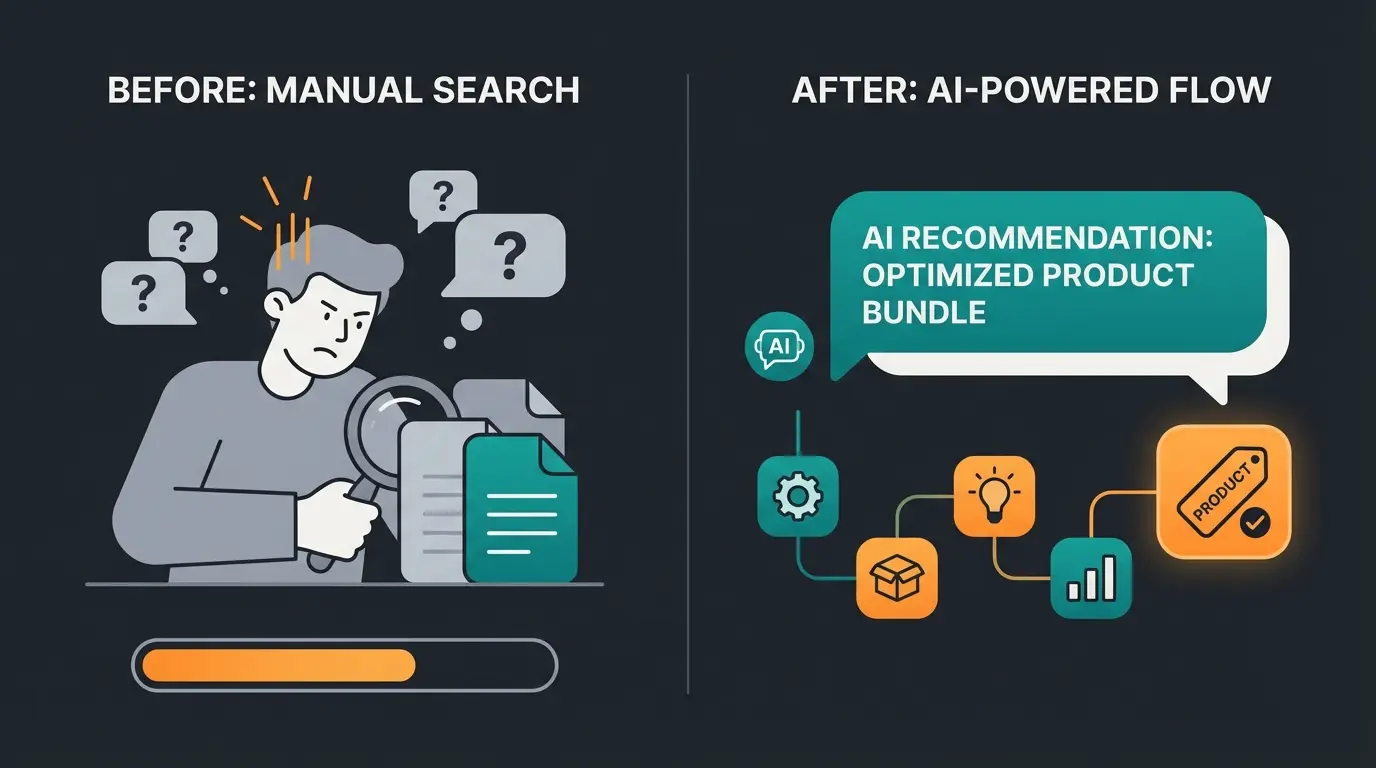
See how AI consultation layers turn your product database into a 24/7 sales advisor that knows your entire catalog.
Get Your Free DemoPurchase Criteria 2026: What Retailers Must Consider
When selecting inventory management software in 2026, you can no longer just ask about "delivery note printing" and "DATEV export." These functions are "table stakes"—basic requirements. To remain future-proof, you need new criteria.
The Classics (Must-Haves)
- Interfaces (Connectors): Connection to marketplaces (Amazon, eBay, Kaufland) and shop systems (Shopify, Shopware, WooCommerce).
- Automation: Workflows (e.g., 'When order is paid → Print delivery note → Send email').
- Legal Compliance: GoBD conformity, TSE for cash registers, correct tax rate calculation (OSS procedure).
The New Criteria (The AI-Readiness Check)
This is where the wheat is separated from the chaff. Ask the provider these critical questions:
1. The "Product Knowledge Engine"
Can the software store unstructured data? A classic IMS has fields for "length," "width," "height." A modern system must also store "use case," "style," or "compatibility" in a way that AI can understand.
Test question: "Can I create free-text attributes that are readable via API?"
2. API-First Architecture
A closed database is deadly in 2026. For an AI agent (like in our scenario above) to work, it must be able to access inventory in milliseconds.
Warning sign: If the provider says "We have a CSV export that runs every night," run away. You need REST or GraphQL APIs for real-time queries.
3. Active Inventory Intelligence
Can the system proactively warn? Not just "stock low," but "stock low AND demand is currently rising due to weather change."
Trend: Systems like Prediko or Relevance AI dock onto IMS to make exactly these predictions. Your IMS must be open for such plugins.
Evaluate if your current system stores rich product attributes beyond basic SKU data
Verify real-time API access with sub-second response times for inventory queries
Check for webhooks, GraphQL, or REST endpoints that AI agents can consume
Design how AI will use inventory data to power customer-facing recommendations
Which Solution Fits Which Business Model?
Not everyone needs the "AI Ferrari." Here's a breakdown by business model:
1. The E-Commerce Starter & Side-Hustler
Profile: Shopify store, dropshipping, or small private warehouse.
Recommendation: Use built-in tools (Shopify Inventory) or Billbee according to Softwareabc24.
AI Strategy: Use tools like Shopify Sidekick. You don't need an expensive external IMS.
2. The Growing D2C Brand (Direct-to-Consumer)
Profile: Own product, strong marketing, 100-500 orders/day.
Recommendation: Xentral or weclapp. You need clean processes but flexibility.
AI Strategy: Xentral offers good approaches with the Copilot. Use the API to connect a custom GPT for your customer support that accesses product data. This is similar to how successful brands implement AI Chat solutions.
3. The Classic Multi-Channel Retailer
Profile: Sells on Amazon, eBay, own shop, and perhaps brick-and-mortar. High volume, small margins.
Recommendation: JTL-Wawi. The cost structure is unbeatable, the logistics processes extremely robust.
AI Strategy: Caution is warranted here. JTL is powerful but often technically "rigid." You need middleware or specialized agencies to connect modern AI agents to the JTL database. However: JTL is working on its own AI features as noted in their latest updates.
Visualizing the Evolution of Inventory Management
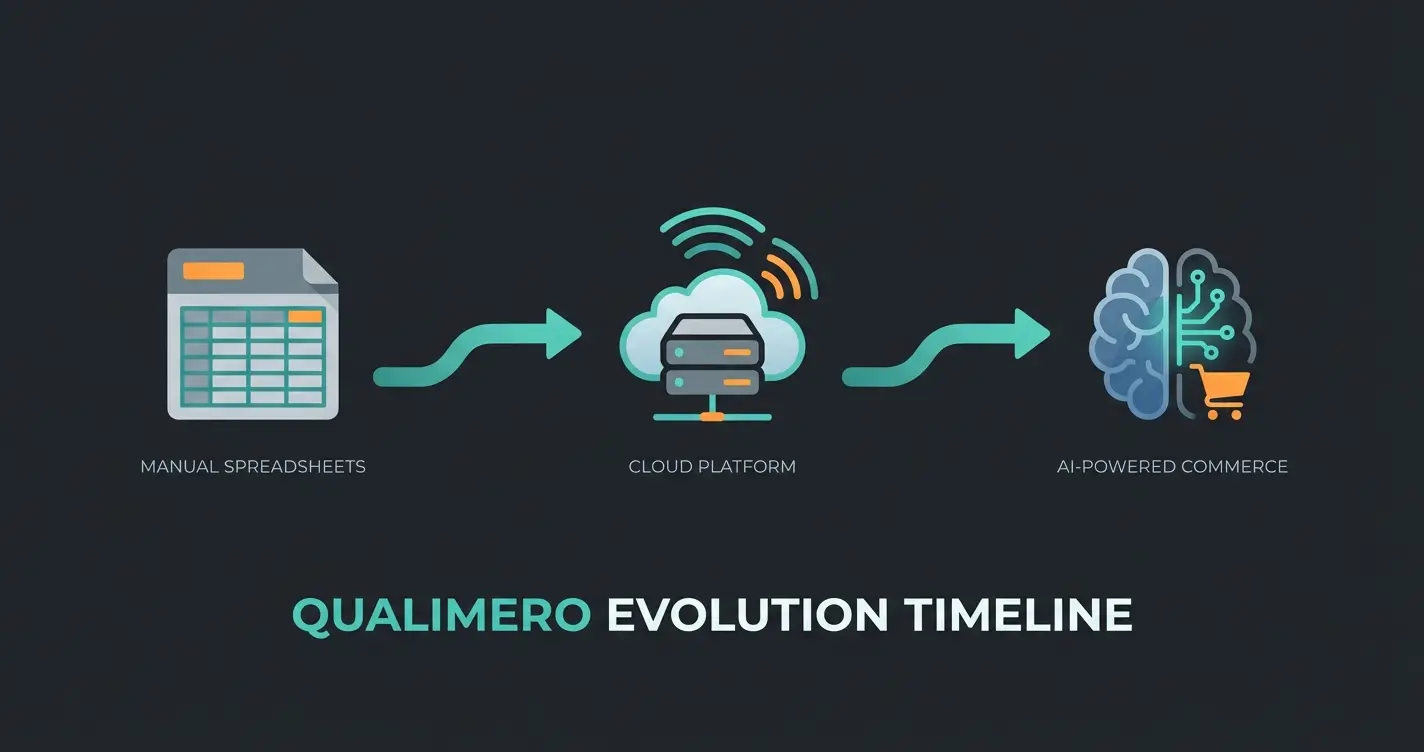
The Evolution: From List to Brain
Understanding where inventory management has been helps clarify where it's going—and why AI integration represents the next logical step.
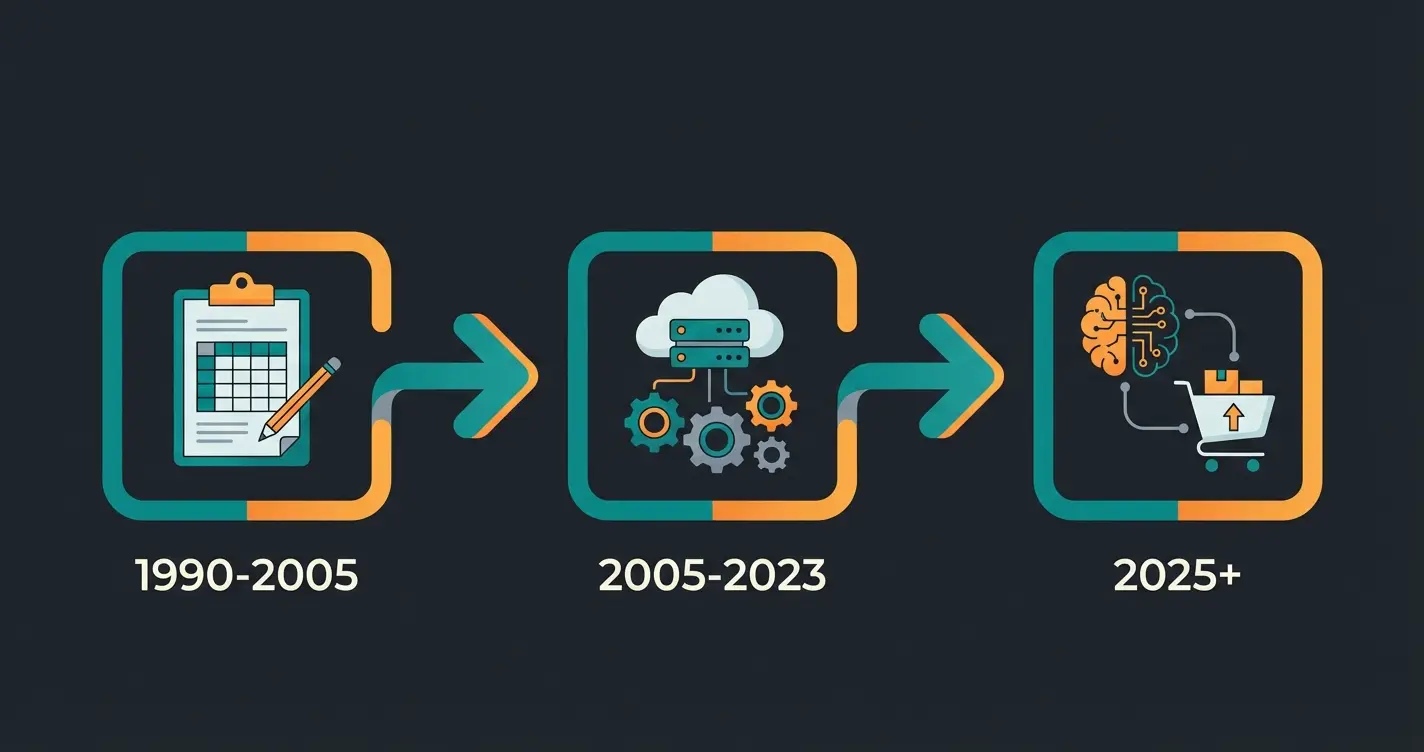
Phase 1 (1990-2005): The List (Excel/DOS)
Symbol: A clipboard or Excel spreadsheet. Function: Storage. Question answered: "What do I have?"
Phase 2 (2005-2023): The Administrator (Cloud IMS/ERP)
Symbol: A server/cloud with gears. Function: Automate & Connect. Question answered: "When do I need to reorder?"
Phase 3 (2025 onward): The Advisor (AI-Integrated IMS)
Symbol: A brain connected to a shopping cart. Function: Consult & Sell. Question answered: "Which product solves the customer's problem right now?"
Companies implementing product consultation ai are already operating in Phase 3, using their inventory data not just for logistics but as the foundation for intelligent customer engagement.
Feature Matrix: Where Classic Systems Fall Short
The following matrix reveals the critical capability gap that most software comparisons overlook:
| Capability | Basic Inventory | Multi-Channel | Accounting Integration | AI Product Consultation |
|---|---|---|---|---|
| JTL-Wawi | ✓ Excellent | ✓ Excellent | ✓ Strong | ◐ Developing |
| Xentral | ✓ Strong | ✓ Strong | ✓ Excellent | ◐ Good (Internal) |
| weclapp | ✓ Good | ✓ Good | ✓ Excellent | ◐ Roadmap |
| Billbee | ✓ Basic | ✓ Excellent | ○ Limited | ✗ None |
| Shopify Native | ◐ Basic | ◐ Limited | ○ Limited | ✓ Sidekick |
| AI-Enhanced IMS | ✓ Via Integration | ✓ Via Integration | ✓ Via Integration | ✓ Core Feature |
Notice how traditional systems check the first three boxes but leave the fourth—the consultation capability that drives modern conversions—largely empty. This visual gap represents your competitive opportunity.
Conclusion: The Future Belongs to "Consulting Systems"
The market for inventory management software is saturated with solid solutions for administration. JTL, Xentral, and weclapp do their jobs well. If you're just looking for someone to count your inventory, grab one of these market leaders.
But if you want to remain competitive in 2026 and beyond, you need to rethink. The price war in e-commerce is getting tougher. You often can't be the cheapest. You must be the one who advises best.
Our Strategic Recommendation
- Choose an IMS that masters your logistics (foundation).
- Verify it has a modern API (future-proofing).
- Start maintaining your product data in the IMS so that AI can 'read' it (quality).
- Supplement your IMS with an AI consultation layer—software that takes your data and transforms it into sales conversations.
Administration was yesterday. Today is consultation. And your inventory management provides the material for it.
FAQ: Common Questions About Inventory Management 2026
For entry-level needs, Billbee (very affordable, strong multi-channel focus) or weclapp (if more ERP functions like CRM are needed) are excellent choices. Those who are technically savvy and want to start free should consider JTL-Wawi.
In most cases: No. Cloud solutions (SaaS) like Xentral or weclapp are more secure, flexible, and better suited for connecting AI tools. On-premise only makes sense for very large warehouses with special hardware connections or extreme data protection requirements (though cloud has caught up here too).
Currently in three areas: 1) Content: Creation of product texts and translations (e.g., in JTL). 2) Analytics: Analysis of data through natural language (e.g., Xentral Copilot). 3) Consultation (The new trend): Using inventory data for chatbots and shopping assistants that advise customers in real-time.
Three key factors: First, the ability to store rich, unstructured product attributes beyond basic specs. Second, real-time API access with sub-second response times. Third, webhook capabilities that allow AI agents to receive instant updates on inventory changes.
Yes, through middleware layers and API integrations. The key is whether your current system exposes the necessary data through modern APIs. Legacy systems with only nightly CSV exports will require significant custom development or replacement.
Discover how AI consultation transforms your product data into personalized customer conversations that convert—24 hours a day.
Start Your Free Trial