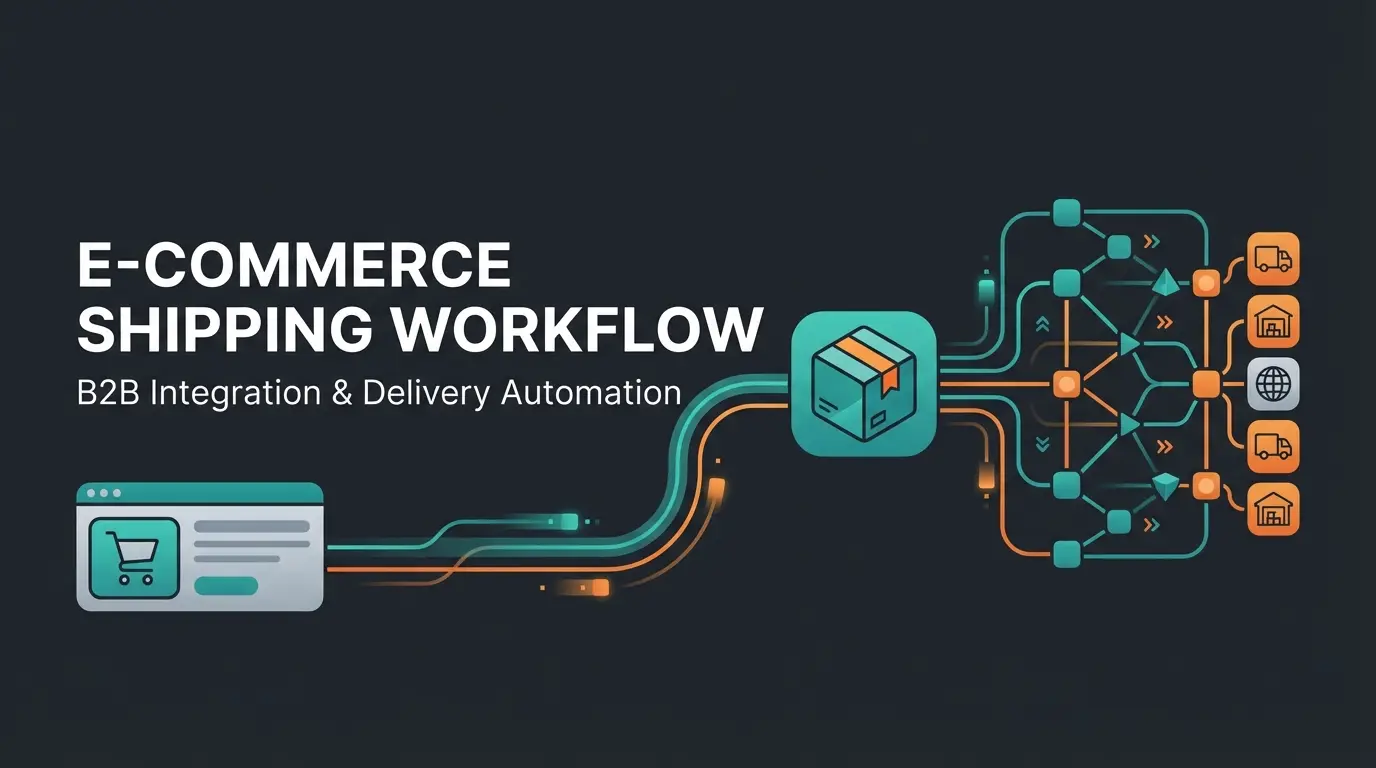
Introduction: From Server to Experience Platform
For German e-commerce decision-makers, the equation used to be simple: hosting must be fast, and data must reside in Frankfurt. But in 2025, this definition no longer suffices. The market demands scalability at the push of a button (Black Friday), absolute legal certainty against the US Cloud Act, and infrastructure powerful enough to run real-time AI models without latency.
The primary keyword Adobe Commerce Cloud hosting no longer just stands for storage space on AWS or Azure. It represents an ecosystem that masters the balancing act between strict German GDPR requirements and the boundless scalability of a global cloud. Similar to how Shopware cloud hosting has evolved, Adobe's platform now serves as a foundation for innovation rather than mere infrastructure.
The Problem: German Fear of Vendor Lock-in and Data Leakage
German mid-sized companies and enterprise customers face a dilemma. On one hand, the Adobe Commerce SaaS solution entices with versionless updates and automatic scaling. On the other hand, the sword of Damocles of compliance hangs over every project: What happens when US authorities demand access to server data?
The Thesis: Hosting as an Enabler for AI Consultants
The best hosting architecture doesn't just keep the lights on. It's the engine for the next generation of e-commerce: intelligent sales consultation. While competitors still proudly point to their loading times, market leaders use their cloud resources to run AI agents that guide customers through the shop like a human salesperson. Understanding the future of AI in commerce is essential for staying competitive.
The German Landscape: Data Sovereignty & BSI C5
Anyone hosting in Germany must do more than just check "Region: EU-Central-1." Legal requirements have massively increased due to geopolitical tensions and stricter data protection laws.
Why Frankfurt Doesn't Equal Secure
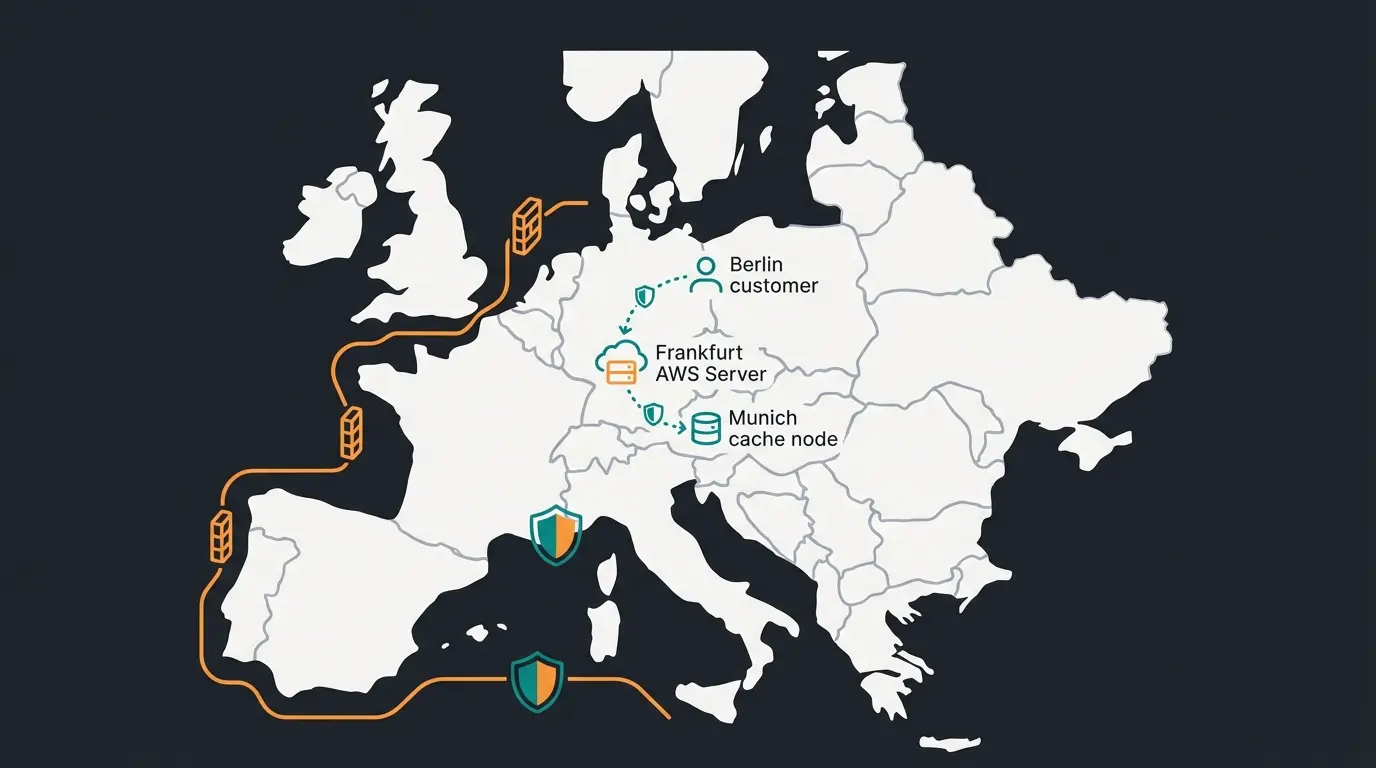
For a long time, the Frankfurt location was considered the gold standard. But technically speaking, US hyperscalers (like AWS or Azure) in Frankfurt are still subject to the US Cloud Act, which theoretically grants US authorities access to data. For industries like healthcare, finance, or public sector in Germany, this was a showstopper for public cloud adoption.
The 2025 Game Changer: AWS European Sovereign Cloud
This is where everything changes for Adobe Commerce Cloud hosting. According to aboutamazon.eu, AWS is investing €7.8 billion in the AWS European Sovereign Cloud, going live in Brandenburg by the end of 2025.
- What is it? A physically and logically separated cloud infrastructure.
- The difference: Operations and support are conducted exclusively by EU-resident employees. There is no access from outside the EU, not even for AWS admins in the USA.
- Significance for Adobe Commerce: Since Adobe Commerce Cloud primarily runs on AWS (and Azure), this enables for the first time hosting that combines full scalability with true data sovereignty.
AWS commitment to European Sovereign Cloud infrastructure
Brandenburg data center going live
Operations handled exclusively by EU residents
Compliance Checklist: BSI C5 and GDPR
An often overlooked aspect in agency pitches is the BSI C5 criteria catalog (Cloud Computing Compliance Criteria Catalogue). As reported by Adobe's compliance documentation, Adobe has already obtained BSI C5 certification for products like Document Cloud.
- Adobe's Status: Adobe has obtained the C5 certificate for products like Document Cloud.
- Commerce Status: For Adobe Commerce, what's crucial is that the underlying infrastructure (IaaS) is certified. AWS and Azure hold these certificates.
- Your Advantage: When you use Adobe Commerce Cloud, you inherit these security standards. This saves you hundreds of hours of documentation work during audits compared to on-premise solutions.
Understanding compliance requirements is essential, especially as the EU AI Act adds new layers of regulation for AI-powered commerce solutions.
Architecture Shift: PaaS vs. SaaS (Adobe Commerce SaaS)
Understanding the difference between the classic Magento Cloud Service (PaaS) and the new Adobe Commerce SaaS is crucial for your investment planning over the next 5 years.
The Status Quo: Platform-as-a-Service (PaaS)
The previous model (often still known as Magento Commerce Cloud) is essentially extremely well-managed hosting.
- You control: The code (PHP), the database structure, the updates.
- Adobe controls: The infrastructure (containers, Git workflow).
- Disadvantage: You remain responsible for security patches and version upgrades (e.g., from 2.4.6 to 2.4.7). This costs time and budget.
The Future: Adobe Commerce as a Cloud Service (SaaS)
Adobe is currently executing the most radical transformation since the Magento acquisition. According to Valtech's analysis and EPAM's documentation, the shift represents a fundamental change in how enterprise e-commerce platforms operate.
- Versionless: The core code is locked. Updates are applied by Adobe in the background, similar to Shopify but with Adobe's enterprise power.
- Microservices: Functions like catalog, search, and checkout are outsourced as separate API services.
- Extensibility: Customizations no longer happen in the core (no more di.xml madness), but "out-of-process" via the Adobe App Builder.
This evolution mirrors what we see in Shopware alternatives where platform flexibility and AI-readiness increasingly determine competitive advantage.
| Feature | Adobe Commerce (PaaS) | Adobe Commerce (SaaS) |
|---|---|---|
| Hosting Model | Single-tenant container in cloud environment | Multi-tenant SaaS architecture |
| Updates & Patches | Manual by agency/in-house (Expensive) | Automatic by Adobe (Versionless) |
| Scalability | Auto-scaling must be configured | Native & Automatic (Serverless) |
| Customizations | Deep PHP core modifications possible | Only via APIs & App Builder (Safer) |
| Frontend | Luma, PWA Studio, Hyvä (PHP-based) | Edge Delivery Services (EDS) or Headless |
| Ideal for | Companies with extremely specific backend logic | Companies seeking speed & low TCO |
The Hidden Gap: Smart Hosting vs. Intelligent Consultation
Here lies your opportunity to differentiate from competitors. Most articles about Adobe Commerce Cloud hosting end at the technology. We go one step further.
The Limits of Adobe Sensei (Backend AI)
Adobe heavily promotes Adobe Sensei. It's fantastic technology for the backend. It analyzes click data to:
- Optimize search results (Live Search).
- Personalize product recommendations ("Customers also bought...").
The problem: Sensei doesn't talk to the customer. It's a "mute" intelligence that only reacts when the customer clicks. For products requiring explanation, this passive approach falls short.
The Solution: AI Product Consultants (Frontend AI)
In a German market accustomed to high consultation quality, a good search bar isn't enough. Adobe's cloud infrastructure provides the perfect foundation to integrate Large Language Models (LLMs) directly into the shop.
The Scenario: A customer searches for "running shoes."
- Standard Shop (Sensei): Shows 50 pairs of running shoes, sorted by bestsellers.
- Your Approach (Consultative AI): An AI agent opens and asks: "Are you planning a marathon on asphalt or trail running in the forest?"
This is where AI sales assistants and AI Product Consultation become game-changers. The ability to engage customers in meaningful dialogue transforms browsing into buying.
User searches for 'running shoes' in your store
Analyzes search, returns 50 sorted products based on click history
Consultative AI initiates dialogue: 'Marathon or trail running?'
AI narrows selection based on active input and stated needs
Customer receives personalized recommendation with confidence
Why Hosting Is Critical for AI Consultation
Why mention this in a hosting article? Because "Consultative AI" needs computing power and low latency.
- Latency: If the AI agent needs 5 seconds to "think," the customer bounces. The Edge architecture (Fastly CDN) of Adobe Commerce Cloud enables processing these requests extremely close to the user.
- Data Security: A generic chatbot (like ChatGPT) often sends data to US servers. An AI agent hosted within your Adobe Commerce Cloud environment (or via App Builder) remains within the secure legal framework of your infrastructure.
This AI-readiness needed in modern hosting determines whether your AI merely sorts data or actively sells. Companies investing in AI customer service solutions need infrastructure capable of supporting real-time inference.
| Dimension | Standard Adobe Sensei (Backend) | Frontend AI Consultant |
|---|---|---|
| Interaction | Passive (waits for click/search) | Active (initiates dialogue, asks questions) |
| Goal | Find product (Matching) | Solve problem (Consultation) |
| Data Basis | Historical click data | Active context & voice/text input |
| Hosting Requirement | Standard database queries | High-compute low-latency inference |
| Example | Shows 'Red Shoes' when searched | Asks: 'What occasion are the red shoes for?' |
Stop relying on passive search algorithms. Deploy AI product consultants that actively guide customers to purchase decisions—powered by enterprise-grade cloud infrastructure.
Start Your AI JourneyPerformance & Scalability: The Technical Deep Dive
For German customers, loading times aren't just UX—thanks to Core Web Vitals, they're also a hard SEO factor.
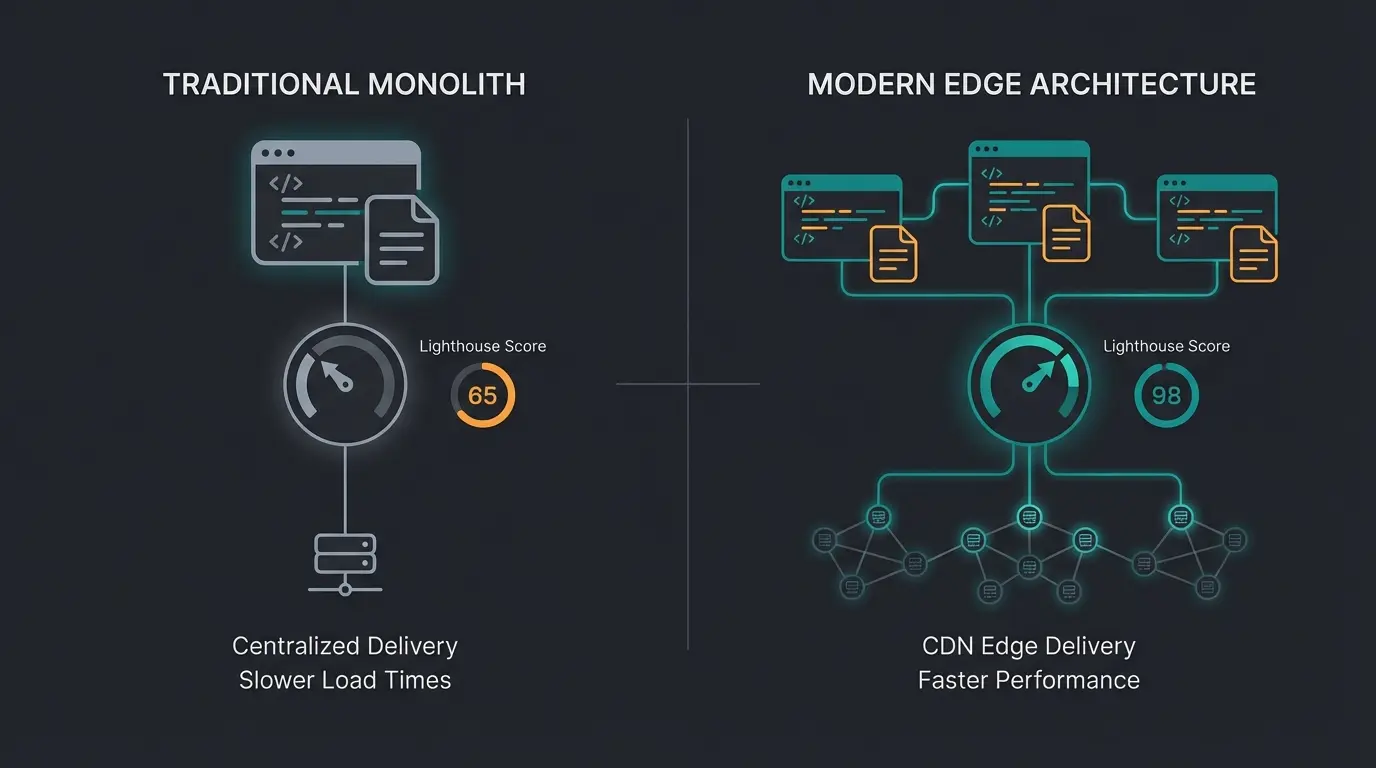
Fastly CDN & Varnish: The Turbo
Adobe Commerce Cloud integrates Fastly not just as a CDN, but as an "Edge Cloud Platform."
- Varnish Cache: Pages aren't loaded from the server in Frankfurt but from the cache node in Munich, Berlin, or Hamburg.
- Image Optimization: Fastly automatically optimizes images (WebP/AVIF), which massively improves the LCP (Largest Contentful Paint).
- DDoS Protection: In times of hybrid warfare, Fastly's integrated DDoS protection is essential for German businesses.
Frontend Innovation: Hyvä vs. Edge Delivery Services
The choice of frontend determines hosting requirements. This decision impacts everything from Shopware TCO comparisons to long-term platform strategy.
Hyvä Themes: Community Favorite
According to elogic.co, Hyvä has become the current darling of the community. Hyvä drastically reduces JavaScript overhead.
- Hosting Impact: Hyvä runs excellently on the PaaS version of Adobe Commerce Cloud. It requires fewer server resources than PWA Studio, which reduces hosting costs.
- Compatibility: Hyvä Enterprise offers full compatibility with Adobe Commerce features (B2B, Sensei), as confirmed by hyva.io.
Edge Delivery Services (EDS): Adobe's New Approach
As documented by Vaimo, Edge Delivery Services represents Adobe's newest approach to frontend performance.
- Concept: The shop is maintained quasi "document-based" (e.g., from Google Docs/SharePoint) and delivered directly via the Edge (CDN).
- Performance: Almost always achieves a Google Lighthouse Score of 100.
- Hybrid Model: You can use Hyvä for complex checkout/cart and EDS for landing pages—a strategy called "Hyvä Edge."
Total Cost of Ownership: The Unvarnished Truth
Many agencies hide the true costs of on-premise solutions. A transparent comparison shows why cloud is often cheaper, even though license fees appear higher.
The Hidden Costs of Self-Hosted (On-Premise)
- DevOps Personnel: You need 24/7 admins patching Linux servers, configuring firewalls, and tuning MySQL. (Cost: >€80,000/year per person).
- Security Risk: A missed patch can cost millions (data protection fines + image damage).
- Over-provisioning: You must rent servers for peak load (Christmas) and pay for them all year, even when they sit idle in summer.
When evaluating options for your complex product platform, understanding true hosting costs becomes critical for accurate budgeting.
Adobe Commerce Cloud Cost Calculation
- Included: Hosting (AWS/Azure), CDN (Fastly), Image Optimization, New Relic (Monitoring), Blackfire (Profiling), Deployment Tools.
- Savings: The internal IT team transforms from "server guardians" to "innovation drivers."
- Predictability: Costs scale with GMV (Gross Merchandise Value), not server hours.
Per person for 24/7 on-premise server management
Typical savings when switching to managed cloud hosting
Adobe Commerce Cloud guaranteed availability
Implementation & Migration: A Roadmap for Germany
Moving to the cloud is not a "copy-paste" task. Here's a strategic workflow for German merchants.
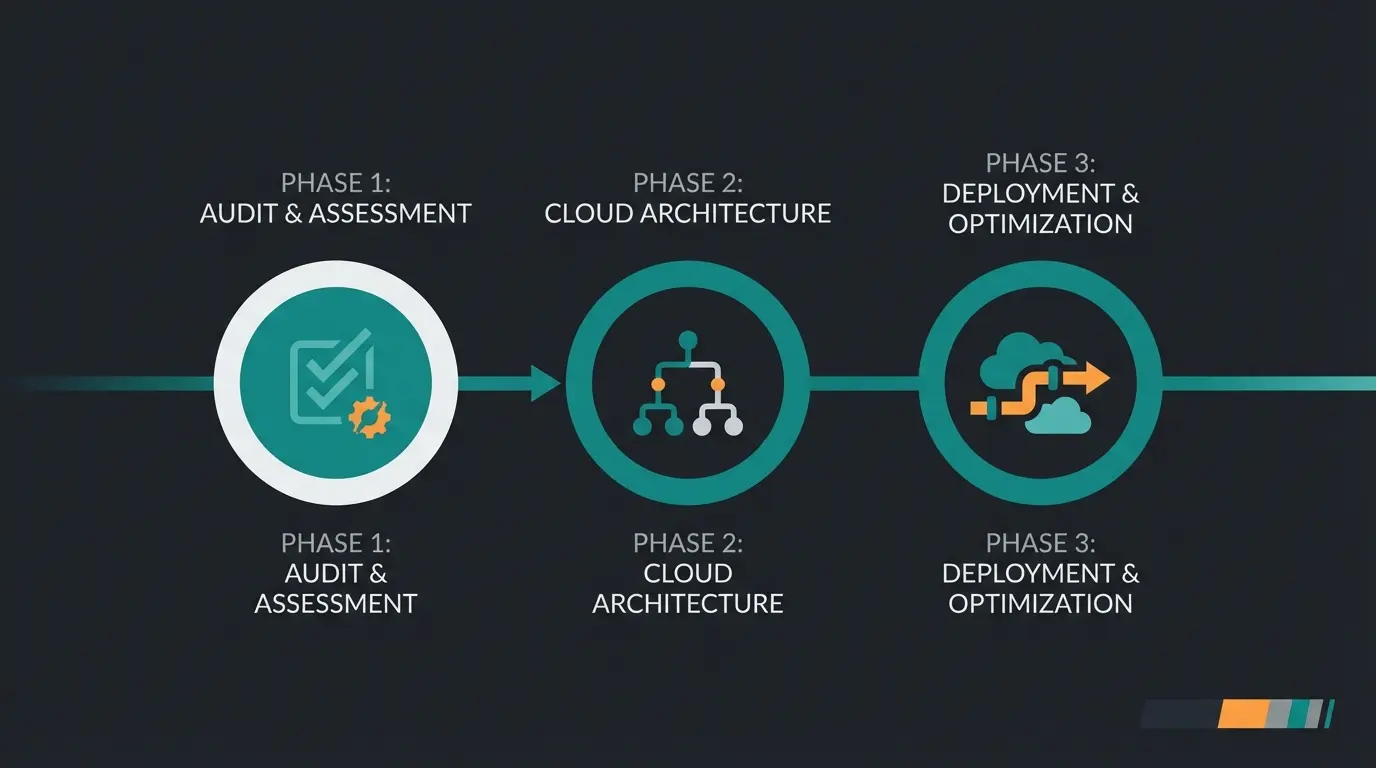
Phase 1: Audit & Compliance
- Check existing extensions for cloud compatibility (especially write permissions in the file system are taboo in the cloud – "Read-only Filesystem").
- Data protection audit: Where does customer data reside? Does the DPA (Data Processing Agreement) with Adobe need updating?
Phase 2: The Architecture Decision
- PaaS or SaaS? If you have extreme custom code, start with PaaS. If you're starting "greenfield," go directly to SaaS/App Builder.
- Frontend: Decide between Hyvä (faster go-live, PHP-based) or EDS (maximum performance, new technology).
Having AI expert consultants involved in this phase can help ensure your architecture supports future AI capabilities.
Phase 3: Deployment Pipeline
- Use Adobe's ece-tools for deployment.
- Set up Bitbucket/GitHub pipelines that run automatic tests before code goes to the staging environment.
- Important: Use the "Split-Database" performance features of the cloud for checkout and order management at high order volumes.
Conclusion: Cloud Is Inevitable, Strategy Is Decisive
The question in 2025 is no longer whether you move to the cloud, but how.
Tomorrow's market leader uses Adobe Commerce Cloud hosting not just to save server costs. They use the sovereignty of German AWS infrastructure to build trust, and the scalability of the cloud to create AI-powered consultation experiences that make Amazon look outdated.
Your next step: Don't rely on standard hosting. Build a platform that's secure enough for German lawyers and innovative enough for Gen Z.
Frequently Asked Questions
Adobe Commerce PaaS (Platform-as-a-Service) gives you control over code, database structure, and updates while Adobe manages infrastructure. Adobe Commerce SaaS features versionless updates, microservices architecture, and out-of-process customizations via App Builder. PaaS suits companies with complex backend logic, while SaaS is ideal for those prioritizing speed and lower TCO.
The AWS European Sovereign Cloud in Brandenburg (launching late 2025) provides physically and logically separated infrastructure operated exclusively by EU-resident employees. This means no access from outside the EU—including AWS US admins—offering true data sovereignty while maintaining full cloud scalability for Adobe Commerce deployments.
BSI C5 (Cloud Computing Compliance Criteria Catalogue) is a German security standard for cloud services. While Adobe holds C5 certification for products like Document Cloud, Adobe Commerce benefits from certified underlying infrastructure (AWS/Azure). This inherited certification saves hundreds of audit documentation hours compared to on-premise solutions.
Yes, Adobe Commerce Cloud's edge architecture (Fastly CDN) and scalable infrastructure make it ideal for running Large Language Models and AI consultants. Unlike generic chatbots that send data to external servers, AI agents hosted within your Adobe Commerce environment maintain data sovereignty while providing low-latency real-time interactions.
Hyvä Themes excels for faster go-live with reduced JavaScript overhead and full Adobe Commerce feature compatibility (B2B, Sensei). Edge Delivery Services achieves near-perfect Lighthouse scores through document-based content delivery. Many merchants use a hybrid "Hyvä Edge" approach—Hyvä for complex checkout/cart and EDS for landing pages.
Combine enterprise-grade Adobe Commerce Cloud hosting with intelligent AI sales consultants. Transform passive shoppers into engaged buyers with consultation-driven commerce.
Schedule Your Consultation
Lasse is CEO and co-founder of Qualimero. After completing his MBA at WHU and scaling a company to seven-figure revenue, he founded Qualimero to build AI-powered digital employees for e-commerce. His focus: helping businesses measurably improve customer interaction through intelligent automation.